
Trial-access debate
This page has four parts, in the order you use them. Part 1 is what you need to know. Part 2 says what to do, in plain English. Part 3 shows the work done once on a case that is not yours. Part 4 is your own work and where to turn it in.
Open your materials, follow the steps, then turn in your work.
Argue a position on who should get access to experimental cancer drugs through clinical trials and right-to-try laws.
Optional: listen or watch a unit review▸
Part 1 of 4 · Background and definitions▸
💡 Big idea: Clinical trials gate access to unproven drugs so that a whole population is not exposed to a treatment before its risks are known, which forces hard trade-offs between one patient's autonomy and everyone else's .
- • Clinical trials test and efficacy before a drug reaches the market.
- • The 2018 federal right-to-try law lets an eligible patient with a life-threatening condition ask a manufacturer for an investigational drug that has finished Phase 1; the manufacturer may refuse, and the request does not go through the FDA.
- • Expanded access decisions involve medical, ethical, and economic stakeholders.
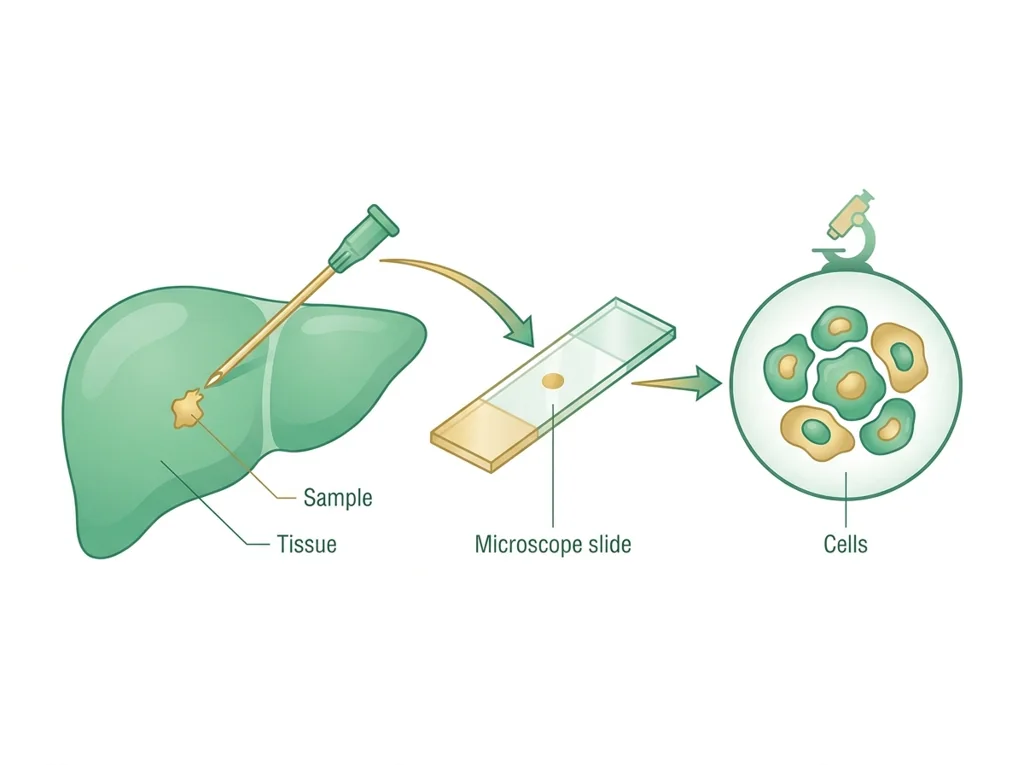
cells lose their normal shape and break through boundaries, so a pathologist can read invasion and disorganization on a slide to judge whether a can metastasize and how dangerous it is.
Clinical trials gate access to unproven drugs so that a whole population is not exposed to a treatment before its risks are known, which forces hard trade-offs between one patient's autonomy and everyone else's .
Driving question: A patient with stage IV and months to live wants a drug that has passed only Phase I testing. Should the oncologist, the drug maker, the insurer, or the patient get the final say?
What you already know: cells lose their normal shape and break through boundaries, so a pathologist can read invasion and disorganization on a slide to judge whether a can metastasize and how dangerous it is.
New idea: Clinical trials gate access to unproven drugs so that a whole population is not exposed to a treatment before its risks are known, which forces hard trade-offs between one patient's autonomy and everyone else's .
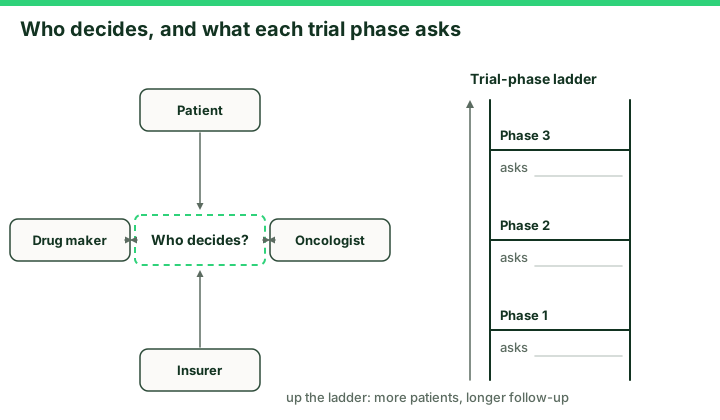
- Observe or measure the relevant feature in trial-access debate.
- Organize the observation with a stable evidence ID.
- Apply this rule: Use science to estimate consequences, then state the value judgment and tradeoff that determine the decision.
- Choose the option the evidence supports and state the limit of the conclusion.
Real biomedical example: A patient with stage IV and months to live wants a drug that has passed only Phase I testing. Should the oncologist, the drug maker, the insurer, or the patient get the final say?
What the evidence supports: E1 to E3 and the figure support the daily take-home when the response meets the stated success criteria.
What it cannot prove: The package does not support claims beyond this lesson's or any real patient diagnosis.
- • : A medical procedure that removes a small sample of from the body so it can be examined under a microscope for disease such as .
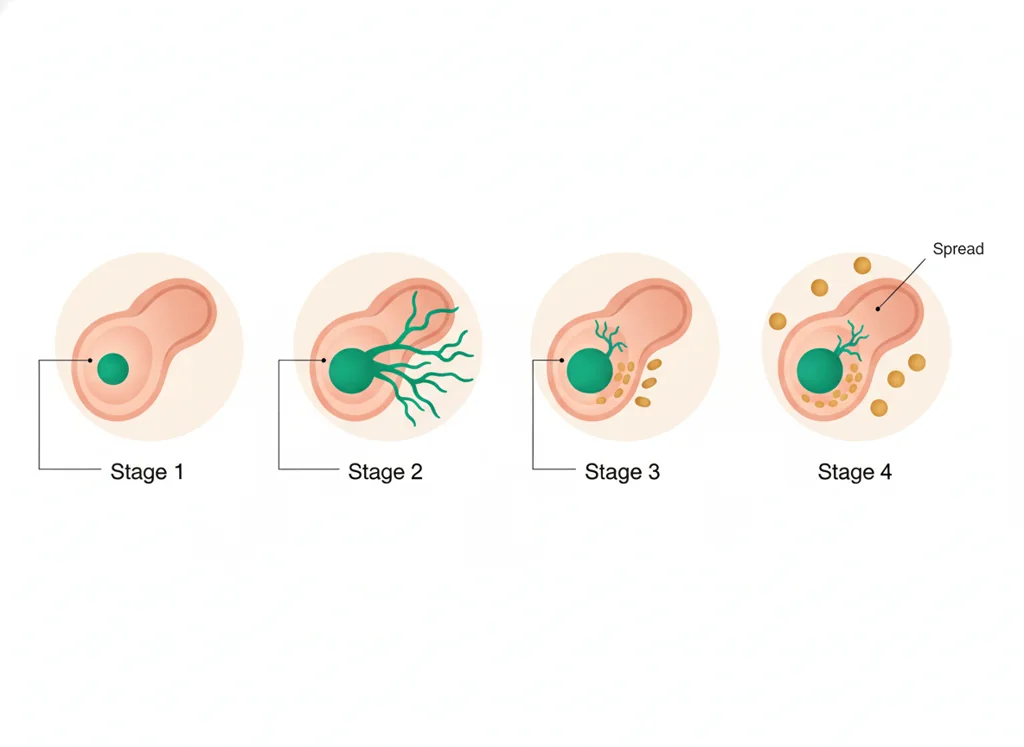
- • staging: Classifying how far a has grown and spread, which guides treatment choices and predicts likely outcomes.
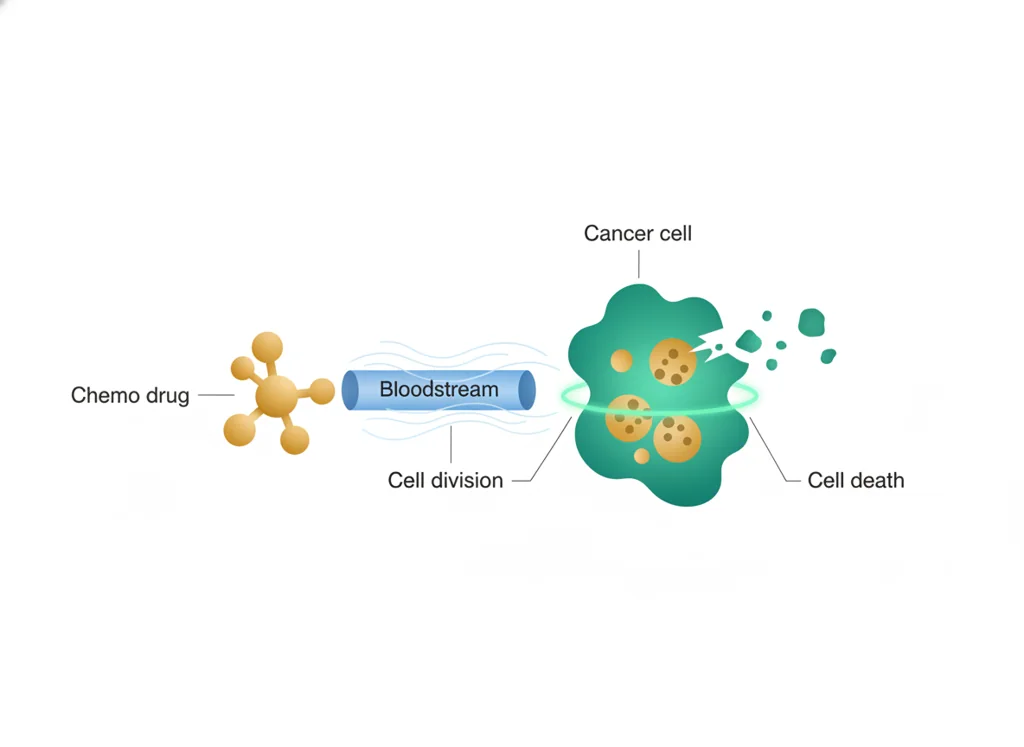
- • : Treatment that uses powerful drugs to kill rapidly dividing cells throughout the body, though it can also harm some fast-growing healthy cells.
- • radiation: Energy that travels as waves or particles; in medicine it can image inside the body or destroy harmful cells like .
- • : A treatment that attacks specific molecules cancer cells rely on, harming those cells while sparing more healthy cells than older .
- • : Programmed, controlled cell death that the body uses on purpose, including to clear the seam between two tissues during .
- • : An unintended effect of a medicine or treatment that happens in addition to its intended benefit, ranging from mild to serious.
Use it now: Choose one decision option. Cite E1 and E3, then explain how the rule connects the evidence to your choice. This is thinking practice for the one turn-in named under Turn in, not a second submission.
Go further, optional: The source links below are optional enrichment. Every fact required for today's local evidence decision appears in this lesson package.
A defensible biomedical decision separates scientific evidence from value judgments, identifies who may benefit or be burdened, and states the uncertainty and tradeoffs that remain.
Limit: Scientific evidence can inform the options and likely consequences, but it cannot choose a single value-neutral answer.
Use science to estimate consequences, then state the value judgment and tradeoff that determine the decision.
Limit: A review-board model organizes reasoning but does not make one ethical principle automatically outweigh every other principle.
You can state who controls access to experimental treatments and why.
Limit: E3 defines the classroom product or success criterion. It is not independent scientific evidence and cannot justify a clinical or causal claim.
Today's decision · Simulated classroom evidence scenario
Your role: medical interventions team member
Decision: Your team must decide what the evidence from trial-access debate supports before submitting the exit response named on today's page.
- • Argue the case by weighing this patient's autonomy against the of everyone still waiting behind the trial.
- • Give the patient the Phase I drug, since someone with months to live has nothing left to lose.
- • Wait on the call until testing beyond Phase I shows whether this drug does anything at all against the patient's .
Response: State one choice, cite at least two evidence IDs, explain the rule that connects them, and add one limitation. Use it inside the one turn-in named under Turn in; it is not a separate submission.
Claim ceiling: Today's evidence supports a classroom claim about trial-access debate. It cannot prove causation, diagnose a real patient, or justify action outside this room.
Reason for review: Your team must decide what the evidence from trial-access debate supports before submitting the exit response named on today's page.
Context: Clinical trials protect the many by slowing access for the few, so every access decision trades one person's hope against everyone's .
- • T1: Read the practice briefing on this page and highlight one fact for and one against expanded early access. Practice briefing: a patient with months to live asks for a drug that has finished its Phase 1 trial but not the trials that show whether it works; the manufacturer may say yes or no; the oncologist worries about side effects nobody has measured yet; the trial's enrolled patients need the study to finish; the insurer will not pay for an unproven drug.
- • T2: Pick a stakeholder role: patient, oncologist, drug maker, or insurer, and write your opening claim in one sentence.
- • T3: List two pieces of evidence that support your claim using the terms clinical trial and .
- • T4: Trade claims with a partner role and write one respectful rebuttal to their strongest point.
- • T5: Vote on the class position and record your final stance plus the reason you would give a patient.
- • E1: A defensible biomedical decision separates scientific evidence from value judgments, identifies who may benefit or be burdened, and states the uncertainty and tradeoffs that remain.
- • E2: Use science to estimate consequences, then state the value judgment and tradeoff that determine the decision.
- • E3: You can state who controls access to experimental treatments and why.
Measurements: Use only the measurements, units, graph, or counts supplied in today's task. No additional patient measurement is implied.
Figure finding: Four boxes labeled patient, oncologist, insurer and drug maker around an empty dashed box that asks who decides, beside a three-rung ladder labeled Phase 1, Phase 2 and Phase 3 with an empty asks line at each rung and an arrow up the ladder.
Uncertainty: This is a composite classroom scenario. Missing history, measurements, or confirmation tests remain unknown and limit the conclusion.
Students often think if a patient is dying anyway, there is no real downside to letting them try any experimental drug. The trap: That skips the fact that an unproven drug can cause a faster, more painful death or use up the patient's last good weeks, and a bad early result can also shut down the trial for the thousands of patients waiting behind them, so the choice is never risk-free.
- CER:
- Claim, Evidence, Reasoning: make a claim, back it with evidence, explain your reasoning.
- SOP:
- Standard Operating Procedure, the exact steps to follow (especially in a lab).
- Tracker:
- Your PLTW progress log where you record completed evidence.
- myPLTW:
- The PLTW course site where you do the online activities. Find it in Clever with your Microsoft sign-in, right next to Schoology.
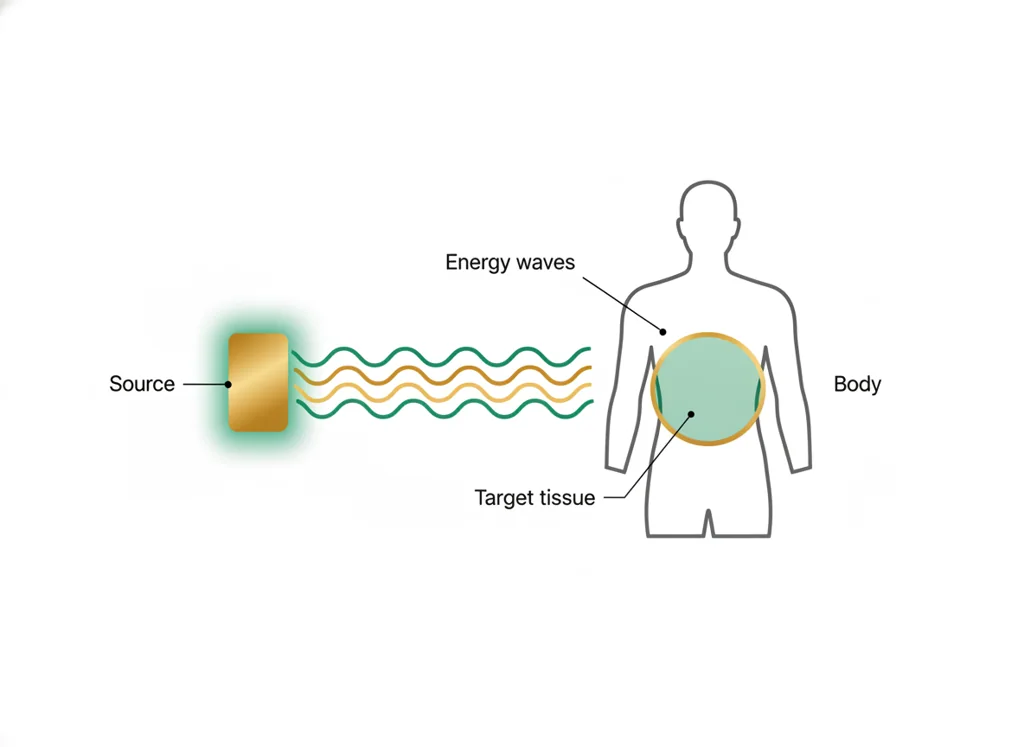
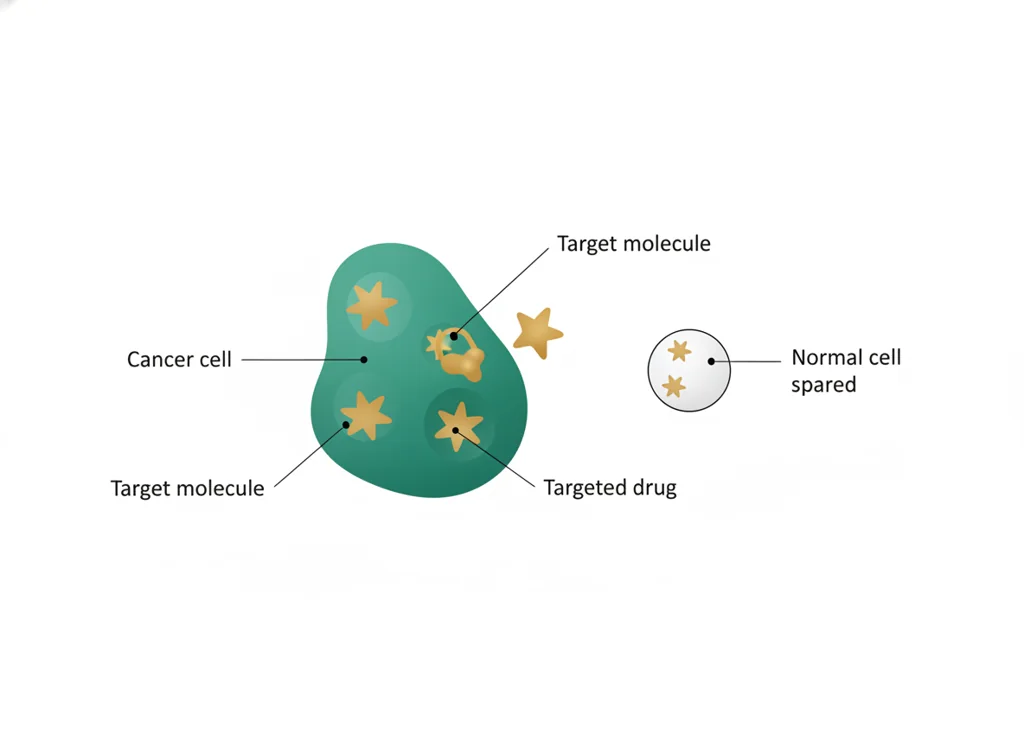
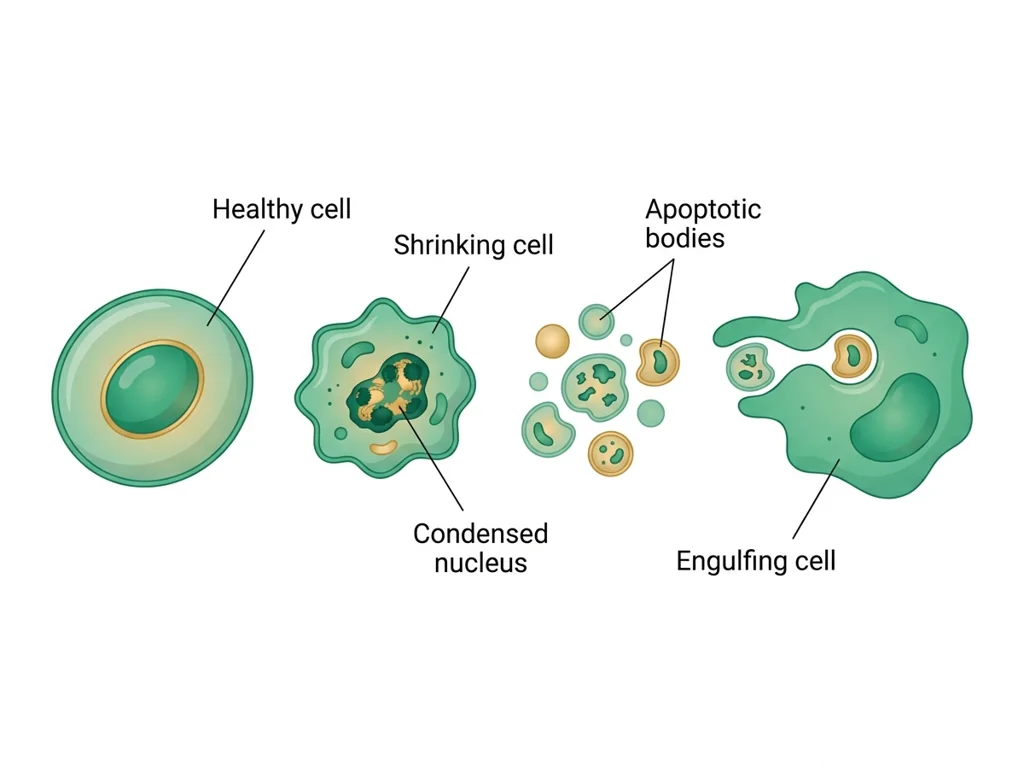
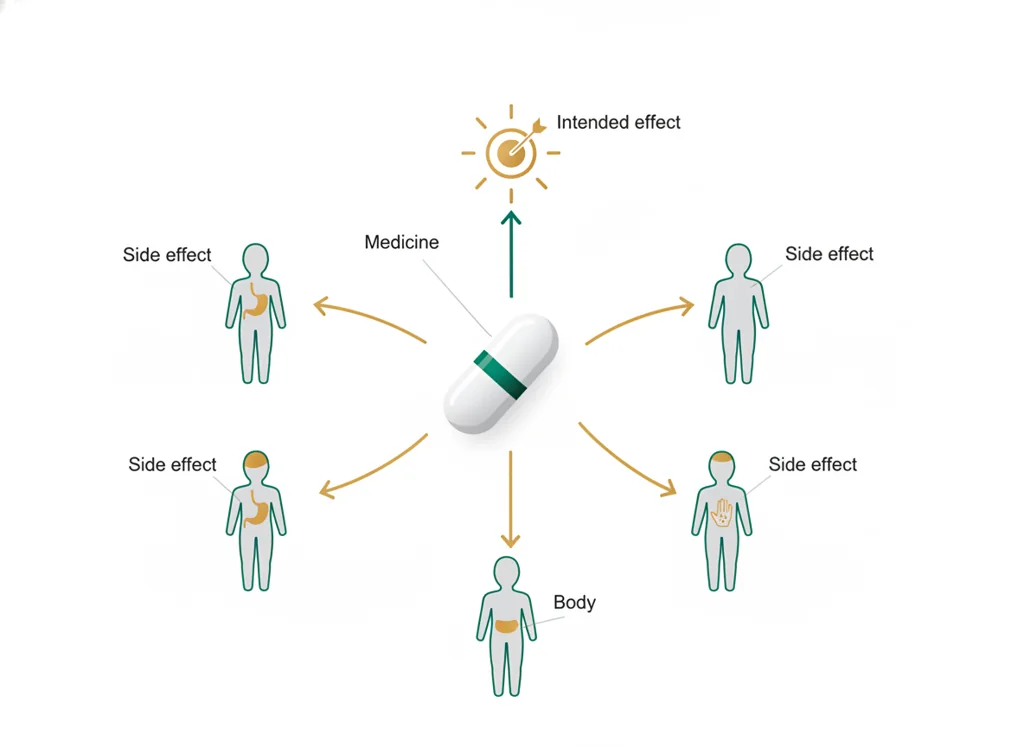
Tap the speaker to hear a term. Add two of these to your notebook glossary with a definition and an example in your own words.
Pick just 2 or 3 words from today and make them yours: write what each one means in your own words, name the context clue or evidence that helped, then give one example from what you actually did in Trial-access debate. Try your own words first; the glossary is there if you get stuck. This is voluntary and counts as extra credit, so keep it short.
Saved on this device. Show Mr. Mendoza or add these to your notebook glossary to claim the extra credit.
Part 2 of 4 · Directions in plain English▸
2.1 Open your materials
2.2 Start the work
Read the practice briefing on this page and highlight one fact for and one against expanded early access. Practice briefing: a patient with months to live asks for a drug that has finished its Phase 1 safety trial but not the trials that show whether it works; the manufacturer may say yes or no; the oncologist worries about side effects nobody has measured yet; the trial's enrolled patients need the study to finish; the insurer will not pay for an unproven drug.
Show all 5 required steps
- Read the practice briefing on this page and highlight one fact for and one against expanded early access. Practice briefing: a patient with months to live asks for a drug that has finished its Phase 1 safety trial but not the trials that show whether it works; the manufacturer may say yes or no; the oncologist worries about side effects nobody has measured yet; the trial's enrolled patients need the study to finish; the insurer will not pay for an unproven drug.
- Pick a stakeholder role: patient, oncologist, drug maker, or insurer, and write your opening claim in one sentence.
- List two pieces of evidence that support your claim using the terms clinical trial and side effect.
- Trade claims with a partner role and write one respectful rebuttal to their strongest point.
- Vote on the class position and record your final stance plus the reason you would give a patient.
Lost your place? Find your stakeholder role (patient, oncologist, drug maker, or insurer) and your one-sentence opening claim, then jump to writing your two pieces of evidence using the terms clinical trial and side effect.
- 0-8Silent read of the practice briefing on this page; highlight one pro, one con
- 8-15Choose stakeholder role; draft opening claim sentence
- 15-30Build evidence list (2 facts using required vocabulary)
- 30-50Pair debate: swap claims, write rebuttal
- 50-65Class vote and full-group discussion of strongest arguments
- 65-80Write final stance + patient-facing reason; exit ticket
- • Every approved drug began as an experiment someone had to decide was worth the risk.
- • Today you will step into that decision from four different stakeholder angles.
- • Your job is to argue a defensible position, not to find the right answer, because there may not be one.
- • By the end you will have practiced the claim-evidence-rebuttal structure you will use on the WebXam.
PLTW connection and today's work
Read Activity 3.4.3 Clinical Trials in myPLTW (Lesson 3.4 Building a Better Cancer Treatment) for how trial phases decide who can get a new drug, and review the CER rubric. The rest of Lesson 3.4 comes later in the unit.
Today's stopping point: Cancer-launch morphology benchmarks should be green; this debate opens the cancer-treatment unit.
PLTW activity titles identify the course connection. If your account will not open, use the posted materials for today and tell Mr. Mendoza. Do not mark an online activity complete unless you completed it.
Use the turn-in directions in Part 4 of this page. Do not create a second submission unless your teacher asks for one.
Show another explanation or a smaller first step
Need help? Choose a starting point
Part 3 of 4 · Worked example▸
This is a parallel case, not your own. Read it for the order of the work, then do your own in Part 4.
Parallel case (not today's prompt): A 12-year-old is the only close tissue match to donate a kidney to a sibling in kidney failure. The child says yes, but a minor cannot legally give full informed consent. Should the parents, the transplant surgeon, a hospital ethics committee, or the child have the final say on whether the donation happens?
Claim: A hospital ethics committee, not the parents or the surgeon alone, should have the final say on whether a minor donates a kidney to a sibling, with the child given a real chance to refuse.
Evidence: Living kidney donation is a surgery a healthy person does not medically need, and it carries real risks such as bleeding, infection, and the loss of one of two working kidneys for life. A 12-year-old cannot legally give informed consent, so someone else must decide for them. Parents have a clear interest in saving the sick child, which can pull them toward saying yes even when it is not in the donor child's best interest. For this reason, most transplant centers require a separate donor advocate and review by an independent ethics committee before a minor is allowed to donate, and courts have stepped in when a family and a hospital disagreed.
Reasoning: The person facing the risk of surgery is the donor child, but that child cannot legally weigh those risks alone, so the decision has to be shared. Handing the final say to the parents alone creates a conflict of interest, because they are also trying to save their other child, and handing it to the surgeon alone puts one person in charge of a life-altering choice for a healthy patient. An independent ethics committee is built to check exactly this kind of pressure: it can confirm the medical facts, protect the donor child's right to say no, and make sure the decision serves the donor and not only the sibling in need. That is why the committee, with the child's voice included, should hold the final say.
This model shows the level of evidence and organization needed to complete: Models the exact CER deliverable (Claim, Evidence, Reasoning) on a parallel bioethics access case so students can copy the structure and depth, not the answer: a single-sentence claim naming who should decide, evidence drawn from how the medical system actually handles the case, and reasoning that ties the evidence back to the claim.
- Name the prompt or task.
- Answer it directly with the key evidence.
- Check that the response matches the requested format.
Keep the structure. Replace the question, facts, measurements, and evidence. Then recheck units, vocabulary, and whether the conclusion goes beyond the evidence.
Also due today: Record the class vote and your final stance, and submit the exit ticket in Schoology before leaving class.
A review board sorts scientific evidence, stakeholder needs, possible benefits, possible burdens, and uncertainty before choosing a policy.
- Which statements are scientific evidence?
- Which statements express a value or priority?
- Who receives the benefit and who carries the burden?
Use science to estimate consequences, then state the value judgment and tradeoff that determine the decision.
A review-board model organizes reasoning but does not make one ethical principle automatically outweigh every other principle.
- • Evidence cards map to source-backed findings.
- • Stakeholder cards map to affected people and priorities.
- • The recommendation maps to an explicit tradeoff with a named uncertainty.
Part 4 of 4 · Your work▸
Check your work before submitting
- You'll be able to state who controls access to experimental cancer treatments and why.
- You'll be able to defend a position using clinical-trial evidence and counterargument.
4.1 Turn in your work
DueCheck the Schoology assignment for this day- Hand in
- One-sentence final stance plus the patient-facing reason you would give for your position.
How to submit and name your file
Submit as one PDF in Schoology.
In Schoology, open your course and the assignment for this lesson. Attach your file, select Submit, and check that it appears in the submission.
PDF upload helpYou get two school days for every day you were absent, so this deadline moves with you.
Today's lesson is in Schoology
Each school day has one lesson page in Schoology that holds everything for the day: the goal, the story so far, every table and data value, the numbered steps, and what to turn in. Open it first and work from it. The other rows for this day, if any, are the score line for a paper quiz or test and the John Carroll debate item; they do not add work. Check Schoology for each deadline.
- Today's Lesson · Tue 11/17 · Wk13 · Choose Mike's drug and draw the cluster tree, then sort cancer risk factors(today's lesson page: the goal, the data, the steps, and what to turn in are all on it)
Link will not open? Open Schoology, choose your course and section, and find the title shown above.
- CompleteEvery required part of the artifact is present, nothing left blank.
- AccurateThe science and the data are correct and match the evidence.
- Scientific reasoningYou explain your claim with evidence and reasoning (CER), not just an answer.
- Professional communicationClear, organized, labeled, and written the way a clinician or scientist would.
- SubmittedGo to Schoology to turn this in. Submit one PDF. Schoology attaches your name to your upload; on the page itself, write your period and code. Name the file: FirstName LastName - Assignment Title - YYYY-MM-DD.pdf. If you cannot get in, see Mr. Mendoza. Do not skip the work.
How this lesson connects
Keep using what you learned last class: Malignant cells lose their normal shape and break through tissue boundaries, so a pathologist can read invasion and disorganization on a slide to judge whether a cancer can metastasize and how dangerous it is. Today: Clinical trials gate access to unproven drugs so that a whole population is not exposed to a treatment before its risks are known, which forces hard trade-offs between one patient's autonomy and everyone else's safety.
Practice: try a question, then check your answer▸
Claim ceiling for this check: Today's evidence supports a classroom claim about trial-access debate. It cannot prove causation, diagnose a real patient, or justify action outside this room.
A terminal patient qualifies for a right-to-try request, but the drug maker still refuses. Is the company breaking the law, and give the reason.
Write an answer and pick a confidence to unlock the key.
Fast retrieval with instant answers, not the commit-then-reveal check above. Try each from memory first: write what you remember about the earlier units, then check yourself here.
Missed class or ready for more?▸
Optional practice for this unit's lab skills. Nothing in it is due today. This lesson has more than one, and they cover different skills.
What today's skills lead to. These are real health-science careers this course builds toward. Tap one to see, on the US Department of Labor's O*NET site, what the job actually involves, what it pays, and how fast it is growing.
At home: write your stance from one stakeholder role in the practice briefing, then write one rebuttal to the strongest opposing point you can think of, and submit both on your exit ticket as one PDF in Schoology.
NCI: Clinical Trials BasicsSubmit as one PDF in Schoology.
Class still runs. Complete today's work as this page describes (it is self-guided). Need the concept taught without a teacher? Use this authoritative explainer:
National Cancer Institute: Types of cancer treatmentThe optional extra-credit track is open. Complete reserved-unit work from home, including virtual labs, for extra credit. Each item shows its correct submission route.
Open the extra-credit trackSources: slides, readings, and resources▸
The deck carries the prior idea forward, lets you inspect an analogy, maps the rule to biology, and ends with the same evidence decision and exit ticket used on this page.
Classroom documents for this lesson are posted in Schoology. Open Clever, then Schoology, and find each one by the name shown on its card.
Open this when the class reaches this activity and use it to complete the required lesson artifact.
Use this if you were absent, got stuck, or need another pass before you submit the lesson artifact.
Sign in to Clever with your district Microsoft account to open Schoology or myPLTW. Follow today's posted steps. If myPLTW will not open, use the posted alternative and tell Mr. Mendoza. Turn in your completed work through the Schoology assignment.
This week
My Progress dashboard