
Protocol and data stations
This page has four parts, in the order you use them. Part 1 is what you need to know. Part 2 says what to do, in plain English. Part 3 shows the work done once on a case that is not yours. Part 4 is your own work and where to turn it in.
Open your materials, follow the steps, then turn in your work.
Rotate through hands-on stations modeling protein purification, HLA matching, and tissue-engineering data.
Optional: listen or watch a unit review▸
Part 1 of 4 · Background and definitions▸
💡 Big idea: Each technique answers one narrow question, so only reading them together produces a decision that is not accidentally resting on the wrong evidence.
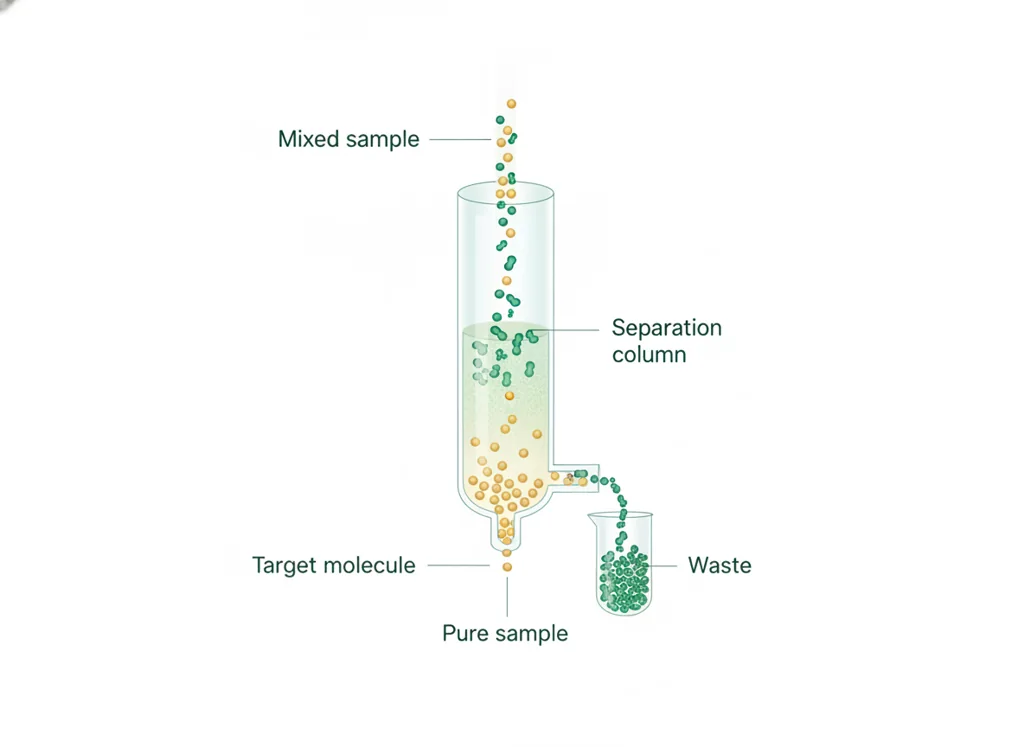
- • separates proteins by binding affinity; target elutes in a specific .
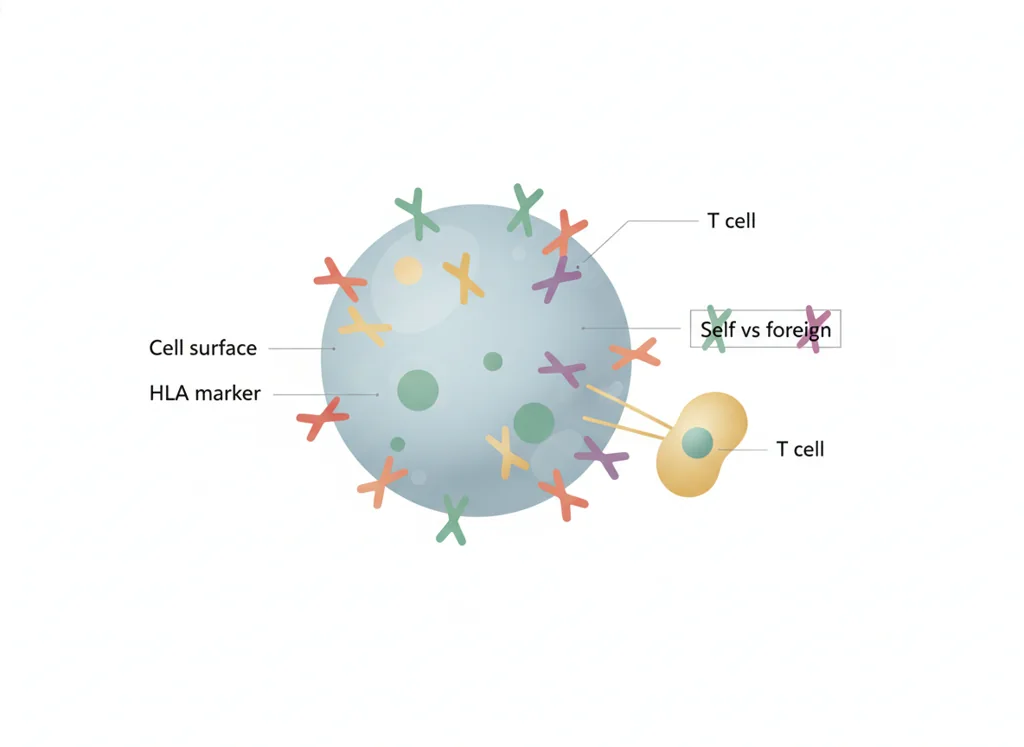
- • An is read positive or negative, not scored. A positive crossmatch means the recipient already carries antibodies against that donor and predicts rapid , which usually disqualifies the donor.
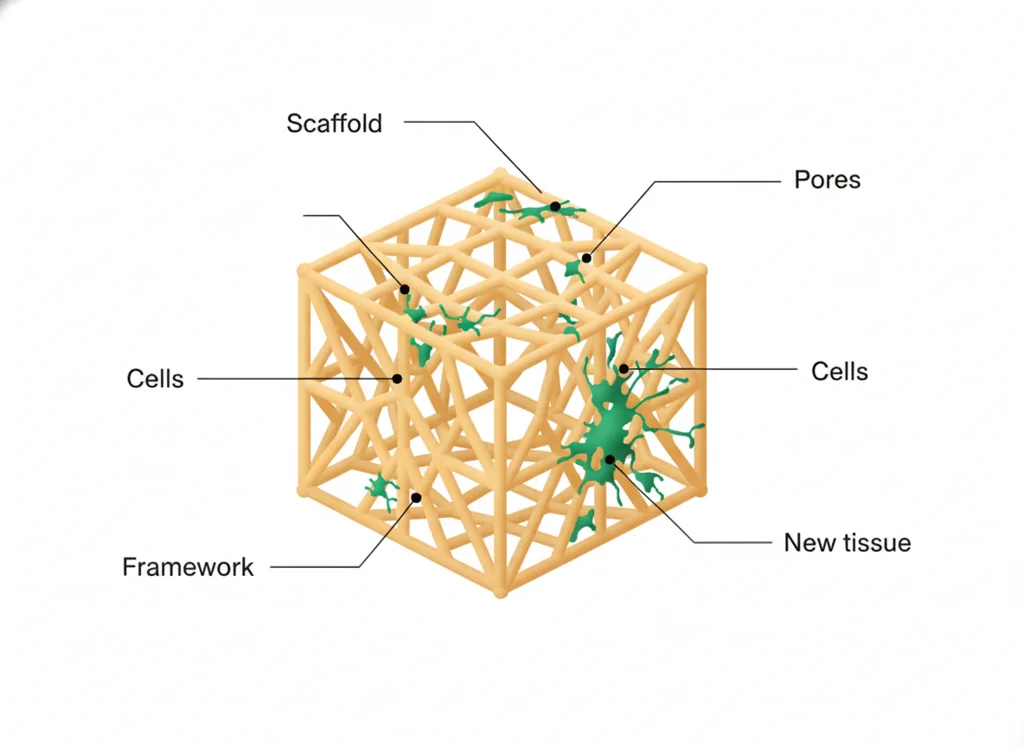
- • Scaffold material and geometry influence how well stem cells attach and grow.
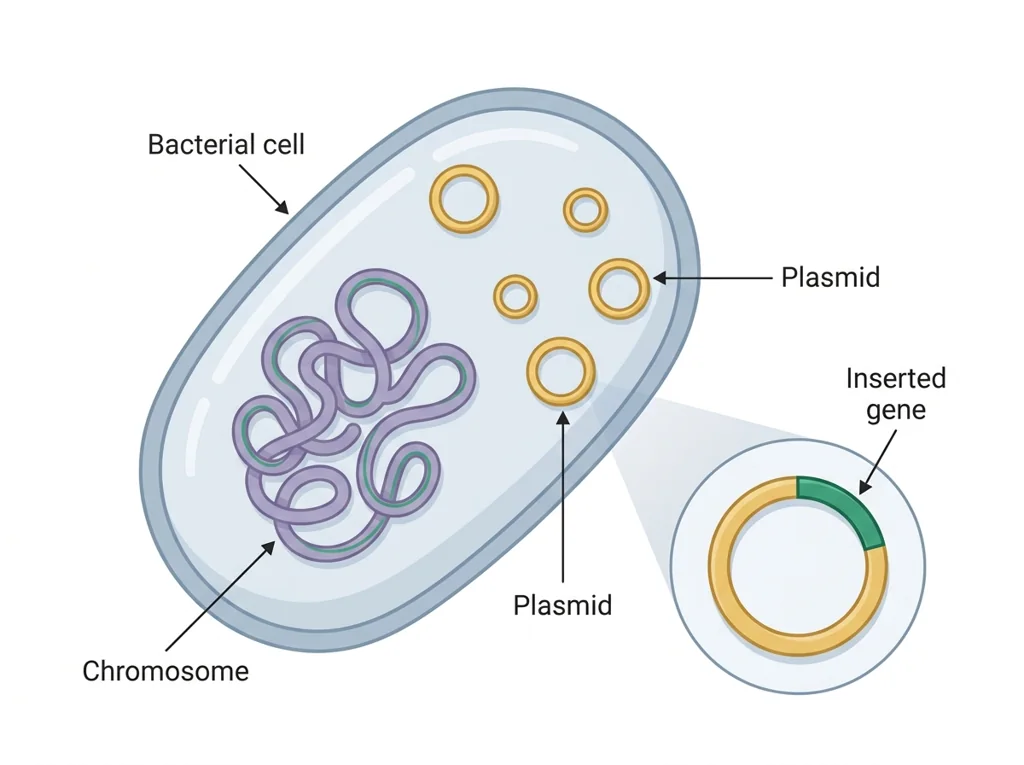
Because the genetic code is shared, inserting a human gene on a turns a host cell into a manufacturer of the human .
Each technique answers one narrow question, so only reading them together produces a decision that is not accidentally resting on the wrong evidence.
Driving question: , , and scaffold growth data all sit on your bench. What decision needs all three?
What you already know: Because the genetic code is shared, inserting a human gene on a turns a host cell into a manufacturer of the human .
New idea: Each technique answers one narrow question, so only reading them together produces a decision that is not accidentally resting on the wrong evidence.
Visual or model: No figure is attached to this lesson. The readings, the worked example and E1 to E3 carry the evidence.
- Observe or measure the relevant feature in today's lesson.
- Organize the observation with a stable evidence ID.
- Apply this rule: Stored information can be copied, read, and converted into a functional product.
- Choose the option the evidence supports and state the limit of the conclusion.
Real biomedical example: , , and scaffold growth data all sit on your bench. What decision needs all three?
What the evidence supports: E1 to E3 support the daily take-home when the response meets the stated success criteria.
What it cannot prove: The package does not support claims beyond this lesson's or any real patient diagnosis.
- • : A small, circular piece of that lives apart from a bacterium's main and is used in the lab to carry a chosen gene into a cell.
- • : The process of separating a target molecule, such as a or , away from everything else in a mixture to get a clean sample.
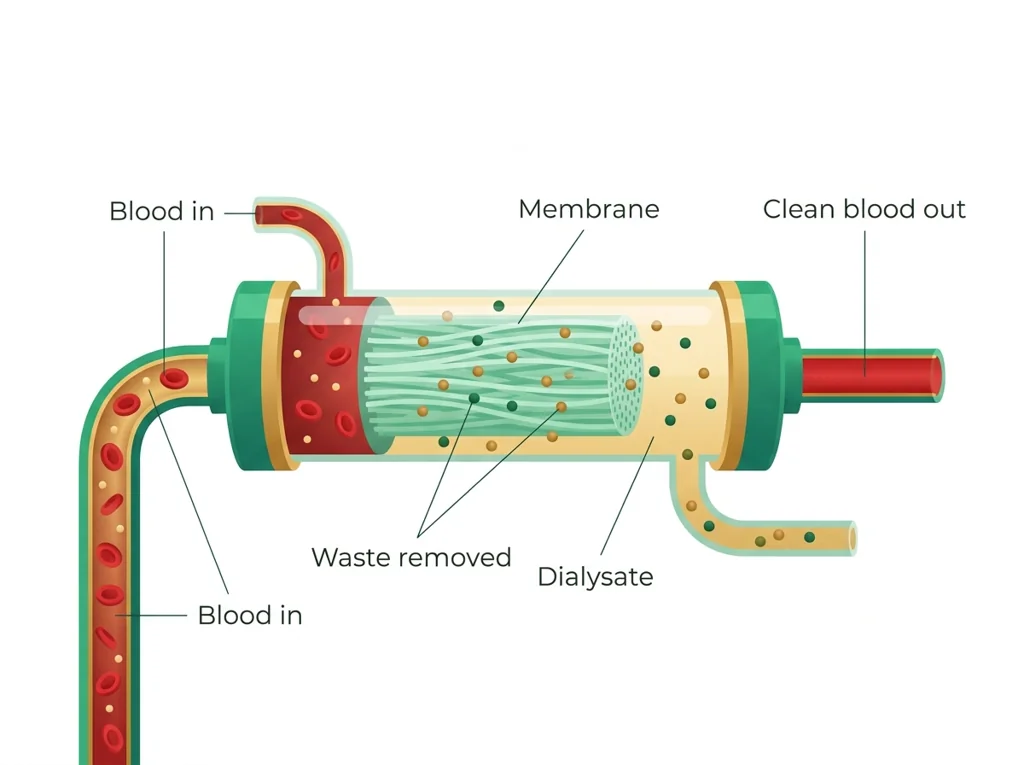
- • : A process that filters waste and excess fluid from blood across a semipermeable membrane, used clinically when the kidneys cannot do this job.
- • : Human antigens, proteins on cell surfaces that mark cells as self, helping the immune system spot foreign cells and guiding transplant matching.
- • scaffold: A supportive framework, such as an engineered structure in repair or a base molecule in chemistry, that other parts build onto or grow within.
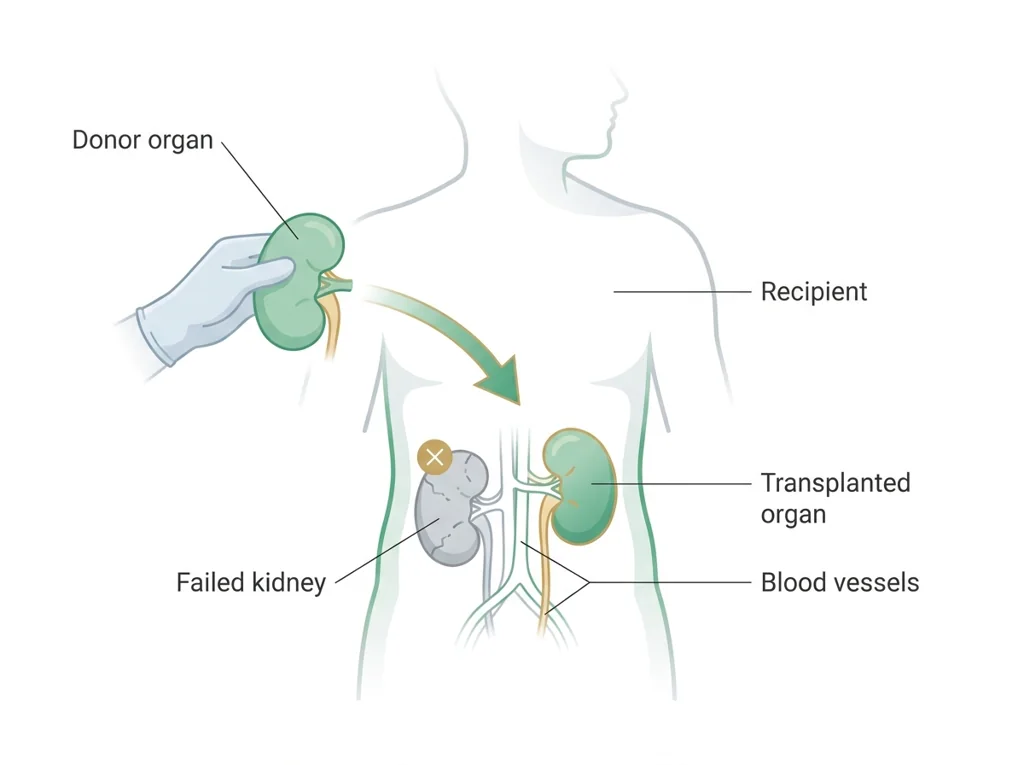
- • transplant: The transfer of a healthy organ, , or cells from a donor into a patient to replace a part that has failed.
Use it now: Choose one decision option. Cite E1 and E3, then explain how the rule connects the evidence to your choice. This is thinking practice for the one turn-in named under Turn in, not a second submission.
Go further, optional: The source links below are optional enrichment. Every fact required for today's local evidence decision appears in this lesson package.
Results from different biomedical methods answer different questions, so a defensible synthesis keeps each method's controls and limits visible before combining the evidence.
Limit: Complementary classroom stations do not reproduce the validation, clinical context, or quality systems required for a patient decision.
Stored information can be copied, read, and converted into a functional product.
Limit: Genes are regulated biological sequences, not conscious instructions, and one gene rarely determines a whole trait alone.
You can collect and record data from each Unit 4 station.
Limit: E3 defines the classroom product or success criterion. It is not independent scientific evidence and cannot justify a clinical or causal claim.
Today's decision · Simulated classroom evidence scenario
Your role: medical interventions team member
Decision: Your team must decide what the evidence from today's lesson supports before submitting the labeled and result claim named on today's page.
- • Combine the three station results into one neat conclusion, since a clean summary shows you understood the data.
- • Hold any patient claim, because the , , and scaffold stations lack the validation real care requires.
- • Record each station's controls and limits with its data, since the three methods answer three different questions.
Response: State one choice, cite at least two evidence IDs, explain the rule that connects them, and add one limitation. Use it inside the one turn-in named under Turn in; it is not a separate submission.
Claim ceiling: Today's evidence supports a classroom claim about today's lesson. It cannot prove causation, diagnose a real patient, or justify action outside this room.
Reason for review: Your team must decide what the evidence from today's lesson supports before submitting the labeled and result claim named on today's page.
Context: Different lab methods answer different questions, so a clinical or research decision is built by reading several data types together rather than trusting whichever one is most familiar.
- • T1: Open the practice station data on this page; each station has its own table.
- • T2: Station 1: read the practice column fractions and record which fractions hold the target .
- • T3: Station 2: read each as positive or negative, and say what each result means for that pair.
- • T4: Station 3: compare cell growth on the three practice scaffolds.
- • T5: Submit the completed three-station table.
- • E1: Results from different biomedical methods answer different questions, so a defensible synthesis keeps each method's controls and limits visible before combining the evidence.
- • E2: Stored information can be copied, read, and converted into a functional product.
- • E3: You can collect and record data from each Unit 4 station.
Measurements: Use only the measurements, units, graph, or counts supplied in today's task. No additional patient measurement is implied.
Uncertainty: This is a composite classroom scenario. Missing history, measurements, or confirmation tests remain unknown and limit the conclusion.
For a linear , y = mx + b. To estimate an unknown concentration, use x = (y - b) / m.
A is y = 0.40x + 0.10. An unknown signal is 0.90. x = (0.90 - 0.10) / 0.40 = 2.0 concentration units.
Signal units belong on y. Concentration units belong on x. Confirm the unknown falls inside the standards before interpreting it.
Use the equation or graph supplied today to estimate one unknown. Show the substitution, concentration unit, and range check.
Students often think the station with the cleanest-looking data as the one that settles the decision. The trap: Clean data on the wrong question is still the wrong question. A sharp peak says the worked; it says nothing about immune compatibility. Reading the three together is the skill, not picking a favourite.
- CER:
- Claim, Evidence, Reasoning: make a claim, back it with evidence, explain your reasoning.
- SOP:
- Standard Operating Procedure, the exact steps to follow (especially in a lab).
- Tracker:
- Your PLTW progress log where you record completed evidence.
- myPLTW:
- The PLTW course site where you do the online activities. Find it in Clever with your Microsoft sign-in, right next to Schoology.
Tap the speaker to hear a term. Add two of these to your notebook glossary with a definition and an example in your own words.
Pick just 2 or 3 words from today and make them yours: write what each one means in your own words, name the context clue or evidence that helped, then give one example from what you actually did in Protocol and data stations. Try your own words first; the glossary is there if you get stuck. This is voluntary and counts as extra credit, so keep it short.
Saved on this device. Show Mr. Mendoza or add these to your notebook glossary to claim the extra credit.
Part 2 of 4 · Directions in plain English▸
2.1 Open your materials
Use the materials named in the first step below. Open lesson resources.
Practice station data (made-up numbers for practice, not from any patient or class run)
Station 1: practice affinity column, eight fractions
| Fraction | Buffer running when it was collected | Protein signal (absorbance at 280 nm) | Green glow under UV |
|---|---|---|---|
| 1 | Load (flow-through) | 0.85 | No |
| 2 | Load (flow-through) | 0.62 | No |
| 3 | Wash | 0.20 | No |
| 4 | Wash | 0.05 | No |
| 5 | Elution | 0.08 | No |
| 6 | Elution | 0.74 | Yes, bright |
| 7 | Elution | 0.41 | Yes, faint |
| 8 | Elution | 0.06 | No |
Station 2: practice recipient T-4 and three possible kidney donors
| Practice donor | HLA match count (out of 6) | Crossmatch result |
|---|---|---|
| D-1 | 4 of 6 | Negative |
| D-2 | 6 of 6 | Positive |
| D-3 | 2 of 6 | Negative |
- The match count compares HLA types (HLA-A, -B and -DR, two each). The crossmatch mixes T-4's serum with the donor's cells and is read positive or negative.
Station 3: three practice scaffolds seeded with the same number of cells
| Practice scaffold | Structure | Pore size (micrometers) | Surface covered by cells at day 7 |
|---|---|---|---|
| S-1 | Dense fiber mesh | 20 | 38 percent |
| S-2 | Porous fiber mesh | 150 | 71 percent |
| S-3 | Porous hydrogel | 300 | 55 percent, cells mostly at the surface |
2.2 Start the work
Open the practice station data on this page; each station has its own table.
Show all 5 required steps
- Open the practice station data on this page; each station has its own table.
- Station 1: read the practice column fractions and record which fractions hold the target protein.
- Station 2: read each HLA crossmatch as positive or negative, and say what each result means for that pair.
- Station 3: compare cell growth on the three practice scaffolds.
- Submit the completed three-station table.
Lost your place? Open the practice station data on this page. Complete whichever station you are working on, record the numbers, then move to the next.
- 0-8Read the practice station data on this page; identify your starting station
- 8-28Station 1 (practice column data): record data and the target fractions
- 28-48Station 2 ( matching): record each match count, read each positive or negative
- 48-65Station 3 (scaffold comparison): note cell-growth differences
- 65-75Complete shared three-station
- 75-80Submit table; flag any unclear data for follow-up
- • Unit 4 connects three distinct technologies: , transplant matching, and .
- • Today you will touch all three in one block so you can see how they relate.
- • The stations are paper data stations: the practice data for all three is on this page, so treat each table like your bench.
- • Accurate data recording is a Lab SOPs skill tested directly on your end-of-course WebXam for this class.
PLTW connection and today's work
Open the three station activities in myPLTW: Activity 4.1.3 Protein Purification, Activity 4.3.2 Finding a Match, and Activity 4.4.1 Replacement Parts. Rotate through all three.
Today's stopping point: Recombinant DNA diagram should be done; three-station data table due today.
PLTW activity titles identify the course connection. If your account will not open, use the posted materials for today and tell Mr. Mendoza. Do not mark an online activity complete unless you completed it.
Course connection
- Activity 4.1.3 Protein Purification
- Activity 4.3.2 Finding a Match
- Activity 4.4.1 Replacement Parts
Use the turn-in directions in Part 4 of this page. Do not create a second submission unless your teacher asks for one.
Show another explanation or a smaller first step
Need help? Choose a starting point
Finish the assigned lab safely before starting extra practice.
Part 3 of 4 · Worked example▸
This is a parallel case, not your own. Read it for the order of the work, then do your own in Part 4.
Three-station data table on a parallel practice set (made-up numbers, not today's stations):
- Purification station, practice column for a different protein, six fractions: signal 0.70, 0.45, 0.10, 0.03, 0.52, 0.09. Fractions 1 and 2 are flow-through, 3 and 4 are washes, 5 and 6 are elution. Reading: the target is the protein that stayed bound and came off in the elution buffer, so fraction 5 holds it. The high signal in the flow-through is the other proteins in the mixture, not the target.
- Matching station, parallel case: a blood transfusion crossmatch. The recipient's serum was mixed with red cells from two donor units. Unit U-1: no clumping, so the crossmatch is negative and the unit can be given. Unit U-2: clumping, so the crossmatch is positive: the recipient already has antibodies against those cells, and that unit is not given. A crossmatch is read positive or negative; it is not a score. A count such as '5 of 6 HLA matches' is a match count, a different measurement.
- Scaffold station, practice: Scaffold X (fine fibers, small pores) reached 30 percent cell coverage at day 7; Scaffold Y (coarse fibers, large pores) reached 64 percent. Reading: larger pores let cells and nutrients move deeper, which fits Y's higher coverage, but one run per scaffold cannot rule out a difference in how many cells were seeded.
(Tip: write the number in every cell, even an estimate, and write the reading beside it.)
This model shows the level of evidence and organization needed to complete: Models the three-station data table on made-up practice numbers that are not today's stations: a purification column, a matching test read positive or negative, and a scaffold comparison.
- Name the variables and include units.
- Enter observations without changing the raw values.
- Check labels, calculations, and patterns before interpreting the data.
Keep the structure. Replace the question, facts, measurements, and evidence. Then recheck units, vocabulary, and whether the conclusion goes beyond the evidence.
Also due today: turns in the completed data table in Schoology under the Unit 4 Protocol and Data Stations assignment.
A library keeps a master plan protected while working copies guide production at different stations.
- Why protect the master copy?
- What information moves?
- Where can an error change the final product?
Stored information can be copied, read, and converted into a functional product.
Genes are regulated biological sequences, not conscious instructions, and one gene rarely determines a whole trait alone.
- • Master plan maps to .
- • Working copy maps to RNA.
- • Production output maps to or a regulated cell function.
Part 4 of 4 · Your work▸
Check your work before submitting
- You'll be able to collect and record data from each Unit 4 station.
- You'll be able to interpret a purification fraction, an HLA crossmatch, and a scaffold comparison.
Before lab work: read the safety rules
- All three stations are paper data stations; no chemicals or biological materials are used.
- Keep the practice data and your table side by side, and check each number against its own station's table before you move on.
4.1 Turn in your work
DueCheck the Schoology assignment for this day- Hand in
- Three-station data table: purification fraction results, each HLA crossmatch read positive or negative with what it means, and scaffold comparison notes.
How to submit and name your file
Submit as one PDF in Schoology.
In Schoology, open your course and the assignment for this lesson. Attach your file, select Submit, and check that it appears in the submission.
PDF upload helpYou get two school days for every day you were absent, so this deadline moves with you.
Today's lesson is in Schoology
Each school day has one lesson page in Schoology that holds everything for the day: the goal, the story so far, every table and data value, the numbered steps, and what to turn in. Open it first and work from it. The other rows for this day, if any, are the score line for a paper quiz or test and the John Carroll debate item; they do not add work. Check Schoology for each deadline.
- Cancer unit test: detection, risk, and prevention (paper, in class Wed 12/2)(taken on paper in class: this row holds the score, there is nothing to upload)
- Today's Lesson · Wed 12/2 · Wk15 · Cancer unit test on paper, then protein factories: make a human protein in bacteria(today's lesson page: the goal, the data, the steps, and what to turn in are all on it)
Link will not open? Open Schoology, choose your course and section, and find the title shown above.
- CompleteEvery required part of the artifact is present, nothing left blank.
- AccurateThe science and the data are correct and match the evidence.
- Scientific reasoningYou explain your claim with evidence and reasoning (CER), not just an answer.
- Professional communicationClear, organized, labeled, and written the way a clinician or scientist would.
- SubmittedGo to Schoology to turn this in. Submit one PDF. Schoology attaches your name to your upload; on the page itself, write your period and code. Name the file: FirstName LastName - Assignment Title - YYYY-MM-DD.pdf. If you cannot get in, see Mr. Mendoza. Do not skip the work.
- Error analysis and method · counts doubleName a specific limit of the method and how it moved your result, and compare what you predicted to what happened. "Human error" does not count; say what about the procedure or instrument caused it.
How this lesson connects
Keep using what you learned last class: Because the genetic code is shared, inserting a human gene on a plasmid turns a host cell into a manufacturer of the human protein. Today: Each technique answers one narrow question, so only reading them together produces a decision that is not accidentally resting on the wrong evidence.
Practice: try a question, then check your answer▸
Claim ceiling for this check: Today's evidence supports a classroom claim about today's lesson. It cannot prove causation, diagnose a real patient, or justify action outside this room.
Your target protein is pure and the scaffold grows well, but the HLA crossmatch is positive. What does the combined data support?
Write an answer and pick a confidence to unlock the key.
Fast retrieval with instant answers, not the commit-then-reveal check above. Try each from memory first: write what you remember about the earlier units, then check yourself here.
Missed class or ready for more?▸
Run this before you touch the bench. It is built from the real lab procedure, so the decisions you make here are the ones you will make with the equipment in your hands. This lesson has more than one, and they cover different skills.
I can name the procedure's purpose and the evidence I will record. I can state today's specific hazards and the control for each. If this deck does not name them, I ask Mr. Mendoza before I touch anything. My data table is ready before materials are handled.
Finish the checklist before you handle any material.
- • All three stations are paper data stations; no chemicals or biological materials are used.
- • Keep the practice data and your table side by side, and check each number against its own station's table before you move on.
- 1Before materials are handled, identify the purpose, variables or comparison, controls, measurement units, and stop-work condition.
- 2Open the practice station data on this page; each station has its own table.
- 3Station 1: read the practice column fractions and record which fractions hold the target protein.
- 4Station 2: read each HLA crossmatch as positive or negative, and say what each result means for that pair.
- 5Station 3: compare cell growth on the three practice scaffolds.
- 6Submit the completed three-station table.
- 7Record each result in the prepared table before interpreting it. Mark missing, repeated, or invalid results truthfully.
- 8Complete the named cleanup and waste route, remove PPE safely, wash hands when required, and confirm the station is ready for the next group.
| Which trial or sample this row is | What you changed on purpose | What you measured, with units | What you saw, before you explain it | Anything that could make this reading wrong |
|---|---|---|---|---|
Before the procedure, predict the result and cite the rule behind the prediction.
After the procedure, compare the result with the prediction and name one limitation or source of uncertainty.
What today's skills lead to. These are real health-science careers this course builds toward. Tap one to see, on the US Department of Labor's O*NET site, what the job actually involves, what it pays, and how fast it is growing.
At home: use the practice station data on this page to complete the three-station , then submit it.
Learn.Genetics: Gel ElectrophoresisSubmit as one PDF in Schoology.
Class still runs. Complete today's work as this page describes (it is self-guided). Need the concept taught without a teacher? Use this authoritative explainer:
MedlinePlus: Organ TransplantationThe optional extra-credit track is open. Complete reserved-unit work from home, including virtual labs, for extra credit. Each item shows its correct submission route.
Open the extra-credit trackSources: slides, readings, and resources▸
The deck carries the prior idea forward, lets you inspect an analogy, maps the rule to biology, and ends with the same evidence decision and exit ticket used on this page.
Play the cold open at the start of the unit to set the scene. Each recording is AI-generated and simulated (fictional callers, no real people or student data).
Classroom documents for this lesson are posted in Schoology. Open Clever, then Schoology, and find each one by the name shown on its card.
Use this for optional reserve or extra-credit work after the required class lesson is complete.
Use this for optional reserve or extra-credit work after the required class lesson is complete.
Use this for optional reserve or extra-credit work after the required class lesson is complete.
Sign in to Clever with your district Microsoft account to open Schoology or myPLTW. Follow today's posted steps. If myPLTW will not open, use the posted alternative and tell Mr. Mendoza. Turn in your completed work through the Schoology assignment.
This week
My Progress dashboard