
CRISPR and reproductive screening
This page has four parts, in the order you use them. Part 1 is what you need to know. Part 2 says what to do, in plain English. Part 3 shows the work done once on a case that is not yours. Part 4 is your own work and where to turn it in.
Open your materials, follow the steps, then turn in your work.
Explain how CRISPR-Cas9 edits DNA, including off-target risk, and apply it to a reproductive screening case.
Optional: listen or watch a unit review▸
Part 1 of 4 · Background and definitions▸
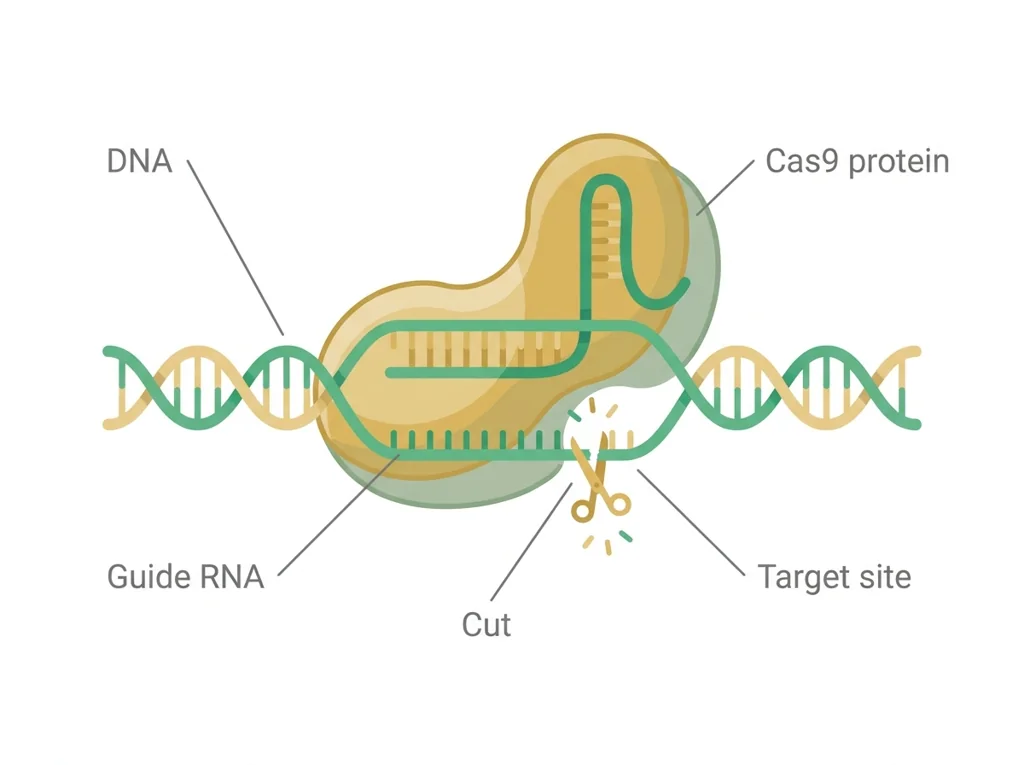
💡 Big idea: Cas9 tolerates a few mismatches between its guide RNA and the , so it can cut at a near-match elsewhere in the genome and break a gene that was keeping the cell safe.
- • uses a guide RNA to direct the Cas9 endonuclease to a specific genomic address; Cas9 cuts both strands.
- • The cell repairs the cut via NHEJ (often creating insertions/deletions) or HDR (if a repair template is supplied); HDR enables precise edits.
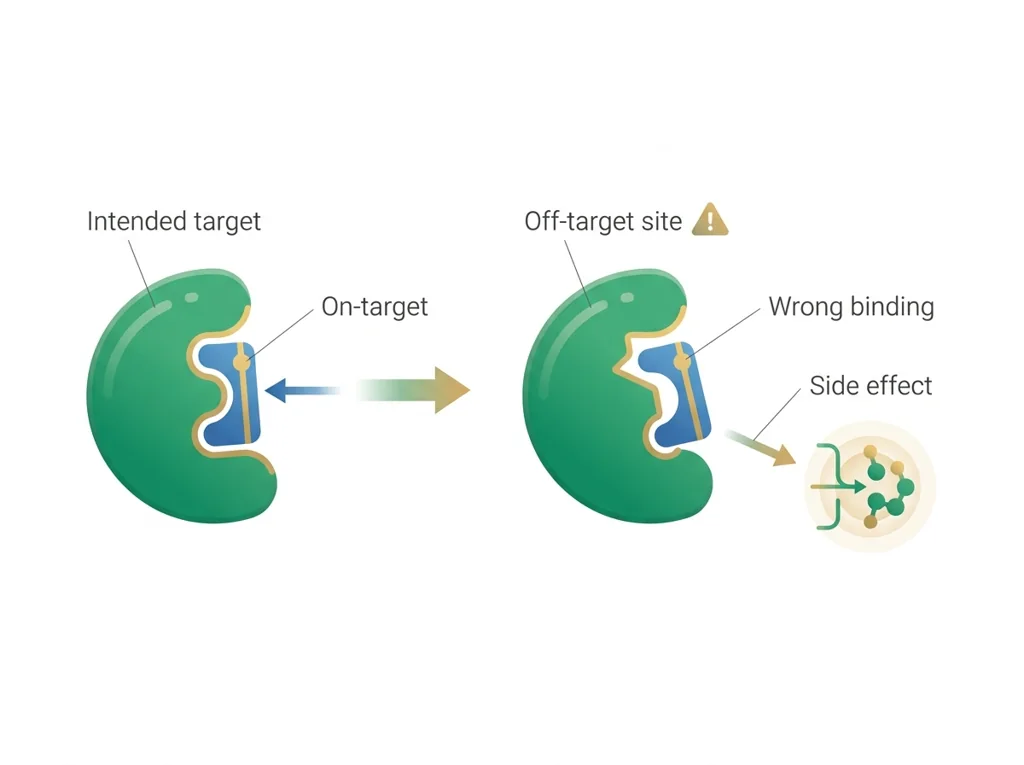
- • edits occur when the guide RNA matches non-target sequences well enough to direct a cut; this can disrupt -suppressor genes or other critical loci.
Can humans be trusted with control over genetics? And: extinction, or life without ?
Cas9 tolerates a few mismatches between its guide RNA and the , so it can cut at a near-match elsewhere in the genome and break a gene that was keeping the cell safe.
Driving question: aims its cut with a short guide RNA about 20 letters long. If the human genome has 3 billion letters, how often will that guide accidentally match the wrong spot, and what breaks when it does?
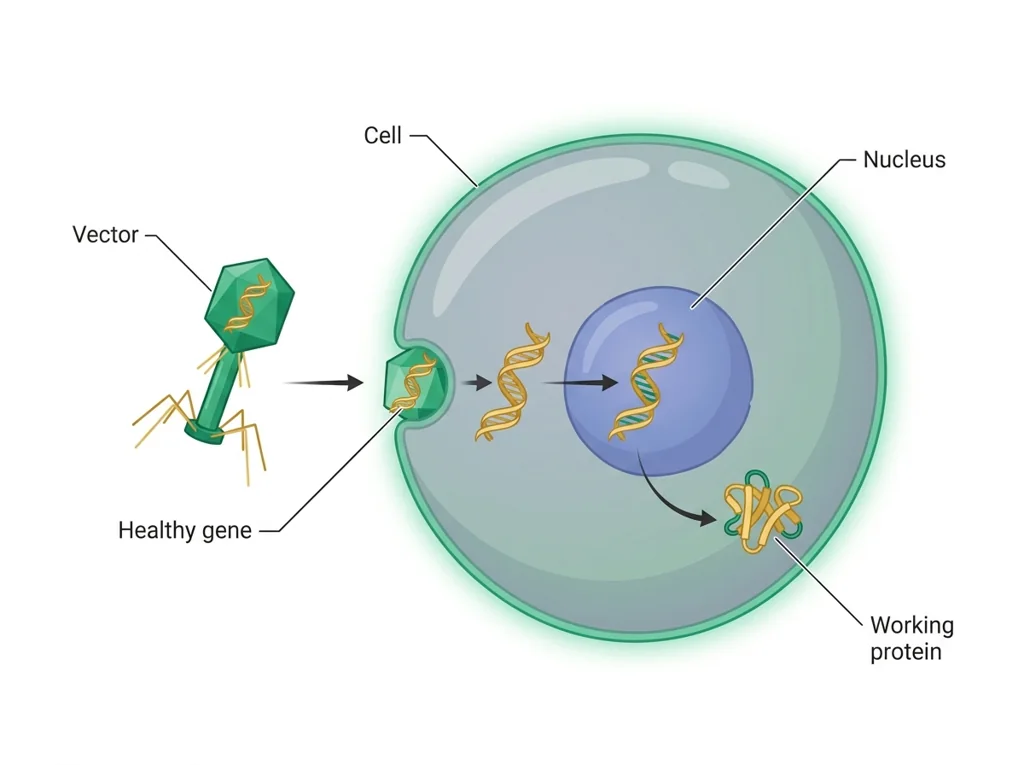
What you already know: From the class before the John Carroll debate: Engineers gut a virus of its disease genes but keep its cell-entry machinery, so the same tool that once caused infection can now deliver a cure.
New idea: Cas9 tolerates a few mismatches between its guide RNA and the , so it can cut at a near-match elsewhere in the genome and break a gene that was keeping the cell safe.
Visual or model: No figure is attached to this lesson. The readings, the worked example and E1 to E3 carry the evidence.
- Observe or measure the relevant feature in today's lesson.
- Organize the observation with a stable evidence ID.
- Apply this rule: Stored information can be copied, read, and converted into a functional product.
- Choose the option the evidence supports and state the limit of the conclusion.
Real biomedical example: aims its cut with a short guide RNA about 20 letters long. If the human genome has 3 billion letters, how often will that guide accidentally match the wrong spot, and what breaks when it does?
What the evidence supports: E1 to E3 support the daily take-home when the response meets the stated success criteria.
What it cannot prove: The package does not support claims beyond this lesson's or any real patient diagnosis.
- • : Treating disease by adding, silencing, or correcting a gene in a patient's cells.
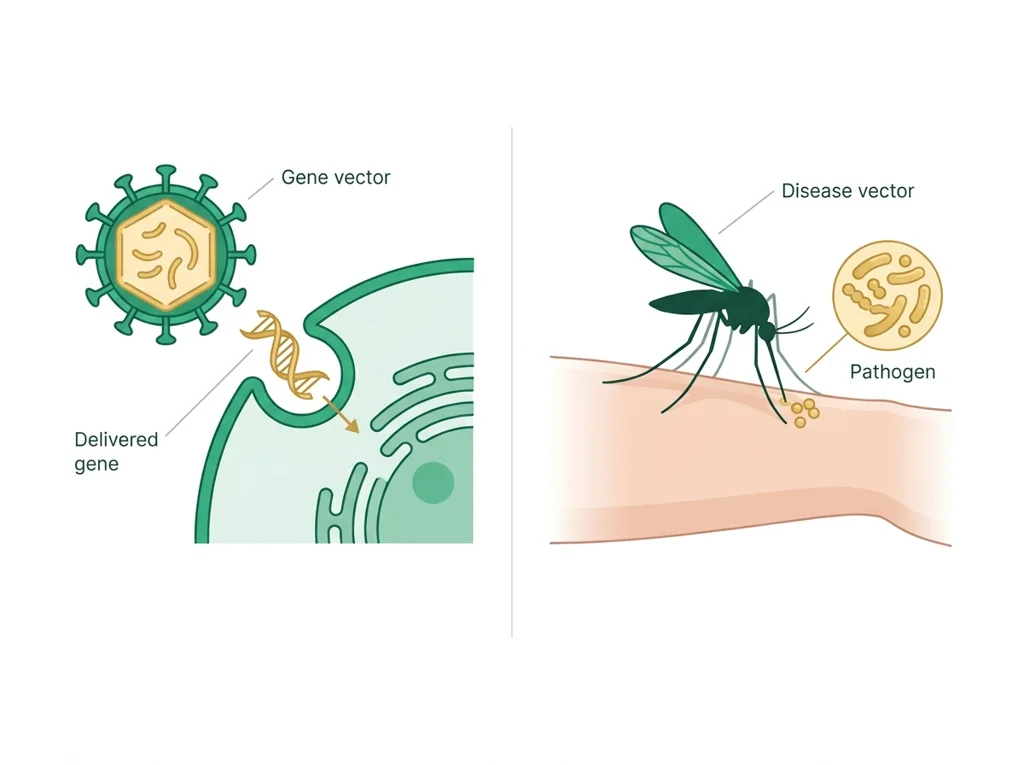
- • vector: Two senses, set by the lesson. In infection control, a living , usually an insect such as a mosquito or a tick, that moves a from one host to the next. In genetics, a or virus engineered to carry into a cell.
- • : A gene-editing tool that uses a guide RNA to steer the Cas9 to a chosen site and cut it, so a sequence can be changed.
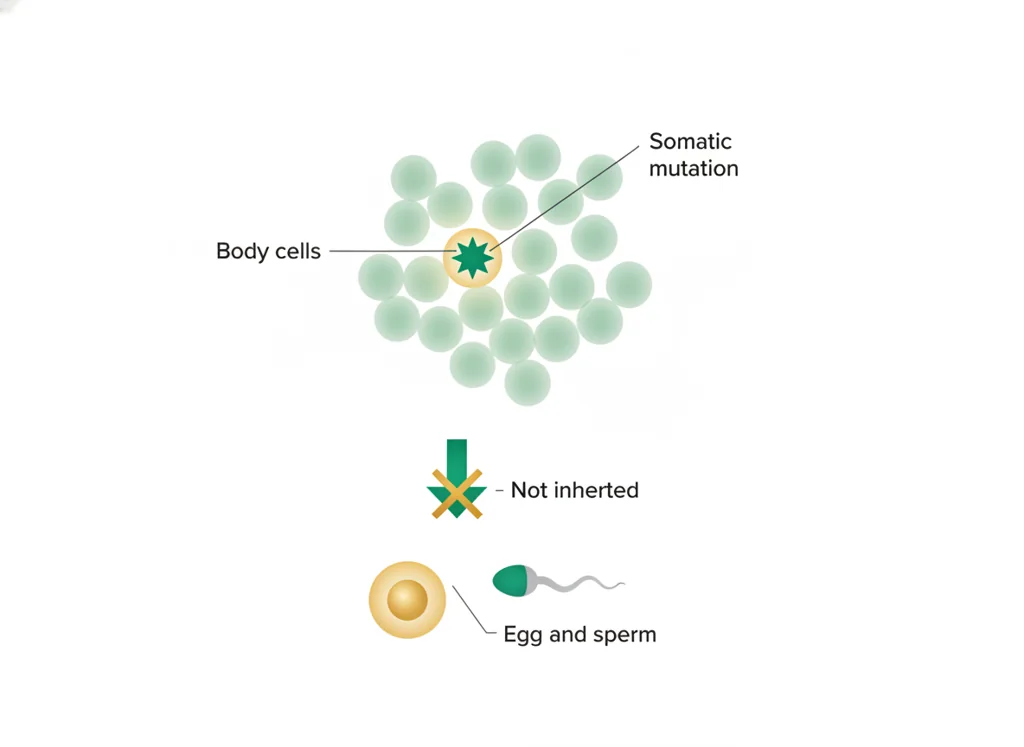
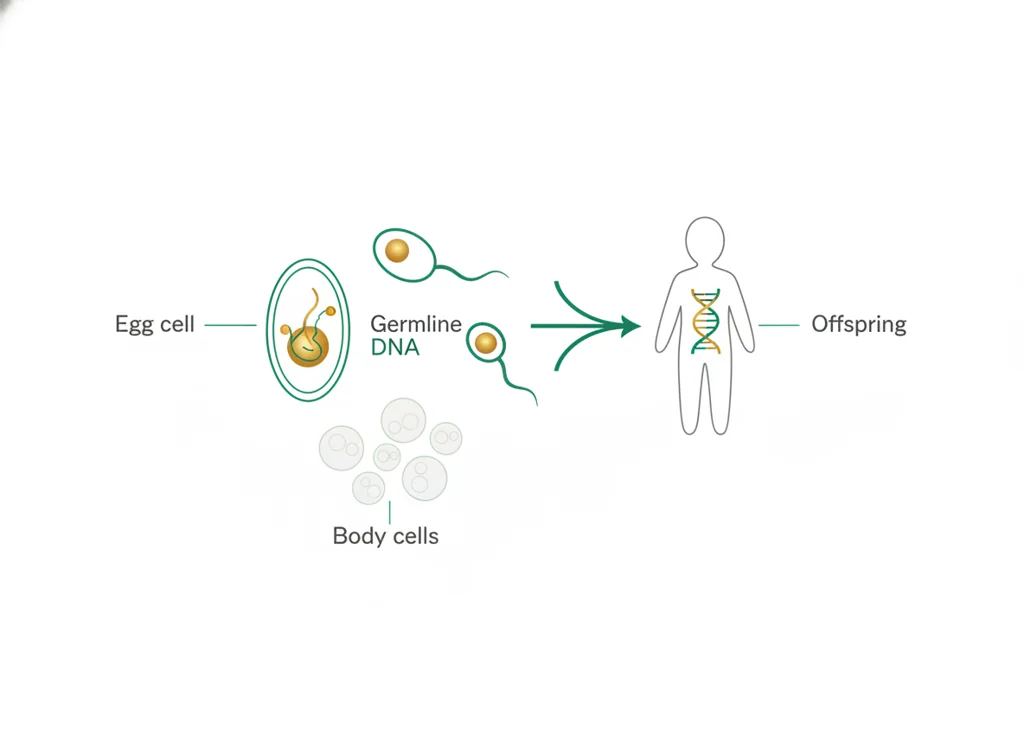
- • : Relating to the ordinary body cells other than egg and sperm; changes in these cells affect only the individual and are not inherited.
- • : The egg, sperm, and the cells that make them; changes in these cells can be passed to a person's children.
- • : An unintended effect when a drug or gene-editing tool acts on something other than its intended target, which can cause side effects.
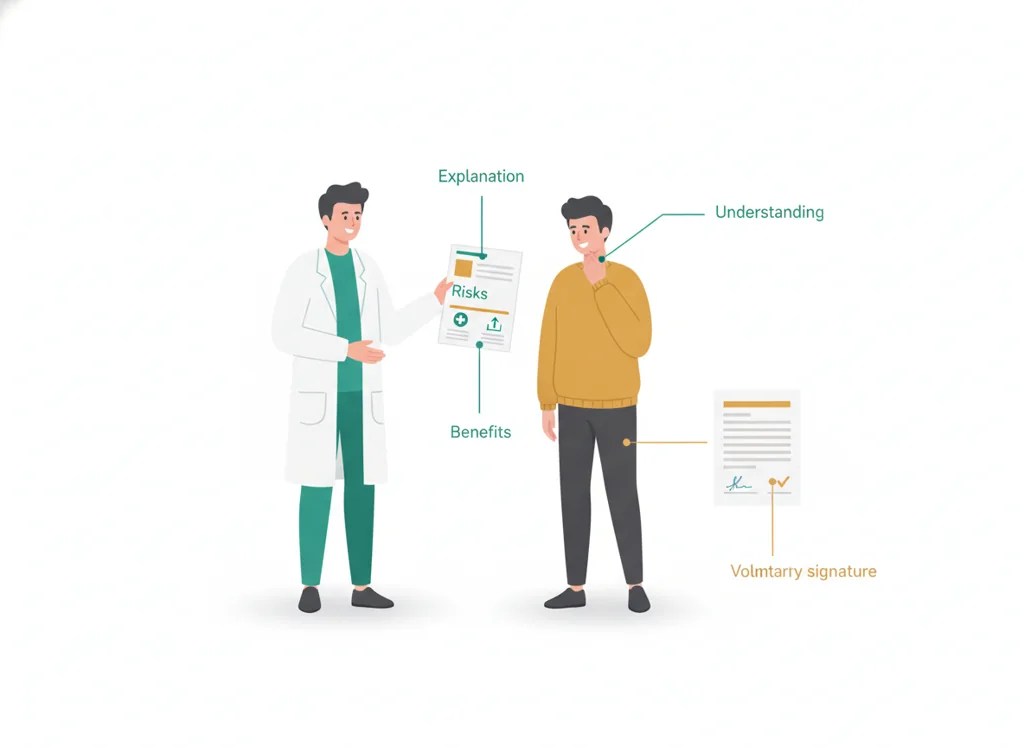
- • : Agreeing to a treatment or study only after truly understanding its purpose, risks, benefits, and alternatives; the understanding, not the signature, is the ethics.
Use it now: Choose one decision option. Cite E1 and E3, then explain how the rule connects the evidence to your choice. This is thinking practice for the one turn-in named under Turn in, not a second submission.
Go further, optional: The source links below are optional enrichment. Every fact required for today's local evidence decision appears in this lesson package.
Gene therapies modify or use genetic material to change cell function, and their potential benefit must be weighed against delivery limits, immune effects, changes, durability, and whether changes could be inherited.
Limit: A classroom model cannot predict , effectiveness, or long-term outcomes for a particular therapy or patient.
Stored information can be copied, read, and converted into a functional product.
Limit: Genes are regulated biological sequences, not conscious instructions, and one gene rarely determines a whole trait alone.
You can explain editing and risk.
Limit: E3 defines the classroom product or success criterion. It is not independent scientific evidence and cannot justify a clinical or causal claim.
Today's decision · Simulated classroom evidence scenario
Your role: medical interventions team member
Decision: Your team must decide what the evidence from today's lesson supports before submitting the claim-evidence-reasoning response named on today's page.
- • Skip the check, since is guided to an exact sequence and cuts only the gene you chose.
- • Hold the reproductive case decision until you know whether any near-match site sits inside a -suppressor gene.
- • Plan for cuts, because Cas9 tolerates a few mismatches, so a 20-letter guide can direct a cut at a near-match elsewhere in 3 billion letters.
Response: State one choice, cite at least two evidence IDs, explain the rule that connects them, and add one limitation. Use it inside the one turn-in named under Turn in; it is not a separate submission.
Claim ceiling: Today's evidence supports a classroom claim about today's lesson. It cannot prove causation, diagnose a real patient, or justify action outside this room.
Reason for review: Your team must decide what the evidence from today's lesson supports before submitting the claim-evidence-reasoning response named on today's page.
Context: Precision is a feature, not a bonus; molecular scissors that cut in the wrong place can break a gene that was protecting the cell, so how exactly they aim is a matter of life and death.
- • T1: Annotate the article (the MedlinePlus Genetics page on genome editing, the explainer link on this page; print it or annotate a copy), marking the guide RNA, the Cas9 cut, and the repair step.
- • T2: Define and explain in one line why it is a concern.
- • T3: Read the reproductive screening practice case: a couple using IVF both carry the same recessive condition; the clinic offers screening for that condition and an add-on panel for adult-onset risks. Decide what could and could not ethically do for them.
- • T4: Write a CER claim about using in the case, with two pieces of evidence.
- • T5: Submit your annotation and reproductive screening CER as your daily evidence.
- • E1: Gene therapies modify or use genetic material to change cell function, and their potential benefit must be weighed against delivery limits, immune effects, changes, durability, and whether changes could be inherited.
- • E2: Stored information can be copied, read, and converted into a functional product.
- • E3: You can explain editing and risk.
Measurements: Use only the measurements, units, graph, or counts supplied in today's task. No additional patient measurement is implied.
Uncertainty: This is a composite classroom scenario. Missing history, measurements, or confirmation tests remain unknown and limit the conclusion.
Students often think is perfectly precise, so if it is targeted, it must only ever cut the exact right gene. The trap: is not flawless, because the guide RNA can match near-identical sequences elsewhere and direct Cas9 to cut there too. That cut is the trap: precise does not mean perfect, and a wrong cut in a -suppressor gene can cause real harm.
- CER:
- Claim, Evidence, Reasoning: make a claim, back it with evidence, explain your reasoning.
- SOP:
- Standard Operating Procedure, the exact steps to follow (especially in a lab).
- Tracker:
- Your PLTW progress log where you record completed evidence.
- myPLTW:
- The PLTW course site where you do the online activities. Find it in Clever with your Microsoft sign-in, right next to Schoology.
Tap the speaker to hear a term. Add two of these to your notebook glossary with a definition and an example in your own words.
Pick just 2 or 3 words from today and make them yours: write what each one means in your own words, name the context clue or evidence that helped, then give one example from what you actually did in CRISPR and reproductive screening. Try your own words first; the glossary is there if you get stuck. This is voluntary and counts as extra credit, so keep it short.
Saved on this device. Show Mr. Mendoza or add these to your notebook glossary to claim the extra credit.
Part 2 of 4 · Directions in plain English▸
2.1 Open your materials
2.2 Start the work
Annotate the CRISPR article (the MedlinePlus Genetics page on genome editing, the explainer link on this page; print it or annotate a copy), marking the guide RNA, the Cas9 cut, and the repair step.
Show all 5 required steps
- Annotate the CRISPR article (the MedlinePlus Genetics page on genome editing, the explainer link on this page; print it or annotate a copy), marking the guide RNA, the Cas9 cut, and the repair step.
- Define off-target editing and explain in one line why it is a safety concern.
- Read the reproductive screening practice case: a couple using IVF both carry the same recessive condition; the clinic offers embryo screening for that condition and an add-on panel for adult-onset risks. Decide what CRISPR could and could not ethically do for them.
- Write a CER claim about using CRISPR in the case, with two pieces of evidence.
- Submit your annotation and reproductive screening CER as your daily evidence.
Lost your place? If your CRISPR article is annotated with the guide RNA, the Cas9 cut, and the repair step marked, move to the reproductive screening case and your CER. If the article is not annotated yet, do that first.
- 0-8Hook headlines; introduce guide RNA, Cas9, and repair as three discrete steps
- 8-30Annotate article: mark guide RNA, Cas9 cut, repair step; define in margin
- 30-45Read reproductive screening case; note what could and could not ethically do
- 45-62Write CER claim about using in this case with two evidences
- 62-75: check that reasoning names one limit
- 75-80Submit annotation and CER; preview the equity debate that follows
- • Hook: Show a headline about curing sickle cell disease and one about an ; ask which story matters more for policy.
- • Why it matters: Reproductive screening cases ask clinicians to apply capabilities and limits to decisions about embryos.
- • Today's work: annotation first (so you understand the tool), then the case (so you apply the limits).
- • Exit goal: Annotated article and reproductive screening CER submitted before the bell.
PLTW connection and today's work
Open Activity 2.2.1 Gene Therapy in myPLTW and complete the CRISPR-Cas9 genome editing activity alongside the reproductive screening case.
Today's stopping point: Vector chart should be done; CRISPR annotation and CER due today.
PLTW activity titles identify the course connection. If your account will not open, use the posted materials for today and tell Mr. Mendoza. Do not mark an online activity complete unless you completed it.
Use the turn-in directions in Part 4 of this page. Do not create a second submission unless your teacher asks for one.
Show another explanation or a smaller first step
Need help? Choose a starting point
Part 3 of 4 · Worked example▸
This is a parallel case, not your own. Read it for the order of the work, then do your own in Part 4.
Parallel case: A 16-year-old with severe sickle cell disease is offered a CRISPR-based therapy. Doctors would collect some of the patient's own blood stem cells and use a guide RNA to steer Cas9 to an enhancer, a switch region of the BCL11A gene that is active in red-cell precursors. BCL11A is what turns fetal hemoglobin off, so cutting the enhancer lowers BCL11A in those cells and fetal hemoglobin comes back. Before the edited cells are returned, the patient receives chemotherapy (busulfan) to clear space in the bone marrow; the edited cells then grow into red cells that make protective fetal hemoglobin. The patient and their guardians consent after counseling.
Claim: In this case CRISPR-based somatic therapy is an appropriate treatment to offer, because the edit is limited to the patient's own body cells, is not passed to future generations, and is chosen with informed consent to treat serious ongoing harm.
Evidence 1: The edit is somatic, not germline. It changes blood-forming cells in one person and is not inherited by that person's future children, so any mistake affects only the consenting patient and does not spread to descendants.
Evidence 2: Off-target risk is real but is being managed and consented to. The guide RNA is about 20 letters long against a genome of roughly 3 billion letters, so Cas9 can cut a wrong site that partially matches, and a bad off-target cut could disrupt a tumor suppressor or another important gene. However, the edited cells can be screened before they are returned, and the patient is weighing that known risk, plus the risks of the chemotherapy conditioning such as infection and infertility, against the daily harm of untreated sickle cell disease.
Reasoning: Because the change stays in one consenting person and is not heritable, the ethical stakes are lower than a change that every future generation would carry. The off-target danger does not disappear, but it can be reduced by checking the cells and is being accepted knowingly to relieve a serious, present illness. When a competent patient consents, the harm is severe, and the risk is bounded to that individual, offering the somatic edit is justified.
This model shows the level of evidence and organization needed to complete: Models the CER format on a parallel gene-editing case: a claim, two pieces of evidence, and reasoning about whether to use CRISPR-based somatic therapy in a consenting teenage patient with sickle cell disease. This mirrors the structure and depth students must produce today without answering the embryo screening prompt.
- Write one defensible claim.
- Choose specific evidence that supports the claim.
- Explain the scientific rule that connects the evidence to the claim.
Keep the structure. Replace the question, facts, measurements, and evidence. Then recheck units, vocabulary, and whether the conclusion goes beyond the evidence.
Also due today: Submit your annotation and reproductive screening CER in Schoology.
A library keeps a master plan protected while working copies guide production at different stations.
- Why protect the master copy?
- What information moves?
- Where can an error change the final product?
Stored information can be copied, read, and converted into a functional product.
Genes are regulated biological sequences, not conscious instructions, and one gene rarely determines a whole trait alone.
- • Master plan maps to .
- • Working copy maps to RNA.
- • Production output maps to or a regulated cell function.
Part 4 of 4 · Your work▸
Check your work before submitting
- You'll be able to explain CRISPR-Cas9 editing and off-target risk.
- You'll be able to apply CRISPR limits to a reproductive case.
4.1 Turn in your work
DueCheck the Schoology assignment for this day- Hand in
- Annotated CRISPR article (guide RNA, Cas9 cut, repair step marked; off-target defined) plus a CER on using CRISPR in the reproductive screening case.
How to submit and name your file
Submit as one PDF in Schoology.
In Schoology, open your course and the assignment for this lesson. Attach your file, select Submit, and check that it appears in the submission.
PDF upload helpYou get two school days for every day you were absent, so this deadline moves with you.
Today's lesson is in Schoology
Each school day has one lesson page in Schoology that holds everything for the day: the goal, the story so far, every table and data value, the numbered steps, and what to turn in. Open it first and work from it. The other rows for this day, if any, are the score line for a paper quiz or test and the John Carroll debate item; they do not add work. Check Schoology for each deadline.
- Today's Lesson · Fri 11/6 · Wk11 · Unit 2 Test on paper, then explain embryo testing to a family(today's lesson page: the goal, the data, the steps, and what to turn in are all on it)
- Unit 2 Test: genetic testing, gene therapy, and reproductive technology (paper, in class Fri 11/6)(taken on paper in class: this row holds the score, there is nothing to upload)
Link will not open? Open Schoology, choose your course and section, and find the title shown above.
- CompleteEvery required part of the artifact is present, nothing left blank.
- AccurateThe science and the data are correct and match the evidence.
- Scientific reasoningYou explain your claim with evidence and reasoning (CER), not just an answer.
- Professional communicationClear, organized, labeled, and written the way a clinician or scientist would.
- SubmittedGo to Schoology to turn this in. Submit one PDF. Schoology attaches your name to your upload; on the page itself, write your period and code. Name the file: FirstName LastName - Assignment Title - YYYY-MM-DD.pdf. If you cannot get in, see Mr. Mendoza. Do not skip the work.
How this lesson connects
Keep using what you learned last class: Can humans be trusted with control over genetics? And: extinction, or life without culture? Today: Cas9 tolerates a few mismatches between its guide RNA and the DNA, so it can cut at a near-match elsewhere in the genome and break a gene that was keeping the cell safe.
Practice: try a question, then check your answer▸
Claim ceiling for this check: Today's evidence supports a classroom claim about today's lesson. It cannot prove causation, diagnose a real patient, or justify action outside this room.
After Cas9 cuts the DNA, the cell can repair it by NHEJ or HDR. Which one gives a precise, intended edit, and what does it require?
Write an answer and pick a confidence to unlock the key.
Fast retrieval with instant answers, not the commit-then-reveal check above. Try each from memory first: write what you remember about the earlier units, then check yourself here.
Missed class or ready for more?▸
Optional practice for this unit's lab skills. Nothing in it is due today.
What today's skills lead to. These are real health-science careers this course builds toward. Tap one to see, on the US Department of Labor's O*NET site, what the job actually involves, what it pays, and how fast it is growing.
Today is individual work you can do from home: complete the same target above, then submit your CER.
Go to Schoology to turn this in. Submit one PDF. Schoology attaches your name to your upload; on the page itself, write your period and code. Name the file: FirstName LastName - Assignment Title - YYYY-MM-DD.pdf. If you cannot get in, see Mr. Mendoza. Do not skip the work.
Class still runs. Complete today's work as this page describes (it is self-guided). Need the concept taught without a teacher? Use this authoritative explainer:
MedlinePlus Genetics: What are genome editing and CRISPR-Cas9?The optional extra-credit track is open. Complete reserved-unit work from home, including virtual labs, for extra credit. Each item shows its correct submission route.
Open the extra-credit trackSources: slides, readings, and resources▸
The deck carries the prior idea forward, lets you inspect an analogy, maps the rule to biology, and ends with the same evidence decision and exit ticket used on this page.
Classroom documents for this lesson are posted in Schoology. Open Clever, then Schoology, and find each one by the name shown on its card.
Use this if you were absent, got stuck, or need another pass before you submit the lesson artifact.
Open this when the class reaches this activity and use it to complete the required lesson artifact.
Use this after the required lesson work when you are ready for a harder application or a deeper connection.
Sign in to Clever with your district Microsoft account to open Schoology or myPLTW. Follow today's posted steps. If myPLTW will not open, use the posted alternative and tell Mr. Mendoza. Turn in your completed work through the Schoology assignment.
This week
My Progress dashboard