
Chemo and radiation
This page has four parts, in the order you use them. Part 1 is what you need to know. Part 2 says what to do, in plain English. Part 3 shows the work done once on a case that is not yours. Part 4 is your own work and where to turn it in.
Open your materials, follow the steps, then turn in your work.
Compare how chemotherapy and radiation kill cancer cells and why each causes side effects.
Optional: listen or watch a unit review▸
Part 1 of 4 · Background and definitions▸
💡 Big idea: Both and radiation work by disrupting cell division, so they inevitably damage healthy fast-dividing tissues too, which is why side effects track the treatment method rather than the itself.
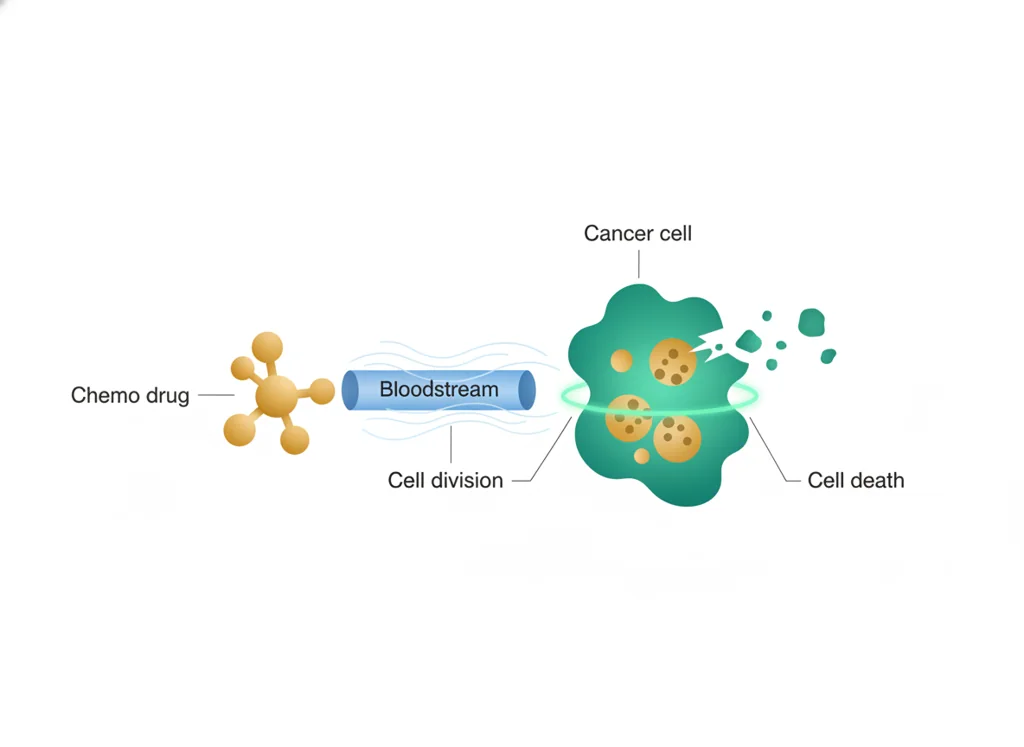
- • circulates systemically and targets any rapidly dividing cell.
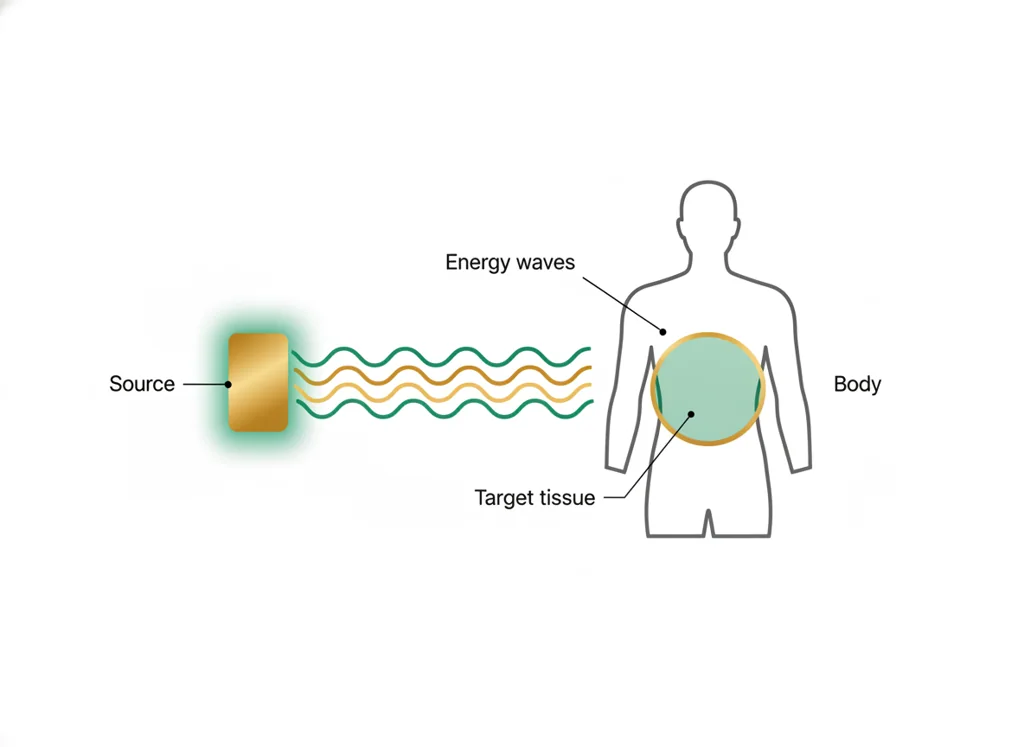
- • Radiation delivers focused ionizing energy to damage in a defined volume.
- • Side effects correlate directly to which fast-dividing healthy tissues are caught in the treatment field.
Should the government prosecute people for lying about vaccines or other health matters?
Both and radiation work by disrupting cell division, so they inevitably damage healthy fast-dividing tissues too, which is why side effects track the treatment method rather than the itself.
Driving question: A patient with a single confined to one spot in the neck is offered either or radiation. Which one fits a localized tumor better, and why does the choice change which side effects they get?
What you already know: From the class before the John Carroll debate: Staging combines size, -node involvement, and into one number, so that doctors can match how far the has spread to how aggressive the treatment must be.
New idea: Both and radiation work by disrupting cell division, so they inevitably damage healthy fast-dividing tissues too, which is why side effects track the treatment method rather than the itself.
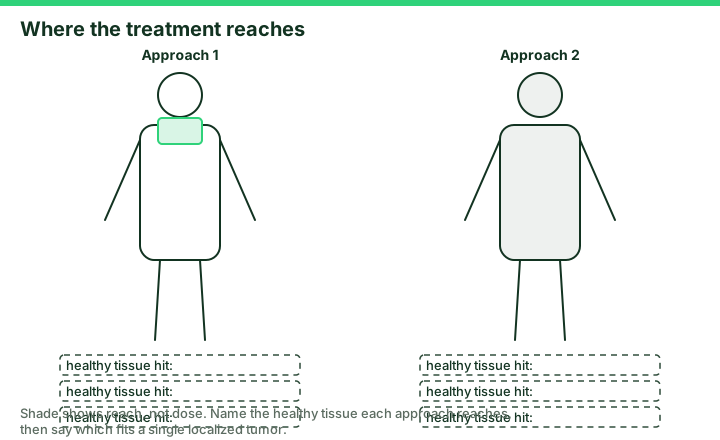
- Observe or measure the relevant feature in today's lesson.
- Organize the observation with a stable evidence ID.
- Apply this rule: A screening signal changes what to investigate next; it does not automatically prove the cause.
- Choose the option the evidence supports and state the limit of the conclusion.
Real biomedical example: A patient with a single confined to one spot in the neck is offered either or radiation. Which one fits a localized tumor better, and why does the choice change which side effects they get?
What the evidence supports: E1 to E3 and the figure support the daily take-home when the response meets the stated success criteria.
What it cannot prove: The package does not support claims beyond this lesson's or any real patient diagnosis.
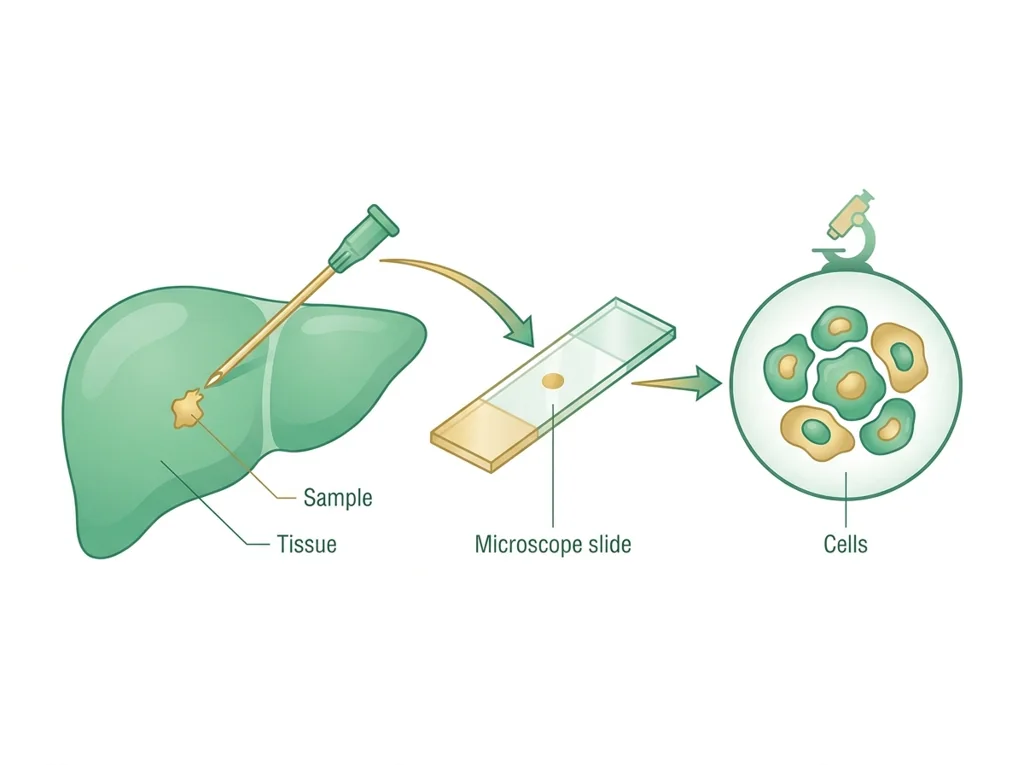
- • : A medical procedure that removes a small sample of from the body so it can be examined under a microscope for disease such as .
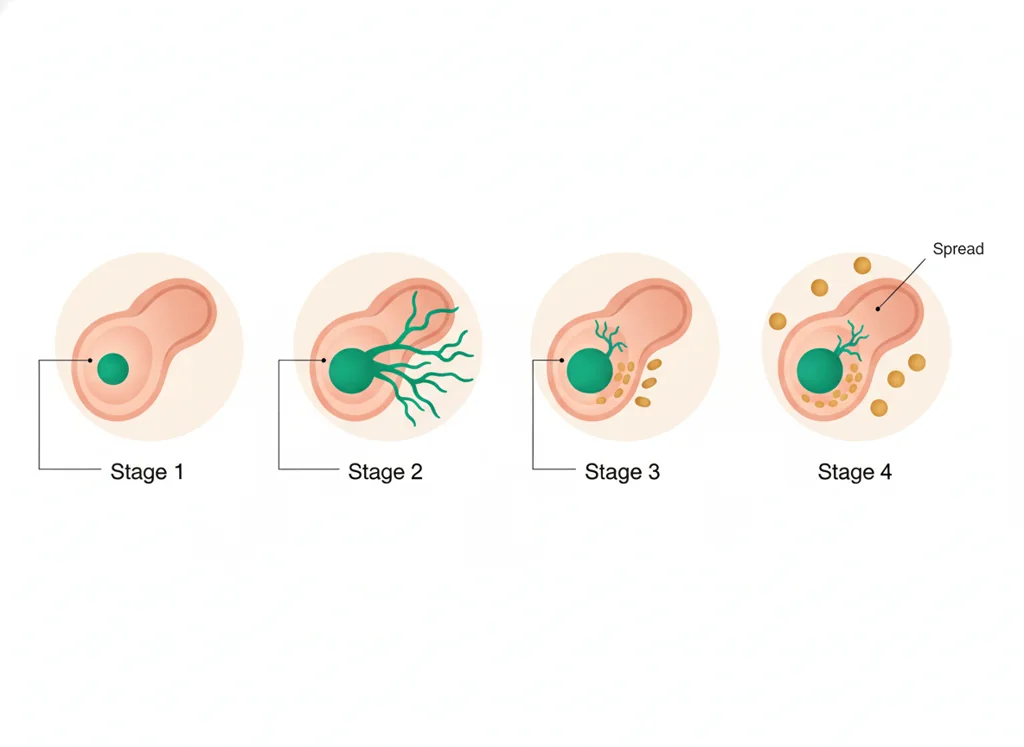
- • staging: Classifying how far a has grown and spread, which guides treatment choices and predicts likely outcomes.
- • : Treatment that uses powerful drugs to kill rapidly dividing cells throughout the body, though it can also harm some fast-growing healthy cells.
- • radiation: Energy that travels as waves or particles; in medicine it can image inside the body or destroy harmful cells like .
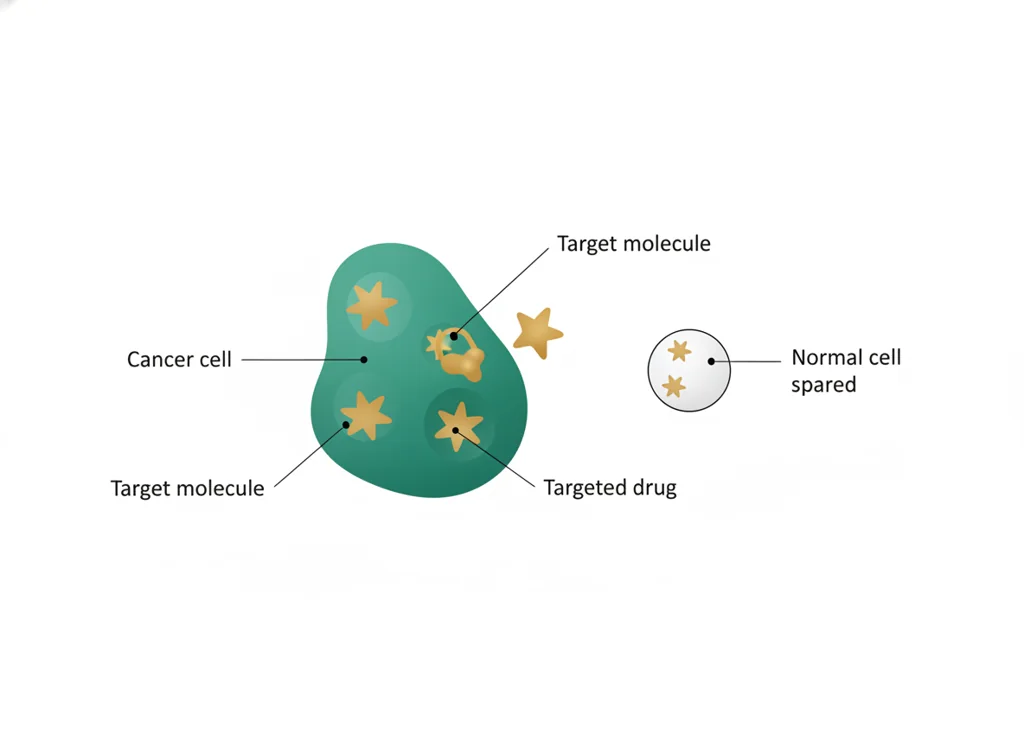
- • : A treatment that attacks specific molecules cancer cells rely on, harming those cells while sparing more healthy cells than older .
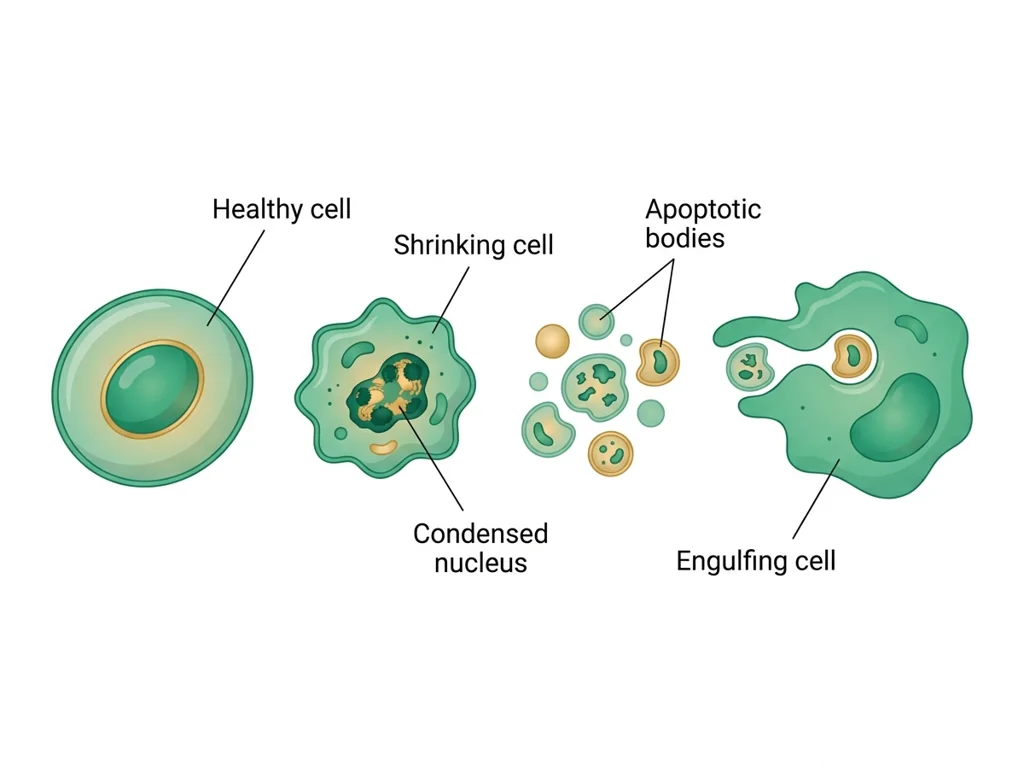
- • : Programmed, controlled cell death that the body uses on purpose, including to clear the seam between two tissues during .
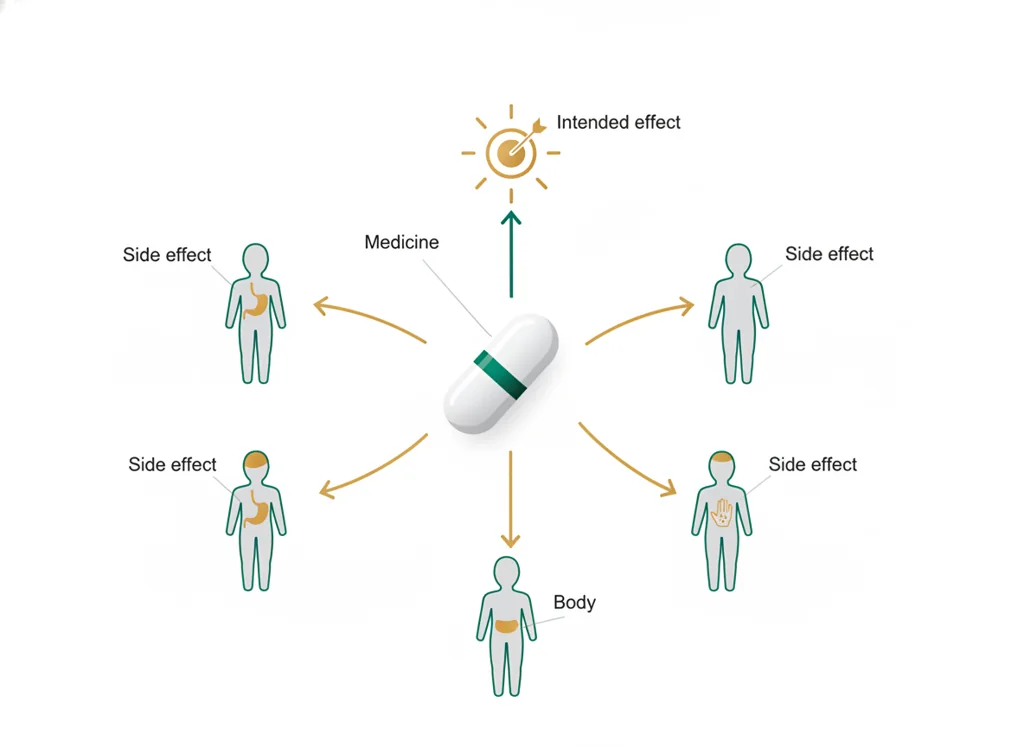
- • : An unintended effect of a medicine or treatment that happens in addition to its intended benefit, ranging from mild to serious.
Use it now: Choose one decision option. Cite E1 and E3, then explain how the rule connects the evidence to your choice. This is thinking practice for the one turn-in named under Turn in, not a second submission.
Go further, optional: The source links below are optional enrichment. Every fact required for today's local evidence decision appears in this lesson package.
diagnosis and treatment planning integrate or molecular findings, stage, features, overall health, benefits, and harms; no single classroom image or marker determines the complete decision.
Limit: The composite classroom case cannot support a real diagnosis, stage, prognosis, or treatment recommendation.
A screening signal changes what to investigate next; it does not automatically prove the cause.
Limit: Biomedical tests have measured performance and biological sampling limits that a household alarm does not capture.
You can contrast the mechanisms of and radiation.
Limit: E3 defines the classroom product or success criterion. It is not independent scientific evidence and cannot justify a clinical or causal claim.
Today's decision · Simulated classroom evidence scenario
Your role: medical interventions team member
Decision: Your team must decide what the evidence from today's lesson supports before submitting the claim-evidence-reasoning response named on today's page.
- • Pick radiation for the confined to the neck, since its beam damages only along its path and the dividing cells there are hit hardest.
- • Choose either treatment and expect few side effects, because both are aimed at the cells themselves.
- • Wait on the choice until you know the patient's overall health, since it decides which method's side effects they could handle.
Response: State one choice, cite at least two evidence IDs, explain the rule that connects them, and add one limitation. Use it inside the one turn-in named under Turn in; it is not a separate submission.
Claim ceiling: Today's evidence supports a classroom claim about today's lesson. It cannot prove causation, diagnose a real patient, or justify action outside this room.
Reason for review: Your team must decide what the evidence from today's lesson supports before submitting the claim-evidence-reasoning response named on today's page.
Context: treatments attack cells that divide fast, so they cannot help hitting the healthy fast-dividing tissues too, and that overlap is the reason side effects exist.
- • T1: Read the mechanism summary in the Know section on this page and define in your own words.
- • T2: Diagram how targets fast-dividing cells throughout the body.
- • T3: Diagram how radiation damages cell in a targeted area.
- • T4: List two common side effects for each and tie them to healthy fast-dividing .
- • T5: Write a CER paragraph claiming which treatment fits a localized and why.
- • E1: diagnosis and treatment planning integrate or molecular findings, stage, features, overall health, benefits, and harms; no single classroom image or marker determines the complete decision.
- • E2: A screening signal changes what to investigate next; it does not automatically prove the cause.
- • E3: You can contrast the mechanisms of and radiation.
Measurements: Use only the measurements, units, graph, or counts supplied in today's task. No additional patient measurement is implied.
Figure finding: A body outline drawn twice, labeled Approach 1 and Approach 2, one with a small shaded field at the neck and one shaded over the whole body, each with three empty tags for healthy hit.
Uncertainty: This is a composite classroom scenario. Missing history, measurements, or confirmation tests remain unknown and limit the conclusion.
Students often think and radiation are smart weapons that seek out and hit only cells. The trap: Neither one targets specifically. They target the act of dividing. Chemo poisons any rapidly dividing cell anywhere in the body, and radiation damages the of every cell in its beam path, so healthy fast-dividing tissues (hair, gut lining, blood-forming marrow) take collateral damage, which is exactly where the side effects come from.
- CER:
- Claim, Evidence, Reasoning: make a claim, back it with evidence, explain your reasoning.
- SOP:
- Standard Operating Procedure, the exact steps to follow (especially in a lab).
- Tracker:
- Your PLTW progress log where you record completed evidence.
- myPLTW:
- The PLTW course site where you do the online activities. Find it in Clever with your Microsoft sign-in, right next to Schoology.
Tap the speaker to hear a term. Add two of these to your notebook glossary with a definition and an example in your own words.
Pick just 2 or 3 words from today and make them yours: write what each one means in your own words, name the context clue or evidence that helped, then give one example from what you actually did in Chemo and radiation. Try your own words first; the glossary is there if you get stuck. This is voluntary and counts as extra credit, so keep it short.
Saved on this device. Show Mr. Mendoza or add these to your notebook glossary to claim the extra credit.
Part 2 of 4 · Directions in plain English▸
2.1 Open your materials
Use the materials named in the first step below. Open lesson resources.
2.2 Start the work
Read the mechanism summary in the Know section on this page and define apoptosis in your own words.
Show all 5 required steps
- Read the mechanism summary in the Know section on this page and define apoptosis in your own words.
- Diagram how chemotherapy targets fast-dividing cells throughout the body.
- Diagram how radiation damages cell DNA in a targeted area.
- List two common side effects for each and tie them to healthy fast-dividing tissue.
- Write a CER paragraph claiming which treatment fits a localized tumor and why.
Lost your place? Off track? If apoptosis is defined and both diagrams are drawn, skip to listing two side effects for each treatment and tying each one to a healthy fast-dividing tissue, then write your CER paragraph.
- 0-8Read treatment notes; define in margin
- 8-25Draw mechanism diagram (systemic, fast-dividers)
- 25-40Draw radiation mechanism diagram (targeted, damage)
- 40-55List two side effects each; link to healthy type
- 55-72Write CER paragraph: chemo vs. radiation for a localized
- 72-80 CER structure; submit
- • Both and radiation kill , but they do it differently and hurt different bystanders.
- • Today you will diagram each mechanism and then argue which one fits a specific case.
- • The CER format you practice today is one of the highest-frequency skills on the WebXam.
- • By the end you will be able to explain to a patient why their hair may fall out.
PLTW connection and today's work
Open Project 3.3.1 Diary of a Cancer Patient in myPLTW for Lesson 3.3 Treating Cancer and use the treatment-mechanism notes to diagram chemotherapy and radiation.
Today's stopping point: Biopsy and staging should be done; chemo/radiation diagrams and CER due today.
PLTW activity titles identify the course connection. If your account will not open, use the posted materials for today and tell Mr. Mendoza. Do not mark an online activity complete unless you completed it.
Course connection
- Project 3.3.1 Diary of a Cancer Patient
Use the turn-in directions in Part 4 of this page. Do not create a second submission unless your teacher asks for one.
Show another explanation or a smaller first step
Need help? Choose a starting point
Part 3 of 4 · Worked example▸
This is a parallel case, not your own. Read it for the order of the work, then do your own in Part 4.
Claim: For a leukemia that has already spread throughout the bloodstream, a targeted therapy that flags one specific molecule on the cancer cells is usually a better fit than broad chemotherapy.
Evidence 1: A targeted therapy is built to recognize a protein that appears mainly on the cancer cells, so it binds those cells and triggers apoptosis (programmed cell death) while mostly leaving normal cells alone, which concentrates the killing on the diseased cells even though they are scattered everywhere.
Evidence 2: Broad chemotherapy travels through the whole body and kills any fast-dividing cell, so it does reach cancer cells no matter where they are, but it also damages healthy fast-dividing tissue and causes side effects like hair loss, mouth sores, nausea, and low blood counts, because hair follicles, the gut lining, and bone marrow all divide quickly.
Reasoning: When the cancer is spread out in the blood, the treatment has to reach the whole body, so a local option would miss most of the disease. Both a targeted therapy and broad chemotherapy can reach cells everywhere, but the targeted drug aims at a marker that is far more common on the cancer cells, so it spares more healthy tissue and tends to cause milder side effects than chemotherapy, which hits every fast-dividing cell it passes. Because the reach of each treatment has to match how spread out the disease is, and because that reach is what decides which healthy tissues get harmed, the targeted therapy fits this widespread situation better.
| Feature | Chemotherapy | Radiation |
|---|---|---|
| Reach | Systemic, whole body | Targeted area |
| How it kills | Hits any fast-dividing cell | Damages DNA in target volume |
| Common side effects | Hair loss, low blood counts | Skin reaction in the treated area, tiredness |
| Why side effects happen | Healthy fast-dividing tissue hit | Healthy cells in the beam path |
This model shows the level of evidence and organization needed to complete: Models the CER format for a treatment-mechanism argument on a parallel scenario: whether a targeted therapy or broad chemotherapy better fits a cancer that has spread throughout the bloodstream, using cell-killing mechanism and side-effect evidence. It does not argue the localized-tumor chemo-versus-radiation prompt students must complete.
- Write one defensible claim.
- Choose specific evidence that supports the claim.
- Explain the scientific rule that connects the evidence to the claim.
Keep the structure. Replace the question, facts, measurements, and evidence. Then recheck units, vocabulary, and whether the conclusion goes beyond the evidence.
Also due today: Submit your CER paragraph in Schoology by end of block.
A smoke alarm detects signs of fire but can also react to burnt toast.
- What does the alarm detect?
- What creates a false alarm?
- What evidence is needed before declaring a fire?
A screening signal changes what to investigate next; it does not automatically prove the cause.
Biomedical tests have measured performance and biological sampling limits that a household alarm does not capture.
- • Alarm signal maps to a test result.
- • Burnt toast maps to a .
- • Inspection maps to confirmation or the next test.
Part 4 of 4 · Your work▸
Check your work before submitting
- You'll be able to contrast the mechanisms of chemotherapy and radiation.
- You'll be able to explain side effects using apoptosis and healthy-cell damage.
4.1 Turn in your work
DueCheck the Schoology assignment for this day- Hand in
- CER paragraph arguing which treatment (chemo or radiation) is more appropriate for a localized tumor, with apoptosis and side-effect evidence.
How to submit and name your file
Submit as one PDF in Schoology.
In Schoology, open your course and the assignment for this lesson. Attach your file, select Submit, and check that it appears in the submission.
PDF upload helpYou get two school days for every day you were absent, so this deadline moves with you.
Today's lesson is in Schoology
Each school day has one lesson page in Schoology that holds everything for the day: the goal, the story so far, every table and data value, the numbered steps, and what to turn in. Open it first and work from it. The other rows for this day, if any, are the score line for a paper quiz or test and the John Carroll debate item; they do not add work. Check Schoology for each deadline.
- Today's Lesson · Fri 11/20 · Wk13 · Record the sunscreen results, then how breast cancer runs in families(today's lesson page: the goal, the data, the steps, and what to turn in are all on it)
Link will not open? Open Schoology, choose your course and section, and find the title shown above.
- CompleteEvery required part of the artifact is present, nothing left blank.
- AccurateThe science and the data are correct and match the evidence.
- Scientific reasoningYou explain your claim with evidence and reasoning (CER), not just an answer.
- Professional communicationClear, organized, labeled, and written the way a clinician or scientist would.
- SubmittedGo to Schoology to turn this in. Submit one PDF. Schoology attaches your name to your upload; on the page itself, write your period and code. Name the file: FirstName LastName - Assignment Title - YYYY-MM-DD.pdf. If you cannot get in, see Mr. Mendoza. Do not skip the work.
How this lesson connects
Keep using what you learned last class: Should the government prosecute people for lying about vaccines or other health matters? Today: Both chemotherapy and radiation work by disrupting cell division, so they inevitably damage healthy fast-dividing tissues too, which is why side effects track the treatment method rather than the cancer itself.
Practice: try a question, then check your answer▸
Claim ceiling for this check: Today's evidence supports a classroom claim about today's lesson. It cannot prove causation, diagnose a real patient, or justify action outside this room.
A patient has one small tumor confined to a single lymph node in the neck. Would radiation or chemotherapy be the better first choice, and why does that choice reduce side effects?
Write an answer and pick a confidence to unlock the key.
Fast retrieval with instant answers, not the commit-then-reveal check above. Try each from memory first: write what you remember about the earlier units, then check yourself here.
Missed class or ready for more?▸
Optional practice for this unit's lab skills. Nothing in it is due today. This lesson has more than one, and they cover different skills.
What today's skills lead to. These are real health-science careers this course builds toward. Tap one to see, on the US Department of Labor's O*NET site, what the job actually involves, what it pays, and how fast it is growing.
Today is individual work you can do from home: complete the same target above, then submit your CER.
Go to Schoology to turn this in. Submit one PDF. Schoology attaches your name to your upload; on the page itself, write your period and code. Name the file: FirstName LastName - Assignment Title - YYYY-MM-DD.pdf. If you cannot get in, see Mr. Mendoza. Do not skip the work.
Class still runs. Complete today's work as this page describes (it is self-guided). Need the concept taught without a teacher? Use this authoritative explainer:
National Cancer Institute: Types of cancer treatmentThe optional extra-credit track is open. Complete reserved-unit work from home, including virtual labs, for extra credit. Each item shows its correct submission route.
Open the extra-credit trackSources: slides, readings, and resources▸
The deck carries the prior idea forward, lets you inspect an analogy, maps the rule to biology, and ends with the same evidence decision and exit ticket used on this page.
Classroom documents for this lesson are posted in Schoology. Open Clever, then Schoology, and find each one by the name shown on its card.
Open this when the class reaches this activity and use it to complete the required lesson artifact.
Use this if you were absent, got stuck, or need another pass before you submit the lesson artifact.
Sign in to Clever with your district Microsoft account to open Schoology or myPLTW. Follow today's posted steps. If myPLTW will not open, use the posted alternative and tell Mr. Mendoza. Turn in your completed work through the Schoology assignment.
This week
My Progress dashboard