
Targeted therapy
This page has four parts, in the order you use them. Part 1 is what you need to know. Part 2 says what to do, in plain English. Part 3 shows the work done once on a case that is not yours. Part 4 is your own work and where to turn it in.
Open your materials, follow the steps, then turn in your work.
Explain how targeted therapy attacks specific molecules so it spares more healthy cells.
Optional: listen or watch a unit review▸
Part 1 of 4 · Background and definitions▸
💡 Big idea: diagnosis and treatment planning integrate or molecular findings, stage, features, overall health, benefits, and harms; no single classroom image or marker determines the complete decision.
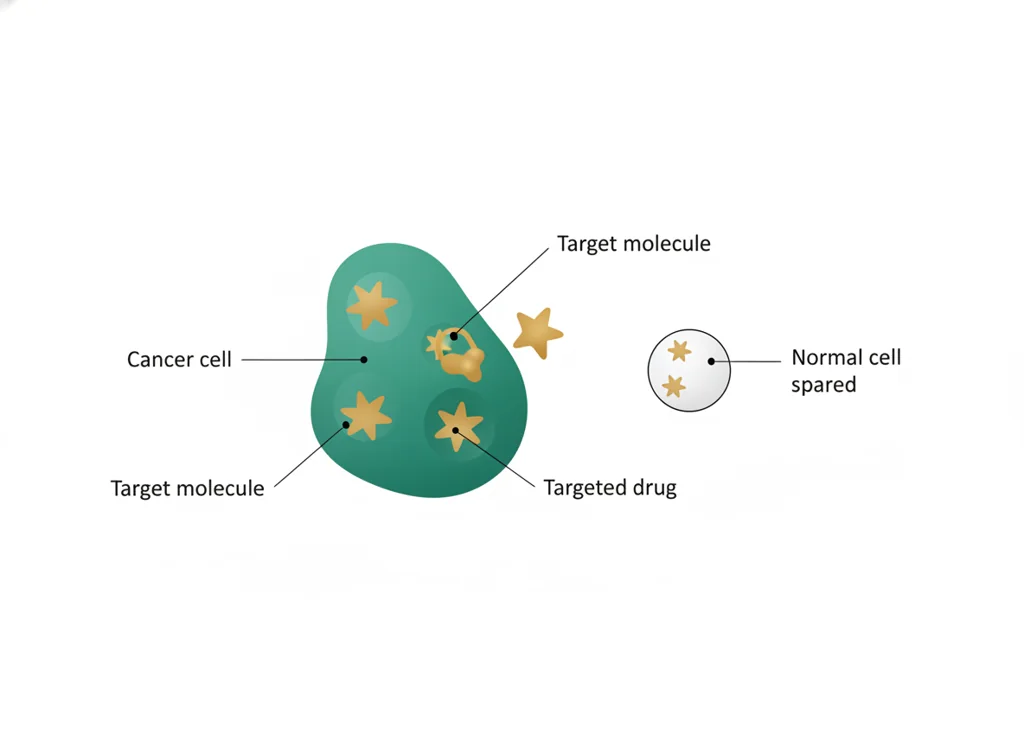
- • Targeted drugs bind specific proteins or gene products overexpressed in cells.
- • A marker test determines whether a patient's has the molecular target.
- • Acquired resistance occurs when cells mutate the targeted molecule.
Both and radiation work by disrupting cell division, so they inevitably damage healthy fast-dividing tissues too, which is why side effects track the treatment method rather than the itself.
diagnosis and treatment planning integrate or molecular findings, stage, features, overall health, benefits, and harms; no single classroom image or marker determines the complete decision.
Driving question: Explain how attacks specific molecules so it spares more healthy cells.
What you already know: Both and radiation work by disrupting cell division, so they inevitably damage healthy fast-dividing tissues too, which is why side effects track the treatment method rather than the itself.
New idea: diagnosis and treatment planning integrate or molecular findings, stage, features, overall health, benefits, and harms; no single classroom image or marker determines the complete decision.
Visual or model: No figure is attached to this lesson. The readings, the worked example and E1 to E3 carry the evidence.
- Observe or measure the relevant feature in .
- Organize the observation with a stable evidence ID.
- Apply this rule: A screening signal changes what to investigate next; it does not automatically prove the cause.
- Choose the option the evidence supports and state the limit of the conclusion.
Real biomedical example: Today the medical interventions team uses to make a bounded evidence decision. The composite classroom case cannot support a real diagnosis, stage, prognosis, or treatment recommendation.
What the evidence supports: E1 to E3 support the daily take-home when the response meets the stated success criteria.
What it cannot prove: The package does not support claims beyond this lesson's or any real patient diagnosis.
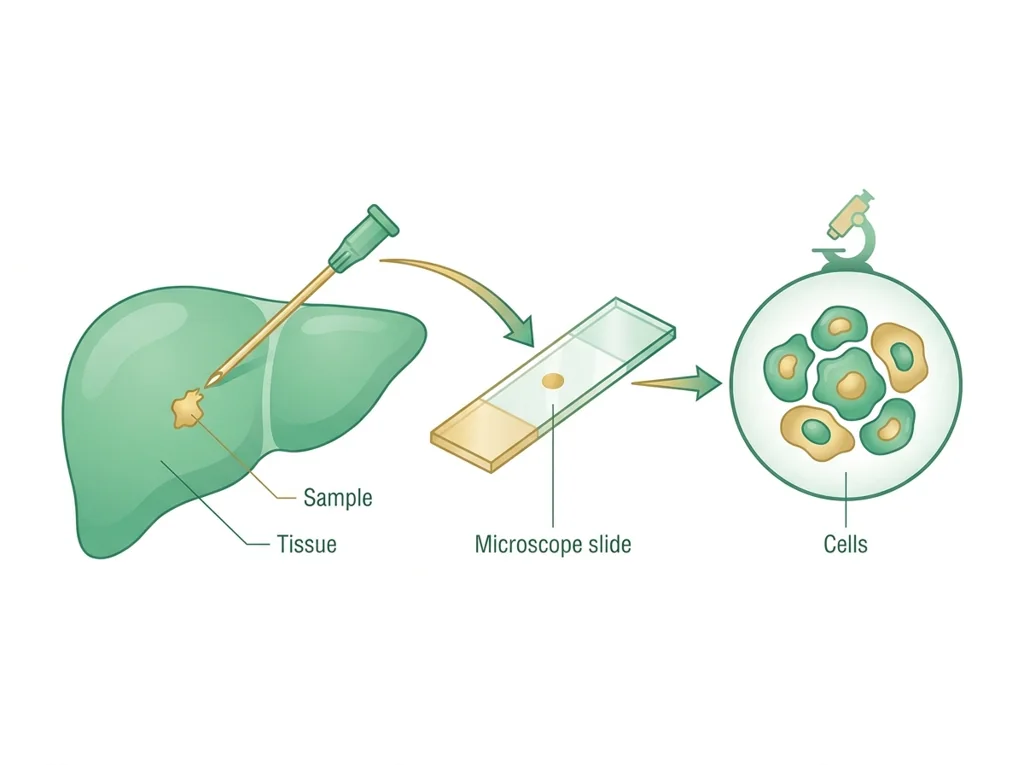
- • : A medical procedure that removes a small sample of from the body so it can be examined under a microscope for disease such as .
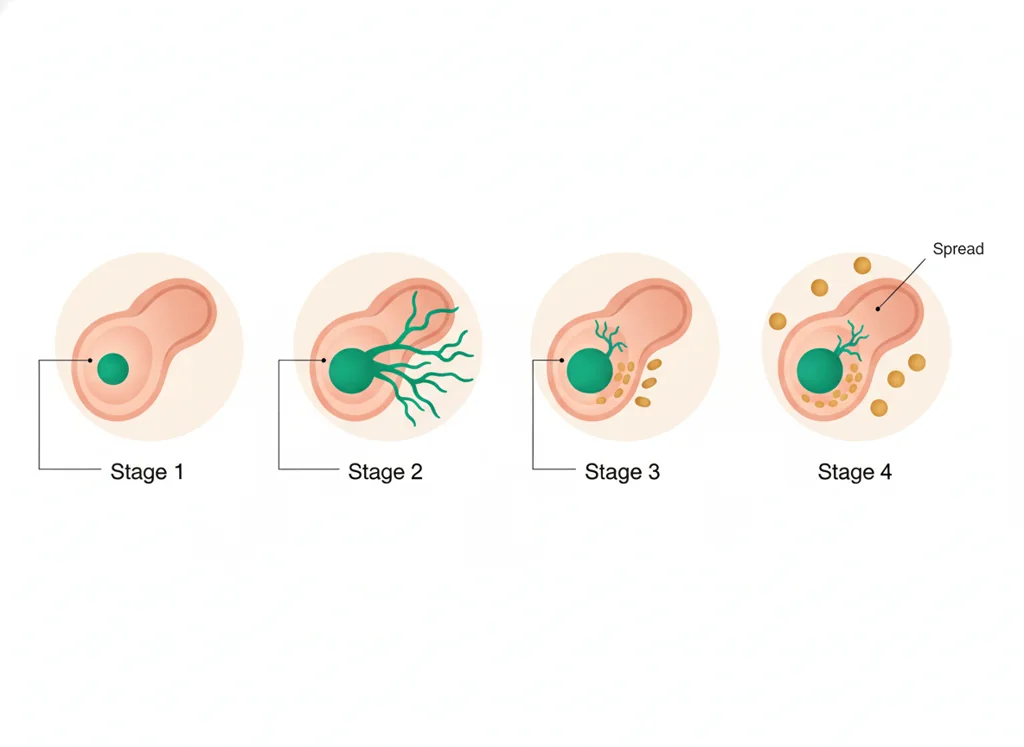
- • staging: Classifying how far a has grown and spread, which guides treatment choices and predicts likely outcomes.
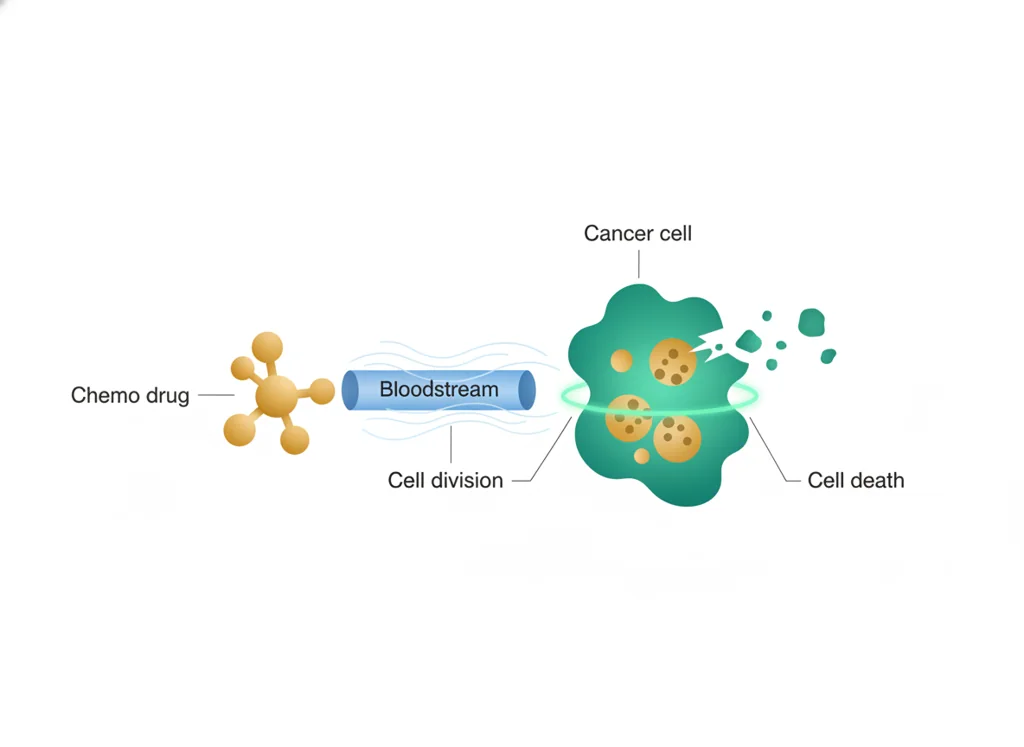
- • : Treatment that uses powerful drugs to kill rapidly dividing cells throughout the body, though it can also harm some fast-growing healthy cells.
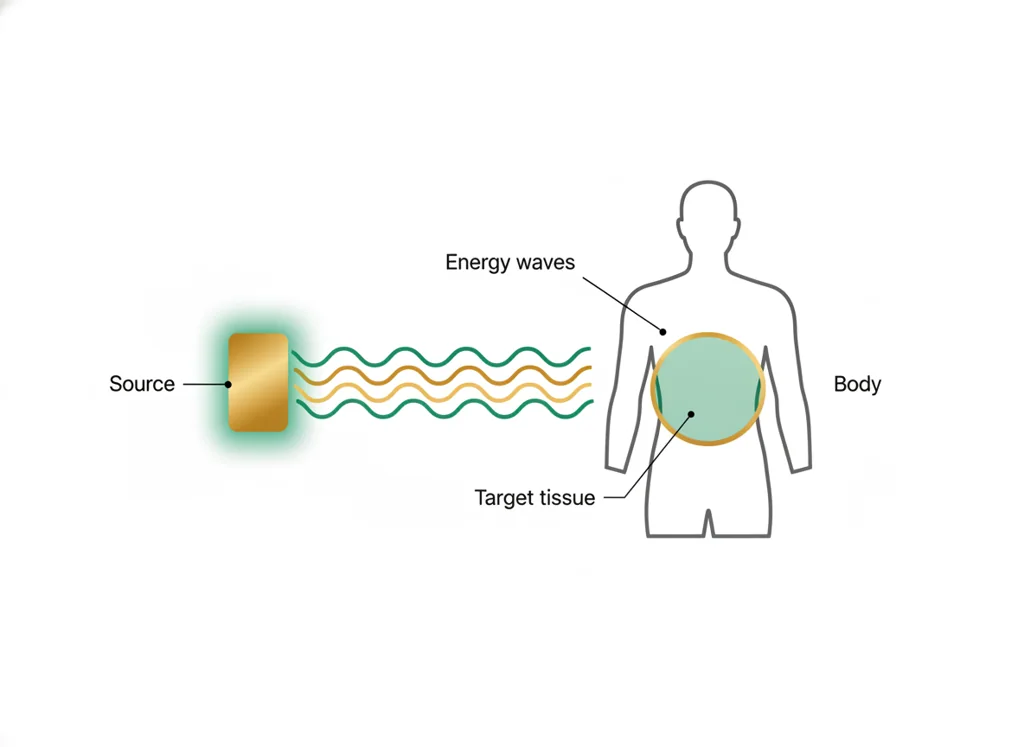
- • radiation: Energy that travels as waves or particles; in medicine it can image inside the body or destroy harmful cells like .
- • : A treatment that attacks specific molecules cancer cells rely on, harming those cells while sparing more healthy cells than older .
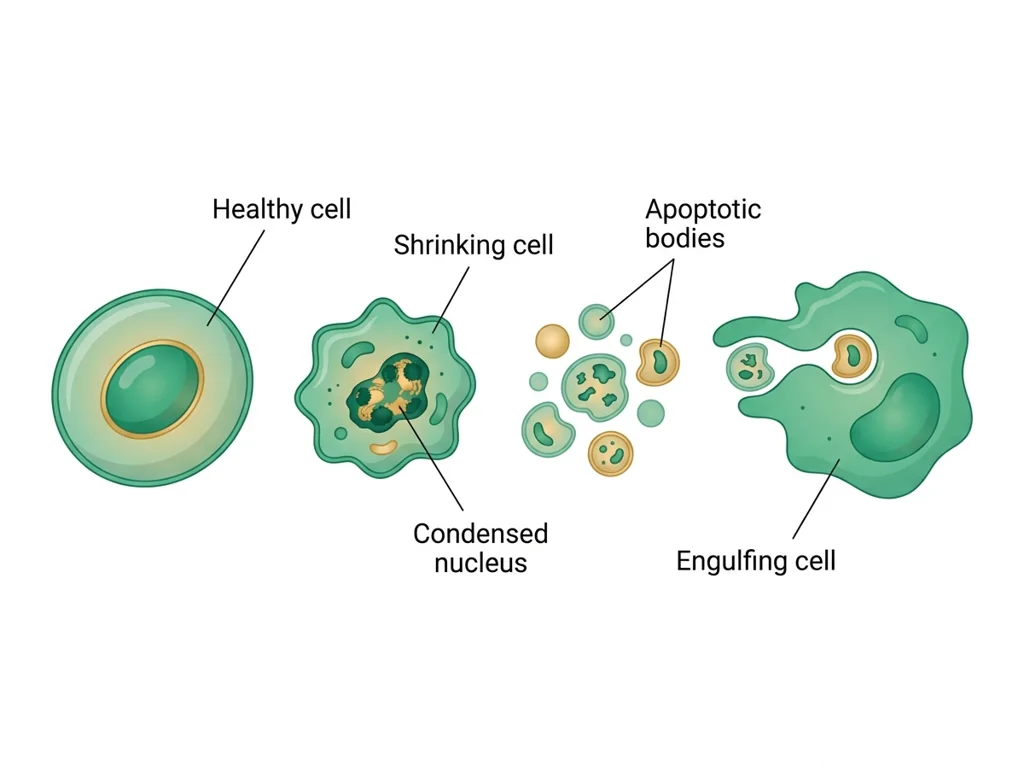
- • : Programmed, controlled cell death that the body uses on purpose, including to clear the seam between two tissues during .
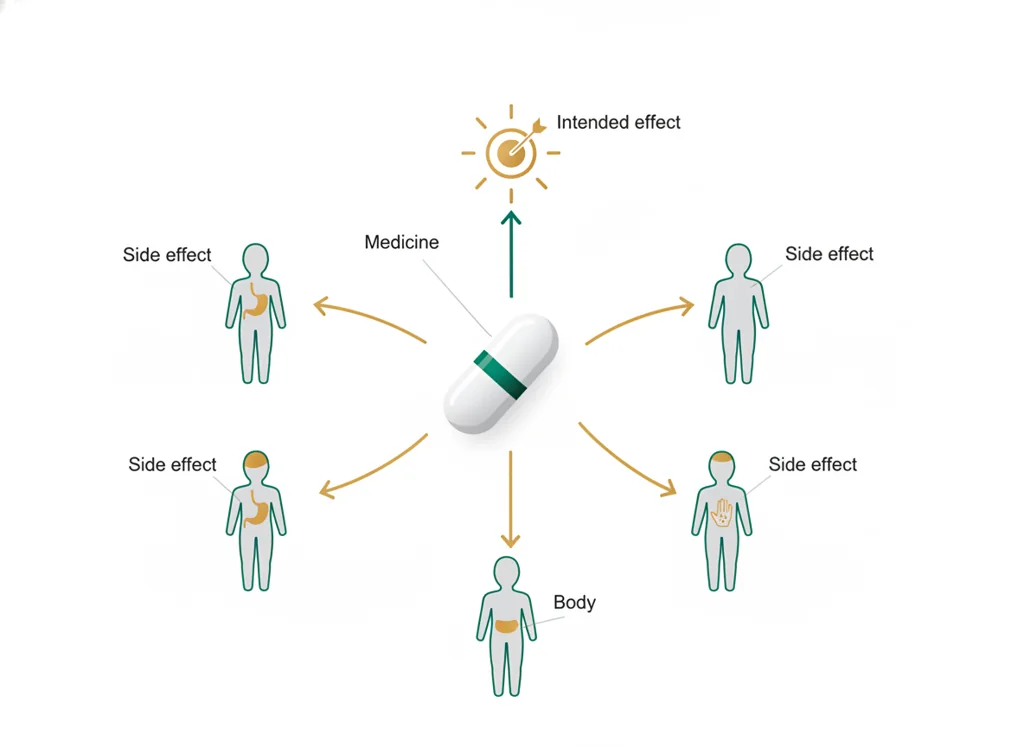
- • : An unintended effect of a medicine or treatment that happens in addition to its intended benefit, ranging from mild to serious.
Use it now: Choose one decision option. Cite E1 and E3, then explain how the rule connects the evidence to your choice. This is thinking practice for the one turn-in named under Turn in, not a second submission.
Go further, optional: The source links below are optional enrichment. Every fact required for today's local evidence decision appears in this lesson package.
National Institute is the source this lesson's claim is checked against: How Cancer Is Diagnosed
Limit: The composite classroom case cannot support a real diagnosis, stage, prognosis, or treatment recommendation.
A screening signal changes what to investigate next; it does not automatically prove the cause.
Limit: Biomedical tests have measured performance and biological sampling limits that a household alarm does not capture.
You can describe how differs from broad .
Limit: E3 defines the classroom product or success criterion. It is not independent scientific evidence and cannot justify a clinical or causal claim.
Today's decision · Simulated classroom evidence scenario
Your role: medical interventions team member
Decision: Your team must decide what the evidence from supports before submitting the labeled and result claim named on today's page.
- • Explain that attacks specific molecules, so the marker result tells you who qualifies for that drug.
- • Recommend once your write-up explains how the drug works, since a thorough answer reads as a supported one.
- • Keep the recommendation inside the classroom case, because it lacks the stage, features, and health data real planning needs.
Response: State one choice, cite at least two evidence IDs, explain the rule that connects them, and add one limitation. Use it inside the one turn-in named under Turn in; it is not a separate submission.
Claim ceiling: Today's evidence supports a classroom claim about . It cannot prove causation, diagnose a real patient, or justify action outside this room.
Reason for review: Your team must decide what the evidence from supports before submitting the labeled and result claim named on today's page.
Context: Today the medical interventions team uses to make a bounded evidence decision. The composite classroom case cannot support a real diagnosis, stage, prognosis, or treatment recommendation.
- • T1: Read the targeted-therapy notes (Activity 3.4.1 in myPLTW if it opens, otherwise the practice case data on this page) and find the molecule each drug targets.
- • T2: Compare a targeted drug to broad in a two-column table.
- • T3: Mark which patients qualify based on the marker results in the practice case data on this page.
- • T4: Write one reason can fail when a mutates.
- • T5: Add your targeted-therapy comparison to your Unit 3 PLTW tracker evidence.
- • E1: National Institute is the source this lesson's claim is checked against: How Cancer Is Diagnosed
- • E2: A screening signal changes what to investigate next; it does not automatically prove the cause.
- • E3: You can describe how differs from broad .
Measurements: Use only the measurements, units, graph, or counts supplied in today's task. No additional patient measurement is implied.
Uncertainty: This is a composite classroom scenario. Missing history, measurements, or confirmation tests remain unknown and limit the conclusion.
Rate or percent = part / comparison total x 100%. Percent change = (new - comparison) / comparison x 100%.
If 18 of 60 records meet a condition, the frequency is 18 / 60 x 100% = 30%.
Name the comparison total. A percent describes the supplied group and does not automatically predict an individual's outcome.
Use the counts in the practice data on this page to calculate one rate, risk, frequency, or percent change. Show the denominator and interpretation.
Students often think a polished answer about is trustworthy even when its evidence source, comparison, or limitation is missing. The trap: Presentation quality cannot raise the evidence level. The composite classroom case cannot support a real diagnosis, stage, prognosis, or treatment recommendation.
- CER:
- Claim, Evidence, Reasoning: make a claim, back it with evidence, explain your reasoning.
- SOP:
- Standard Operating Procedure, the exact steps to follow (especially in a lab).
- Tracker:
- Your PLTW progress log where you record completed evidence.
- myPLTW:
- The PLTW course site where you do the online activities. Find it in Clever with your Microsoft sign-in, right next to Schoology.
Tap the speaker to hear a term. Add two of these to your notebook glossary with a definition and an example in your own words.
Pick just 2 or 3 words from today and make them yours: write what each one means in your own words, name the context clue or evidence that helped, then give one example from what you actually did in Targeted therapy. Try your own words first; the glossary is there if you get stuck. This is voluntary and counts as extra credit, so keep it short.
Saved on this device. Show Mr. Mendoza or add these to your notebook glossary to claim the extra credit.
Part 2 of 4 · Directions in plain English▸
2.1 Open your materials
Use the materials named in the first step below. Open lesson resources.
Practice case data (made up for practice, not real patients and not the myPLTW case)
Three practice targeted drugs and the molecule each one targets
| Practice drug | Molecule it targets | What that molecule does in the tumor |
|---|---|---|
| Drug R-1 | Protein R, a growth-signal receptor on the cell surface | Tumors that make too much of it get a nonstop signal to divide |
| Drug K-2 | Enzyme K, a switch inside the cell | A changed form stays switched on and keeps the cell dividing |
| Drug V-3 | Signal V, which tumors send out to grow new blood vessels | Blocking it cuts off the new blood supply a growing tumor needs |
Protein R test on tumor tissue for five practice patients (Drug R-1 is used in this practice case only for a high result)
| Practice patient | Where the tumor started | Protein R test on tumor tissue | Treatment so far |
|---|---|---|---|
| P-1 | Breast | High: strong staining on most tumor cells | First treatment |
| P-2 | Breast | Not detected | First treatment |
| P-3 | Stomach | High: strong staining on most tumor cells | First treatment |
| P-4 | Breast | Low: faint staining on a few cells | First treatment |
| P-5 | Breast | Was high. Retested after 10 months on Drug R-1: still high, with a new change in the part of Protein R where the drug binds | Tumor growing again |
2.2 Start the work
Read the targeted-therapy notes (Activity 3.4.1 in myPLTW if it opens, otherwise the practice case data on this page) and find the molecule each drug targets.
Show all 5 required steps
- Read the targeted-therapy notes (Activity 3.4.1 in myPLTW if it opens, otherwise the practice case data on this page) and find the molecule each drug targets.
- Compare a targeted drug to broad chemotherapy in a two-column table.
- Mark which patients qualify based on the tumor marker results in the practice case data on this page.
- Write one reason targeted therapy can fail when a tumor mutates.
- Add your targeted-therapy comparison to your Unit 3 PLTW tracker evidence.
Lost your place? Reopen today's Targeted therapy record. Find the last completed evidence ID, check it against the claim ceiling, and continue with the first unfinished step rather than restarting the whole task.
- 0-10Read targeted-therapy notes; identify molecule each drug targets
- 10-28Build two-column comparison table: targeted vs. broad
- 28-45Work through the practice case data on this page; mark qualifying patients by marker
- 45-58Write resistance explanation ( disrupts the target)
- 58-72Add comparison table to PLTW tracker; note evidence slot
- 72-80Class debrief: who did NOT qualify and why
- • is a blunt instrument; is a guided missile.
- • The guidance system is a molecular marker unique to that patient's .
- • Today you will decide which patients qualify for and why resistance happens.
- • Molecular and genetic technology is the biggest single category on your end-of-course WebXam for this class.
PLTW connection and today's work
Open Activity 3.4.1 Precision Medicine in myPLTW for Lesson 3.4 Building a Better Cancer Treatment and build your targeted-therapy comparison table.
Today's stopping point: Chemo/radiation CER should be done; targeted-therapy table due today.
PLTW activity titles identify the course connection. If your account will not open, use the posted materials for today and tell Mr. Mendoza. Do not mark an online activity complete unless you completed it.
Use the turn-in directions in Part 4 of this page. Do not create a second submission unless your teacher asks for one.
Show another explanation or a smaller first step
Need help? Choose a starting point
Finish the assigned lab safely before starting extra practice.
Part 3 of 4 · Worked example▸
This is a parallel case, not your own. Read it for the order of the work, then do your own in Part 4.
Parallel case, not today's task: choosing an antibiotic for an infection.
Comparison (parallel case)
Feature | Narrow-spectrum antibiotic | Broad-spectrum antibiotic
What it acts on | One group of bacteria, through a target those bacteria carry | Many kinds of bacteria at once
Who it can work for | Only patients whose infection is caused by bacteria with that target | Most patients with a bacterial infection
How eligibility is decided | A culture and sensitivity test on the patient's sample | Often started before any test result is back
Harm to the body's own bacteria | Less, because most gut bacteria lack the target | More, which is why diarrhea and yeast infections can follow
How it stops working | The bacteria change the target or pump the drug out | Resistance can spread across many species at once
Who qualifies in the parallel case:
Practice patient Q-1: the culture grows a species the narrow drug acts on, and the sensitivity test shows the drug kills it. Q-1 qualifies.
Practice patient Q-2: the culture grows a species that lacks the drug's target. Q-2 does not qualify; the drug would bring its side effects with no benefit.
One reason the treatment can fail: if a few bacteria in the infection already carry a changed target, the drug kills the rest and leaves those few room to grow, so the infection returns and no longer responds.
How to use this: build your own two-column table for targeted therapy and chemotherapy, and decide who qualifies from the practice case data on today's page.
| Feature | Narrow-spectrum antibiotic | Broad-spectrum antibiotic |
|---|---|---|
| Acts on | One group of bacteria with a target | Many kinds of bacteria |
| Eligibility | Culture and sensitivity test | Often started before results |
| Own bacteria harmed | Fewer | More |
| How it fails | Target changes or drug pumped out | Resistance across many species |
This model shows the level of evidence and organization needed to complete: Models the targeted-therapy task on a parallel case from infection treatment: a two-column comparison, the lab result that decides who qualifies, and one reason the treatment can stop working. It does not use today's cancer drugs or today's patients.
- Name the variables and include units.
- Enter observations without changing the raw values.
- Check labels, calculations, and patterns before interpreting the data.
Keep the structure. Replace the question, facts, measurements, and evidence. Then recheck units, vocabulary, and whether the conclusion goes beyond the evidence.
Also due today: Add the comparison table and both qualification decisions to your Unit 3 PLTW tracker, and submit it in Schoology.
A smoke alarm detects signs of fire but can also react to burnt toast.
- What does the alarm detect?
- What creates a false alarm?
- What evidence is needed before declaring a fire?
A screening signal changes what to investigate next; it does not automatically prove the cause.
Biomedical tests have measured performance and biological sampling limits that a household alarm does not capture.
- • Alarm signal maps to a test result.
- • Burnt toast maps to a .
- • Inspection maps to confirmation or the next test.
Part 4 of 4 · Your work▸
Check your work before submitting
- You'll be able to describe how targeted therapy differs from broad chemotherapy.
- You'll be able to explain why a tumor marker decides who qualifies.
Before lab work: read the safety rules
- Wear the required personal protective equipment (PPE), keep the bench clear, handle equipment only as directed, and know where the eyewash, sink, and spill kit are before you start.
- Human samples and data stay private: label with a code, never a name, and dispose of materials in the correct waste container, then wash your hands.
4.1 Turn in your work
DueCheck the Schoology assignment for this day- Hand in
- Two-column table comparing targeted therapy and chemotherapy, with qualifying-patient markup and resistance explanation.
How to submit and name your file
Submit as one PDF in Schoology.
In Schoology, open your course and the assignment for this lesson. Attach your file, select Submit, and check that it appears in the submission.
PDF upload helpYou get two school days for every day you were absent, so this deadline moves with you.
Today's lesson is in Schoology
Each school day has one lesson page in Schoology that holds everything for the day: the goal, the story so far, every table and data value, the numbered steps, and what to turn in. Open it first and work from it. The other rows for this day, if any, are the score line for a paper quiz or test and the John Carroll debate item; they do not add work. Check Schoology for each deadline.
- Today's Lesson · Mon 11/23 · Wk14 · Read both plate sets and write up the sunscreen experiment (lab report, 50 points)(today's lesson page: the goal, the data, the steps, and what to turn in are all on it)
Link will not open? Open Schoology, choose your course and section, and find the title shown above.
- CompleteEvery required part of the artifact is present, nothing left blank.
- AccurateThe science and the data are correct and match the evidence.
- Scientific reasoningYou explain your claim with evidence and reasoning (CER), not just an answer.
- Professional communicationClear, organized, labeled, and written the way a clinician or scientist would.
- SubmittedGo to Schoology to turn this in. Submit one PDF. Schoology attaches your name to your upload; on the page itself, write your period and code. Name the file: FirstName LastName - Assignment Title - YYYY-MM-DD.pdf. If you cannot get in, see Mr. Mendoza. Do not skip the work.
- Error analysis and method · counts doubleName a specific limit of the method and how it moved your result, and compare what you predicted to what happened. "Human error" does not count; say what about the procedure or instrument caused it.
How this lesson connects
Keep using what you learned last class: Both chemotherapy and radiation work by disrupting cell division, so they inevitably damage healthy fast-dividing tissues too, which is why side effects track the treatment method rather than the cancer itself. Today: Cancer diagnosis and treatment planning integrate tissue or molecular findings, stage, tumor features, overall health, benefits, and harms; no single classroom image or marker determines the complete decision.
Practice: try a question, then check your answer▸
Claim ceiling for this check: Today's evidence supports a classroom claim about . It cannot prove causation, diagnose a real patient, or justify action outside this room.
A student treats one classroom result about targeted therapy as proof. What must the student add before the conclusion is defensible?
Write an answer and pick a confidence to unlock the key.
Fast retrieval with instant answers, not the commit-then-reveal check above. Try each from memory first: write what you remember about the earlier units, then check yourself here.
Missed class or ready for more?▸
Run this before you touch the bench. It is built from the real lab procedure, so the decisions you make here are the ones you will make with the equipment in your hands. This lesson has more than one, and they cover different skills.
Tomorrow's DNA repair plate lab runs as a simulation, because no cultures were ordered. Before then: reread your aseptic technique notes from 2 October, because the simulation asks you to handle two cultures that must not mix. Come with a rough idea of how you would set up a fair comparison between a strain that can repair DNA damage and one that cannot. You write the procedure yourself tomorrow, and it has to be written before the simulation opens.
Finish the checklist before you handle any material.
- • Wear the required personal protective equipment (PPE), keep the bench clear, handle equipment only as directed, and know where the eyewash, sink, and spill kit are before you start.
- • Human samples and data stay private: label with a code, never a name, and dispose of materials in the correct waste container, then wash your hands.
- 1Before materials are handled, identify the purpose, variables or comparison, controls, measurement units, and stop-work condition.
- 2Read the targeted-therapy notes (Activity 3.4.1 in myPLTW if it opens, otherwise the practice case data on this page) and find the molecule each drug targets.
- 3Compare a targeted drug to broad chemotherapy in a two-column table.
- 4Mark which patients qualify based on the tumor marker results in the practice case data on this page.
- 5Write one reason targeted therapy can fail when a tumor mutates.
- 6Add your targeted-therapy comparison to your Unit 3 PLTW tracker evidence.
- 7Record each result in the prepared table before interpreting it. Mark missing, repeated, or invalid results truthfully.
- 8Complete the named cleanup and waste route, remove PPE safely, wash hands when required, and confirm the station is ready for the next group.
| Which trial or sample this row is | What you changed on purpose | What you measured, with units | What you saw, before you explain it | Anything that could make this reading wrong |
|---|---|---|---|---|
Before the procedure, predict the result and cite the rule behind the prediction.
After the procedure, compare the result with the prediction and name one limitation or source of uncertainty.
What today's skills lead to. These are real health-science careers this course builds toward. Tap one to see, on the US Department of Labor's O*NET site, what the job actually involves, what it pays, and how fast it is growing.
Today is individual work you can do from home: complete the same target above, then submit your Data table.
Go to Schoology to turn this in. Submit one PDF. Schoology attaches your name to your upload; on the page itself, write your period and code. Name the file: FirstName LastName - Assignment Title - YYYY-MM-DD.pdf. If you cannot get in, see Mr. Mendoza. Do not skip the work.
Class still runs. Complete today's work as this page describes (it is self-guided). Need the concept taught without a teacher? Use this authoritative explainer:
National Cancer Institute: Types of cancer treatmentThe optional extra-credit track is open. Complete reserved-unit work from home, including virtual labs, for extra credit. Each item shows its correct submission route.
Open the extra-credit trackSources: slides, readings, and resources▸
The deck carries the prior idea forward, lets you inspect an analogy, maps the rule to biology, and ends with the same evidence decision and exit ticket used on this page.
Classroom documents for this lesson are posted in Schoology. Open Clever, then Schoology, and find each one by the name shown on its card.
Open this when the class reaches this activity and use it to complete the required lesson artifact.
Use this if you were absent, got stuck, or need another pass before you submit the lesson artifact.
Sign in to Clever with your district Microsoft account to open Schoology or myPLTW. Follow today's posted steps. If myPLTW will not open, use the posted alternative and tell Mr. Mendoza. Turn in your completed work through the Schoology assignment.
This week
My Progress dashboard