
Skin cancer risk and the DNA repair plate lab
This page has four parts, in the order you use them. Part 1 is what you need to know. Part 2 says what to do, in plain English. Part 3 shows the work done once on a case that is not yours. Part 4 is your own work and where to turn it in.
Open your materials, follow the steps, then turn in your work.
Score your own skin cancer risk against the ABCDE exam, then design and run a simulated plate experiment comparing wild-type yeast with a DNA repair mutant after the same UV exposure.
Optional: listen or watch a unit review▸
Part 1 of 4 · Background and definitions▸
💡 Big idea: Sunlight damages in every cell it reaches, so whether that damage becomes depends on repair capacity and on the dose delivered.
- • UV light makes neighboring bases in a strand bond to each other. About 75 percent of the damage is one product, the cyclobutane pyrimidine dimer, and a cell with a working excision repair pathway cuts that damage out before it is copied into a .
- • A strain missing a repair pathway is not more likely to be hit by UV; it is less able to undo the hit, which is why the two strains only separate on the exposed plates.
- • Both exposed plates go under the lamp together, same distance, same time, because the only thing allowed to differ between them is the strain. A time is not a dose either: dose is the lamp's intensity multiplied by the time, so the same seconds on a different shelf or an older tube is a different experiment.
- • Wavelength is the whole experiment. absorbs most strongly near 260 nm and a germicidal lamp puts more than 90 percent of its output at 254 nm, which is why one works. A blue-light box near 470 nm and a black light near 365 nm do something else entirely to yeast: both sit inside the 300 to 500 nm band that powers photolyase, the that takes this lesion apart again, and the yeast peak for that is near 355 to 385 nm. Those lamps are not weak damage sources. On yeast they are repair sources.
- • Percent growth on a is percent of the plate COVERED. It is not percent of cells that survived, and no arithmetic converts one into the other. A cell that is alive and dividing too slowly to make a visible in 48 hours scores exactly the same as a dead one. Measuring survival means counting separated colonies from dilutions and dividing by the count from an unexposed plate.
- • The ABCDE check (asymmetry, border, color, diameter, evolving) is a screening rule, not a diagnosis: it decides who gets looked at by a clinician, and the E is the one people skip.
- • 5-fluorouracil is a drug used as a cream on sun-damaged skin; it blocks a step in making , so the fastest-dividing damaged cells are hit hardest.
diagnosis and treatment planning integrate or molecular findings, stage, features, overall health, benefits, and harms; no single classroom image or marker determines the complete decision.
Sunlight damages in every cell it reaches, so whether that damage becomes depends on repair capacity and on the dose delivered.
Driving question: Two yeast strains sit under the same lamp for the same seconds. Why does only one of them die?
What you already know: diagnosis and treatment planning integrate or molecular findings, stage, features, overall health, benefits, and harms; no single classroom image or marker determines the complete decision.
New idea: Sunlight damages in every cell it reaches, so whether that damage becomes depends on repair capacity and on the dose delivered.
Visual or model: No figure is attached to this lesson. The readings, the worked example and E1 to E3 carry the evidence.
- Observe or measure the relevant feature in today's lesson.
- Organize the observation with a stable evidence ID.
- Apply this rule: Stored information can be copied, read, and converted into a functional product.
- Choose the option the evidence supports and state the limit of the conclusion.
Real biomedical example: Two yeast strains sit under the same lamp for the same seconds. Why does only one of them die?
What the evidence supports: E1 to E3 support the daily take-home when the response meets the stated success criteria.
What it cannot prove: The package does not support claims beyond this lesson's or any real patient diagnosis.
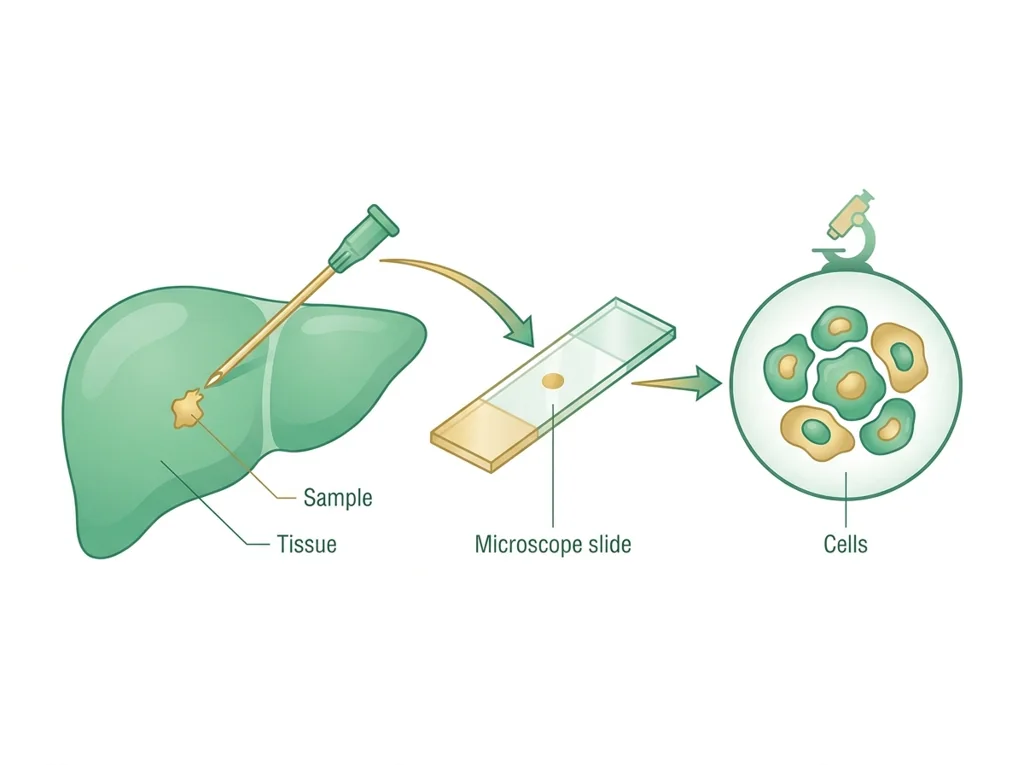
- • : A medical procedure that removes a small sample of from the body so it can be examined under a microscope for disease such as .
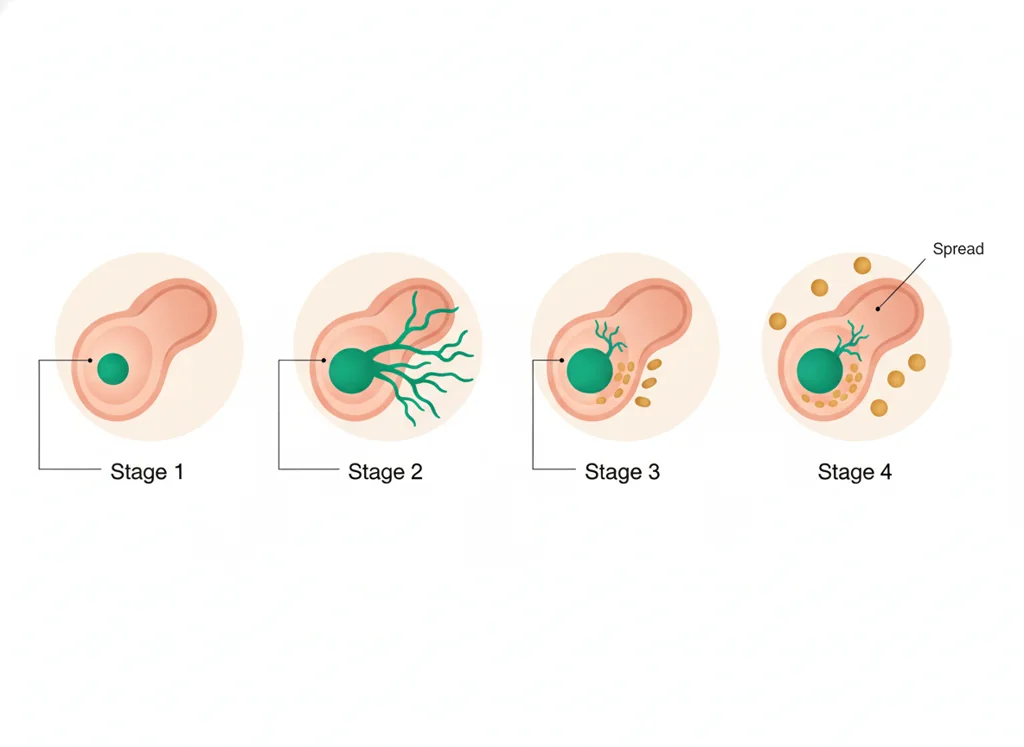
- • staging: Classifying how far a has grown and spread, which guides treatment choices and predicts likely outcomes.
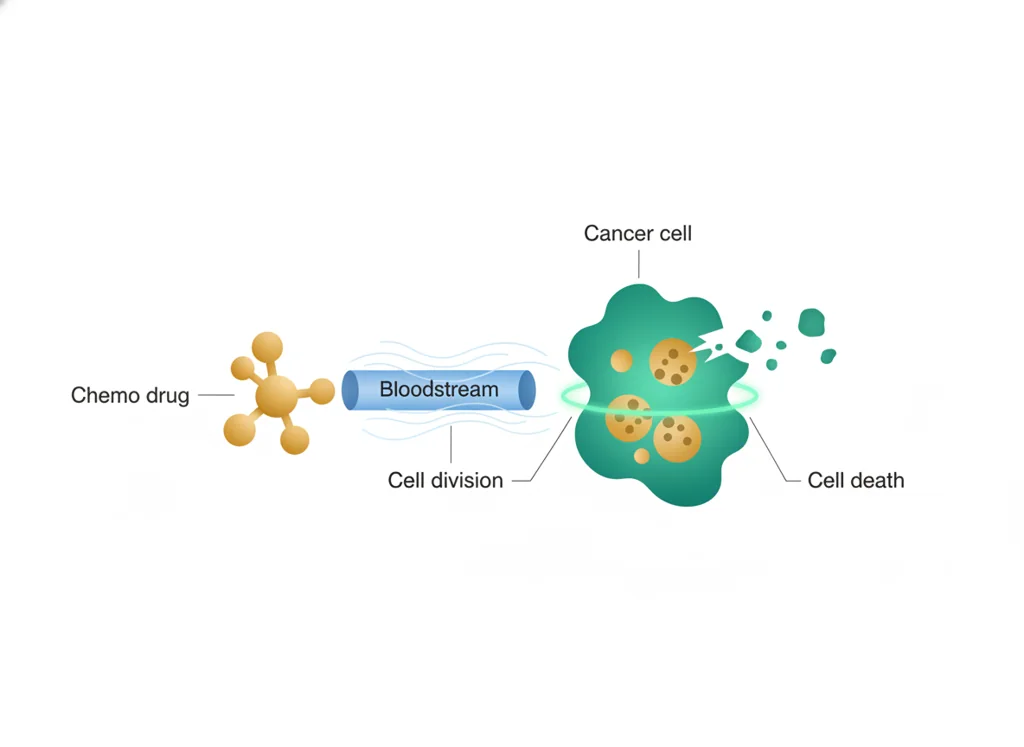
- • : Treatment that uses powerful drugs to kill rapidly dividing cells throughout the body, though it can also harm some fast-growing healthy cells.
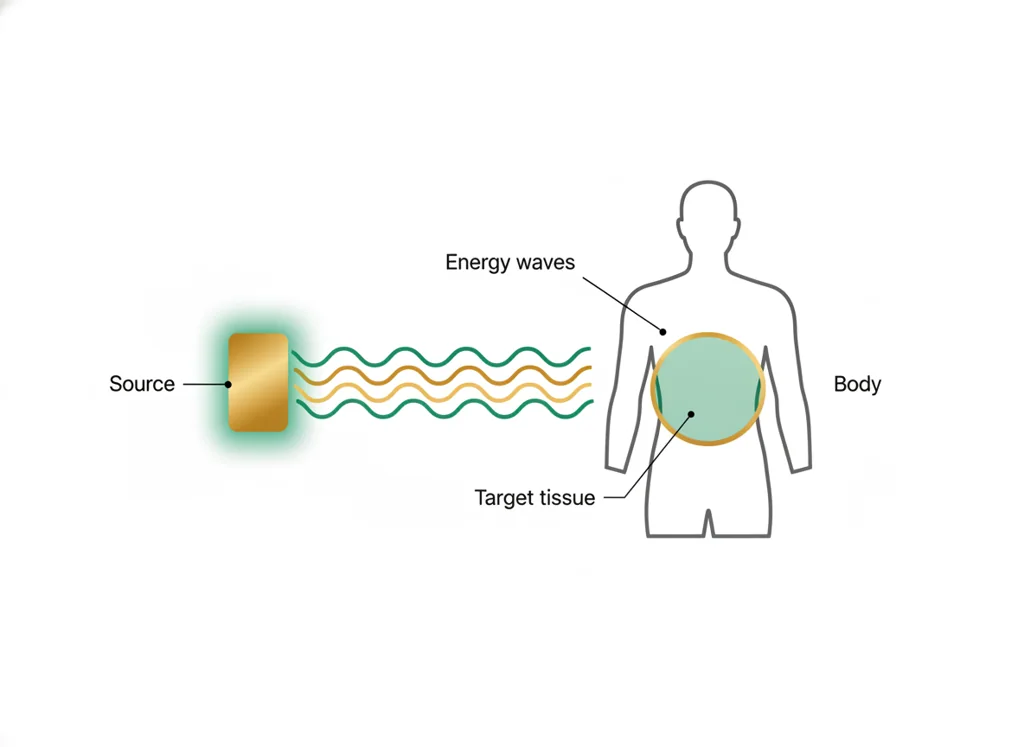
- • radiation: Energy that travels as waves or particles; in medicine it can image inside the body or destroy harmful cells like .
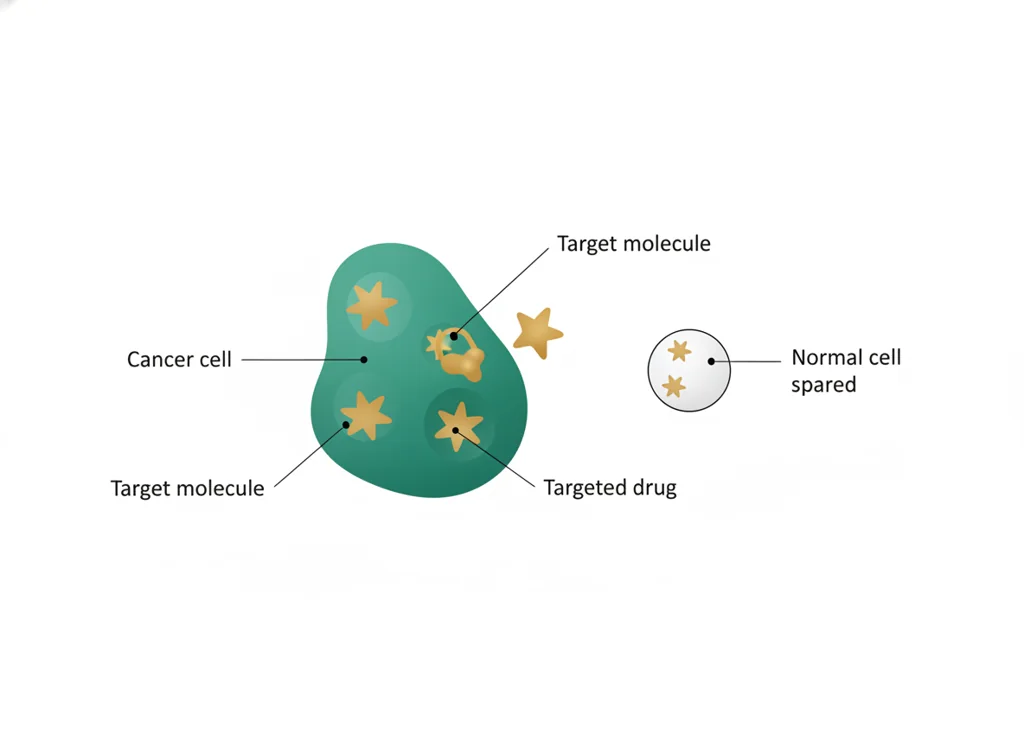
- • : A treatment that attacks specific molecules cancer cells rely on, harming those cells while sparing more healthy cells than older .
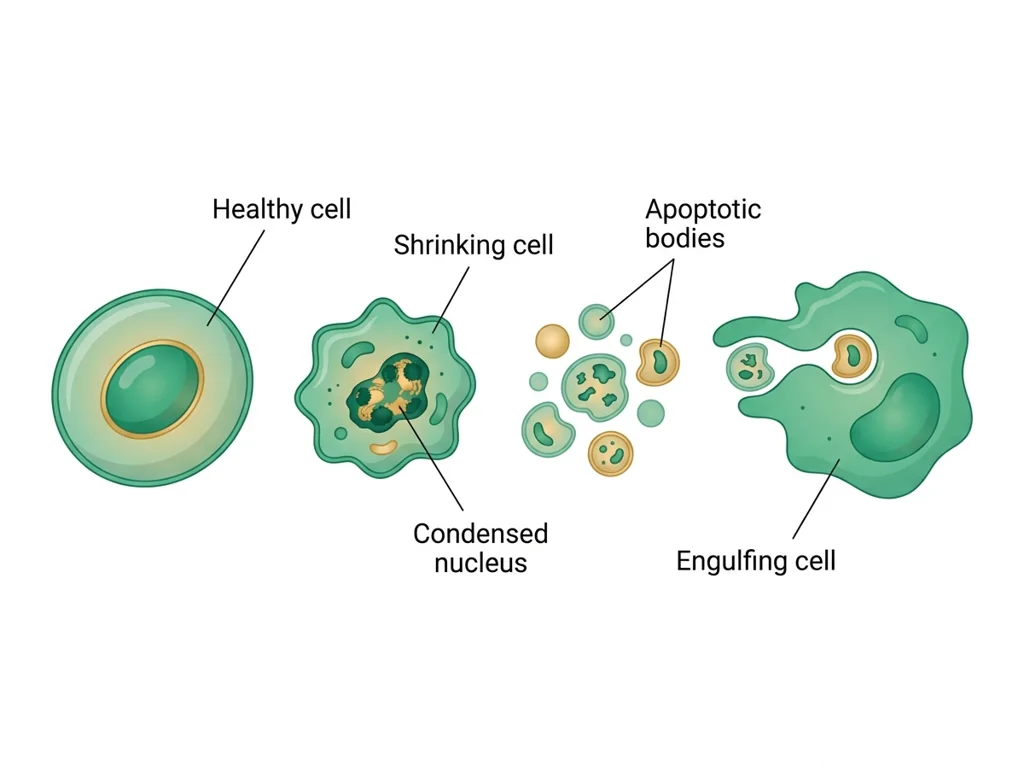
- • : Programmed, controlled cell death that the body uses on purpose, including to clear the seam between two tissues during .
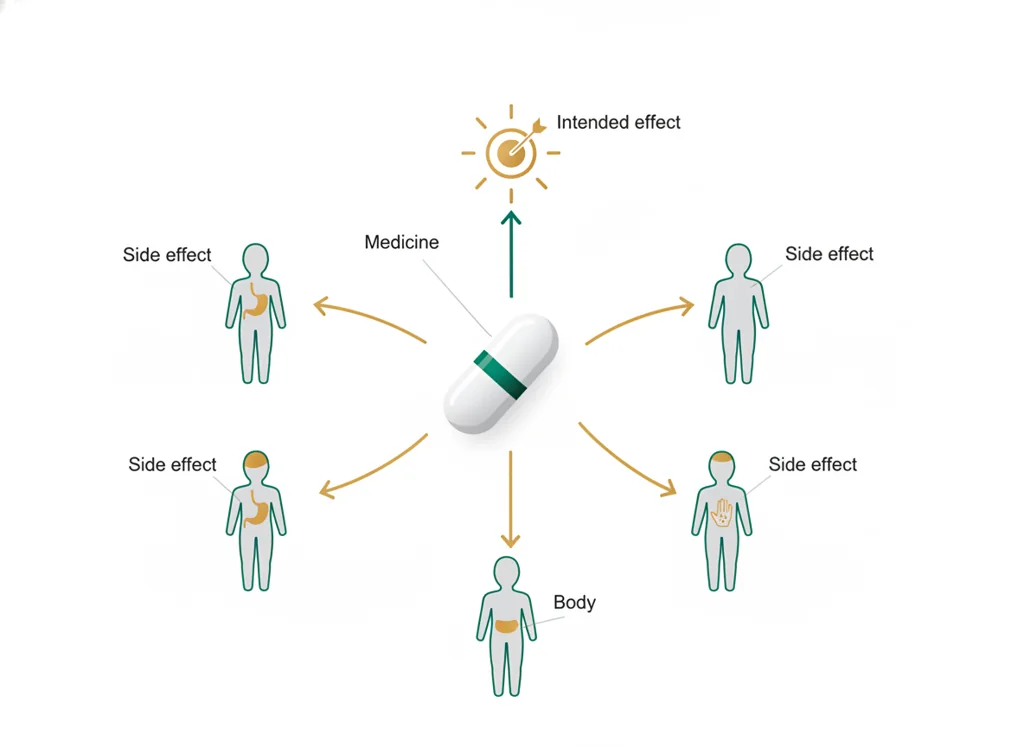
- • : An unintended effect of a medicine or treatment that happens in addition to its intended benefit, ranging from mild to serious.
Use it now: Choose one decision option. Cite E1 and E3, then explain how the rule connects the evidence to your choice. This is thinking practice for the one turn-in named under Turn in, not a second submission.
Go further, optional: The source links below are optional enrichment. Every fact required for today's local evidence decision appears in this lesson package.
diagnosis and treatment planning integrate or molecular findings, stage, features, overall health, benefits, and harms; no single classroom image or marker determines the complete decision.
Limit: The composite classroom case cannot support a real diagnosis, stage, prognosis, or treatment recommendation.
Stored information can be copied, read, and converted into a functional product.
Limit: Genes are regulated biological sequences, not conscious instructions, and one gene rarely determines a whole trait alone.
You can run the ABCDE check on a mole and say what each letter is asking.
Limit: E3 defines the classroom product or success criterion. It is not independent scientific evidence and cannot justify a clinical or causal claim.
Today's decision · Simulated classroom evidence scenario
Your role: medical interventions team member
Decision: Your team must decide what the evidence from today's lesson supports before submitting the notebook record named on today's page.
- • Give the mutant a longer dose so the difference between the strains shows up clearly.
- • Hold any claim about UV until the unexposed plates grow, because a blank plate proves nothing grew rather than that UV killed it.
- • Expose both strains together at the same distance and time, so the only thing differing between the plates is the strain.
Response: State one choice, cite at least two evidence IDs, explain the rule that connects them, and add one limitation. Use it inside the one turn-in named under Turn in; it is not a separate submission.
Claim ceiling: Today's evidence supports a classroom claim about today's lesson. It cannot prove causation, diagnose a real patient, or justify action outside this room.
Reason for review: Your team must decide what the evidence from today's lesson supports before submitting the notebook record named on today's page.
Context: UV damage is common and mostly repaired, so what turns exposure into is the balance between the dose you take and the repair capacity you have, which is why the repair mutant and the wild type only separate on the exposed plates.
- • T1: Take notes on the ABCDE method for a skin self-exam.
- • T2: Take the risk questionnaire and build your three-column table: risk factors you cannot change, protective things you already do, and protective things you would have to start doing.
- • T3: Write your experimental procedure in your notebook before you open anything. Name the , name every plate in your set and say what job each one does, and name the rules the bench version of this would need. The simulation will not let you past its notebook gate until this is written.
- • T4: Open the pre-lab simulation on today's page and design the set: which plates exist, whether each strain gets its own unexposed plate, lids on or off under the lamp, and how many seconds each exposed plate gets.
- • T5: Run the exposure and read the plates. Fill both percent-coverage tables, wild type and repair mutant, at every exposure level, with at least two readings per level.
- • T6: Write the claim your data supports, then write the ceiling on it: what percent coverage is a measurement OF, where the threshold is bounded, and one thing the method could not see.
- • E1: diagnosis and treatment planning integrate or molecular findings, stage, features, overall health, benefits, and harms; no single classroom image or marker determines the complete decision.
- • E2: Stored information can be copied, read, and converted into a functional product.
- • E3: You can run the ABCDE check on a mole and say what each letter is asking.
Measurements: Use only the measurements, units, graph, or counts supplied in today's task. No additional patient measurement is implied.
Uncertainty: This is a composite classroom scenario. Missing history, measurements, or confirmation tests remain unknown and limit the conclusion.
= final volume / sample volume. New concentration = starting concentration / dilution factor.
Mix 1 mL of sample to a final volume of 10 mL. The is 10. A 100 mg/mL starting sample becomes 10 mg/mL.
Use the same volume units before dividing. Concentration keeps its original concentration unit.
Rework the example with 2 mL of sample made up to 10 mL. Show the , the new concentration with its unit, and a reasonableness check.
Students often think percent growth on a as percent of cells that survived. The trap: Percent growth is percent of the plate COVERED, and no arithmetic converts it to survival. A cell alive but dividing too slowly to form a visible in 48 hours scores identically to a dead one. Survival needs separated colonies counted from dilutions against an unexposed plate.
- CER:
- Claim, Evidence, Reasoning: make a claim, back it with evidence, explain your reasoning.
- SOP:
- Standard Operating Procedure, the exact steps to follow (especially in a lab).
- Tracker:
- Your PLTW progress log where you record completed evidence.
- myPLTW:
- The PLTW course site where you do the online activities. Find it in Clever with your Microsoft sign-in, right next to Schoology.
Tap the speaker to hear a term. Add two of these to your notebook glossary with a definition and an example in your own words.
Pick just 2 or 3 words from today and make them yours: write what each one means in your own words, name the context clue or evidence that helped, then give one example from what you actually did in Skin cancer risk and the DNA repair plate lab. Try your own words first; the glossary is there if you get stuck. This is voluntary and counts as extra credit, so keep it short.
Saved on this device. Show Mr. Mendoza or add these to your notebook glossary to claim the extra credit.
Part 2 of 4 · Directions in plain English▸
2.1 Open your materials
2.2 Start the work
Take notes on the ABCDE method for a skin self-exam.
Show all 7 required steps
- Take notes on the ABCDE method for a skin self-exam.
- Take the risk questionnaire and build your three-column table: risk factors you cannot change, protective things you already do, and protective things you would have to start doing.
- Write your experimental procedure in your notebook before you open anything. Name the independent variable, name every plate in your set and say what job each one does, and name the safety rules the bench version of this would need. The simulation will not let you past its notebook gate until this is written.
- Open the pre-lab simulation on today's page and design the set: which plates exist, whether each strain gets its own unexposed plate, lids on or off under the lamp, and how many seconds each exposed plate gets.
- Run the exposure and read the plates. Fill both percent-coverage tables, wild type and repair mutant, at every exposure level, with at least two readings per level.
- Write the claim your data supports, then write the ceiling on it: what percent coverage is a measurement OF, where the threshold is bounded, and one thing the method could not see.
- Optional, if you finish early or at home: fill in the table of skin cancer types (where each one starts and how likely it is to spread), and summarize what 5-fluorouracil is and why a drug that interferes with making DNA is used on sun-damaged skin. Neither is required for today's PDF.
Lost your place? Your procedure has to be written before the simulation lets you past its notebook gate. Name the independent variable, name every plate and its job, and list the safety rules.
- 0-8 minDo Now, then notes on the ABCDE method for a skin self-exam
- 8-20 minTake the risk questionnaire; fill the three-column risk table
- 20-34 minWrite the full procedure in your notebook: , every plate and its job, what you will measure and what the number is a number of, . No written procedure, no simulation
- 34-52 minOpen the pre-lab simulation and design the set. Which plates exist, lids on or off, and how many seconds each exposed plate gets are all yours and none of them can be changed afterwards
- 52-64 minRead the plates and fill both coverage tables, at least two readings per exposure level per strain
- 64-74 minWrite the claim and its ceiling: what coverage measures, where the threshold is bounded, one thing the method could not see
- 74-80 minExit: which single plate in your set had to grow before any other plate meant anything; photograph your pages and submit the one PDF
- • Sunburn risk adds up rather than arriving all at once. Pooling fifty-one studies, ever having been sunburned as a child went with about 1.9 times the melanoma risk; in a study following 108,916 women, five or more blistering sunburns between 15 and 20 went with about 1.8 times. Burns at every age count, not only the childhood ones, and the number of them is what moves the figure.
- • Today has two halves. The first is about you: how to check your own skin, and which of your risk factors you can actually do something about.
- • The second is the experiment. Two yeast strains, identical except that one cannot repair UV damage, and you design the comparison. There is no lamp in this building and no cultures were ordered, so the plates run in a simulation. Everything you decide in it is real and none of it can be undone.
- • Exit goal: your risk table and your written procedure in your notebook, and a completed simulation run with both coverage tables filled and a claim written to its ceiling.
PLTW connection and today's work
Open Project 3.2.2 Skin Cancer Prevention in myPLTW, under Unit 3 Lesson 3.2 Reducing Your Risk, and follow its laboratory protocol page while you write your own procedure.
Today's stopping point: The targeted-therapy comparison should be done; the risk table, the written procedure and the simulated plate experiment are due today.
PLTW activity titles identify the course connection. If your account will not open, use the posted materials for today and tell Mr. Mendoza. Do not mark an online activity complete unless you completed it.
Course connection
- Project 3.2.2 Skin Cancer Prevention
Use the turn-in directions in Part 4 of this page. Do not create a second submission unless your teacher asks for one.
Show another explanation or a smaller first step
Need help? Choose a starting point
Finish the assigned lab safely before starting extra practice.
Part 3 of 4 · Worked example▸
This is a parallel case, not your own. Read it for the order of the work, then do your own in Part 4.
Project 3.2.2 notebook entry (sample)
ABCDE, and what each letter asks:
A, asymmetry: fold the spot in half in your mind. Do the halves match?
B, border: is the edge clean, or ragged and blurred into the skin?
C, color: one shade, or several browns, blacks, or reds in one spot?
D, diameter: is it wider than a pencil eraser, about 6 mm?
E, evolving: has it changed over weeks or months? This is the letter people skip, and change over time is the strongest single signal.
What the check is: a screening rule that decides who gets looked at by a clinician. It does not diagnose anything.
Skin cancer types:
Type | Starts in | How likely to spread
Basal cell carcinoma | Basal layer of the epidermis | Rarely spreads, locally destructive
Squamous cell carcinoma | Keratinocytes above the basal layer | Can spread, usually late
Melanoma | Melanocytes | Spreads early, and is the one that kills
My risk table:
Cannot change | Already do | Would have to start
Skin that burns before it tans | Sunglasses most days | Sunscreen on cloudy days, not only sunny ones
A family history of melanoma | Shade at midday in summer | A yearly skin check
Many moles across my back | | Reapplying after swimming, not once in the morning
Experimental procedure, written before I opened anything:
Independent variable: UV exposure time, at 0, 10, 20, and 40 seconds.
Dependent variable: percent of the plate covered by growth at 48 hours.
Plates in my set:
WT unexposed. Wild type, no lamp. Shows the strain grows and the plate was not contaminated.
RM unexposed. Repair mutant, no lamp. Shows the mutant is not simply a sick strain to begin with. Without its own unexposed plate I could not separate repair failure from poor growth.
WT exposed, one plate at each time point.
RM exposed, one plate at each time point.
Held constant: both strains go under the lamp together, same shelf distance, same seconds, lids off, from the same overnight culture at the same dilution. The only thing allowed to differ between the exposed plates is the strain.
Safety the bench version would need: UV at this wavelength gives the eye no warning, so the lamp stays interlocked and off whenever hands are inside, with a face shield and gloves, and every yeast plate is autoclaved before disposal.
Percent coverage, wild type:
Exposure | Reading 1 | Reading 2 | Mean
0 s | 88 | 90 | 89
10 s | 84 | 86 | 85
20 s | 76 | 74 | 75
40 s | 61 | 65 | 63
Percent coverage, repair mutant:
Exposure | Reading 1 | Reading 2 | Mean
0 s | 87 | 85 | 86
10 s | 52 | 56 | 54
20 s | 24 | 20 | 22
40 s | 6 | 4 | 5
Claim my plate set supports: the two strains start together and separate as soon as UV is applied. Unexposed, they are within 3 points of each other, at 89 and 86. By 20 seconds wild type reads 75 percent coverage and the repair mutant reads 22. The mutant is not being struck more often; it is less able to undo the damage, and it is the pair of unexposed plates that lets me say that rather than blaming a weak strain.
The ceiling on that claim:
Percent coverage is percent of the plate covered by visible growth. It is not percent of cells that survived, and no arithmetic converts one into the other. A cell that is alive but dividing too slowly to raise a visible colony in 48 hours scores exactly the same as a dead one. Measuring survival would mean counting separated colonies from a dilution series and dividing by the count from the unexposed plate.
Seconds are not a dose. Dose is the lamp's intensity multiplied by time, so the same 20 seconds on a different shelf, or with an older tube, is a different experiment. My numbers do not transfer to another setup.
I read coverage by eye, so a 75 and a 78 are not distinguishable in my data, and I should not argue from a 3 point difference anywhere in these tables.
This set says nothing about wavelength. It was run at 254 nm, which is near the peak where DNA absorbs. A lamp near 365 nm or 470 nm would not be a weaker version of this experiment, because those wavelengths power photolyase, which takes the lesion apart again.
5-fluorouracil: a chemotherapy drug used as a cream on sun-damaged skin. It blocks a step in making DNA, so the cells dividing fastest take the heaviest hit, and on sun-damaged skin those are the damaged ones. The skin goes red and raw while it works, which is the drug reaching its target rather than a reaction against it.
| Exposure | Wild type, mean coverage | Repair mutant, mean coverage |
|---|---|---|
| 0 s | 89 | 86 |
| 10 s | 85 | 54 |
| 20 s | 75 | 22 |
| 40 s | 63 | 5 |
This model shows the level of evidence and organization needed to complete: Completes Project 3.2.2: ABCDE notes, the skin cancer type table, the three-column personal risk table, the written procedure with every plate named, both percent-coverage tables, the claim with its stated ceiling, and the 5-fluorouracil summary.
- Date and label the entry.
- Record the procedure, observation, or design decision clearly.
- End with what the evidence means and the next step.
Keep the structure. Replace the question, facts, measurements, and evidence. Then recheck units, vocabulary, and whether the conclusion goes beyond the evidence.
Also due today: Photograph the notebook pages, including both coverage tables and the claim with its stated ceiling, and submit them in Schoology or hand them to Mr. Mendoza in class.
A library keeps a master plan protected while working copies guide production at different stations.
- Why protect the master copy?
- What information moves?
- Where can an error change the final product?
Stored information can be copied, read, and converted into a functional product.
Genes are regulated biological sequences, not conscious instructions, and one gene rarely determines a whole trait alone.
- • Master plan maps to .
- • Working copy maps to RNA.
- • Production output maps to or a regulated cell function.
Part 4 of 4 · Your work▸
Check your work before submitting
- You will be able to run the ABCDE check on a mole and say what each letter is asking.
- You will be able to separate a risk factor you cannot change from a behavior you can.
- You will be able to write a procedure another group could follow to get your result.
- You will be able to name the control on your own plate set and say what it proves.
Before lab work: read the safety rules
- There is no hazard in the room today. Nothing is handled, nothing is cultured and no lamp is switched on. The safety writing below is part of the assessed procedure, not a description of a risk present in the block, and students should be told that plainly so they do not learn to treat a safety section as decoration.
- Write the safety section anyway, and write it for the bench version, because naming the hazards a procedure would create is part of what a procedure IS. There are at least two distinct hazards and they need different rules, which is the point of the notebook item.
- Hazard one, if this were ever run: 254 nm ultraviolet light burns the surface of the eye and the skin, and you feel none of it while it is happening. A cornea burn arrives hours later, usually that evening, as pain like grit under the eyelid. The control is that the lamp is enclosed, one adult operates it, nobody looks at it, and no hand, arm or face goes in line with it. Polycarbonate goggles absorb 254 nm and cover two small windows; they are not permission to look at the lamp.
- Hazard two, if this were ever run: both yeast strains are live BSL-1 cultures. Gloves and goggles before any tube is opened, no food or drink at the bench, cover broken skin, never blow out a pipette tip because it makes an aerosol, plates sealed and inverted, and every plate flooded with 10 percent bleach for five minutes before it goes in the biohazard bag.
- A third thing that is not a hazard but is treated like one every year: the lamp tube in a germicidal fixture is a mercury lamp. Students do not handle it. A broken tube is a mercury spill and is cleared by an adult, not swept up.
4.1 Turn in your work
DueCheck the Schoology assignment for this day- Hand in
- Notebook entry for Project 3.2.2: ABCDE notes, your three-column risk table, your written experimental procedure, both filled percent-coverage tables, and the claim your plate set supports with its stated ceiling. The skin cancer type table and the 5-fluorouracil summary are optional.
How to submit and name your file
Photograph the notebook pages, including both coverage tables and the claim with its ceiling, and submit them as one PDF in Schoology.
In Schoology, open your course and the assignment for this lesson. Attach your file, select Submit, and check that it appears in the submission.
PDF upload helpYou get two school days for every day you were absent, so this deadline moves with you.
Today's lesson is in Schoology
Each school day has one lesson page in Schoology that holds everything for the day: the goal, the story so far, every table and data value, the numbered steps, and what to turn in. Open it first and work from it. The other rows for this day, if any, are the score line for a paper quiz or test and the John Carroll debate item; they do not add work. Check Schoology for each deadline.
- Today's Lesson · Tue 11/24 · Wk14 · Measure the marker gel and find who carries the change, then write to Judy(today's lesson page: the goal, the data, the steps, and what to turn in are all on it)
Link will not open? Open Schoology, choose your course and section, and find the title shown above.
- CompleteEvery required part of the artifact is present, nothing left blank.
- AccurateThe science and the data are correct and match the evidence.
- Scientific reasoningYou explain your claim with evidence and reasoning (CER), not just an answer.
- Professional communicationClear, organized, labeled, and written the way a clinician or scientist would.
- SubmittedGo to Schoology to turn this in. Submit one PDF. Schoology attaches your name to your upload; on the page itself, write your period and code. Name the file: FirstName LastName - Assignment Title - YYYY-MM-DD.pdf. If you cannot get in, see Mr. Mendoza. Do not skip the work.
- Error analysis and method · counts doubleName a specific limit of the method and how it moved your result, and compare what you predicted to what happened. "Human error" does not count; say what about the procedure or instrument caused it.
How this lesson connects
Keep using what you learned last class: Cancer diagnosis and treatment planning integrate tissue or molecular findings, stage, tumor features, overall health, benefits, and harms; no single classroom image or marker determines the complete decision. Today: Sunlight damages DNA in every cell it reaches, so whether that damage becomes cancer depends on repair capacity and on the dose delivered.
Practice: try a question, then check your answer▸
Claim ceiling for this check: Today's evidence supports a classroom claim about today's lesson. It cannot prove causation, diagnose a real patient, or justify action outside this room.
Why must both exposed plates go under the lamp at the same time, same shelf, same duration?
Write an answer and pick a confidence to unlock the key.
Fast retrieval with instant answers, not the commit-then-reveal check above. Try each from memory first: write what you remember about the earlier units, then check yourself here.
Missed class or ready for more?▸
Run this before you touch the bench. It is built from the real lab procedure, so the decisions you make here are the ones you will make with the equipment in your hands. This lesson has more than one, and they cover different skills.
Today is a laptop lab, not a bench lab, and the reason matters: no consumables were ordered, so the plate experiment runs in a simulation. Two things to bring. First, reread your aseptic technique notes from Friday, October 2, because the simulation asks you to handle two cultures with one set of tools and the answer is on those notes. Second, come with a rough idea of how you would set up a fair comparison between a strain that can repair DNA damage and one that cannot. You write the procedure yourself before the simulation opens, and it has to be written before you touch the design.
Finish the checklist before you handle any material.
- • There is no hazard in the room today. Nothing is handled, nothing is cultured and no lamp is switched on. The safety writing below is part of the assessed procedure, not a description of a risk present in the block, and students should be told that plainly so they do not learn to treat a safety section as decoration.
- • Write the safety section anyway, and write it for the bench version, because naming the hazards a procedure would create is part of what a procedure IS. There are at least two distinct hazards and they need different rules, which is the point of the notebook item.
- • Hazard one, if this were ever run: 254 nm ultraviolet light burns the surface of the eye and the skin, and you feel none of it while it is happening. A cornea burn arrives hours later, usually that evening, as pain like grit under the eyelid. The control is that the lamp is enclosed, one adult operates it, nobody looks at it, and no hand, arm or face goes in line with it. Polycarbonate goggles absorb 254 nm and cover two small windows; they are not permission to look at the lamp.
- • Hazard two, if this were ever run: both yeast strains are live BSL-1 cultures. Gloves and goggles before any tube is opened, no food or drink at the bench, cover broken skin, never blow out a pipette tip because it makes an aerosol, plates sealed and inverted, and every plate flooded with 10 percent bleach for five minutes before it goes in the biohazard bag.
- • A third thing that is not a hazard but is treated like one every year: the lamp tube in a germicidal fixture is a mercury lamp. Students do not handle it. A broken tube is a mercury spill and is cleared by an adult, not swept up.
- 1Before materials are handled, identify the purpose, variables or comparison, controls, measurement units, and stop-work condition.
- 2Take notes on the ABCDE method for a skin self-exam.
- 3Take the risk questionnaire and build your three-column table: risk factors you cannot change, protective things you already do, and protective things you would have to start doing.
- 4Write your experimental procedure in your notebook before you open anything. Name the independent variable, name every plate in your set and say what job each one does, and name the safety rules the bench version of this would need. The simulation will not let you past its notebook gate until this is written.
- 5Open the pre-lab simulation on today's page and design the set: which plates exist, whether each strain gets its own unexposed plate, lids on or off under the lamp, and how many seconds each exposed plate gets.
- 6Run the exposure and read the plates. Fill both percent-coverage tables, wild type and repair mutant, at every exposure level, with at least two readings per level.
- 7Write the claim your data supports, then write the ceiling on it: what percent coverage is a measurement OF, where the threshold is bounded, and one thing the method could not see.
- 8Optional, if you finish early or at home: fill in the table of skin cancer types (where each one starts and how likely it is to spread), and summarize what 5-fluorouracil is and why a drug that interferes with making DNA is used on sun-damaged skin. Neither is required for today's PDF.
- 9Record each result in the prepared table before interpreting it. Mark missing, repeated, or invalid results truthfully.
- 10Complete the named cleanup and waste route, remove PPE safely, wash hands when required, and confirm the station is ready for the next group.
| Which trial or sample this row is | What you changed on purpose | What you measured, with units | What you saw, before you explain it | Anything that could make this reading wrong |
|---|---|---|---|---|
Before the procedure, predict the result and cite the rule behind the prediction.
After the procedure, compare the result with the prediction and name one limitation or source of uncertainty.
What today's skills lead to. These are real health-science careers this course builds toward. Tap one to see, on the US Department of Labor's O*NET site, what the job actually involves, what it pays, and how fast it is growing.
Everything today runs from a laptop, so a missed block is fully recoverable. Write the ABCDE notes, take the risk questionnaire and build your three-column table. Then open the pre-lab simulation, write your procedure into its notebook gate, design and run the plate set, fill both coverage tables and write your claim with its ceiling. The skin type table and the 5-fluorouracil summary are optional. The simulation saves your run, so start it and come back to it if the block runs out.
NCI: sunlight and skin cancer riskPhotograph the notebook pages, including both coverage tables and the claim with its ceiling, and submit them as one PDF in Schoology.
Class still runs. Complete today's work as this page describes (it is self-guided). Need the concept taught without a teacher? Use this authoritative explainer:
National Cancer Institute: Types of cancer treatmentThe optional extra-credit track is open. Complete reserved-unit work from home, including virtual labs, for extra credit. Each item shows its correct submission route.
Open the extra-credit trackSources: slides, readings, and resources▸
The deck carries the prior idea forward, lets you inspect an analogy, maps the rule to biology, and ends with the same evidence decision and exit ticket used on this page.
Classroom documents for this lesson are posted in Schoology. Open Clever, then Schoology, and find each one by the name shown on its card.
Open this when the class reaches this activity and use it to complete the required lesson artifact.
Use this if you were absent, got stuck, or need another pass before you submit the lesson artifact.
Sign in to Clever with your district Microsoft account to open Schoology or myPLTW. Follow today's posted steps. If myPLTW will not open, use the posted alternative and tell Mr. Mendoza. Turn in your completed work through the Schoology assignment.
This week
My Progress dashboard