
WebXam pretest and goal setting
This page has four parts, in the order you use them. Part 1 is what you need to know. Part 2 says what to do, in plain English. Part 3 shows the work done once on a case that is not yours. Part 4 is your own work and where to turn it in.
Open your materials, follow the steps, then turn in your work.
Take an ungraded baseline WebXam pretest for 072130 Genetics of Disease to see where you start, then set a mastery goal and reflect on week 1.
Optional: listen or watch a unit review▸
Part 1 of 4 · Background and definitions▸
💡 Big idea: A is not a test you can fail. It shows where you start so we can measure how far you grow.
- • The WebXam is the Ohio end-of-course assessment that verifies mastery.
- • A measures your starting point, not your grade.
- • A good goal is specific and about growth, not perfection.
We earn lab privileges by proving we are safe, and we get credit by submitting clear evidence of our work.
A is not a test you can fail. It shows where you start so we can measure how far you grow.
Driving question: You are about to take a test on MI content you have not been taught yet. If you cannot fail it, what is the smartest way to take it, and why?
What you already know: We earn lab privileges by proving we are safe, and we get credit by submitting clear evidence of our work.
New idea: A is not a test you can fail. It shows where you start so we can measure how far you grow.
Visual or model: No figure is attached to this lesson. The readings, the worked example and E1 to E3 carry the evidence.
- Observe or measure the relevant feature in today's lesson.
- Organize the observation with a stable evidence ID.
- Apply this rule: A useful test links a controlled trial to a measurable criterion and turns the result into a documented revision decision.
- Choose the option the evidence supports and state the limit of the conclusion.
Real biomedical example: You are about to take a test on MI content you have not been taught yet. If you cannot fail it, what is the smartest way to take it, and why?
What the evidence supports: E1 to E3 support the daily take-home when the response meets the stated success criteria.
What it cannot prove: The package does not support claims beyond this lesson's or any real patient diagnosis.
- • procedure: A clear, ordered set of steps followed exactly the same way each time to carry out a task safely and get reliable results.
- • routine: A consistent set of steps done in the same order each time, which builds good habits and makes work more reliable and efficient.
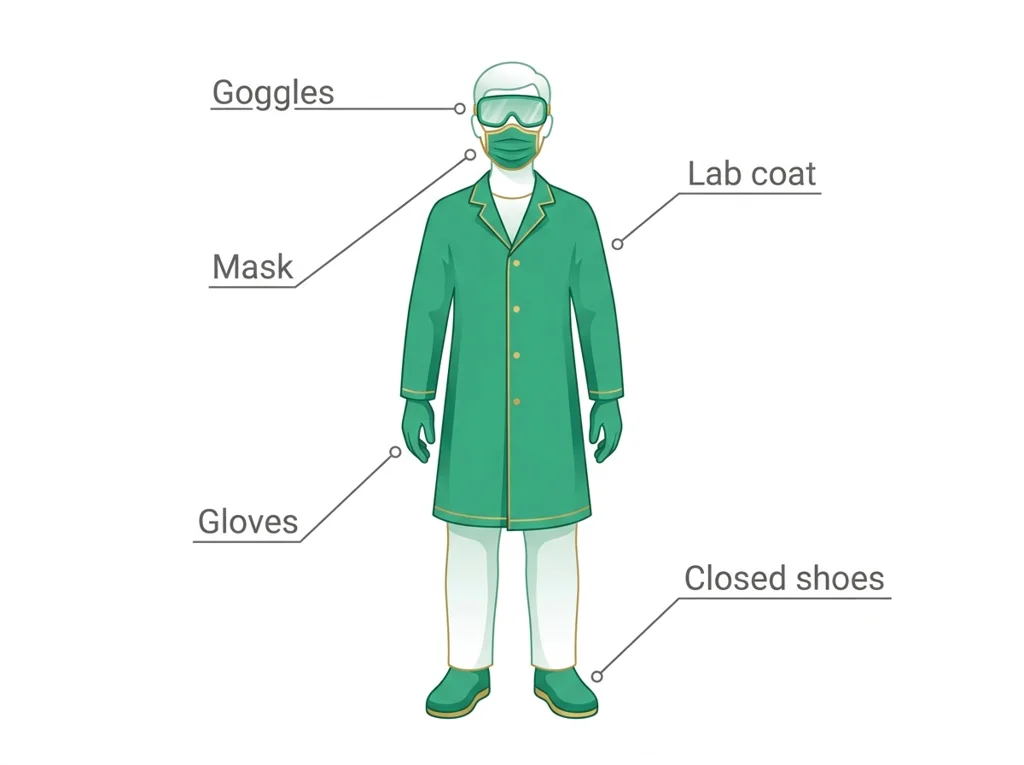
- • : Personal protective equipment, the gear like gloves, goggles, lab coats, and masks worn to shield the body from chemical, biological, or physical hazards.
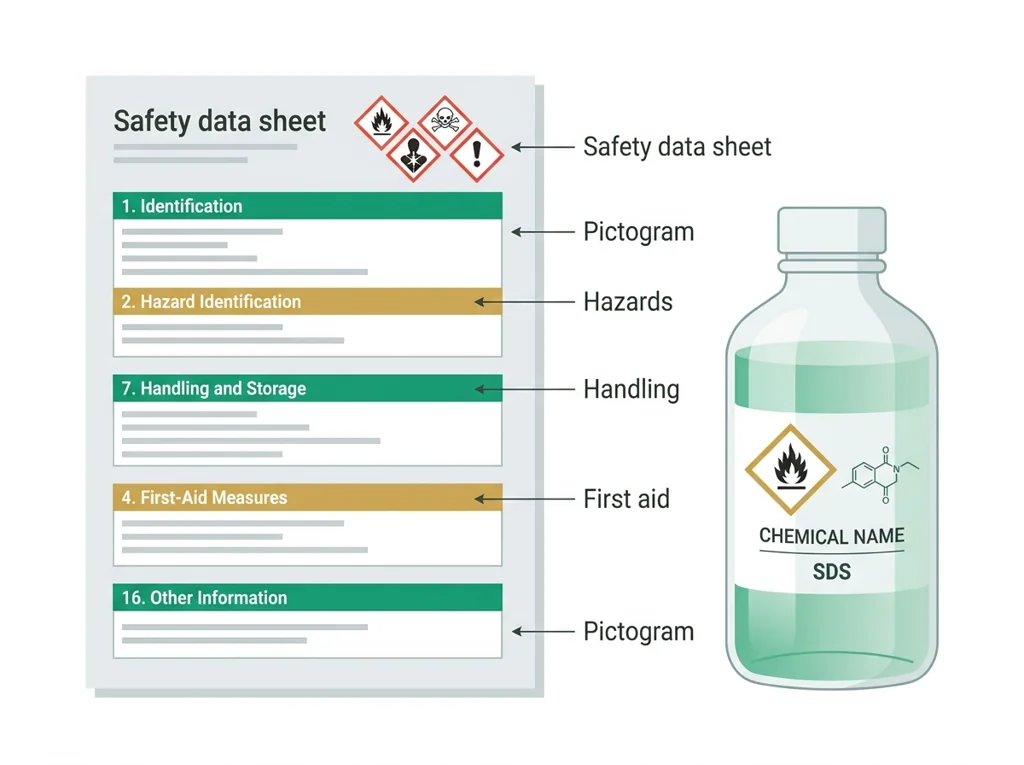
- • SDS: A data sheet: a standardized document listing a chemical's hazards, safe handling steps, and emergency measures for anyone using it.
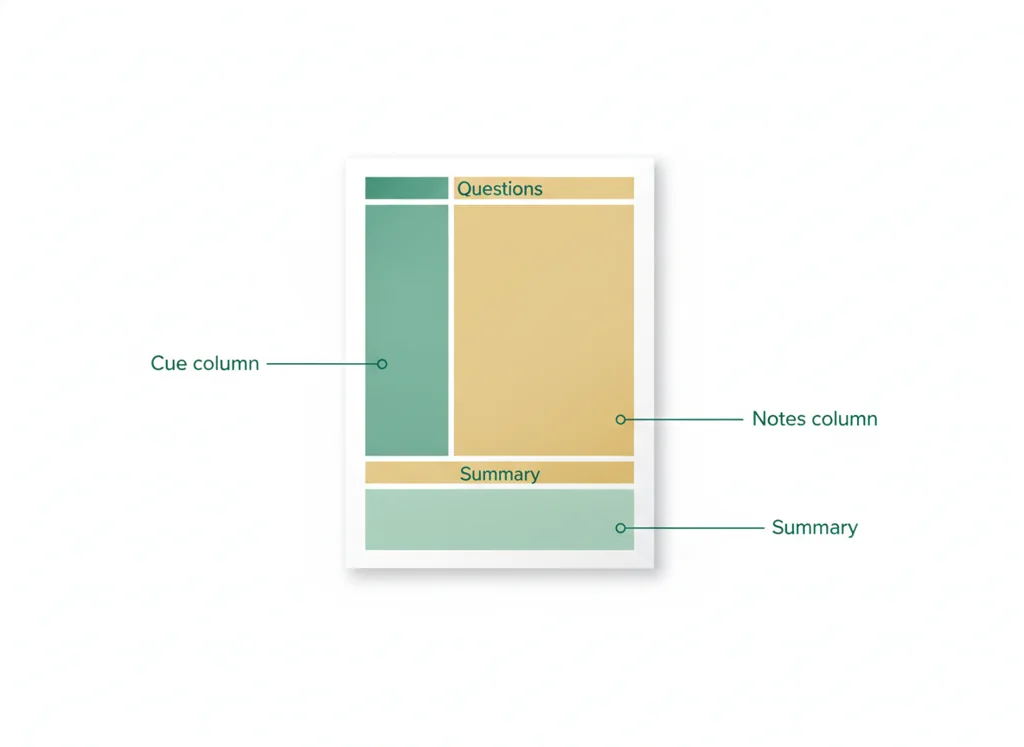
- • : A note-taking layout that splits a page into a wide notes column, a narrow cue column for questions, and a summary strip at the bottom.
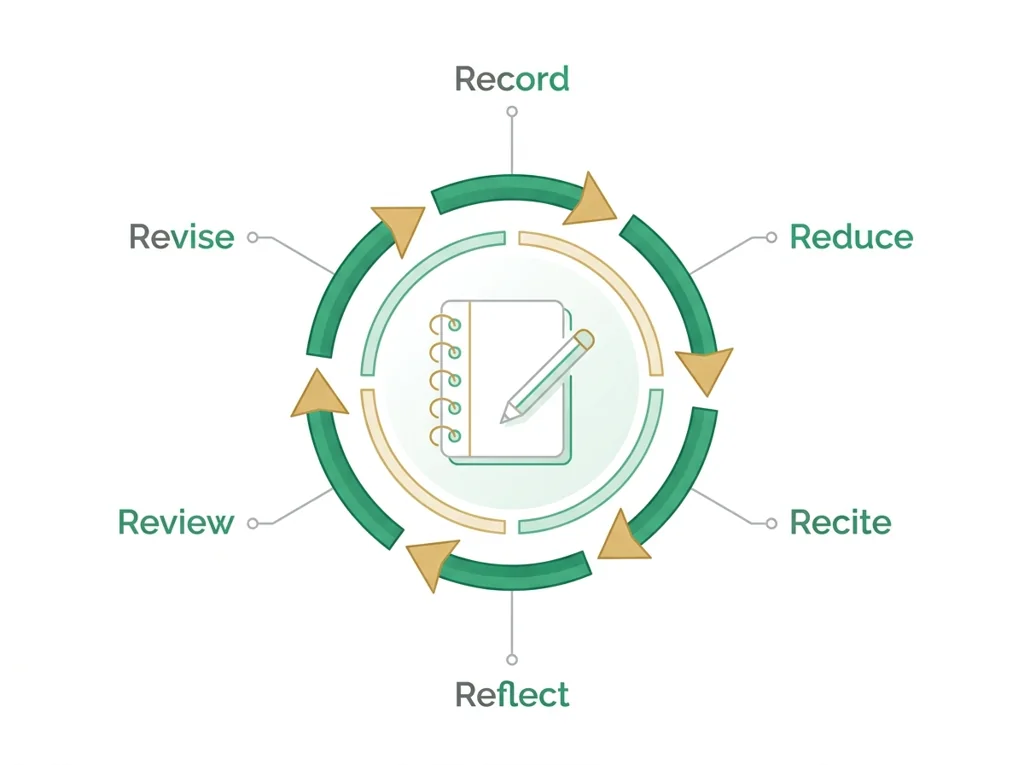
- • : A six-step learning cycle (Record, Reduce, Review, Reflect, Recite, Revise) used to turn class notes into deep, lasting understanding.
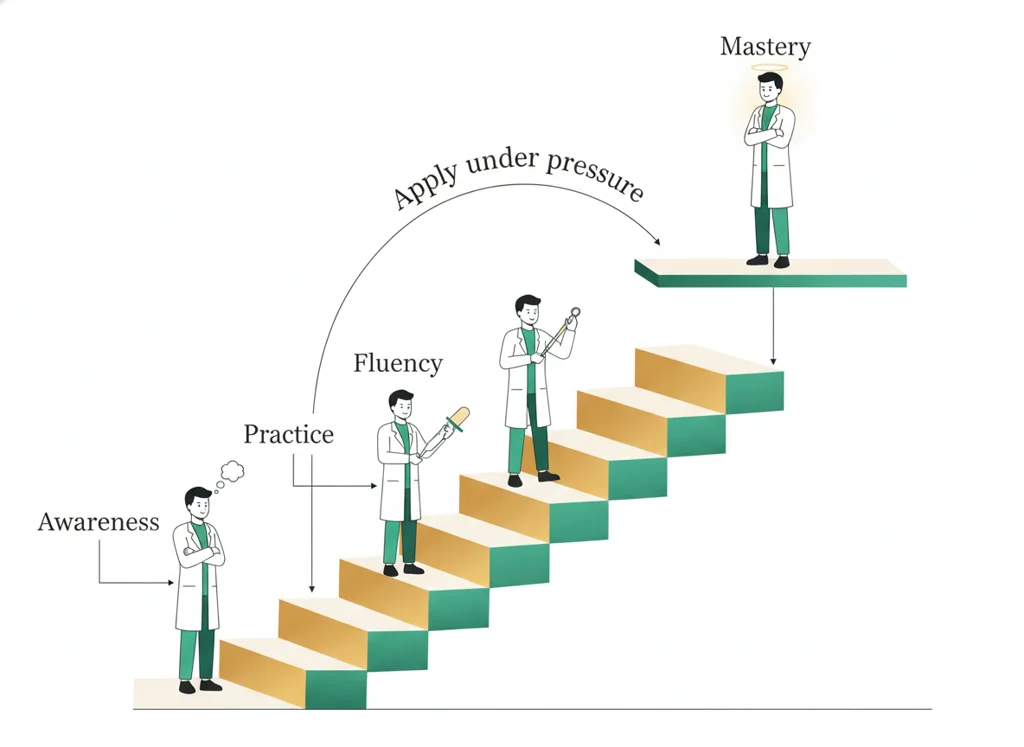
- • mastery: Knowing a skill or concept well enough to use it confidently under pressure, not just recognizing it on a slide.
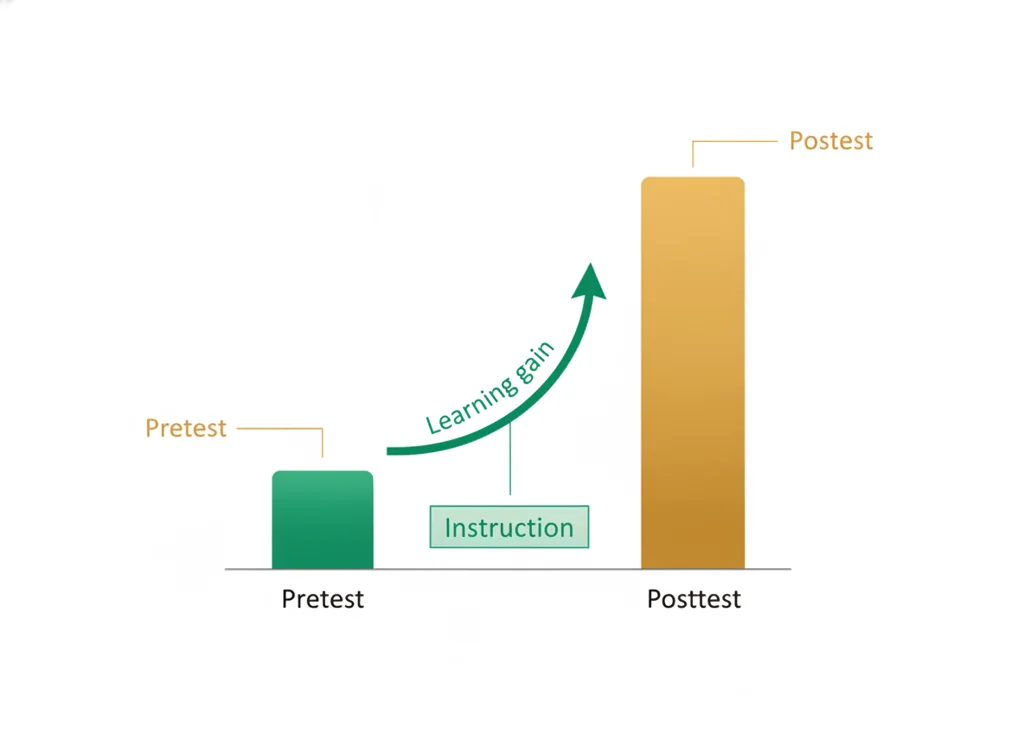
- • : An assessment given before instruction begins so you can measure how much was learned by comparing it to a later test on the same material.
Use it now: Choose one decision option. Cite E1 and E3, then explain how the rule connects the evidence to your choice. This is thinking practice for the one turn-in named under Turn in, not a second submission.
Go further, optional: The source links below are optional enrichment. Every fact required for today's local evidence decision appears in this lesson package.
A is not a test you can fail. It shows where you start so we can measure how far you grow.
Limit: This day teaches local course routines rather than a biomedical science claim.
A useful test links a controlled trial to a measurable criterion and turns the result into a documented revision decision.
Limit: A classroom test can reveal a design weakness without establishing clinical , effectiveness, durability, or regulatory readiness.
You can finish the baseline WebXam pretest and record your score.
Limit: E3 defines the classroom product or success criterion. It is not independent scientific evidence and cannot justify a clinical or causal claim.
Today's decision · Simulated classroom evidence scenario
Your role: medical interventions team member
Decision: Your team must decide what the evidence from today's lesson supports before submitting the WebXam-style response named on today's page.
- • Delay any growth claim until the same exam is repeated at the end of the semester after instruction.
- • Take the pretest honestly and use the score as a starting line for measuring your own growth this semester.
- • Read a low pretest score as a sign that you are already behind in this course and weak at genetics.
Response: State one choice, cite at least two evidence IDs, explain the rule that connects them, and add one limitation. Use it inside the one turn-in named under Turn in; it is not a separate submission.
Claim ceiling: Today's evidence supports a classroom claim about today's lesson. It cannot prove causation, diagnose a real patient, or justify action outside this room.
Students often think a low pretest score means you are behind or bad at this. The trap: a pretest measures your starting point before any instruction, so a low score is expected and simply sets your growth target
- CER:
- Claim, Evidence, Reasoning: make a claim, back it with evidence, explain your reasoning.
- SOP:
- Standard Operating Procedure, the exact steps to follow (especially in a lab).
- Tracker:
- Your PLTW progress log where you record completed evidence.
- myPLTW:
- The PLTW course site where you do the online activities. Find it in Clever with your Microsoft sign-in, right next to Schoology.
Tap the speaker to hear a term. Add two of these to your notebook glossary with a definition and an example in your own words.
Pick just 2 or 3 words from today and make them yours: write what each one means in your own words, name the context clue or evidence that helped, then give one example from what you actually did in WebXam pretest and goal setting. Try your own words first; the glossary is there if you get stuck. This is voluntary and counts as extra credit, so keep it short.
Saved on this device. Show Mr. Mendoza or add these to your notebook glossary to claim the extra credit.
Part 2 of 4 · Directions in plain English▸
2.1 Open your materials
Use the materials named in the first step below. Open lesson resources.
2.2 Start the work
Icebreaker: Rose and Thorn of week 1 (one good thing, one hard thing).
Show all 5 required steps
- Icebreaker: Rose and Thorn of week 1 (one good thing, one hard thing).
- Understand the WebXam: it is the Ohio end-of-course exam for MI (072130 Genetics of Disease), and it reports how well you know the material.
- Take the baseline pretest. It is not graded for correctness; it is a starting point, so answer honestly and skip what you do not know yet.
- Look at your pretest result and set one mastery goal for the semester.
- Reflect: write two routines from this week you will keep, and one thing you still have a question about.
Lost your place? If you were interrupted during the pretest, keep going from the next question. When you finish, look at your result and write your mastery goal.
- 0-6Icebreaker: Rose and Thorn of week 1
- 6-15What the WebXam is and how mastery + the boost work
- 15-55Baseline WebXam pretest (ungraded)
- 55-70Set a mastery goal from your result
- 70-80Week 1 reflection and close
- • Today you take a pretest. You cannot fail it, because it only shows where you start.
- • Be honest: guessing wildly hides what you really know, and that is the one thing the pretest is for.
- • Then you set a growth goal, and we look back at the routines we built this week.
PLTW connection and today's work
Complete the course orientation checklist: routines, website, notebook, safety contract, and the baseline pretest. Check myPLTW course access; if it is unavailable, report it and use the posted class materials.
Today's stopping point: Reach the day-5 checkpoint for this unit.
PLTW activity titles identify the course connection. If your account will not open, use the posted materials for today and tell Mr. Mendoza. Do not mark an online activity complete unless you completed it.
Course connection
- No myPLTW activity today. Check your course access. If it will not open, tell your teacher and continue with the assigned orientation materials.
Use the turn-in directions in Part 4 of this page. Do not create a second submission unless your teacher asks for one.
Show another explanation or a smaller first step
Need help? Choose a starting point
Part 3 of 4 · Worked example▸
This is a parallel case, not your own. Read it for the order of the work, then do your own in Part 4.
My baseline pretest showed I am strongest on lab safety and weakest on data analysis.
Mastery goal: By the WebXam, I will read a data table and write a correct CER without help.
Two routines I will keep: checking the website before class, and taking Cornell notes every day.
This model shows the level of evidence and organization needed to complete: Completes the pretest goal-setting: the student reads a baseline result and writes a specific growth goal.
- Name the prompt or task.
- Answer it directly with the key evidence.
- Check that the response matches the requested format.
Keep the structure. Replace the question, facts, measurements, and evidence. Then recheck units, vocabulary, and whether the conclusion goes beyond the evidence.
An engineering team tests one feature at a time against a written criterion and records each failure before revising.
- Which criterion is being tested?
- What stays controlled between trials?
- Which result justifies a specific revision?
A useful test links a controlled trial to a measurable criterion and turns the result into a documented revision decision.
A classroom test can reveal a design weakness without establishing clinical , effectiveness, durability, or regulatory readiness.
- • The written criterion maps to the pass condition.
- • Repeated controlled trials map to test evidence.
- • The revision log maps to the next design change and its rationale.
Part 4 of 4 · Your work▸
Check your work before submitting
- You can finish the baseline WebXam pretest and record your score.
- You set a specific mastery goal for the semester.
- You can explain how the WebXam affects your grade.
4.1 Turn in your work
DueCheck the Schoology assignment for this day- Hand in
- Baseline WebXam pretest complete (ungraded) + a written mastery goal and a two-routine reflection.
How to submit and name your file
Submit your goal and reflection in Schoology using the assignment with this same title. The pretest records automatically.
In Schoology, open your course and the assignment for this lesson. Attach your file, select Submit, and check that it appears in the submission.
PDF upload helpYou get two school days for every day you were absent, so this deadline moves with you.
Find this lesson's Schoology assignments
These are existing assignments for your section. Follow the directions in the assignment you are working on; this list does not add new work. A PLTW Work row repeats on every day of its lesson; submit it once. Check Schoology for each deadline.
Link will not open? Open Schoology, choose your course and section, and find the title shown above.
- CompleteEvery required part of the artifact is present, nothing left blank.
- AccurateThe science and the data are correct and match the evidence.
- Scientific reasoningYou explain your claim with evidence and reasoning (CER), not just an answer.
- Professional communicationClear, organized, labeled, and written the way a clinician or scientist would.
- SubmittedGo to Schoology to turn this in. Submit one PDF. Schoology attaches your name to your upload; on the page itself, write your period and code. Name the file: FirstName LastName - Assignment Title - YYYY-MM-DD.pdf. If you cannot get in, see Mr. Mendoza. Do not skip the work.
How this lesson connects
Keep using what you learned last class: We earn lab privileges by proving we are safe, and we get credit by submitting clear evidence of our work. Today: A baseline pretest is not a test you can fail. It shows where you start so we can measure how far you grow.
Practice: try a question, then check your answer▸
Claim ceiling for this check: Today's evidence supports a classroom claim about today's lesson. It cannot prove causation, diagnose a real patient, or justify action outside this room.
What is the WebXam for in MI, and why does the pretest not count?
Write an answer and pick a confidence to unlock the key.
Missed class or ready for more?▸
Optional practice for this unit's lab skills. Nothing in it is due today.
What today's skills lead to. These are real health-science careers this course builds toward. Tap one to see, on the US Department of Labor's O*NET site, what the job actually involves, what it pays, and how fast it is growing.
Today is individual work you can do from home: complete the same target above, then submit your WebXam practice.
Go to Schoology to turn this in. Submit one PDF. Schoology attaches your name to your upload; on the page itself, write your period and code. Name the file: FirstName LastName - Assignment Title - YYYY-MM-DD.pdf. If you cannot get in, see Mr. Mendoza. Do not skip the work.
Class still runs. Complete today's work as this page describes (it is self-guided). Need the concept taught without a teacher? Use this authoritative explainer:
CDC Laboratory SafetySources: slides, readings, and resources▸
The deck carries the prior idea forward, lets you inspect an analogy, maps the rule to biology, and ends with the same evidence decision and exit ticket used on this page.
Vetted readings and references for this unit. Use them to prepare, to catch up if you were absent, or to go deeper on today's target.
May require a free account. Use the class copy if you cannot sign in.
This week
My Progress dashboard