
Genetics of Disease · Hearing reference library
Trace the sound. Read the evidence.
Today's Lesson · Tue 10/13 · Wk8 · 1.3.2 Day 1: Run the Rinne test and a speech-in-noise test with a partner
Open today's complete lesson in Schoology (opens in a new tab)Follow that lesson for required work, your organizer and what to turn in. These references add no new assignment. For quiz dates, follow the in-class paper-quiz directions.
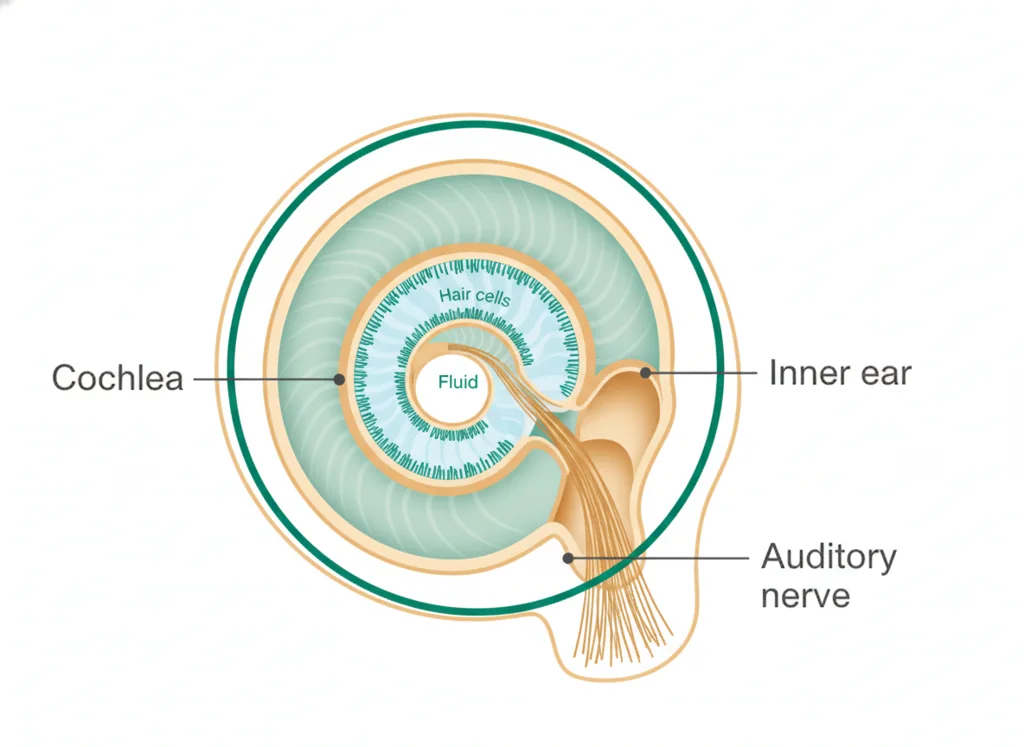
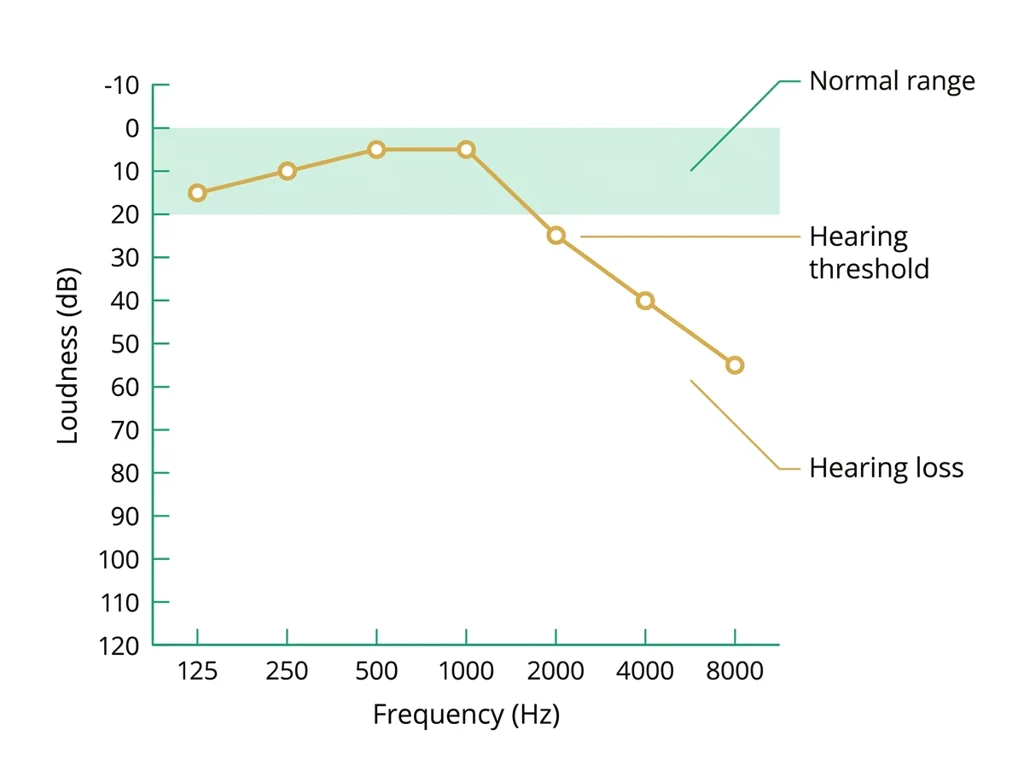
Use the labeled ear drawing and hearing-test explanations alongside your current lesson. A hearing pattern can help locate a problem; it cannot by itself prove a cause or choose a treatment. Practice records are constructed teaching data.
Download the complete ear and hearing study pack (ZIP)- Download How Sound Becomes a Signal: labeled ear plates, tuning fork lab and audiograms (PDF)
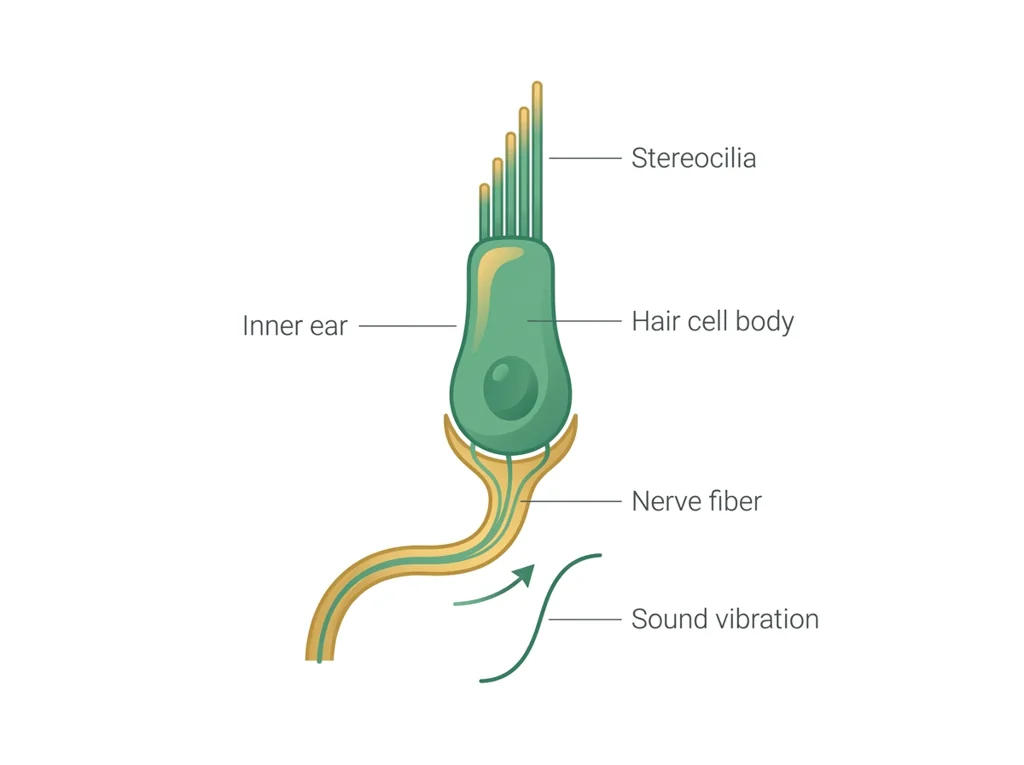
Color-coded ear anatomy, the cochlea, hair cells and balance organs, air versus bone conduction, the Rinne and Weber tests with a blocked-ear lab design, and how to read an audiogram.
- Download Illustrated ear and hearing-test guide (PDF)
Follow sound through the ear, compare hearing tests and connect a pattern to the next question.
- Download One-page hearing reference card (PDF)
Keep the test rules, limits and audiogram symbols beside your organizer.
- Download Four simulated practice cases and audiogram grids (PDF)
Optional practice with constructed teaching data, separate from your assigned patient and paper quiz.
- Download 16 hearing-study flashcards (TSV)
Import the two-column text file into a flashcard app, or open it as a table.
- Download Hearing-study podcast script (PDF)
Read or rehearse the two-voice study conversation. This download is a script.
- Download Hearing-study podcast script (plain text)
The same script in a text format.
Study ear examination with the drawings and models. Do not put an instrument into a classmate's ear or use loud sounds to test hearing. Follow your teacher's directions for voluntary partner activities.
Earlier portal reference material (before the class was repaced)
Use the Schoology lesson above for today's required work; this older reference follows an earlier schedule.
Herd immunity math
This page has four parts, in the order you use them. Part 1 is what you need to know. Part 2 says what to do, in plain English. Part 3 shows the work done once on a case that is not yours. Part 4 is your own work and where to turn it in.
Open your materials, follow the steps, then turn in your work.
Calculate a herd immunity threshold from a reproduction number and explain who it protects.
Optional: listen or watch a unit review▸
Part 1 of 4 · Background and definitions▸
💡 Big idea: How contagious a disease is determines what share of a community must be immune, which is why the same coverage figure can be safe for one disease and dangerous for another.
- • threshold = 1 - (1/R0); a disease with R0=10 needs 90% coverage to stop spread.
- • R-zero is the average number of people one infectious person infects in a fully susceptible population.
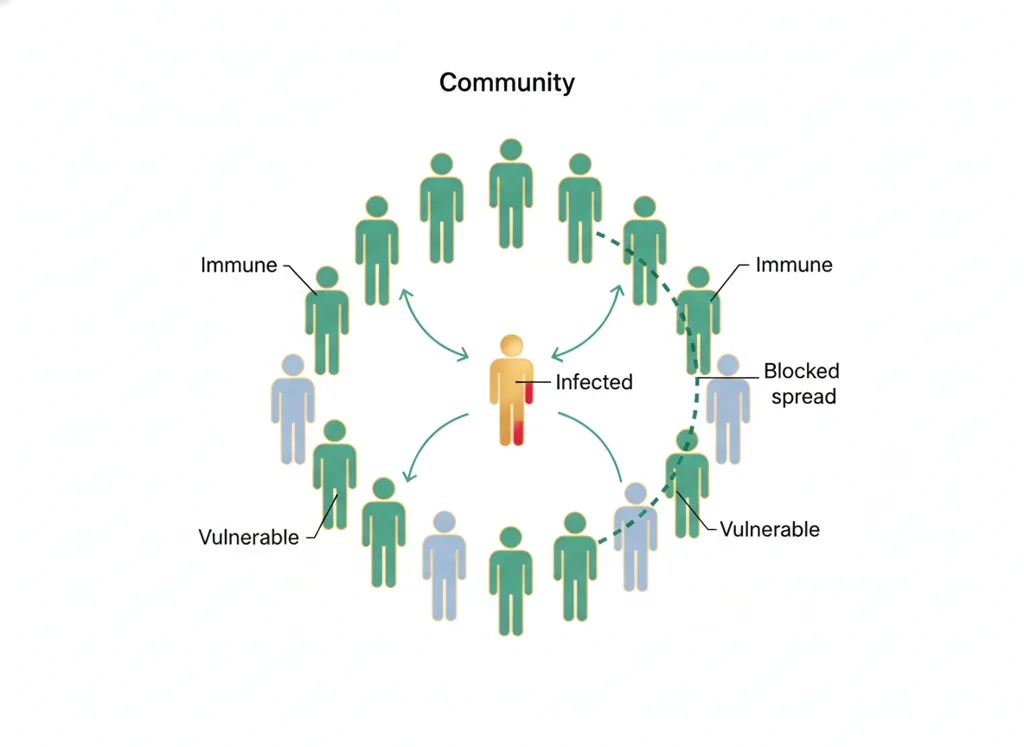
- • Infants, immunocompromised individuals, and those with certain allergies depend on because they cannot receive some vaccines.
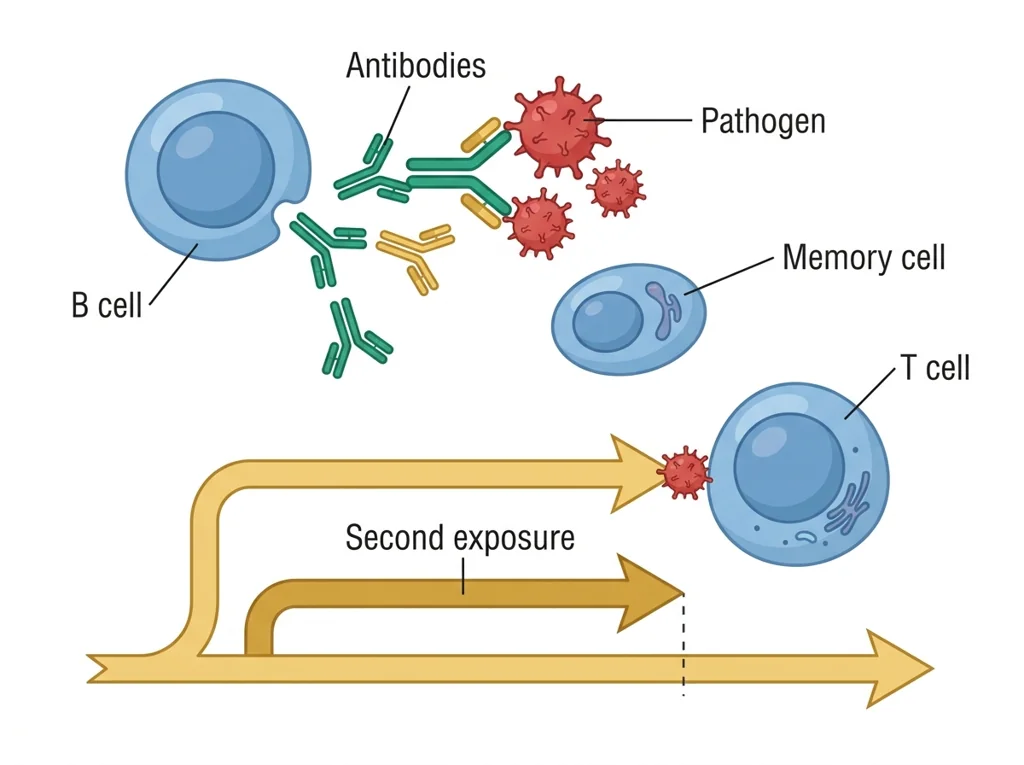
and adaptive defenses interact, and vaccination can prepare -specific immune memory that changes the probability or severity of later disease without guaranteeing protection for every person.
How contagious a disease is determines what share of a community must be immune, which is why the same coverage figure can be safe for one disease and dangerous for another.
Driving question: Measles spreads far faster than seasonal flu. Should both require the same vaccination rate to keep a school safe?
What you already know: and adaptive defenses interact, and vaccination can prepare -specific immune memory that changes the probability or severity of later disease without guaranteeing protection for every person.
New idea: How contagious a disease is determines what share of a community must be immune, which is why the same coverage figure can be safe for one disease and dangerous for another.
Visual or model: No figure is attached to this lesson. The readings, the worked example and E1 to E3 carry the evidence.
- Observe or measure the relevant feature in math.
- Organize the observation with a stable evidence ID.
- Apply this rule: A decision is stronger when the test fits the question and its limits are known.
- Choose the option the evidence supports and state the limit of the conclusion.
Real biomedical example: Measles spreads far faster than seasonal flu. Should both require the same vaccination rate to keep a school safe?
What the evidence supports: E1 to E3 support the daily take-home when the response meets the stated success criteria.
What it cannot prove: The package does not support claims beyond this lesson's or any real patient diagnosis.
- • : The spiral, snail-shaped part of the inner ear that turns sound vibrations into nerve signals the brain reads as hearing.
- • : A sensory cell in the inner ear with tiny hair-like bundles that convert sound vibrations or movement into nerve signals the brain can read.
- • : A graph from a hearing test that plots the softest sounds a person can hear at different pitches, showing the type and degree of any hearing loss.
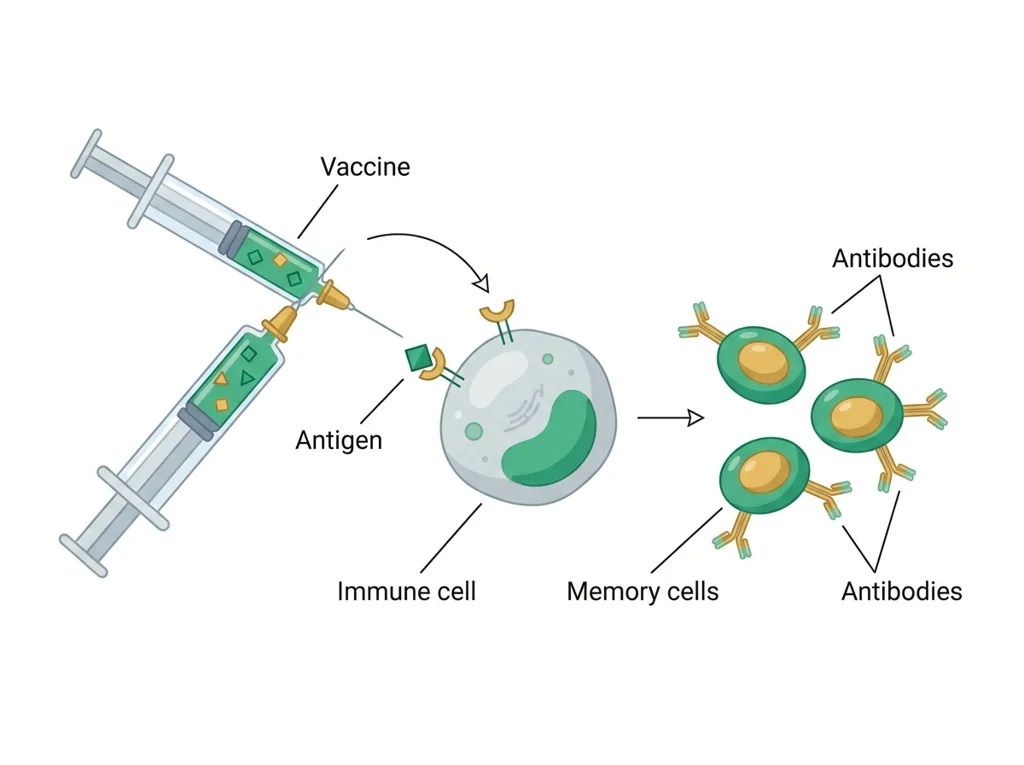
- • : A preparation that delivers an (or the instructions to make one) so the immune system learns to recognize the real later.
- • : Protection that arises when enough people in a community are immune to a disease that its spread slows and shields those who are not immune.
- • : The part of the immune system that learns a specific , builds targeted antibodies and memory cells, and responds faster the next time it appears.
Use it now: Choose one decision option. Cite E1 and E3, then explain how the rule connects the evidence to your choice. This is thinking practice for the one turn-in named under Turn in, not a second submission.
Go further, optional: The source links below are optional enrichment. Every fact required for today's local evidence decision appears in this lesson package.
and adaptive defenses interact, and vaccination can prepare -specific immune memory that changes the probability or severity of later disease without guaranteeing protection for every person.
Limit: A teaching model simplifies interacting cells, signals, timing, types, and population differences.
A decision is stronger when the test fits the question and its limits are known.
Limit: Medical decisions also depend on biology, patient context, ethics, and professional judgment.
You can compute a threshold from R-zero.
Limit: E3 defines the classroom product or success criterion. It is not independent scientific evidence and cannot justify a clinical or causal claim.
Today's decision · Simulated classroom evidence scenario
Your role: medical interventions team member
Decision: Your team must decide what the evidence from math supports before submitting the exit response named on today's page.
- • Accept the cleanest, best presented answer, because a well written explanation of the threshold shows the number can be trusted.
- • Name the reproduction number and the population it came from before applying the threshold to your own school.
- • Report the threshold as the share of people needed to break spread, not a promise of for everyone.
Response: State one choice, cite at least two evidence IDs, explain the rule that connects them, and add one limitation. Use it inside the one turn-in named under Turn in; it is not a separate submission.
Claim ceiling: Today's evidence supports a classroom claim about math. It cannot prove causation, diagnose a real patient, or justify action outside this room.
Reason for review: Your team must decide what the evidence from math supports before submitting the exit response named on today's page.
Context: is arithmetic, not goodwill: the threshold is set by how contagious the disease is, so a disease that spreads faster demands a higher share of the community and leaves less room for opting out.
- • T1: Write the threshold formula, 1 minus 1 over R-zero, in your notebook.
- • T2: Using the two R-zero values on this page (rubella, about 6; the original COVID-19 strain, about 3), calculate the threshold percentage for each disease.
- • T3: Explain in one sentence why a higher R-zero requires a higher vaccination rate.
- • T4: Identify one group that protects who cannot be vaccinated themselves.
- • T5: Submit your two calculations and your explanation as your daily evidence.
- • E1: and adaptive defenses interact, and vaccination can prepare -specific immune memory that changes the probability or severity of later disease without guaranteeing protection for every person.
- • E2: A decision is stronger when the test fits the question and its limits are known.
- • E3: You can compute a threshold from R-zero.
Measurements: Use only the measurements, units, graph, or counts supplied in today's task. No additional patient measurement is implied.
Uncertainty: This is a composite classroom scenario. Missing history, measurements, or confirmation tests remain unknown and limit the conclusion.
Threshold = 1 minus 1 over R-zero = 1 minus 1/4 = 1 minus 0.25 = 0.75, so 75 percent of the community must be immune.
A disease has an R-zero of 4. What share of the community must be immune to stop sustained spread?
The threshold always lands between 0 and 100 percent and rises as R-zero rises. An R-zero below 1 needs no threshold, because each case already infects fewer than one other person.
Compute the threshold for the two R-zero values on this page, show the subtraction and the percent conversion for each, and say which is harder to reach and why.
Students often think means most people are vaccinated, so roughly a majority is enough. The trap: The threshold is not a majority, it is set by R-zero and can sit above 90 percent. Treating 60 or 70 percent as safe is exactly how a community with good intentions still gets an outbreak, because the last few percent are doing the load-bearing work.
- CER:
- Claim, Evidence, Reasoning: make a claim, back it with evidence, explain your reasoning.
- SOP:
- Standard Operating Procedure, the exact steps to follow (especially in a lab).
- Tracker:
- Your PLTW progress log where you record completed evidence.
- myPLTW:
- The PLTW course site where you do the online activities. Find it in Clever with your Microsoft sign-in, right next to Schoology.
Tap the speaker to hear a term. Add two of these to your notebook glossary with a definition and an example in your own words.
Pick just 2 or 3 words from today and make them yours: write what each one means in your own words, name the context clue or evidence that helped, then give one example from what you actually did in Herd immunity math. Try your own words first; the glossary is there if you get stuck. This is voluntary and counts as extra credit, so keep it short.
Saved on this device. Show Mr. Mendoza or add these to your notebook glossary to claim the extra credit.
Part 2 of 4 · Directions in plain English▸
2.1 Open your materials
Use the materials named in the first step below. Open lesson resources.
2.2 Start the work
Write the herd immunity threshold formula, 1 minus 1 over R-zero, in your notebook.
Show all 5 required steps
- Write the herd immunity threshold formula, 1 minus 1 over R-zero, in your notebook.
- Using the two R-zero values on this page (rubella, about 6; the original COVID-19 strain, about 3), calculate the threshold percentage for each disease.
- Explain in one sentence why a higher R-zero requires a higher vaccination rate.
- Identify one group that herd immunity protects who cannot be vaccinated themselves.
- Submit your two calculations and your explanation as your daily evidence.
Lost your place? You need two numbers: an R-zero and the threshold you calculated from it. If you have both, move to the sentence explaining who that threshold protects.
- 0-8Hook: compare R-zero values; derive threshold formula together
- 8-25Guided calculation for rubella (R-zero about 6); check units and percent conversion
- 25-40Independent calculation for the original COVID-19 strain (R-zero about 3); check against neighbor
- 40-55Write explanation sentence: why higher R-zero demands higher coverage
- 55-70Identify and justify one group protected by but unable to receive the
- 70-80Submit calculations and explanation; check your myPLTW tracker is current
- • Hook: Post two R-zero values (rubella about 6, the original COVID-19 strain about 3) and ask students which disease is harder to stop.
- • Why it matters: This single formula determines vaccination targets that agencies use globally.
- • Today's work: Apply the formula to two real diseases, then explain the human impact of crossing the threshold.
- • Exit goal: Two worked calculations and an explanation submitted by block end.
PLTW connection and today's work
Open Activity 1.4.1 Disease Prevention Through Vaccination in Lesson 1.4 of myPLTW. Use the herd immunity threshold formula with the two R-zero values on this page.
Today's stopping point: Immunity diagram and data table should be saved; herd immunity calculations due today.
PLTW activity titles identify the course connection. If your account will not open, use the posted materials for today and tell Mr. Mendoza. Do not mark an online activity complete unless you completed it.
Course connection
- Activity 1.4.1 Disease Prevention Through Vaccination
Use the turn-in directions in Part 4 of this page. Do not create a second submission unless your teacher asks for one.
Show another explanation or a smaller first step
Need help? Choose a starting point
Part 3 of 4 · Worked example▸
This is a parallel case, not your own. Read it for the order of the work, then do your own in Part 4.
Herd immunity threshold work (sample)
Formula: HIT = 1 minus (1 divided by R-zero)
Disease A, measles, R-zero of 12
HIT = 1 minus (1 divided by 12) = 1 minus 0.083 = 0.917
So about 92 percent of the community has to be immune.
Disease B, seasonal influenza, R-zero of 1.3
HIT = 1 minus (1 divided by 1.3) = 1 minus 0.77 = 0.23
So about 23 percent has to be immune.
Why a higher R-zero needs a higher rate: one infectious person with measles infects about 12 others in a fully susceptible group, so nearly every route out of that person has to be blocked before the chain dies out. A disease whose average case infects only slightly more than one other person needs far fewer of those routes blocked, which is why the same 60 percent coverage can be comfortable for one disease and dangerous for another.
One group this protects who cannot be vaccinated: infants who are too young for the first MMR dose. They cannot be vaccinated yet, so the only thing between them and measles is that the people around them are immune. People receiving chemotherapy are in the same position, because a live vaccine is withheld from them: the weakened organism in it can cause disease when the immune system is suppressed.
The ceiling on this calculation: the formula assumes a vaccine that works every time and a community that mixes at random. Neither is true for influenza, where the vaccine is partly effective and changes year to year, so 23 percent is the floor this model gives and not a public health target anyone would set.
What surprised me: 92 percent leaves very little room. A school at 85 percent coverage sounds high and is still under the measles threshold.
This model shows the level of evidence and organization needed to complete: Completes the herd immunity task: two threshold calculations with the formula and the work shown, one sentence on why a higher R-zero demands higher coverage, and one group that depends on herd immunity.
- Name the prompt or task.
- Answer it directly with the key evidence.
- Check that the response matches the requested format.
Keep the structure. Replace the question, facts, measurements, and evidence. Then recheck units, vocabulary, and whether the conclusion goes beyond the evidence.
Also due today: Submit both calculations and your explanation to Schoology assignment Wk8 Exit ticket: Herd immunity math before you leave.
An airport checkpoint uses an ID check, a metal detector, and an X-ray scanner.
- What can the ID check detect?
- What might set off the metal detector by mistake?
- Why do we need the X-ray if we already checked their ID?
A decision is stronger when the test fits the question and its limits are known.
Medical decisions also depend on biology, patient context, ethics, and professional judgment.
- • The ID check maps to confirming patient identity.
- • The metal detector maps to a rapid, non-specific screening test.
- • The X-ray scanner maps to a detailed, specific diagnostic test.
Part 4 of 4 · Your work▸
Check your work before submitting
- You'll be able to compute a herd immunity threshold from R-zero.
- You'll be able to explain who herd immunity protects and why.
4.1 Turn in your work
DueCheck the Schoology assignment for this day- Hand in
- Two herd immunity threshold calculations with work shown, and one sentence explaining who herd immunity protects.
How to submit and name your file
Submit as one PDF in Schoology.
In Schoology, open your course and the assignment for this lesson. Attach your file, select Submit, and check that it appears in the submission.
PDF upload helpYou get two school days for every day you were absent, so this deadline moves with you.
Today's lesson is in Schoology
Each school day has one lesson page in Schoology that holds everything for the day: the goal, the story so far, every table and data value, the numbered steps, and what to turn in. Open it first and work from it. The other rows for this day, if any, are the score line for a paper quiz or test and the John Carroll debate item; they do not add work. Check Schoology for each deadline.
- Today's Lesson · Tue 10/13 · Wk8 · 1.3.2 Day 1: Run the Rinne test and a speech-in-noise test with a partner(today's lesson page: the goal, the data, the steps, and what to turn in are all on it)
Link will not open? Open Schoology, choose your course and section, and find the title shown above.
- CompleteEvery required part of the artifact is present, nothing left blank.
- AccurateThe science and the data are correct and match the evidence.
- Scientific reasoningYou explain your claim with evidence and reasoning (CER), not just an answer.
- Professional communicationClear, organized, labeled, and written the way a clinician or scientist would.
- SubmittedGo to Schoology to turn this in. Submit one PDF. Schoology attaches your name to your upload; on the page itself, write your period and code. Name the file: FirstName LastName - Assignment Title - YYYY-MM-DD.pdf. If you cannot get in, see Mr. Mendoza. Do not skip the work.
How this lesson connects
Keep using what you learned last class: Innate and adaptive defenses interact, and vaccination can prepare antigen-specific immune memory that changes the probability or severity of later disease without guaranteeing protection for every person. Today: How contagious a disease is determines what share of a community must be immune, which is why the same coverage figure can be safe for one disease and dangerous for another.
Practice: try a question, then check your answer▸
Claim ceiling for this check: Today's evidence supports a classroom claim about math. It cannot prove causation, diagnose a real patient, or justify action outside this room.
A disease has an R-zero of 4. What vaccination coverage stops sustained spread, and who does that coverage protect that it does not immunise?
Write an answer and pick a confidence to unlock the key.
Fast retrieval with instant answers, not the commit-then-reveal check above. Try each from memory first: write what you remember about the earlier units, then check yourself here.
Missed class or ready for more?▸
Optional practice for this unit's lab skills. Nothing in it is due today.
What today's skills lead to. These are real health-science careers this course builds toward. Tap one to see, on the US Department of Labor's O*NET site, what the job actually involves, what it pays, and how fast it is growing.
Today is individual work you can do from home: complete the same target above, then submit your Exit ticket.
Go to Schoology to turn this in. Submit one PDF. Schoology attaches your name to your upload; on the page itself, write your period and code. Name the file: FirstName LastName - Assignment Title - YYYY-MM-DD.pdf. If you cannot get in, see Mr. Mendoza. Do not skip the work.
Class still runs. Complete today's work as this page describes (it is self-guided). Need the concept taught without a teacher? Use this authoritative explainer:
NIH MedlinePlusSources: slides, readings, and resources▸
The deck carries the prior idea forward, lets you inspect an analogy, maps the rule to biology, and ends with the same evidence decision and exit ticket used on this page.
Classroom documents for this lesson are posted in Schoology. Open Clever, then Schoology, and find each one by the name shown on its card.
Use this with the vaccination lesson to connect development to a real example.
Use this if you were absent, got stuck, or need another pass before you submit the lesson artifact.
Use this if you were absent, got stuck, or need another pass before you submit the lesson artifact.
Open this when the class reaches this activity and use it to complete the required lesson artifact.
Sign in to Clever with your district Microsoft account to open Schoology or myPLTW. Follow today's posted steps. If myPLTW will not open, use the posted alternative and tell Mr. Mendoza. Turn in your completed work through the Schoology assignment.
This week
My Progress dashboard