
Evidence sort and false results
This page has four parts, in the order you use them. Part 1 is what you need to know. Part 2 says what to do, in plain English. Part 3 shows the work done once on a case that is not yours. Part 4 is your own work and where to turn it in.
Open your materials, follow the steps, then turn in your work.
Sort a practice test history by strength and explain how false positives and false negatives change a decision.
Optional: listen or watch a unit review▸
Part 1 of 4 · Background and definitions▸
💡 Big idea: The cost of a wrong result depends on the decision it feeds, so the same error rate is acceptable for screening and unacceptable for a surgical decision.
- • A says disease is present when it is not; in genetic medicine it may lead to unnecessary preventive surgery or anxiety.
- • A says disease is absent when it is present; it may delay treatment until the disease progresses.
- • Evidence strength depends on sensitivity, specificity, and reproducibility; a single positive with low sensitivity is weak evidence alone.
Early screening lowers cost and mortality, so a test that only wealthy or well-insured patients can reach turns a medical advance into a driver of inequality.
The cost of a wrong result depends on the decision it feeds, so the same error rate is acceptable for screening and unacceptable for a surgical decision.
Driving question: The practice test history on this page has results of uneven quality. Which ones would you let a doctor act on?
What you already know: Early screening lowers cost and mortality, so a test that only wealthy or well-insured patients can reach turns a medical advance into a driver of inequality.
New idea: The cost of a wrong result depends on the decision it feeds, so the same error rate is acceptable for screening and unacceptable for a surgical decision.
- Observe or measure the relevant feature in today's lesson.
- Organize the observation with a stable evidence ID.
- Apply this rule: Define variables, controls, sampling, units, and the analysis plan before interpreting a result; analysis cannot repair biased or inconsistent measurement.
- Choose the option the evidence supports and state the limit of the conclusion.
Real biomedical example: The practice test history on this page has results of uneven quality. Which ones would you let a doctor act on?
What the evidence supports: E1 to E3 and the figure support the daily take-home when the response meets the stated success criteria.
What it cannot prove: The package does not support claims beyond this lesson's or any real patient diagnosis.
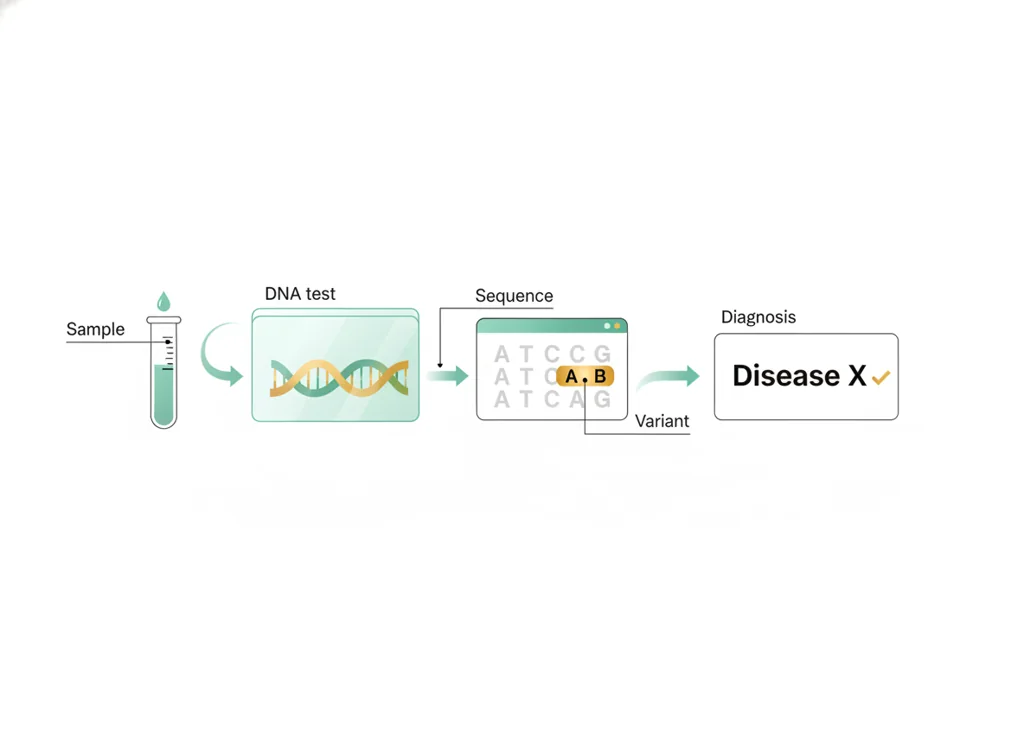
- • : Identifying a disease by detecting specific , RNA, or proteins in a sample, allowing precise diagnosis at the level of genes and molecules.
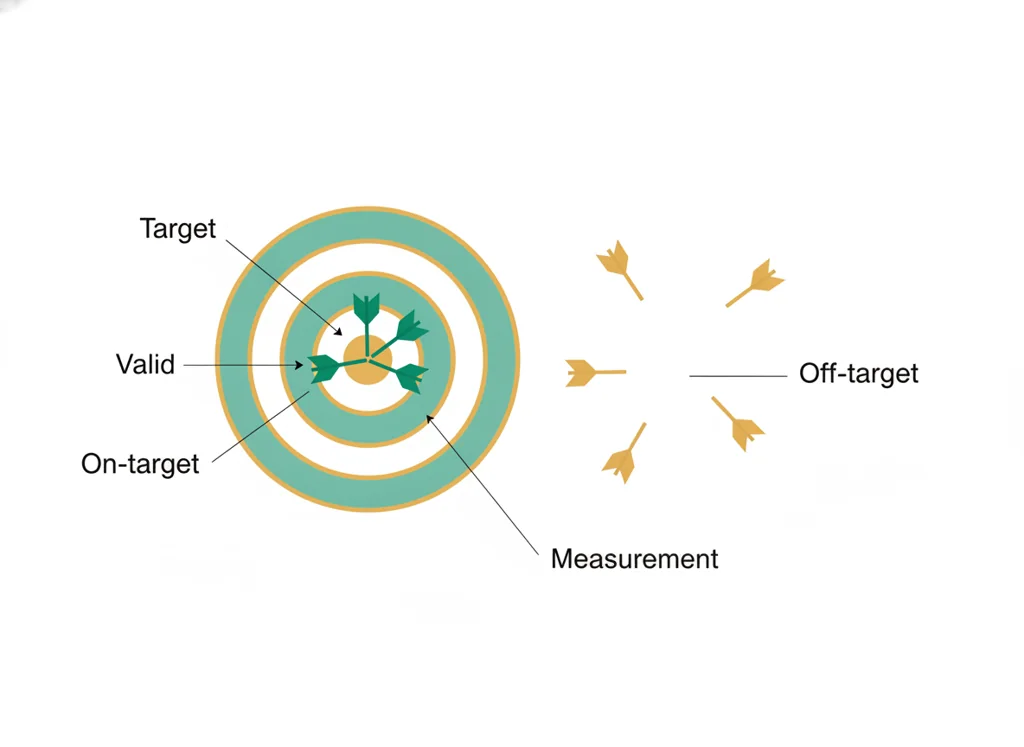
- • validity: How well a test or study actually measures what it claims to, so the conclusions truly reflect reality.
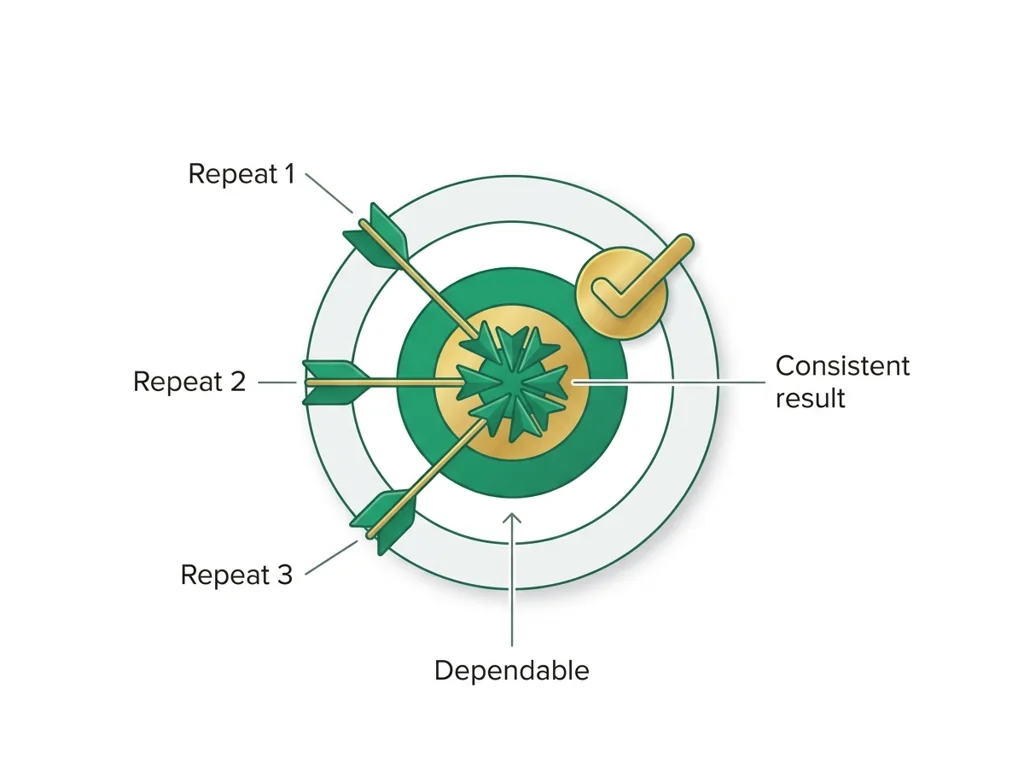
- • reliability: The degree to which a measurement, method, or person produces the same dependable result each time under the same conditions.
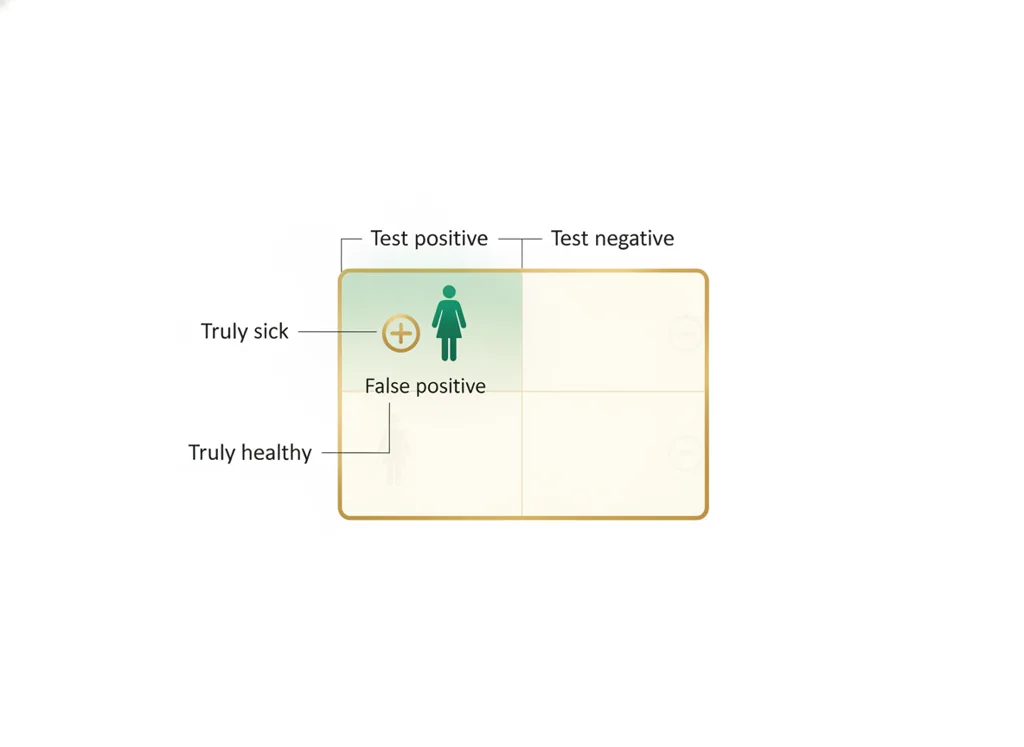
- • : A test result that signals a condition is present when it actually is not, a kind of error that can lead to needless worry or treatment.
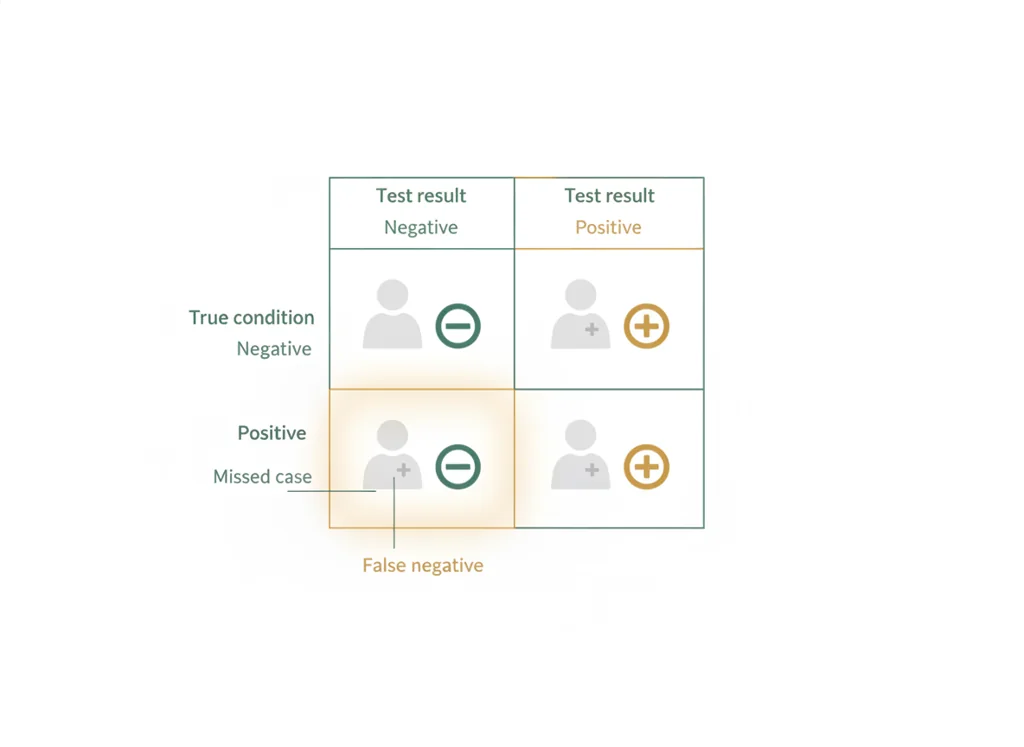
- • : A test result that says a condition is absent when it is actually present, missing a true case.
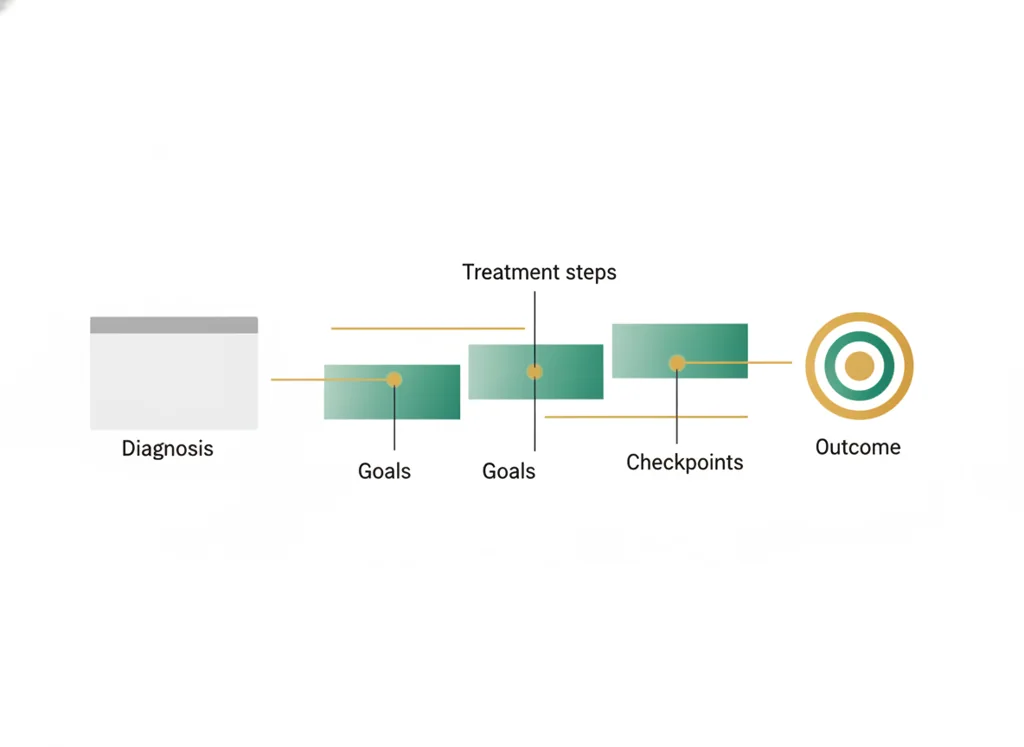
- • : An organized roadmap of the steps, therapies, and goals a healthcare team will follow to manage or cure a patient's condition.
Use it now: Choose one decision option. Cite E1 and E3, then explain how the rule connects the evidence to your choice. This is thinking practice for the one turn-in named under Turn in, not a second submission.
Go further, optional: The source links below are optional enrichment. Every fact required for today's local evidence decision appears in this lesson package.
A screening test and a confirmatory test fail in different directions: a positive screen is evidence to confirm, not a diagnosis, and a negative on an insensitive test does not clear the patient, so each result is weighed by what its test detects and how it can be wrong.
Limit: A sorted practice history supports a ranked list of what to confirm next, not a clinical diagnosis or a treatment decision.
Define variables, controls, sampling, units, and the analysis plan before interpreting a result; analysis cannot repair biased or inconsistent measurement.
Limit: A well-organized classroom study can still be limited by , measurement quality, confounding, and the population represented.
You can rank evidence by strength.
Limit: E3 defines the classroom product or success criterion. It is not independent scientific evidence and cannot justify a clinical or causal claim.
Today's decision · Simulated classroom evidence scenario
Your role: medical interventions team member
Decision: Your team must decide what the evidence from today's lesson supports before submitting the labeled and result claim named on today's page.
- • Stop short of a diagnosis, because a screening result needs a confirmatory test before a plan can rest on it.
- • Rank each result by what its test detects and how it can fail, then say how a or negative changes the plan.
- • Trust the clearest, most polished write-up, since a well-explained result reads like the strongest evidence.
Response: State one choice, cite at least two evidence IDs, explain the rule that connects them, and add one limitation. Use it inside the one turn-in named under Turn in; it is not a separate submission.
Claim ceiling: Today's evidence supports a classroom claim about today's lesson. It cannot prove causation, diagnose a real patient, or justify action outside this room.
Reason for review: Your team must decide what the evidence from today's lesson supports before submitting the labeled and result claim named on today's page.
Context: False positives and false negatives cause different harms to different people, so the acceptable error rate depends on what the result will be used to do, not on the test alone.
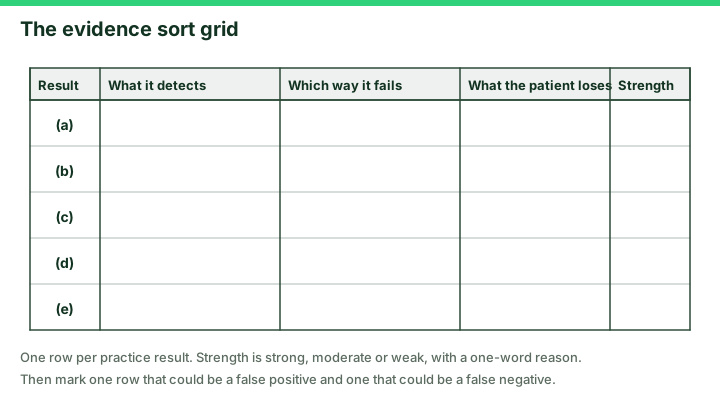
- • T1: Sort the practice test history on this page into strong, moderate, and weak evidence with a one-word reason each. Practice patient (not a real one): (a) a consumer kit flags an HFE variant linked to iron overload (hereditary hemochromatosis); (b) a clinical lab confirms the patient carries two copies of that variant; (c) one ferritin reading is above range, drawn during a week the patient had a cold; (d) transferrin saturation is above range on two separate draws; (e) a grandparent is said to have had liver trouble, with no records.
- • T2: Identify one result that could be a and one that could be a .
- • T3: Explain in one sentence how each false result would change the patient's treatment.
- • T4: Decide which result you trust most and why.
- • T5: Submit your evidence sort and false-result analysis as your daily evidence.
- • E1: A screening test and a confirmatory test fail in different directions: a positive screen is evidence to confirm, not a diagnosis, and a negative on an insensitive test does not clear the patient, so each result is weighed by what its test detects and how it can be wrong.
- • E2: Define variables, controls, sampling, units, and the analysis plan before interpreting a result; analysis cannot repair biased or inconsistent measurement.
- • E3: You can rank evidence by strength.
Measurements: Use only the measurements, units, graph, or counts supplied in today's task. No additional patient measurement is implied.
Figure finding: An empty five-row grid with rows a to e and columns Result, What it detects, Which way it fails, What the patient loses and Strength, with a note that strength is strong, moderate or weak with a one-word reason and that one row is marked as a possible and one as a possible .
Uncertainty: This is a composite classroom scenario. Missing history, measurements, or confirmation tests remain unknown and limit the conclusion.
False flags = 200 x 1/20 = 10 people. Each of the 10 needs the confirmatory test before anyone acts, which is the cost of a sensitive screen.
Suppose a screening step flags 1 in 20 people who do not have the condition. A clinic screens 200 people who are all free of it. How many false flags does the clinic have to clear?
The 1 in 20 rate belongs to people WITHOUT the condition; it says nothing about how many real cases the screen catches. A rate applied to the wrong group gives a confident wrong number.
For each screening result in your sort, write which group its error rate describes (the well or the sick) and which direction it can fail in.
Students often think the scariest-sounding result is the strongest evidence, when strength comes from how reliable the test is. The trap: A dramatic result from a low-sensitivity test is weak evidence, and a dull result from a well-validated one can be strong. Strength comes from sensitivity, specificity and reproducibility, not from how serious the named condition is.
- CER:
- Claim, Evidence, Reasoning: make a claim, back it with evidence, explain your reasoning.
- SOP:
- Standard Operating Procedure, the exact steps to follow (especially in a lab).
- Tracker:
- Your PLTW progress log where you record completed evidence.
- myPLTW:
- The PLTW course site where you do the online activities. Find it in Clever with your Microsoft sign-in, right next to Schoology.
Tap the speaker to hear a term. Add two of these to your notebook glossary with a definition and an example in your own words.
Pick just 2 or 3 words from today and make them yours: write what each one means in your own words, name the context clue or evidence that helped, then give one example from what you actually did in Evidence sort and false results. Try your own words first; the glossary is there if you get stuck. This is voluntary and counts as extra credit, so keep it short.
Saved on this device. Show Mr. Mendoza or add these to your notebook glossary to claim the extra credit.
Part 2 of 4 · Directions in plain English▸
2.1 Open your materials
Use the materials named in the first step below. Open lesson resources.
2.2 Start the work
Sort the practice test history on this page into strong, moderate, and weak evidence with a one-word reason each. Practice patient (not a real one): (a) a consumer DNA kit flags an HFE variant linked to iron overload (hereditary hemochromatosis); (b) a clinical lab confirms the patient carries two copies of that variant; (c) one ferritin reading is above range, drawn during a week the patient had a cold; (d) transferrin saturation is above range on two separate draws; (e) a grandparent is said to have had liver trouble, with no records.
Show all 5 required steps
- Sort the practice test history on this page into strong, moderate, and weak evidence with a one-word reason each. Practice patient (not a real one): (a) a consumer DNA kit flags an HFE variant linked to iron overload (hereditary hemochromatosis); (b) a clinical lab confirms the patient carries two copies of that variant; (c) one ferritin reading is above range, drawn during a week the patient had a cold; (d) transferrin saturation is above range on two separate draws; (e) a grandparent is said to have had liver trouble, with no records.
- Identify one result that could be a false positive and one that could be a false negative.
- Explain in one sentence how each false result would change the patient's treatment.
- Decide which result you trust most and why.
- Submit your evidence sort and false-result analysis as your daily evidence.
Lost your place? You need your three-column sort: strong, moderate, weak, with a one-word reason on each. Have that, and go to the false-positive and false-negative pair.
- 0-8Hook class vote; define and with genetic test examples
- 8-25Sort the practice test history into strong, moderate, weak with a one-word reason each
- 25-45Identify one candidate and one candidate from the sort
- 45-60Write one sentence per error type on how it would change the treatment decision
- 60-72State which result you trust most and justify; partner check logic
- 72-80Submit evidence sort and false-result analysis in Schoology
- • Hook: Ask: which error is worse for a screening test, a or a ? Take a class vote and note the reasoning.
- • Why it matters: The sorting skill is used in clinical decision support, in evidence-based medicine, and in the Biotechnology Research questions on your end-of-course WebXam.
- • Today's work: You rank the practice test history on this page by strength and then model how two error types propagate into treatment decisions.
- • Exit goal: Evidence sort and false-result analysis submitted before the bell.
PLTW connection and today's work
Open Activity 2.2.2 Reproductive Technology in myPLTW for the genetic-testing background, then sort the practice test history on this page by strength.
Today's stopping point: The screening-equity debate is done; evidence sort and false-result analysis due today.
PLTW activity titles identify the course connection. If your account will not open, use the posted materials for today and tell Mr. Mendoza. Do not mark an online activity complete unless you completed it.
Course connection
- Activity 2.2.2 Reproductive Technology
The mapping has not been confirmed inside myPLTW.
Use the turn-in directions in Part 4 of this page. Do not create a second submission unless your teacher asks for one.
Show another explanation or a smaller first step
Need help? Choose a starting point
Part 3 of 4 · Worked example▸
This is a parallel case, not your own. Read it for the order of the work, then do your own in Part 4.
Parallel case, not today's case: a 9 year old arrives with a sore throat and fever. The clinic runs a rapid antigen test for group A streptococcus, sends a throat culture, and takes a history.
Result | Strength | One-word reason
Throat culture positive at 24 hours | Strong | Confirmatory
Rapid antigen test, positive | Strong | Specific
Rapid antigen test, negative | Moderate | Insensitive
Fever reported at home, no thermometer | Weak | Unmeasured
Sibling said to have had strep, undocumented | Weak | Hearsay
One result that could be a false positive: the rapid antigen test. It detects strep antigen, and a child who carries strep in the throat without being ill from it can test positive while a virus is causing today's sore throat.
How that would change the patient's treatment: the child takes antibiotics they do not need, carrying the side effects and the resistance cost, and the actual viral cause stops being investigated.
One result that could be a false negative: the rapid antigen test again, failing in the other direction. It is meaningfully less sensitive than culture, which is why a negative rapid test in a child is normally backed up by a culture rather than believed on its own.
How that would change the patient's treatment: untreated group A strep is the case that can go on to rheumatic fever, so a false negative nobody backs up is the more costly of the two errors here.
The result I trust most: the 24 hour culture. It grows the organism itself instead of detecting a fragment of it, and it is the reference standard the rapid test is measured against.
How to use this: today's case is not this one. Sort your own results with the same three questions. What does this test actually detect, which direction can it fail in, and what does the patient lose when it does?
This model shows the level of evidence and organization needed to complete: Completes the evidence-sort task on a DIFFERENT case from today's, so it models the ranking and the false-result reasoning without handing over the sort students must do: every result ranked with a one-word reason, one plausible false positive and one false negative, the treatment consequence of each, and the result the student trusts most.
- Name the variables and include units.
- Enter observations without changing the raw values.
- Check labels, calculations, and patterns before interpreting the data.
Keep the structure. Replace the question, facts, measurements, and evidence. Then recheck units, vocabulary, and whether the conclusion goes beyond the evidence.
Also due today: Submit the evidence sort table and both false-result sentences in Schoology by end of period.
A research team lays out its question, variables, controls, sampling plan, measurement record, and analysis before deciding what the data support.
- Which variable is changed or compared?
- Which conditions and measurements must stay consistent?
- Which conclusion is inside the study's evidence boundary?
Define variables, controls, sampling, units, and the analysis plan before interpreting a result; analysis cannot repair biased or inconsistent measurement.
A well-organized classroom study can still be limited by , measurement quality, confounding, and the population represented.
- • Question and variable cards map to the study design.
- • Control and measurement cards map to fair, reproducible data collection.
- • The conclusion card maps to a bounded claim supported by the analysis.
Part 4 of 4 · Your work▸
Check your work before submitting
- You'll be able to rank evidence by strength.
- You'll be able to explain the consequence of a false positive or false negative.
4.1 Turn in your work
DueCheck the Schoology assignment for this day- Hand in
- Evidence sort table (strong/moderate/weak with one-word reasons) plus two false-result sentences and a justification for the most trusted result.
How to submit and name your file
Submit as one PDF in Schoology.
In Schoology, open your course and the assignment for this lesson. Attach your file, select Submit, and check that it appears in the submission.
PDF upload helpYou get two school days for every day you were absent, so this deadline moves with you.
Today's lesson is in Schoology
Each school day has one lesson page in Schoology that holds everything for the day: the goal, the story so far, every table and data value, the numbered steps, and what to turn in. Open it first and work from it. The other rows for this day, if any, are the score line for a paper quiz or test and the John Carroll debate item; they do not add work. Check Schoology for each deadline.
- Today's Lesson · Tue 11/10 · Wk12 · How cells lose control, then score two biopsies like a pathologist(today's lesson page: the goal, the data, the steps, and what to turn in are all on it)
Link will not open? Open Schoology, choose your course and section, and find the title shown above.
- CompleteEvery required part of the artifact is present, nothing left blank.
- AccurateThe science and the data are correct and match the evidence.
- Scientific reasoningYou explain your claim with evidence and reasoning (CER), not just an answer.
- Professional communicationClear, organized, labeled, and written the way a clinician or scientist would.
- SubmittedGo to Schoology to turn this in. Submit one PDF. Schoology attaches your name to your upload; on the page itself, write your period and code. Name the file: FirstName LastName - Assignment Title - YYYY-MM-DD.pdf. If you cannot get in, see Mr. Mendoza. Do not skip the work.
How this lesson connects
Keep using what you learned last class: Early screening lowers cost and mortality, so a test that only wealthy or well-insured patients can reach turns a medical advance into a driver of inequality. Today: The cost of a wrong result depends on the decision it feeds, so the same error rate is acceptable for screening and unacceptable for a surgical decision.
Practice: try a question, then check your answer▸
Claim ceiling for this check: Today's evidence supports a classroom claim about today's lesson. It cannot prove causation, diagnose a real patient, or justify action outside this room.
A screening test has high sensitivity and low specificity. Which error does it make more of, and why might that still be the right test to use first?
Write an answer and pick a confidence to unlock the key.
Fast retrieval with instant answers, not the commit-then-reveal check above. Try each from memory first: write what you remember about the earlier units, then check yourself here.
Missed class or ready for more?▸
Optional practice for this unit's lab skills. Nothing in it is due today.
What today's skills lead to. These are real health-science careers this course builds toward. Tap one to see, on the US Department of Labor's O*NET site, what the job actually involves, what it pays, and how fast it is growing.
Today is individual work you can do from home: complete the same target above, then submit your Data table.
Go to Schoology to turn this in. Submit one PDF. Schoology attaches your name to your upload; on the page itself, write your period and code. Name the file: FirstName LastName - Assignment Title - YYYY-MM-DD.pdf. If you cannot get in, see Mr. Mendoza. Do not skip the work.
Class still runs. Complete today's work as this page describes (it is self-guided). Need the concept taught without a teacher? Use this authoritative explainer:
MedlinePlus: How is genetic testing done and what do results mean?The optional extra-credit track is open. Complete reserved-unit work from home, including virtual labs, for extra credit. Each item shows its correct submission route.
Open the extra-credit trackSources: slides, readings, and resources▸
The deck carries the prior idea forward, lets you inspect an analogy, maps the rule to biology, and ends with the same evidence decision and exit ticket used on this page.
Classroom documents for this lesson are posted in Schoology. Open Clever, then Schoology, and find each one by the name shown on its card.
Use this if you were absent, got stuck, or need another pass before you submit the lesson artifact.
Use this after the required lesson work when you are ready for a harder application or a deeper connection.
Use this after the required lesson work when you are ready for a harder application or a deeper connection.
Sign in to Clever with your district Microsoft account to open Schoology or myPLTW. Follow today's posted steps. If myPLTW will not open, use the posted alternative and tell Mr. Mendoza. Turn in your completed work through the Schoology assignment.
This week
My Progress dashboard