
Public-health design project
This page has four parts, in the order you use them. Part 1 is what you need to know. Part 2 says what to do, in plain English. Part 3 shows the work done once on a case that is not yours. Part 4 is your own work and where to turn it in.
Open your materials, follow the steps, then turn in your work.
Student teams design a usable public-health communication app for a surge scenario.
Check you have the right sheet: the top of it prints today's portal day, Public-health design project. The PLTW activity itself is in myPLTW and is not posted here.
Optional: listen or watch a unit review▸
Part 1 of 4 · Background and definitions▸
💡 Big idea: A clear public-health communication identifies a specific audience, presents one evidence-based main message and action, uses familiar language, and states what is known and uncertain without overstating risk.
- • A user persona is a realistic composite of a target user group: it names goals, pain points, and technology comfort level.
- • A prioritized feature list ranks features by how directly each one addresses a persona's highest-urgency need.
- • A low-fidelity wireframe shows information hierarchy and navigation flow without committing to visual style.
A biomedical design advances when test evidence is compared with explicit user needs, criteria, constraints, risks, and failure modes, then used to justify a documented revision.
A clear public-health communication identifies a specific audience, presents one evidence-based main message and action, uses familiar language, and states what is known and uncertain without overstating risk.
Driving question: Your team must design a surge-communication app in one class period. Before you draw a single screen, who is the specific Cleveland resident you are building for, and which of their needs decides what goes on screen one?
What you already know: A biomedical design advances when test evidence is compared with explicit user needs, criteria, constraints, risks, and failure modes, then used to justify a documented revision.
New idea: A clear public-health communication identifies a specific audience, presents one evidence-based main message and action, uses familiar language, and states what is known and uncertain without overstating risk.
Visual or model: No figure is attached to this lesson. The readings, the worked example and E1 to E3 carry the evidence.
- Observe or measure the relevant feature in public-health design project.
- Organize the observation with a stable evidence ID.
- Apply this rule: A design improves when evidence is compared with explicit criteria and constraints.
- Choose the option the evidence supports and state the limit of the conclusion.
Real biomedical example: Today the biomedical investigation team uses Public-health design project to make a bounded evidence decision. A classroom communication product is not an official public-health advisory and still requires audience testing, current local guidance, and review by the responsible authority before release.
What the evidence supports: E1 to E3 support the daily take-home when the response meets the stated success criteria.
What it cannot prove: The package does not support claims beyond this lesson's or any real patient diagnosis.
- • : A health system's ability to rapidly expand staff, beds, and supplies to handle a sudden jump in patients during an emergency or outbreak.
- • : Healthcare delivered to people where they are, using vehicles or portable units to reach communities far from a fixed clinic or hospital.
- • : The science of protecting and improving the health of whole communities through prevention, education, and policies rather than treating one patient at a time.
- • surveillance: The ongoing, systematic collection and analysis of health data to detect disease early, track its trends, and trigger a timely response.
- • communication: Sharing information clearly and accurately between people, which in healthcare keeps patients safe and helps teams coordinate care.
Use it now: Choose one decision option. Cite E1 and E3, then explain how the rule connects the evidence to your choice. This is thinking practice for the one turn-in named under Turn in, not a second submission.
Go further, optional: The source links below are optional enrichment. Every fact required for today's local evidence decision appears in this lesson package.
Centers for Disease Control and Prevention is the source this lesson's claim is checked against: The CDC Clear Communication Index
Limit: A classroom communication product is not an official public-health advisory and still requires audience testing, current local guidance, and review by the responsible authority before release.
A design improves when evidence is compared with explicit criteria and constraints.
Limit: Biomedical designs also require , ethics, and biological validation beyond a physical test.
Team produces personas and a wireframe grounded in user needs.
Limit: E3 defines the classroom product or success criterion. It is not independent scientific evidence and cannot justify a clinical or causal claim.
Today's decision · Simulated classroom evidence scenario
Your role: biomedical investigator
Decision: Your team must decide what the evidence from public-health design project supports before submitting the pre-lab readiness record named on today's page.
- • Design the polished screens now and pack in the most features, because a good app is the one that looks best.
- • Interview one real Cleveland resident before wireframing, because the team's persona is still a guess about which need is most urgent.
- • Name the specific Cleveland resident and their top need first, then let that need decide what goes on screen one.
Response: State one choice, cite at least two evidence IDs, explain the rule that connects them, and add one limitation. Use it inside the one turn-in named under Turn in; it is not a separate submission.
Claim ceiling: Today's evidence supports a classroom claim about public-health design project. It cannot prove causation, diagnose a real patient, or justify action outside this room.
Reason for review: Your team must decide what the evidence from public-health design project supports before submitting the pre-lab readiness record named on today's page.
Context: Today the biomedical investigation team uses Public-health design project to make a bounded evidence decision. A classroom communication product is not an official public-health advisory and still requires audience testing, current local guidance, and review by the responsible authority before release.
- • T1: Record the for the user-centered design cycle the team will follow.
- • T2: Define the target users and the variables that shape their needs.
- • T3: Draft user personas and a prioritized feature list for the app.
- • T4: Build a low-fidelity wireframe addressing key surge information needs.
- • T5: Plan a usability check and note one limitation of the design data.
- • E1: Centers for Disease Control and Prevention is the source this lesson's claim is checked against: The CDC Clear Communication Index
- • E2: A design improves when evidence is compared with explicit criteria and constraints.
- • E3: Team produces personas and a wireframe grounded in user needs.
Measurements: Use only the measurements, units, graph, or counts supplied in today's task. No additional patient measurement is implied.
Uncertainty: This is a composite classroom scenario. Missing history, measurements, or confirmation tests remain unknown and limit the conclusion.
- • The solution must address the stated need in public-health design project.
- • The decision must be supported by E1-E3.
- • The final product must make the success criteria visible.
- • Complete the work inside the 80-minute block.
- • Use only supplied or teacher-approved materials and evidence.
- • Do not trade , accessibility, or privacy for speed.
- • and evidence quality: must pass before scoring other criteria.
- • User need and effectiveness: highest scored criterion.
- • Time, cost, and ease of use: compare only after and effectiveness pass.
Test evidence: For each option, record the E1-E3 result that supports or fails each criterion. Do not assign a score without a named observation.
- Which version or option did you test?
- Which requirement did it meet or miss?
- Which evidence shows that, and what did it say?
- What did you change?
- Why did you change it?
- Who is this for, and what do they need?
- What must it do, and what limits you?
- Which option did you choose, and what evidence backs it?
- What did you test, and what happened?
- What did you change, and why?
Students often think a polished answer about public-health design project is trustworthy even when its evidence source, comparison, or limitation is missing. The trap: Presentation quality cannot raise the evidence level. A classroom communication product is not an official public-health advisory and still requires audience testing, current local guidance, and review by the responsible authority before release.
- CER:
- Claim, Evidence, Reasoning: make a claim, back it with evidence, explain your reasoning.
- SOP:
- Standard Operating Procedure, the exact steps to follow (especially in a lab).
- Tracker:
- Your PLTW progress log where you record completed evidence.
- myPLTW:
- The PLTW course site where you do the online activities. Find it in Clever with your Microsoft sign-in, right next to Schoology.
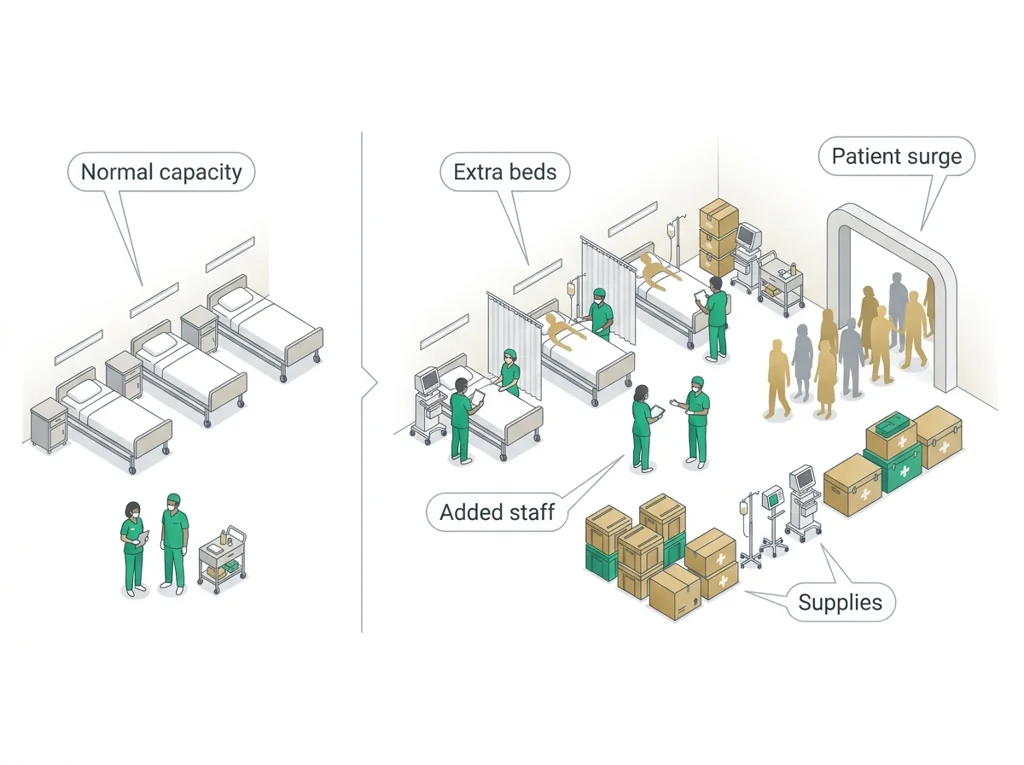
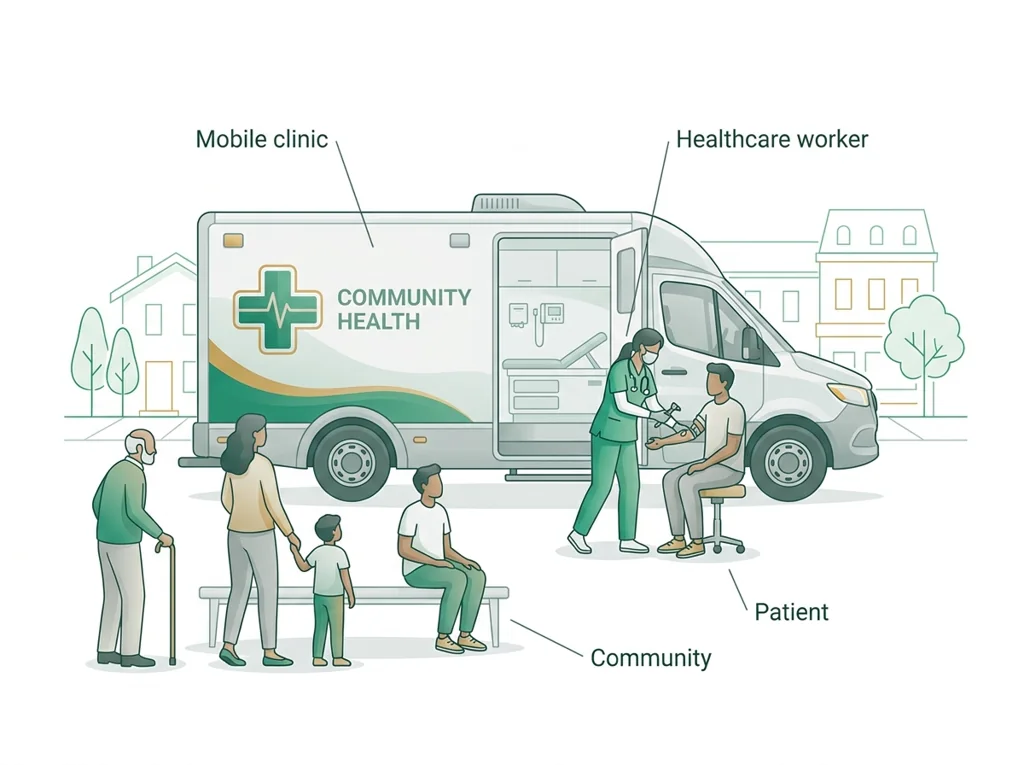
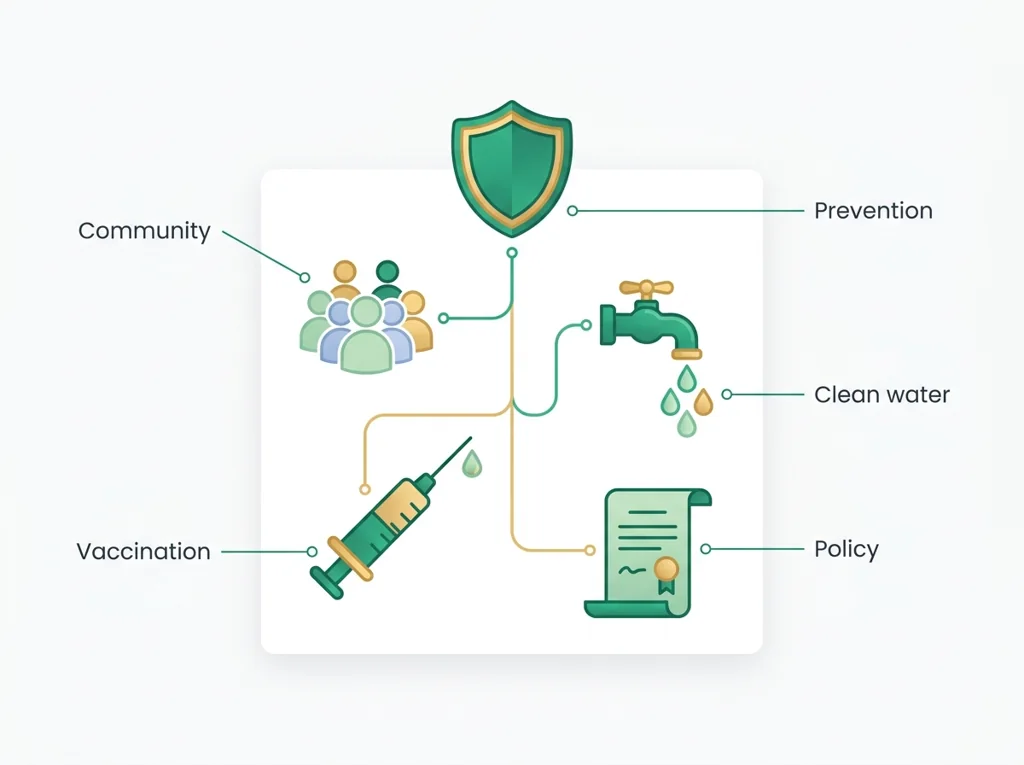
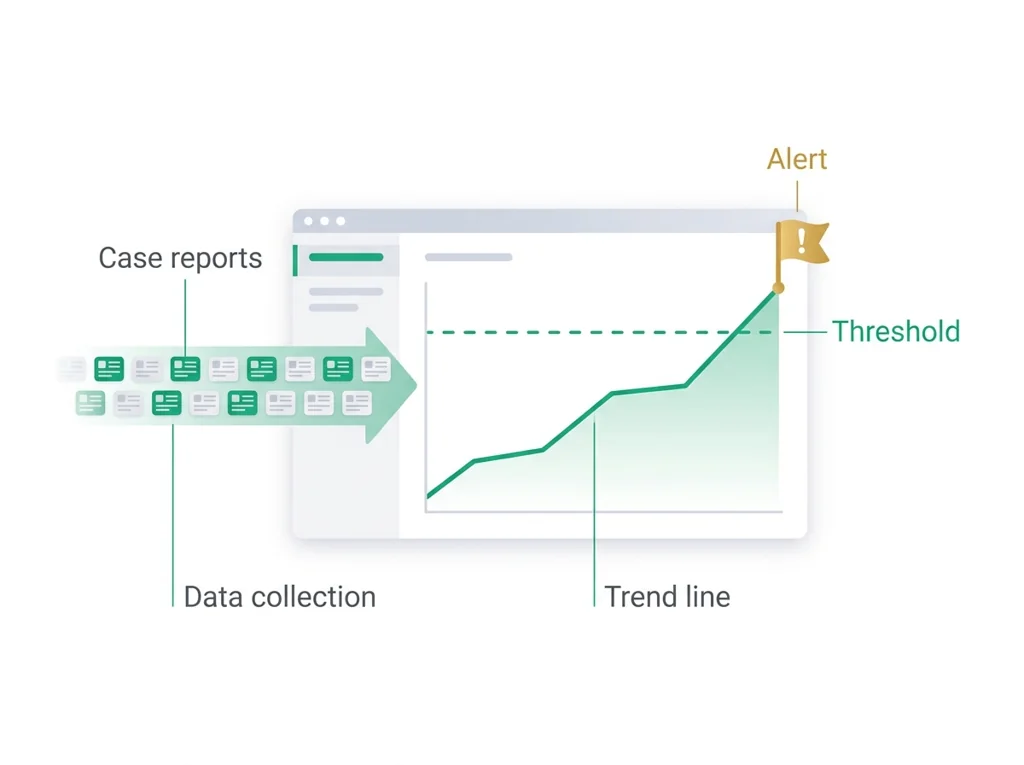
Tap the speaker to hear a term. Add two of these to your notebook glossary with a definition and an example in your own words.
Pick just 2 or 3 words from today and make them yours: write what each one means in your own words, name the context clue or evidence that helped, then give one example from what you actually did in Public-health design project. Try your own words first; the glossary is there if you get stuck. This is voluntary and counts as extra credit, so keep it short.
Saved on this device. Show Mr. Mendoza or add these to your notebook glossary to claim the extra credit.
Part 2 of 4 · Directions in plain English▸
2.1 Open your materials
Use the materials named in the first step below. Open lesson resources.
2.2 Start the work
Record the SOP for the user-centered design cycle the team will follow.
Show all 5 required steps
- Record the SOP for the user-centered design cycle the team will follow.
- Define the target users and the variables that shape their needs.
- Draft user personas and a prioritized feature list for the app.
- Build a low-fidelity wireframe addressing key surge information needs.
- Plan a usability check and note one limitation of the design data.
Lost your place? Reopen today's Public-health design project record. Find the last completed evidence ID, check it against the claim ceiling, and continue with the first unfinished step rather than restarting the whole task.
- 0-8 minAgree on the user-centered design the team will follow today.
- 8-20 minDefine target user groups (age, tech comfort, language, surge context); list variables shaping their needs.
- 20-38 minDraft two user personas: name, context, goals, and top three pain points each.
- 38-52 minBuild prioritized feature list: rank by persona urgency, not team preference.
- 52-68 minBuild low-fidelity wireframe for two key screens (home and alert screens).
- 68-80 minWrite usability check plan; state one design data limitation.
- • Today you are a user experience (UX) design team, the people who decide how something feels to use, hired to solve a real public-health communication crisis.
- • Your personas are your design constraints: every feature you add must trace back to a persona need.
- • The wireframe is a testable artifact, not a sketch: someone should be able to navigate it without your help.
- • The usability check plan tells you how you would know if the design actually works for real users.
PLTW connection and today's work
In myPLTW, open Lesson 3.3 Information Sharing and go to Problem 3.3.2 Public Health Emergency Apps. Use its guidelines to line up your persona and wireframe work.
Today's stopping point: The myPLTW prompts completed, and personas and wireframe substantially done before the bell.
PLTW activity titles identify the course connection. If your account will not open, use the posted materials for today and tell Mr. Mendoza. Do not mark an online activity complete unless you completed it.
Course connection
- Problem 3.3.2 Public Health Emergency Apps
Use the turn-in directions in Part 4 of this page. Do not create a second submission unless your teacher asks for one.
Show another explanation or a smaller first step
Need help? Choose a starting point
Finish the assigned lab safely before starting extra practice.
Part 3 of 4 · Worked example▸
This is a parallel case, not your own. Read it for the order of the work, then do your own in Part 4.
SOP recorded: follow the user-centered design cycle: define users, list needs, prioritize features, sketch a wireframe, then plan a usability check.
Target users and the variables shaping their needs: language, data access, age, and health literacy all change what a user needs.
Persona 1, 'Rosa, 58': limited data plan, prefers Spanish, worried about exposing family. Top need: know if it is safe to seek care without traveling far.
Persona 2, 'Jamal, 19': smartphone-fluent, no car, relies on public transit. Top need: find the closest open mobile site and its hours.
Prioritized feature list (highest-urgency first):
- Live clinic and mobile-site map with wait times.
- Language toggle (English and Spanish).
- Low-bandwidth text-only mode.
- Symptom self-check with 'when to seek care' guidance.
Wireframe (two screens, low fidelity):
- Screen 1: big 'Find care near me' button, language toggle, last-updated stamp.
- Screen 2: map list of sites with wait time and hours, one tap to directions.
Usability-check plan: have three classmates find the nearest open site in under 30 seconds; count taps and note confusion points.
Limitation: our personas are composites we invented, not real users, so the feature priorities are our best guess until we test with actual community members.
This model shows the level of evidence and organization needed to complete: Completes the design project prep: two user personas, a prioritized feature list, a low-fidelity two-screen wireframe, and a usability-check plan with one limitation.
- Identify the purpose, hazards, and required controls.
- Write the procedure in a usable order.
- Confirm materials, measurements, and waste handling before starting.
Keep the structure. Replace the question, facts, measurements, and evidence. Then recheck units, vocabulary, and whether the conclusion goes beyond the evidence.
Also due today: One team member turns in the design package in Schoology under the Wednesday Design Project assignment; all names must appear.
A bridge is tested against a load limit, cost limit, and user need before revision.
- Which requirement is a criterion?
- Which limit is a constraint?
- What test result should trigger a redesign?
A design improves when evidence is compared with explicit criteria and constraints.
Biomedical designs also require , ethics, and biological validation beyond a physical test.
- • Bridge requirements map to what the device must do for the body.
- • Load results map to the measurements taken from the .
- • Revision maps to the change those measurements justify.
Part 4 of 4 · Your work▸
Check your work before submitting
- Team produces personas and a wireframe grounded in user needs.
- Plan a usability check and state one limitation.
Before lab work: read the safety rules
- Wear the required personal protective equipment (PPE), keep the bench clear, handle equipment only as directed, and know where the eyewash, sink, and spill kit are before you start.
- Human samples and data stay private: label with a code, never a name, and dispose of materials in the correct waste container, then wash your hands.
4.1 Turn in your work
DueCheck the Schoology assignment for this day- Hand in
- Team deliverable: two user personas, a prioritized feature list, a low-fidelity wireframe of two screens, and a written usability check plan with one stated limitation.
How to submit and name your file
Submit as one PDF in Schoology.
In Schoology, open your course and the assignment for this lesson. Attach your file, select Submit, and check that it appears in the submission.
PDF upload helpYou get two school days for every day you were absent, so this deadline moves with you.
Today's lesson is in Schoology
Each school day has one lesson page in Schoology that holds everything for the day: the goal, the story so far, every table and data value, the numbered steps, and what to turn in. Open it first and work from it. The other rows for this day, if any, are the score line for a paper quiz or test and the John Carroll debate item; they do not add work. Check Schoology for each deadline.
- Today's Lesson · Fri 12/11 · Wk16 · The Saline Switch-Up, then how blood clots and the ABCs of bleeding(today's lesson page: the goal, the data, the steps, and what to turn in are all on it)
Link will not open? Open Schoology, choose your course and section, and find the title shown above.
- CompleteEvery required part of the artifact is present, nothing left blank.
- AccurateThe science and the data are correct and match the evidence.
- Scientific reasoningYou explain your claim with evidence and reasoning (CER), not just an answer.
- Professional communicationClear, organized, labeled, and written the way a clinician or scientist would.
- SubmittedGo to Schoology to turn this in. Submit one PDF. Schoology attaches your name to your upload; on the page itself, write your period and code. Name the file: FirstName LastName - Assignment Title - YYYY-MM-DD.pdf. If you cannot get in, see Mr. Mendoza. Do not skip the work.
- Error analysis and method · counts doubleName a specific limit of the method and how it moved your result, and compare what you predicted to what happened. "Human error" does not count; say what about the procedure or instrument caused it.
How this lesson connects
Keep using what you learned last class: A biomedical design advances when test evidence is compared with explicit user needs, criteria, constraints, risks, and failure modes, then used to justify a documented revision. Today: A clear public-health communication identifies a specific audience, presents one evidence-based main message and action, uses familiar language, and states what is known and uncertain without overstating risk.
Practice: try a question, then check your answer▸
Claim ceiling for this check: Today's evidence supports a classroom claim about public-health design project. It cannot prove causation, diagnose a real patient, or justify action outside this room.
A student treats one classroom result about public-health design project as proof. What must the student add before the conclusion is defensible?
Write an answer and pick a confidence to unlock the key.
Fast retrieval with instant answers, not the commit-then-reveal check above. Try each from memory first: write what you remember about the earlier units, then check yourself here.
Missed class or ready for more?▸
I can name the procedure's purpose and the evidence I will record. I can state today's specific hazards and the control for each. If this deck does not name them, I ask Mr. Mendoza before I touch anything. My data table is ready before materials are handled.
Finish the checklist before you handle any material.
- • Wear the required personal protective equipment (PPE), keep the bench clear, handle equipment only as directed, and know where the eyewash, sink, and spill kit are before you start.
- • Human samples and data stay private: label with a code, never a name, and dispose of materials in the correct waste container, then wash your hands.
- 1Before materials are handled, identify the purpose, variables or comparison, controls, measurement units, and stop-work condition.
- 2Record the SOP for the user-centered design cycle the team will follow.
- 3Define the target users and the variables that shape their needs.
- 4Draft user personas and a prioritized feature list for the app.
- 5Build a low-fidelity wireframe addressing key surge information needs.
- 6Plan a usability check and note one limitation of the design data.
- 7Record each result in the prepared table before interpreting it. Mark missing, repeated, or invalid results truthfully.
- 8Complete the named cleanup and waste route, remove PPE safely, wash hands when required, and confirm the station is ready for the next group.
| Which trial or sample this row is | What you changed on purpose | What you measured, with units | What you saw, before you explain it | Anything that could make this reading wrong |
|---|---|---|---|---|
Before the procedure, predict the result and cite the rule behind the prediction.
After the procedure, compare the result with the prediction and name one limitation or source of uncertainty.
What today's skills lead to. These are real health-science careers this course builds toward. Tap one to see, on the US Department of Labor's O*NET site, what the job actually involves, what it pays, and how fast it is growing.
Group public-health design project: teams build personas, a prioritized feature list, and a wireframe for a surge communication app, then plan a usability check.
Digital.gov: User-Centered DesignSubmit as one PDF in Schoology.
Class still runs. Complete today's work as this page describes (it is self-guided). Need the concept taught without a teacher? Use this authoritative explainer:
Ready.gov: pandemic and large-scale health emergenciesThe optional extra-credit track is open. Complete reserved-unit work from home, including virtual labs, for extra credit. Each item shows its correct submission route.
Open the extra-credit trackSources: slides, readings, and resources▸
The deck carries the prior idea forward, lets you inspect an analogy, maps the rule to biology, and ends with the same evidence decision and exit ticket used on this page.
Hand-picked readings and interactives for this lesson, from authoritative open organizations and PLTW's own public course outline.
This week
My Progress dashboard