
Surge resource debate
This page has four parts, in the order you use them. Part 1 is what you need to know. Part 2 says what to do, in plain English. Part 3 shows the work done once on a case that is not yours. Part 4 is your own work and where to turn it in.
Open your materials, follow the steps, then turn in your work.
Students debate how a community should prioritize mobile medical resources during a public-health surge.
Check you have the right sheet: the top of it prints today's portal day, Surge resource debate. The PLTW activity itself is in myPLTW and is not posted here.
Optional: listen or watch a unit review▸
Part 1 of 4 · Background and definitions▸
💡 Big idea: An allocation rule needs evidence, a reason for its fairness, and a way to reconsider the decision.
- • means prioritizing assessment and care according to need and available resources; a classroom debate does not qualify anyone to perform it.
- • is a demand for care that challenges available capacity.
- • Equity asks how differences in need and access affect a fair decision.
- • An uncertain benefit is not a measured outcome or a person's value.
You evaluate a decision against the logged evidence and the information you had, not against the final outcome, because outcomes depend partly on severity and chance, so only the evidence-based review reliably points to the next protocol improvement.
An allocation rule needs evidence, a reason for its fairness, and a way to reconsider the decision.
Driving question: One mobile assessment unit can serve Central or Riverside this shift. How should request counts, existing capacity and transport barriers inform the choice?
What you already know: You evaluate a decision against the logged evidence and the information you had, not against the final outcome, because outcomes depend partly on severity and chance, so only the evidence-based review reliably points to the next protocol improvement.
New idea: An allocation rule needs evidence, a reason for its fairness, and a way to reconsider the decision.
Visual or model: No figure is attached to this lesson. The readings, the worked example and E1 to E3 carry the evidence.
- Observe or measure the relevant feature in surge resource debate.
- Organize the observation with a stable evidence ID.
- Apply this rule: Use science to estimate consequences, then state the value judgment and tradeoff that determine the decision.
- Choose the option the evidence supports and state the limit of the conclusion.
Real biomedical example: One mobile assessment unit can serve Central or Riverside this shift. How should request counts, existing capacity and transport barriers inform the choice?
What the evidence supports: E1 to E3 support the daily take-home when the response meets the stated success criteria.
What it cannot prove: The package does not support claims beyond this lesson's or any real patient diagnosis.
- • : A health system's ability to rapidly expand staff, beds, and supplies to handle a sudden jump in patients during an emergency or outbreak.
- • : Healthcare delivered to people where they are, using vehicles or portable units to reach communities far from a fixed clinic or hospital.
- • : The science of protecting and improving the health of whole communities through prevention, education, and policies rather than treating one patient at a time.
- • surveillance: The ongoing, systematic collection and analysis of health data to detect disease early, track its trends, and trigger a timely response.
- • communication: Sharing information clearly and accurately between people, which in healthcare keeps patients safe and helps teams coordinate care.
Use it now: Choose one decision option. Cite E1 and E3, then explain how the rule connects the evidence to your choice. This is thinking practice for the one turn-in named under Turn in, not a second submission.
Go further, optional: The source links below are optional enrichment. Every fact required for today's local evidence decision appears in this lesson package.
A defensible biomedical decision separates scientific evidence from value judgments, identifies who may benefit or be burdened, and states the uncertainty and tradeoffs that remain.
Limit: Scientific evidence can inform the options and likely consequences, but it cannot choose a single value-neutral answer.
Use science to estimate consequences, then state the value judgment and tradeoff that determine the decision.
Limit: A review-board model organizes reasoning but does not make one ethical principle automatically outweigh every other principle.
Defend a clear deployment position with two evidence points.
Limit: E3 defines the classroom product or success criterion. It is not independent scientific evidence and cannot justify a clinical or causal claim.
Today's decision · Simulated classroom evidence scenario
Your role: biomedical investigator
Decision: Your team must decide what the evidence from surge resource debate supports before submitting the exit response named on today's page.
- • Send the unit downtown where the most sick people already are, because helping the largest number at once is fairest.
- • Find out who downtown goes without care once the unit moves, since nobody has measured that burden yet.
- • Place the mobile unit where people already struggle to reach a clinic, since deployment location decides who actually gets care.
Response: State one choice, cite at least two evidence IDs, explain the rule that connects them, and add one limitation. Use it inside the one turn-in named under Turn in; it is not a separate submission.
Claim ceiling: Today's evidence supports a classroom claim about surge resource debate. It cannot prove causation, diagnose a real patient, or justify action outside this room.
Reason for review: Your team must decide what the evidence from surge resource debate supports before submitting the exit response named on today's page.
Context: A fair allocation argument considers need, available support, access and uncertainty, and explains what new evidence could change it.
- • T1: Read the complete fictional case and its limits in Part 2 below. No additional case sheet or patient record is needed.
- • T2: Compare the two deployment choices using the supplied counts, capacity and access information. Name one missing fact.
- • T3: Prepare two reasons for your position using specific case details. State your decision criteria and one constraint from the case. Keep your preparation in your notebook.
- • T4: Discuss with a partner. If working alone, write the strongest reasonable argument for the other choice before answering it.
- • T5: Record the strongest opposing argument in one sentence. Submit that sentence as one PDF to today's Schoology assignment; there is no second upload.
- • E1: A defensible biomedical decision separates scientific evidence from value judgments, identifies who may benefit or be burdened, and states the uncertainty and tradeoffs that remain.
- • E2: Use science to estimate consequences, then state the value judgment and tradeoff that determine the decision.
- • E3: Defend a clear deployment position with two evidence points.
Measurements: Use only the measurements, units, graph, or counts supplied in today's task. No additional patient measurement is implied.
Uncertainty: This is a composite classroom scenario. Missing history, measurements, or confirmation tests remain unknown and limit the conclusion.
Requests beyond existing local capacity = requests - existing slots. Added slots cannot exceed either the unit's capacity or the remaining requests.
In a separate fictional example, 12 requests and 5 existing slots leave 12 - 5 = 7 requests beyond local capacity.
Use requests and slots for the same four-hour shift. These invented counts do not measure urgency, actual treatment or lives saved.
Calculate requests beyond existing slots for Central and Riverside. For each possible deployment, subtract the unit's 20 slots from that site's remaining requests. Keep the other site unchanged and explain one access limit those counts miss.
Students often think One number or one simple rule can settle every allocation decision. The trap: The supplied record has limits. Arrival order, request counts or expected benefit alone cannot establish every person's need, the support available or a real outcome. State what is missing and revisit the choice when evidence changes.
- CER:
- Claim, Evidence, Reasoning: make a claim, back it with evidence, explain your reasoning.
- SOP:
- Standard Operating Procedure, the exact steps to follow (especially in a lab).
- Tracker:
- Your PLTW progress log where you record completed evidence.
- myPLTW:
- The PLTW course site where you do the online activities. Find it in Clever with your Microsoft sign-in, right next to Schoology.
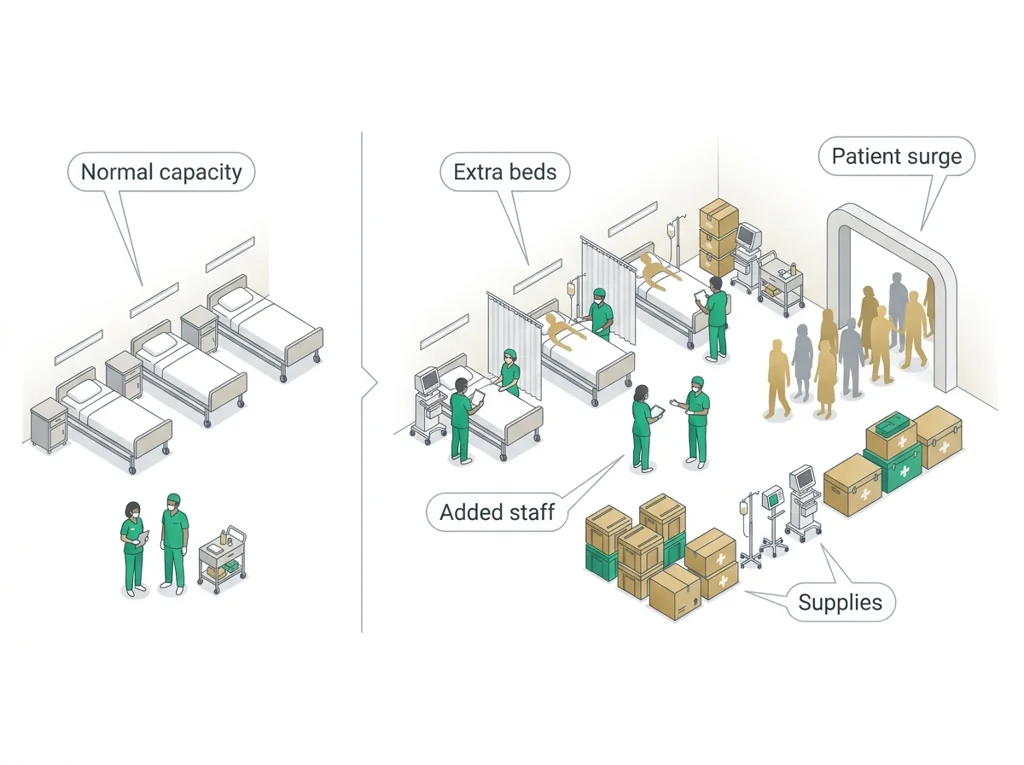
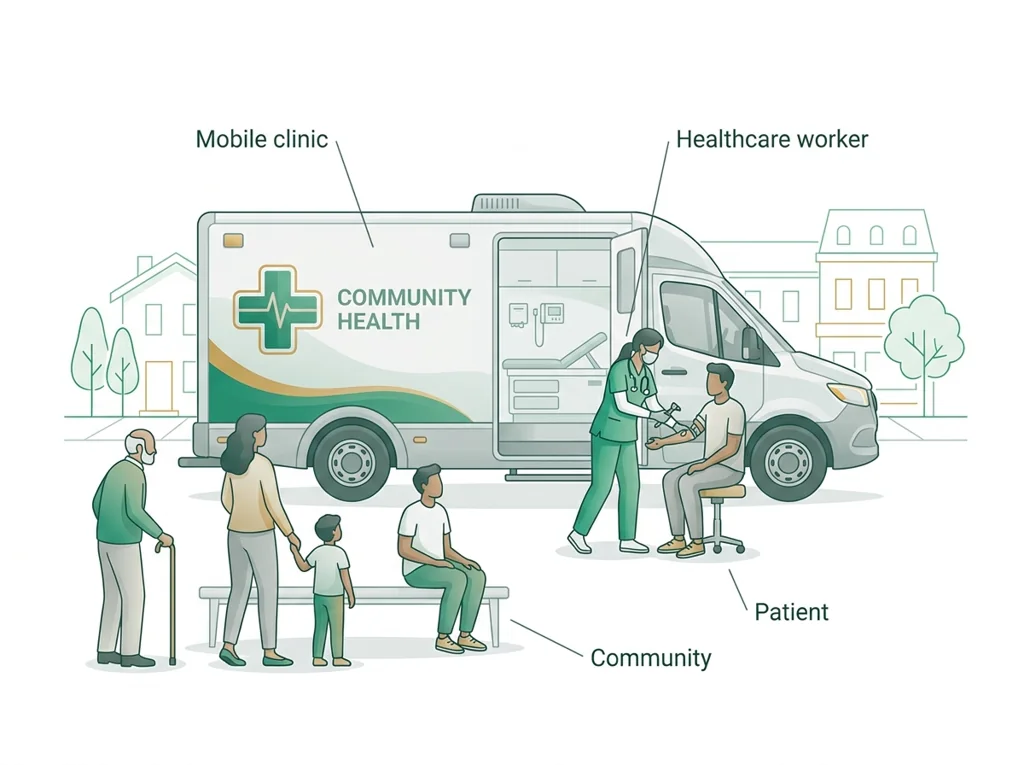
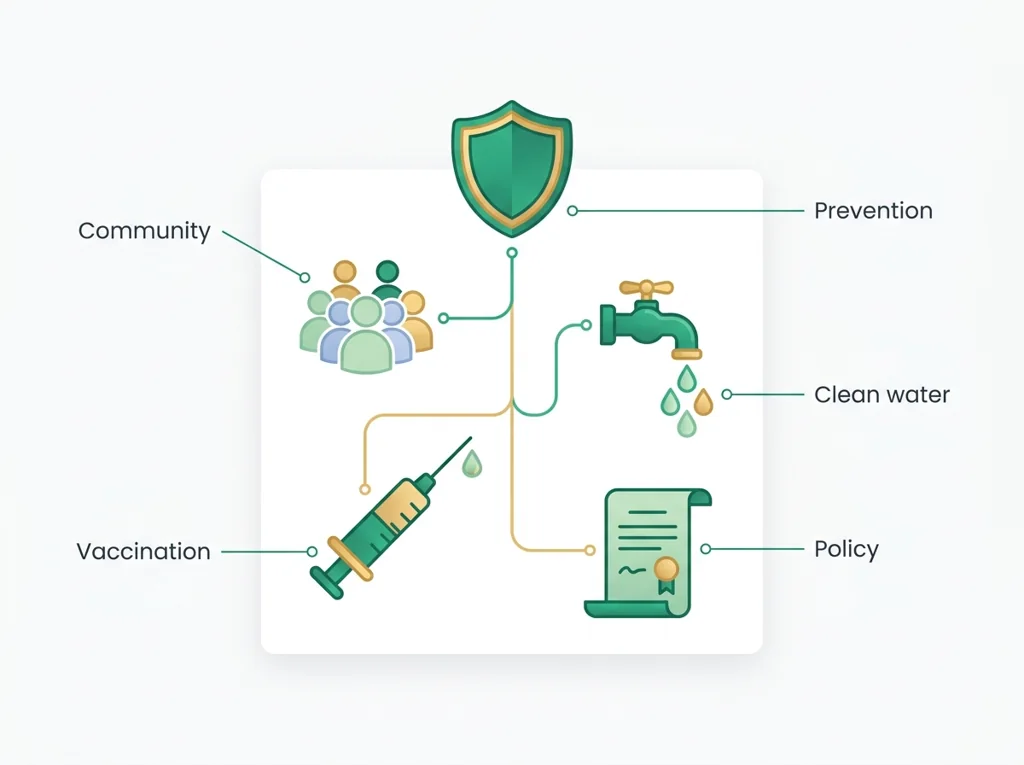
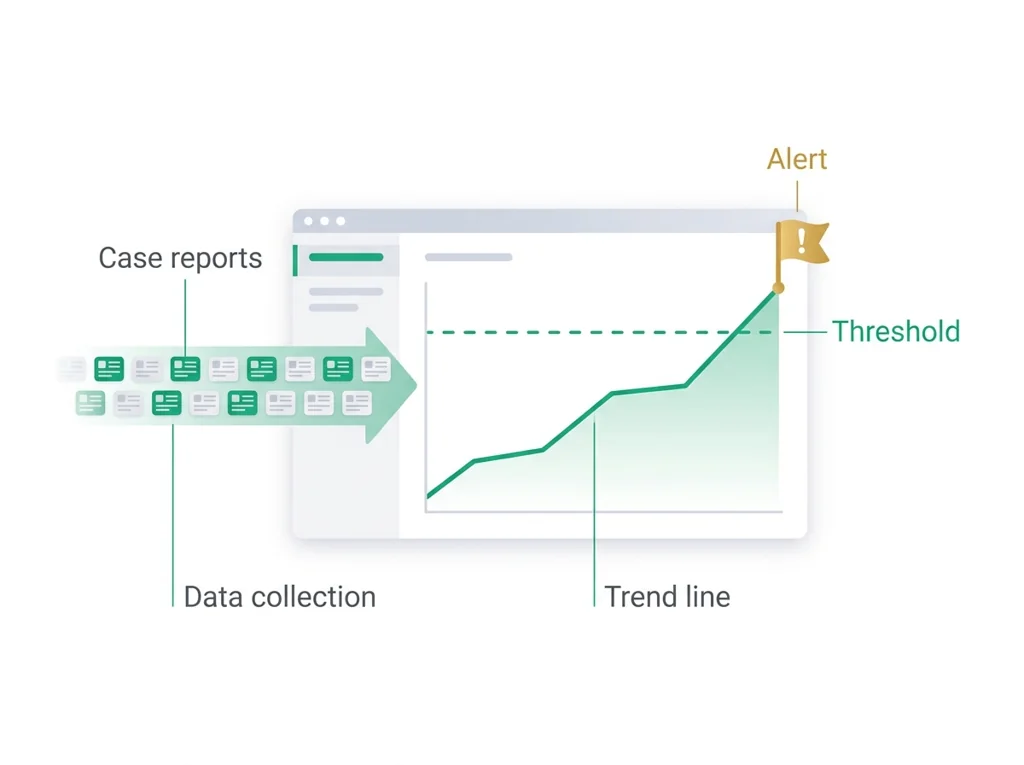
Tap the speaker to hear a term. Add two of these to your notebook glossary with a definition and an example in your own words.
Pick just 2 or 3 words from today and make them yours: write what each one means in your own words, name the context clue or evidence that helped, then give one example from what you actually did in Surge resource debate. Try your own words first; the glossary is there if you get stuck. This is voluntary and counts as extra credit, so keep it short.
Saved on this device. Show Mr. Mendoza or add these to your notebook glossary to claim the extra credit.
Part 2 of 4 · Directions in plain English▸
2.1 Open your materials
Fictional surge case: where should one mobile unit go?
Read the limits first
- Original fictional classroom case. All quantities and assessments are invented discussion inputs, not observations or clinical predictions. Discuss fairness and uncertainty only. Do not diagnose, assign real triage categories, practice treatment, or use this record to make a real care decision.
- A fictional region has one mobile assessment unit available for one four-hour shift. It can assess at most 20 people during that shift. It cannot provide hospital-level treatment or replace emergency transport. Both sites have safe space, power and staff; relocation during this shift would consume the available operating time.
Community and capacity cards
| Site | People requesting assessment | Existing local assessment slots | Access to another site |
|---|---|---|---|
| Central | 60 | 30 | A bus route reaches another assessment site in 20 minutes; its remaining capacity is unknown. |
| Riverside | 30 | 5 | No bus route operates during the shift; reaching another site requires private transport and takes 60 minutes. |
- The counts refer to this four-hour shift. They describe requests for assessment, not diagnoses or predictions of survival.
Map and decision rules
- Text map: Central and Riverside are separate communities. The mobile unit can serve either, but not both this shift. The travel times above describe residents' access to another site, not the unit's travel time.
- Compare sending the unit to Central, with more requests overall, against Riverside, with fewer existing slots and a larger transport barrier. Subtract existing slots from requests at each site, then consider what those differences do not tell you.
- Do not assume all requests have equal urgency or that every person can use private transport. Name one missing fact that could change your choice and a fair way to review the decision when that fact arrives.
- Plan one plain-English message stating where the unit will be and how people can obtain updated official information. Do not invent a phone number or give treatment advice.
2.2 Start the work
Read the complete fictional case and its limits in Part 2 below. No additional case sheet or patient record is needed.
Show all 5 required steps
- Read the complete fictional case and its limits in Part 2 below. No additional case sheet or patient record is needed.
- Compare the two deployment choices using the supplied counts, capacity and access information. Name one missing fact.
- Prepare two reasons for your position using specific case details. State your decision criteria and one constraint from the case. Keep your preparation in your notebook.
- Discuss with a partner. If working alone, write the strongest reasonable argument for the other choice before answering it.
- Record the strongest opposing argument in one sentence. Submit that sentence as one PDF to today's Schoology assignment; there is no second upload.
Lost your place? Reopen the supplied case cards. Find your two case-based reasons and the missing fact you named. If those are finished, write the strongest opposing argument fairly in one sentence.
- 0-10 minRead the fictional case and distinguish supplied information from missing information.
- 10-25 minCompare the two choices and prepare two case-based reasons.
- 25-50 minDiscuss the competing arguments, or write both sides independently.
- 50-65 minTest your position against the strongest opposing argument and one missing fact.
- 65-80 minWrite the one-sentence counterargument, check its case detail, and upload one PDF.
- • Today you compare fair ways to allocate limited resources using an original fictional case.
- • WHO describes mass-casualty incidents as demand overwhelming available local resources.
- • A defensible argument uses the supplied evidence and makes missing information visible.
- • Your one turn-in is the strongest opposing argument, stated fairly in one sentence.
PLTW connection and today's work
Course connection: Activity 3.2.5 Medical Surge in Lesson 3.2 Emergency Response. Today's complete discussion case is on this page.
Today's stopping point: Stop after the one-sentence counterargument. The next lesson's practical work is separate.
PLTW activity titles identify the course connection. If your account will not open, use the posted materials for today and tell Mr. Mendoza. Do not mark an online activity complete unless you completed it.
Use the turn-in directions in Part 4 of this page. Do not create a second submission unless your teacher asks for one.
Show another explanation or a smaller first step
Need help? Choose a starting point
Part 3 of 4 · Worked example▸
This is a parallel case, not your own. Read it for the order of the work, then do your own in Part 4.
Parallel case (not today's prompt): A clinic receives only enough seasonal flu vaccine to cover half the people who want it this week. It can send the doses to a nearby nursing home where residents face high risk of severe illness, or hold them at a walk-in site downtown where far more people pass through each day. Which group should get the limited doses first?
Claim: The limited flu doses should go to the nursing home residents first.
Evidence: Older adults in congregate settings have much higher rates of hospitalization and death from influenza than the general public, and a single outbreak can spread quickly through a shared-living facility. Vaccinating a smaller, high-risk group prevents more severe cases than spreading the same doses thinly across a lower-risk crowd.
Reasoning: When a health system cannot cover everyone at once, the fair test is not who is easiest to reach but where each dose prevents the most serious harm. Because the residents are both more likely to get dangerously sick and more likely to spread illness to one another, protecting them first uses a scarce public-health resource where it does the most good.
Strongest opposing argument I would have to answer: The downtown site reaches many more people per day, so placing the doses there could slow community spread faster and shield more of the total population, which during a real surge might protect more people overall.
(Tip: notice the shape to copy for today. Name your Claim in one clear sentence, back it with Evidence that is actually true, explain in the Reasoning why that evidence supports the claim, and state the strongest opposing point in one fair sentence using surge vocabulary like medical surge, mobile response, or public-health communication. Model the format here, then argue your own deployment question yourself.)
This model shows the level of evidence and organization needed to complete: Models the debate exit task on a parallel resource-allocation case (limited flu vaccine doses) so students can see the Claim, Evidence, Reasoning format and depth without seeing an answer to today's mobile-unit deployment prompt.
- Name the prompt or task.
- Answer it directly with the key evidence.
- Check that the response matches the requested format.
Keep the structure. Replace the question, facts, measurements, and evidence. Then recheck units, vocabulary, and whether the conclusion goes beyond the evidence.
Also due today: Hand in your exit-ticket card, or submit it in Schoology under today's exit-ticket.
A review board sorts scientific evidence, stakeholder needs, possible benefits, possible burdens, and uncertainty before choosing a policy.
- Which statements are scientific evidence?
- Which statements express a value or priority?
- Who receives the benefit and who carries the burden?
Use science to estimate consequences, then state the value judgment and tradeoff that determine the decision.
A review-board model organizes reasoning but does not make one ethical principle automatically outweigh every other principle.
- • Evidence cards map to source-backed findings.
- • Stakeholder cards map to affected people and priorities.
- • The recommendation maps to an explicit tradeoff with a named uncertainty.
Part 4 of 4 · Your work▸
Check your work before submitting
- Defend a clear deployment position with two evidence points.
- Use surge-response vocabulary correctly during the debate.
Working rules for today
- Original fictional classroom case. All quantities and assessments are invented discussion inputs, not observations or clinical predictions. Discuss fairness and uncertainty only. Do not diagnose, assign real triage categories, practice treatment, or use this record to make a real care decision.
4.1 Turn in your work
DueCheck the Schoology assignment for this day- Hand in
- One sentence recording the strongest opposing argument heard during the surge resource debate.
How to submit and name your file
Submit the one-sentence strongest opposing argument as one PDF to today's Schoology assignment. Keep preparation notes in your notebook.
In Schoology, open your course and the assignment for this lesson. Attach your file, select Submit, and check that it appears in the submission.
PDF upload helpYou get two school days for every day you were absent, so this deadline moves with you.
Today's lesson is in Schoology
Each school day has one lesson page in Schoology that holds everything for the day: the goal, the story so far, every table and data value, the numbered steps, and what to turn in. Open it first and work from it. The other rows for this day, if any, are the score line for a paper quiz or test and the John Carroll debate item; they do not add work. Check Schoology for each deadline.
- Outbreak unit test: the hospital investigation (paper, in class Tue 12/8)(taken on paper in class: this row holds the score, there is nothing to upload)
- Today's Lesson · Tue 12/8 · Wk16 · Outbreak unit test on paper, then record and share your podcast(today's lesson page: the goal, the data, the steps, and what to turn in are all on it)
Link will not open? Open Schoology, choose your course and section, and find the title shown above.
- CompleteEvery required part of the artifact is present, nothing left blank.
- AccurateThe science and the data are correct and match the evidence.
- Scientific reasoningYou explain your claim with evidence and reasoning (CER), not just an answer.
- Professional communicationClear, organized, labeled, and written the way a clinician or scientist would.
- SubmittedGo to Schoology to turn this in. Submit one PDF. Schoology attaches your name to your upload; on the page itself, write your period and code. Name the file: FirstName LastName - Assignment Title - YYYY-MM-DD.pdf. If you cannot get in, see Mr. Mendoza. Do not skip the work.
How this lesson connects
Keep using what you learned last class: You evaluate a triage decision against the logged evidence and the information you had, not against the final outcome, because outcomes depend partly on severity and chance, so only the evidence-based review reliably points to the next protocol improvement. Today: An allocation rule needs evidence, a reason for its fairness, and a way to reconsider the decision.
Practice: try a question, then check your answer▸
Claim ceiling for this check: Today's evidence supports a classroom claim about surge resource debate. It cannot prove causation, diagnose a real patient, or justify action outside this room.
Does the fictional record prove how many lives either choice would save? Explain what it supplies and what remains unknown.
Write an answer and pick a confidence to unlock the key.
Fast retrieval with instant answers, not the commit-then-reveal check above. Try each from memory first: write what you remember about the earlier units, then check yourself here.
Missed class or ready for more?▸
What today's skills lead to. These are real health-science careers this course builds toward. Tap one to see, on the US Department of Labor's O*NET site, what the job actually involves, what it pays, and how fast it is growing.
Use the complete fictional case on this page. Prepare both sides in your notebook, then submit the same one-sentence strongest opposing argument as one PDF in today's Schoology assignment. No partner, separate board post or external case sheet is required.
Submit the one-sentence strongest opposing argument as one PDF to today's Schoology assignment. Keep preparation notes in your notebook.
Class still runs. Complete today's work as this page describes (it is self-guided). Need the concept taught without a teacher? Use this authoritative explainer:
WHO: Mass casualty managementThe optional extra-credit track is open. Complete reserved-unit work from home, including virtual labs, for extra credit. Each item shows its correct submission route.
Open the extra-credit trackSources: slides, readings, and resources▸
The deck carries the prior idea forward, lets you inspect an analogy, maps the rule to biology, and ends with the same evidence decision and exit ticket used on this page.
Hand-picked readings and interactives for this lesson, from authoritative open organizations and PLTW's own public course outline.
This week
My Progress dashboard