
PBS/PBT · PBS1282 · Case A (STATIC) · September 14, 2026
Process the Scene: review the intake records
One product: D06 Parts A–E intake sheet
This page has four parts, in the order you use them. Part 1 is what you need to know. Part 2 says what to do, in plain English. Part 3 shows one record read once on a practice scene that is not your case. Part 4 is your own case records and the ten tasks on your sheet.
Start: Part 1, then follow the steps in Part 2. Due: September 14, 11:59 PM.
Part 1 of 4 · Background and definitions
What you need to know before you write
Everything on your intake sheet comes from these short readings. Read them once before Part 2; Part A quotes them, Part B applies R1 to R5 to your rows, and Part E checks R1 to R4.
R1. What should an intake record tell the next reader?
Friday's case work practiced keeping a source beside each statement. Today, use that rule to organize the supplied records. You are reviewing a classroom simulation. You are not collecting samples or testing a stain.
An intake record lists an item, its location, its photo references, and who handled it. An E-number is the evidence number used to track an item. Keep the number supplied. If none is assigned, say so. Do not make one up.
A reference point, or RP, is a named place used to describe a location. Keep both distances and their units. Chain of custody is the record of who handled an item and when. In today's collected-item records, the custody row starts when the item is bagged. An item left in place needs its true status, not a made-up transfer.
R2. A light response is an observation
Latent means not readily visible under the conditions being used. An alternate light source uses selected light to help make some material easier to see. Fluorescence means a material absorbs light and gives off light. The supplied classroom records describe a fluorescent visual model.
Luminol is different. It produces light through a chemical reaction. The classroom model does not reproduce that test or identify a substance. It helps us practice describing a response without naming its cause. [Sources S1 and S2]
R3. What can a first check establish?
A presumptive test is an initial check that may suggest a substance is present but does not identify it conclusively. Some chemical screens can respond to bleach or copper. These are examples of interference, not claims about the contents of our case items. Repeating initial screens does not itself establish identification. [Sources S3 and S4]
A visible response can be misleading if another material caused it. A missing response can also mislead if the material was not detected under the viewing conditions. Write what was reported. Do not turn “no response observed” into “nothing was present.” [Sources S1, S3 and S4]
R4. Keep the missing information visible
“No UV photograph supplied” describes a missing image reference. “No UV hit” describes a reported observation. They are different. Copy the status the record actually gives. If a record says only “no UV,” copy those words and add “meaning not specified.” If UV is not mentioned, write “UV status not supplied.” Do not change either into “no UV hit.” You do not need to open an unavailable photograph for this record exercise.
For a reported glowing area, write that the supplied record reports fluorescence, then name the recorded location and photo reference. The material remains unconfirmed. A stronger identification needs a method appropriate for the material and its actual result. You do not need to name or perform a test. [Sources S3 and S4]
R5. Which records should be handled first?
Fragile means easily damaged or lost. Time-sensitive means delay could change the item. The supplied case record groups the items into four collection priorities. Use those groups to explain the recorded order. The groups are not a replacement for the full intake list.
R6. Use the same rule in biomedical work
In laboratory work, a comparison is useful only when its role is clear. A comparison item is an item used to compare with another. A seal describes packaging; it does not establish the contents as clean. A control is used to check how a test or comparison performs. [Source S5]
The strongest statement today preserves what the source reports and what remains unknown. An observation by itself does not identify a person, substance or cause.
R7. Use it now
Follow MODEL-1 before starting Part B. Notice how its source, location, photo references and custody status stay together. Then use your own case's records for your sheet. Keep that sheet for Tuesday's trace-comparison work.
Plain-English terms
- Intake record
- A list of an item's identifier, location, photo references and handling information.
- E-number
- The evidence number used to track an item. Retain an unassigned status when no number is supplied.
- Reference point (RP)
- A named place used to describe a location. Keep both distances and units.
- Chain of custody
- The record of who handled an item and when.
- Custody row
- The handling entry. In these collected-item records it starts at bagging; an in-place item has no invented transfer.
- Latent
- Not readily visible under the conditions being used.
- Alternate light source
- Selected light used to help make some material easier to see.
- Fluorescence
- A material absorbs light and gives off light. The response alone does not identify it.
- Presumptive test
- An initial check that may suggest a substance is present but does not identify it conclusively.
- Fragile
- Easily damaged or lost.
- Time-sensitive
- Delay could change the item.
- Comparison item
- An item used to compare with another. A seal describes packaging, not a clean analytical result.
- W and UV
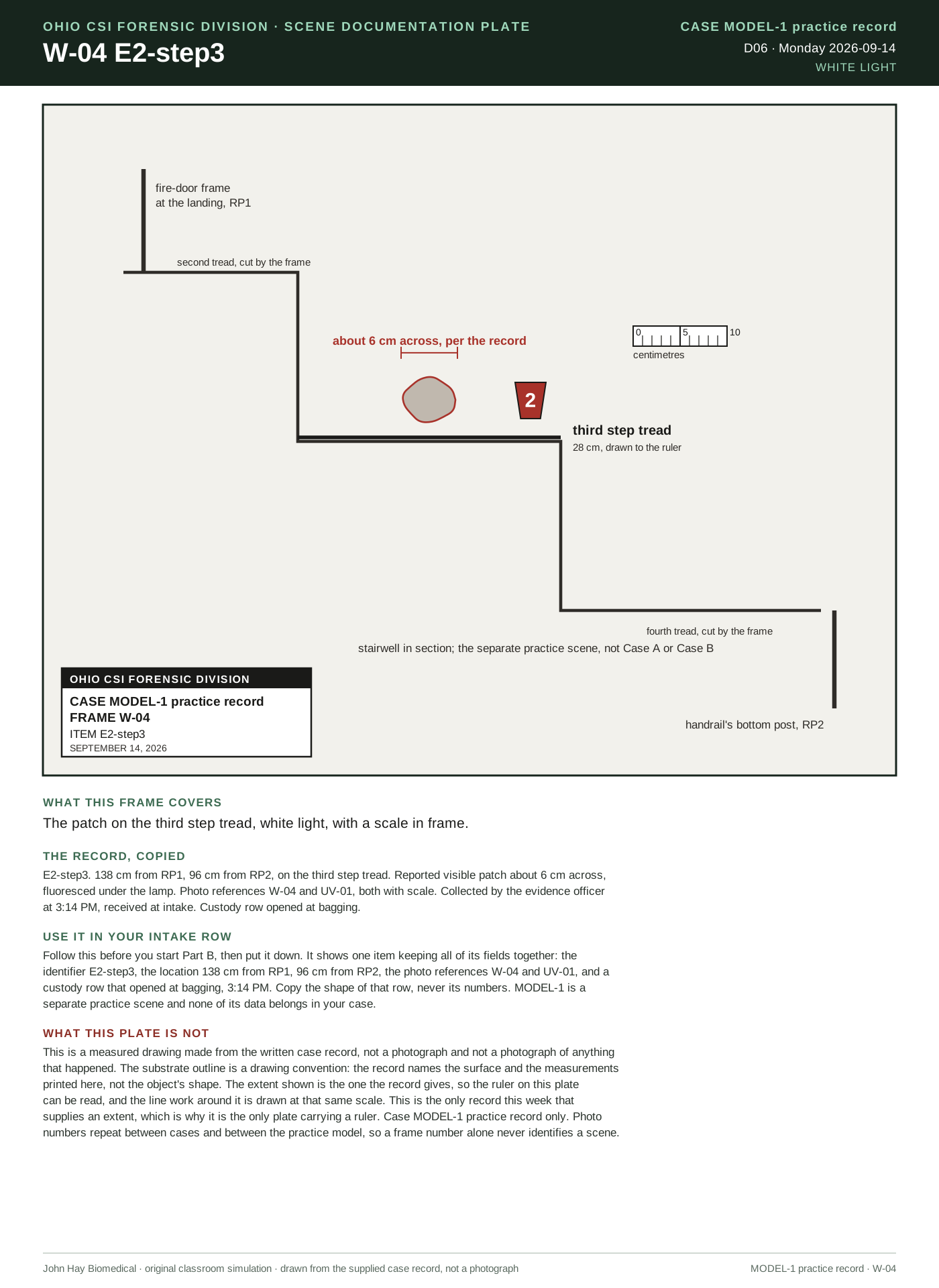
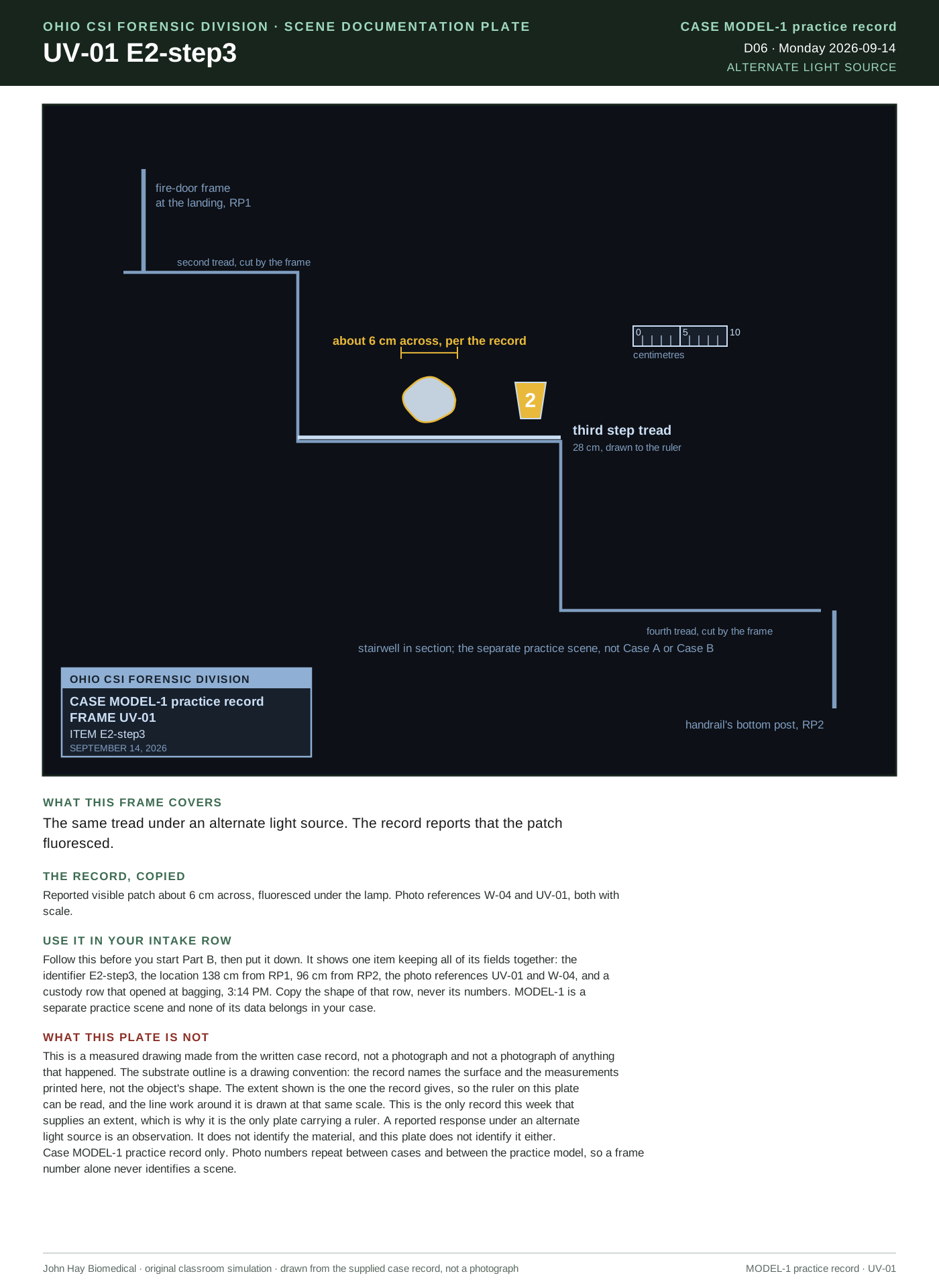
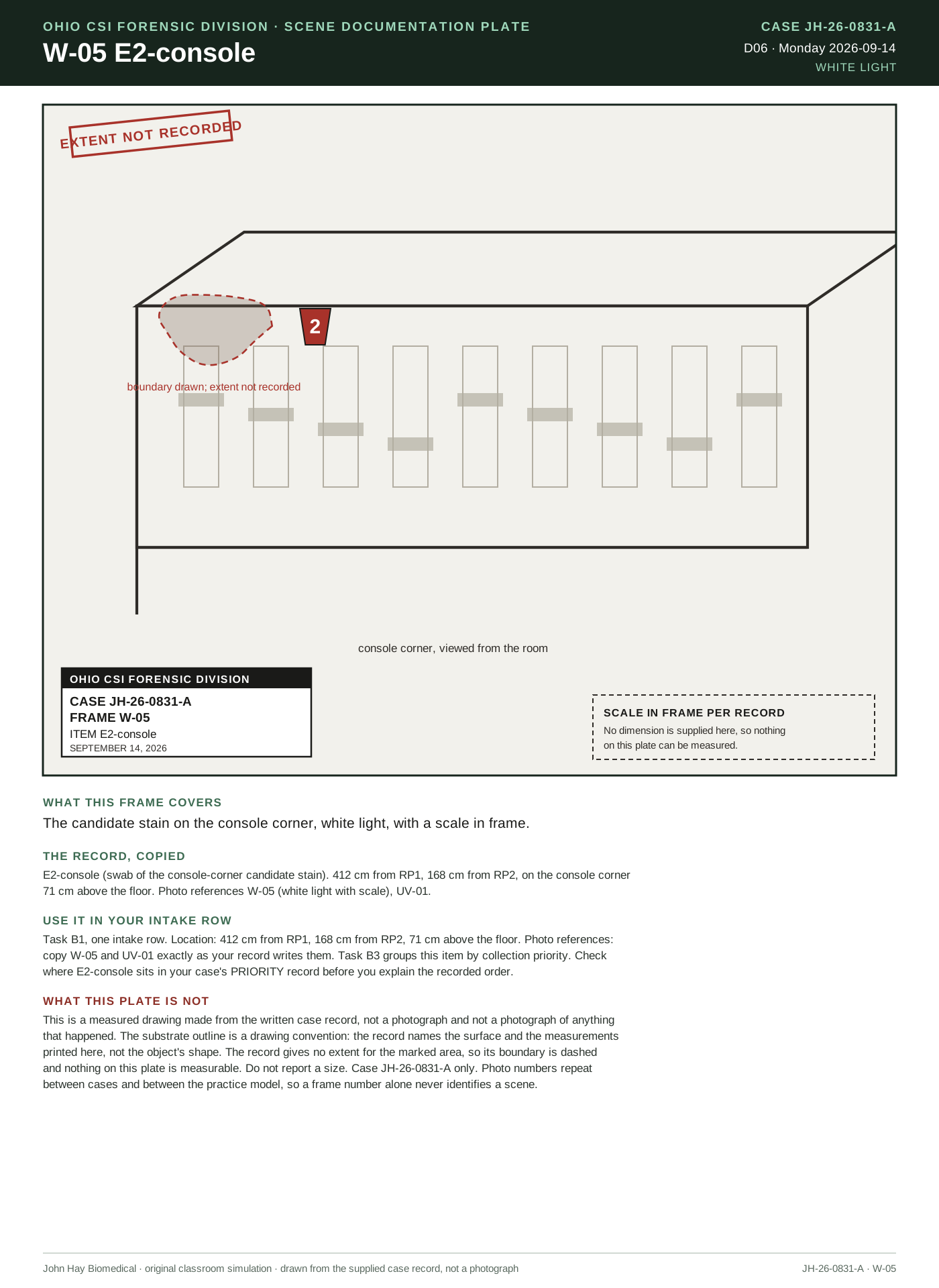
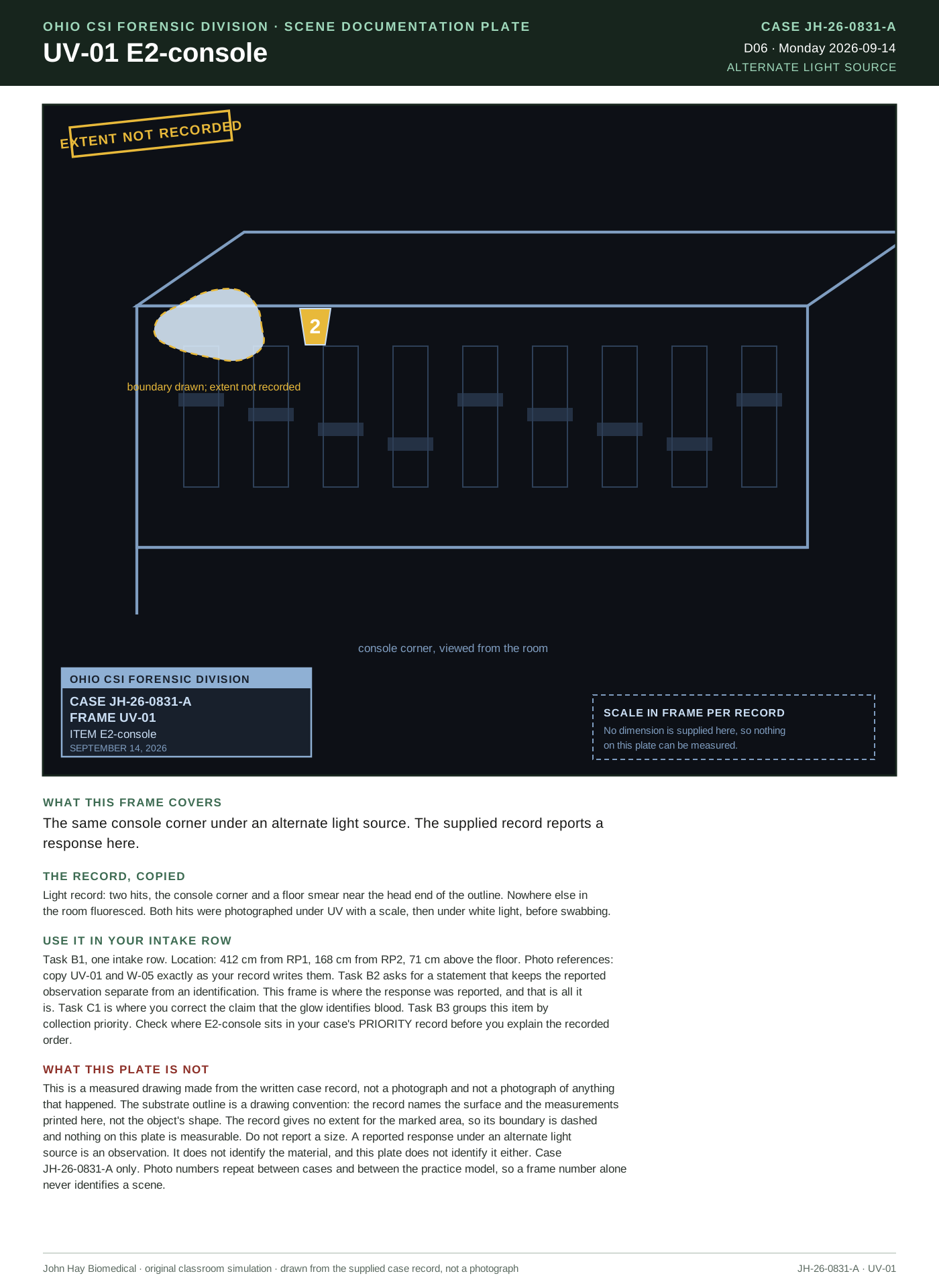
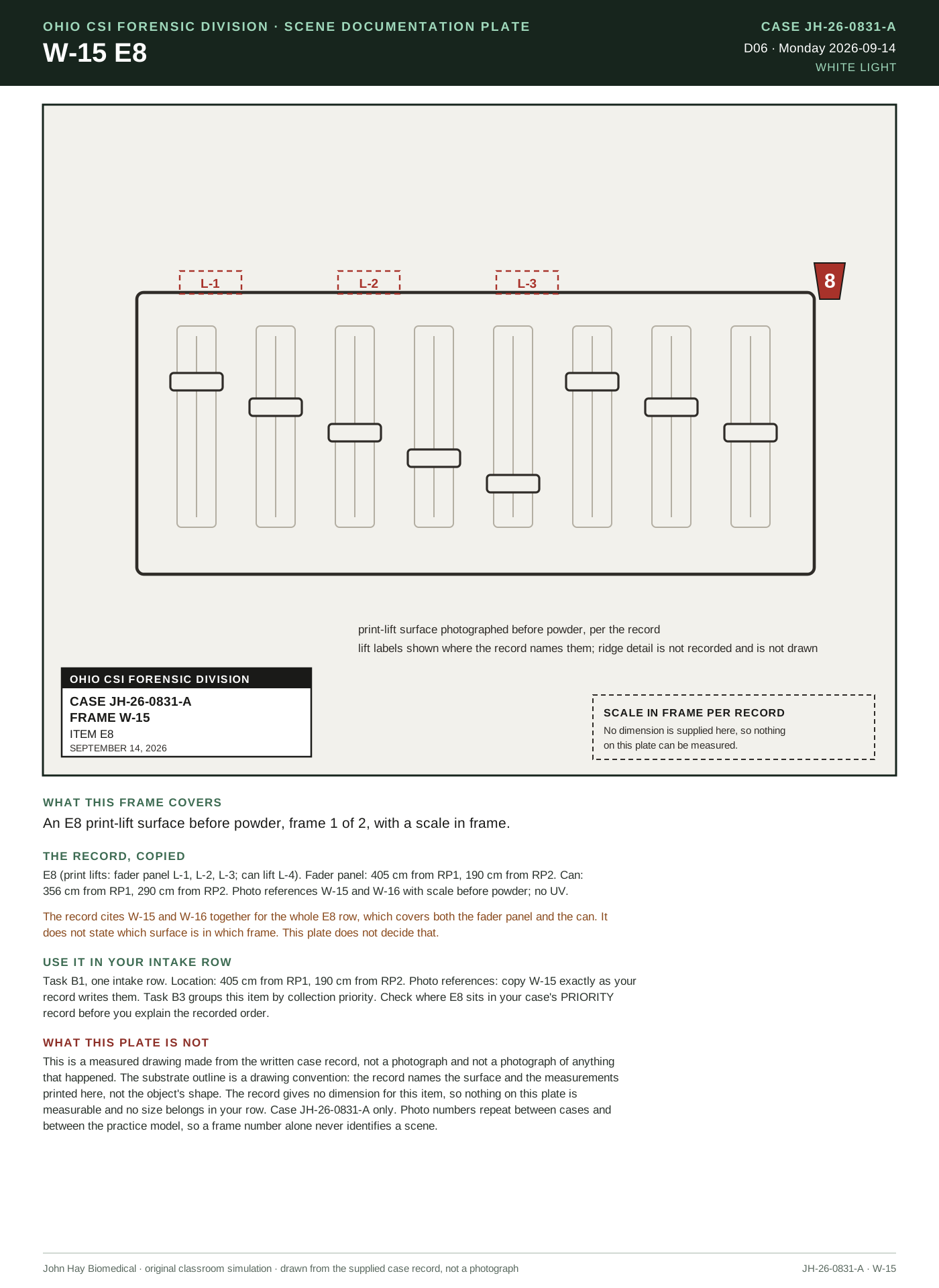
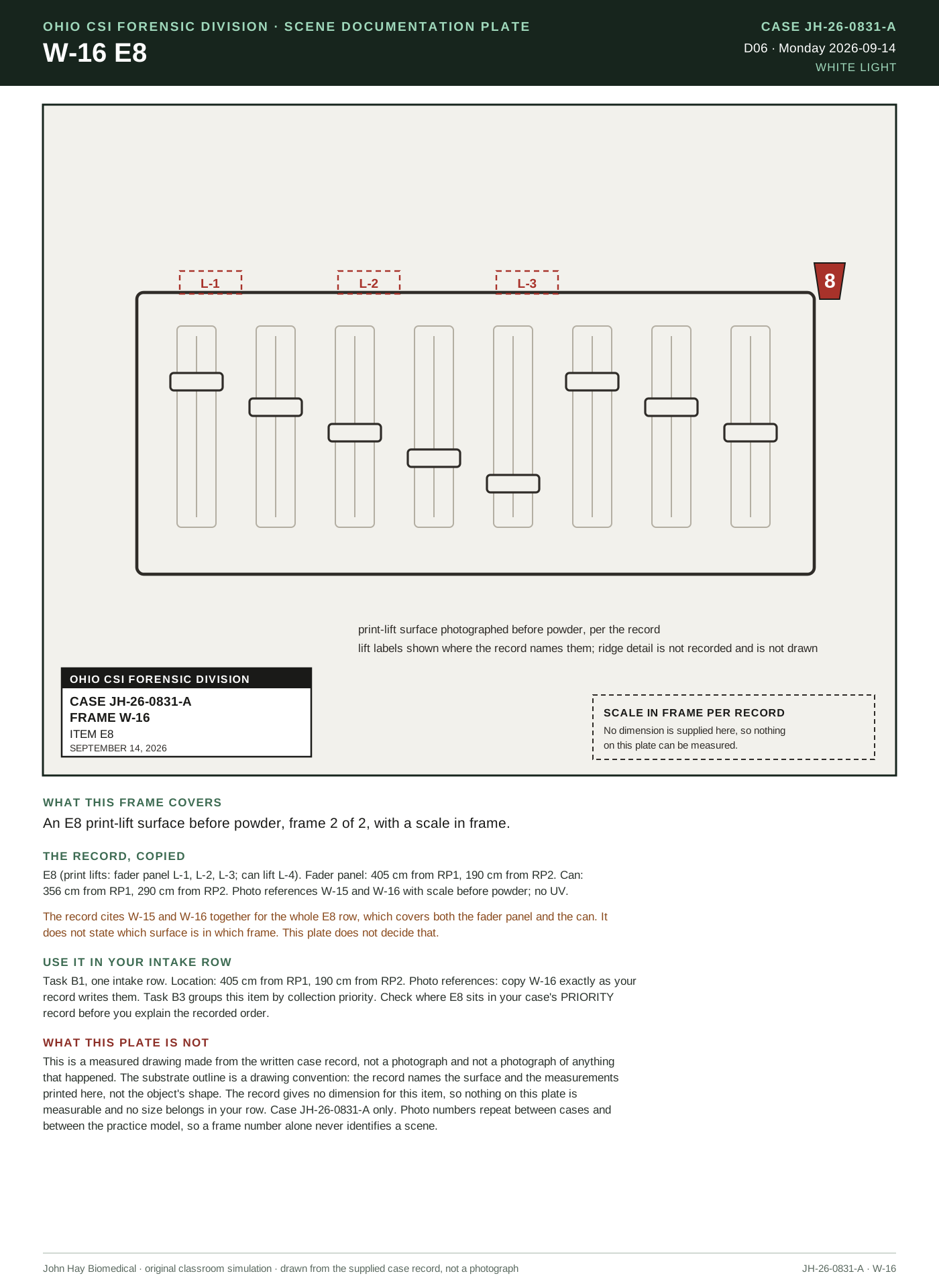
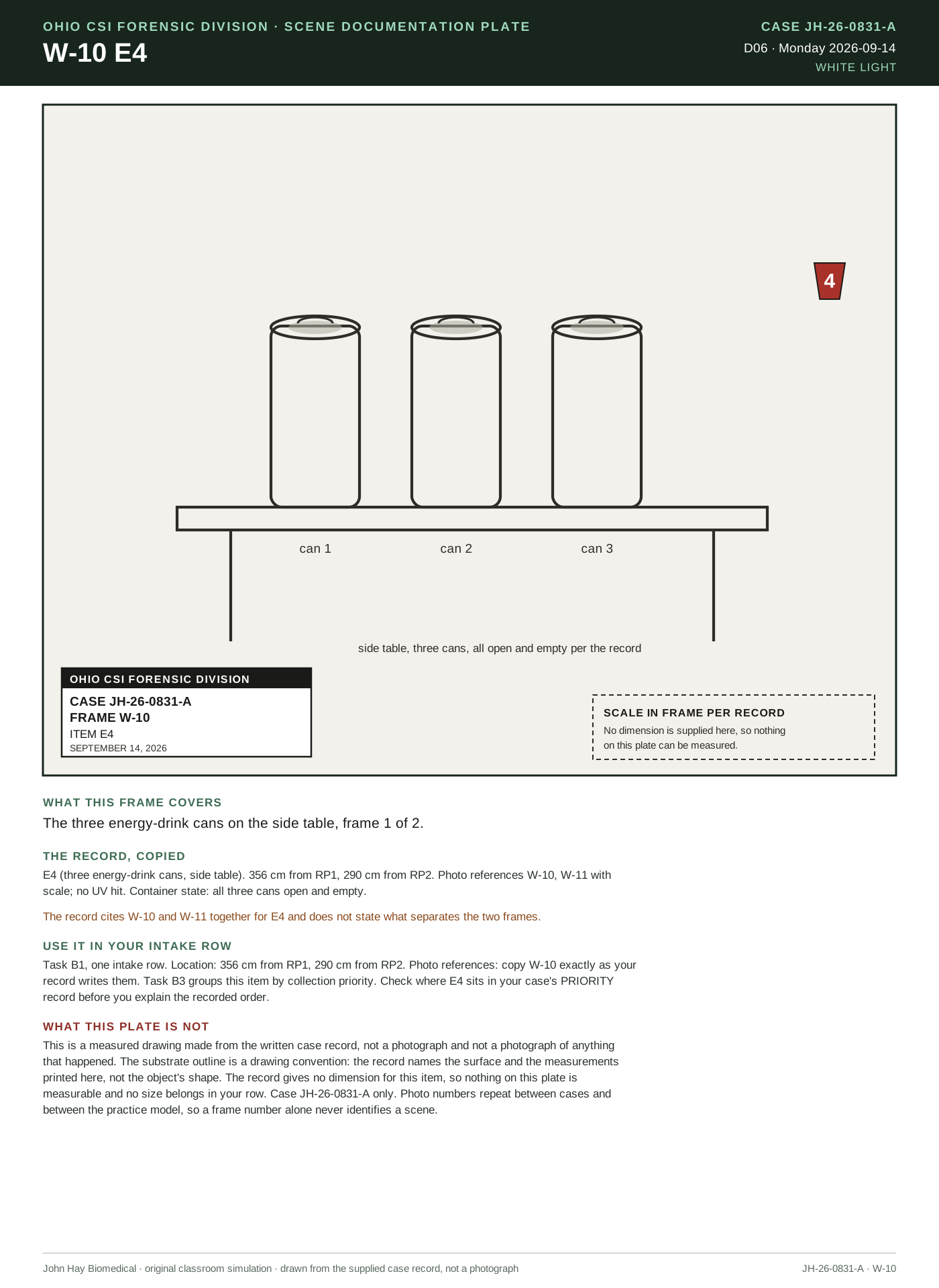
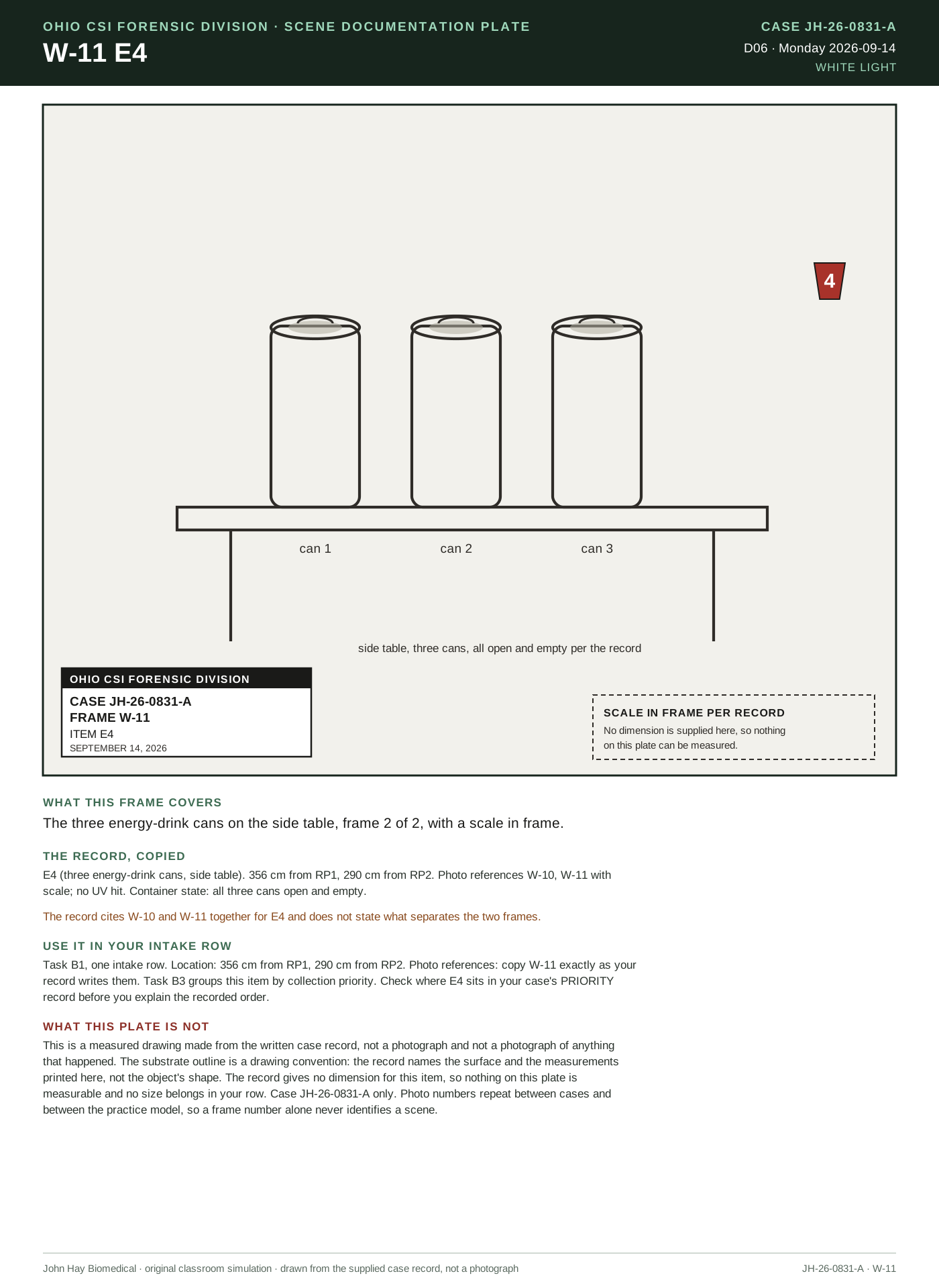
- W labels a white-light photograph; UV labels an ultraviolet-light photograph. A reference names a frame. Your evidence folder supplies a measured plate drawn from each frame's record; the plate is not the photograph.
- Claim
- A statement about what happened or what something is.
Part 2 of 4 · Directions in plain English
What you will do today, in order
Complete one intake sheet that preserves each item's source, location, photo references and handling status without making a stronger claim than the record supports.
- Open your case's D06 sheet, choose the permitted record source and read R1–R6. Complete Part A.
- Follow the separate MODEL-1 row. Use your case's RECORDS and STATUS to complete every Part B intake row.
- Finish B2/B3 from the same sources and the four PRIORITY groups. Keep observations separate from identification and record missing fields honestly.
- Write the approved four-to-six-sentence Part C correction. Finish Parts D and E; check your source labels and required fields.
- Submit the same completed sheet once, on paper or as one PDF to your exact section assignment. Keep your notebook work separate.
Use the supplied classroom simulation records for your case. If teacher-approved classroom records are available, you may use them for the same sheet. State your source. Do not claim you performed the events described.
Show the 80-minute plan
- 0–10 min: Choose the correct case and record source; fill the sheet header.
- 10–25 min: Read R1–R6, follow MODEL-1 and F1, and complete Part A.
- 25–40 min: Complete all six Case A rows or eight Case B rows, or all authorized actual-record rows.
- 40–60 min: Check with a partner if helpful, then complete B2/B3 and your own C1.
- 60–70 min: Complete D/E and check missing fields or claims against the source.
- 70–80 min: Submit the same sheet once, on paper or in one PDF. Keep notebook work separate.
Slides and optional guided notes
Optional guided notes can help you organize your thinking. They are not another submission. Use one support level, not all three.
Download the editable PowerPoint or open it in Google Drive. These slides use a static sequence, with no click animations.
The frames your records name
Every photo reference below, W-05, UV-01 and the rest, names a frame. Your evidence folder holds one measured plate for each of them, plus a measured sketch of where each item sat. Click any reference in the RECORDS list to open that frame.
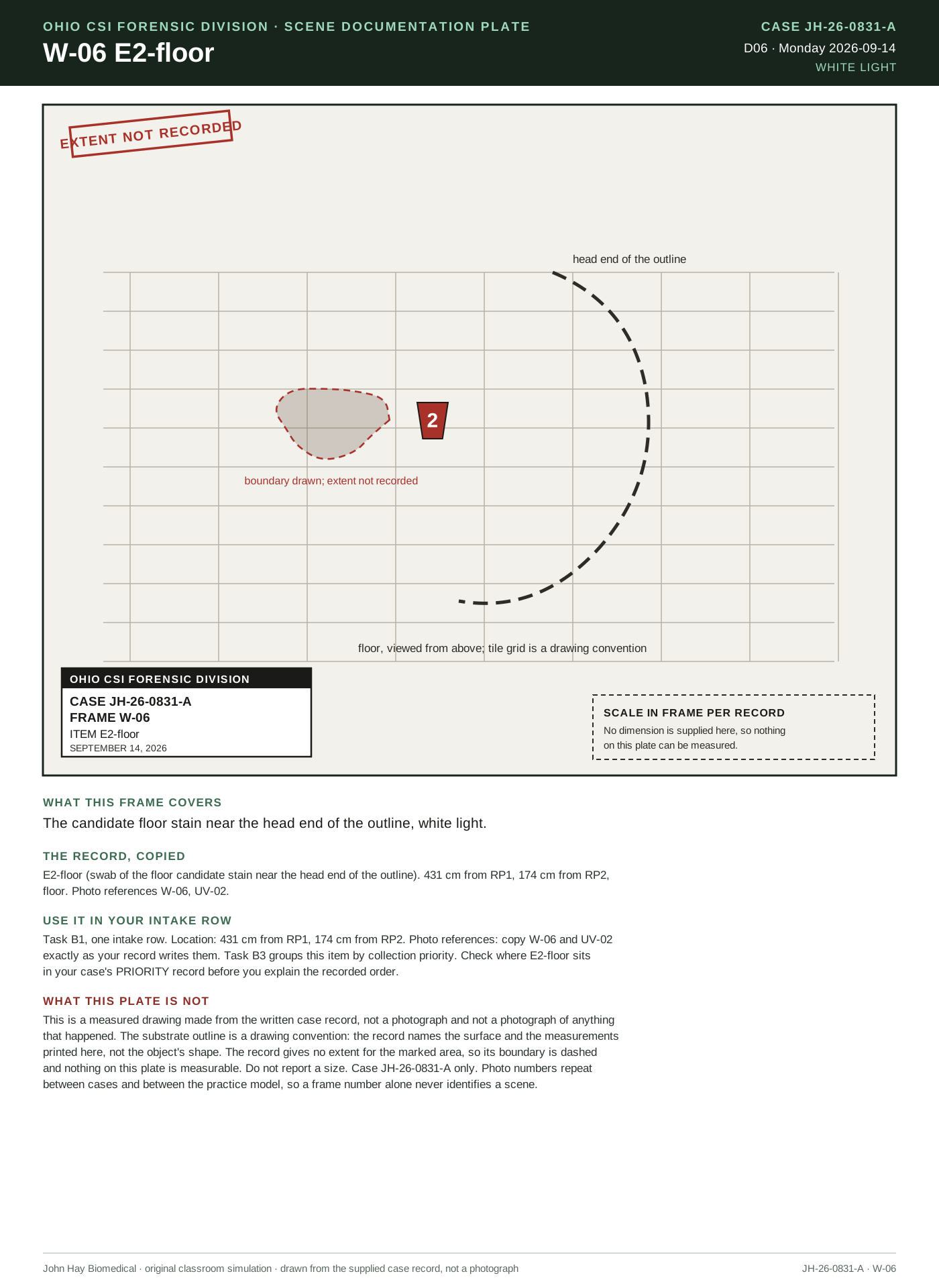
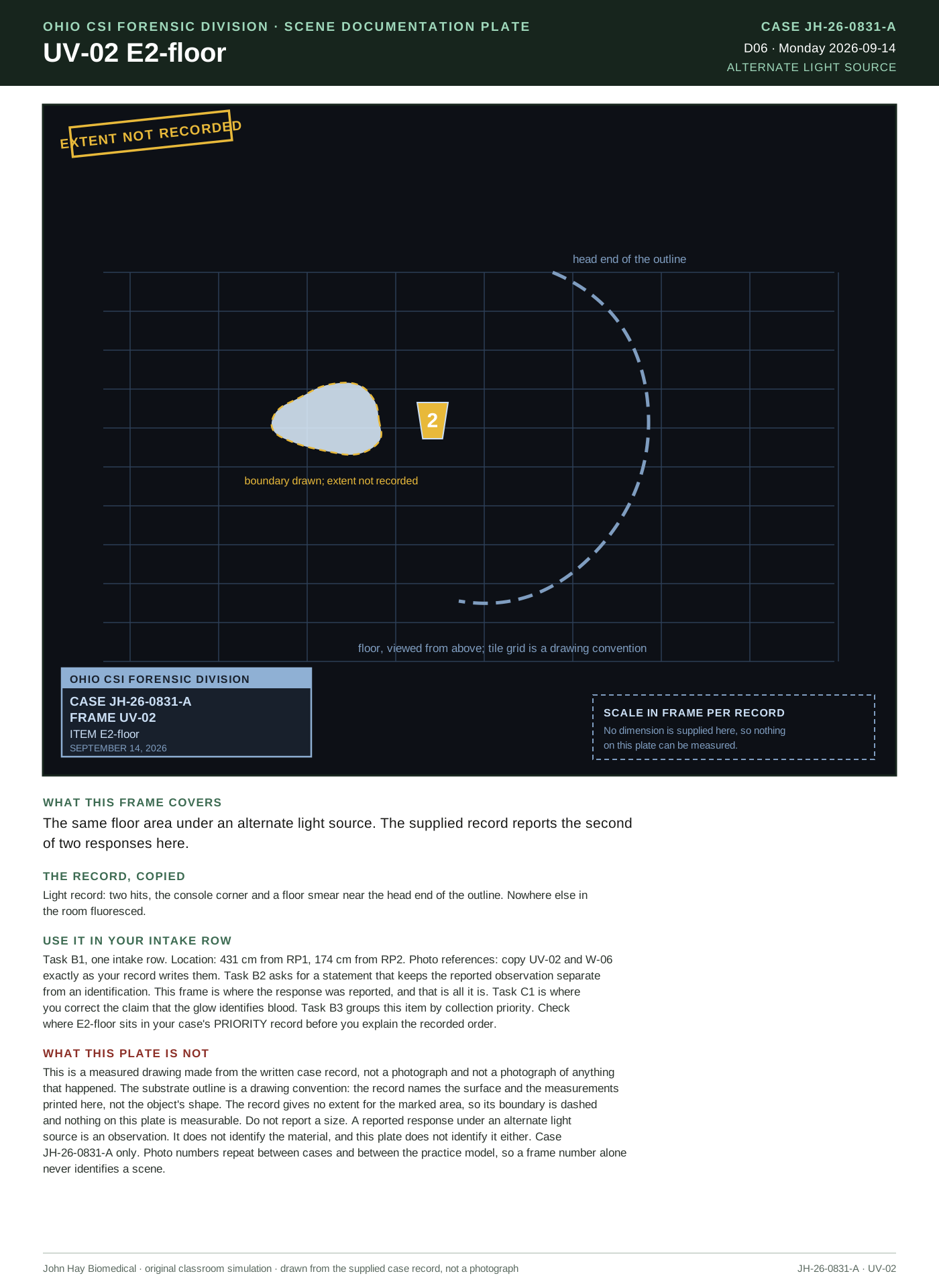
A plate is a drawing made from the written record. It is not a photograph and it identifies nothing. Where the record withheld something, the plate leaves it missing on purpose: a dashed boundary marked EXTENT NOT RECORDED means no size was ever given, so no size belongs in your row.
Read before Part A
Friday's case work practiced keeping the source beside each statement. Today, use that rule to organize the intake records.
R1. What should an intake record tell the next reader?
Friday's case work practiced keeping a source beside each statement. Today, use that rule to organize the supplied records. You are reviewing a classroom simulation. You are not collecting samples or testing a stain.
An intake record lists an item, its location, its photo references, and who handled it. An E-number is the evidence number used to track an item. Keep the number supplied. If none is assigned, say so. Do not make one up.
A reference point, or RP, is a named place used to describe a location. Keep both distances and their units. Chain of custody is the record of who handled an item and when. In today's collected-item records, the custody row starts when the item is bagged. An item left in place needs its true status, not a made-up transfer.
R2. A light response is an observation
Latent means not readily visible under the conditions being used. An alternate light source uses selected light to help make some material easier to see. Fluorescence means a material absorbs light and gives off light. The supplied classroom records describe a fluorescent visual model.
Luminol is different. It produces light through a chemical reaction. The classroom model does not reproduce that test or identify a substance. It helps us practice describing a response without naming its cause. [Sources S1 and S2]
R3. What can a first check establish?
A presumptive test is an initial check that may suggest a substance is present but does not identify it conclusively. Some chemical screens can respond to bleach or copper. These are examples of interference, not claims about the contents of our case items. Repeating initial screens does not itself establish identification. [Sources S3 and S4]
A visible response can be misleading if another material caused it. A missing response can also mislead if the material was not detected under the viewing conditions. Write what was reported. Do not turn “no response observed” into “nothing was present.” [Sources S1, S3 and S4]
R4. Keep the missing information visible
“No UV photograph supplied” describes a missing image reference. “No UV hit” describes a reported observation. They are different. Copy the status the record actually gives. If a record says only “no UV,” copy those words and add “meaning not specified.” If UV is not mentioned, write “UV status not supplied.” Do not change either into “no UV hit.” You do not need to open an unavailable photograph for this record exercise.
For a reported glowing area, write that the supplied record reports fluorescence, then name the recorded location and photo reference. The material remains unconfirmed. A stronger identification needs a method appropriate for the material and its actual result. You do not need to name or perform a test. [Sources S3 and S4]
R5. Which records should be handled first?
Fragile means easily damaged or lost. Time-sensitive means delay could change the item. The supplied case record groups the items into four collection priorities. Use those groups to explain the recorded order. The groups are not a replacement for the full intake list.
R6. Use the same rule in biomedical work
In laboratory work, a comparison is useful only when its role is clear. A comparison item is an item used to compare with another. A seal describes packaging; it does not establish the contents as clean. A control is used to check how a test or comparison performs. [Source S5]
The strongest statement today preserves what the source reports and what remains unknown. An observation by itself does not identify a person, substance or cause.
R7. Use it now
Follow MODEL-1 before starting Part B. Notice how its source, location, photo references and custody status stay together. Then use your own case's records for your sheet. Keep that sheet for Tuesday's trace-comparison work.
Plain-English terms
- Intake record
- A list of an item's identifier, location, photo references and handling information.
- E-number
- The evidence number used to track an item. Retain an unassigned status when no number is supplied.
- Reference point (RP)
- A named place used to describe a location. Keep both distances and units.
- Chain of custody
- The record of who handled an item and when.
- Custody row
- The handling entry. In these collected-item records it starts at bagging; an in-place item has no invented transfer.
- Latent
- Not readily visible under the conditions being used.
- Alternate light source
- Selected light used to help make some material easier to see.
- Fluorescence
- A material absorbs light and gives off light. The response alone does not identify it.
- Presumptive test
- An initial check that may suggest a substance is present but does not identify it conclusively.
- Fragile
- Easily damaged or lost.
- Time-sensitive
- Delay could change the item.
- Comparison item
- An item used to compare with another. A seal describes packaging, not a clean analytical result.
- W and UV
- W labels a white-light photograph; UV labels an ultraviolet-light photograph. A reference names a frame. Your evidence folder supplies a measured plate drawn from each frame's record; the plate is not the photograph.
- Claim
- A statement about what happened or what something is.
Part 3 of 4 · Worked example
MODEL-1: a separate practice record
These supplied values belong to a stairwell practice scene, not Case A or B. A patch about 6 cm across on the third step tread reportedly fluoresced under the lamp. No material identification is supplied.
- Identifier
- MODEL-1, E2-step3
- Reference points
- RP1: fire-door frame at the landing. RP2: handrail's bottom post.
- Location
- 138 cm from RP1, 96 cm from RP2, on the third step tread
- Photo references
- W-04 and UV-01, both with scale. Earlier white-light references: W-01, W-02, W-03. The record does not say what those three show and supplies no frame for them, so none was drawn.
- Handling
- evidence officer; 3:14 PM; received by intake.
- Status
- custody row opened at bagging
A four-sentence practice correction
The MODEL-1 record reports fluorescence on the third step. That light response does not identify the material. The intake entry should preserve the reported location and photo references without changing the item description to blood. An identification claim would need a method appropriate for the material and its actual result, which this practice record does not supply.
Use the shape to understand Part C. Write your own response from your case record. Do not copy MODEL-1 numbers into it.
Start with the supplied source. Keep the identifier, location, photo references and handling status together. State limits or missing information. Finish the single Parts A–E intake sheet.
Part 4 of 4 · Your work
4.1 Case A RECORDS, STATUS and PRIORITY
Everything below is yours to write from. These are the only records for your case; every row on your sheet starts from one of them.
Supplied classroom simulation records, not observations made by the student. Use only your case.
RP1: doorframe corner. RP2: console-end wall junction.
RECORDS: all 6 required intake rows
A-R1: E2-console (swab of the console-corner candidate stain)
- Location:
- 412 cm from RP1, 168 cm from RP2, on the console corner 71 cm above the floor
- Handling:
- Collected by Team C evidence officer; 8:52 AM; received by Team A intake.
A-R2: E2-floor (swab of the floor candidate stain near the head end of the outline)
- Location:
- 431 cm from RP1, 174 cm from RP2, floor
- Handling:
- Collected by Team C evidence officer; 8:55 AM; received by Team A intake.
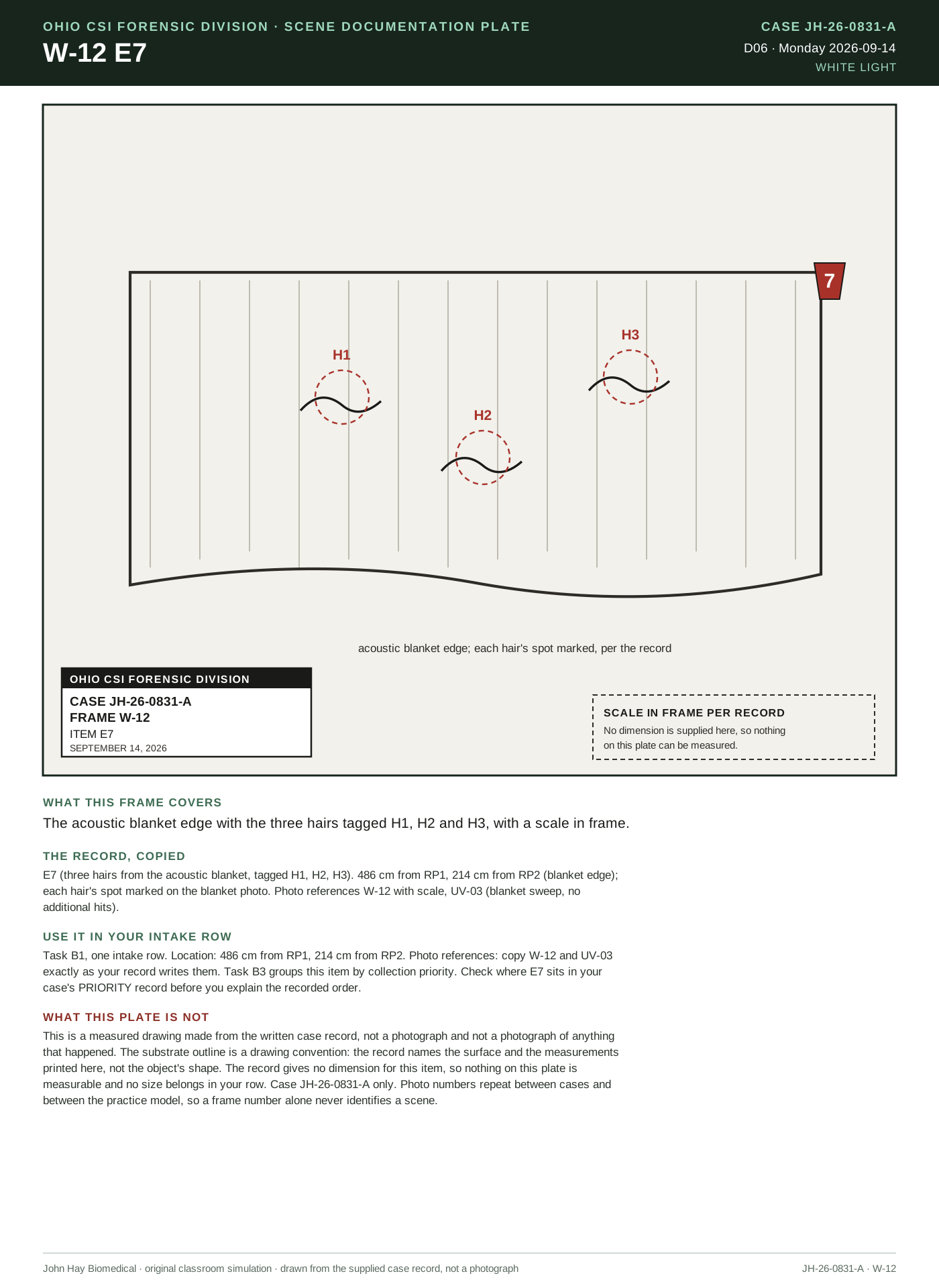
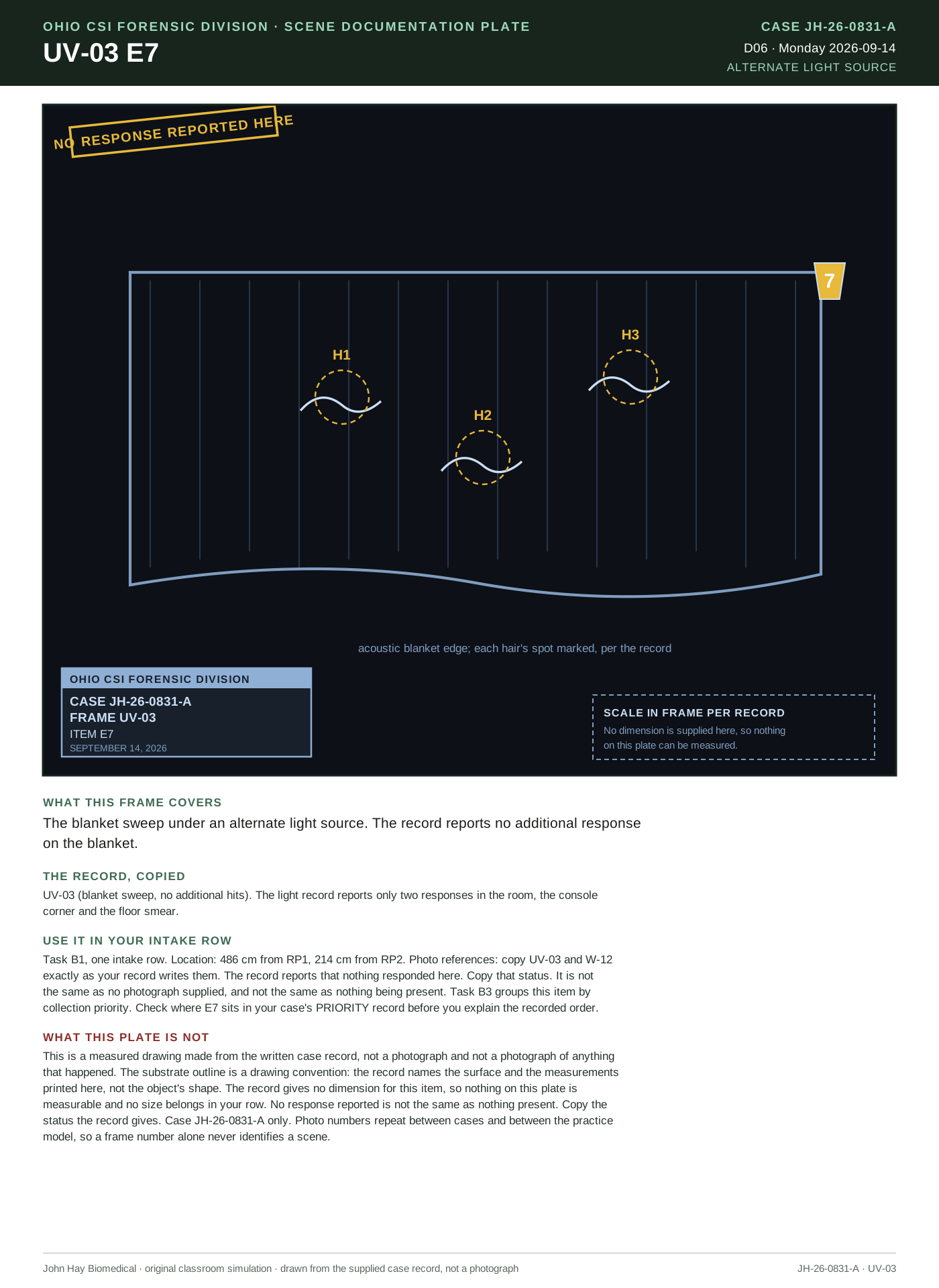
A-R3: E7 (three hairs from the acoustic blanket, tagged H1, H2, H3)
- Location:
- 486 cm from RP1, 214 cm from RP2 (blanket edge); each hair's spot marked on the blanket photo
- Handling:
- Collected by Team B evidence officer; 9:01 AM; received by Team A intake.
A-R4: E8 (print lifts: fader panel L-1, L-2, L-3; can lift L-4)
- Location:
- Fader panel: 405 cm from RP1, 190 cm from RP2. Can: 356 cm from RP1, 290 cm from RP2
- Handling:
- Collected by Team B evidence officer; 9:08 AM; received by Team A intake.
A-R5: E4 (three energy-drink cans, side table)
- Location:
- 356 cm from RP1, 290 cm from RP2
- Handling:
- Collected by Team D evidence officer; 9:12 AM; received by Team A intake.
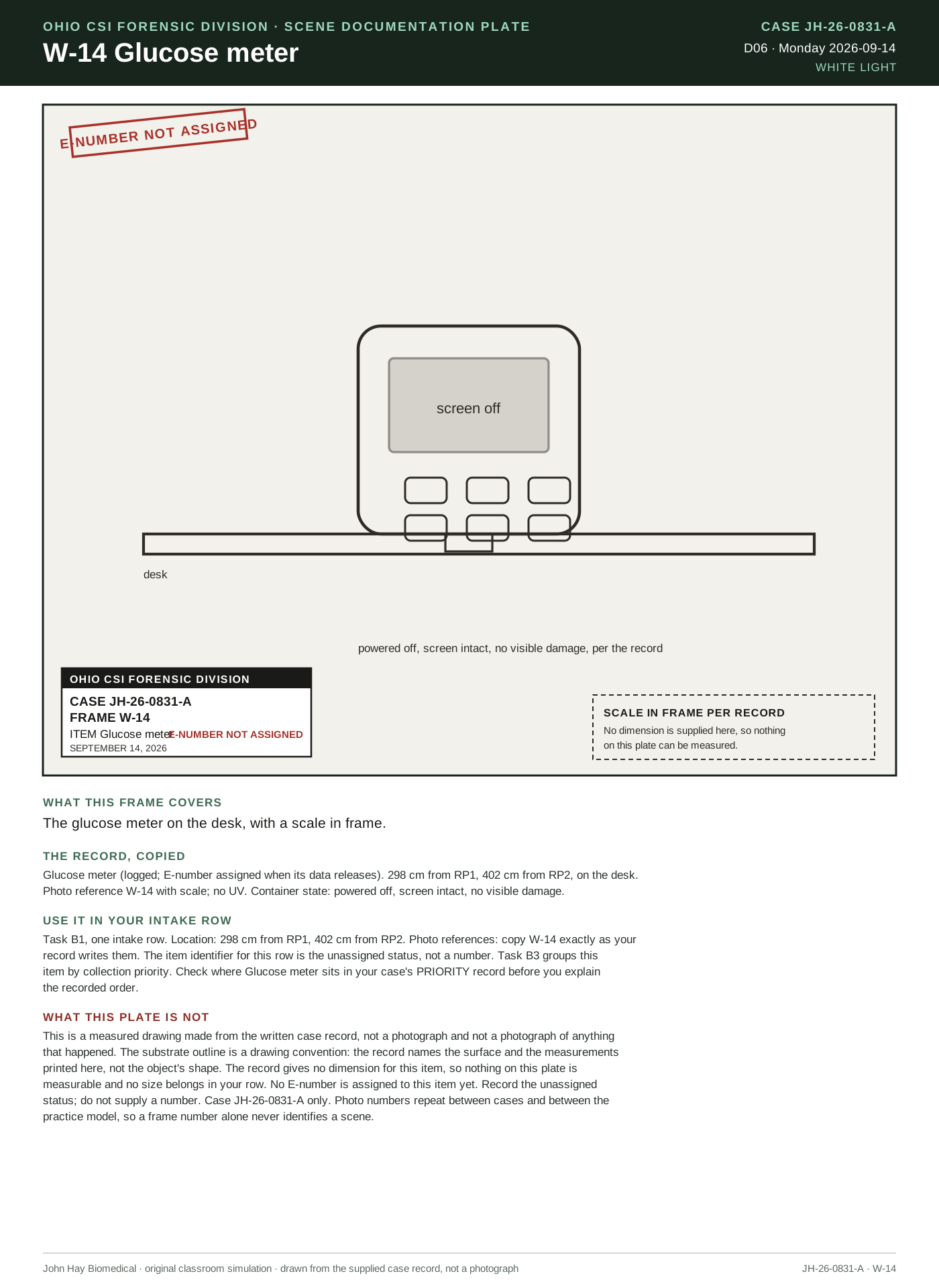
A-R6: Glucose meter (logged; E-number assigned when its data releases)
- Location:
- 298 cm from RP1, 402 cm from RP2, on the desk
- Photo/status:
- W-14 with scale; no UV
- Handling:
- Collected by Team D evidence officer; 9:14 AM; received by Team A intake.
STATUS: item conditions, light record and custody
All three cans open and empty. Glucose meter powered off, screen intact, no visible damage.
The supplied classroom simulation record reports: Two hits: the console corner and a floor smear near the head end of the outline. Nowhere else in the room fluoresced. Both hits were photographed under UV with a scale, then under white light, before swabbing.
The report describes what was observed under those conditions. It does not establish that no material was present elsewhere.
Every bag has a row; every row has a released-by and a received-by. Six rows opened today.
PRIORITY: four recorded groups, not the full inventory
- E2 stain swabs: a floor stain can be walked on or smeared; fragile and time-sensitive.
- E7 hairs: a hair can lift off the blanket with one gust.
- E8 print lifts: powder and tape work has to be done before anyone touches the panel.
- E4 cans and the meter: durable, not going anywhere.
Help when you need it
Need help? Choose a starting point
Optional guided notes can help you organize your thinking. They are not another submission. Use one support level, not all three.
Check one row
Check one row: use R1 and MODEL-1, then complete the next intake row. Do not copy model data into your case.
Explain your choice
Explain your choice: use your case's PRIORITY record to explain its first and last groups, then continue with Part C.
Check a limit
Check a limit: compare one recorded observation with a stronger unsupported claim; revise your existing Part C if needed. No extra submission.
Restart where you stopped
Find your last completed intake row. Check its item, location, photo status and handling information against the source. Continue with the next row, then finish the remaining parts of the same sheet.
Record-review preparation
Today is a record review. Do not collect samples, handle a stain, use UV equipment or perform chemical tests for this assignment. Any practical work requires separate teacher direction and approved safety preparation.
Three knowledge checks, within the same work
- Name today's purpose: preserve the source, location, photo status and handling information in one intake sheet.
- State the boundary: read the records only. Practical work requires separate teacher direction and approved safety preparation.
- Prepare the intake-row headings before copying any record. This knowledge check does not give permission to handle materials.
Connection to PLTW
Related PLTW reference: Principles of Biomedical Science, Activity 1.1.1 A Sketchy Scene. This John Hay record exercise practices connected documentation skills. It does not by itself complete the official activity.
Complete the assigned D06 sheet here. Record official PLTW completion only when the teacher assigns and verifies the actual activity requirements.
Open your section's official PLTW class hubTurn in one sheet
Hand in the paper sheet or submit one PDF of the same completed sheet to your section's Schoology assignment by September 14 at 11:59 PM. Include continuation rows in that same submission. Submit once.
No separate microscopy drawing, new scene photograph, scale sketch, group document, extra CER or exit ticket is required. Notebook work stays in the notebook.
Case A: submit to the D06 assignmentKeep your intake sheet for Tuesday's trace-comparison work. It records the source and limits of the information you will use.
Sources and optional background
Everything needed is supplied in the reading, model and own-case records. These links are optional background, not hidden answer locations.
- S1. FTCoE/NIJ, Landscape Study of Alternate Light Sources, 2018
- S2. Cassidy and colleagues, NIJ research record, 2017
- S3. NIJ, Locating Evidence, archived training
- S4. NIJ, Screening Tests, archived training
- S5. NIST OSAC Lexicon, Control
Today's records cannot identify a substance, person, cause of death or responsible suspect. They describe reported observations and handling. A copied photo reference does not mean you viewed its photograph; the evidence folder supplies a measured plate drawn from that frame's record, and a plate identifies nothing either.