
The Missing Microscope: Crime Scene CER Scenario
This page has four parts, in the order you use them. Part 1 is what you need to know. Part 2 says what to do, in plain English. Part 3 shows the work done once on a case that is not yours. Part 4 is your own work and where to turn it in.
Open your materials, follow the steps, then turn in your work.
Use a scaffold to write a bounded CER from a fictional crime-scene evidence record.
Part 1 of 4 · Background and definitions▸
💡 Big idea: A defensible conclusion names the most supported claim, connects at least three evidence records to it, and states what the evidence still cannot prove.
- • Evidence is an observation or record that supports or challenges a claim.
- • Reasoning explains why each evidence item matters to the claim.
- • A limitation keeps a conclusion from becoming stronger than the evidence allows.
- • Most supported does not mean proved guilty.
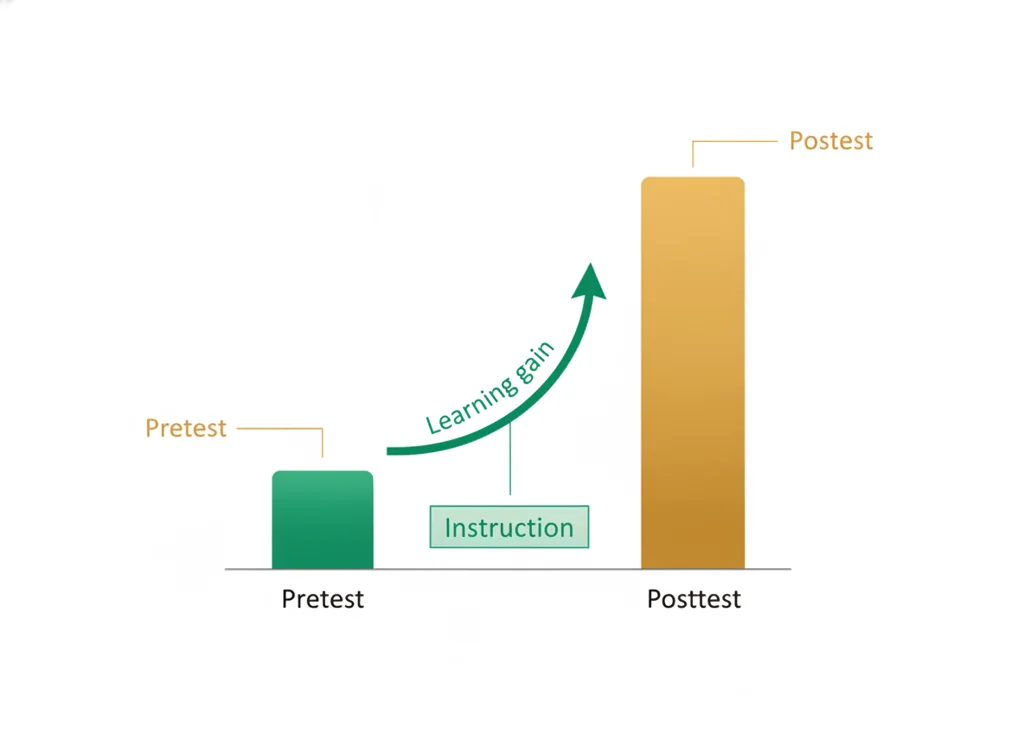
Students often think a low pretest score means you are behind or bad at this. The trap: a pretest measures your starting point before any instruction, so a low score is expected and simply sets your growth target
- CER:
- Claim, Evidence, Reasoning: make a claim, back it with evidence, explain your reasoning.
- SOP:
- Standard Operating Procedure, the exact steps to follow (especially in a lab).
- Tracker:
- Your PLTW progress log where you record completed evidence.
- myPLTW:
- The PLTW course site where you do the online activities. Find it in Clever with your Microsoft sign-in, right next to Schoology.
Tap the speaker to hear a term. Add two of these to your notebook glossary with a definition and an example in your own words.
Pick just 2 or 3 words from today and make them yours: write what each one means in your own words, name the context clue or evidence that helped, then give one example from what you actually did in The Missing Microscope: Crime Scene CER Scenario. Try your own words first; the glossary is there if you get stuck. This is voluntary and counts as extra credit, so keep it short.
Saved on this device. Show Mr. Mendoza or add these to your notebook glossary to claim the extra credit.
Part 2 of 4 · Directions in plain English▸
2.1 Open your materials
2.2 Start the work
Open The Missing Microscope: Crime Scene CER Scenario under Read to prepare for today and read the reference record, Persons A to C, and evidence E1 to E6.
Show all 5 required steps
- Open The Missing Microscope: Crime Scene CER Scenario under Read to prepare for today and read the reference record, Persons A to C, and evidence E1 to E6.
- Choose Person A, Person B, Person C, or insufficient evidence. Write one claim using the words most supported.
- Use the CER scaffold on the worked-example page: fill three evidence lines with exact evidence IDs, then explain how the evidence works together.
- Add one limitation or conflict and state what the evidence cannot prove.
- Save the finished CER as one PDF, upload it to the Schoology assignment named The Missing Microscope: Crime Scene CER Scenario, then select Submit.
Lost your place? If you were interrupted during the pretest, keep going from the next question. When you finish, look at your result and write your mastery goal.
- 0-6Icebreaker: Rose and Thorn of week 1
- 6-15What the WebXam is and how mastery + the boost work
- 15-55Baseline WebXam pretest (ungraded)
- 55-70Set a mastery goal from your result
- 70-80Week 1 reflection and close
- • Today you take a pretest. You cannot fail it, because it only shows where you start.
- • Be honest: guessing wildly hides what you really know, and that is the one thing the pretest is for.
- • Then you set a growth goal, and we look back at the routines we built this week.
PLTW connection and today's work
No myPLTW activity is assigned for this practice. Open the John Hay original The Missing Microscope: Crime Scene CER Scenario on this page.
Today's stopping point: Finish the CER today. If time is short, complete the evidence organizer first so the response can be finished without guessing.
Today uses John Hay teacher-created practice. It builds skills for the course, but does not count as completing an official myPLTW activity.
Course connection
- No myPLTW activity today. Check your course access. If it will not open, tell your teacher and continue with the assigned orientation materials.
Use the turn-in directions in Part 4 of this page. Do not create a second submission unless your teacher asks for one.
Show another explanation or a smaller first step
Need help? Choose a starting point
Finish the assigned lab safely before starting extra practice.
Part 3 of 4 · Worked example▸
This is a parallel case, not your own. Read it for the order of the work, then do your own in Part 4.
SCAFFOLD FOR YOUR MICROSCOPE CER
1. Claim: The most supported conclusion is ____ because the evidence most consistently points to ____.
2. Evidence 1: E__ shows ____. This matters because ____.
3. Evidence 2: E__ shows ____. This matters because ____.
4. Evidence 3: E__ shows ____. This matters because ____.
5. Reasoning: Taken together, E__, E__, and E__ support the claim because ____.
6. Limitation or conflict: However, E__ is limited or conflicts with E__ because ____. Therefore, the evidence cannot prove ____.
7. Final check: I used at least three exact evidence IDs, explained how they work together, named one limitation, and wrote most supported instead of proved guilty.
WORKED PARALLEL CASE: THE MISSING PH METER
Reference record: A pH meter was found missing after lab cleanup. Person B signed it out at 2:10 PM (E1), a hallway camera showed someone in Person B's distinctive lab jacket carrying a long instrument case at 2:18 PM (E2), and Person B's badge opened the storage-room exit at 2:16 PM (E5). A mixed touch-DNA sample from the case handle included Person B (E3), but Person B had used the meter during class, so that result could come from routine contact.
Claim: Person B is the most supported person connected to the pH meter's removal, but the record does not prove that Person B took it improperly.
Evidence and reasoning: E1 places the meter in Person B's documented possession shortly before it went missing. E5 independently places Person B's badge at the storage-room exit six minutes later. E2 adds a time-matched observation of a person wearing Person B's distinctive jacket and carrying a case shaped like the meter case. Taken together, E1, E5, and E2 form a consistent sequence from possession to exit, so they support Person B more strongly than any one record alone.
Limitation: E2 does not show the person's face, and a badge or jacket could have been used by someone else. E3 is also weak for timing because routine class use could explain the touch DNA. Therefore, the evidence supports a lead for follow-up, not a finding of guilt.
This model shows the level of evidence and organization needed to complete: John Hay original evidence-reasoning practice for PBS Unit 1. It prepares students for bounded CER writing but does not replace a myPLTW activity.
- Write one defensible claim.
- Choose specific evidence that supports the claim.
- Explain the scientific rule that connects the evidence to the claim.
Keep the structure. Replace the question, facts, measurements, and evidence. Then recheck units, vocabulary, and whether the conclusion goes beyond the evidence.
Also due today: Complete the actual microscope CER and submit it in Schoology under the exact title The Missing Microscope: Crime Scene CER Scenario.
Part 4 of 4 · Your work▸
Check your work before submitting
- The claim selects Person A, Person B, Person C, or insufficient evidence and uses most supported rather than proved guilty.
- The response cites at least three exact evidence IDs from E1 to E6.
- The reasoning explains how the evidence works together instead of only listing observations.
- The response addresses at least one limitation or conflict and states what remains uncertain.
- One PDF is submitted in Schoology under the exact title The Missing Microscope: Crime Scene CER Scenario.
Before lab work: read the safety rules
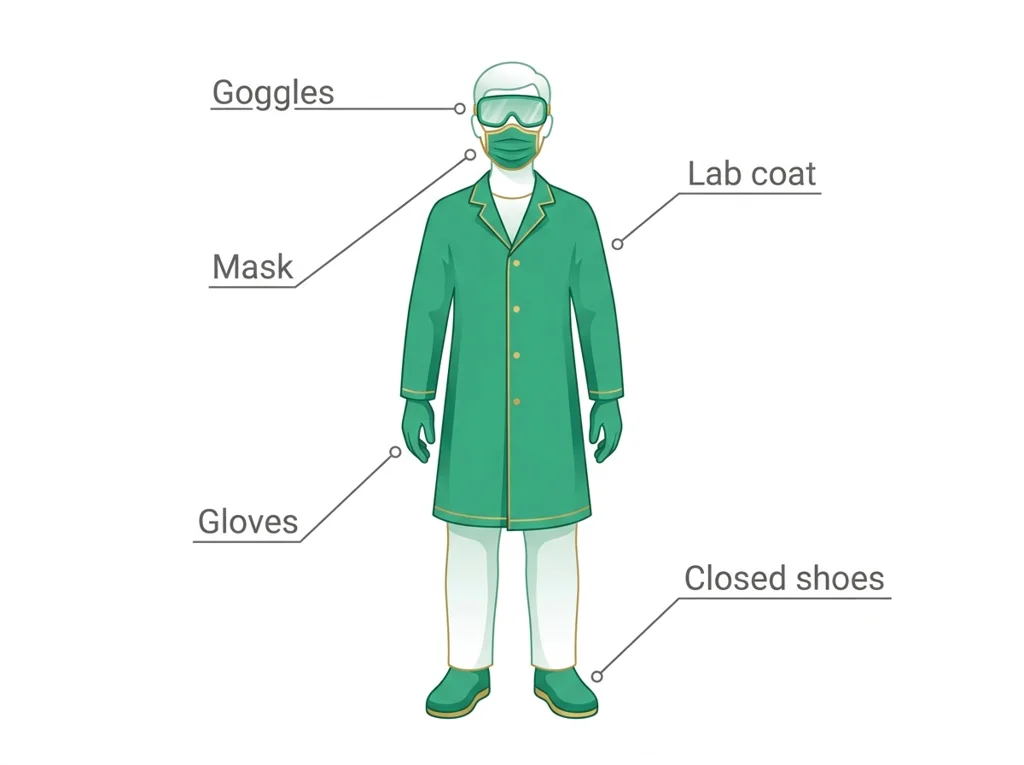
- Wear the required personal protective equipment (PPE), keep the bench clear, handle equipment only as directed, and know where the eyewash, sink, and spill kit are before you start.
- Human samples and data stay private: label with a code, never a name, and dispose of materials in the correct waste container, then wash your hands.
4.1 Turn in your work
DueCheck the Schoology assignment for this day- Hand in
- The Missing Microscope: Crime Scene CER Scenario
How to submit and name your file
Upload one PDF to the Schoology assignment named The Missing Microscope: Crime Scene CER Scenario.
In Schoology, open your course and the assignment for this lesson. Attach your file, select Submit, and check that it appears in the submission.
PDF upload helpYou get two school days for every day you were absent, so this deadline moves with you.
Find this lesson's Schoology assignments
These are existing assignments for your section. Follow the directions in the assignment you are working on; this list does not add new work. A PLTW Work row repeats on every day of its lesson; submit it once. Check Schoology for each deadline.
Link will not open? Open Schoology, choose your course and section, and find the title shown above.
- CompleteEvery required part of the artifact is present, nothing left blank.
- AccurateThe science and the data are correct and match the evidence.
- Scientific reasoningYou explain your claim with evidence and reasoning (CER), not just an answer.
- Professional communicationClear, organized, labeled, and written the way a clinician or scientist would.
- SubmittedGo to Schoology to turn this in. Submit one PDF. Schoology attaches your name to your upload; on the page itself, write your period and code. Name the file: FirstName LastName - Assignment Title - YYYY-MM-DD.pdf. If you cannot get in, see Mr. Mendoza. Do not skip the work.
- Error analysis and method · counts doubleName a specific limit of the method and how it moved your result, and compare what you predicted to what happened. "Human error" does not count; say what about the procedure or instrument caused it.
How this lesson connects
Clear claims → honest graphs → careful evidence records → a case investigation. Use evidence to explain what you know and what you still need to find out.
Practice: try a question, then check your answer▸
Claim ceiling for this check: Today's evidence supports a classroom claim about today's lesson. It cannot prove causation, diagnose a real patient, or justify action outside this room.
Does your CER use three exact evidence IDs, explain how they work together, and state one limit on the conclusion?
Write an answer and pick a confidence to unlock the key.
Missed class or ready for more?▸
Run this before you touch the bench. It is built from the real lab procedure, so the decisions you make here are the ones you will make with the equipment in your hands.
I can name the procedure's purpose and the evidence I will record. I can state today's specific hazards and the control for each. If this deck does not name them, I ask Mr. Mendoza before I touch anything. My data table is ready before materials are handled.
Finish the checklist before you handle any material.
- • Wear the required personal protective equipment (PPE), keep the bench clear, handle equipment only as directed, and know where the eyewash, sink, and spill kit are before you start.
- • Human samples and data stay private: label with a code, never a name, and dispose of materials in the correct waste container, then wash your hands.
- 1Before materials are handled, identify the purpose, variables or comparison, controls, measurement units, and stop-work condition.
- 2Open The Missing Microscope: Crime Scene CER Scenario under Read to prepare for today and read the reference record, Persons A to C, and evidence E1 to E6.
- 3Choose Person A, Person B, Person C, or insufficient evidence. Write one claim using the words most supported.
- 4Use the CER scaffold on the worked-example page: fill three evidence lines with exact evidence IDs, then explain how the evidence works together.
- 5Add one limitation or conflict and state what the evidence cannot prove.
- 6Save the finished CER as one PDF, upload it to the Schoology assignment named The Missing Microscope: Crime Scene CER Scenario, then select Submit.
- 7Record each result in the prepared table before interpreting it. Mark missing, repeated, or invalid results truthfully.
- 8Complete the named cleanup and waste route, remove PPE safely, wash hands when required, and confirm the station is ready for the next group.
| Which trial or sample this row is | What you changed on purpose | What you measured, with units | What you saw, before you explain it | Anything that could make this reading wrong |
|---|---|---|---|---|
Before the procedure, predict the result and cite the rule behind the prediction.
After the procedure, compare the result with the prediction and name one limitation or source of uncertainty.
What today's skills lead to. These are real health-science careers this course builds toward. Tap one to see, on the US Department of Labor's O*NET site, what the job actually involves, what it pays, and how fast it is growing.
Today is individual work you can do from home: complete the same target above, then submit your CER.
Go to Schoology to turn this in. Submit one PDF. Schoology attaches your name to your upload; on the page itself, write your period and code. Name the file: FirstName LastName - Assignment Title - YYYY-MM-DD.pdf. If you cannot get in, see Mr. Mendoza. Do not skip the work.
Class still runs. Complete today's work as this page describes (it is self-guided). Need the concept taught without a teacher? Use this authoritative explainer:
CDC Laboratory SafetySources: slides, readings, and resources▸
Vetted readings and references for this unit. Use them to prepare, to catch up if you were absent, or to go deeper on today's target.
May require a free account. Use the class copy if you cannot sign in.
This week
My Progress dashboard