

Unit 3.2 to 3.3: Medical surge, mobile response facility, public-health communication, app design concept.
Your PLTW coursework: Principles of Biomedical Science ▸ Unit 3: Outbreaks and Emergencies ▸ Lesson 3.2 Emergency Response / Lesson 3.3 Information Sharing ▸ "Activity 3.2.5 Medical Surge", "Activity 3.3.1 User-centered Design", "Problem 3.3.2 Public Health Emergency Apps"
What to do if absent- CER:
- Claim, Evidence, Reasoning: make a claim, back it with evidence, explain your reasoning.
- SOP:
- Standard Operating Procedure, the exact steps to follow (especially in a lab).
- Tracker:
- Your PLTW progress log where you record completed evidence.
- myPLTW:
- The PLTW course site where you do the online activities. Find it in Clever with your Microsoft sign-in, right next to Schoology.
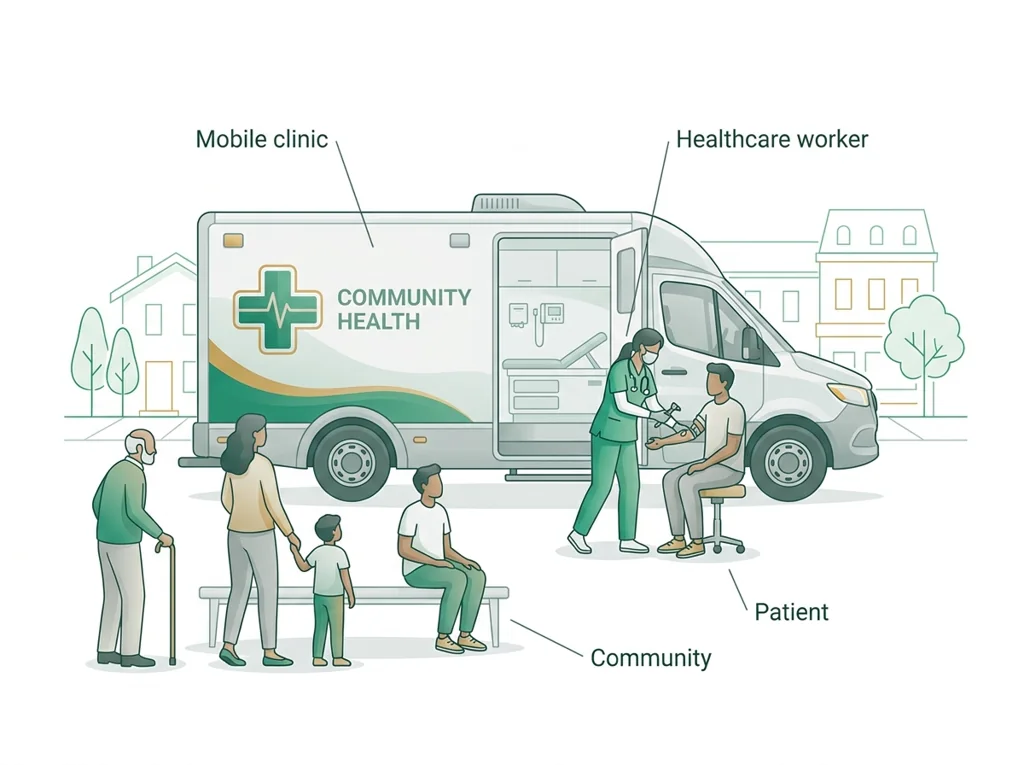
Design a concept for a mobile response facility and a public-health communication app that supports , surveillance, and clear messaging.
- 1Define and , then explain why a surge can overwhelm a hospital.
- 2Sketch a facility and label where patients are received, treated, and discharged.
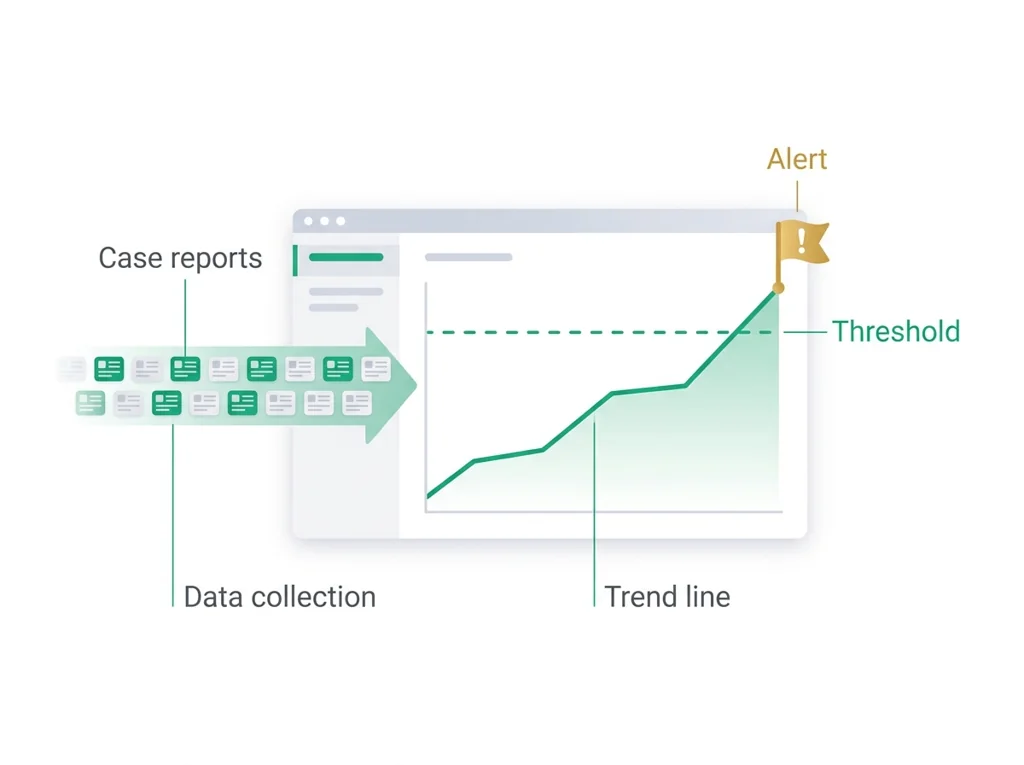
- 3List the surveillance data your facility must collect to track the event.
- 4Draft the core screens of a communication app that shares public-health updates with the community.
- 5Apply one usability principle to make the app easy to read under stress.
- 6Write two sentences explaining how your design increases .
- • You will be able to explain and why it matters in a crisis.
- • You will be able to design a mobile-care and surveillance concept.
- • You will be able to apply a usability principle to public-health communication, meaning a clear message or tool that helps a community understand and act on health guidance during a crisis.
Open any day for its full lesson, the work due that day, and guided notes.
CER with a specific design-claim, persona and feature-list evidence, reasoning linking choices to usability principles, a communication improvement prediction, and design assumptions and limitations.
Completed with at least three trial measurements, labeled independent and dependent variables, an average performance calculation, one measurement error source, and one test-setup limitation.
CER recommending one coating ratio against the five-to-six-minute window, citing your timed trials for each ratio you tested, with reasoning that connects the data to the window and one test-data limitation.
One sentence recording the strongest opposing argument heard during the patent debate.
- Hook: when a disaster fills every hospital bed, good design is what keeps care flowing.
- Today's goal: sketch a mobile facility and a clear app that help a community handle a surge.
- Monday bioethics debate ties in: during a surge, who decides which patients a stretched system can treat?
- Reminder: your graded surge facility and app concept are submitted on the class site.
Do this: Advance your PLTW PBS public-health benchmark by completing the medical-surge facility and communication-app concept in the online course shell.
- • is a system's ability to handle a sudden rise in patients.
- • Public-health surveillance tracks an event so officials can respond in time.
- • Design a mobile-care and surveillance concept for a surge.
- • Apply a usability principle to make public-health messaging clear.
📋 PLTW evidence due: the completed mobile-surge facility and communication-app concept in the course shell.
All PLTW activities are completed inside the PLTW course environment: this page only gives direction.
Use this chart to keep your place. Nothing on it is turned in through the portal.
| Day | Work | Turn in |
|---|---|---|
| Monday · Mon, Dec 14 | Design justification CER | CER with a specific design-claim, persona and feature-list evidence, reasoning linking choices to usability principles, a communication improvement prediction, and design assumptions and limitations. |
| Tuesday · Tue, Dec 15 | Evidence for | |
| Wednesday · Wed, Dec 16 | Enteric coating lab | Completed data table with at least three trial measurements, labeled independent and dependent variables, an average performance calculation, one measurement error source, and one test-setup limitation. |
| Thursday · Thu, Dec 17 | Coating ratio CER | CER recommending one coating ratio against the five-to-six-minute window, citing your timed trials for each ratio you tested, with reasoning that connects the data to the window and one test-data limitation. |
| Friday · Fri, Dec 18 | Bioprospecting ethics debate | One sentence recording the strongest opposing argument heard during the patent debate. |
- M: Philosophy for Kids / John Carroll bioethical debate
- W: lab / data or model work
- Th: analysis / CER or design revision
- F: submit tracker + weekly evidence
Turn in: Unit 3.2 to 3.3: Medical surge, mobile response facility, public-health communication, app design concept. weekly work due Surge/mobile response design.
Go to Schoology to turn this in.
Submit one PDF. Schoology attaches your name to your upload; on the page itself, write your period and code. Name the file: FirstName LastName - Assignment Title - YYYY-MM-DD.pdf.
Open Schoology PDF upload helpIf you cannot get in, see Mr. Mendoza. Do not skip the work.
Most days, this class is your PLTW coursework: and PLTW is online and individual. So being out usually just means doing exactly what we did in class, from home.
Open Clever, then myPLTWSign in to Clever with your district Microsoft account to open Schoology or myPLTW. Follow today's posted steps. If myPLTW will not open, use the posted alternative and tell Mr. Mendoza. Turn in your completed work through the Schoology assignment.
You can't do those from home: do this instead: Teacher-posted data/model packet, same objective. Supplemental: CDC Solve the Outbreak; NN/g UX design basics.
Class still runs. A substitute will post today's plan: complete the online activity above; it's built to be self-guided. Need the concept taught without a teacher? Use this authoritative explainer:
Ready.gov: pandemic and large-scale health emergencies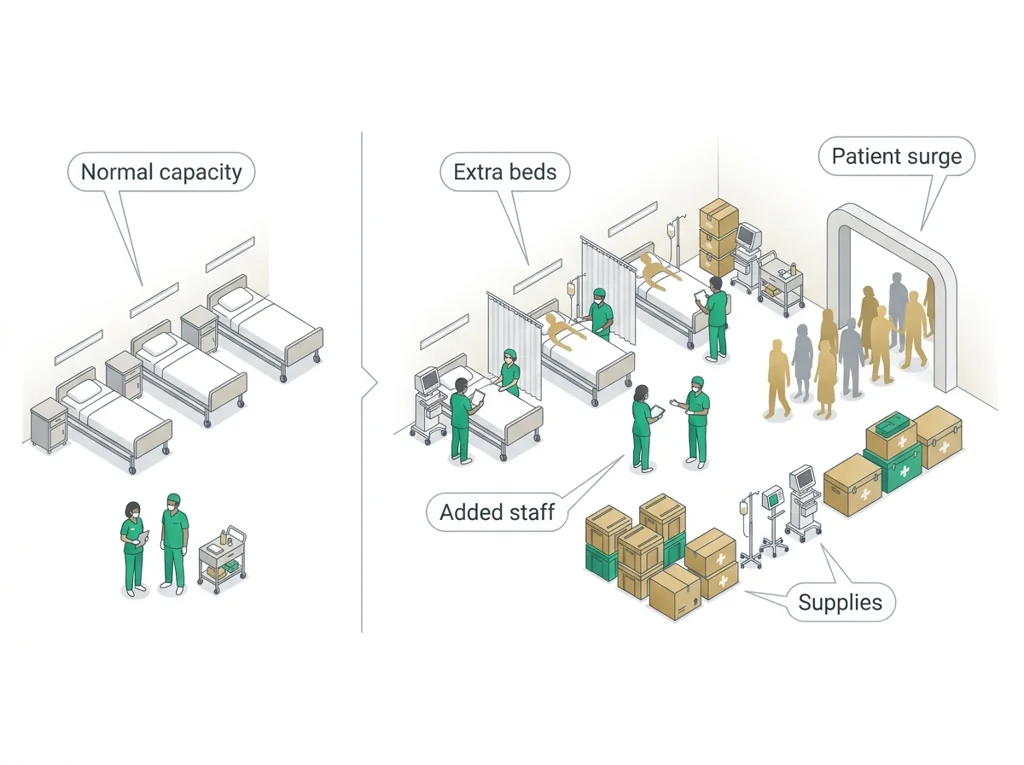
Hand-picked readings and interactives for this lesson, from authoritative open organizations and PLTW's own public course outline.