
PBS/PBT · September 17 · D08 · Case A STATIC · Period 1-2
Maybe Is a Result
One product: Presumptive test report, Parts A–E.
This page has four parts, in the order you use them. Part 1 is what you need to know. Part 2 says what to do, in plain English. Part 3 shows the work done once on a kitchen record that is not your case. Part 4 is your own four stain records and the ten tasks. Everything you write goes in one report.
Start: Part 1, then follow the steps in Part 2. Digital deadline: September 17, 11:59 PM.
Part 1 of 4 · Background and definitions
What you need to know before you write
Why today matters: A case summary names two positive screens but supplies no colors or times. What should a careful report record, and what must stay unknown?
The question you are answering: What can we responsibly report when a screen is only an initial indication?
Last class, you compared the information available and stated where a conclusion must stop. Use the same source-and-limit discipline for today's screening records.
Everything in your report comes from six short readings. Read all six once before Part 2, and keep them open: Part A quotes R2. B1 uses all six, with R3 and the F1 workflow doing most of the work. B2 uses R2 and R3. B3 uses R4. C1 uses R4 to R6. D1 uses R1 and R5. E1 to E3 check R3, R2 and R6.
R1. Your job today
Complete one presumptive test report, Parts A–E. A presumptive test is an initial screen that can indicate a material may be present without identifying it. Serology is the study of blood and other body fluids. Today you analyze supplied illustrative records. You do not run a test, photograph a stain or identify a person.
Use only the four stain records for your class's case. The evidence ID identifies a row. The description, photo references and coordinates come from the supplied record. RP1 and RP2 mean reference point 1 and reference point 2; the distances are recorded in centimeters. Do not replace these with guessed room measurements.
Used in B1, D1.
R2. Why careful language matters
Some other materials, including fruits and oxidizing substances on a surface, can affect a chemical screen. An oxidizing substance can cause a chemical change that affects the screen's response. This does not identify the substance in any of our case stains. An expected classroom outcome is a prediction, not a recorded result. A stain's name does not establish that the testing process worked correctly. NIJ screening background [S1].
Calling an initial positive confirmed blood can send attention or a limited follow-up allowance toward an unsupported conclusion. Treating a negative as proof that nothing was present can cause relevant information to be dismissed. These are possible consequences, not measured error rates for this exercise. A reported negative means the material of interest was not detected by that screen; it does not establish its absence. NIST definition [S2].
Used in A1, A2, B1, B2, E2.
R3. Record the result and its limit
For a reported positive, use the case's qualified phrase: presumptive positive for blood; confirmatory testing required. For the explicitly reported negative, use no indication of blood by presumptive screen. These are the classroom report's labels, not guarantees of identification or absence.
If an observation is missing, write not reported in the supplied record. A missing observation is not a negative result or proof of test failure. Individual colors and times are not supplied for the four case rows. Do not invent them.
Rust needs a different status. Its individual observation is not reported. The aggregate summary lists two negative swabs, while only one is individually named. Use the permitted statement: Individual observation not reported; the summary implies a negative classification if its four-stain record is complete. An inference is a conclusion drawn from other information. Keep this inference conditional rather than calling it an observed negative.
Used in B1, B2, E1, E2.
R4. Use the classroom budget
For this paper exercise, each swab starts with two test allowances. Each recorded screen uses one allowance. Multiply swabs by allowances per swab, then subtract the recorded screens. The follow-up limit is a separate constraint. Compare that limit with the number of reported positives before deciding whether any must wait.
This is classroom accounting; it does not establish how much real material a test uses or whether a real sample can be tested again. Those decisions require the approved method and sample information. A route is the next step proposed or reported for an item, with a reason. “None waits” is a valid decision when the supplied numbers support it. Keep the kitchen example's different numbers out of your case report.
Used in B1, B3, C1.
R5. A route is not an identification result
The term confirmatory test is used in the original classroom record for further evaluation. It does not guarantee a definite answer. In this exercise, “confirmatory allowance” names a place in the follow-up budget, not a guarantee of identification. Further testing would need a stated question, an appropriate method, an actual result and its limits. Sending an item forward does not supply that result.
Today's records do not establish species, donor or time of deposition. A DNA comparison would be separate evidence; none is supplied here. The NIST report warns against categorical identification wording, and NIJ explains that DNA results require interpretation and suitable comparison information. NIST, §§4.6.2–4.6.3 [S3], NIJ DNA-result background [S4].
Used in B1, C1, D1.
R6. Keep the documentation attached
Documentation preserves a record of an item's location and appearance before later work. Keeping its references beside its evidence ID lets another reader trace your statement to its source. The W and UV labels in this packet are supplied photo references, not pictures you examined. A reported pattern description is also a source statement, not your own image analysis.
Attribute the case's pattern descriptions and reported absences to that record. A pattern reported absent differs from one the record does not mention. The descriptions alone do not establish whether an event was a fall or an attack. The historical reporting draft separates source information, observations and conclusions; it does not validate this case. NIST-hosted 2017 draft, §§4.2.9–4.2.12 [S5].
Used in B1, C1, E3.
The two phrases you will write
From R3. A reported positive gets presumptive positive for blood; confirmatory testing required. A reported negative gets no indication of blood by presumptive screen. Both keep the limit attached to the result.
Plain-English terms
Part D asks you to use two of these correctly: confirmatory test and serology. The rest appear in the readings and in your records.
- Presumptive test
- An initial screen that can indicate a material may be present without identifying it.
- Serology
- The study of blood and other body fluids.
- Evidence ID
- Identifies a row. The description, photo references and coordinates come from the supplied record.
- RP1 and RP2
- Reference point 1 and reference point 2; the distances are recorded in centimeters.
- Oxidizing substance
- Can cause a chemical change that affects the screen's response. This does not identify the substance in any of our case stains.
- Reported negative
- The material of interest was not detected by that screen; it does not establish its absence.
- Not reported in the supplied record
- The status to write when an observation is missing. A missing observation is not a negative result or proof of test failure.
- Inference
- A conclusion drawn from other information. Keep the rust inference conditional rather than calling it an observed negative.
- Test allowance
- For this paper exercise, each swab starts with two test allowances. Each recorded screen uses one allowance.
- Route
- The next step proposed or reported for an item, with a reason.
- Confirmatory test
- The term used in the original classroom record for further evaluation. It does not guarantee a definite answer.
- Confirmatory allowance
- A place in the follow-up budget, not a guarantee of identification.
- Documentation
- A record of an item's location and appearance before later work.
- W and UV labels
- Supplied photo references, not pictures you examined.
The limit that applies to everything today
Today's records do not establish species, donor or time of deposition. A DNA comparison would be separate evidence; none is supplied here. A route does not produce a new result or identify a donor.
The principle the slides and notes name: A careful report states what was recorded, what it supports and what remains unknown.
The mistake to avoid: A positive label identifies blood, a negative proves absence, or a missing value can be filled from an expected outcome. Each of these goes beyond the record.
Part 2 of 4 · Directions in plain English
What you will do today, in order
Interpret four supplied stain records, distinguish reported results from missing observations, and justify a paper-record route using the classroom allowance budget.
You fill in one report with five parts, A to E. The five steps below match those five parts. Each step says what to do, what to use and where to find it on this page.
Step 1. Start in Part 1. Put your period and investigator code on the report and label the record route: supplied illustrative case record. Read R1 to R6, the briefing on what a screen can and cannot tell you, then answer Part A. Both A1 and A2 come from R2. With each answer, copy the first three words of the sentence you used.
Step 2. Study the worked example in Part 3 before you touch your own case. F1 shows the four moves, and the kitchen model K1 shows one finished report card, the allowance arithmetic and a short memo, all on a kitchen record that is not your case. Then go to Part 4 and write B1: one report card for each of your case's four stain IDs, keeping the documentation references, the reported classification, the missing color and time, the qualified phrase and the proposed route together on each card. Rust stays a conditional inference.
Step 3. Still in Part 4, write B2 and B3. B2 is the negative log for your case's named negative stain, not rust: its evidence ID, the qualified negative phrase, its photo reference and the allowance it has left. B3 is the allowance arithmetic: four swabs times two allowances, minus the four recorded screens, then the two follow-up allowances set against the two reported positives. Decide whether any positive must wait. None waits is a valid answer when your record supports it.
Step 4. Write C1, a short memo in four labeled parts: which reported positives can proceed and whether any waits, the evidence reason for each route, how the allowance limit shaped the choice, and the qualified wording that stays until a result is actually supplied. Then write D1: one or two sentences that use confirmatory test and serology correctly. The definitions are in Part 1.
Step 5. Finish with Part E, then hand in. E1, E2 and E3 are one-line reading checks from R3, R2 and R6. Then check all ten task IDs, all four stain IDs and your source labels, and turn in the one report on paper or as one PDF to your section's assignment.
Record route: Supplied illustrative case record. These are supplied illustrative case records, not observations you made. Photo labels and coordinates are reported references, not photographs or measurements you independently examined. No individual color or timing observations are supplied for these four rows.
One work sequence. Optional help explains the current task; it does not add a parallel work plan. Guided notes and the kitchen model are support, not extra submissions.
The 80-minute plan
- 0–10 min (from 0:00), Teacher opening and individual reading: Open the correct case, label the supplied record, read the briefing and start A1–A2. Tasks A1, A2.
- 10–22 min (from 0:10), Teacher model, then individual check: Use F1 and the separate kitchen model to see the report structure. Finish A1–A2. Keep model numbers separate. Tasks A1, A2.
- 22–45 min (from 0:22), Individual work with optional partner discussion: Complete all four B1 report cards. Keep reported, missing and inferred fields distinct. Tasks B1.
- 45–60 min (from 0:45), Individual work with teacher support: Complete B2 and B3. Show the budget arithmetic and whether any positive must wait. Tasks B2, B3.
- 60–70 min (from 1:00), Individual writing: Complete C1's four-part memo and D1. Keep follow-up routing separate from results. Tasks C1, D1.
- 70–80 min (from 1:10), Individual check and handoff: Complete E1–E3, check the whole report and hand in paper or one PDF. Tasks E1, E2, E3.
Before you submit
I have four complete report cards, B2's negative log, B3's arithmetic, C1's four-part memo, D1 and all five short reading/self-check answers. A1–A2 and E1–E3 are those five short answers, not another product. Missing observations are labeled; the rust inference stays conditional. I have not claimed to view missing photos or identify a donor.
Hand the paper report to Mr. Mendoza before leaving, or submit one PDF in the assignment Wk4 D08 · Maybe Is a Result (PLTW 1.1.4). The online deadline is September 17 at 11:59 PM. Use your period and investigator code in the header. Do not submit the same work twice. Keep notebook pages in your notebook.
Working on paper? The complete handout has the same four parts and the response sheet, also as a PDF.
Slides and optional guided notes
The slides follow the same order as this page. Guided notes and the kitchen model are support, not extra submissions. One work sequence. Optional help explains the current task; it does not add a parallel work plan.
Download the editable PowerPoint or open it in Google Drive. These slides use a static sequence, with no click animations.
Part 3 of 4 · Worked example
F1 and K1: the report done once, on a kitchen record
The kitchen record is not your case: it has three swabs and one follow-up allowance, where your case has four swabs and two. Read it for the shape of the work, because Part B asks for the same shape with your own records: find the record, check what is actually supplied, explain a route, state the limit.
Select your case and evidence ID.
Keep the documentation references with it.
Reported positive → use the qualified positive phrase.
Reported negative → use the qualified negative phrase.
Missing observation → write not reported.
Summary inference → state its condition and source.
Check the classroom allowances.
Give an evidence reason and say whether anything waits.
A route supplies no new test result or identity.
Keep your case, evidence ID, source and limit together.
Find your case and evidence ID, then retain its documentation references. Check whether the record supplies an individual positive, an individual negative, a missing observation or a conditional inference. Do not collapse those four statuses into two. Copy the supported qualified phrase or state the missing item or inference. Next, check the classroom allowance record and explain a proposed route with an evidence reason, including whether any reported positive must wait. Finish by stating the limits. A route does not produce a new result or identify a donor.
The qualified positive phrase is “presumptive positive for blood; confirmatory testing required.” The qualified negative phrase is “no indication of blood by presumptive screen.” Both keep the limits explained in R3. The rust row keeps the exact conditional status provided in your case data.
Optional check
If two entries disagree, record the disagreement or missing information. Do not fill a gap with the other case, the kitchen example or an expected color. In this exercise, no new test is required to finish the report.
K1. Separate kitchen practice report
Optional worked support. This is the existing illustrative kitchen example, not Case A or Case B. No part of this model is a new required submission or evidence for your assigned case.
A reddish smear is described on a wooden cutting board in a kitchen where someone reported a bad cut. The record has three swabs. It identifies photo C-01 for the cutting-board smear and mentions two location measurements, but supplies no numerical coordinates. C-01 is a listed reference, not a photograph shown here. The other descriptions are a brown spot on the sink rim and a red spot on the counter.
The supplied kitchen narrative classifies the cutting-board smear and counter spot as presumptive positives and the sink-rim spot as negative. Its colors are part of that illustrative narrative, not observations you made. This paper model uses its reported classifications. It gives no operating instructions and supplies no new result for your case.
What one finished report card looks like
- Record
- cutting-board smear, separate kitchen practice.
- Documentation
- the record names C-01 and says the location was documented. The two measurement values are not reported here.
- Reported result
- presumptive positive.
- Qualified phrase
- presumptive positive for blood; confirmatory testing required.
- Recorded route and reason
- the practice record sends this item forward because the surface was reportedly used by the injured person. That is the reason given in the record, not proof of the person's identity or where an injury occurred.
- Limit
- the referral supplies no follow-up result. Species, donor and time remain unestablished.
For the sink-rim spot, the model uses “no indication of blood by presumptive screen” and records that this example stops further routing for that item. It does not change the phrase to “no blood.” The counter spot retains the qualified positive phrase while waiting under this example's budget.
The allowance arithmetic, done once
The kitchen example has three swabs and two allowances per swab:
- Starting allowances: 3 × 2 = 6.
- Recorded screens: 3. Remaining after screens: 6 − 3 = 3.
- Separate follow-up allowance: 1.
- Reported positives: 2. One can proceed under this limit; the other waits.
The remaining total allowance and the follow-up cap answer different questions. The example uses the one follow-up place for the cutting-board smear and leaves the counter spot waiting. This illustrates how a stated constraint affects a paper-record choice. It is not a universal rule about sample consumption.
The short memo, done once
The separate kitchen record routes the cutting-board smear forward and leaves the counter spot waiting. Both are reported positives, but the practice budget allows only one follow-up. The source gives priority to the cutting board because it was reportedly used by the injured person; this is a stated reason, not proof of the event. Using that one allowance leaves no follow-up place for the counter spot now. Both records still need qualified positive language because no follow-up result is supplied.
Use the structure, not the answers. For your assigned report, return to your four own-case IDs, documentation references and budget. Your case has four swabs and two follow-up allowances. Decide from that record whether anything waits. Do not transfer C-01, the kitchen locations or the one-place limit into your case. F1 and R1–R6 provide the same report method without requiring a second example response.
Next, Part 4 applies this same shape to your case. Open this example on its own page if you want it beside your report.
Part 4 of 4 · Your work
Your Case A records and the ten tasks
Everything below is yours to write. First come the four stain records for your case, with the routing and allowance record; they are the only inputs for Parts B and C. Then the ten tasks, grouped into Parts A to E. Each task says what to use and where to find it on this page.
4.1 Your Case A records
Supplied illustrative case record. These are supplied illustrative case records, not observations you made. Photo labels and coordinates are reported references, not photographs or measurements you independently examined. No individual color or timing observations are supplied for these four rows. Use only your case.
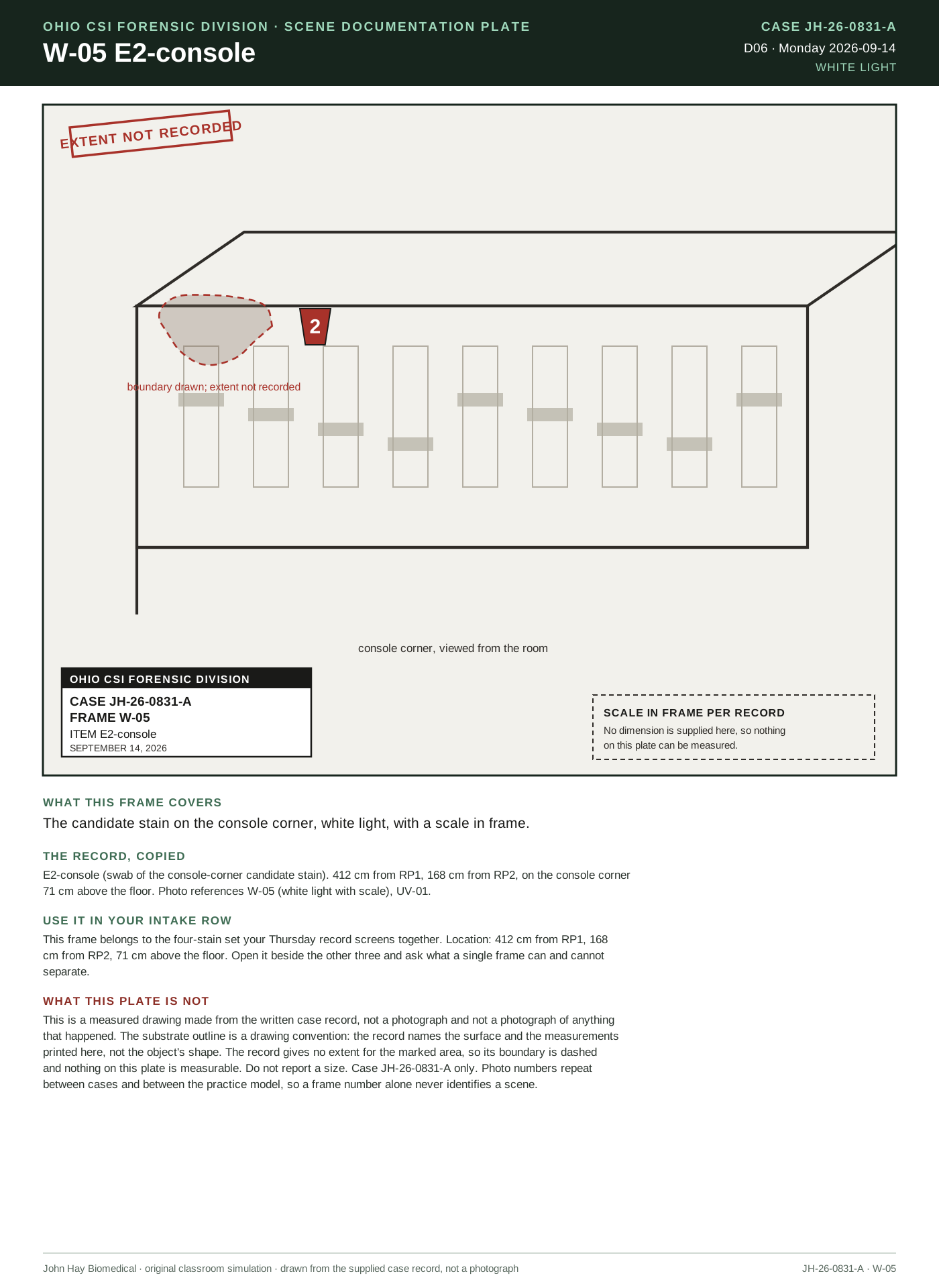
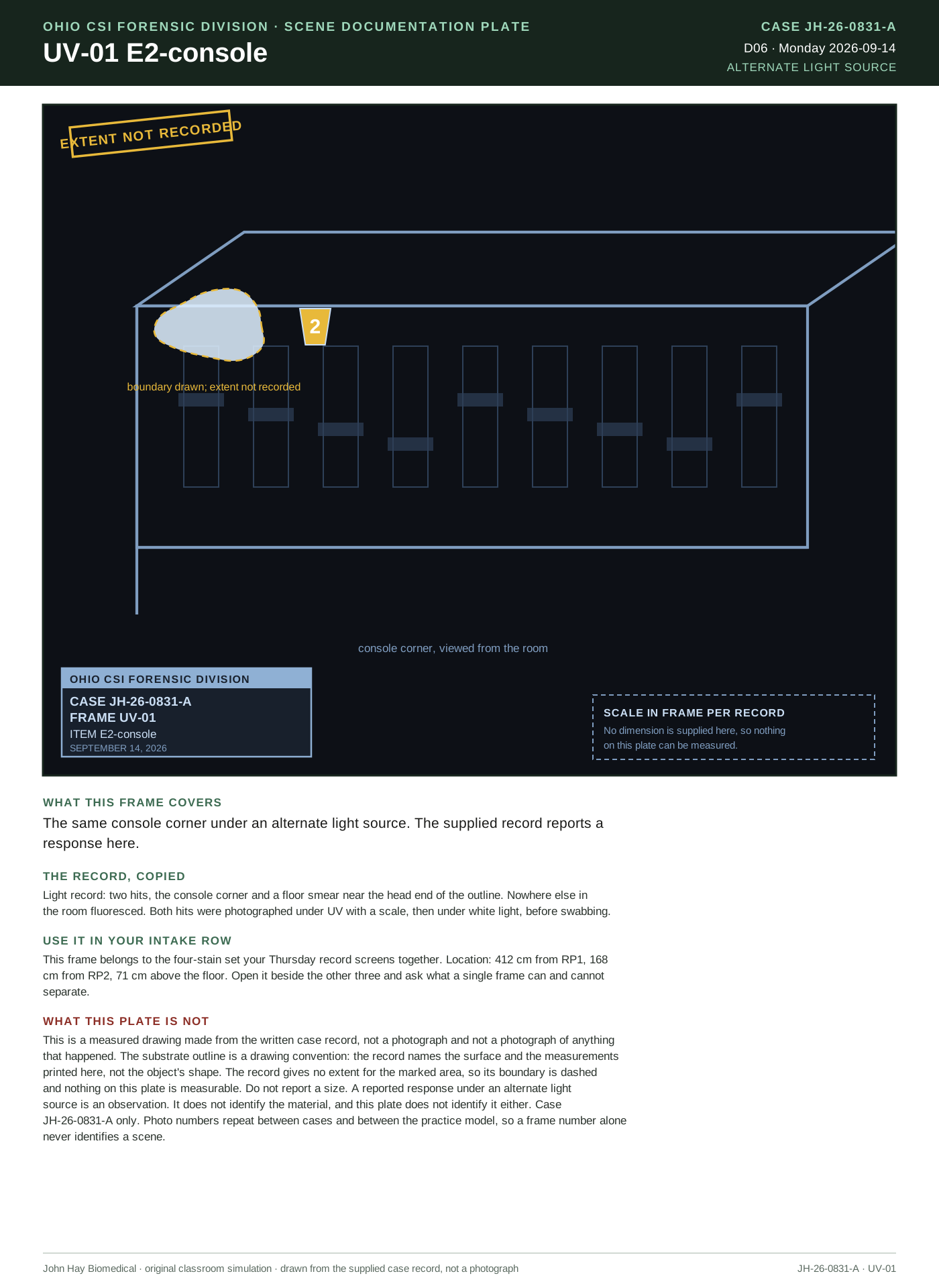
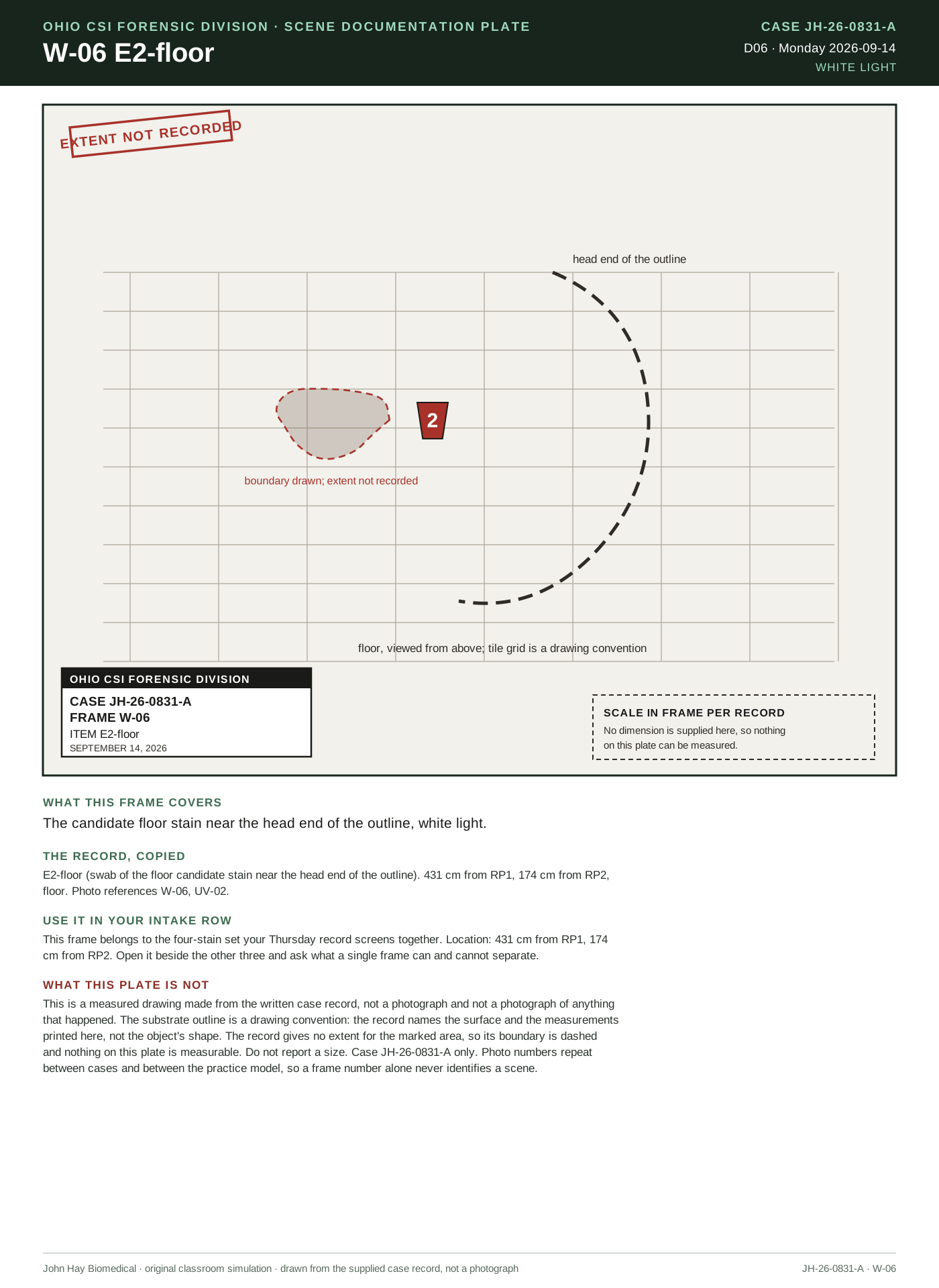
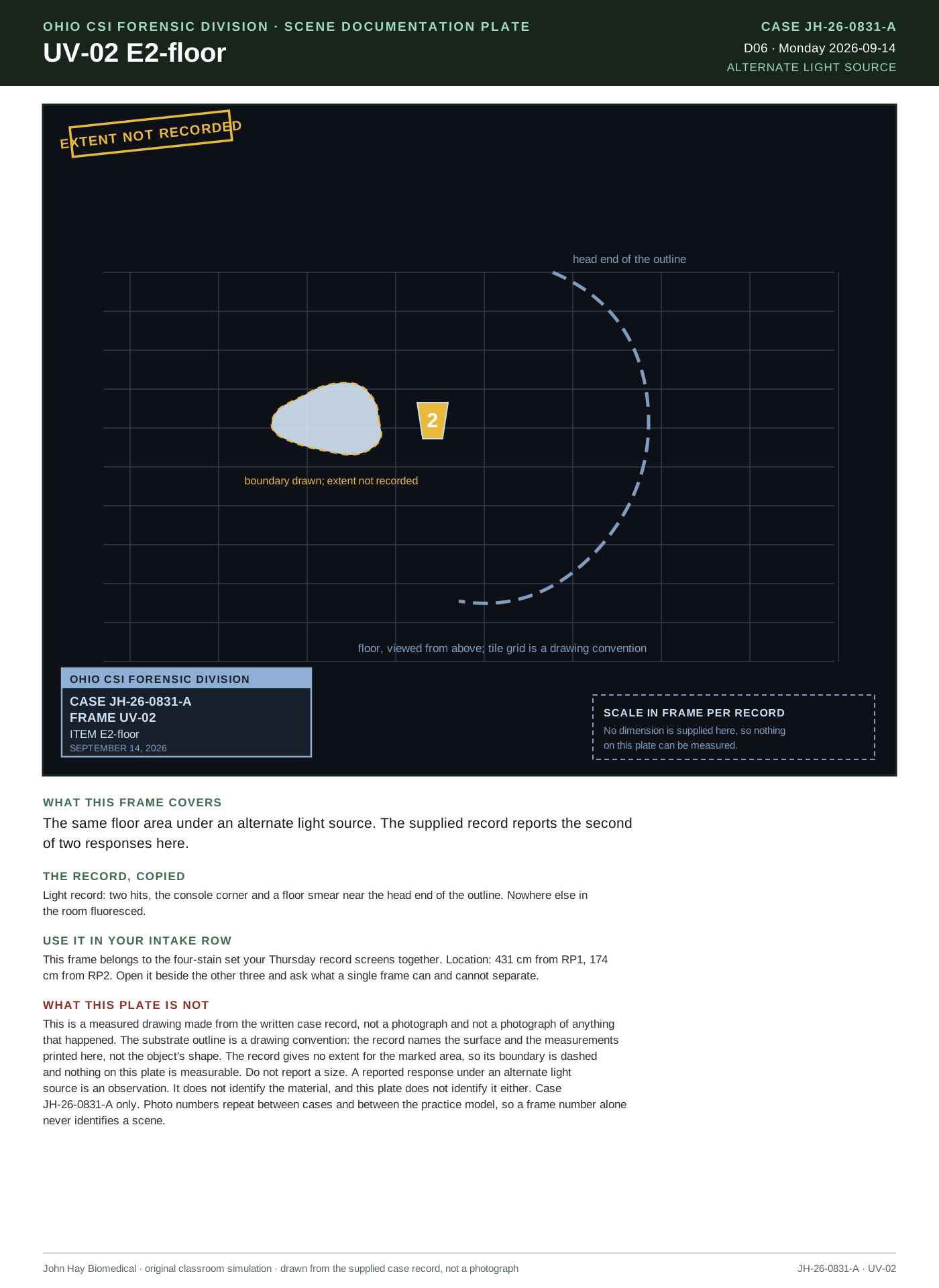
Setting: Statik Sound, a neighborhood recording studio. Case number JH-26-0831-A. Each photo reference below opens its plate in your Case A evidence folder: the plate shows where the stain was, and the record says what was reported about it.
E2-console
console-corner stain swab
- Documented before screening:
- Yes, according to the supplied record
- Recorded coordinates:
- 412 cm from RP1, 168 cm from RP2
- Prior log:
- day 6
- Color:
- Not reported in the supplied record
- Time:
- Not reported in the supplied record
- Classification:
- Reported presumptive positive
- Classification source:
- reported in the case record
E2-floor
floor stain swab near the head end
- Documented before screening:
- Yes, according to the supplied record
- Recorded coordinates:
- 431 cm from RP1, 174 cm from RP2
- Prior log:
- day 6
- Color:
- Not reported in the supplied record
- Time:
- Not reported in the supplied record
- Classification:
- Reported presumptive positive
- Classification source:
- reported in the case record
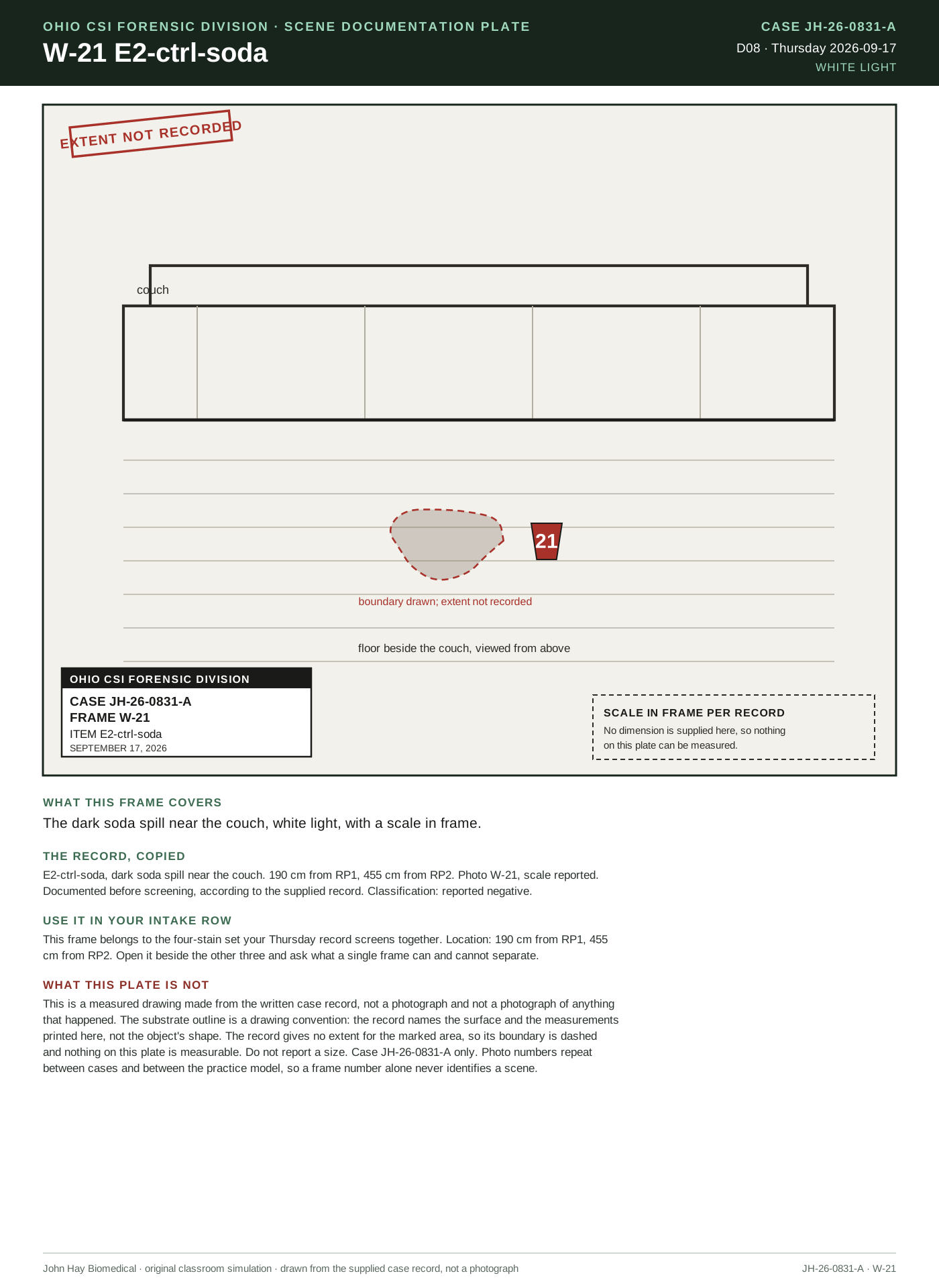
E2-ctrl-soda
dark soda spill near the couch
- Documented before screening:
- Yes, according to the supplied record
- Photo references:
- W-21, scale reported
- Recorded coordinates:
- 190 cm from RP1, 455 cm from RP2
- Color:
- Not reported in the supplied record
- Time:
- Not reported in the supplied record
- Classification:
- Reported negative
- Classification source:
- reported in the case record
- Negative log:
- E2-ctrl-soda: no indication of blood by presumptive screen. Photo W-21. Sample remaining: one test.
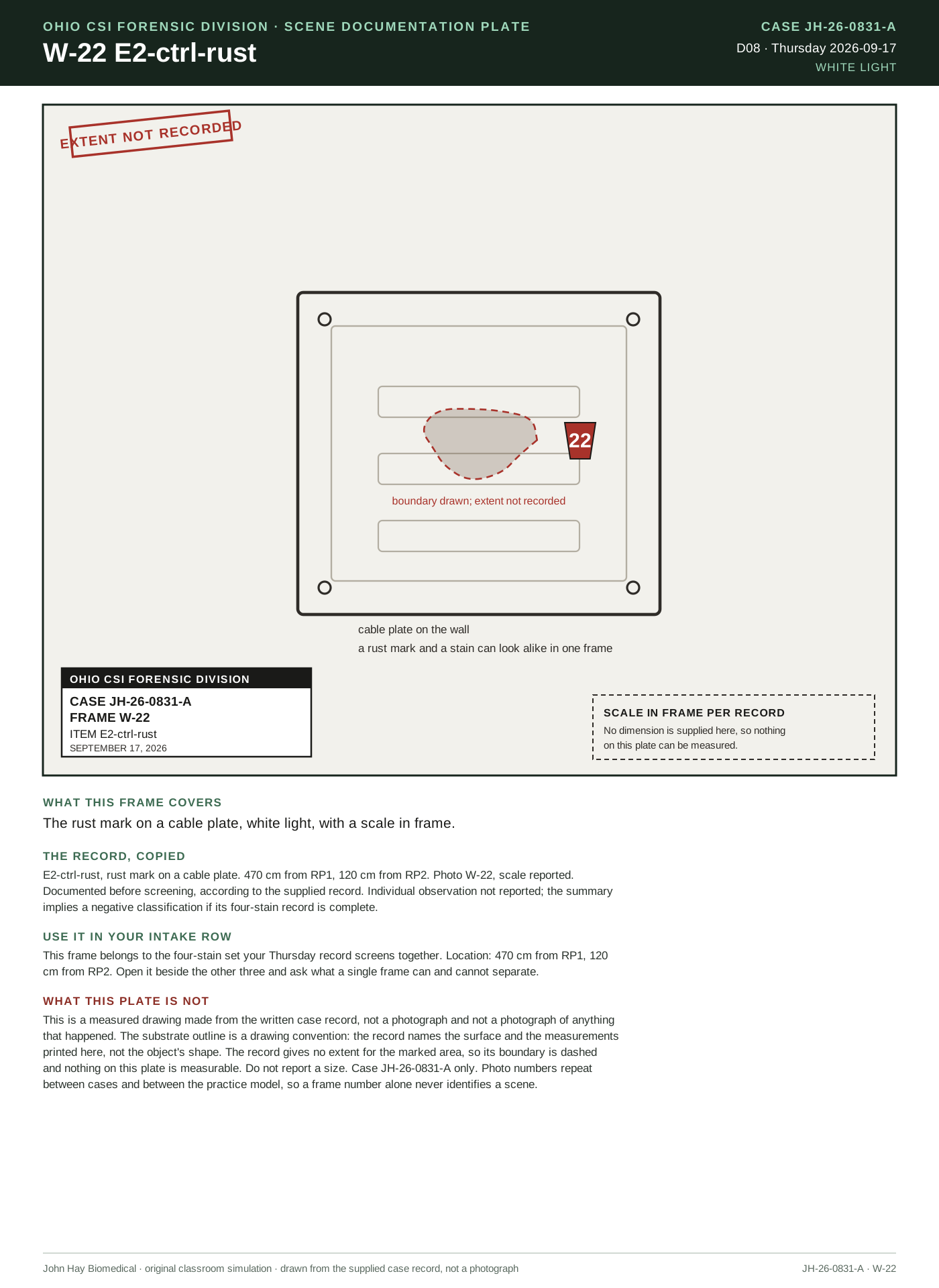
E2-ctrl-rust
rust mark on a cable plate
- Documented before screening:
- Yes, according to the supplied record
- Photo references:
- W-22, scale reported
- Recorded coordinates:
- 470 cm from RP1, 120 cm from RP2
- Color:
- Not reported in the supplied record
- Time:
- Not reported in the supplied record
- Classification:
- Individual observation not reported; the summary implies a negative classification if its four-stain record is complete.
- Classification source:
- conditional inference from the complete summary, not an individually reported result
Routing record and classroom allowance record
The supplied summary reports that E2-console and E2-floor went forward under the two follow-up allowances and that no positive had to wait. It supplies no follow-up test result.
Classroom allowance record: 4 swabs, 2 allowances per swab, 4 recorded screens, 2 follow-up allowances, 2 reported positives.
The summary reports four screens, two swab halves reserved for follow-up, and two negative swabs retained with their untested halves kept in custody. This is a supplied classroom record, not a procedure to follow.
The two-allowances-per-swab rule is classroom accounting. It does not establish real sample consumption, compatibility or suitability for another test.
Rust status and pattern summary
Individual observation not reported; the summary implies a negative classification if its four-stain record is complete.
The summary does not individually name rust as the second negative. Keep its conditional inference separate from a reported individual result. Do not guess a color or time.
The E3 documentation summary describes a contact smear at the console corner and passive drops on the floor below. It reports no cast-off pattern and no impact-spatter field. These are the source's descriptions, not an image analysis you performed. Its fall-versus-attack implications were recorded as questions only.
Qualified phrases from R3: presumptive positive for blood; confirmatory testing required and no indication of blood by presumptive screen.
4.2 The ten tasks, in one report
Complete Parts A–E in one report. Use your period and investigator code, not a name. Label the record route. Keep every evidence number beside its response. The supplied-record route is available to everyone.
Write on the response sheet in the handout or on paper. The task letters match the sheet. Extra help sits under each task; it supports that same response and never adds a product.
Part A. Use the reading
Two short answers from R2 that quote the sentence you used. This is where you show you read Part 1.
A1 PBS-U1-D08-A1
Name two kinds of material besides blood that the reading says can affect a screen. Copy the first three words of the sentence you used.
Use: Reading R2 (Part 1)
Response: Two kinds of material: ______. Sentence starts: ______.
Space: 3 writing lines
Need a hint?
Find the sentence beginning Some other materials. You are citing the reading, not identifying the material in a case stain.
A2 PBS-U1-D08-A2
Explain two reporting errors: treating an initial positive as confirmed blood, and treating a negative as proof that no blood was present. Give one possible consequence of each. Copy the first three words of a supporting sentence from R2.
Use: Reading R2 (Part 1)
Response: Error and possible consequence 1: ______. Error and possible consequence 2: ______. Sentence starts: ______.
Space: 5 writing lines
Need a hint?
Explain possible consequences. Do not invent a rate of error or claim that this lesson has validated a test.
Part B. Your four stain records
The main work. One report card per stain from 4.1, then the negative log, then the allowance arithmetic.
B1 PBS-U1-D08-B1
Complete one report card for each of your case's four stain IDs. Record the documentation references, reported classification or missing-status statement, qualified result phrase or conditional inference, and proposed route with a reason. For color and time, use not reported when the record supplies none. Keep the rust inference conditional.
Use: your case's four supplied stain records (4.1); the shared record, rust and allowance notices (4.1); Reading R1–R6 (Part 1); F1, the workflow (Part 3)
- Evidence ID
- Documentation references and recorded coordinates
- Reported classification and source
- Color and time status
- Qualified result phrase or exact conditional inference
- Proposed paper-record route and evidence reason
- What remains unknown
Need a hint?
Use the provided classification, not a guessed color. For rust, the conditional inference is an acceptable completed result field. Do not label it observed negative. Model K1 shows the report structure on a separate case.
B2 PBS-U1-D08-B2
Use your case's explicitly named negative stain, not rust. Write its evidence ID, qualified negative phrase, photo reference and remaining test allowance. Explain why the phrase does not prove that blood was absent.
Use: your case's negative log (4.1); Reading R2–R3 (Part 1)
Response: Negative log line: ______. Meaning and limit: ______.
Space: 4 writing lines
Need a hint?
Use E2-ctrl-soda for Case A. A missing observation and a reported negative are different.
B3 PBS-U1-D08-B3
Show the classroom budget for four swabs with two test allowances each. Subtract the four recorded screens. Then use the two follow-up allowances and the two reported positive IDs to explain how many can proceed and whether any must wait. Keep the allowance calculation separate from a claim that a follow-up test succeeded.
Use: the classroom allowance record (4.1); your case's supplied routing record (4.1); Reading R4 (Part 1); the separate kitchen model K1 (Part 3)
- Starting allowances: ___ × ___ = ___
- After recorded screens: ___ − ___ = ___
- Separate follow-up limit: ___
- Reported positive IDs: ___
- Can proceed: ___; must wait: ___
- Reason and accounting limit: ___
Space: 6 labeled calculation/reason lines
Need a hint?
The report may conclude that none waits. The kitchen model has a different budget and is not your case.
Optional check within B1, not three work plans
The rust row has no individual observation, but the summary reports two negatives. Which reporting choice preserves the evidence limit?
- Call rust an observed negative because its name sounds familiar.
- Keep the missing observation and label the negative classification as a conditional inference from the complete summary.
- Copy a result from the kitchen example to fill the blank.
Check your choice
The summary can support a stated inference only under its completeness condition. It does not supply an observed color or individual test record.
- This turns an inference into an observation and adds certainty the record does not supply.
- This preserves the distinction between a missing individual observation and an inference from a summary.
- The kitchen model is a different case with different records and cannot fill the missing entry.
Part C. The routing memo
Four labeled parts that turn your Part B work into a decision with its reasons and its limits.
C1 PBS-U1-D08-C1
Write one short routing-and-ethics memo with four parts: which reported positives can proceed and whether any must wait; an evidence reason for each proposed route; how the classroom allowance limit affects the choice; and the qualified wording that remains until further results are actually supplied. None waits is valid when the case supports it. Do not claim species, donor, time, or a completed follow-up result.
Use: your own B1 to B3 answers; your case's stain records and routing record (4.1); Reading R4–R6 (Part 1)
- 1. Proceed/wait decision
- 2. Evidence reasons
- 3. Allowance and ethics reason
- 4. Result wording and limits
Space: Four labeled fields with 3 lines each
Need a hint?
An evidence reason can refer to a reported location or the supplied routing record. Attribute it to the record. A budget decision is not an identification.
Part D. Use the vocabulary
One or two sentences that use confirmatory test and serology correctly. The definitions are in Part 1.
D1 PBS-U1-D08-D1
Use confirmatory test and serology in one or two sentences about this paper-record exercise. Explain the follow-up role without claiming that it guarantees identification. A copied definition alone is not enough.
Use: Reading R1 and R5 (Part 1); your own report
Response: One or two sentences: ______.
Space: 3 writing lines
Need a hint?
Use the legacy term with its stated limit. You may describe what the report asks a later evaluation to address; do not say that you ran a test.
Part E. Reading checks
Three one-line answers checked against R3, R2 and R6. Checking is part of the work, not a second submission.
E1 PBS-U1-D08-E1
A supplied record classifies a stain as a presumptive positive. Write the qualified report phrase. This is a reading check, not a new case result.
Use: Reading R3 (Part 1)
Response: ______
Space: 2 writing lines
Need a hint?
Use the phrase and its limit from R3. Do not substitute an unreported color.
E2 PBS-U1-D08-E2
A supplied record classifies a screen as negative. Does that prove the material was absent? Answer in one line with the limit.
Response: ______
Space: 2 writing lines
Need a hint?
Distinguish not detected from confirmed absence.
E3 PBS-U1-D08-E3
Why does the report keep the documentation made before testing? Give one reason, and do not claim to have viewed photographs that are only listed by reference.
Use: Reading R6 (Part 1); your case's documentation references (4.1)
Response: ______
Space: 2 writing lines
Need a hint?
Think about what the original location and appearance record allows a later reader to trace.
Short check, same report
Can a correct routing memo say that no positive waits? Explain using your case's classroom allowances, without claiming that any follow-up succeeded.
Use B3 and the supplied routing record. This is a check of the same report, not another task.
Turn in one report
Complete one presumptive test report, Parts A–E. Hand the paper report to Mr. Mendoza before leaving, or submit one PDF to this section's Schoology assignment by September 17 at 11:59 PM. Use your period and investigator code. Do not submit the same report twice; keep notebook pages in your notebook.
Keep notebook pages in your notebook. You may copy F1 and update a line in your evidence log as support; do not upload a second product.
Case A: submit to Wk4 D08 · Maybe Is a Result (PLTW 1.1.4)Carry forward your evidence IDs, reported classifications and limits. A later lesson needs its own supplied evidence; today's report does not supply a DNA result.
Help when you need it
Need help? Choose a starting point
One work sequence. Optional help explains the current task; it does not add a parallel work plan. Guided notes and the kitchen model are support, not extra submissions.
Restart where you stopped
Lost your place? Find the next unanswered task ID. Use R2 for Part A, R3 and F1 for B1, R4–R5 for B2–C1, and R6 for documentation. Keep working in the same report.
If you were absent or need help
Use the same supplied-record handout and complete the same report. You do not need to find missing specimens or make up colors, times or pictures. If your teacher supplies actual approved classroom observations, label that separate source and follow the assigned instructions; do not silently combine it with this practice record.
Lost your place? Find the next unanswered task ID. R2 supports the reading questions; R3 and F1 support the rows; R4–R5 support the budget and memo; R6 supports documentation. Guided notes and the kitchen model are support, not extra submissions. The existing preparation gate applies before any separate teacher-directed bench task, not as proof that this paper report completed one.
If your teacher is absent: Use the complete handout, R1–R6 and F1. Complete the paper-record report only. Do not begin an unassigned hands-on task.
Notebook support, not another submission
Keep notebook pages in your notebook. You may copy F1 and update a line in your evidence log as support; do not upload a second product.
Log fields: Date / Evidence ID / Supplied-record statement / Interpretation and limit / Report task ID.
- What was reported?
- What was not reported?
- What can the budget support?
In one sentence, explain where a report must stop.
Optional vocabulary extra credit
The existing optional vocabulary extra credit may remain optional, separate from required D1. Use terms from this lesson and do not add a required submission.
Preparation gate and optional references for a separate lesson
No extra DNA simulation is required for the report.
Complete the existing preparation gate before any separate teacher-directed hands-on task. This paper report does not grant bench clearance or certify practical performance.
- Kastle-Meyer blood testing simulation: existing preparation gate, not required for this paper report.
- What Is the Match Allowed to Mean?: optional separate support, not required for the report.
- Whose DNA, and Does It Even Matter?: optional separate support, not required for the report.
Connection to PLTW
Related PLTW reference:
- Activity 1.1.4 Blood Evidence
This John Hay original record exercise practices careful reporting, limited-resource reasoning and evidence limits connected to PLTW Activity 1.1.4, Blood Evidence, in Lesson 1.1, Investigating the Scene. It does not certify completion of the official activity. The retained PLTW activity link is supporting access, not an extra task for this report. If it does not open, the required explanation and records are here.
Before any separate teacher-directed hands-on task, complete the existing Kastle-Meyer preparation gate and follow your teacher's approved instructions. This paper report does not provide bench clearance or certify practical performance. No extra DNA simulation is required for the report.
Local John Hay practice connected to the activity, not certification of official completion.
Sources and optional background
For A1–A2, use R2. For the four rows, use R3 and the F1 record workflow. For the budget and memo, use R4–R5 and the separate kitchen model. For a documentation question, use R6. Guided notes can help organize your thinking; they are not another submission. The explanation above contains the required background, so the source links are not an additional reading assignment.
- S1. NIJ screening background
cited in R2.
- S2. NIST definition
cited in R2.
- S3. NIST, §§4.6.2–4.6.3
cited in R5.
- S4. NIJ DNA-result background
cited in R5.
- S5. NIST-hosted 2017 draft, §§4.2.9–4.2.12
cited in R6.
Today's records do not establish species, donor or time of deposition. A DNA comparison would be separate evidence; none is supplied here. A route does not produce a new result or identify a donor.