
Human Body Systems · 2027-03-24 · 80 minutes
Wk10 Lab notebook: Negative feedback model build
Your goal: Build and run a physical model of blood-glucose negative feedback involving insulin and glucagon.
One product: Feedback loop diagram showing insulin and glucagon responses for both a meal and a fasting scenario, with labeled negative-feedback arrows.
If access is unavailable, save the same work and tell the teacher. Do the physical runs only when their materials are available. Keep the assigned official reflection/log and tracker work separate; request missing classroom inputs.
Start the work
- Review how the pancreas senses high and low blood glucose.
- Build a feedback loop model using cards or tokens for glucose, insulin, and glucagon.
- Simulate a meal by adding glucose and trace the insulin response.
- Simulate fasting and trace the glucagon response.
- Record how the model returns glucose toward the set point.
Show the 80-minute plan
- 0 to 10 minutes. Read E1/E2 and answer the warmups using the defined terms.
- 10 to 25 minutes. Build K1, assign roles and verify the starting state.
- 25 to 42 minutes. Run the meal cycle and record all R1 steps.
- 42 to 58 minutes. Reset, run fasting and record all R2 steps.
- 58 to 70 minutes. Draw both D1 branches and labeled negative-feedback return arrows.
- 70 to 80 minutes. Explain both loops, correct them, answer the check and submit or save.
Open your materials
Use the reading, word guide, and worked example below. Keep your answers on paper or in one document.
Printable lesson and response record (PDF). This packet contains the same required reading and work.
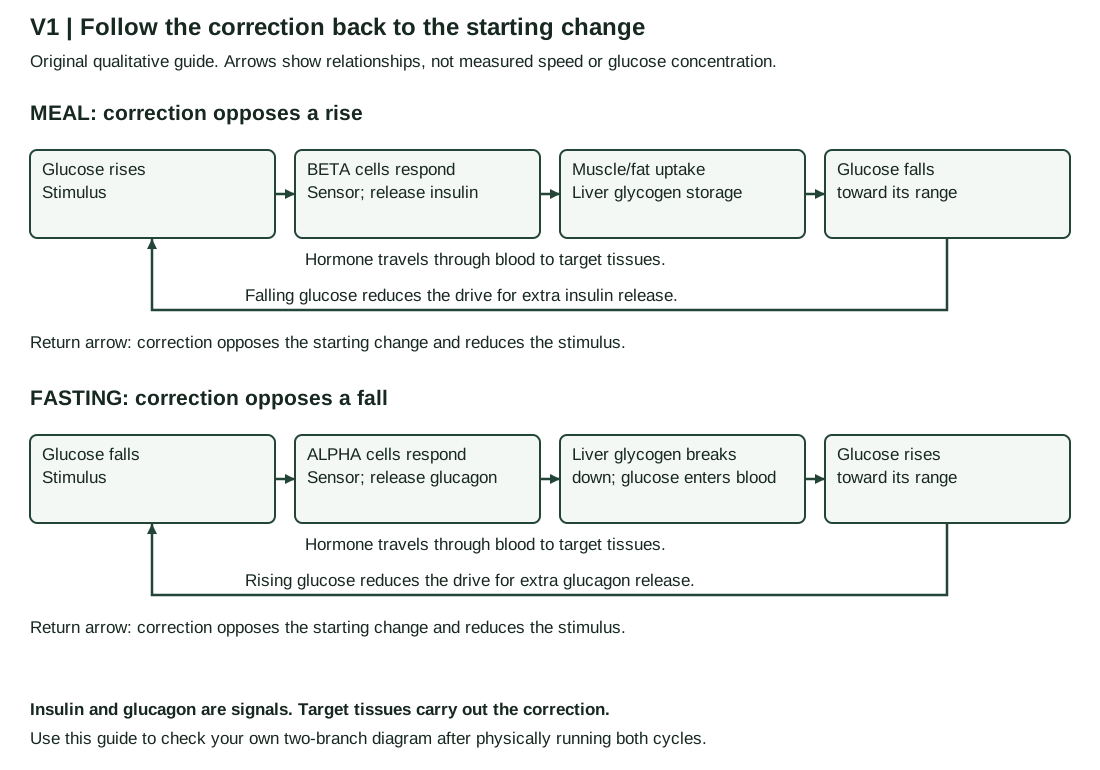
V1: meal and fasting loop guide
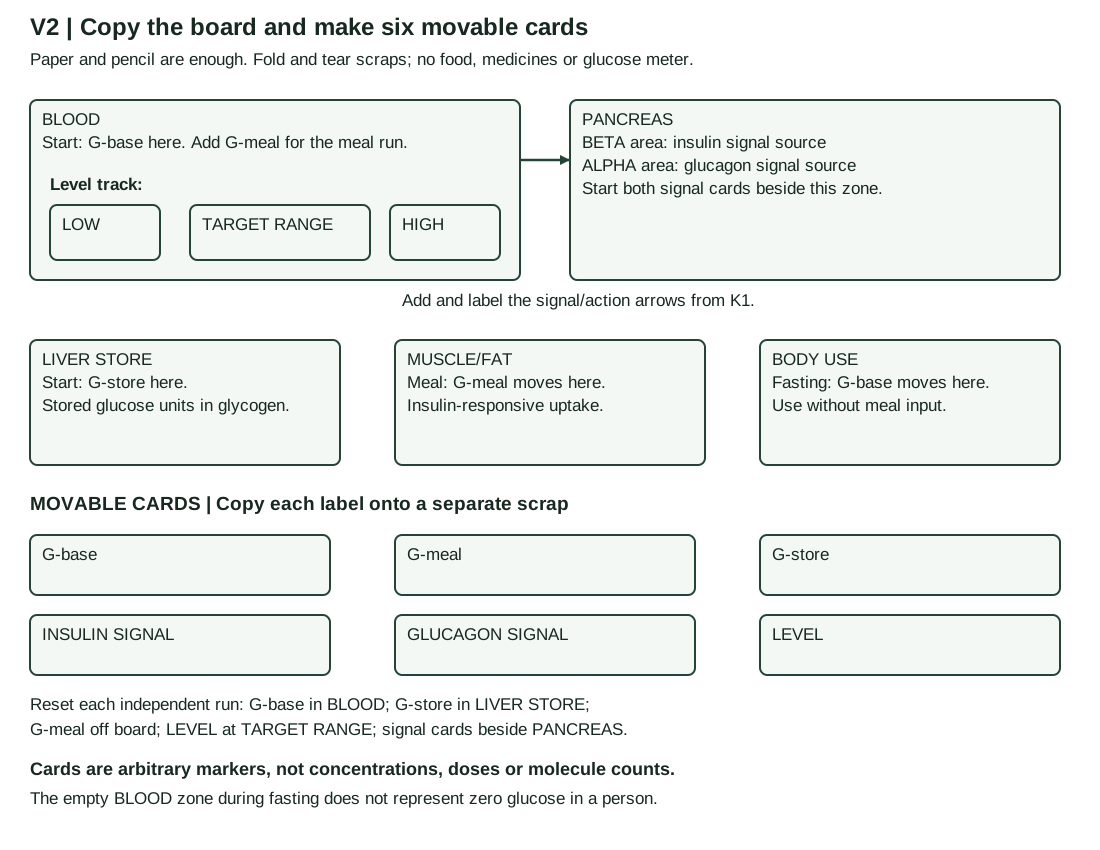
V2: copyable board and six cards
Question: How does each hormone branch oppose its starting change, and what does the card model leave out?
Words you will use
- blood glucose
- Glucose, a sugar, carried in blood; this lesson models its level qualitatively.
- hormone
- A chemical signal released into blood that affects cells with suitable receptors and response machinery.
- endocrine gland
- An organ or tissue that releases hormones into blood.
- pancreatic islet
- A cluster of endocrine cells within the pancreas.
- beta cell
- A pancreatic islet cell that produces and releases insulin.
- alpha cell
- A pancreatic islet cell that produces and releases glucagon.
- insulin
- A hormone that helps lower blood glucose through uptake, use and storage processes.
- glucagon
- A hormone that helps raise blood glucose, including by stimulating liver glucose output.
- receptor
- A protein that receives a chemical signal and helps begin a cell response.
- target cell
- A cell that can respond to a hormone through its receptor and signaling machinery.
- glycogen
- A stored form of glucose made of linked glucose units.
- liver
- An organ that can store glucose as glycogen and supply glucose to blood.
- stimulus
- The change that starts the modeled response.
- sensor
- The component detecting the modeled change; here pancreatic islet cells respond to glucose.
- effector
- A tissue carrying out the correction, such as liver or insulin-responsive muscle and fat.
- response
- The action produced by the signal, such as increased glucose uptake or liver output.
- set point
- A reference value used in a simplified control model; real regulation operates over ranges and changing conditions.
- target range
- The workable range toward which this qualitative model corrects; no personal medical target is assigned.
- homeostasis
- Regulation that helps keep internal conditions within workable limits.
- feedback loop
- A chain in which a response changes the condition that started it.
- negative feedback
- A response that opposes the starting change and reduces the drive for that response.
- fasting
- A period without food intake; here it is simulated with cards, not performed.
- simulation
- A run of a simplified representation using stated rules.
- model token
- A movable marker for a role or change; it is not a molecule count, dose or measured concentration.
- mg/dL
- Milligrams per deciliter, a unit for concentration; no token is assigned this unit.
- type 1 diabetes
- An autoimmune disease in which insulin-producing beta cells are destroyed.
- autoimmune
- Involving the immune system attacking the body’s own cells.
- limitation
- A feature the model cannot establish or fully represent.
E1: the two pancreatic branches
Pancreatic beta cells release insulin as blood glucose rises. Insulin supports glucose uptake in skeletal muscle and fat, and promotes liver glycogen storage. Falling glucose reduces the drive for further insulin release.
With low glucose, pancreatic alpha cells release glucagon. It stimulates liver glycogen breakdown and glucose output. As glucose rises, the drive for further glucagon release falls.
Insulin and glucagon travel through blood. Glucose tokens do not represent hormone molecules. Target tissues carry out the correction; hormones are signals, not physical carriers that drag glucose.
Negative feedback requires the return path: the correction reduces the original stimulus. Merely showing two opposing hormones without this return path leaves the explanation incomplete.
E2: glucose facts and model limits
MedlinePlus describes blood glucose as an energy source. It explains that rising glucose signals the pancreas to release insulin, which helps glucose enter cells for use.
A meal can raise glucose and fasting can lower it, but no universal meal peak or one-hour return time is supplied. Real levels depend on several processes and individual circumstances.
Use HIGH, TARGET RANGE and LOW for this model. Do not equate its target with 90 mg/dL for everyone. Do not convert token counts to blood-test values or use this activity to judge a person’s glucose.
K1: complete physical kit and board
Use a notebook sheet or plain paper, a writing tool and small paper scraps as movable cards. Fold and tear scraps if needed; scissors, color, food, medicines and glucose meters are not required. Work alone by moving every role yourself.
Draw five board zones: BLOOD; PANCREAS with separate BETA and ALPHA areas; LIVER STORE; MUSCLE/FAT; BODY USE. Beside BLOOD, draw a three-position level track: LOW | TARGET RANGE | HIGH.
Make these movable cards: G-base, G-meal, G-store, INSULIN SIGNAL, GLUCAGON SIGNAL and LEVEL. The three G cards represent glucose only. G-store in LIVER STORE represents stored glucose units in glycogen, not free glucose already in blood.
Start each run with G-base in BLOOD, G-store in LIVER STORE, G-meal off the board, LEVEL at TARGET RANGE, and both hormone cards beside PANCREAS. Card counts are arbitrary teaching rules, not biological quantities.
Add arrows to the board: BLOOD change to the appropriate pancreatic cell; hormone signal through blood to its target; target action back to BLOOD level. Label each arrow with its action. The completed-loop guide in V1 and the kit/board in V2 will accompany the delivered packet.
If printed cards are missing, copy these exact labels onto scraps and the board onto paper. If no paper or movable pieces are available, trace the instructions as preparation and ask for the build materials before doing a physical run. Reading alone does not complete it.
R1: meal cycle, run and record
Meal row 1, stimulus: reset K1. Add G-meal to BLOOD and move LEVEL to HIGH. Say: this added card models glucose arriving after a meal.
Meal row 2, sensor and signal: point to BETA cells. Move INSULIN SIGNAL from PANCREAS through BLOOD to MUSCLE/FAT. Say: rising glucose promotes insulin release and target responses.
Meal row 3, correction: move G-meal from BLOOD to MUSCLE/FAT and move LEVEL toward TARGET RANGE. Also label the liver arrow insulin promotes glycogen storage; that additional biological action is shown without moving another card.
Meal row 4, feedback: return INSULIN SIGNAL beside PANCREAS. Say: as glucose falls toward range, the drive for extra insulin release decreases. This resting card means reduced extra signal, not zero insulin in a real body.
For each row, record the level category, pancreatic cell, hormone, target action and why the next move follows. Record your actual card moves, not a blood measurement. If you chose the wrong branch, correct it and note the change.
R2: fasting cycle, run and record
Fasting row 1, stimulus: reset K1 independently of the meal run. Move G-base from BLOOD to BODY USE and LEVEL to LOW. This represents use without incoming meal glucose; an empty model box does not mean zero glucose in a person.
Fasting row 2, sensor and signal: point to ALPHA cells. Move GLUCAGON SIGNAL from PANCREAS through BLOOD to LIVER STORE.
Fasting row 3, correction: move G-store from LIVER STORE to BLOOD and LEVEL toward TARGET RANGE. Say: the liver breaks down glycogen and releases glucose. The model omits other sources of liver glucose output.
Fasting row 4, feedback: return GLUCAGON SIGNAL beside PANCREAS. Say: rising glucose reduces the drive for extra glucagon release. Record the same five fields as R1 for all four rows.
The liver reserve is deliberately reset between independent demonstrations. Real reserves are finite, responses overlap and hormones are not simple on/off switches. The cards do not predict timing, concentration or an unlimited fasting response.
D1: diagram, self-check and disease extension
Create your own final two-branch loop diagram after the runs. Meal branch: rising glucose, BETA cells, insulin, muscle/fat uptake plus liver storage, glucose falls toward range, reduced drive for extra insulin. Fasting branch: falling glucose, ALPHA cells, glucagon, liver glucose output, glucose rises toward range, reduced drive for extra glucagon.
Label stimulus, sensor, hormone, effector action and return toward homeostasis. Draw the last arrow back to the initial glucose-change box and label it opposes the original change. The guide is inspectable input; copying it without running the model is not evidence of a completed physical run.
Given self-check: a hypothetical post-meal value is 150 mg/dL and is described as a rise. Name the expected hormone, direction of correction and why negative means opposing the rise. Method: start at the rise on your meal branch, follow it to the sensing cells and their hormone, then use the correction and return arrows to explain the direction of change. The number alone cannot diagnose diabetes or determine a personal target.
NIDDK explains that type 1 diabetes involves immune destruction of insulin-producing beta cells. For the extension, remove INSULIN SIGNAL and redraw the blocked beta-cell-to-insulin step. In the simplified meal run, trace what happens to the insulin-driven correction and to the glucose level.
This extension does not mean all glucose uptake stops or every person has the same course. It is not a treatment model, and it gives no dosing, diagnosis or food advice.
P1: actual course work and recovery
Warmups: which hormone is expected after a glucose rise following a meal, and what does set point mean? For the prerequisite, also predict the hormone during the stated low-glucose fasting case. Simulate only; do not skip a meal.
March 23’s take-home was to name the hormone source, follow blood transport and explain a target response using its receptor. Bring your gland map if available. Its actual matching task or submission is not assumed complete.
Today’s official work is Activity 2.2.1 The Endocrine System for the model and myPLTW log, plus any linked reflection/check-in and a completion note or screenshot. Obtain the assigned portion and stopping point. This original model cannot certify unseen official work.
Activity 2.2.1 includes the sections Endocrinology Lab, Game of Hormones, Feedback Loops and Conclusion. Its game needs a die, the actual Journey Begins card, station-path/event notes, the fictional game diagnosis and another-group comparison. Ask the teacher for those inputs and directions before doing the work.
The official Feedback Loops work draws on that game/discussion and adds both type 1 and type 2 diabetes annotations. It also requires a separate Endocrine System Body System Organizer showing releasing glands, targets, hormone names on arrows and functions. The intro also requires the five-term chemical-communication concept map and hormone/gland examples. The local model and optional type 1 extension do not complete those requirements. Obtain the assigned portion and stopping point; no official game, comparison, organizer or type 2 annotation is supplied here.
The assigned cards/tokens, model photos, async lab notes and glucose tracking sheet are not supplied from the classroom. K1/R1/R2 and the original diagrams supply a complete paper-model alternative. Ask for the directions for any teacher-required kit, photo or record check.
Absent or alone: make K1, run one full meal and one full fasting cycle, and record sensor, hormone and correction at each step. This preserves the daily async lab objective and uses E2’s MedlinePlus input. Ask for the teacher-posted data/model packet if it is separately required.
During pair-share, explain both loops to a partner. If alone, explain them aloud to yourself, then compare every arrow with D1 and record one correction or a reason it matches. Do not invent partner feedback.
This week’s work includes the feedback-loop organizer, hormone model and online evidence through Activity 2.2.1. The later glucose CER and experimental design remain separate.
March 25 is catch-up and March 26 is no school. Confirm the actual deadline. No homework is due before this class.
Section 1292 assignment: https://clevelandmetro.schoology.com/assignment/8544582704 ; section 6792 assignment: https://clevelandmetro.schoology.com/assignment/8544582730 . Use only your enrolled section. The assignment title is Wk10 Lab notebook: Negative feedback model build. Confirm that your section's link opens.
The weekend item Submit reflex evidence in Exit Tickets and unresolved March 22/23 work remain separate. Submit this loop diagram and run notes through the confirmed Lab Notebooks route. Tell the teacher about access problems, then check Schoology after uploading; use only evidence from official work you actually do.
M1: distinct worked example, room thermostat
Invented control example: a room is cooler than its thermostat setting. A sensor detects the lower temperature, the controller signals a heater, and the heater warms the room. As temperature approaches the setting, heating demand falls.
Worked loop: temperature falls, sensor/controller responds, heater adds heat, temperature rises, the original temperature error shrinks. The return arrow says warming opposes cooling. No measured temperatures or heating times are supplied.
The controlled variable is temperature, not glucose. The thermostat signal is not insulin or glucagon. Use the pattern of detection, correction and reduced stimulus; use E1 for the pancreatic cells and tissue actions.
If the heater cannot switch on, the model cannot perform its warming correction. That illustrates a broken effector pathway, not the specific beta-cell failure in type 1 diabetes. Your extension must mark the actual insulin-signal step in D1.
Try the decision
Which explanation closes the meal negative-feedback loop?
- Rising glucose promotes insulin; target actions lower glucose, reducing the drive for extra insulin release.
- Insulin carries glucose cards itself, proving every real cell needs insulin to take up glucose.
- Two opposite hormone names alone prove the loop works, even without a return arrow.
Explain your choice using the reading. Discuss it or say it to yourself. This practice does not add another submission.
Your response record
Use these labels on paper or in your document. The space below also works when this page is printed.
Explain the opposite responses
Answer both P1 warmups and name the expected hormone for the stated low-glucose fasting case. Define hormone, endocrine gland, feedback loop and homeostasis in your own words.
E1/E2 and the vocabulary supply the facts. A model target is not a personal medical target.
Build the movable model
Make all K1 zones and cards, assign BETA and ALPHA roles and place the starting cards. Sketch or note the actual setup.
One person can move every role. Copy labels onto scraps if no kit is supplied; lack of physical materials remains a build hold.
Run and record the meal cycle
Carry out all four R1 rows and record each step’s level, cell, hormone, target action and feedback explanation.
Add the glucose card, trace insulin, show uptake/storage, then reduce the extra signal. No token has mg/dL units.
Run and record the fasting cycle
Reset and carry out all four R2 rows with the same record fields. Explain why this correction opposes the initial change.
Remove the baseline card, trace glucagon to liver, then return stored glucose to blood. Empty model blood is not zero real glucose.
Draw the two negative-feedback loops
Create the exact two-branch diagram with labeled arrows and all D1 components. Answer the 150 mg/dL hypothetical check; add the type 1 extension if ready.
Include the return arrows, not just hormone names. Mark the beta-cell-to-insulin break for the extension; do not erase all cell glucose uptake.
Explain, check and submit
Pair-share or use the labeled solo explanation route, check each arrow and submit the diagram with both run records. Keep evidence from your assigned official reflection/log and tracker work; ask for missing directions.
The original build, submitted product and official completion are different states. P1 lists materials to request and dates to check.
Check your product
- Both physical model runs are recorded, including the actual card moves or a clear materials hold.
- The diagram shows insulin lowering and glucagon raising glucose through named target actions.
- Both return arrows explain why the original stimulus decreases.
- Explain the model's limits and include only evidence from work you actually do.
Qualitative cards demonstrate a feedback rule. They cannot establish measured glucose, individual physiology, diagnosis, treatment, concentrations or response times. Completing the original model does not complete unseen official tasks.
Turn in your work
Wk10 Lab notebook: Negative feedback model build
Submit the feedback loop diagram for meal and fasting, with labeled negative-feedback arrows and both run records, through your enrolled section: 1292 https://clevelandmetro.schoology.com/assignment/8544582704 ; 6792 https://clevelandmetro.schoology.com/assignment/8544582730 . Confirm that your section's assignment is open.
- Section 1292: Wk10 Lab notebook: Negative feedback model build
- Section 6792: Wk10 Lab notebook: Negative feedback model build
If access is unavailable, save the same work and tell the teacher. Do the physical runs only when their materials are available. Keep the assigned official reflection/log and tracker work separate; request missing classroom inputs.
Connection to PLTW
Original physical feedback model; official activity and authentic classroom inputs remain separate.
These references locate related course material. Complete only the official work and stopping point your teacher assigns. This local preparation does not establish completion of an online activity.
- Activity 2.2.1 The Endocrine System
Optional practice and examples
Use these resources to practice related skills. Follow the required work and evidence limits above. A simulation does not authorize a live experiment or add another submission.
Slides and optional notes
Keep actual setup, both four-step run records, two-branch loop diagram and checks and next actions together. Model tokens are not measured glucose data. Guided notes are optional and do not add a second submission.
Sources and optional reading
- 17.9 The Endocrine Pancreas · OpenStax, Anatomy and Physiology 2e
- Blood Glucose · MedlinePlus, National Library of Medicine
- Type 1 Diabetes · National Institute of Diabetes and Digestive and Kidney Diseases
Keep going
If you were absent or lost your place, read the word guide and reading first. Try the example, then complete the first unfinished response.
No partner is required. Read your response aloud to yourself and check it against the product checklist.
Take home: Trace the change, the pancreatic signal and the target response, then show why the signal weakens as glucose returns toward its range.
Keep both run records and the diagram for the feedback-loop organizer and later glucose CER. Ask for any missing official or prior-work materials before using them. What differs between the meal and fasting feedback sequences?