
Bloodwork and ranges
This page has four parts, in the order you use them. Part 1 is what you need to know. Part 2 says what to do, in plain English. Part 3 shows the work done once on a case that is not yours. Part 4 is your own work and where to turn it in.
Open your materials, follow the steps, then turn in your work.
Identify routine blood tests and their normal ranges before the PLTW clinical-data task.
Check you have the right sheet: the top of it prints today's portal day, Bloodwork and ranges. The PLTW activity itself is in myPLTW and is not posted here.
Optional: listen or watch a unit review▸
Part 1 of 4 · Background and definitions▸
💡 Big idea: A blood panel measures organ function as numbers, so comparing each value to its and tracking it over repeated tests lets a clinician catch disease that a single reading or a physical exam would miss.
- • A complete blood count (CBC) measures red and white blood cell counts and platelets; fasting glucose is 70-99 mg/dL; total below 200 mg/dL is desirable.
- • Chronic disease monitoring uses repeated measurements over months or years to detect trends that a single reading would miss.
- • Telehealth platforms transmit patient-reported data and wearable sensor readings into the clinical record, but the clinician must validate them against lab-confirmed values.
One vital-sign reading is only a snapshot of , so it cannot separate a transient response from a chronic condition, which is why clinicians rely on repeated measurements to reveal a real trend.
A blood panel measures organ function as numbers, so comparing each value to its and tracking it over repeated tests lets a clinician catch disease that a single reading or a physical exam would miss.
Driving question: Your fasting glucose comes back at 96 mg/dL and a classmate's at 104 mg/dL. One is normal and one is not, so where exactly is the line and why does 8 mg/dL matter?
What you already know: One vital-sign reading is only a snapshot of , so it cannot separate a transient response from a chronic condition, which is why clinicians rely on repeated measurements to reveal a real trend.
New idea: A blood panel measures organ function as numbers, so comparing each value to its and tracking it over repeated tests lets a clinician catch disease that a single reading or a physical exam would miss.
Visual or model: No figure is attached to this lesson. The readings, the worked example and E1 to E3 carry the evidence.
- Observe or measure the relevant feature in today's lesson.
- Organize the observation with a stable evidence ID.
- Apply this rule: A blood value outside the range printed on its report is a signal to recheck and look further; it does not by itself prove a disease.
- Choose the option the evidence supports and state the limit of the conclusion.
Real biomedical example: Your fasting glucose comes back at 96 mg/dL and a classmate's at 104 mg/dL. One is normal and one is not, so where exactly is the line and why does 8 mg/dL matter?
What the evidence supports: E1 to E3 support the daily take-home when the response meets the stated success criteria.
What it cannot prove: The package does not support claims beyond this lesson's or any real patient diagnosis.
- • : The amount of sugar dissolved in the blood, the body's main fuel, normally about 70 to 99 mg/dL when fasting and tightly controlled by .
- • : A waxy, fat-like substance that the body uses to build cell membranes and make hormones, but too much in the blood can clog arteries.
- • : Anything that raises a person's chance of developing a disease, such as smoking, family history, or high , without guaranteeing it.
- • telehealth: Delivering healthcare remotely using video calls, phone, or digital tools so patients and providers can connect without being in the same place.
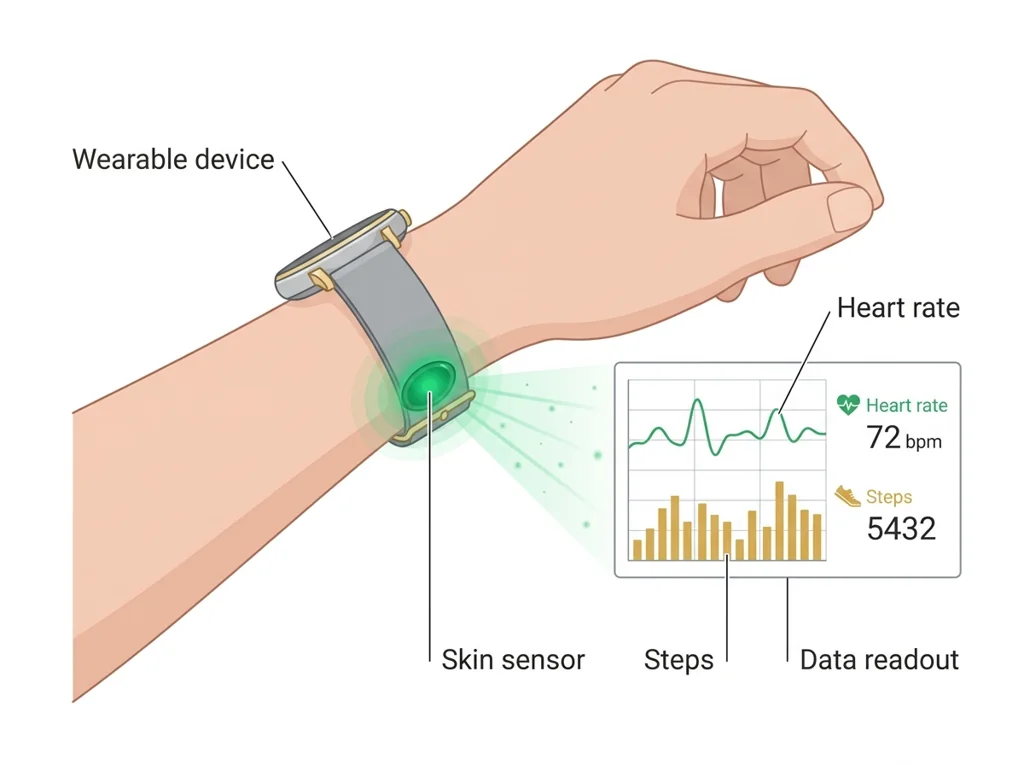
- • wearable: A small electronic device worn on the body that continuously senses and records health data such as heart rate, steps, or oxygen level.
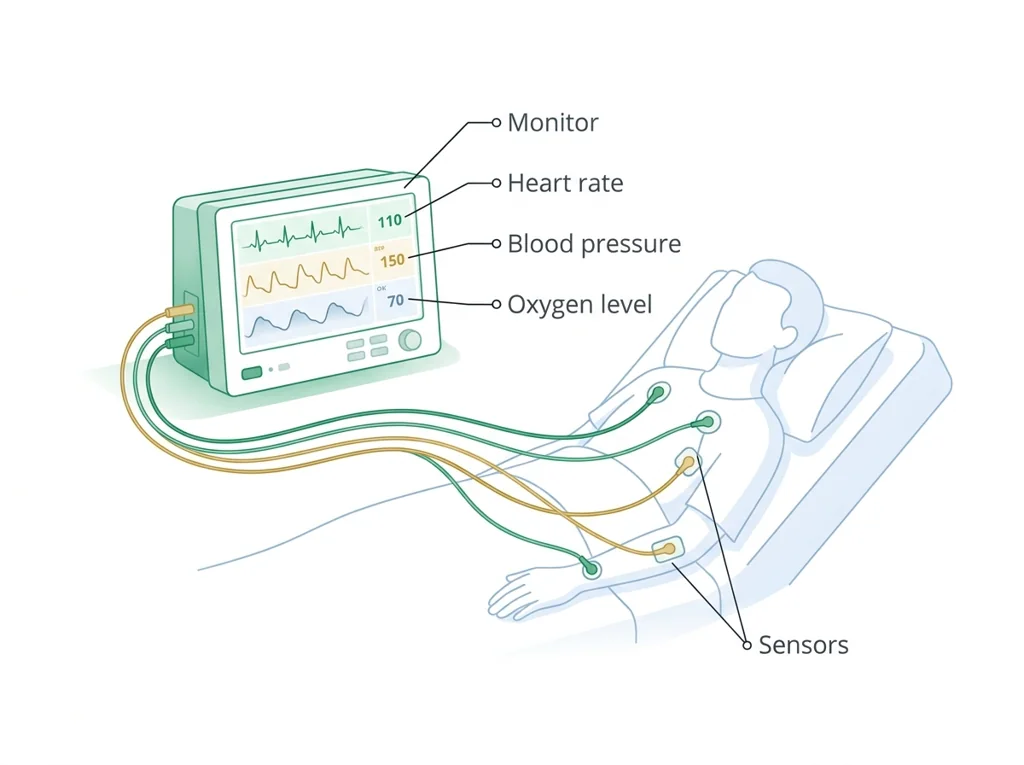
- • monitoring: The ongoing measurement of a patient's vital signs or condition over time to track changes and catch problems early.
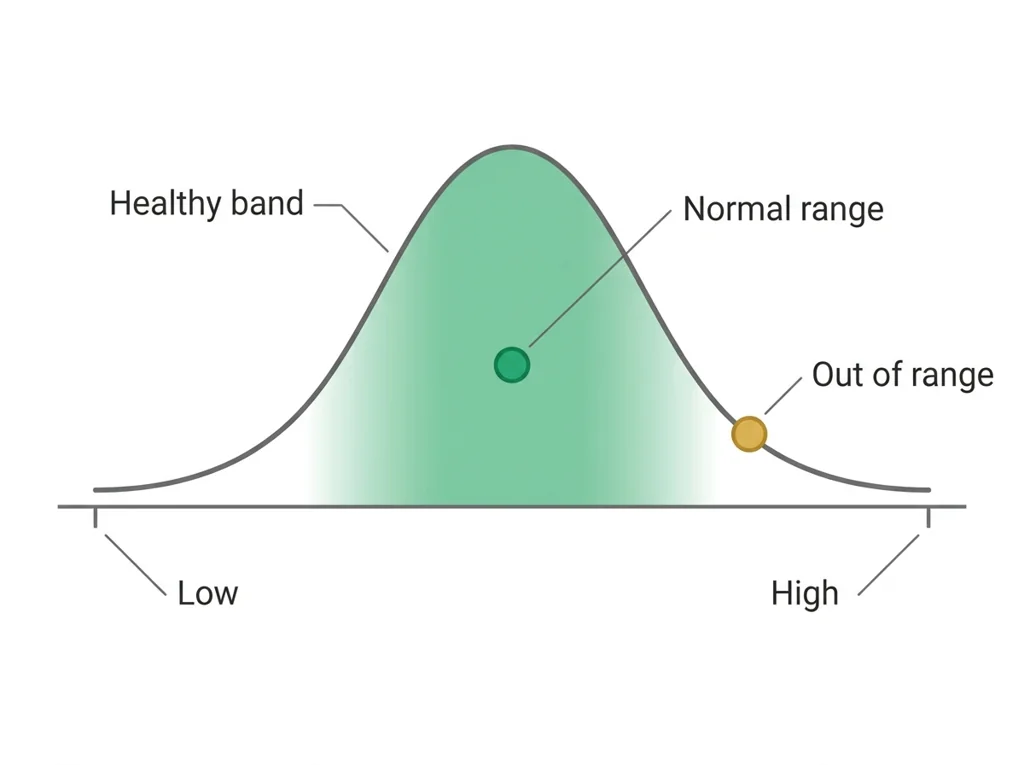
- • : The span of values for a lab test or measurement seen in healthy people, used as a reference to flag results that may signal a problem.
Use it now: Choose one decision option. Cite E1 and E3, then explain how the rule connects the evidence to your choice. This is thinking practice for the one turn-in named under Turn in, not a second submission.
Go further, optional: The source links below are optional enrichment. Every fact required for today's local evidence decision appears in this lesson package.
Routine blood tests come in panels: a complete blood count counts red cells, white cells and platelets and measures and ; a lipid panel measures total, LDL and HDL and triglycerides; a basic metabolic panel measures eight dissolved substances, a sugar, salts and wastes, that together report on fluid balance, and how well the kidneys are working.
Limit: A value outside the range printed on its own report is a reason to recheck and look further, not a diagnosis: diet, activity, medicines, not drinking enough water and other factors can move a result.
A blood value outside the range printed on its report is a signal to recheck and look further; it does not by itself prove a disease.
Limit: A smoke alarm watches one signal. A blood panel reads many values at once, each against its own range in its own unit, and a healthy person can sit just outside a range.
You can name routine blood tests and their normal ranges.
Limit: E3 defines the classroom product or success criterion. It is not independent scientific evidence and cannot justify a clinical or causal claim.
Today's decision · Simulated classroom evidence scenario
Your role: biomedical team member
Decision: Your team must decide what the evidence from today's lesson supports before submitting the exit response named on today's page.
- • Flag the 104 as above the , then repeat the test, because ranges catch disease early.
- • Conclude the classmate has a disease, because 104 sits outside the while 96 stays inside it.
- • Hold the comparison until we know the lab's measurement error for glucose, since 8 mg/dL may sit inside it.
Response: State one choice, cite at least two evidence IDs, explain the rule that connects them, and add one limitation. Use it inside the one turn-in named under Turn in; it is not a separate submission.
Claim ceiling: Today's evidence supports a classroom claim about today's lesson. It cannot prove causation, diagnose a real patient, or justify action outside this room.
Reason for review: Your team must decide what the evidence from today's lesson supports before submitting the exit response named on today's page.
Context: A blood panel is a quantitative snapshot of how the body is working, and comparing a value to its , then watching it over time, is how clinicians catch disease before symptoms appear.
- • T1: Draw and label the parts of blood, then build the blood count table on your Routine Testing day-1 sheet: five rows, with what a low value and a high value can point at.
- • T2: Research your assigned row, then copy in the rows other groups share.
- • T3: Copy the three tables and write, in your own words, which direction counts as better for each one.
- • T4: List the basic metabolic panel substances and the organ or system each one reports on.
- • T5: Look at the simulated practice patient record in Part 2 of this page, pick the marker you will graph next class, and write its unit and adult reference range in your notebook.
- • E1: Routine blood tests come in panels: a complete blood count counts red cells, white cells and platelets and measures and ; a lipid panel measures total, LDL and HDL and triglycerides; a basic metabolic panel measures eight dissolved substances, a sugar, salts and wastes, that together report on fluid balance, and how well the kidneys are working.
- • E2: A blood value outside the range printed on its report is a signal to recheck and look further; it does not by itself prove a disease.
- • E3: You can name routine blood tests and their normal ranges.
Measurements: Use only the measurements, units, graph, or counts supplied in today's task. No additional patient measurement is implied.
Uncertainty: This is a composite classroom scenario. Missing history, measurements, or confirmation tests remain unknown and limit the conclusion.
Difference = 214 minus 200 = 14 mg/dL above the upper limit. Write the value, the unit, the range exactly as the report prints it, and the words above range by 14.
A report lists total at 214 mg/dL with a reference range printed as below 200. How far outside the range is it, and what do you write?
Take the range from the report in front of you, never from memory; different labs print different ranges. A value inside the range gets within range, never a number.
For the marker you pick from the simulated practice patient record in Part 2 of this page, write one value, its unit, the range the record prints, and how far outside the range it sits, or within range.
Students often think a value just outside the means the person definitely has a disease. The trap: Normal ranges are statistical bands built from healthy populations, so a single slightly-high value can come from a recent meal, stress, or lab variation; one out-of-range number is a flag to recheck, not a diagnosis.
- CER:
- Claim, Evidence, Reasoning: make a claim, back it with evidence, explain your reasoning.
- SOP:
- Standard Operating Procedure, the exact steps to follow (especially in a lab).
- Tracker:
- Your PLTW progress log where you record completed evidence.
- myPLTW:
- The PLTW course site where you do the online activities. Find it in Clever with your Microsoft sign-in, right next to Schoology.
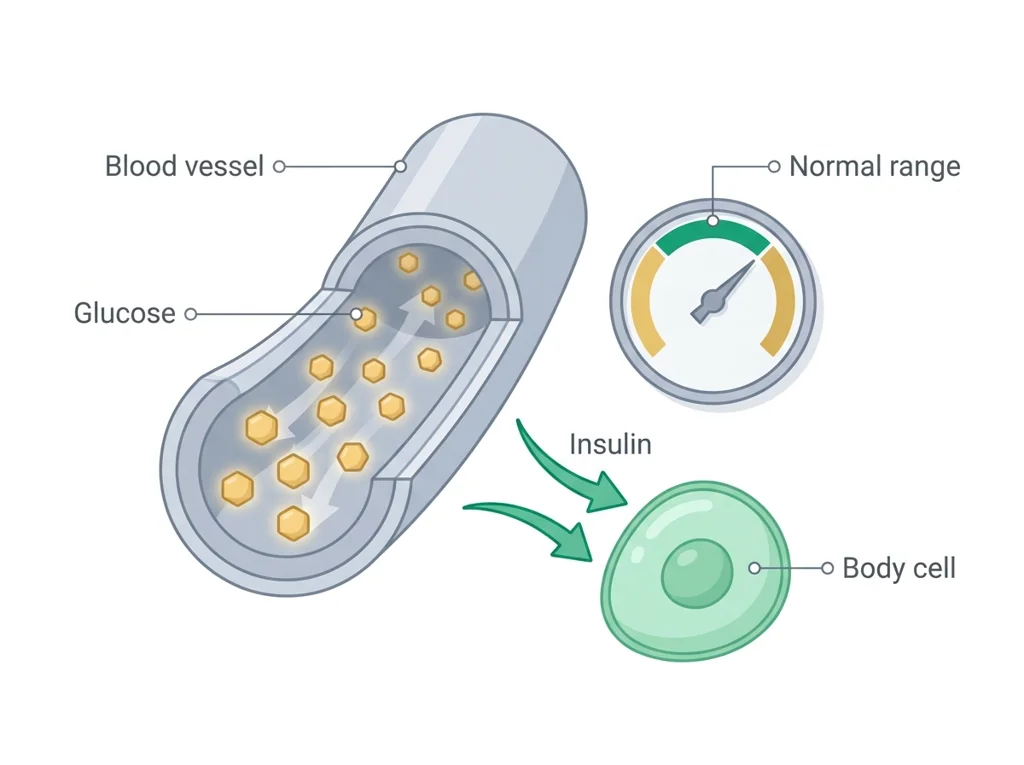
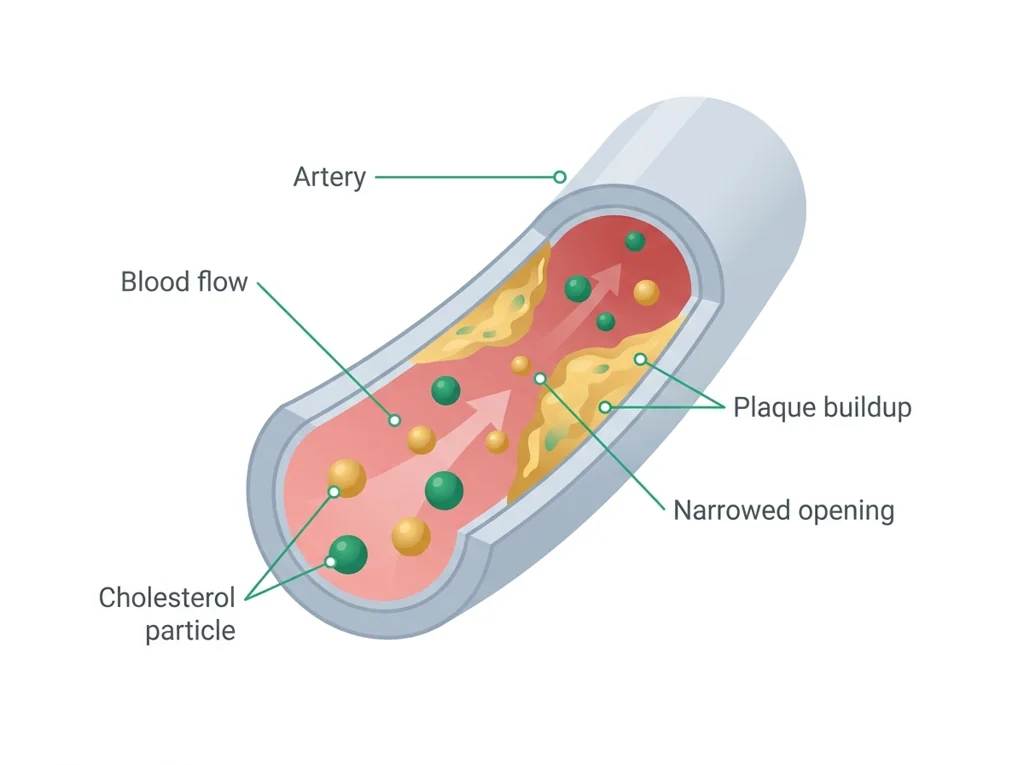
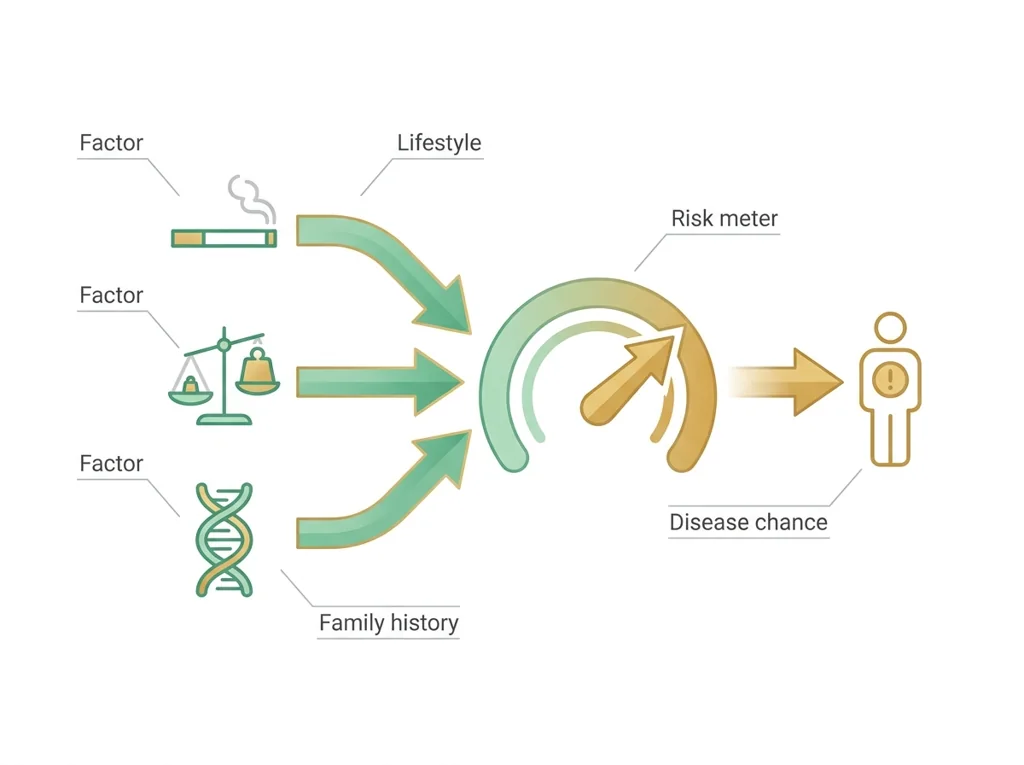
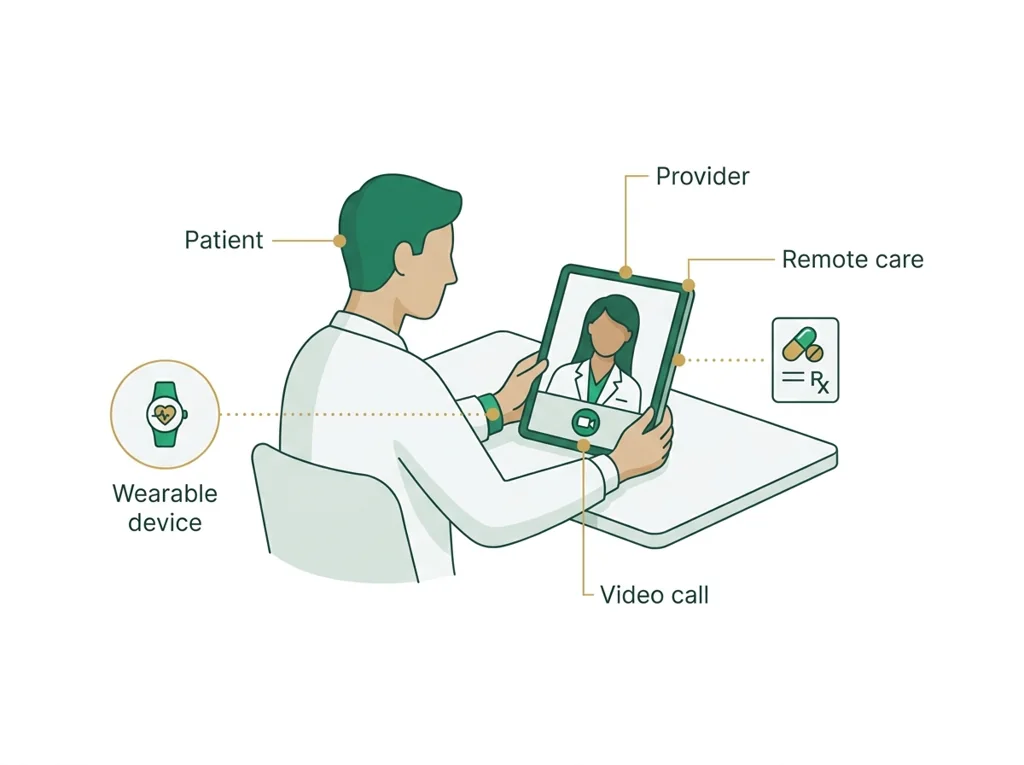
Tap the speaker to hear a term. Add two of these to your notebook glossary with a definition and an example in your own words.
Pick just 2 or 3 words from today and make them yours: write what each one means in your own words, name the context clue or evidence that helped, then give one example from what you actually did in Bloodwork and ranges. Try your own words first; the glossary is there if you get stuck. This is voluntary and counts as extra credit, so keep it short.
Saved on this device. Show Mr. Mendoza or add these to your notebook glossary to claim the extra credit.
Part 2 of 4 · Directions in plain English▸
2.1 Open your materials
Use the materials named in the first step below. Open lesson resources.
Simulated practice patient record (made-up practice data, not a real patient and not anyone in a class case)
Practice patient P-30, an adult woman. Eight fasting blood draws over 30 days. All values in mg/dL.
| Blood draw number | Date | Fasting blood sugar (glucose) | Total cholesterol | HDL (the "good" cholesterol) | LDL (the "bad" cholesterol) |
|---|---|---|---|---|---|
| 1 | Sep 1 | 98 | 214 | 46 | 138 |
| 2 | Sep 5 | 104 | 209 | 45 | 134 |
| 3 | Sep 9 | 101 | 218 | 47 | 141 |
| 4 | Sep 13 | 109 | 212 | 44 | 137 |
| 5 | Sep 17 | 114 | 216 | 46 | 140 |
| 6 | Sep 21 | 112 | 220 | 45 | 144 |
| 7 | Sep 25 | 119 | 215 | 44 | 139 |
| 8 | Sep 30 | 127 | 219 | 46 | 143 |
Adult reference ranges
- Fasting glucose: 70 to 99 normal; 100 to 125 prediabetes range; 126 or higher diabetes range, on repeat testing.
- Total cholesterol: under 200 desirable.
- HDL: 40 or higher for men, 50 or higher for women.
- LDL: under 100 optimal.
2.2 Start the work
Draw and label the parts of blood, then build the blood count table on your Routine Testing day-1 sheet: five rows, with what a low value and a high value can point at.
Show all 5 required steps
- Draw and label the parts of blood, then build the blood count table on your Routine Testing day-1 sheet: five rows, with what a low value and a high value can point at.
- Research your assigned row, then copy in the rows other groups share.
- Copy the three cholesterol tables and write, in your own words, which direction counts as better for each one.
- List the basic metabolic panel substances and the organ or system each one reports on.
- Look at the simulated practice patient record in Part 2 of this page, pick the marker you will graph next class, and write its unit and adult reference range in your notebook.
Lost your place? Interrupted? Check that your blood count table has all five rows (steps 1 and 2) and that the three cholesterol tables each say which direction is better (step 3). Then list the metabolic panel substances (step 4) and note the marker you will graph next class (step 5).
- 0:00Open a real anonymized blood panel result; class reads it together and identifies unknown abbreviations
- 0:12Teacher-led notes: CBC, fasting glucose, panels; normal ranges and clinical significance of each
- 0:30Chronic disease monitoring: how and why diabetes and cardiovascular disease are tracked over time
- 0:42myPLTW: complete the clinical-data online task on routine bloodwork
- 1:02Choose one blood marker to track next class; write the variable name, units, and
- 1:10Finish the one-page table sheet and submit it before leaving
- • Your doctor orders a blood test and three days later you get a portal notification full of numbers, abbreviations, and ranges. What does it all mean?
- • Today we decode routine bloodwork. CBC, glucose, , and what each tells a clinician about what is happening inside the body.
- • We are also talking about chronic disease monitoring, which is different from a one-time checkup. Diabetes management, for example, tracks over years. A single reading means almost nothing; the trend is everything.
- • Next class you graph the simulated practice patient record in Part 2 of this page. Today you learn what the numbers mean.
PLTW connection and today's work
In myPLTW, open Lesson 2.1 Talk to Your Doc and go to Activity 2.1.4 Routine Testing: In the Lab. Work the CBC, glucose, and cholesterol part today.
Today's stopping point: By the end of today your one-page table sheet should be finished and submitted, and your marker for next class chosen.
PLTW activity titles identify the course connection. If your account will not open, use the posted materials for today and tell Mr. Mendoza. Do not mark an online activity complete unless you completed it.
Course connection
- Activity 2.1.4 Routine Testing: In the Lab
Use the turn-in directions in Part 4 of this page. Do not create a second submission unless your teacher asks for one.
Show another explanation or a smaller first step
Need help? Choose a starting point
Part 3 of 4 · Worked example▸
This is a parallel case, not your own. Read it for the order of the work, then do your own in Part 4.
Parallel example, worked on tests that are NOT on your sheet. Your five blood count rows, your three cholesterol tables and your metabolic panel list are yours to build; none of them appear here.
- Row format, done for ALT (alanine transaminase), a liver enzyme from a liver test, not the blood count. What it reports on: mainly the liver. What a high value can point at: possible liver injury or disease. What a low value can point at: low values are uncommon; MedlinePlus lists vitamin B6 deficiency or long-term kidney disease as possibilities.
- Direction format, done for triglycerides, a fat some lipid reports list beside the cholesterol values (not one of your three tables). Better direction: lower, because high triglycerides may raise the risk of heart disease.
- Range format, done on the made-up practice patient record in Part 2 of the day page (not a real patient). Draw 1 total cholesterol is 214 mg/dL, and the record prints under 200 as desirable, so the value sits above the range by 14. That is a flag to recheck and to follow over time, not a diagnosis.
Each line names what is measured, the body system it reports on, and which direction is a flag, so a reader knows what the number means. Sources: MedlinePlus ALT Blood Test and Cholesterol Levels pages.
| Test (not on your sheet) | What it measures | What a high or low value may mean |
|---|---|---|
| ALT, from a liver test | an enzyme found mainly in the liver | high may point at liver injury or disease |
| Triglycerides, on some lipid reports | a type of fat in the blood | high may raise heart disease risk; lower is the better direction |
This model shows the level of evidence and organization needed to complete: One page from the Routine Testing day-1 sheet: the five-row blood count table, the three cholesterol tables with the better direction of each in your own words, the basic metabolic panel substances each paired with the organ or system it reports on, and two closing sentences.
- Name the prompt or task.
- Answer it directly with the key evidence.
- Check that the response matches the requested format.
Keep the structure. Replace the question, facts, measurements, and evidence. Then recheck units, vocabulary, and whether the conclusion goes beyond the evidence.
Also due today: Submit this page as one PDF to Schoology assignment for this lesson in Schoology before you leave.
A smoke alarm detects signs of fire but can also react to burnt toast.
- What does the alarm detect?
- What creates a false alarm?
- What evidence is needed before declaring a fire?
A blood value outside the range printed on its report is a signal to recheck and look further; it does not by itself prove a disease.
A smoke alarm watches one signal. A blood panel reads many values at once, each against its own range in its own unit, and a healthy person can sit just outside a range.
- • The alarm going off maps to a value printed outside its reference range.
- • Burnt toast maps to a harmless cause, such as eating before a fasting glucose or lipid panel.
- • Checking the kitchen maps to a repeat test or a follow-up test before anyone names a disease.
Part 4 of 4 · Your work▸
Check your work before submitting
- I can name routine blood tests and their normal ranges.
- I can explain how monitoring tracks chronic disease.
4.1 Turn in your work
DueCheck the Schoology assignment for this day- Hand in
- One page from your Routine Testing day-1 sheet: the blood count table with all five rows, the three cholesterol tables with the better direction of each in your own words, the metabolic panel substances each paired with the organ it reports on, and two closing sentences, the most useful thing you learned and one thing you are still unsure about.
How to submit and name your file
Submit this page as one PDF to the Schoology assignment for this lesson in Schoology before you leave.
In Schoology, open your course and the assignment for this lesson. Attach your file, select Submit, and check that it appears in the submission.
PDF upload helpYou get two school days for every day you were absent, so this deadline moves with you.
- CompleteEvery required part of the artifact is present, nothing left blank.
- AccurateThe science and the data are correct and match the evidence.
- Scientific reasoningYou explain your claim with evidence and reasoning (CER), not just an answer.
- Professional communicationClear, organized, labeled, and written the way a clinician or scientist would.
- SubmittedGo to Schoology to turn this in. Submit one PDF. Schoology attaches your name to your upload; on the page itself, write your period and code. Name the file: FirstName LastName - Assignment Title - YYYY-MM-DD.pdf. If you cannot get in, see Mr. Mendoza. Do not skip the work.
How this lesson connects
Keep using what you learned last class: One vital-sign reading is only a snapshot of homeostasis, so it cannot separate a transient response from a chronic condition, which is why clinicians rely on repeated measurements to reveal a real trend. Today: A blood panel measures organ function as numbers, so comparing each value to its normal range and tracking it over repeated tests lets a clinician catch disease that a single reading or a physical exam would miss.
Practice: try a question, then check your answer▸
Claim ceiling for this check: Today's evidence supports a classroom claim about today's lesson. It cannot prove causation, diagnose a real patient, or justify action outside this room.
A patient's fasting glucose is 112 mg/dL. Is that inside the normal range, and what would you want before calling it a problem?
Write an answer and pick a confidence to unlock the key.
Fast retrieval with instant answers, not the commit-then-reveal check above. Try each from memory first: write what you remember about the earlier units, then check yourself here.
Missed class or ready for more?▸
Before the bloodwork data lab next class: know the unit and adult reference range for the marker you chose from the simulated practice patient record in Part 2 of this page. Review how to build a line graph with time on the x-axis and the marker value on the y-axis. Bring your lab notebook.
What today's skills lead to. These are real health-science careers this course builds toward. Tap one to see, on the US Department of Labor's O*NET site, what the job actually involves, what it pays, and how fast it is growing.
Today is individual work you can do from home: complete the same target above, then submit your Exit ticket.
Go to Schoology to turn this in. Submit one PDF. Schoology attaches your name to your upload; on the page itself, write your period and code. Name the file: FirstName LastName - Assignment Title - YYYY-MM-DD.pdf. If you cannot get in, see Mr. Mendoza. Do not skip the work.
Class still runs. Complete today's work as this page describes (it is self-guided). Need the concept taught without a teacher? Use this authoritative explainer:
MedlinePlus: Laboratory TestsSources: slides, readings, and resources▸
The deck carries the prior idea forward, lets you inspect an analogy, maps the rule to biology, and ends with the same evidence decision and exit ticket used on this page.
Hand-picked readings and interactives for this lesson, from authoritative open organizations and PLTW's own public course outline.
This week
My Progress dashboard