
Analyze the mutation
This page has four parts, in the order you use them. Part 1 is what you need to know. Part 2 says what to do, in plain English. Part 3 shows the work done once on a case that is not yours. Part 4 is your own work and where to turn it in.
Open your materials, follow the steps, then turn in your work.
Interpret your mutation model with a CER and evaluate the model's limitations.
Check you have the right sheet: the top of it prints today's portal day, Analyze the mutation. The PLTW activity itself is in myPLTW and is not posted here.
Optional: listen or watch a unit review▸
Part 1 of 4 · Background and definitions▸
💡 Big idea: A 's clinical severity is set by where it falls and how it changes the amino acid's chemistry, so identical-size changes can produce anything from no effect to a broken .
- • Two variables that determine severity are the position of the changed amino acid in the (active site vs. structural region) and whether the new amino acid has different chemical properties (polar vs. nonpolar, charged vs. uncharged).
- • A introduces a premature stop codon, producing a truncated (shortened) that is usually nonfunctional; this often has severe clinical consequences.
- • A paper or virtual model of cannot represent the three-dimensional folding of the actual , which means the model can show the amino acid sequence but not the functional impact of that sequence change.
Is super hearing, as offered by the Clarity Implant, a net positive for humanity?
A 's clinical severity is set by where it falls and how it changes the amino acid's chemistry, so identical-size changes can produce anything from no effect to a broken .
Driving question: Looking at your own before-and-after amino acid sequences, how severe is your , and what evidence in the tells you so?
New idea: A 's clinical severity is set by where it falls and how it changes the amino acid's chemistry, so identical-size changes can produce anything from no effect to a broken .
Visual or model: No figure is attached to this lesson. The readings, the worked example and E1 to E3 carry the evidence.
- Observe or measure the relevant feature in analyze the .
- Organize the observation with a stable evidence ID.
- Apply this rule: Stored information can be copied, read, and converted into a functional product.
- Choose the option the evidence supports and state the limit of the conclusion.
Real biomedical example: Looking at your own before-and-after amino acid sequences, how severe is your , and what evidence in the tells you so?
What the evidence supports: E1 to E3 support the daily take-home when the response meets the stated success criteria.
What it cannot prove: The package does not support claims beyond this lesson's or any real patient diagnosis.
- • : The molecule that stores genetic instructions in a twisted double helix, with paired bases that spell out the code for building an organism.
- • : A tightly coiled package of wrapped around proteins that carries genes; humans normally have 46 of them, arranged in 23 pairs.
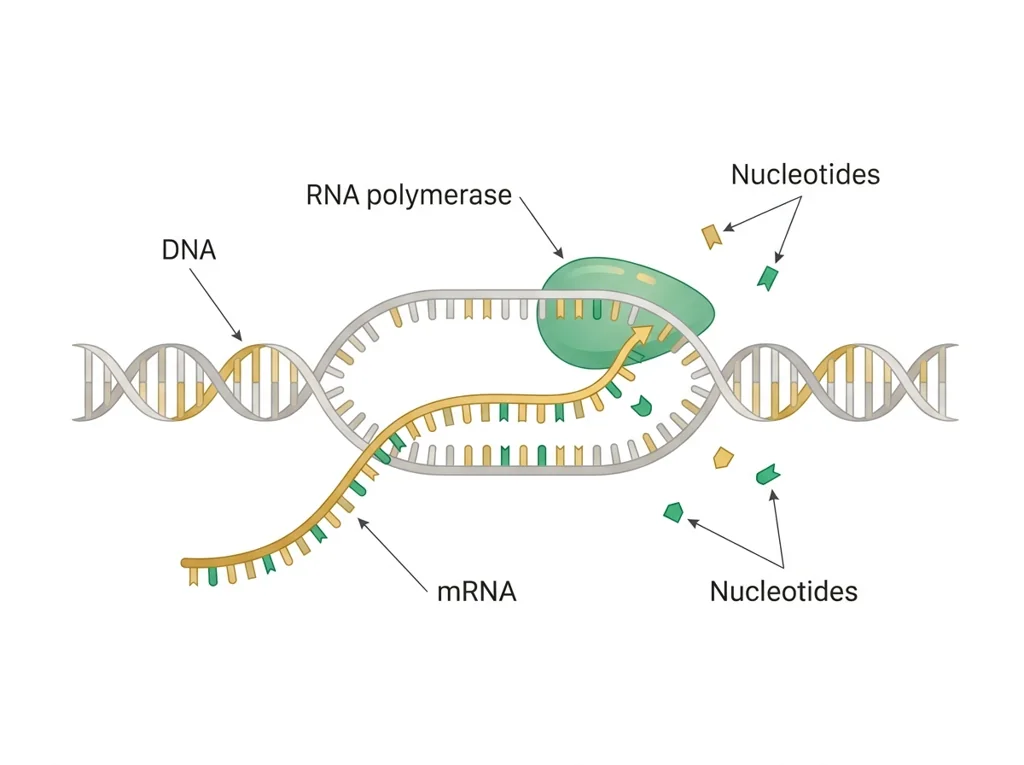
- • gene: A stretch of that codes for a product (usually a ) and carries an instruction for the cell.
- • : One of the alternative versions of a gene found at the same spot on a , like the A, B, and O versions of the blood-group gene.
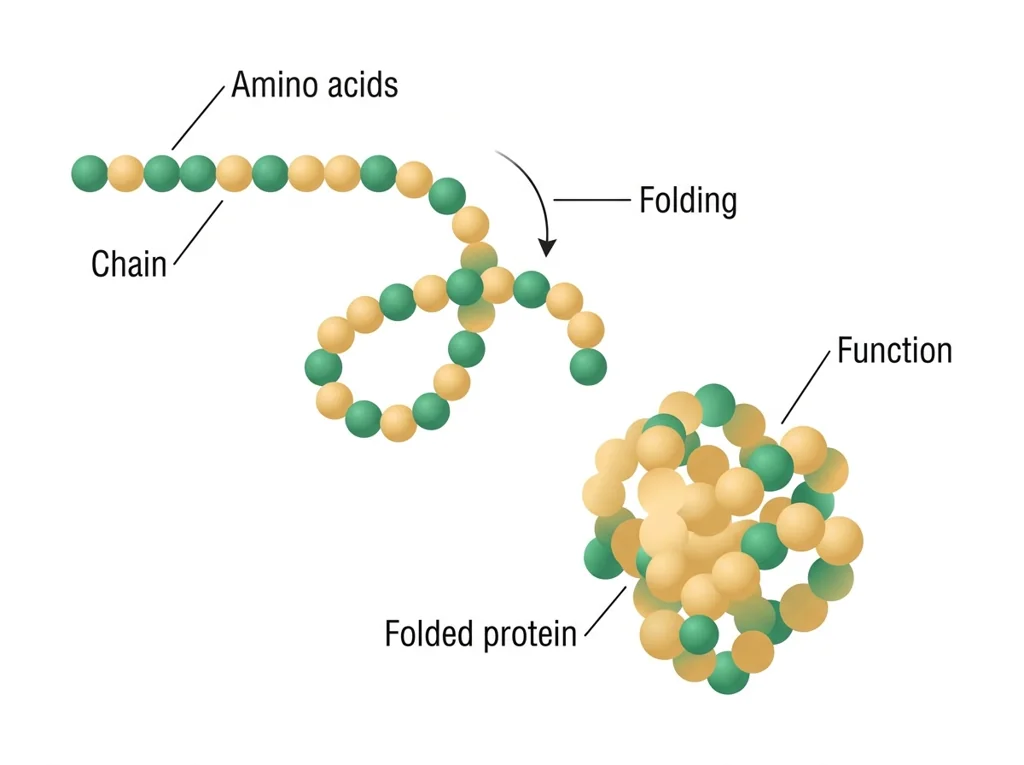
- • : A folded chain of amino acids that a gene's instructions are used to build, serving as the cell's machines and structural building blocks.
- • : The first step of making a : copying a gene into messenger RNA.
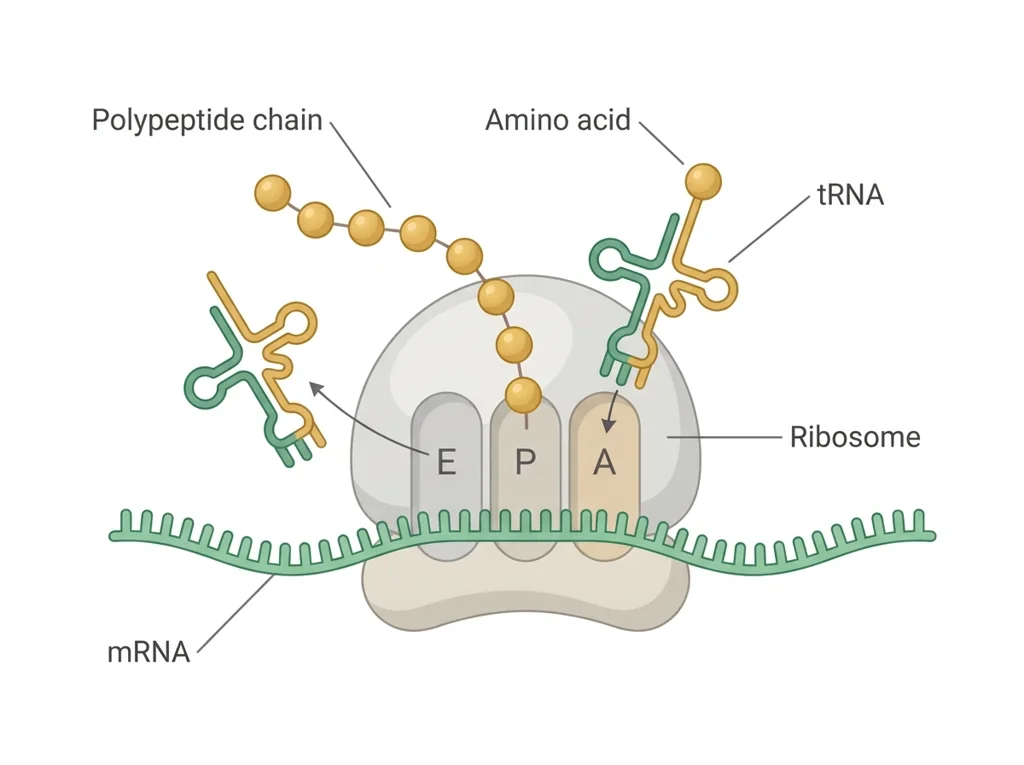
- • : The second step of making a : the ribosome reads the mRNA and builds a chain of amino acids.
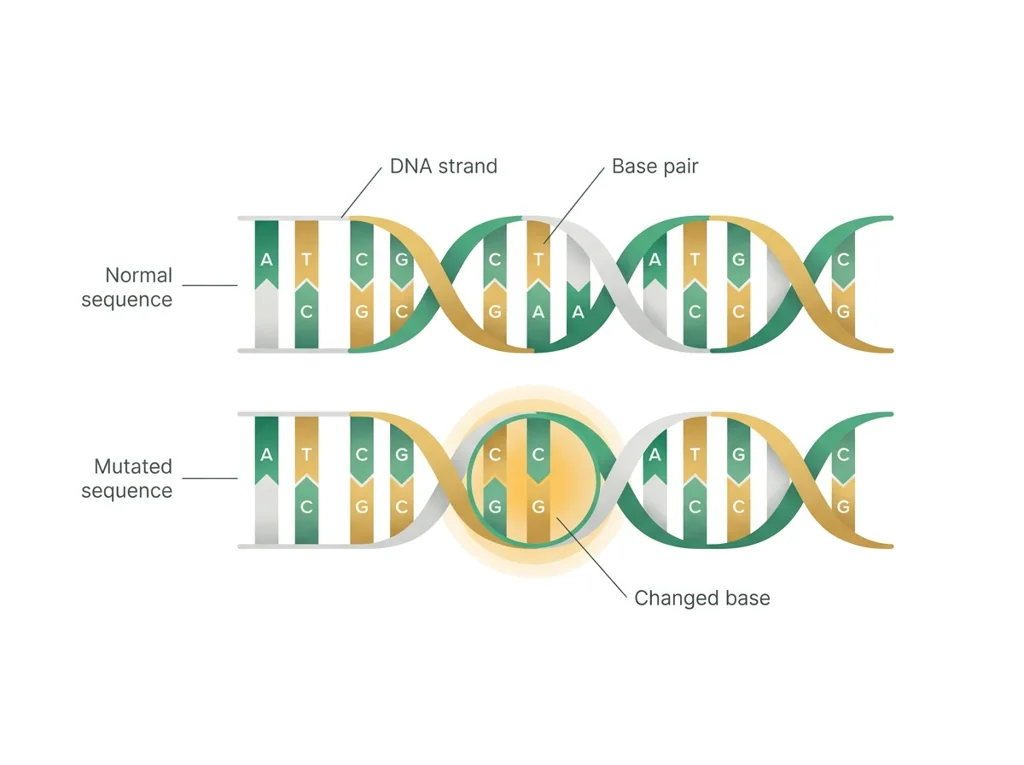
- • : A change in the ; some change a enough to cause disease, many do not.
Use it now: Choose one decision option. Cite E1 and E3, then explain how the rule connects the evidence to your choice. This is thinking practice for the one turn-in named under Turn in, not a second submission.
Go further, optional: The source links below are optional enrichment. Every fact required for today's local evidence decision appears in this lesson package.
Genetic evidence can support an inheritance, , sequence, or expression explanation, but penetrance, regulation, environment, family structure, and test uncertainty can limit the conclusion.
Limit: A classroom , , pedigree, or molecular model does not establish a real person's diagnosis, prognosis, identity, or reproductive outcome.
Stored information can be copied, read, and converted into a functional product.
Limit: Genes are regulated biological sequences, not conscious instructions, and one gene rarely determines a whole trait alone.
You can interpret how a changes a .
Limit: E3 defines the classroom product or success criterion. It is not independent scientific evidence and cannot justify a clinical or causal claim.
Today's decision · Simulated classroom evidence scenario
Your role: biomedical team member
Decision: Your team must decide what the evidence from analyze the supports before submitting the claim-evidence-reasoning response named on today's page.
- • Rank your as severe, because every mutation harms the and a bigger change means a worse disease.
- • Hold the severity call until we learn whether people carrying this same change actually developed symptoms, since some never do.
- • Judge severity by where the change lands and how the amino acid's chemistry shifts, not by the change's size.
Response: State one choice, cite at least two evidence IDs, explain the rule that connects them, and add one limitation. Use it inside the one turn-in named under Turn in; it is not a separate submission.
Claim ceiling: Today's evidence supports a classroom claim about analyze the . It cannot prove causation, diagnose a real patient, or justify action outside this room.
Reason for review: Your team must decide what the evidence from analyze the supports before submitting the claim-evidence-reasoning response named on today's page.
Context: A 's harm depends on where it lands and what it changes, so location and chemistry, not the mere fact of a mutation, decide how sick a person gets.
- • T1: Compare the original and mutated amino acid sequences from your three runs, then read the practice sequencing report in Part 2 of this page the way your day-2 sheet describes.
- • T2: Write a CER: how does this affect the resulting ?
- • T3: Relate the change to a possible diagnosis.
- • T4: Identify two variables that determine a 's severity.
- • T5: State one limitation of a paper or virtual model of .
- • E1: Genetic evidence can support an inheritance, , sequence, or expression explanation, but penetrance, regulation, environment, family structure, and test uncertainty can limit the conclusion.
- • E2: Stored information can be copied, read, and converted into a functional product.
- • E3: You can interpret how a changes a .
Measurements: No patient measurement is supplied unless it appears explicitly in E1-E3. Do not invent a value.
Uncertainty: This is a composite classroom scenario. Missing history, measurements, or confirmation tests remain unknown and limit the conclusion.
Students often think every is bad, and a bigger-looking change must be a worse disease. The trap: thinking all mutations harm equally. A silent can change nothing, while a mutation can be catastrophic. Severity comes from position (active site vs. structural region) and chemistry (polar vs. nonpolar), not from the fact that a base changed.
- CER:
- Claim, Evidence, Reasoning: make a claim, back it with evidence, explain your reasoning.
- SOP:
- Standard Operating Procedure, the exact steps to follow (especially in a lab).
- Tracker:
- Your PLTW progress log where you record completed evidence.
- myPLTW:
- The PLTW course site where you do the online activities. Find it in Clever with your Microsoft sign-in, right next to Schoology.
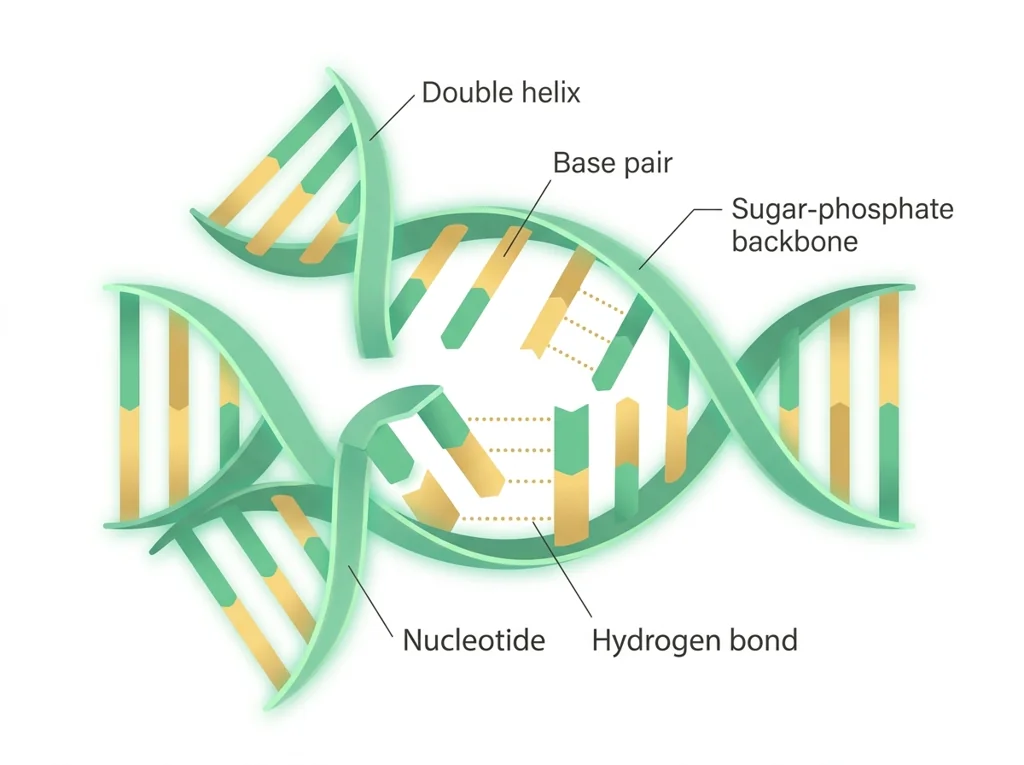
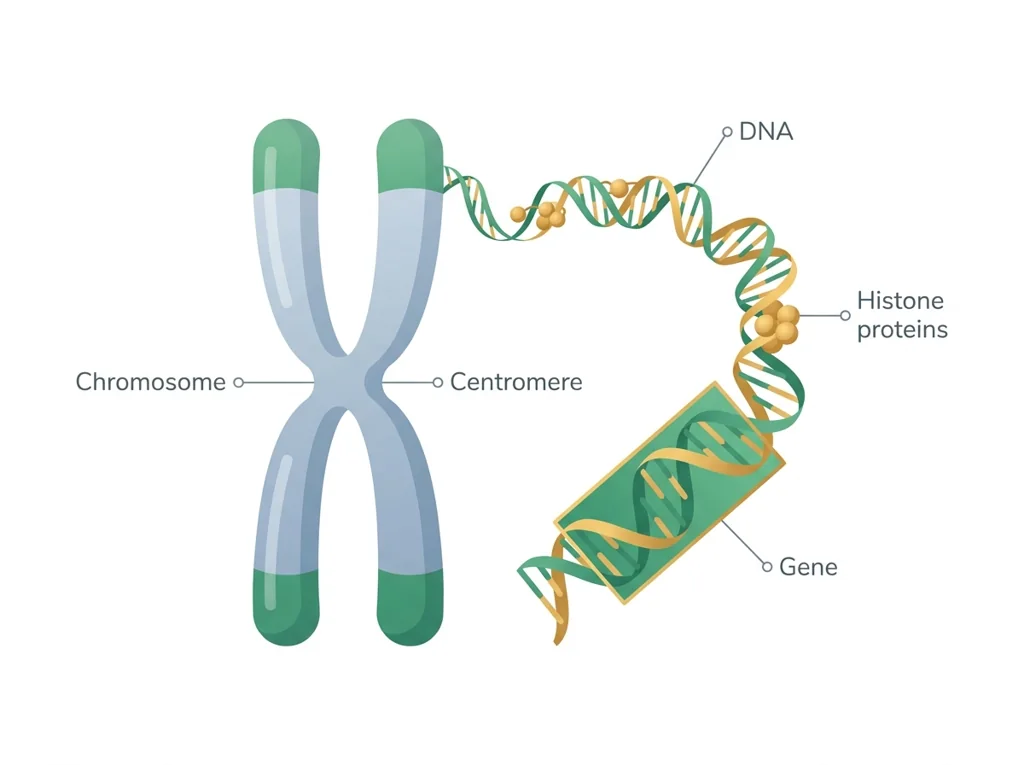
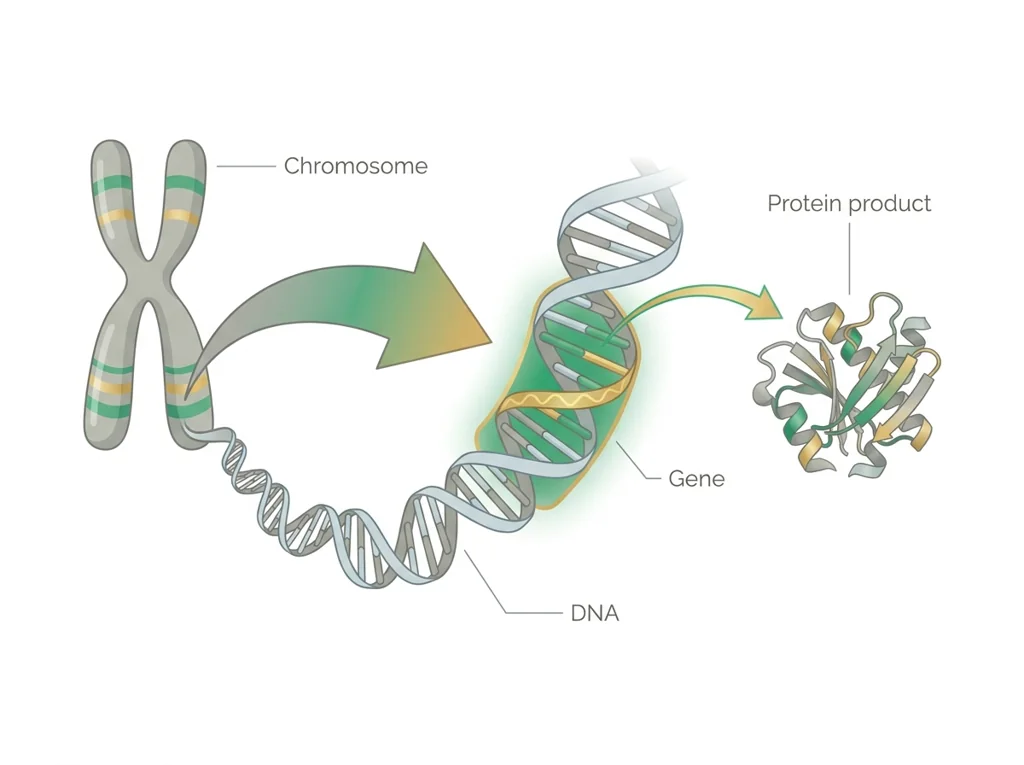
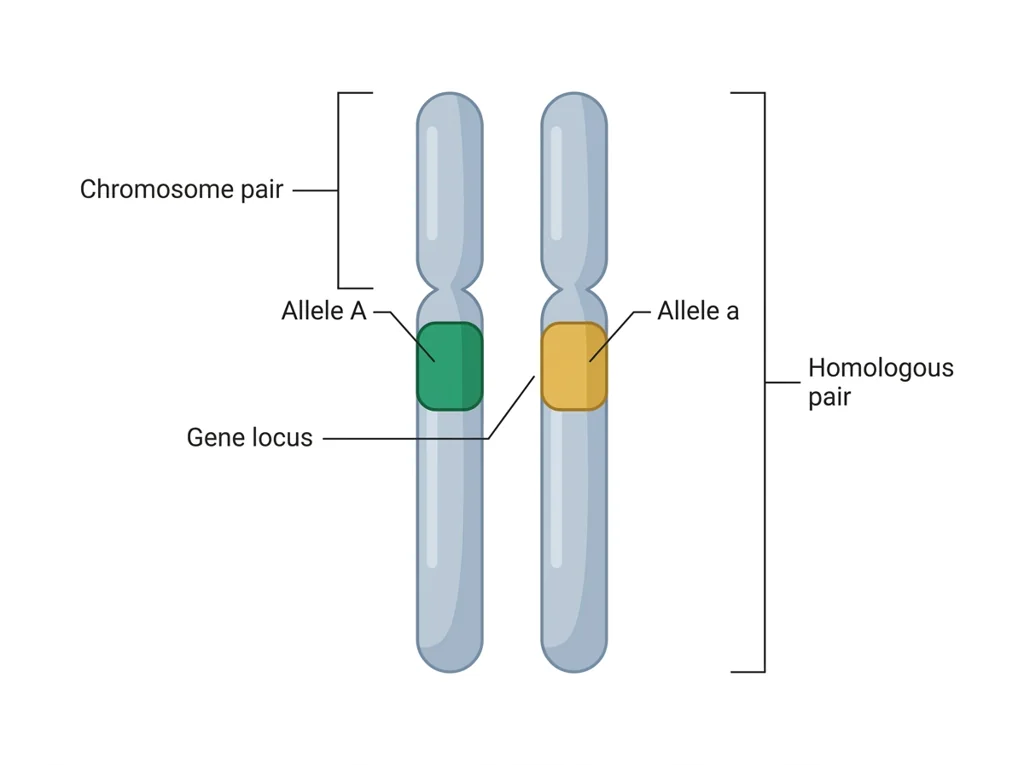
Tap the speaker to hear a term. Add two of these to your notebook glossary with a definition and an example in your own words.
Pick just 2 or 3 words from today and make them yours: write what each one means in your own words, name the context clue or evidence that helped, then give one example from what you actually did in Analyze the mutation. Try your own words first; the glossary is there if you get stuck. This is voluntary and counts as extra credit, so keep it short.
Saved on this device. Show Mr. Mendoza or add these to your notebook glossary to claim the extra credit.
Part 2 of 4 · Directions in plain English▸
2.1 Open your materials
Practice sequencing report (made up for practice, not your patient's report and not a real person)
What was tested
- Test ordered: sequencing of practice gene PG-7, a made-up gene used only for practice.
- Sample: practice patient P-22, blood sample. Compared against the reference (normal) sequence of PG-7.
Sequences compared: the coding strand, 5' to 3', grouped in codons from the start codon
| Whose sequence | Codons 1 to 8 |
|---|---|
| Reference (normal) | ATG GCT TGG AAA CGC GAG TTC TAA |
| Practice patient P-22 | ATG GCT TGG AAA TGC GAG TTC TAA |
- The coding strand reads the same as the mRNA, with T wherever the mRNA has U.
What the laboratory reports
- Result: one variant found; base 13 changed from C to T.
- Laboratory interpretation: the variant is expected to change the protein and reduce how well it works. This is the laboratory's conclusion, not raw data.
- Recommendation: genetic counseling for the patient and family.
2.2 Start the work
Compare the original and mutated amino acid sequences from your three runs, then read the practice sequencing report in Part 2 of this page the way your day-2 sheet describes.
Show all 5 required steps
- Compare the original and mutated amino acid sequences from your three runs, then read the practice sequencing report in Part 2 of this page the way your day-2 sheet describes.
- Write a CER: how does this mutation affect the resulting protein?
- Relate the protein change to a possible diagnosis.
- Identify two variables that determine a mutation's severity.
- State one limitation of a paper or virtual model of translation.
Lost your place? You should have (1) the original and mutated sequences compared and (2) a CER on the protein effect. Finish those, tie the change to a possible diagnosis, then list two severity variables and one model limitation.
- 0:00Return your modeling notebook entries; run the three mutations from the day-2 sheet, then compare original and mutated sequences as a class (anonymized)
- 0:10Classify each group's (silent, , ) and discuss severity expectations
- 0:22Research: find one real genetic condition caused by a or similar to yours (MedlinePlus Genetics conditions, linked in the readings)
- 0:38CER writing: claim about how the affects the , evidence from sequence comparison, reasoning from amino acid property change and disease connection
- 0:58List two variables that determine severity; state one limitation of a paper model
- 1:10Pair-share CERs; preview the final submission
- • Today you introduce the mutations, three runs on your day-2 sheet (a substitution, an , a deletion), and then ask: so what? Does the new sequence produce a that still works, works differently, or does not work at all?
- • The answer depends on two things: which amino acid changed, and where in the that amino acid does its job. An amino acid buried deep in the core of a protein and one sitting in the active site are not equally important.
- • You will write a CER today that connects your to a possible diagnosis. This is the payoff of the whole central dogma unit: a change in , traced all the way through RNA and , producing a disease.
- • We will also be honest about what the model cannot show. Paper models are 2D. Real proteins fold into complex 3D shapes. The model is useful but limited.
PLTW connection and today's work
In myPLTW, go back to Activity 2.2.2 A Protein Problem in Lesson 2.2 Decoding a Diagnosis and finish it.
Today's stopping point: You modeled the correct process on Thu, Oct 22; the mutation runs are today. By the end of today your CER and the mutation severity analysis should both be done.
PLTW activity titles identify the course connection. If your account will not open, use the posted materials for today and tell Mr. Mendoza. Do not mark an online activity complete unless you completed it.
Use the turn-in directions in Part 4 of this page. Do not create a second submission unless your teacher asks for one.
Show another explanation or a smaller first step
Need help? Choose a starting point
Part 3 of 4 · Worked example▸
This is a parallel case, not your own. Read it for the order of the work, then do your own in Part 4.
Parallel case, not your mutation: the best-known single-base change in a human gene, in the beta chain of hemoglobin.
Claim: One substitution at the sixth codon of the beta-globin gene changes the protein enough to cause a disease, because of where the change lands and how the amino acid's chemistry shifts.
Evidence: The codon GAG becomes GTG, one base swapped. GAG codes for glutamate, a charged amino acid; GTG codes for valine, a nonpolar one. The chain still has the same length and the same fold, but position 6 sits on the protein's surface, and the nonpolar patch makes deoxygenated hemoglobin molecules stick to each other in long fibers.
Reasoning: A missense change matters when the new amino acid has different chemistry and sits where the protein touches something else; this one meets both tests, so a single letter changes the shape of a red blood cell. A silent change at the same codon (GAA, still glutamate) would do nothing.
Limitation: A paper or kit model shows the codon and the amino acid change but not the surface position or the fiber-forming behavior, so the model can predict the type of change and only suggest its severity.
This model shows the level of evidence and organization needed to complete: A claim-evidence-reasoning paragraph on a parallel case: one base substitution in the gene for a blood protein, traced through the codon change to the amino acid change and to what that does to the protein, with a stated limitation. It models the position-and-chemistry reasoning without answering today's own mutation prompt.
- Write one defensible claim.
- Choose specific evidence that supports the claim.
- Explain the scientific rule that connects the evidence to the claim.
Keep the structure. Replace the question, facts, measurements, and evidence. Then recheck units, vocabulary, and whether the conclusion goes beyond the evidence.
Also due today: Submit your CER as one PDF to Schoology assignment for this lesson in Schoology by the end of class.
A library keeps a master plan protected while working copies guide production at different stations.
- Why protect the master copy?
- What information moves?
- Where can an error change the final product?
Stored information can be copied, read, and converted into a functional product.
Genes are regulated biological sequences, not conscious instructions, and one gene rarely determines a whole trait alone.
- • Master plan maps to .
- • Working copy maps to RNA.
- • Production output maps to or a regulated cell function.
Part 4 of 4 · Your work▸
Check your work before submitting
- I can interpret how a mutation changes a protein.
- I can connect a protein change to a diagnosis.
4.1 Turn in your work
DueCheck the Schoology assignment for this day- Hand in
- CER arguing how the point mutation affects the resulting protein, using your sequence comparison from today's mutation runs as evidence and connecting the protein change to a possible diagnosis in the reasoning.
How to submit and name your file
Submit your CER as one PDF to the Schoology assignment for this lesson in Schoology by the end of class.
In Schoology, open your course and the assignment for this lesson. Attach your file, select Submit, and check that it appears in the submission.
PDF upload helpYou get two school days for every day you were absent, so this deadline moves with you.
Today's lesson is in Schoology
Each school day has one lesson page in Schoology that holds everything for the day: the goal, the story so far, every table and data value, the numbered steps, and what to turn in. Open it first and work from it. The other rows for this day, if any, are the score line for a paper quiz or test and the John Carroll debate item; they do not add work. Check Schoology for each deadline.
- Today's Lesson · Tue 10/27 · Wk10 · Plan the first visit, then build your proposal(today's lesson page: the goal, the data, the steps, and what to turn in are all on it)
Link will not open? Open Schoology, choose your course and section, and find the title shown above.
- CompleteEvery required part of the artifact is present, nothing left blank.
- AccurateThe science and the data are correct and match the evidence.
- Scientific reasoningYou explain your claim with evidence and reasoning (CER), not just an answer.
- Professional communicationClear, organized, labeled, and written the way a clinician or scientist would.
- SubmittedGo to Schoology to turn this in. Submit one PDF. Schoology attaches your name to your upload; on the page itself, write your period and code. Name the file: FirstName LastName - Assignment Title - YYYY-MM-DD.pdf. If you cannot get in, see Mr. Mendoza. Do not skip the work.
How this lesson connects
Keep using what you learned last class: Is super hearing, as offered by the Clarity Implant, a net positive for humanity? Today: A mutation's clinical severity is set by where it falls and how it changes the amino acid's chemistry, so identical-size changes can produce anything from no effect to a broken protein.
Practice: try a question, then check your answer▸
Claim ceiling for this check: Today's evidence supports a classroom claim about analyze the . It cannot prove causation, diagnose a real patient, or justify action outside this room.
A point mutation changes a codon from GAA to UAA partway through a gene. What kind of mutation is this, and why would it likely be severe?
Write an answer and pick a confidence to unlock the key.
Fast retrieval with instant answers, not the commit-then-reveal check above. Try each from memory first: write what you remember about the earlier units, then check yourself here.
Missed class or ready for more?▸
What today's skills lead to. These are real health-science careers this course builds toward. Tap one to see, on the US Department of Labor's O*NET site, what the job actually involves, what it pays, and how fast it is growing.
Today is individual work you can do from home: complete the same target above, then submit your CER.
Go to Schoology to turn this in. Submit one PDF. Schoology attaches your name to your upload; on the page itself, write your period and code. Name the file: FirstName LastName - Assignment Title - YYYY-MM-DD.pdf. If you cannot get in, see Mr. Mendoza. Do not skip the work.
Class still runs. Complete today's work as this page describes (it is self-guided). Need the concept taught without a teacher? Use this authoritative explainer:
Learn.Genetics (University of Utah): DNA to proteinSources: slides, readings, and resources▸
The deck carries the prior idea forward, lets you inspect an analogy, maps the rule to biology, and ends with the same evidence decision and exit ticket used on this page.
Hand-picked readings and interactives for this lesson, from authoritative open organizations and PLTW's own public course outline.
This week
My Progress dashboard