
Auditory anatomy, audiograms, cochlear implants, immune response, vaccine design, herd immunity.
Your PLTW coursework: Medical Interventions ▸ Unit 1: How to Fight Infection ▸ Lesson 1.3 The Aftermath: Hearing Loss / Lesson 1.4 Vaccination ▸ "Activity 1.3.3 Cochlear Implants"
What to do if absent- CER:
- Claim, Evidence, Reasoning: make a claim, back it with evidence, explain your reasoning.
- SOP:
- Standard Operating Procedure, the exact steps to follow (especially in a lab).
- Tracker:
- Your PLTW progress log where you record completed evidence.
- myPLTW:
- The PLTW course site where you do the online activities. Find it in Clever with your Microsoft sign-in, right next to Schoology.
Read an and connect to design and to complete Unit 1 evidence.
- 1Label a diagram of the ear, marking the and hair cells.
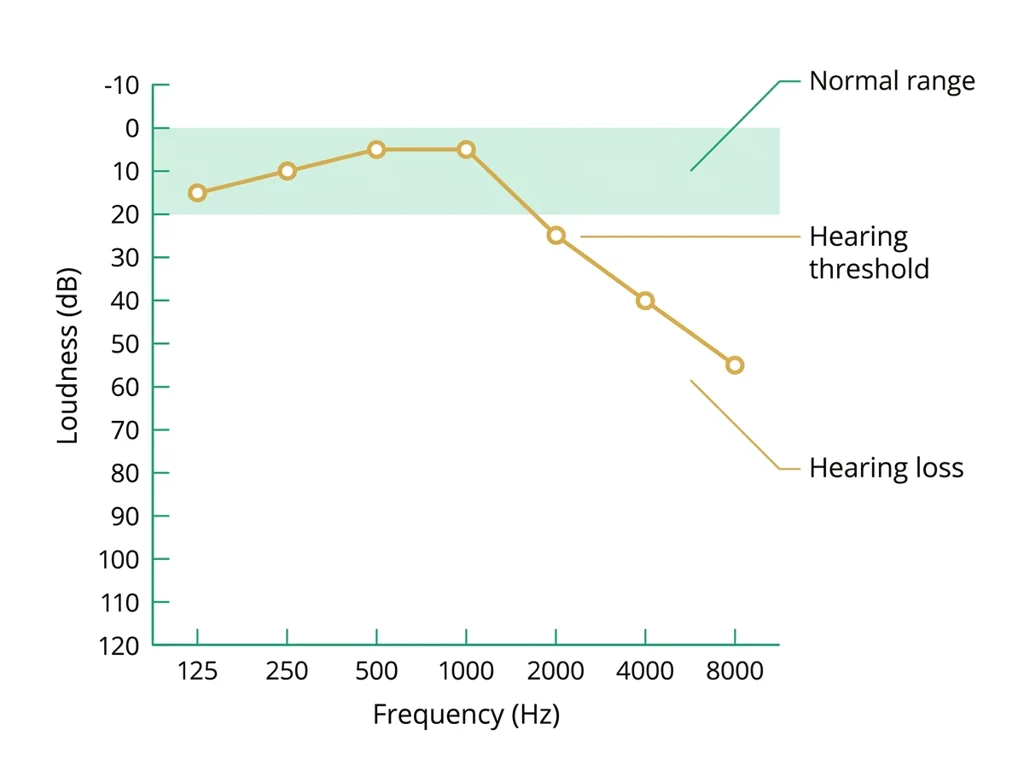
- 2Read a sample and identify the frequencies where hearing loss appears.
- 3Diagram a basic , labeling .
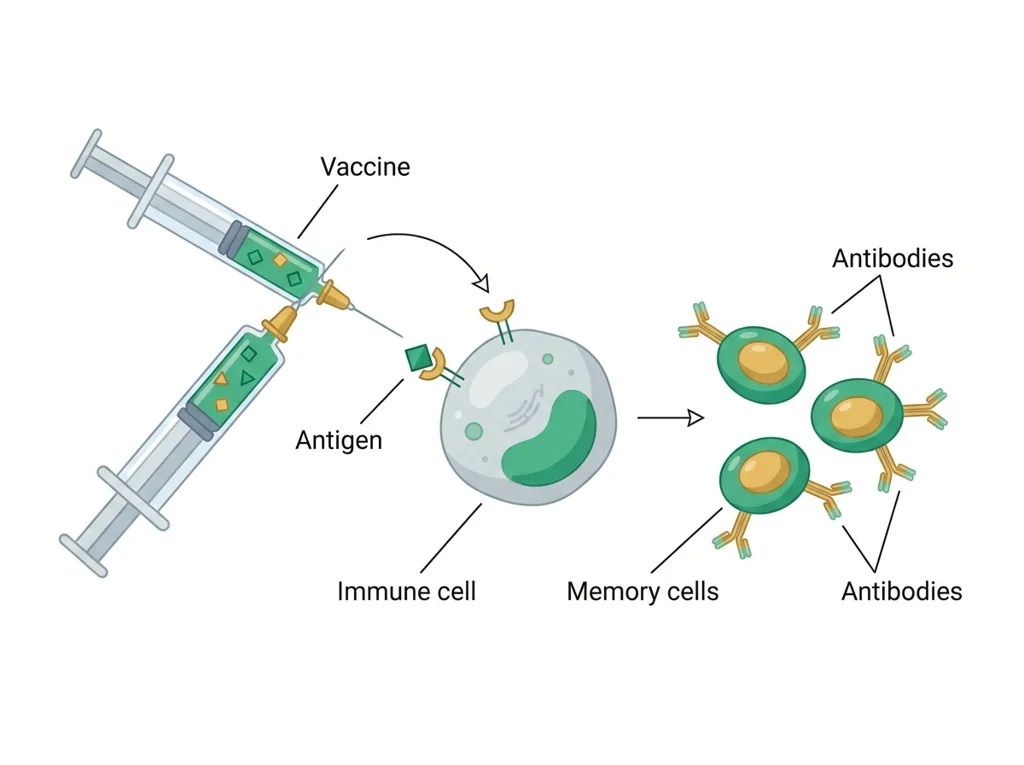
- 4Explain in one sentence how a trains before real exposure.
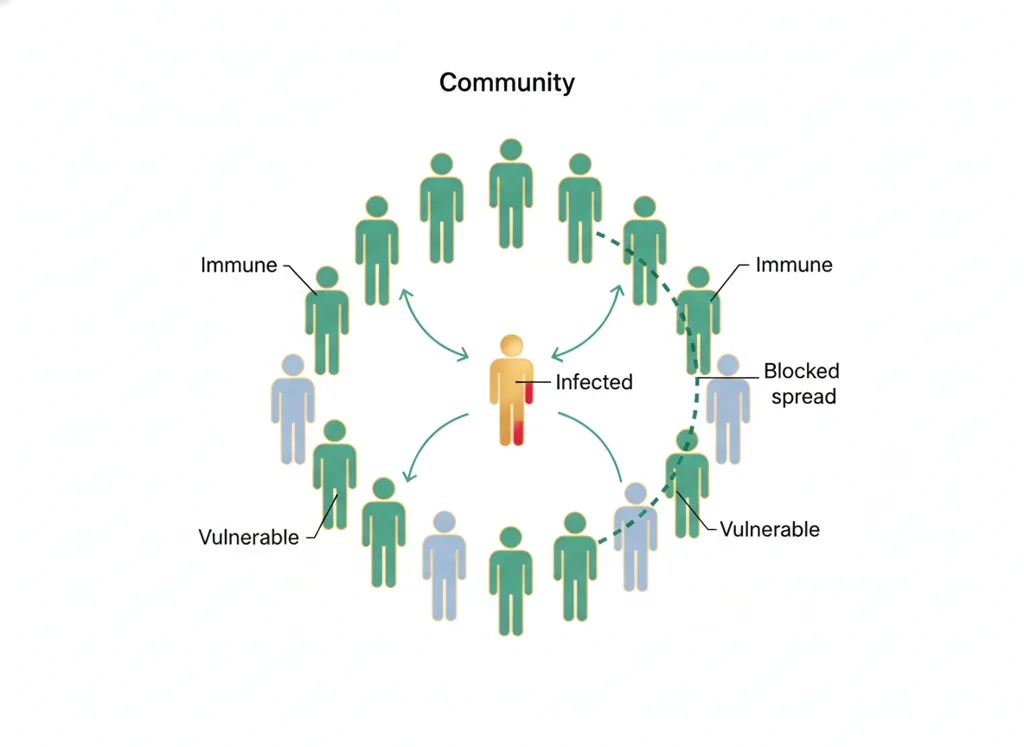
- 5Use a model dataset to show how slows disease spread as coverage rises.
- 6Assemble your Unit 1 evidence so the tracker is ready for audit.
- • You will be able to read an for hearing loss.
- • You will be able to explain how a engages .
- • You will be able to describe how protects a population.
Open any day for its full lesson, the work due that day, and guided notes.
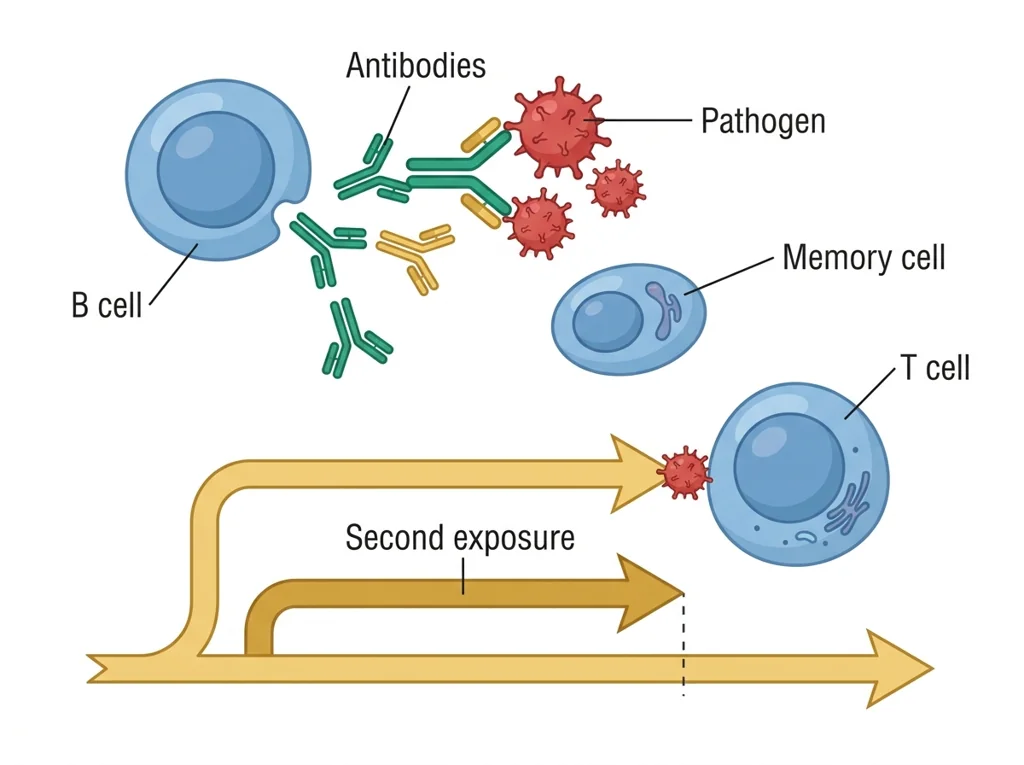
diagram (, helper T cell, B cell, , memory cells), two-scenario disease-model , and one comparison sentence.
Two threshold calculations with work shown, and one sentence explaining who herd immunity protects.
One CER (claim, two evidences, reasoning) on genetic privacy access plus a short reflection naming one counterargument.
Your worksheet: the side you argued, your three strongest arguments, the opposing point you had to answer, and where you actually stand now.
Completed three-generation pedigree with carriers circled, mode of inheritance stated, and one sentence of evidence.
- Hook: the same biology that lets you hear a whisper also decides whether a community resists an outbreak.
- Today's goal: read an and connect immunity to design while finishing your Unit 1 evidence.
- This week's Monday bioethics debate is cochlear implants, so weigh technology against identity and choice.
- Reminder: your Unit 1 tracker and all evidence are submitted on the class site for audit.
Do this: Complete the PLTW Unit 1 tracker in myPLTW with your hearing and vaccination evidence.
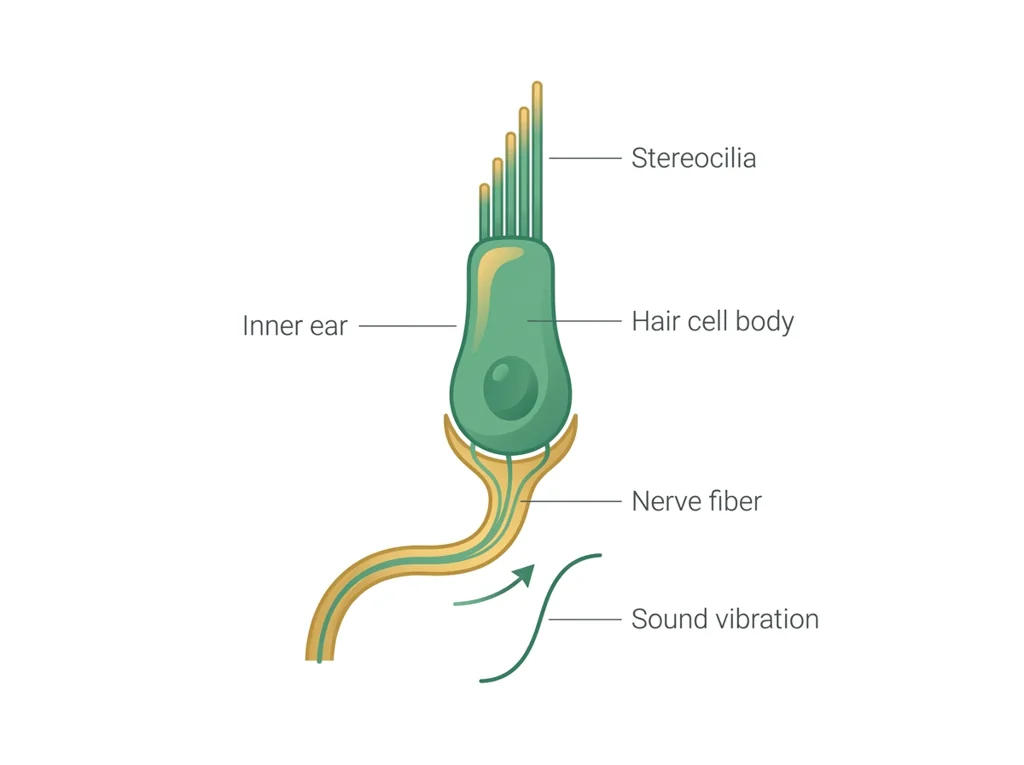
- • Hair cells in the convert sound into nerve signals.
- • Vaccines prime so the body responds faster to real infection.
- • Read an to locate hearing loss.
- • Explain how limits disease spread.
📋 PLTW tracker evidence due this week: completed Unit 1 tracker with analysis and and herd-immunity evidence ready for audit.
All PLTW activities are completed inside the PLTW course environment: this page only gives direction.
Use this chart to keep your place. Nothing on it is turned in through the portal.
| Day | Work | Turn in |
|---|---|---|
| Monday · Mon, Oct 12 | Vaccine and disease-model lab | Adaptive immunity diagram (antigen, helper T cell, B cell, antibody, memory cells), two-scenario disease-model data table, and one comparison sentence. |
| Tuesday · Tue, Oct 13 | Herd immunity math | Two herd immunity threshold calculations with work shown, and one sentence explaining who herd immunity protects. |
| Wednesday · Wed, Oct 14 | Genetic privacy debate | One CER (claim, two evidences, reasoning) on genetic privacy access plus a short reflection naming one counterargument. |
| Thursday · Thu, Oct 15 | JCU bioethics 4: Euthanasia to reduce antibiotic use | Your worksheet: the side you argued, your three strongest arguments, the opposing point you had to answer, and where you actually stand now. |
| Friday · Fri, Oct 16 | Pedigree logic | Completed three-generation pedigree with carriers circled, mode of inheritance stated, and one sentence of evidence. |
- M: cochlear implant debate
- T: interpretation
- W: model
- Th: math
- F: Unit 1 tracker check
Turn in: Auditory anatomy, audiograms, cochlear implants, immune response, vaccine design, herd immunity. weekly work due Hearing / vaccine intervention case recommendation.
Go to Schoology to turn this in.
Submit one PDF. Schoology attaches your name to your upload; on the page itself, write your period and code. Name the file: FirstName LastName - Assignment Title - YYYY-MM-DD.pdf.
Open Schoology PDF upload helpIf you cannot get in, see Mr. Mendoza. Do not skip the work.
4 panels from the illustrated semester.
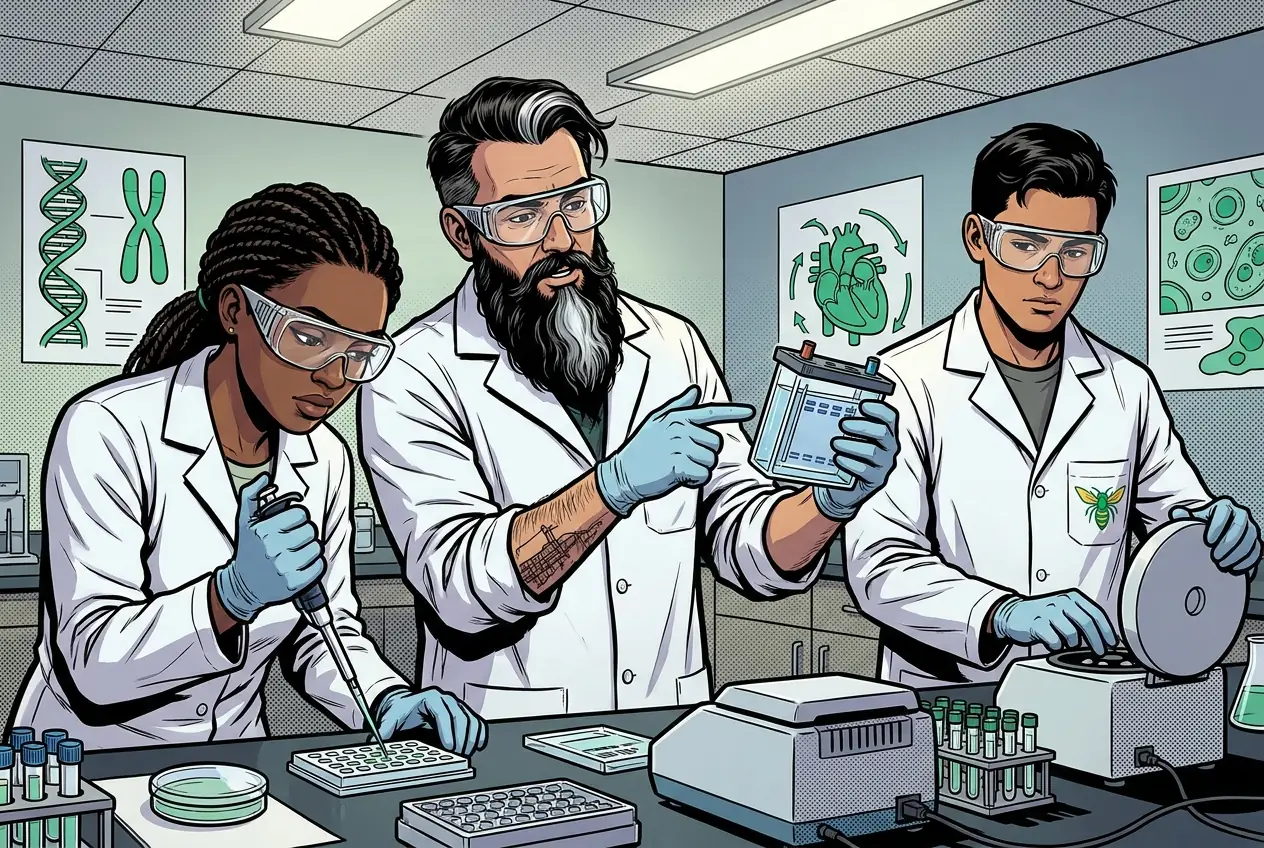
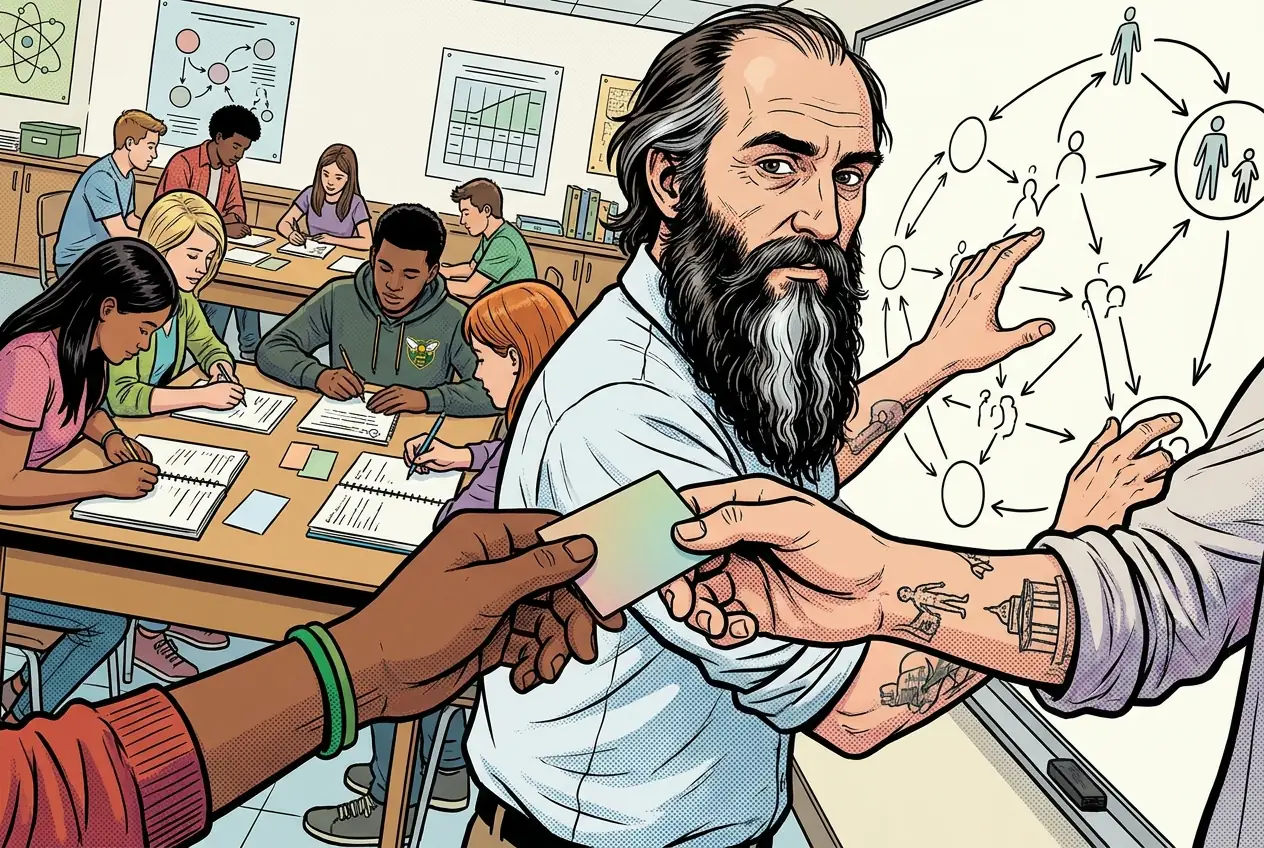
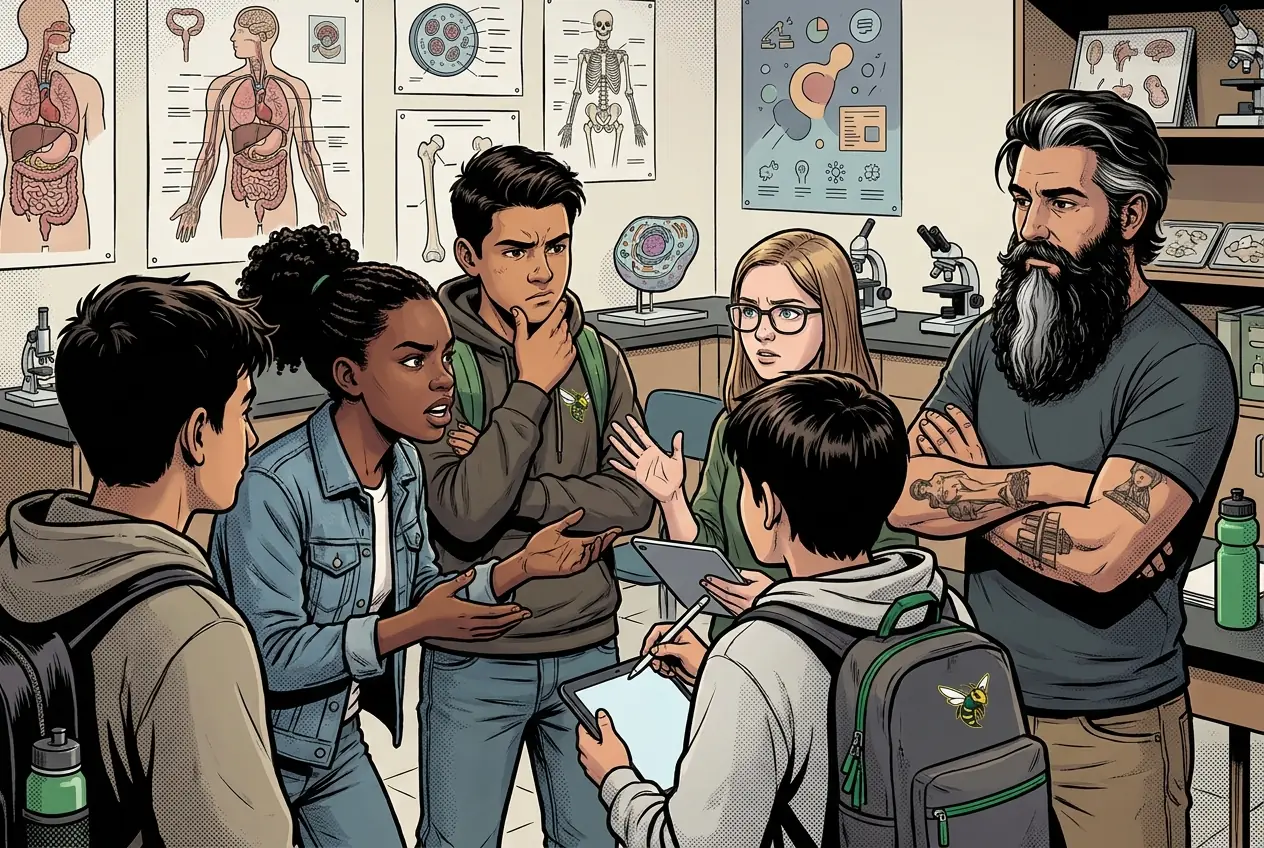
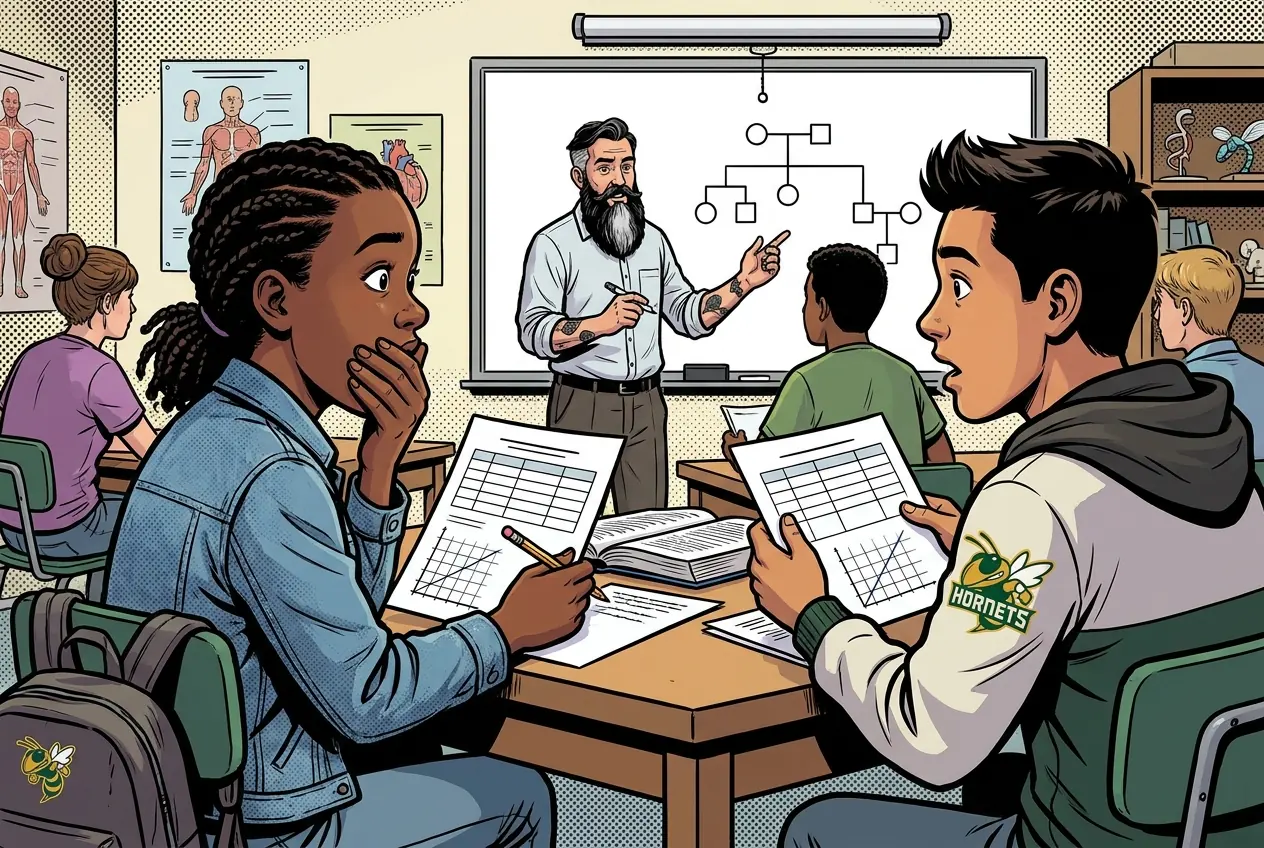
Fiction. There is no such student. The lessons, labs and dates are the real planned course; the student, the classmates and the conversations are invented.
This explainer accompanies the PLTW lab protocol: watch it before lab.
Most days, this class is your PLTW coursework: and PLTW is online and individual. So being out usually just means doing exactly what we did in class, from home.
Open Clever, then myPLTWSign in to Clever with your district Microsoft account to open Schoology or myPLTW. Follow today's posted steps. If myPLTW will not open, use the posted alternative and tell Mr. Mendoza. Turn in your completed work through the Schoology assignment.
You can't do those from home: do this instead: Online case / data analysis.
Class still runs. A substitute will post today's plan: complete the online activity above; it's built to be self-guided. Need the concept taught without a teacher? Use this authoritative explainer:
NIH MedlinePlus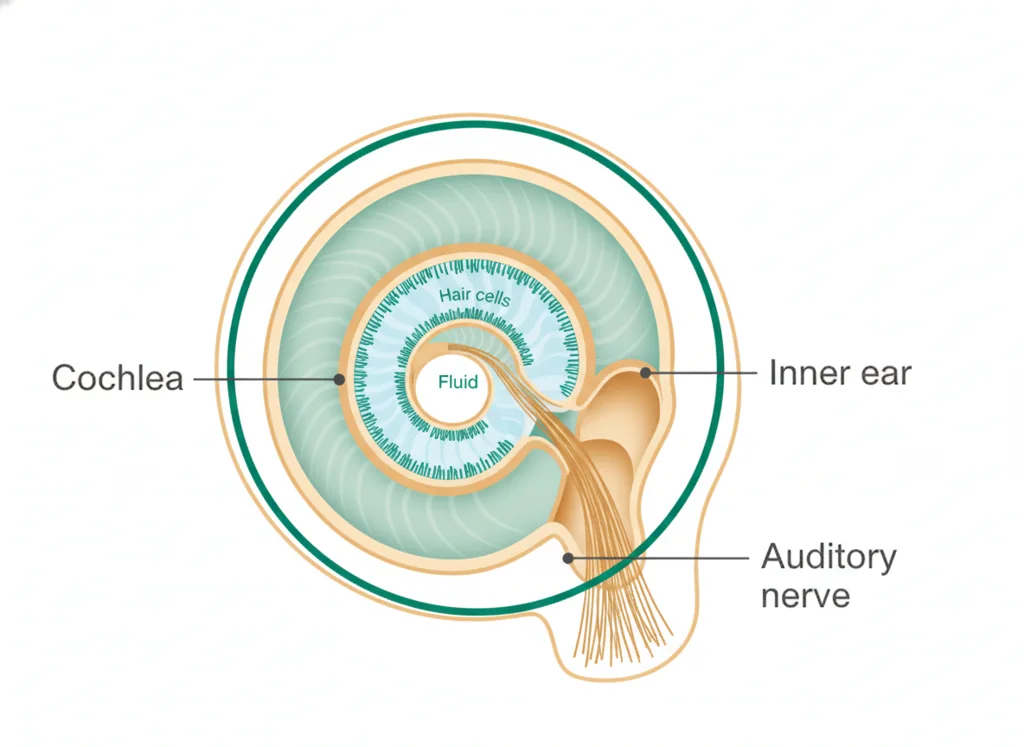
Classroom documents for this lesson are posted in Schoology. Open Clever, then Schoology, and find each one by the name shown on its card.
Use this with the vaccination lesson to connect development to a real example.
Use this if you were absent, got stuck, or need another pass before you submit the lesson artifact.
Use this if you were absent, got stuck, or need another pass before you submit the lesson artifact.
Open this when the class reaches this activity and use it to complete the required lesson artifact.
Sign in to Clever with your district Microsoft account to open Schoology or myPLTW. Follow today's posted steps. If myPLTW will not open, use the posted alternative and tell Mr. Mendoza. Turn in your completed work through the Schoology assignment.