
Cancer as loss of regulation; tumor types; diagnostic workflow.
Your PLTW coursework: Medical Interventions ▸ Unit 3: How to Conquer Cancer ▸ Lesson 3.1 Detecting Cancer ▸ "Activity 3.1.1 Who Is Affected by Cancer?"
What to do if absent- CER:
- Claim, Evidence, Reasoning: make a claim, back it with evidence, explain your reasoning.
- SOP:
- Standard Operating Procedure, the exact steps to follow (especially in a lab).
- Tracker:
- Your PLTW progress log where you record completed evidence.
- myPLTW:
- The PLTW course site where you do the online activities. Find it in Clever with your Microsoft sign-in, right next to Schoology.
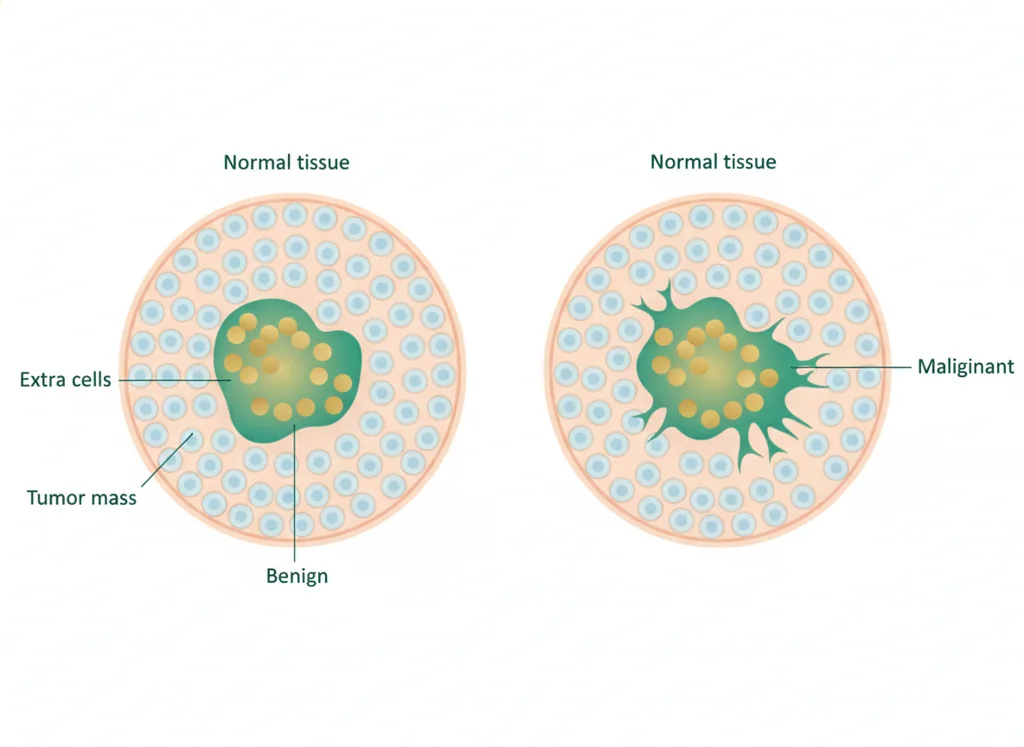
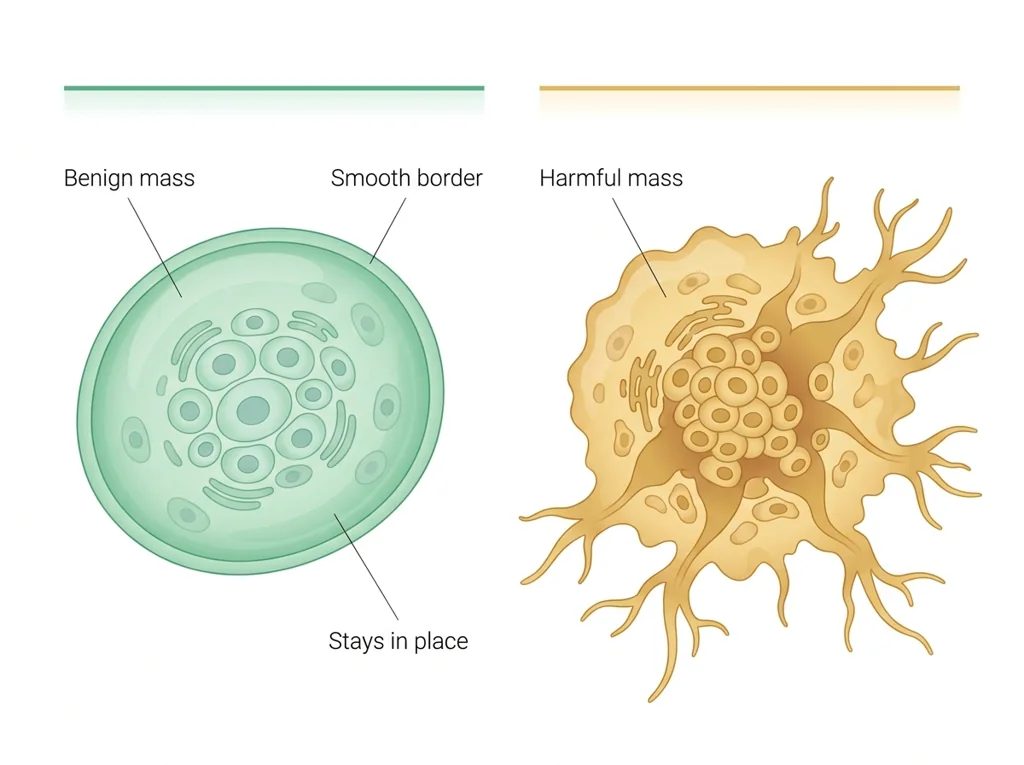
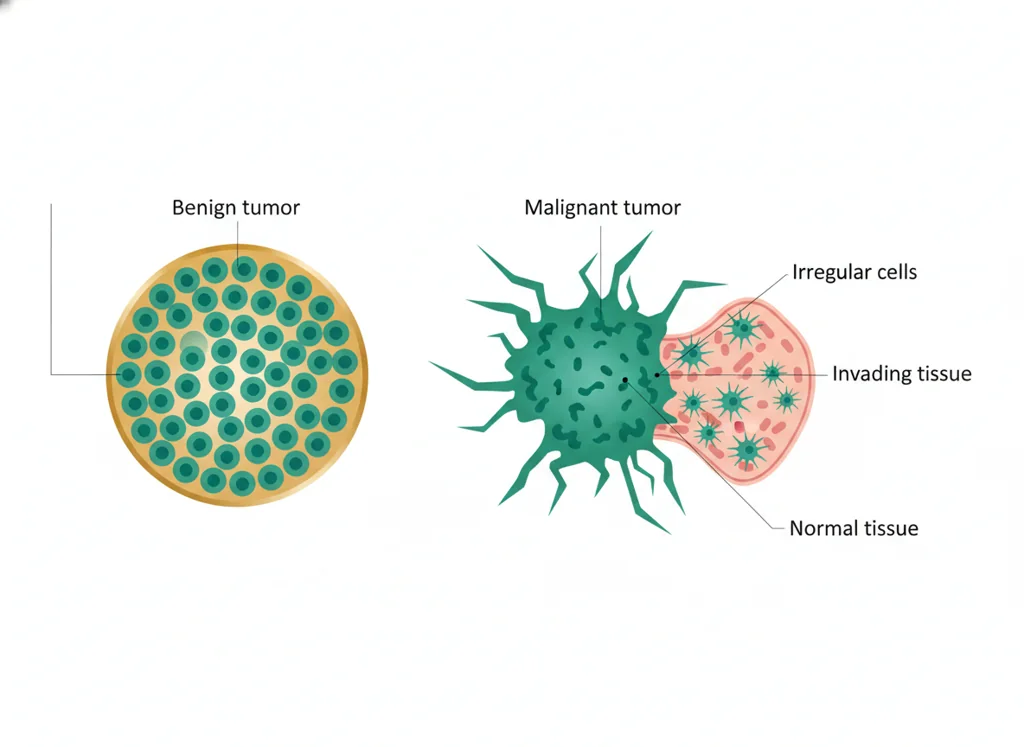
Use cell morphology images to tell benign from and describe the diagnostic that follows a suspicious finding.
- 1Open the labeled morphology packet in the PLTW course shell and read the image key before judging any slide.
- 2Set up the microscope, focus on the provided prepared slide, and sketch what a normal cell layer looks like.
- 3Compare your normal sketch to a image and circle two features that look out of place, such as crowding or odd .
- 4Label one image as benign and one as , writing one reason for each using the word .
- 5Match the terms and to a one-line description of what each does when it goes wrong.
- 6Draft one question for the Monday -screening debate about who should be screened and when.
- • You'll be able to tell benign from using cell features.
- • You'll be able to define and in your own words.
- • You'll be able to outline the steps of a basic diagnostic .
Open any day for its full lesson, the work due that day, and guided notes.
Two-column morphology comparison (benign vs. ), one-line explanation, and a three-step diagnostic sketch.
One-sentence final stance plus the patient-facing reason you would give for your position.
Diagnostic- ticket: ordered steps from through assigned stage, plus your stage-to-treatment sentence.
Your worksheet: the side you argued, your three strongest arguments, the opposing point you had to answer, and where you actually stand now.
CER paragraph arguing which treatment (chemo or radiation) is more appropriate for a localized , with and side-effect evidence.
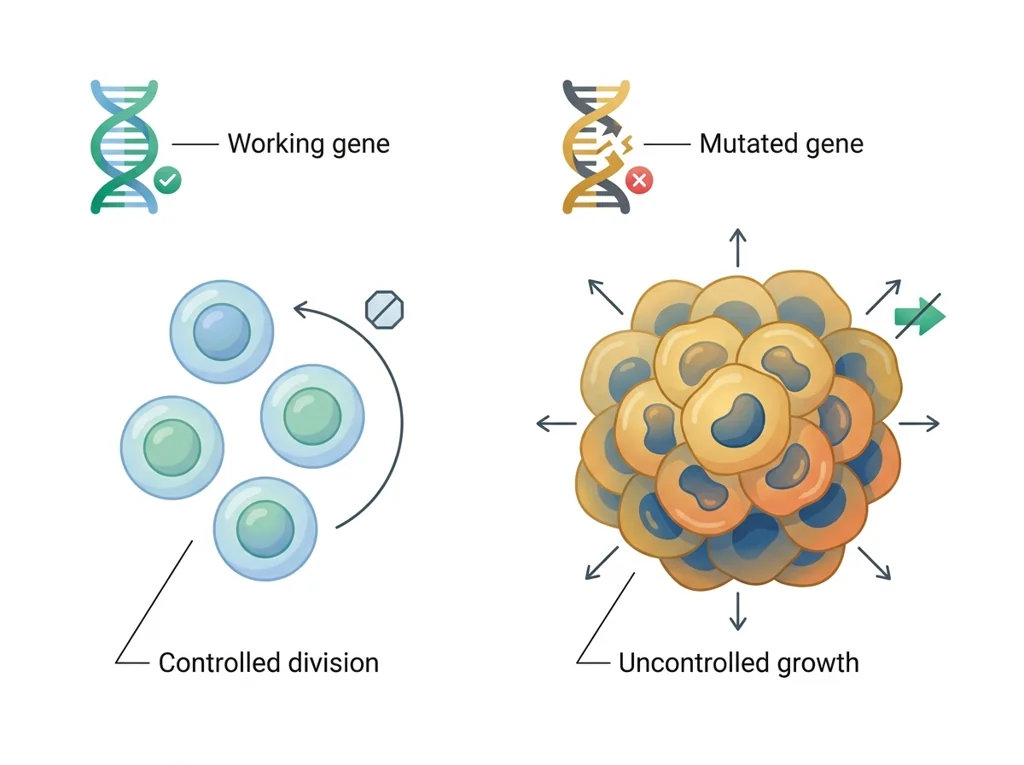
- Today launches Unit 3: is what happens when the cell cycle loses its brakes and growth runs wild.
- Goal for today: read images like a pathologist and capture a clean baseline of normal versus abnormal.
- Monday is our bioethics debate, and the question is screening: who should be tested, how often, and at what cost?
- Remember, all graded work, including your morphology packet and image baseline, lives in the PLTW course shell.
Do this: Advance the Unit 3 -launch benchmark by submitting your benign-versus- image baseline on the class site.
- • is a loss of normal growth regulation, and a is a mass of cells that can be benign or .
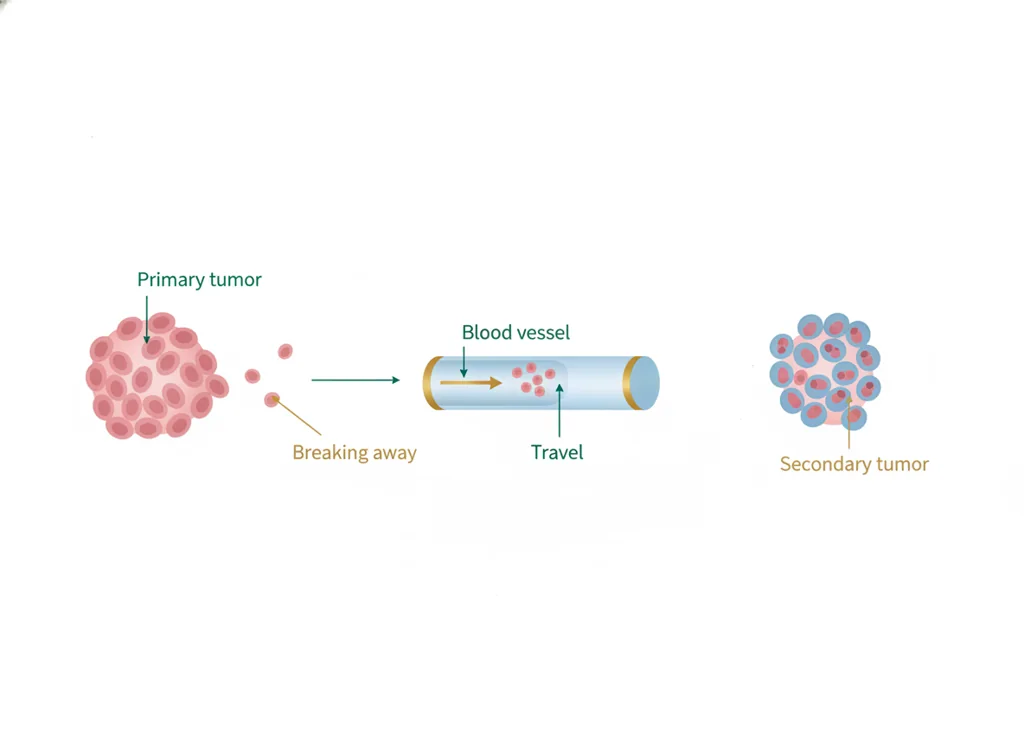
- • is the spread of cells to distant tissues.
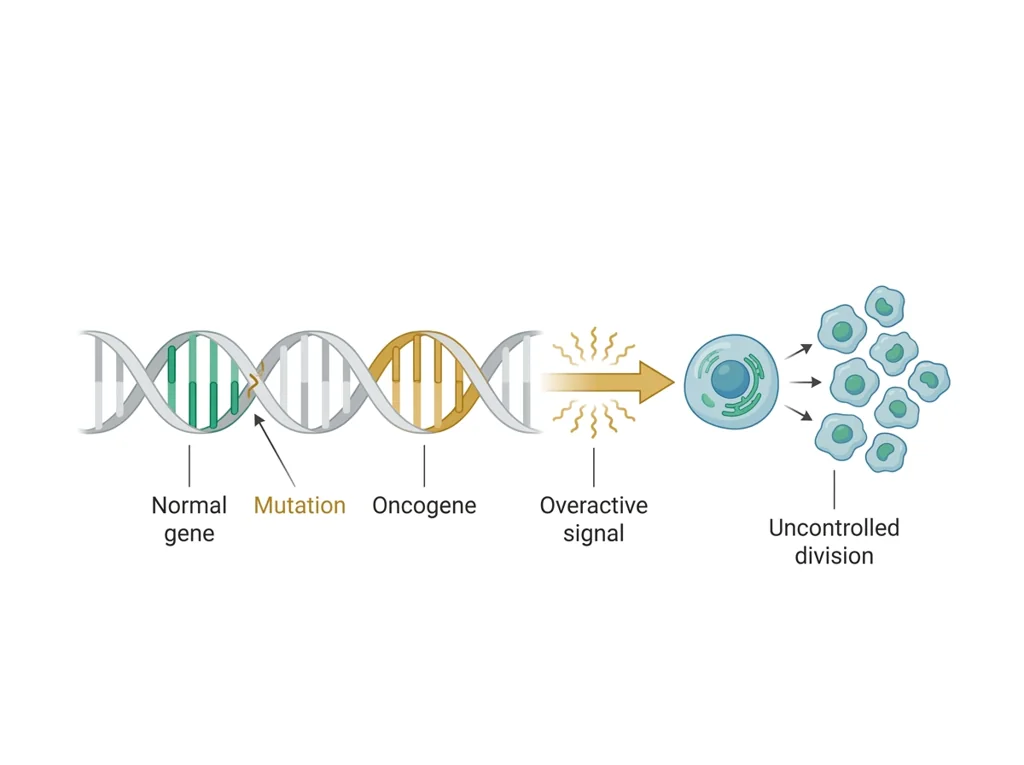
- • Oncogenes push growth while suppressors normally hold growth in check.
- • Distinguish benign from using cell morphology.
- • Describe the diagnostic from suspicious finding to classification.
📋 Tracker evidence due this week: your labeled benign-versus- microscopy image baseline uploaded to the class site.
All PLTW activities are completed inside the PLTW course environment: this page only gives direction.
Use this chart to keep your place. Nothing on it is turned in through the portal.
| Day | Work | Turn in |
|---|---|---|
| Monday · Mon, Nov 16 | Microscopy image baseline | Two-column morphology comparison (benign vs. malignant), one-line metastasis explanation, and a three-step diagnostic workflow sketch. |
| Tuesday · Tue, Nov 17 | Trial-access debate | One-sentence final stance plus the patient-facing reason you would give for your position. |
| Wednesday · Wed, Nov 18 | Biopsy and staging | Diagnostic-workflow ticket: ordered steps from biopsy through assigned stage, plus your stage-to-treatment sentence. |
| Thursday · Thu, Nov 19 | JCU bioethics 9: Prosecuting health misinformation | Your worksheet: the side you argued, your three strongest arguments, the opposing point you had to answer, and where you actually stand now. |
| Friday · Fri, Nov 20 | Chemo and radiation | CER paragraph arguing which treatment (chemo or radiation) is more appropriate for a localized tumor, with apoptosis and side-effect evidence. |
- M: screening debate + concept map
- T: diagnostic ticket
- W–F: no school
Turn in: Cancer as loss of regulation; tumor types; diagnostic workflow. weekly work due Short-week cancer launch checkpoint.
Go to Schoology to turn this in.
Submit one PDF. Schoology attaches your name to your upload; on the page itself, write your period and code. Name the file: FirstName LastName - Assignment Title - YYYY-MM-DD.pdf.
Open Schoology PDF upload helpIf you cannot get in, see Mr. Mendoza. Do not skip the work.
4 panels from the illustrated semester.
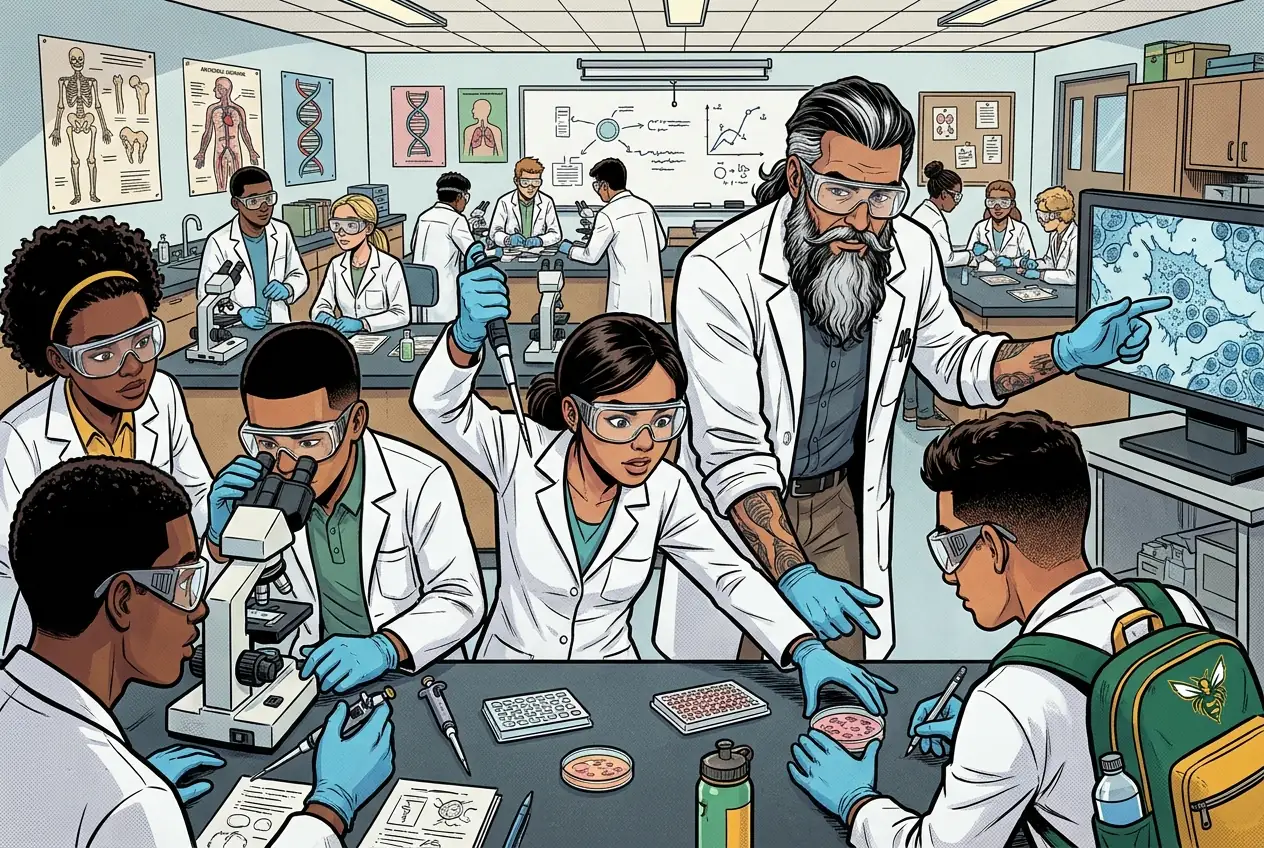
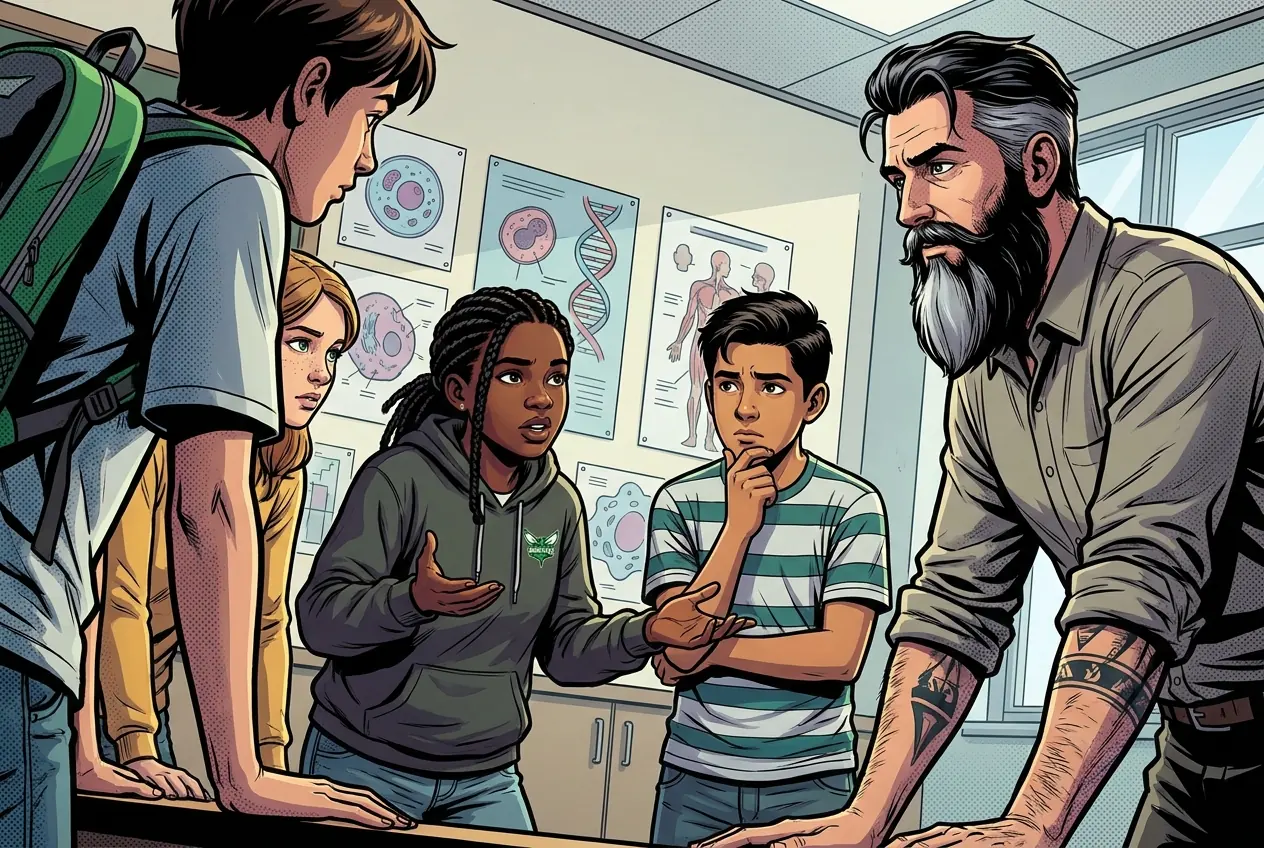
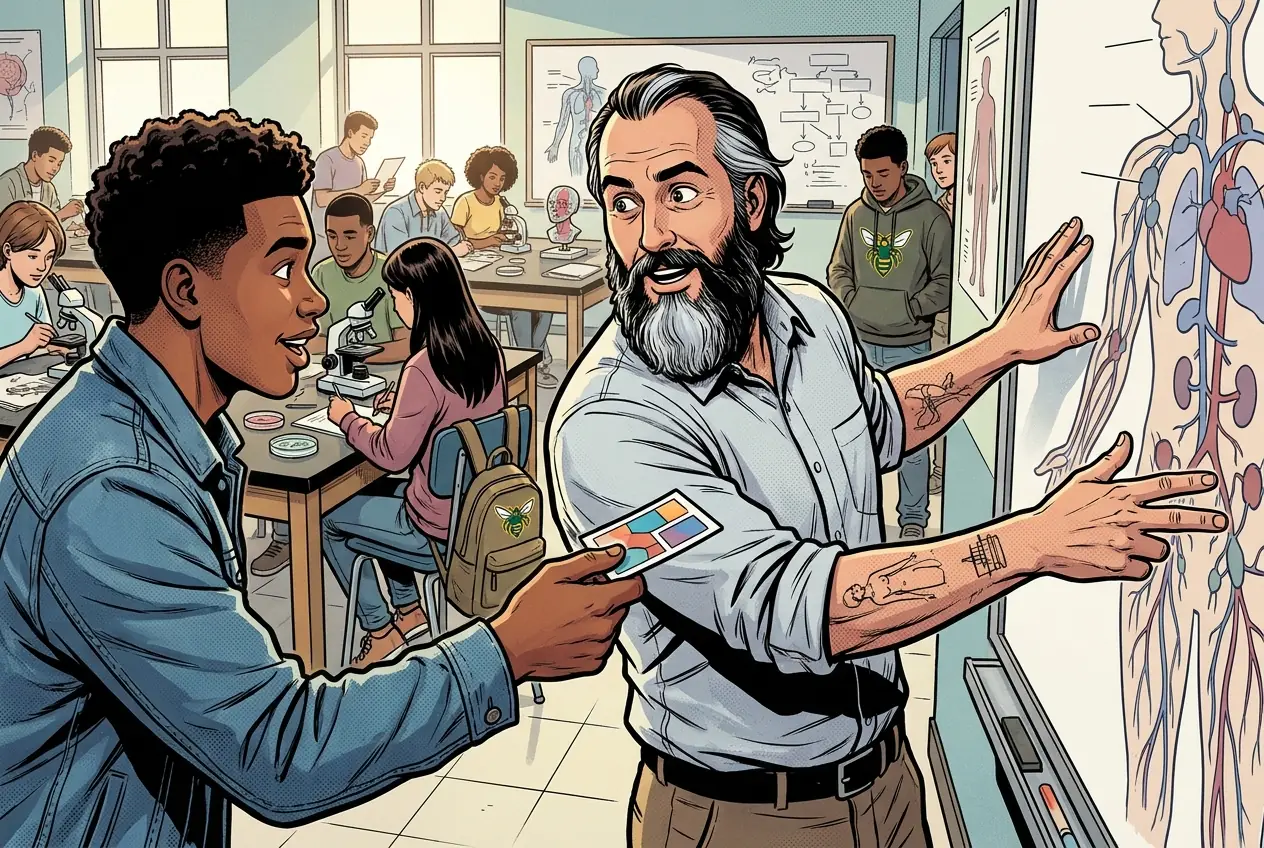
Fiction. There is no such student. The lessons, labs and dates are the real planned course; the student, the classmates and the conversations are invented.
This explainer accompanies the PLTW lab protocol: watch it before lab.
Most days, this class is your PLTW coursework: and PLTW is online and individual. So being out usually just means doing exactly what we did in class, from home.
Open Clever, then myPLTWSign in to Clever with your district Microsoft account to open Schoology or myPLTW. Follow today's posted steps. If myPLTW will not open, use the posted alternative and tell Mr. Mendoza. Turn in your completed work through the Schoology assignment.
You can't do those from home: do this instead: Labeled morphology packet.
Class still runs. A substitute will post today's plan: complete the online activity above; it's built to be self-guided. Need the concept taught without a teacher? Use this authoritative explainer:
National Cancer Institute: What Is Cancer?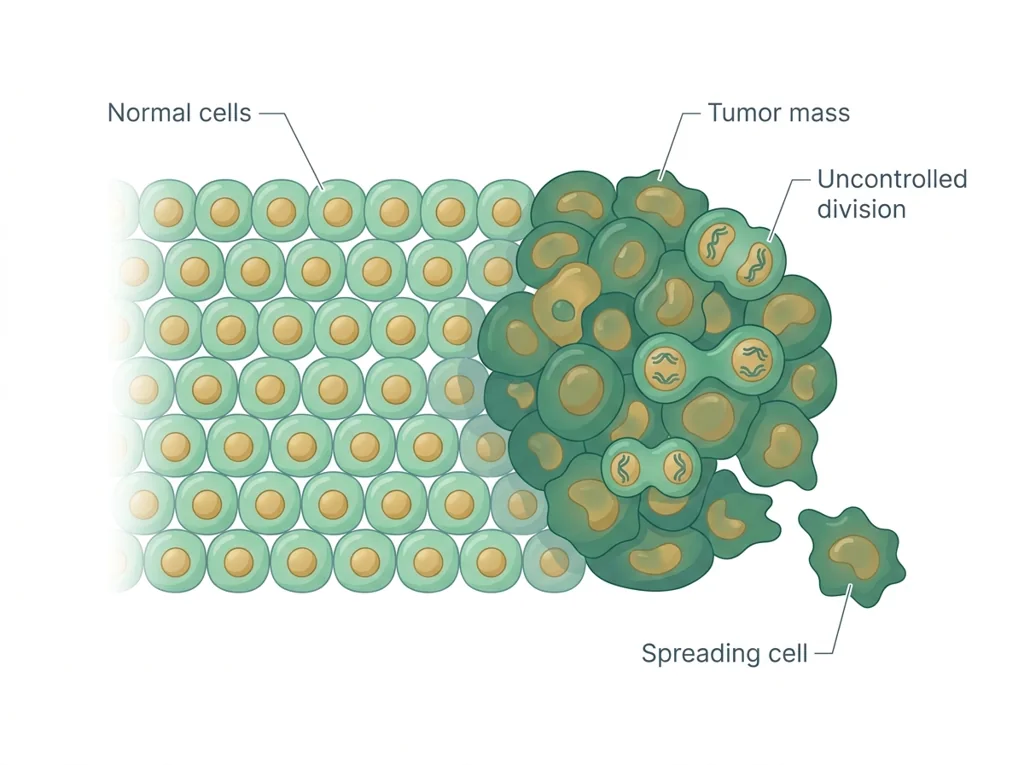
Classroom documents for this lesson are posted in Schoology. Open Clever, then Schoology, and find each one by the name shown on its card.
Open this when the class reaches this activity and use it to complete the required lesson artifact.
Use this if you were absent, got stuck, or need another pass before you submit the lesson artifact.
Use this if you were absent, got stuck, or need another pass before you submit the lesson artifact.
Sign in to Clever with your district Microsoft account to open Schoology or myPLTW. Follow today's posted steps. If myPLTW will not open, use the posted alternative and tell Mr. Mendoza. Turn in your completed work through the Schoology assignment.