The question

Which jobs must happen before the next phase can begin?

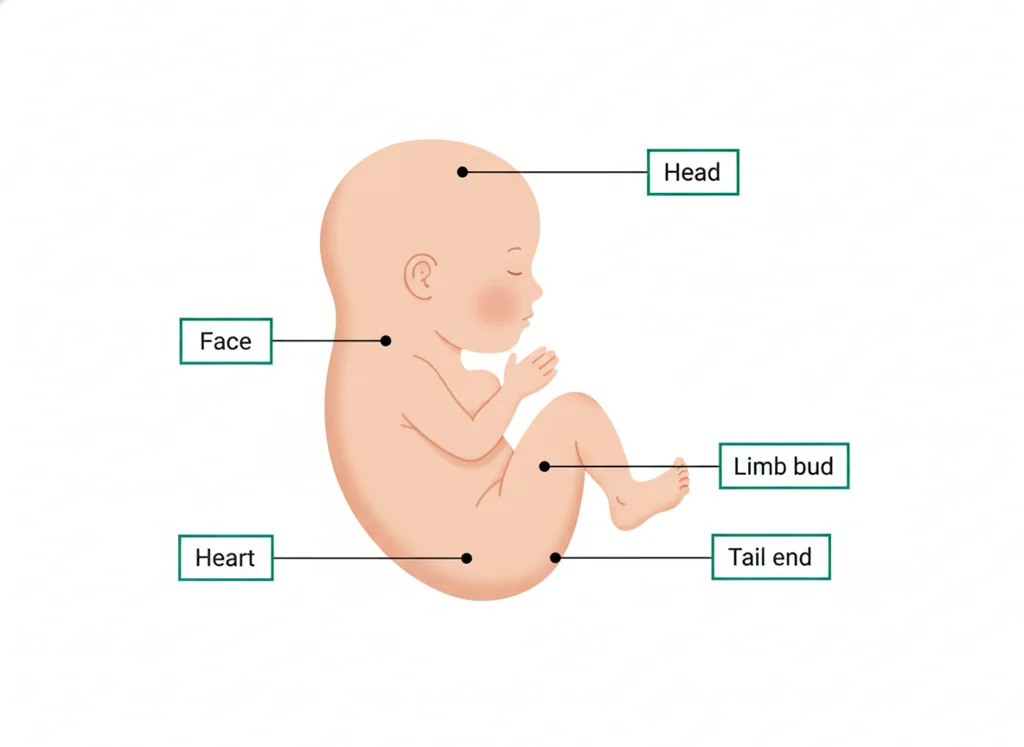
Why it matters: The face forms through a timed sequence of growth, movement, and joining. Locating the missed step helps researchers ask a testable question instead of treating every cleft as the same process. Today you practice the professional reasoning behind that work: The lip and palate form in short, ordered windows, so timing narrows where a developmental change began.

On your WebXam

Using a craniofacial timeline to bound the window when a cleft could begin

For life

To find the cause, change one thing and watch what changes.

Principle: Same look, different cause
Five principles we return to
Two identical breaker panels with different switches turned on.
Having it is not using it
Same instructions, different switches
Two matching porch lights, one controlled by a sensor and one by a timer.
Same look, different cause
Change one thing and watch
A dimmer that changes an outcome beside a key card that only allows entry.
Boss or doorman?
Decides the result or only allows it
A beach ball held underwater and then released to the surface.
Held down, not gone
Remove the brake and it returns
Many roads leading toward one shared ending.
Many roads, one ending
One result can begin many ways
Try the everyday version first

A construction calendar with locked phases

Large projects are built in phases. Foundations, supports, and surfaces must occur in an order, and a later crew may have to wait if an earlier phase is unfinished.

Do not jump to the biology yet. Treat the picture as a small system. Track its parts, follow one change at a time, and keep more than one explanation open until the picture supplies a way to separate them.

Clue 1: Orient yourself

Which jobs must happen before the next phase can begin?

Use the labels and the picture's left-to-right, near-to-far, or before-and-after order. Name only what you can point to.

Clue 2: Trace one change

What happens if one crew arrives after its phase closes?

Follow one object, stage, or path. Point to the first place where the situation changes instead of jumping to the ending.

Clue 3: Keep the cause open

Which clues could identify when a finished bridge problem began?

List more than one explanation that still fits. Name the extra observation that would help you separate those possibilities.

Editorial illustration of a bridge construction calendar in which foundation, supports, and roadway must occur in order, beside a human facial development timeline.
Now inspect the illustration

Work from the visible evidence. A useful answer names the part of the picture that supports it and leaves unknown causes open.

  1. 1Which jobs must happen before the next phase can begin?
  2. 2What happens if one crew arrives after its phase closes?
  3. 3Which clues could identify when a finished bridge problem began?
Tier 1 check

Finish with the everyday model

Use the everyday picture to answer today's question in plain words: Which jobs must happen before the next phase can begin?

You can complete today's required check without opening the technical details below.

Ready for the real names? Optional tier 2
Technical rules and limits
Rule 1: Development follows an ordered sequence.
Rule 2: Each structure has a limited building window.
Rule 3: A final defect can point back to an earlier missed step.

Where the analogy stops: An embryo is not built by crews. The analogy models sequence and timing only.

Carry the previous idea forward

A structural finding describes what is present now; development asks when and how that structure formed.

Today's technical takeaway

The lip and palate form in short, ordered windows, so timing narrows where a developmental change began.

Now map the same rules onto biology

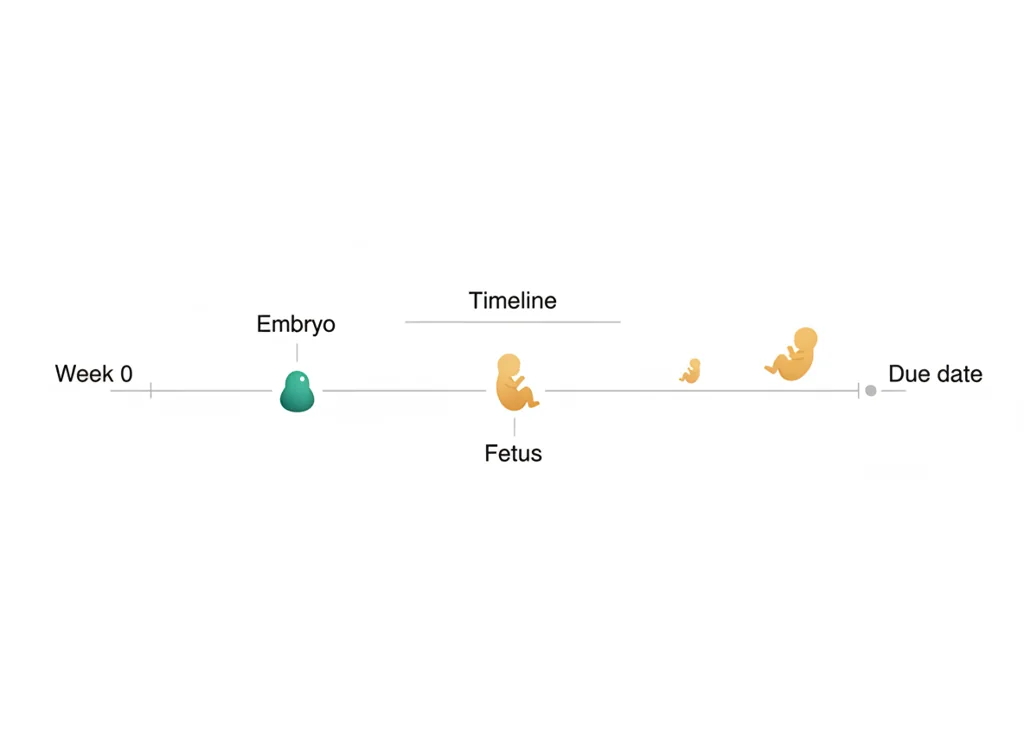
Place lip and palate formation on the human timeline

Foundation phase
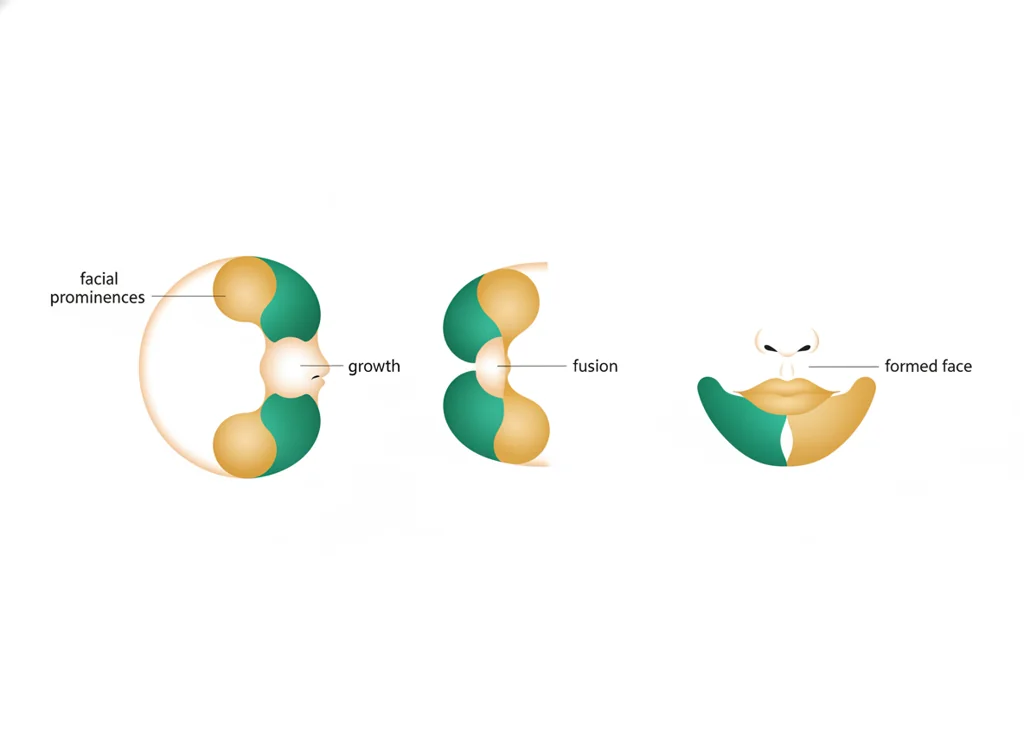
Facial prominences form
Support phase
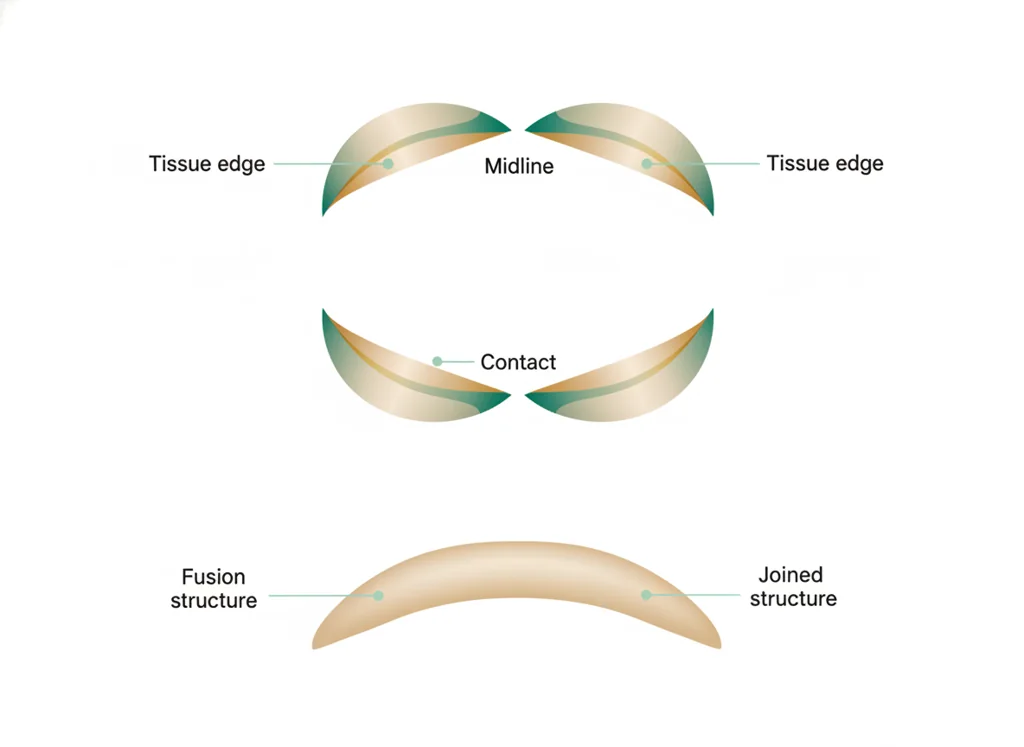
Upper lip structures merge and fuse
Roadway phase
Palatal shelves grow, elevate, and fuse

Educational illustration, not a clinical photograph. Use the labels and evidence cards to make the biological claim.

Mateo's case file: evidence supplied in this lesson
DEV01-E1
The upper lip normally joins during approximately weeks 4 to 7.
Why it matters: Mateo's cleft lip began during an early facial fusion window.
DEV01-E2
Secondary palate development starts near week 6 and fusion is normally complete by about week 12.
Why it matters: Mateo's cleft palate began during a later, overlapping window.
DEV01-E3
A newborn cleft is the visible result of an earlier developmental event.
Why it matters: The delivery-room appearance does not give the exact day or cause.
Make the clinical decision

You are the developmental biologist at Mateo's case conference.

The team asks whether the cleft started during birth, late pregnancy, or early facial development.

APlace the origin in the early lip and palate formation windows.
BPlace the origin during delivery.
CClaim one exact day from appearance alone.

Choose the timeline statement and cite the two evidence cards that set its limits.

Evidence required
DEV01-E1 + DEV01-E2
Claim ceiling
You may identify developmental windows. You may not identify an exact day or cause from the cleft pattern alone.
Go deeper Optional tier 3

Everything required for today is above. Open these only if you want the explainer, source trail, or download files.

The plan

Track your required Tier 1 work

The everyday model and Tier 1 check are the complete required path for this lesson.

Use these checks to keep your place. They are not turned in through the portal.

Check off as you finish
  • Worked through the everyday picture and answered its three questions.
  • Completed the Tier 1 check in plain words.

Turn in: Developmental lesson 1: When Could Mateo's Cleft Have Happened?

Go to Schoology to turn this in.

Submit one PDF. Put your first and last name in the document header. Name the file: FirstName LastName - Assignment Title - YYYY-MM-DD.pdf.

Open Schoology PDF upload help

If you cannot get in, see Mr. Mendoza. Do not skip the work.

Optional legacy technical materials Open only if you want the original notes, vocabulary, artifact, and CER work
Learn first

Original technical overview

A structure can only break during the window when it is being built, so timing the event tells the team when to look, not yet what or why.

Learn first

What you will learn

Goal: Place the major events of human on a week-by-week timeline (weeks 4 to 12) and identify the time window in which a lip or must originate.

Know by the end
  • Human runs mostly from week 4 to week 12 of the .
  • Many face structures are made by separate blocks of that grow toward each other and then fuse, and a is a that did not happen on time.
  • The upper lip closes by about week 6 and the is fully fused by about week 12.
  • Each structure has a critical window, so a disruption can only cause a given if it happens during that structure's window.
The plan

Guided notes

1

The face is built early

Model start: In humans, runs mostly from about week 4 to week 12 of the .
  • The upper lip closes by about week ____, and the is fully fused by about week ____.
  • Many face structures are made by separate blocks that grow toward each other and then ____ (join).
2

Why windows matter

  • Because each structure is built in its own window, there is a ____ window for each one.
  • A disruption can only cause a given if it happens during that structure's ____.
  • For Mateo, who has both a lip and a cleft, the window of interest spans roughly weeks ____ to ____.
3

An honesty note for scientists

  • Knowing the window tells us ____ something could have gone wrong, not yet what or why.
  • We are not diagnosing Mateo today, we are only ____ the event.
Explore

Reading the Research

Everything you need for today is on this page. These links are optional.

What to read
Read the short plain-language explanation written for this lesson. Plain-language explainer for this lesson
Why this source matters
This explanation gives you the background for today's idea without making you decode a research paper: A structure can only break during the window when it is being built, so timing the event tells the team when to look, not yet what or why.
Words to unlock first
embryocraniofacial developmentgestational weekfusioncritical window
Reading moves
  1. Skim the title and abstract first to get the gist.
  2. Circle the one sentence that states the main claim.
  3. Box the evidence the authors give for that claim.
  4. Mark one sentence that confuses you, and move on.
Stop point
Stop after the final 'Use it now' section. The research citations are available separately for advanced readers.
Your output
Write one claim-evidence sentence: state the main idea, then name the example or evidence that supports it.
Where this fits
Tested on (Ohio WebXam)
Genetics of Disease · 072130
PLTW lesson
MI · Developmental domain · Human development foundations; the craniofacial timeline and critical windows
WebXam domain
Molecular and Genetic Technology
Evidence to produce
On a blank timeline strip (weeks 4 to 12), mark two brackets: one over the weeks when the lip is forming and closing, and one over the weeks when the palate is forming and fusing. Then write one sentence for Mateo's chart: "Mateo's cleft of the lip and palate must have begun sometime between week ____ and week ____ of development, because that is the window when these structures are built."
Lab / skill
Principles of Biomedical Science (PBS) · Medical Interventions (MI)
Words

Vocabulary (the same words your classes use)

critical window
Explore

Research citation trail (advanced)

Everything required for today's decision is already in the case file and plain-language explainer. The links below are original papers and database records for teachers and advanced readers, not assigned student reading.

Check yourself

Exit ticket (Claim, Evidence, Reasoning)

  • Claim: Mateo's began during a specific window of development, roughly weeks ____ to ____.
  • Evidence: On the timeline, the lip forms and closes during weeks ____ to ____ and the forms and fuses during weeks ____ to ____.
  • Reasoning: A structure can only be disrupted while it is being built, so the must trace to the window when the lip and were forming, not before and not after.
How this is graded (rubric)
For: On a blank timeline strip (weeks 4 to 12), mark two brackets: one over the weeks when the lip is forming and closing, and one over the weeks when the palate is forming and fusing. Then write one sentence for Mateo's chart: "Mateo's cleft of the lip and palate must have begun sometime between week ____ and week ____ of development, because that is the window when these structures are built."
CriterionProficientDevelopingBeginning
CompleteEvery required part of the artifact is present and filled in.Most parts are present, but one is missing or left blank.Several parts are missing.
AccurateThe science and data are correct and match the evidence.Mostly correct, with a small factual slip.Key science or data is wrong.
Scientific reasoning (CER)States a claim, backs it with specific evidence, and explains the reasoning.Has a claim and evidence, but the reasoning is thin or missing.Gives an answer with no evidence or reasoning.
Professional communicationClear, organized, and labeled the way a clinician or scientist would write it.Readable but disorganized or missing labels.Hard to follow.
SubmittedTurned in through the route named under Submit here and confirmed.Turned in, but in the wrong place or unconfirmed.Not turned in.
How the model answer scores against this rubric
  • CompleteProficient: Nothing is left blank: the model fills every part of "On a blank timeline strip (weeks 4 to 12), mark two brackets: one over the weeks when the lip is forming and closing, and one over the weeks when the palate is forming and fusing. Then write one sentence for Mateo's chart: "Mateo's cleft of the lip and palate must have begun sometime between week ____ and week ____ of development, because that is the window when these structures are built."".
  • AccurateProficient: Every number and claim matches the case evidence.
  • Scientific reasoning (CER)Proficient: It names a claim, cites the specific evidence, and explains the reasoning, not just the answer.
  • Professional communicationProficient: It is organized and labeled like a real chart note.
  • SubmittedProficient: It would be attached to your class form or handed in, and confirmed.
Explore

Where this leads: careers

Embryologist Developmental biologist Pediatric craniofacial surgeon

What's next: We answered today's question: Mateo's started in a window between about week 4 and week 12. But if a cleft is a that did not happen, then which exact building blocks of the face were supposed to grow toward each other and fuse? We chase that next time.