
When Could Mateo's Cleft Have Happened?
This reading contains every idea and every piece of evidence needed for today's decision. The research links at the end are optional.
Why this matters
Timing turns a visible structure into a testable developmental question.
The question you are trying to answer
Which jobs must happen before the next phase can begin?
Begin with the idea you already earned
A structural finding describes what is present now; development asks when and how that structure formed.
Study the analogy before the biology
- Which jobs must happen before the next phase can begin?
- What happens if one crew arrives after its phase closes?
- Which clues could identify when a finished bridge problem began?
Turn the analogy into three rules
Limit: An embryo is not built by crews. The analogy models sequence and timing only.
Map those rules onto the biology
The face changes quickly during the first trimester. Separate tissue blocks grow toward one another and join.
The upper lip forms before the secondary palate finishes. Their windows overlap, but they are not identical.
A cleft seen at birth records an earlier missed developmental step. It does not prove when, why, or which gene changed.
Read Mateo's labeled case evidence
The upper lip normally joins during approximately weeks 4 to 7.
Mateo's cleft lip began during an early facial fusion window.
Secondary palate development starts near week 6 and fusion is normally complete by about week 12.
Mateo's cleft palate began during a later, overlapping window.
A newborn cleft is the visible result of an earlier developmental event.
The delivery-room appearance does not give the exact day or cause.
Make the concrete decision
You are the developmental biologist at Mateo's case conference.
The team asks whether the cleft started during birth, late pregnancy, or early facial development.
- Place the origin in the early lip and palate formation windows.
- Place the origin during delivery.
- Claim one exact day from appearance alone.
Choose the timeline statement and cite the two evidence cards that set its limits.
Claim ceiling: You may identify developmental windows. You may not identify an exact day or cause from the cleft pattern alone.
Write the 10-year takeaway
The lip and palate form in short, ordered windows, so timing narrows where a developmental change began.
- Which window is earlier, lip closure or completion of palatal fusion?
- Why can the newborn exam not reveal one exact developmental day?
Glossary in plain English
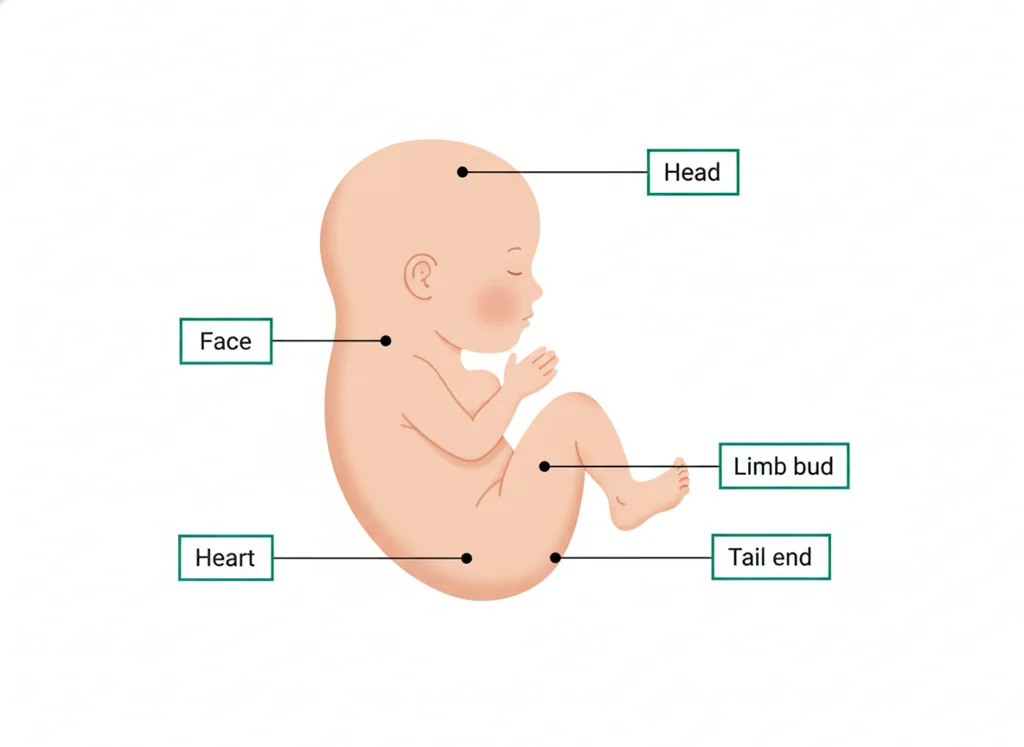
The developing human from about week 3 to week 8, when most organs and the face first take shape.
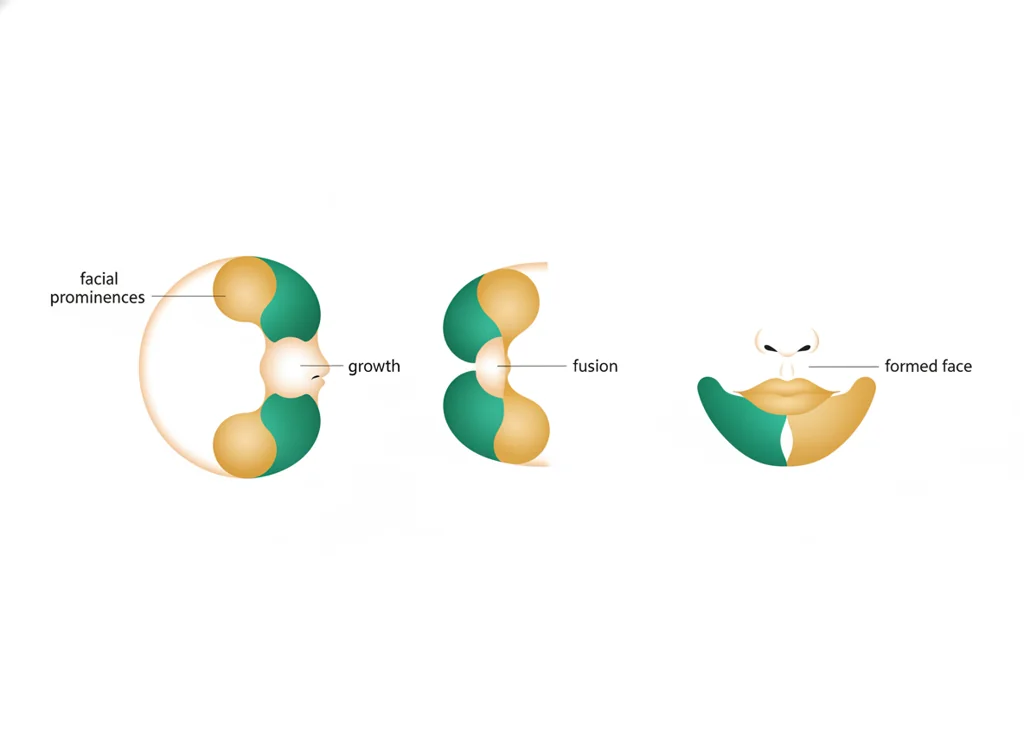
The set of steps in the embryo that shape the skull and face, including how facial swellings grow and fuse into lips, palate, and jaw.
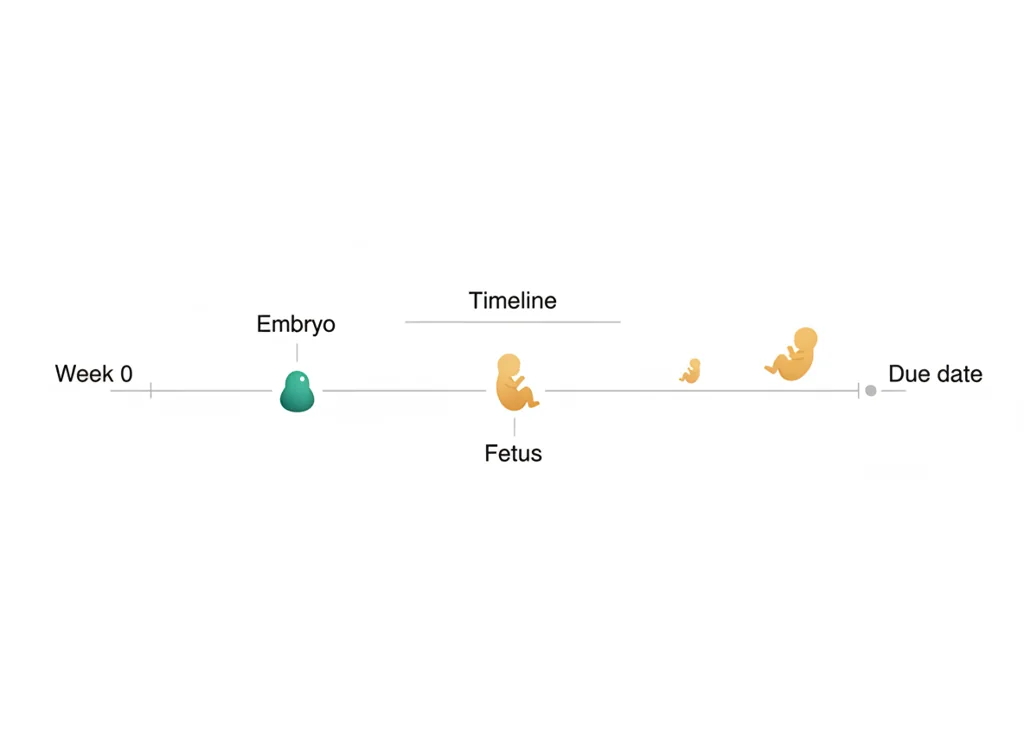
A way of counting how far along a pregnancy is, measured in weeks from the start of the mother's last menstrual period.
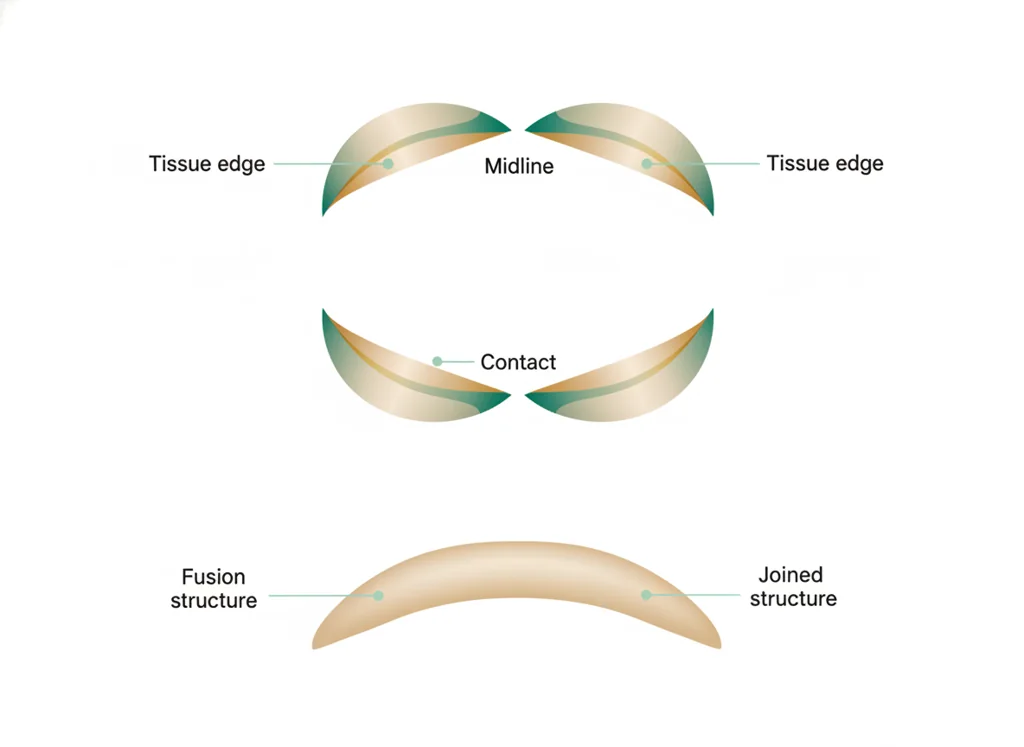
When two growing tissue edges meet at the midline and join into one continuous structure, as the lip and palate do during development.
A lesson term defined by the surrounding model and case evidence.
Research citation trail (advanced)
You do not need these papers or database records to finish the lesson. They document where the plain-language explainer's claims come from and are intended for teachers or advanced readers.