
DNA identification, sequencing, BLAST, controls, query coverage, and E-value.
Your PLTW coursework: Medical Interventions ▸ Unit 1: How to Fight Infection ▸ Lesson 1.1 The Mystery Infection ▸ "Activity 1.1.3 Using DNA to Identify Pathogens"
What to do if absent- CER:
- Claim, Evidence, Reasoning: make a claim, back it with evidence, explain your reasoning.
- SOP:
- Standard Operating Procedure, the exact steps to follow (especially in a lab).
- Tracker:
- Your PLTW progress log where you record completed evidence.
- myPLTW:
- The PLTW course site where you do the online activities. Find it in Clever with your Microsoft sign-in, right next to Schoology.
Use a and to identify an unknown bacterial and judge match quality with E-value and .
- 1Open the case file and copy the unknown into a scratch doc so you do not lose it.
- 2Go to NCBI , choose nucleotide BLAST, and paste your unknown sequence into the query box.
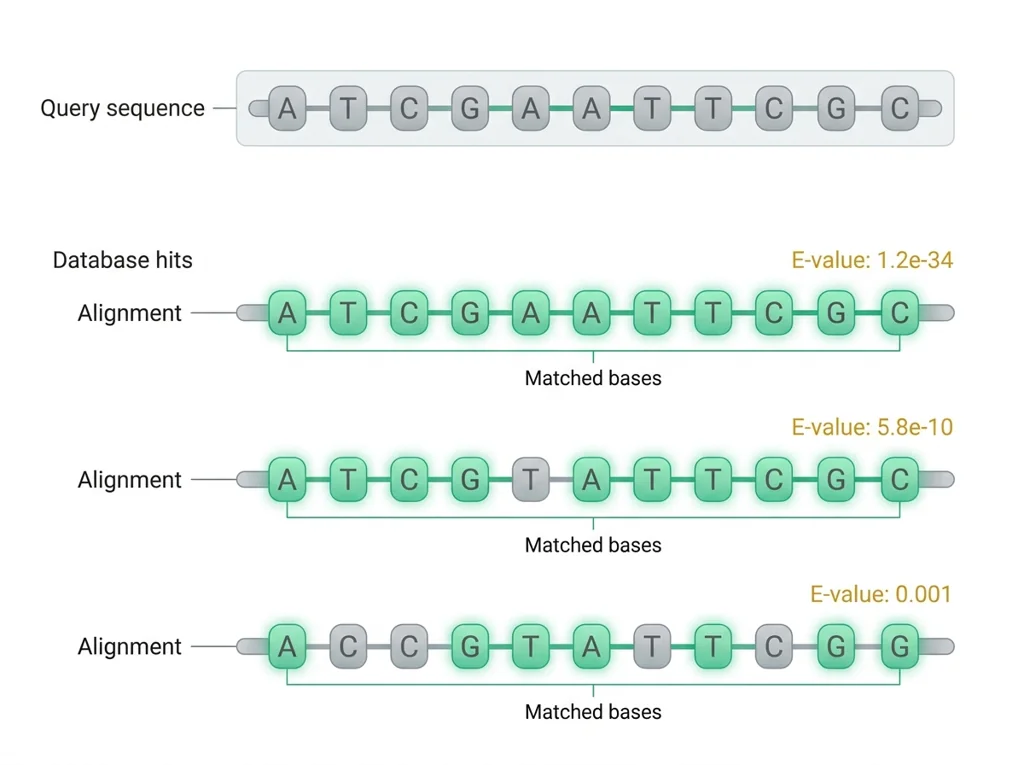
- 3Run the search, then sort the hit table and read the top match name, , and E-value.
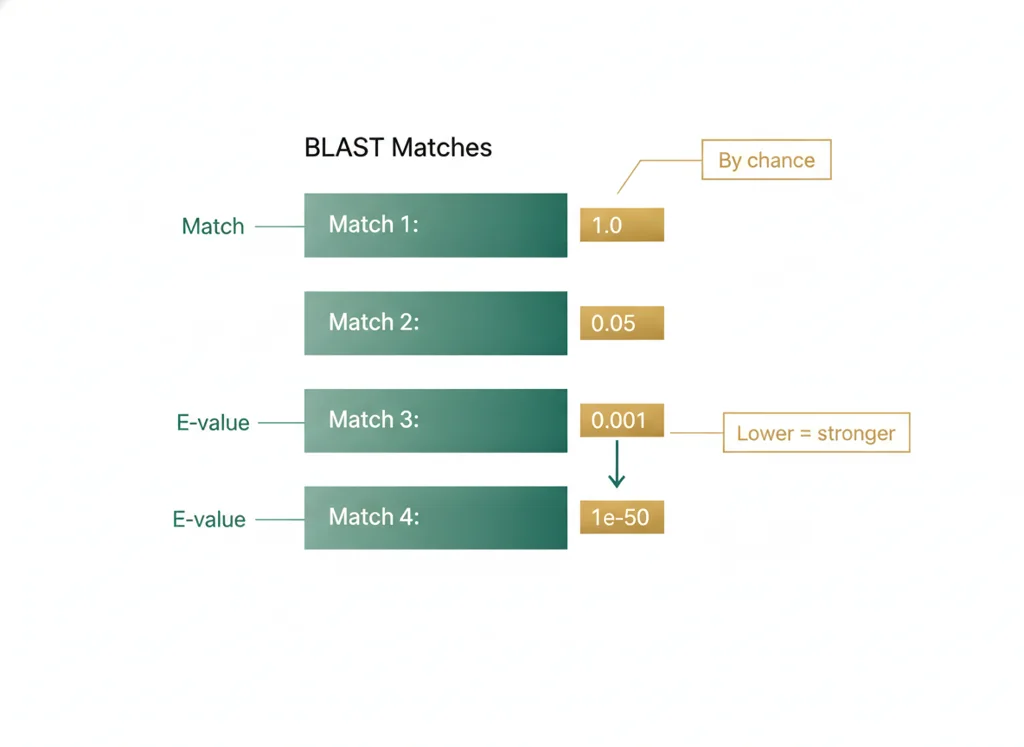
- 4Record the and E-value for your top hit; note that a smaller E-value means a stronger match.
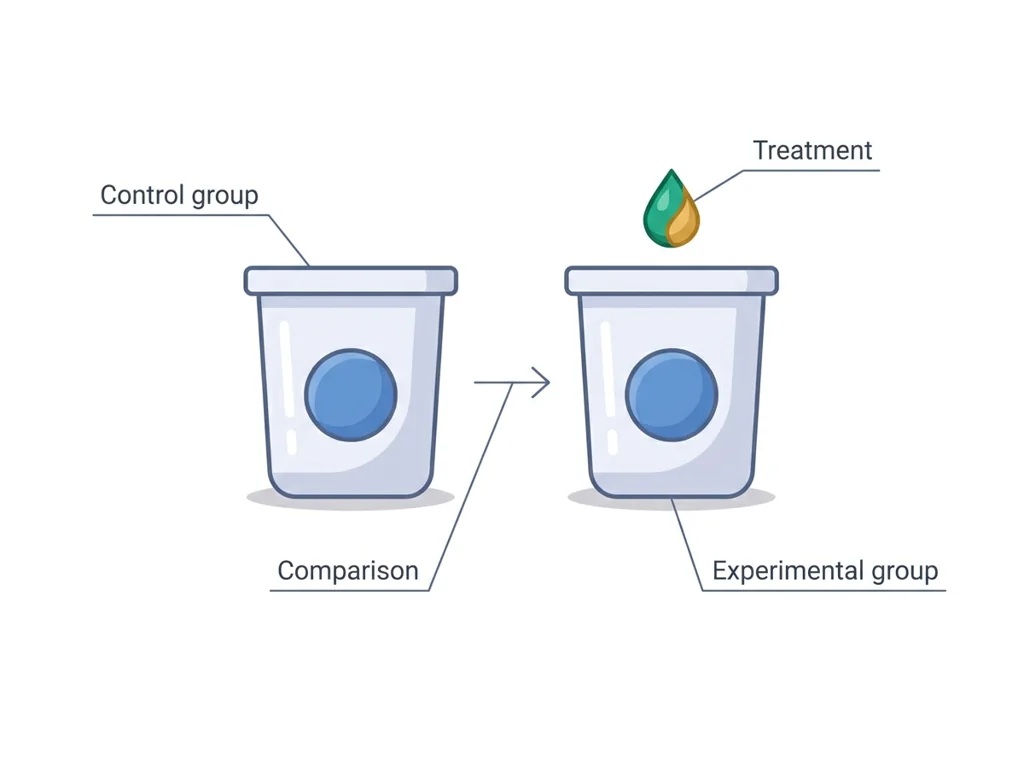
- 5Compare your top hit to a control sequence the teacher provides to confirm the is behaving.
- 6Write one sentence naming the likely and the evidence (top hit, E-value, ) that supports it.
- • You will be able to run a nucleotide search and read the hit table.
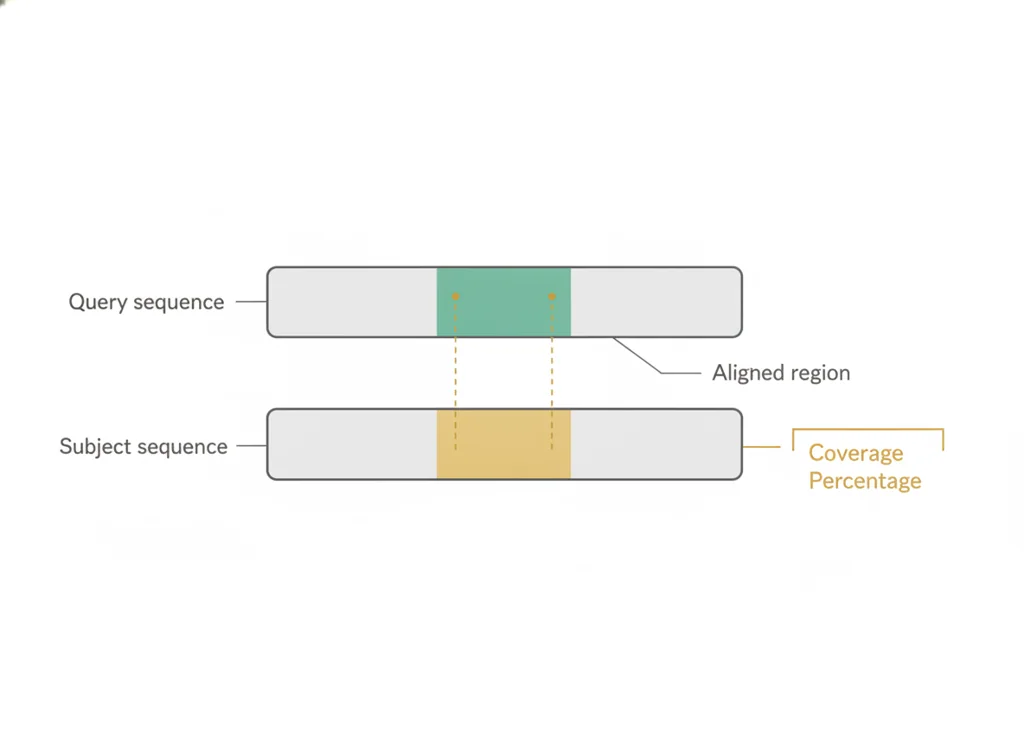
- • You will be able to explain what E-value and tell you about a match.
- • You will be able to name an unknown and back it with sequence evidence.
Open any day for its full lesson, the work due that day, and guided notes.
Lab report: annotated hit-table screenshot, one-sentence qualified comparison, and actual tutorial -check result.
One two-hit comparison table and a revised, qualified statement citing , E-value and .
One individual allocation CER and one separate, short official-source/progress record. Submit each once to its own assignment.
One paper-planning record: a starting-stock row, four 1:10 step rows with calculations and units, and one conditional signal-prediction sentence.
One model-analysis record: a labeled binding diagram with a brief explanation, four supplied model rows with your short supported statements, and one conditional comparison plus one interpretation limit.
- Hook: a real outbreak gets solved when investigators read the way you are about to.
- Today's goal: turn an unknown sequence into a named using and defend your call.
- Monday's bioethics debate on data sharing connects here: open sequence databases are why works at all.
- Reminder: your graded screenshots and write-up live in the PLTW course shell, not on paper.
Do this: Advance the PLTW Unit 1 -identification benchmark in the online course shell after today's run.
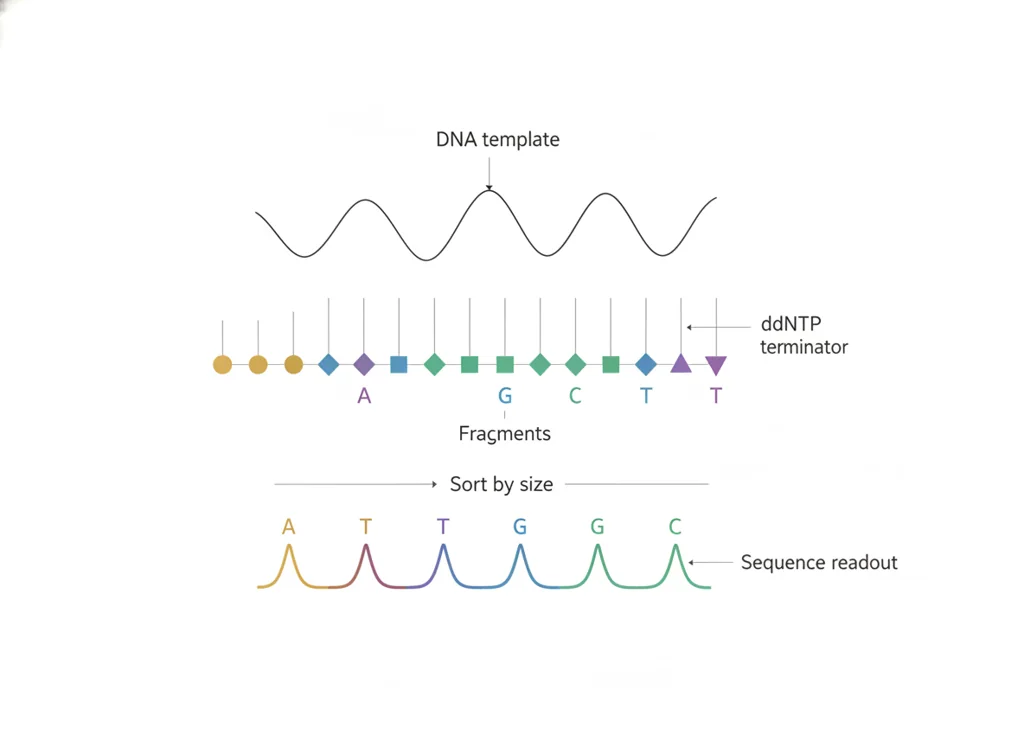
- • sequences can act as a fingerprint that identifies an organism.
- • compares a query sequence against a database of known sequences.
- • Interpret E-value and to rank matches.
- • Use a control sequence to check that a sequencing is reliable.
📋 PLTW tracker evidence due this week: hit screenshot plus a written identification with E-value and .
All PLTW activities are completed inside the PLTW course environment: this page only gives direction.
Use this chart to keep your place. Nothing on it is turned in through the portal.
| Day | Work | Turn in |
|---|---|---|
| Monday · Mon, Sep 14 | BLAST computer lab | Lab report: annotated hit-table screenshot, one-sentence qualified comparison, and actual tutorial workflow-check result. |
| Tuesday · Tue, Sep 15 | E-value and query coverage | One two-hit comparison table and a revised, qualified statement citing percent identity, E-value and query coverage. |
| Wednesday · Wed, Sep 16 | Bioethics debate: who gets the test | One individual allocation CER and one separate, short official-source/progress record. Submit each once to its own assignment. |
| Thursday · Thu, Sep 17 | Concentration and serial dilution | One paper-planning record: a starting-stock row, four 1:10 step rows with calculations and units, and one conditional signal-prediction sentence. |
| Friday · Fri, Sep 18 | Antigen-antibody and ELISA model | One model-analysis record: a labeled binding diagram with a brief explanation, four supplied model rows with your short supported statements, and one conditional comparison plus one interpretation limit. |
- T: debate post + intro
- W: shortened-day sequence check
- Th: interpretation
- F: ID ticket
Turn in: DNA identification, sequencing, BLAST, controls, query coverage, and E-value. weekly work due Pathogen ID mini-report.
Go to Schoology to turn this in.
Submit one PDF. Schoology attaches your name to your upload; on the page itself, write your period and code. Name the file: FirstName LastName - Assignment Title - YYYY-MM-DD.pdf.
Open Schoology PDF upload helpIf you cannot get in, see Mr. Mendoza. Do not skip the work.
5 panels from the illustrated semester.
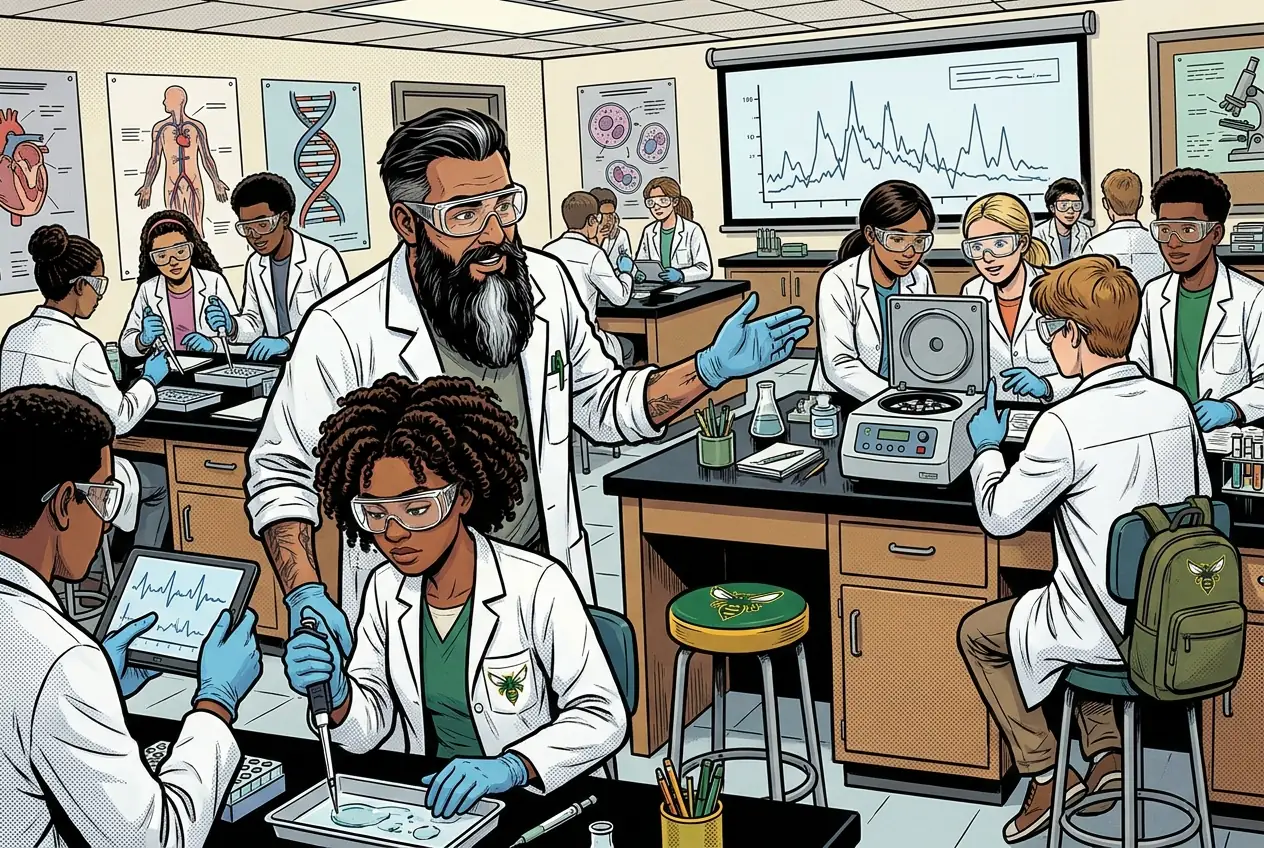
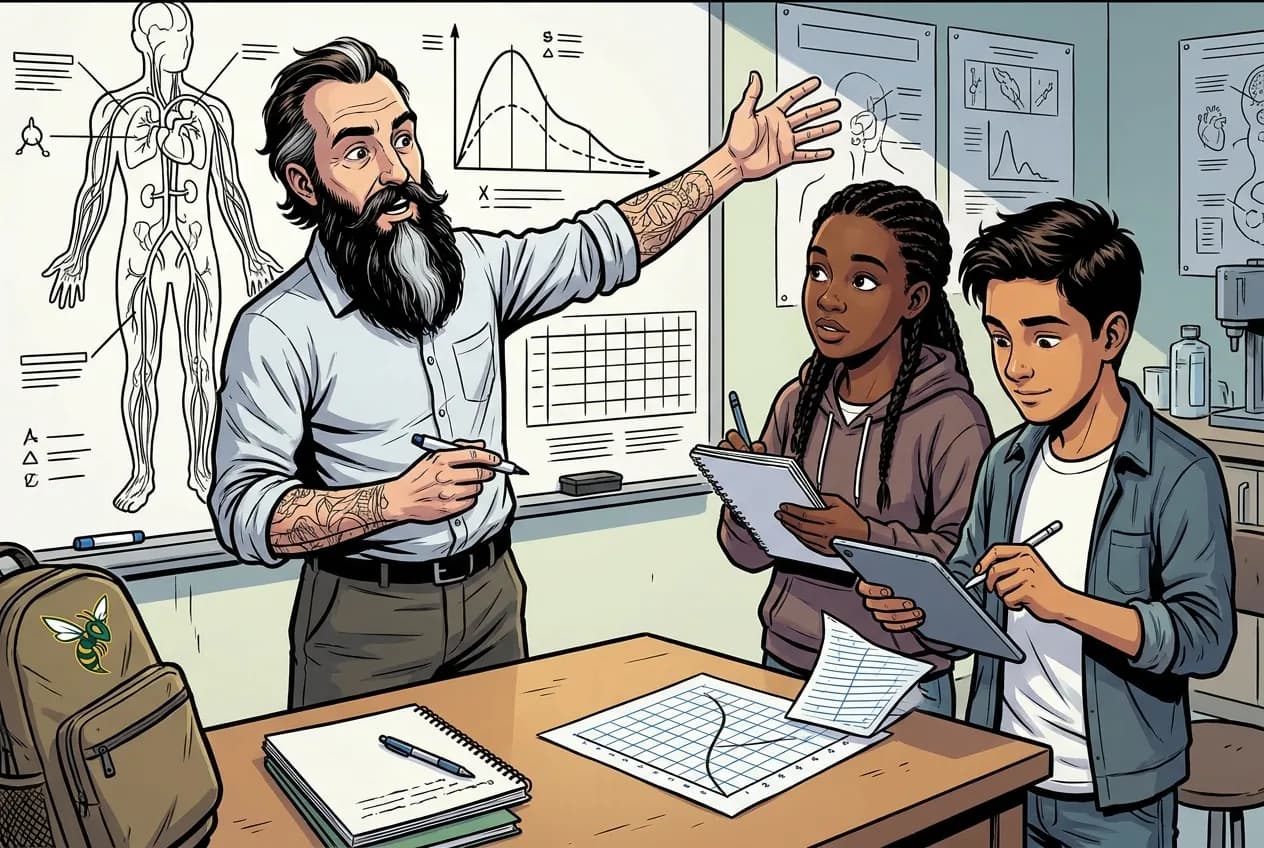
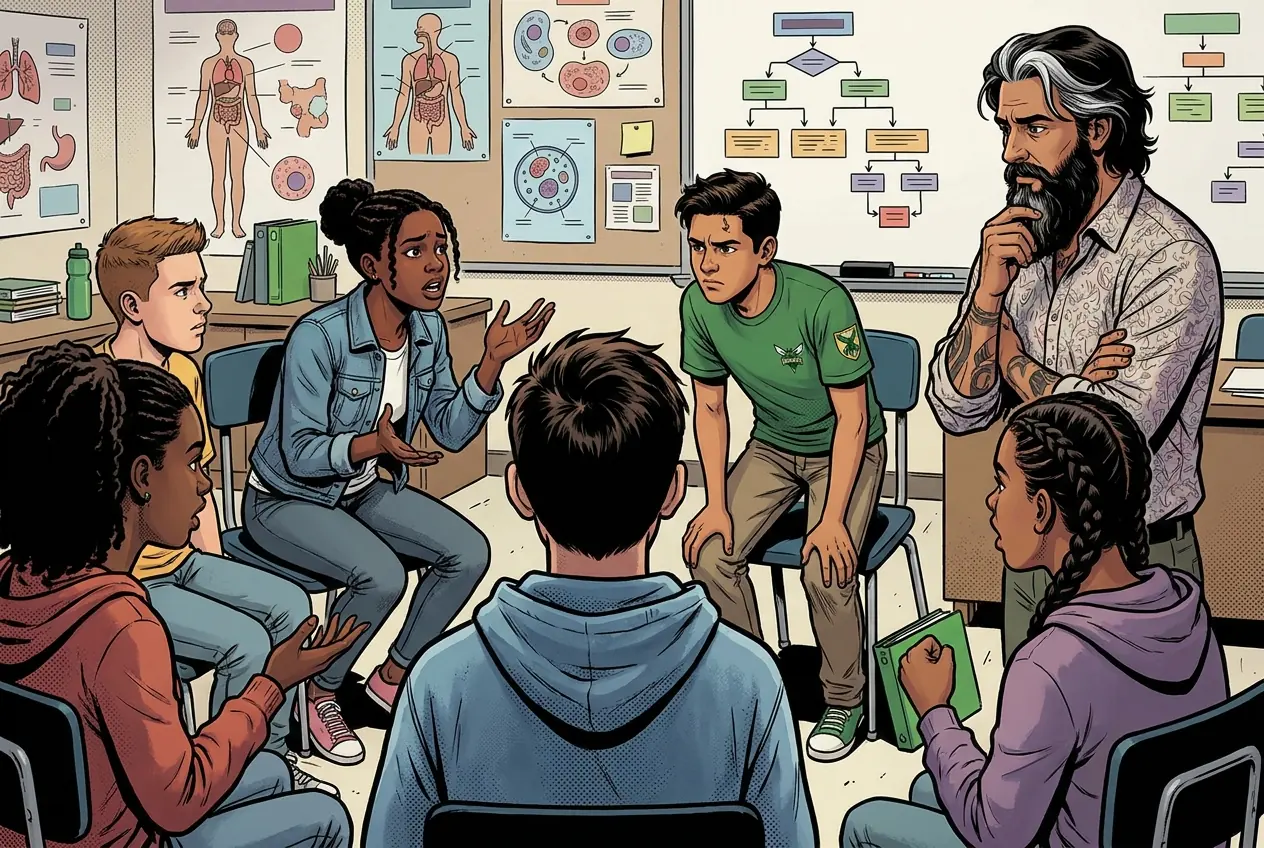
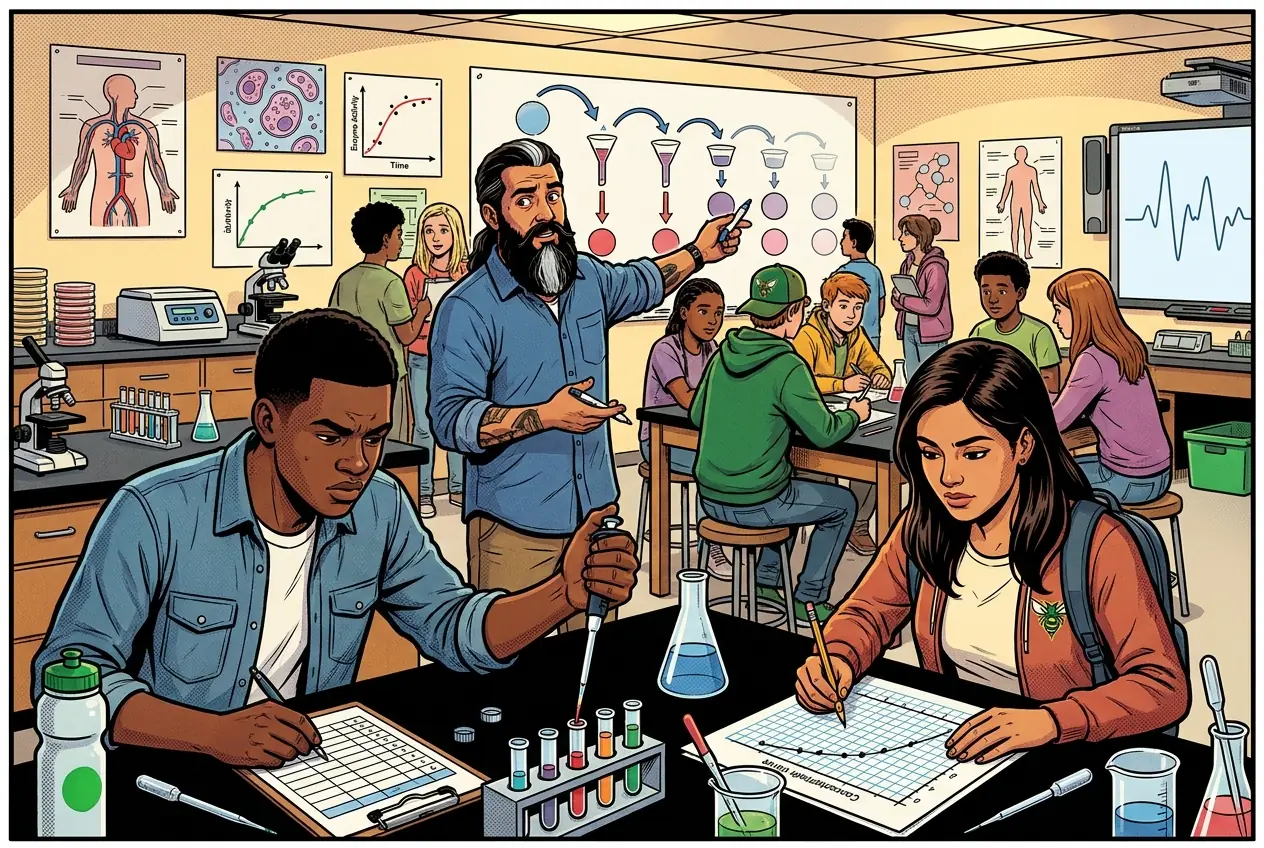
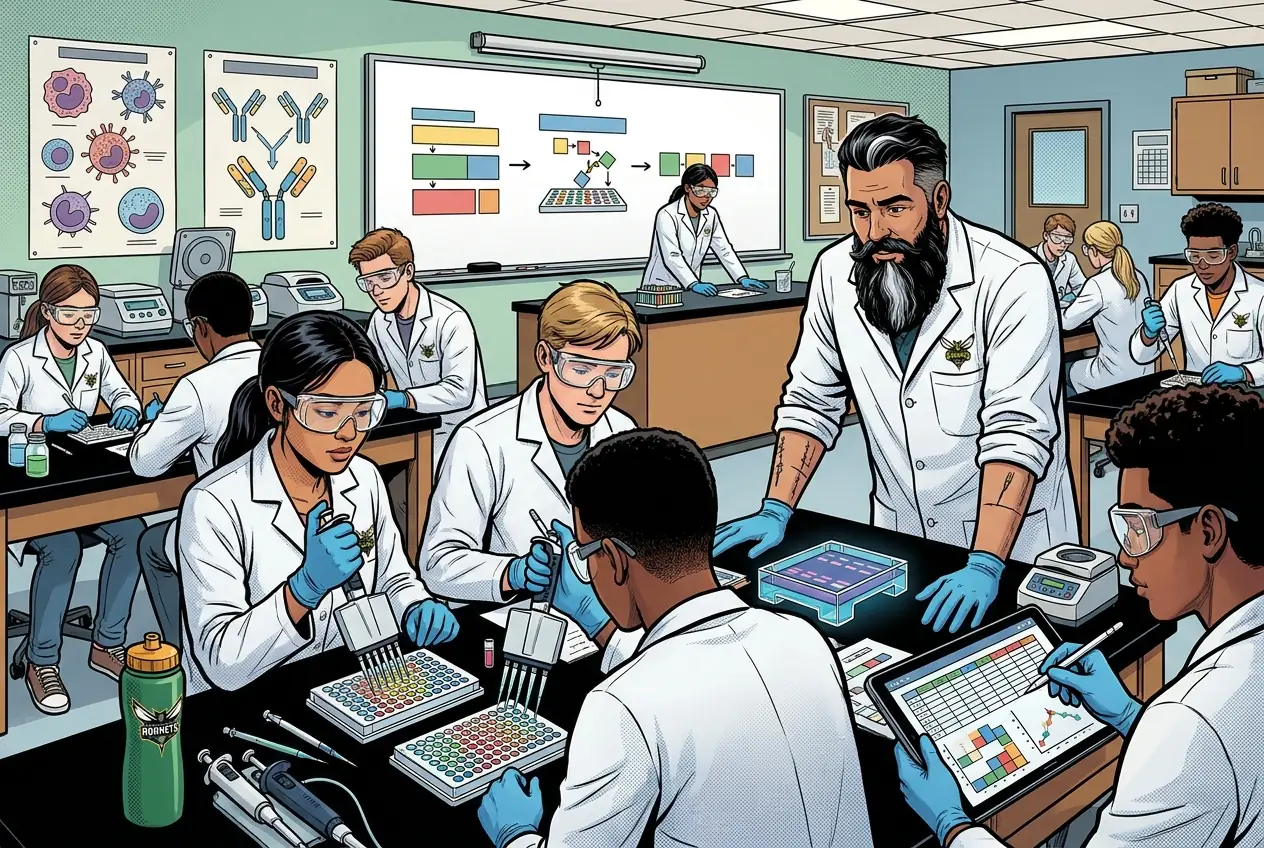
Fiction. There is no such student. The lessons, labs and dates are the real planned course; the student, the classmates and the conversations are invented.
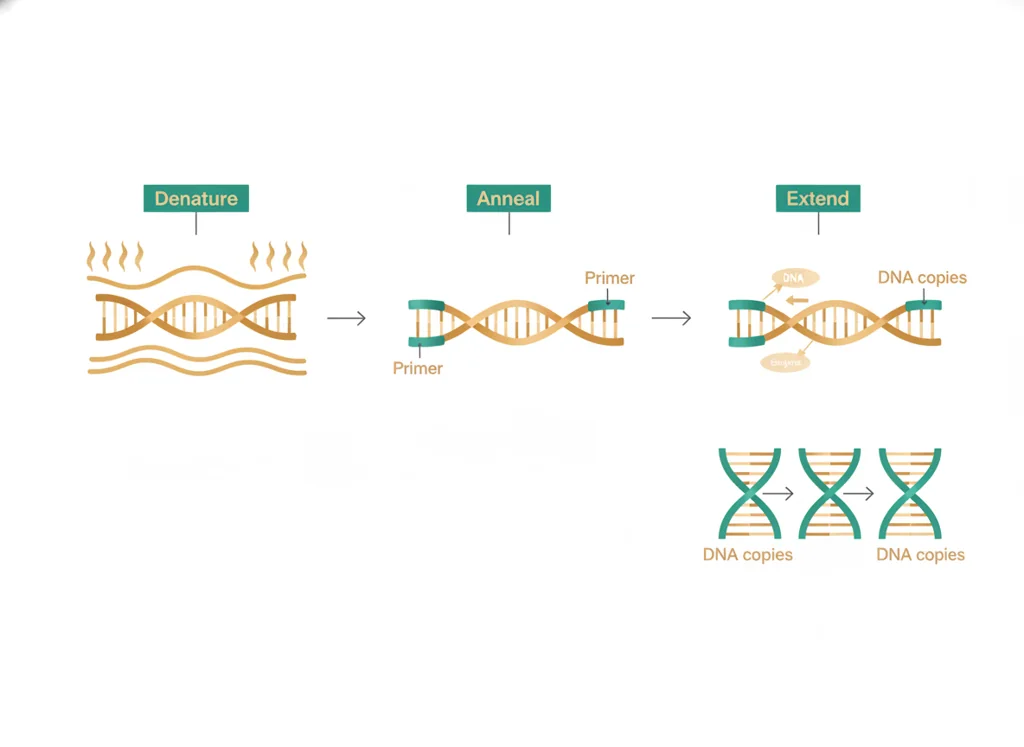
This explainer accompanies the PLTW lab protocol: watch it before lab.
Most days, this class is your PLTW coursework: and PLTW is online and individual. So being out usually just means doing exactly what we did in class, from home.
Open Clever, then myPLTWSign in to Clever with your district Microsoft account to open Schoology or myPLTW. Follow today's posted steps. If myPLTW will not open, use the posted alternative and tell Mr. Mendoza. Turn in your completed work through the Schoology assignment.
You can't do those from home: do this instead: Virtual bacterial ID with screenshot explanation.
Class still runs. A substitute will post today's plan: complete the online activity above; it's built to be self-guided. Need the concept taught without a teacher? Use this authoritative explainer:
NCBI BLAST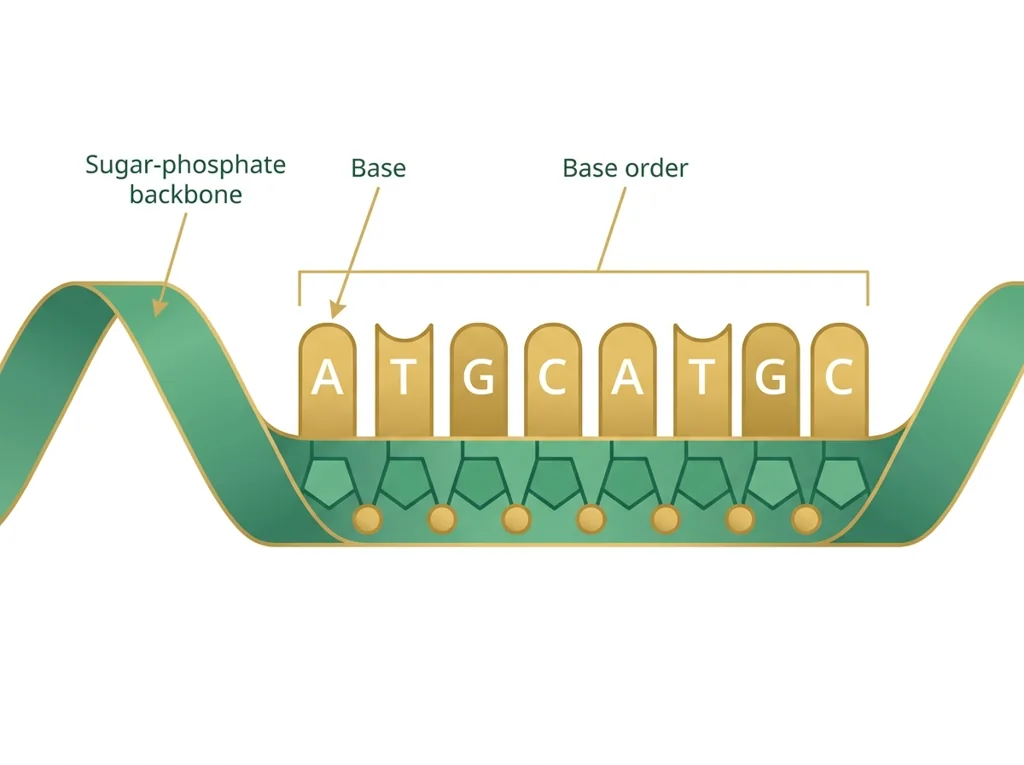
Classroom documents for this lesson are posted in Schoology. Open Clever, then Schoology, and find each one by the name shown on its card.
Open this when the class reaches this activity and use it to complete the required lesson artifact.
Use this after the required lesson work when you are ready for a harder application or a deeper connection.
Use this if you were absent, got stuck, or need another pass before you submit the lesson artifact.
Sign in to Clever with your district Microsoft account to open Schoology or myPLTW. Follow today's posted steps. If myPLTW will not open, use the posted alternative and tell Mr. Mendoza. Turn in your completed work through the Schoology assignment.