
Clinical skills reference · PBS + Medical Interventions

Patient Intake

Begin with a respectful conversation. Turn what a person reports into a clear record, preserve what is unknown and hand off the facts responsibly.
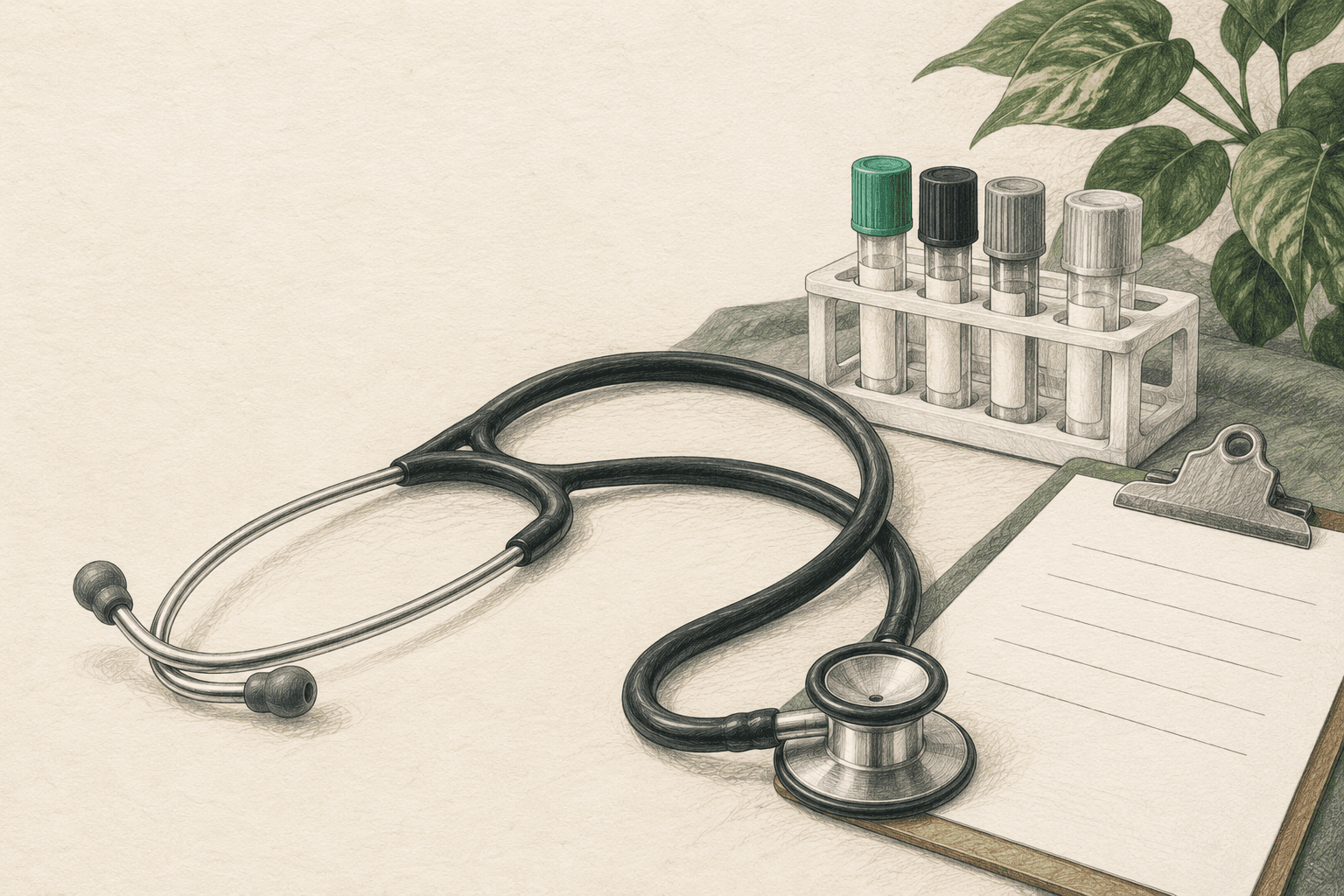
Your reference, whenever you need it. Start with the guide, try the fictional practice, then return to today's Schoology lesson for the required work. These activities add no submission. Keep actual health information private. Real equipment practice is voluntary and teacher or school-nurse supervised.
Keep the guides and links together.All files and Google Drive linksOpen the complete resource index, including a Google Drive link for every downloadable guide, teaching sound and model.Open the Google Drive reference folder (opens in a new tab)Browse the new files and resource index, with links to existing course downloads.Download the clinical skills reference PDFSave or share the illustrated companion with clickable links to the pages, Drive resources, sounds, videos and manuals. Audio and video play through the links.
01 · From introduction to handoff

Listen first. Make the record useful.

A useful visit starts with a careful conversation. Intake means gathering and checking the information the care team needs before an examination. Practice listening, asking follow-up questions and making a clear record. Use only the fictional case supplied here or a teacher-approved case card. This reference supports PBS Activity 2.1.1 Building a Medical History and clinical communication practice in either class. It adds no assignment or submission.

  1. Invite the storyExplain your role, ask permission and listen.
  2. Check the detailsClarify the timeline, medicines, allergies and gaps.
  3. Separate the evidenceReported symptoms and measured findings need distinct labels.
  4. Confirm and hand offRead back the summary and request teacher review.
A clinical intake moves from permission and listening to checked facts and a responsible handoff. This is patient-history practice, separate from forensic evidence intake.
Step 1 of 8

Prepare a private practice space

Open the fictional case card and the assigned recording sheet. Keep actual health information off this page, shared screens and recordings. In partner practice, both people may choose an observer role instead. Use only teacher-approved equipment and follow the classroom cleaning instructions.

Why this matters. Good records begin with the correct source and a setting where people can speak without pressure.

We will use the supplied practice case. You do not need to share anything about your own health.
Read all steps together
  1. Prepare a private practice space. Open the fictional case card and the assigned recording sheet. Keep actual health information off this page, shared screens and recordings. In partner practice, both people may choose an observer role instead. Use only teacher-approved equipment and follow the classroom cleaning instructions. Good records begin with the correct source and a setting where people can speak without pressure.

    We will use the supplied practice case. You do not need to share anything about your own health.

  2. Introduce yourself and ask permission. State your name and student role in the spoken role-play. Match the fictional case code to the teacher's record. Explain what you will ask and who will receive the practice summary. Ask whether the person agrees before continuing; check again before any approved measurement. Stop if they withdraw permission. Consent means agreeing after understanding what will happen. A classroom role-play does not authorize real clinical care.

    I am the student interviewer for this practice. May I ask about the concern on your case card? You can pause or stop.

  3. Let the person describe the main concern. Begin with an open question, one that invites more than yes or no. Listen without interrupting, then identify the main reason for the visit. This is sometimes called the chief complaint. Avoid suggesting a diagnosis in your question. The person's own description tells you what matters to them and what needs clarification.

    What brings you in today? What would you most like the care team to know?

  4. Clarify the symptom story. A symptom is something the person experiences and reports. Ask when it began, where it occurs, what it feels like, how it affects usual activities and what makes it better or worse. Ask one question at a time. If the case card does not answer a question, record that gap instead of inventing a reply. Specific follow-up questions turn a broad concern into a timeline that another reader can follow.

    When did the headache begin? What were you doing when you first noticed it?

  5. Check relevant history, medicines and allergies. Use the fictional record to ask about earlier conditions, procedures, family health patterns and relevant daily habits. Ask about prescribed medicines, medicines bought without a prescription and supplements. Check the name, amount and timing when supplied. For a reported allergy, clarify the substance and reaction. Keep unknown information marked as unknown. A missing allergy answer does not mean no allergies. A medicine list should preserve uncertainties so a clinician can check them.

    You mentioned one tablet yesterday. What was its name and amount? If you do not know, I will mark those details as needing confirmation.

  6. Separate reported information from measurements. Label what the person says as reported. Label a measurement with its value, unit and supplied method or conditions. Objective information comes from observation or measurement; subjective information is the person's experience. Both matter. If the case gives no value, write 'measurement not supplied' rather than a typical value. Use 'not measured' only when the record states the measurement was not performed. A reader must be able to tell what was said, what was actually measured and what is still missing.

    Reported: felt warm last night. Temperature measurement: not supplied. That gap does not tell you whether someone measured it. Do not invent a number or a confirmed fever.

  7. Summarize and check understanding. Read back the main concern, timeline and uncertain details in plain language. Ask the person to correct anything you missed. Explain the teacher-directed next step. Use teach-back by asking the person to describe that plan in their own words. Teach-back checks your explanation; it is not a memory test. Corrections prevent an early misunderstanding from traveling into the next part of the visit.

    Have I understood the concern correctly? To check that I explained the next step clearly, what will happen after this interview?

  8. Give a clear handoff. A handoff is a transfer of relevant information to the next responsible person. State the reason for the visit, useful background, supplied findings and what needs checking next. Report uncertainty directly. For student practice, give this summary to your teacher and request review; do not diagnose, recommend a medicine or decide treatment. If a real person becomes unwell, stop the activity and alert the teacher or school nurse immediately under the school's emergency plan. The next reader needs accurate evidence and a clear request, including the limits of your student role.

    This practice case reports a headache since yesterday. Medicine details and allergies need checking. No vital signs were supplied. Please review the history and direct the next step.

02 · A fully supplied fictional case

Try both sides of the conversation.

Original fictional practice case, INTAKE-PRACTICE. This is not a PLTW patient's record or the answer to an assigned case. Play the interviewer using only the statements below. You may read both roles yourself. No personal information is needed.

Read the interview below, then choose how you would clarify the gaps. You can practice alone or with a willing partner. Do not substitute your own medical history.

Open the fictional interview and source record

Opening question

Interviewer: What brings you in today?

Main concern, reported

Practice patient: I have had a headache since yesterday afternoon. I would like the clinician to check it.

Focused follow-up

Interviewer: What changes how it feels? Practice patient: Reading a screen makes it worse. Taking a break helps a little.

Medicine details, reported

Practice patient: I took one pain tablet yesterday evening, but I do not know its name or amount. The card supplies no further medicine information.

Allergy history

Practice patient: I do not know whether I have any medicine allergies. The history needs confirmation.

Other history

Earlier conditions, procedures, family history and other symptoms are not supplied. Record these gaps; do not fill them with guesses.

Measured findings

No temperature, pulse, breathing rate, oxygen saturation or blood-pressure measurement is supplied. Record each as 'measurement not supplied in this case.' The missing entries do not establish whether measurements were performed.

Correction check

Interviewer: I recorded a headache since yesterday afternoon and an unidentified tablet taken yesterday evening. What should I correct? Practice patient: Those details are correct.

Next step and teach-back

Interviewer: I will share this fictional history with the teacher for review. What happens next? Practice patient: The teacher reviews the history and tells us the next practice step.

Use these practice questions to find your next step. Read the feedback, revisit the guide, and try again. Nothing is sent or saved.

Check 1Which follow-up best clarifies the medicine gap?
Check 2What can you conclude from this practice record?
Check 3A partner develops real breathing difficulty during practice. Should you finish the interview?
Compare with a careful handoff

Situation: INTAKE-PRACTICE reports a headache since yesterday afternoon. Background: screen reading reportedly worsens it and a break helps a little. One unidentified pain tablet was reportedly taken yesterday evening. Findings and limits: allergies are unknown; other history and all vital-sign readings are not supplied in this case. Whether measurements were performed is not established. The cause is not established. Request: teacher review of the record and direction on the next practice step. This is a classroom adaptation of SBAR: situation, background, assessment and recommendation or request. Here, assessment stays within supplied findings and uncertainties; it is not a student diagnosis.

This example belongs only to the fictional practice above. Use your assigned record, not this case's details, for class work.

03 · Human demonstrations and course audio

Hear how a clear conversation works.

Human demonstration: patient-centered communication

Dr. Cliff Coleman demonstrates OHSU's four habits for a clear clinical conversation. This AHRQ-recommended example runs about 18 minutes. Watch how he invites the story, clarifies concerns and checks understanding; use our student walkthrough for the classroom boundaries.

Open the original video on YouTube (new tab). Use this link if embedded playback is unavailable. Loading the video connects to its provider.

Human demonstration: clear conversation during a visit (opens in a new tab)On the AHRQ page, open the video of Dr. Clifford Coleman. Watch for open questions, plain language and checking understanding. This is a communication demonstration, not a complete student intake protocol. The page also supplies written strategies if video is blocked.Patient intake voicemail: fictional cold open (M4A)Existing 34-second AI-generated course introduction. Use it as a listening prompt. It is not a human recording or a complete intake demonstration; use the written walkthrough and fictional interview for the full process.Human handoff examples and SBAR guide (opens in a new tab)Use the scenario videos and written guide to notice how a care team organizes a handoff. Clinical examples show professional roles; your classroom request remains teacher review, not diagnosis or treatment.

The short local audio is an AI-generated fictional introduction, not a full intake demonstration. The complete written process and practice interview above supply everything needed for this page.

04 · Readiness checklist

Ready to listen, document and hand off?

Check each step you can explain or demonstrate. Your checks stay on this page until you leave or reset. They are not a grade or a submission.

0 of 8 ready

05 · Practice, not a grade

Make the record honest and useful.

Use these practice questions to find your next step. Read the feedback, revisit the guide, and try again. Nothing is sent or saved.

Check 1Which opening gives the person the best opportunity to explain the reason for the visit?
Check 2The fictional card says the person does not know their allergy history. What should the record say?
Check 3The person says, 'I felt warm last night.' No thermometer reading is supplied. Which entry preserves the evidence?
Check 4During a voluntary partner role-play, the person asks to stop. What comes next?
Check 5After explaining the next practice step, which question checks how clearly you explained it?
Check 6Which handoff stays within the evidence and the student role?
06 · Sources

The practice rests on clear communication.

AHRQ: Communicate Clearly (opens in a new tab)Professional guidance supporting the communication and documentation principles used in this student practice.AHRQ: Use the Teach-Back Method (opens in a new tab)Professional guidance supporting the communication and documentation principles used in this student practice.AHRQ: SBAR for a structured handoff (opens in a new tab)Professional guidance supporting the communication and documentation principles used in this student practice.NICE: recording drug allergy status (opens in a new tab)Professional guidance supporting the communication and documentation principles used in this student practice.American Medical Association: informed consent (opens in a new tab)Professional guidance supporting the communication and documentation principles used in this student practice.MedlinePlus: communicating with patients (opens in a new tab)Professional guidance supporting the communication and documentation principles used in this student practice.
John Hay Biomedical · Learn the method. Record the evidence. Respect its limits.
Practice results stay in this page's memory and clear when you leave or reset. Conceptual still-life artwork was generated with AI; it is not a clinical equipment setup. Return to the student hub.