
What Tells Tissues When and Where to Grow: The Signaling Centers SHH, BMP, FGF
This reading contains every idea and every piece of evidence needed for today's decision. The research links at the end are optional.
Why this matters
About 1 in 700 babies is born with a cleft, so learning how nearby tissues work together can help researchers find the missed step.
The question you are trying to answer
How do nearby tissues tell one another where and how much to grow?
Begin with the idea you already earned
True palatal fusion requires removal of the midline epithelial seam so mesenchyme becomes continuous.
Study the analogy before the biology
- Why does each section receive a different cue?
- What happens if one cue is missing but the others continue?
- How can timing and location change the meaning of the same cue?
Turn the analogy into three rules
Limit: Signaling networks include feedback and gradients, not a single conductor.
Map those rules onto the biology
Cells send protein signals to nearby cells. A signal only matters when the target cell can receive and respond to it.
SHH, BMP, and FGF pathways help coordinate growth and pattern in the developing palate.
Because signals interact, blocking one pathway tests one part of a network rather than proving a single master cause.
Read Mateo's labeled case evidence
SHH is produced in palatal epithelium and influences nearby mesenchyme.
Signal source and target can be different tissues.
BMP and FGF pathways help regulate shelf growth and regional identity.
Several pathways coordinate the process.
Changing a pathway in a model can alter proliferation or shape in specific shelf regions.
Signal effects depend on place and time.
Make the concrete decision
You are interpreting a pathway-inhibition experiment.
A drug blocks SHH response only in palatal mesenchyme, and anterior shelf proliferation drops.
- Conclude that mesenchymal SHH response supports regional growth in this model.
- Conclude that SHH is the only signal in palate development.
- Conclude that Mateo received the same drug.
Choose the bounded conclusion and cite source-target and growth evidence.
Claim ceiling: You may infer a pathway role in the model and tissue tested. You may not erase other pathways or transfer exposure to Mateo.
Write the 10-year takeaway
Signals such as SHH, BMP, and FGF carry local instructions that coordinate growth, position, and cell fate.
- What are the source and target in epithelial-mesenchymal cross-talk?
- Why does one inhibitor result not prove that only one signal matters?
Glossary in plain English
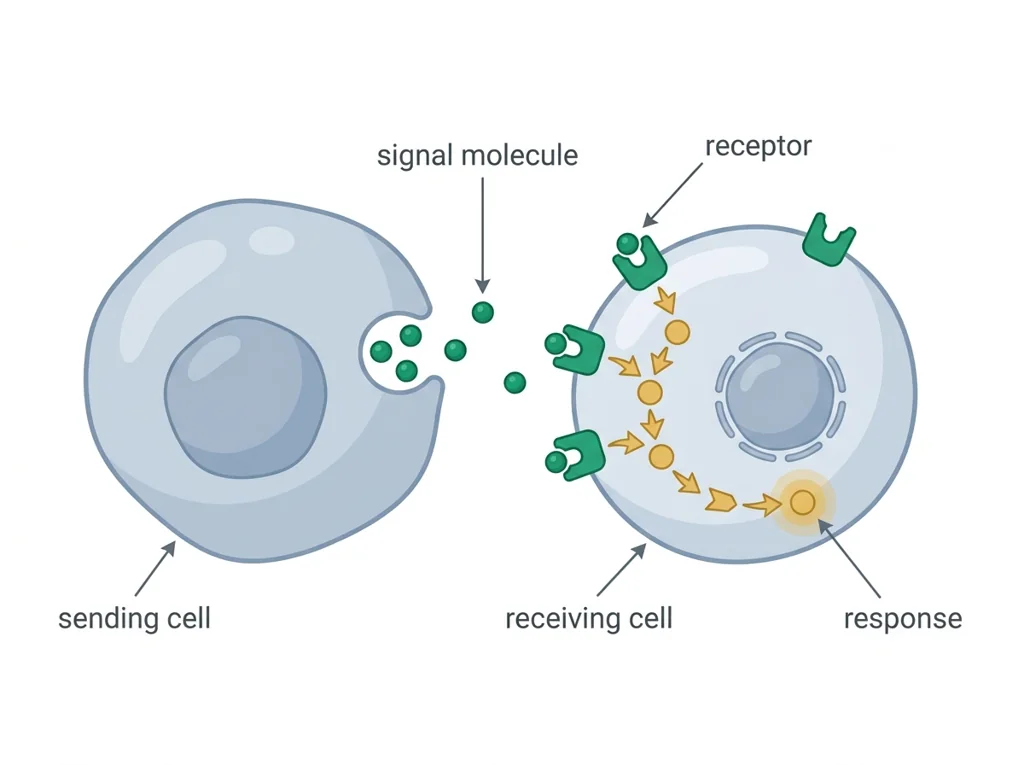
A chemical messenger released by one cell that travels to another cell and triggers a specific response.
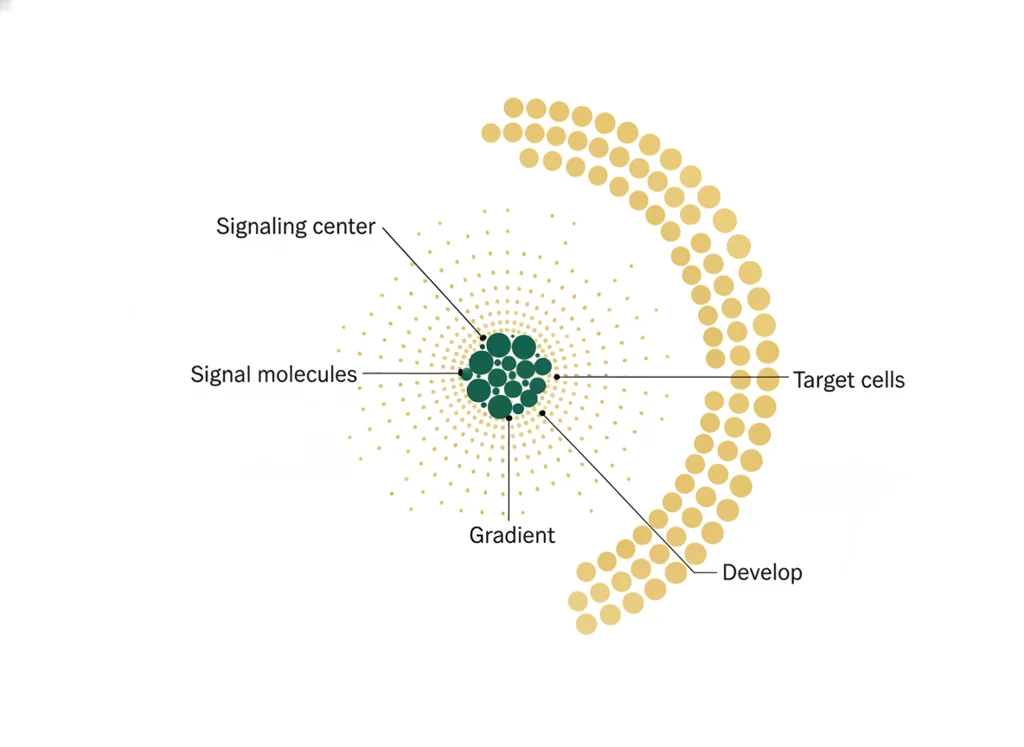
A small group of cells in a developing embryo that releases signals telling nearby cells how to grow and what to become.
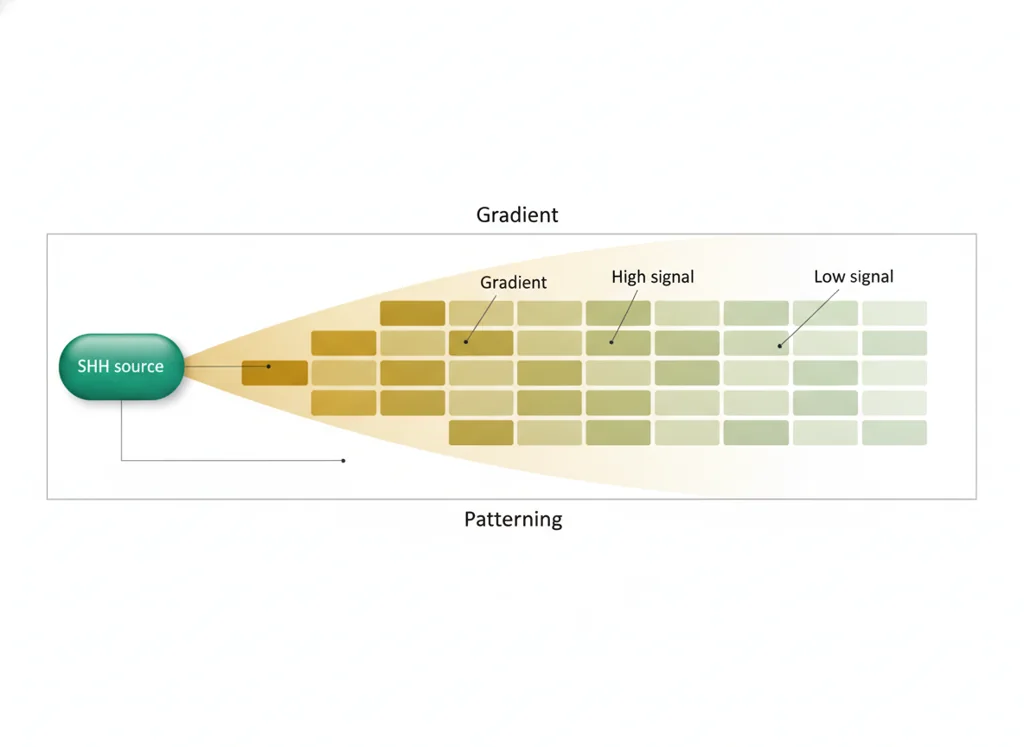
A signaling molecule that tells cells their position during development and helps pattern the face, limbs, and brain.
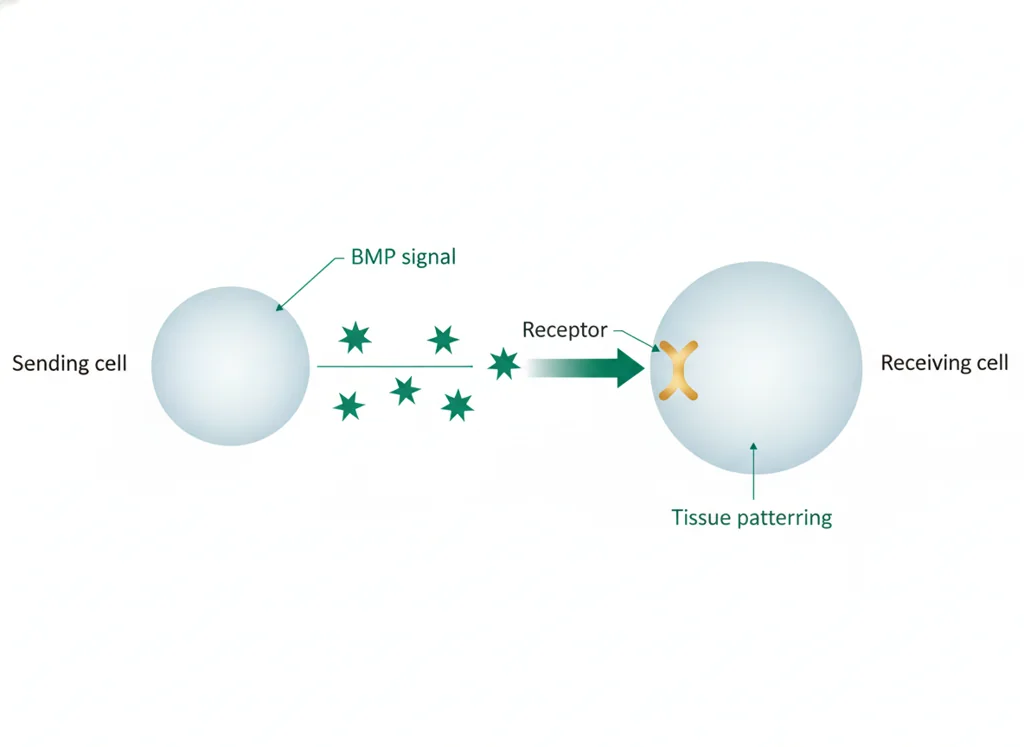
Bone morphogenetic protein, a signaling molecule that tells cells where to form bone, cartilage, and other tissues during development.
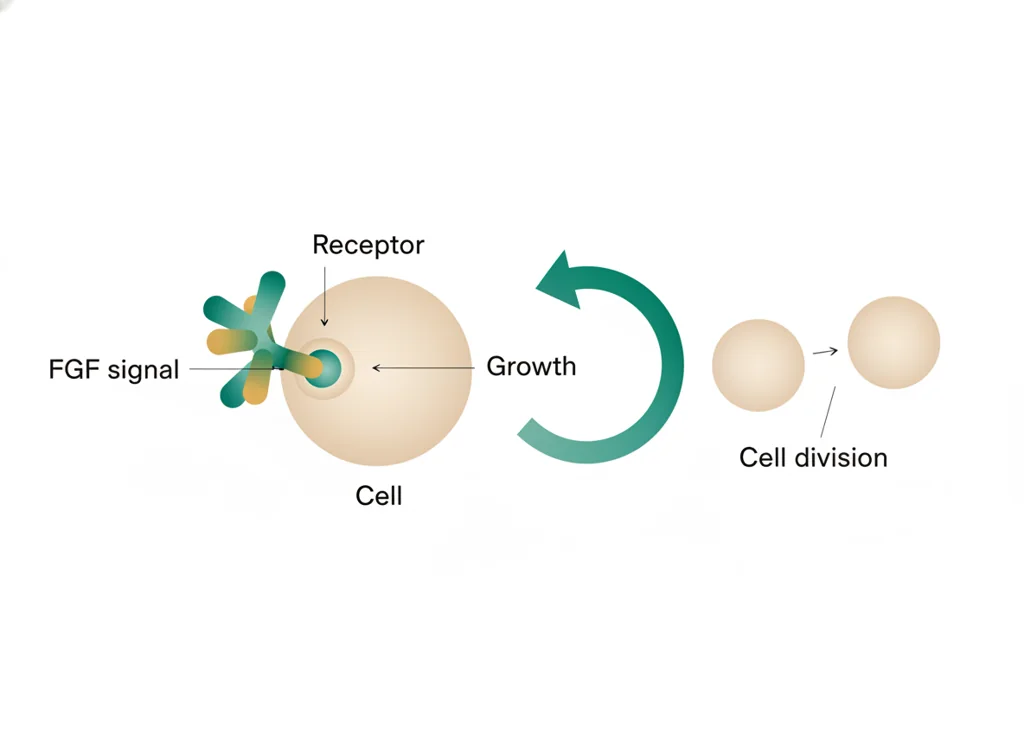
Fibroblast growth factor, a signaling molecule that drives cells to grow and divide while shaping developing tissues.
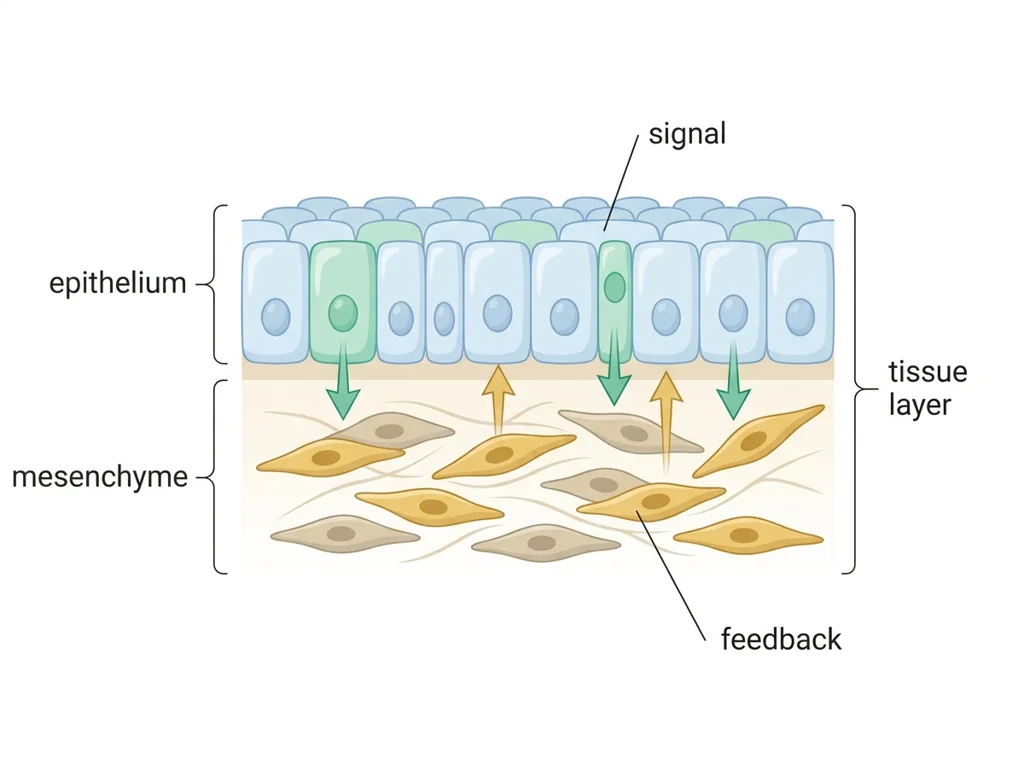
Back-and-forth chemical signaling between surface epithelial cells and underlying mesenchyme cells that guides how tissues grow and form.
Research citation trail (advanced)
You do not need these papers or database records to finish the lesson. They document where the plain-language explainer's claims come from and are intended for teachers or advanced readers.