Rough draft.This research track is under review with Dr. Atit's lab. Content and sequence may still change.
The Baby Mateo Case
Developmental domainPrinciples of Biomedical Science (PBS)Lesson 10 of 20Your seat: Molecular Embryologist

What Tells Tissues When and Where to Grow: The Signaling Centers SHH, BMP, FGF

Discovery question

What signals tell the palatal shelves how much to grow and where, and what happens to a shelf if a signal is missing?

💡 The shelves grow the right amount in the right place because signaling molecules act as instructions, and removing an instruction gives a too-small or mis-grown shelf, one way a can .

The plan

Prerequisite check

Before this page, you should know
  • For the to be one , the on the left and right must become continuous, which requires removing the seam between them.
  • Scientists agree the seam disappears, but they have proposed different mechanisms for how its cells leave: EMT, , , and live-.
Today's new idea is only
The shelves grow the right amount in the right place because signaling molecules act as instructions, and removing an instruction gives a too-small or mis-grown shelf, one way a can .
Learn first

What you will learn

Goal: Explain that palatal shelves grow on schedule because signaling molecules (SHH, BMP, FGF) are released from specific places and act as instructions for when and where grows, and that losing a signal causes a too-small or mis-grown shelf.

Know by the end
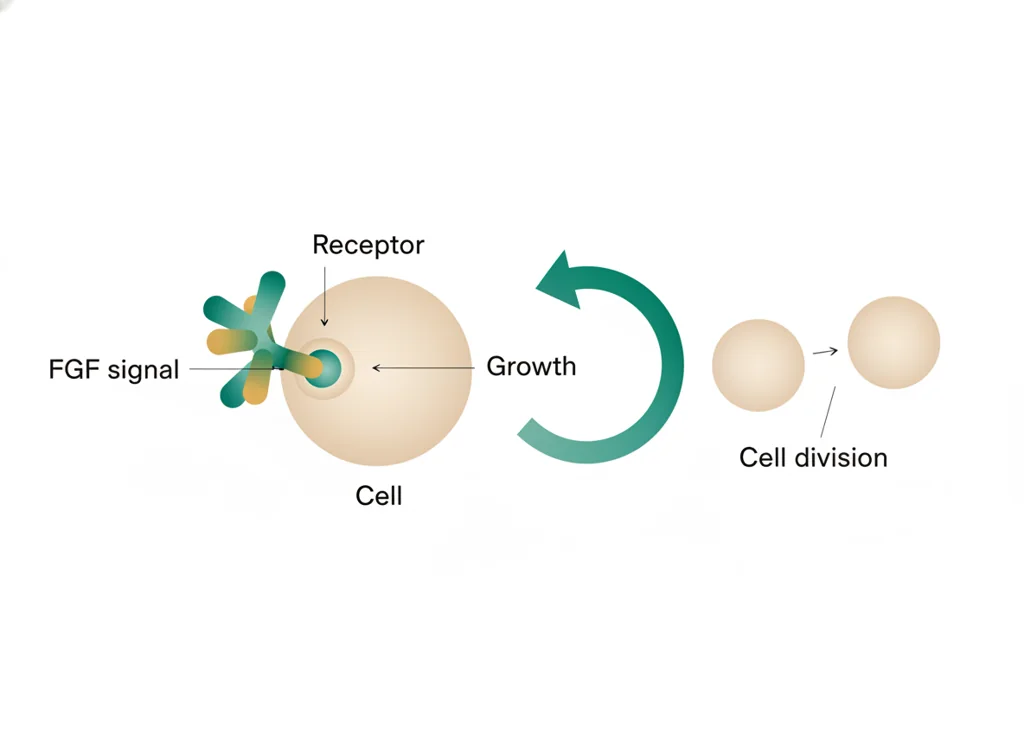
  • A is a chemical message a cell releases to change nearby cells, and the cells that release it are a .
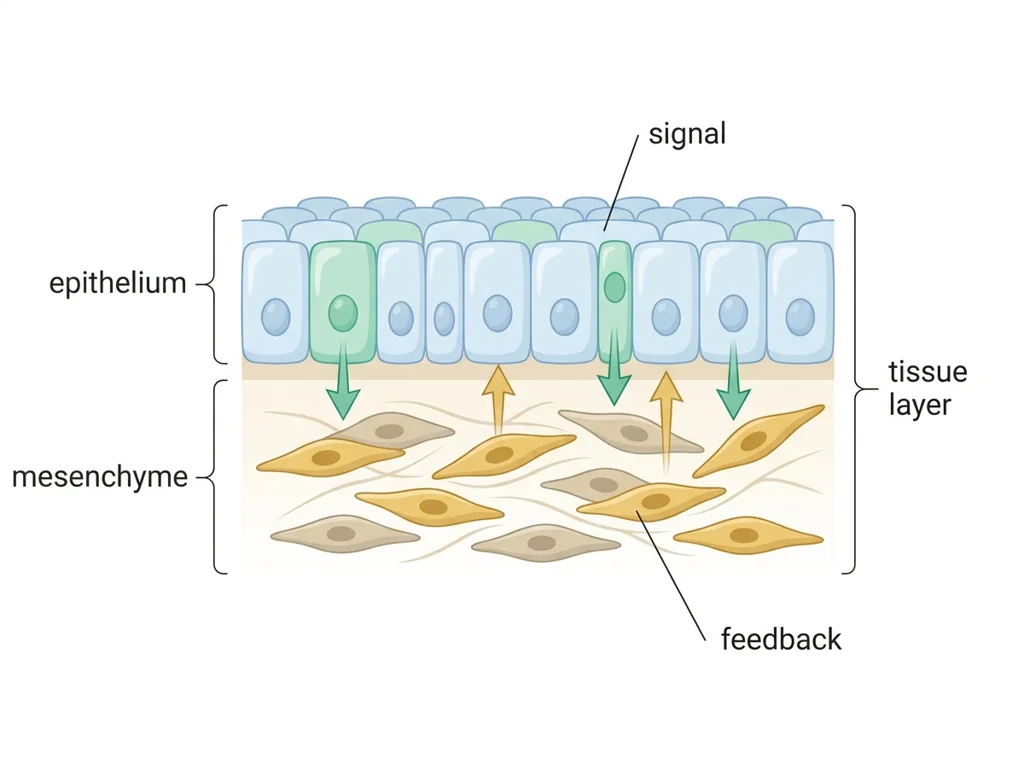
  • In the shelf, the and the carry on constant .
  • SHH from the tells the shelf to proliferate; FGF10 from the mesenchyme keeps SHH on, making a ; BMP drives growth especially in the and is dose-sensitive.
  • Removing a signal gives a too-small or mis-grown shelf: blocking Hedgehog reception causes complete agenesis, and disrupting FGF gives a poorly grown shelf with wrong-place adhesions.
Learn first

Model: Signals as instructions, and what happens when you remove one

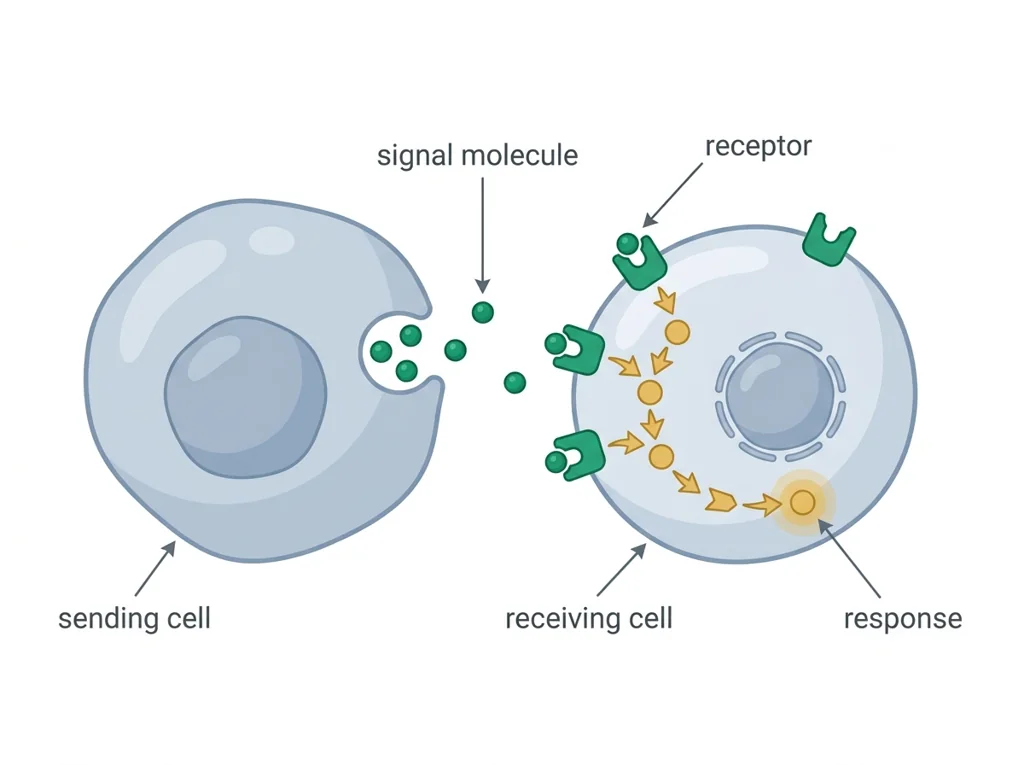
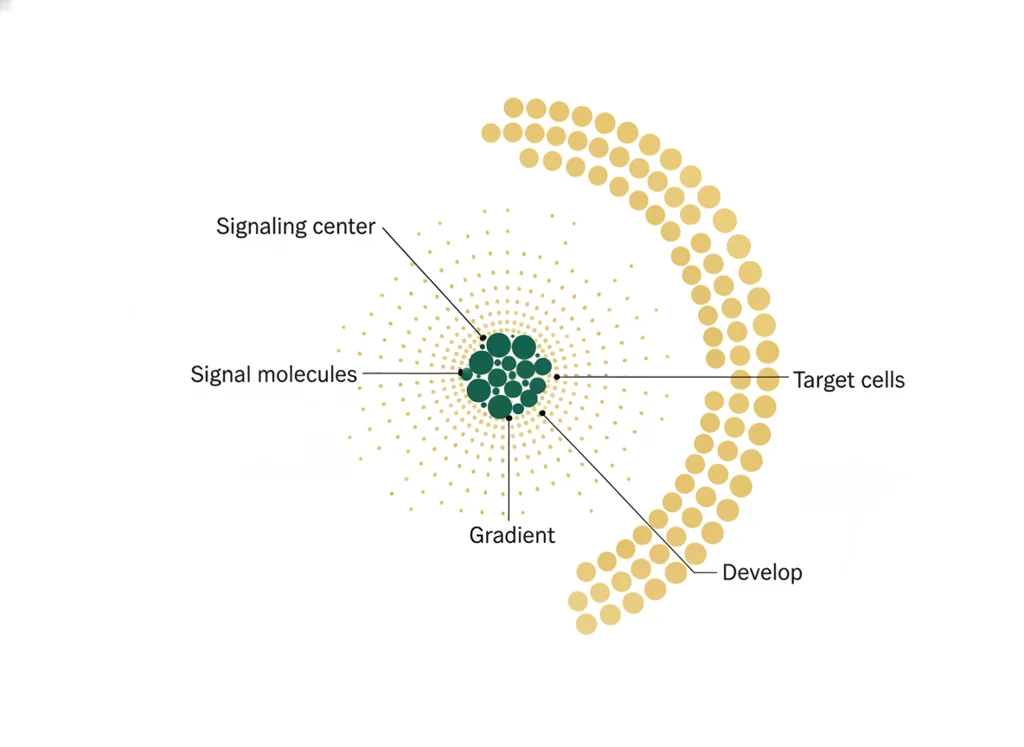
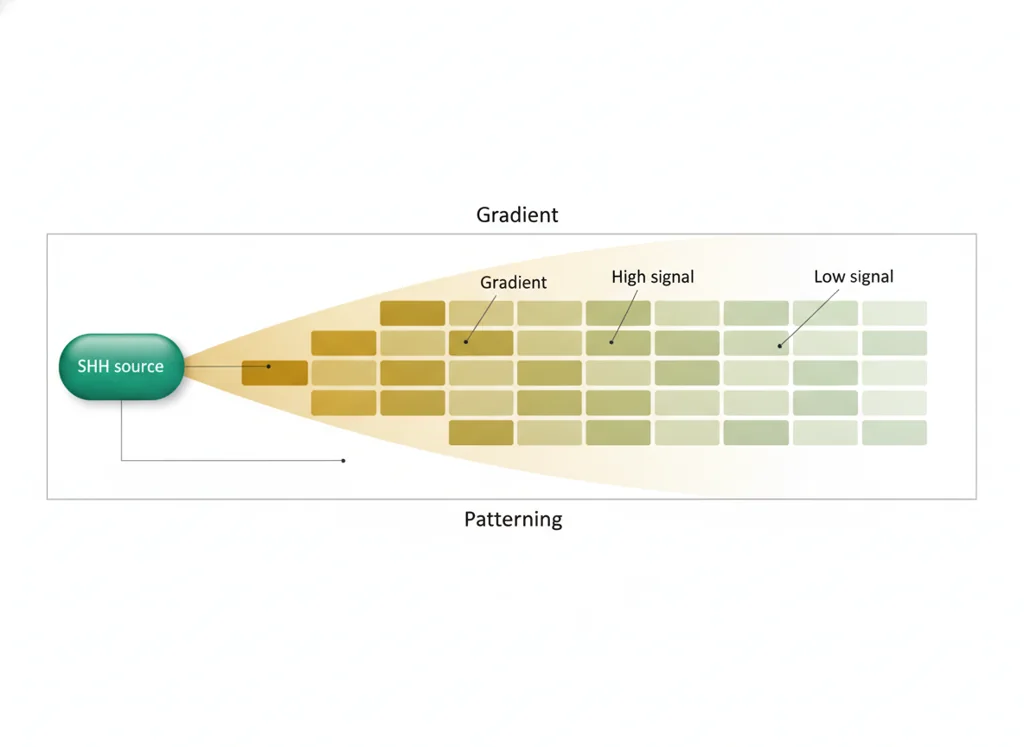
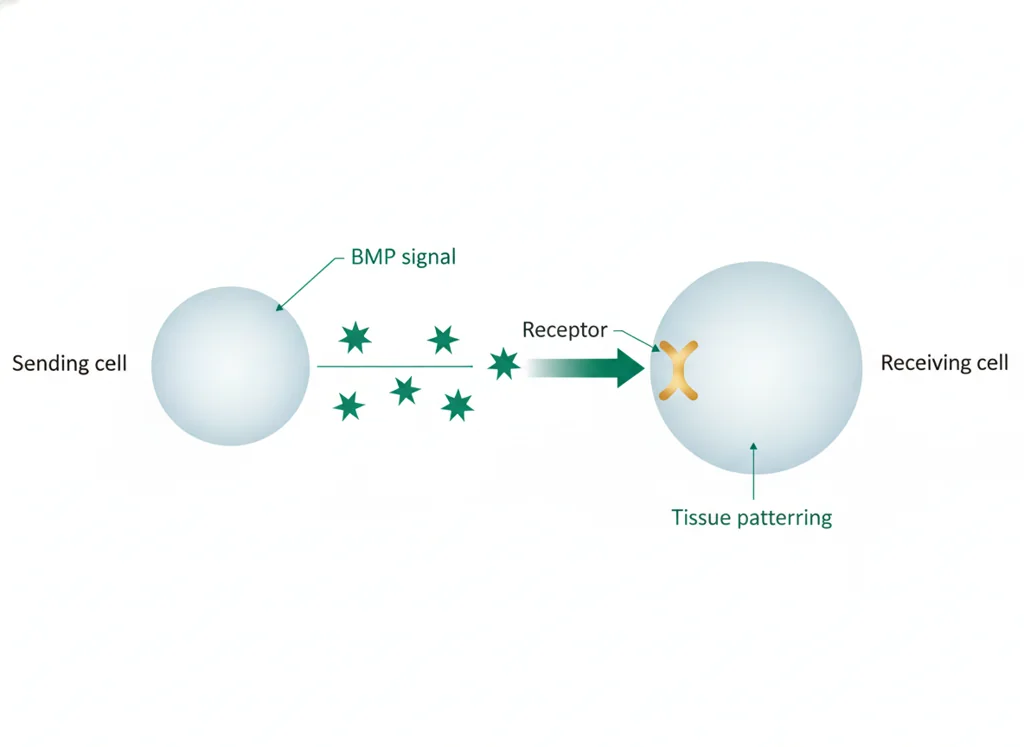
A is a chemical message a cell releases that changes the behavior of nearby cells, and the cells that release it are a , like a small broadcast tower. In the the two layers talk constantly, the (surface lining) and the (growing inner tissue), a back-and-forth called . is released from the oral epithelium and tells the shelf mesenchyme to proliferate; it is the central player in shelf growth. FGF10 from the mesenchyme keeps SHH switched on, so the two layers keep each other going in a loop. BMP drives growth especially in the front () of the palate and is dose-sensitive, since too little or too much both cause problems.

Now remove a signal and watch the shelf. Block the 's ability to receive Hedgehog (delete the transducer Smo) and the secondary does not form at all (complete agenesis): no SHH signal, no growth, no shelf. Disrupt the FGF10-to- conversation and the shelf grows poorly and sticks to wrong surfaces (palate to tongue, palate to jaw), giving a . Lose BMP signaling and the shelf grows too little, especially in front, and may fail to elevate or fuse. The pattern: each signal is an instruction; remove it and the shelf grows too little, mis-grows, or never forms, and a shelf that grew too little cannot reach the to fuse.

Read this in pieces, one chunk at a time
Do the work

Explore (work the model before reading on)

  1. What is a , and what is a ?
  2. Which two layers talk to each other in the shelf, and what is that conversation called?
  3. What happens to the secondary when the cannot receive the Hedgehog (SHH) signal?
  4. SHH tells to grow, and FGF10 keeps SHH on. Why is it useful to describe this as a LOOP rather than a one-way order, and what happens if you break either side?
  5. BMP causes trouble whether there is too little OR too much. Predict why a developmental signal might need to be at just the right level, not simply more is better.
The plan

Guided notes

1

Signals and signaling centers

Model start: Cells cannot see the whole , so they coordinate growth with signaling molecules released from a .
  • In the , the surface and the inner carry on a constant -mesenchymal ____ (cross-talk).
  • SHH from the tells the to ____ (proliferate); it is the central player in shelf growth.
2

A feedback loop and a dose

  • FGF10 from the keeps SHH switched on, making a feedback ____ between the two layers.
  • BMP drives growth especially in the ____ ( / front) and is dose-sensitive.
3

Remove a signal, watch the shelf

  • Blocking Hedgehog reception gives complete ____ (agenesis / absence) of the secondary .
  • A shelf that grows too little cannot reach the to ____, which is one way a can .
Explore

Reading the Research

What to read
Why this source matters
This is the published evidence behind today's idea: The shelves grow the right amount in the right place because signaling molecules act as instructions, and removing an instruction gives a too-small or mis-grown shelf, one way a can .
Words to unlock first
signaling moleculesignaling centerSHH (Sonic hedgehog)BMPFGF
Reading moves
  1. Skim the title and abstract first to get the gist.
  2. Circle the one sentence that states the main claim.
  3. Box the evidence the authors give for that claim.
  4. Mark one sentence that confuses you, and move on.
Stop point
You do not need the methods or statistics yet. If a sentence is about lab technique or math you have not learned, mark it and skip it.
Your output
Write one claim-evidence sentence: what this source claims, and the one piece of evidence that backs it up.
Where this fits
Tested on (Ohio WebXam)
Genetics of Disease · 072130
PLTW lesson
MI · Developmental domain · Cell communication and growth signals in development
WebXam domain
Bio-Molecular Technology
Evidence to produce
Build a one-page signal map for Mateo's case file: draw the shelf as two layers (epithelium on the surface, mesenchyme inside) and add three labeled arrows: SHH from epithelium to mesenchyme (grow), FGF10 from mesenchyme back to epithelium (keep SHH on), and BMP in the anterior shelf (front growth, right dose). Add one sentence on how a missing or mis-dosed instruction can leave the shelf too small to reach the midline, and note we cannot read Mateo's embryonic signals from a newborn exam.
Lab / skill
Principles of Biomedical Science (PBS) · Medical Interventions (MI)
Words

Vocabulary (the same words your classes use)

The plan

Track your progress today

Check these off as you work through the lesson, then submit. This tells Mr. Mendoza how you're doing so he can help the class. It does not replace turning in your producible.

Use the code Mr. Mendoza gave you, not your name. Saved on this device.

Check off as you finish
  • Read the Model and answered the Explore questions.
  • Filled in the guided notes in my own words.
  • Defined the new vocabulary with an example.
  • Built the producible: Build a one-page signal map for Mateo's case file: draw the shelf as two layers (epithelium on the surface, mesenchyme inside) and add three labeled arrows: SHH from epithelium to mesenchyme (grow), FGF10 from mesenchyme back to epithelium (keep SHH on), and BMP in the anterior shelf (front growth, right dose). Add one sentence on how a missing or mis-dosed instruction can leave the shelf too small to reach the midline, and note we cannot read Mateo's embryonic signals from a newborn exam.
  • Wrote my Claim, Evidence, and Reasoning exit ticket.
Pick your period and code first.
Check yourself

Exit ticket (Claim, Evidence, Reasoning)

  • Claim: Palatal shelves grow on schedule because signaling molecules like ____, BMP, and FGF act as instructions.
  • Evidence: When the cannot receive the Hedgehog signal, the secondary shows complete ____; when FGF signaling is disrupted, the shelf grows poorly and sticks in the wrong places.
  • Reasoning: This matters for Mateo because a shelf that grew too ____ cannot reach the to fuse, adding a molecular possibility to our list that we cannot confirm from a .
How this is graded (rubric)
For: Build a one-page signal map for Mateo's case file: draw the shelf as two layers (epithelium on the surface, mesenchyme inside) and add three labeled arrows: SHH from epithelium to mesenchyme (grow), FGF10 from mesenchyme back to epithelium (keep SHH on), and BMP in the anterior shelf (front growth, right dose). Add one sentence on how a missing or mis-dosed instruction can leave the shelf too small to reach the midline, and note we cannot read Mateo's embryonic signals from a newborn exam.
CriterionProficientDevelopingBeginning
CompleteEvery required part of the artifact is present and filled in.Most parts are present, but one is missing or left blank.Several parts are missing.
AccurateThe science and data are correct and match the evidence.Mostly correct, with a small factual slip.Key science or data is wrong.
Scientific reasoning (CER)States a claim, backs it with specific evidence, and explains the reasoning.Has a claim and evidence, but the reasoning is thin or missing.Gives an answer with no evidence or reasoning.
Professional communicationClear, organized, and labeled the way a clinician or scientist would write it.Readable but disorganized or missing labels.Hard to follow.
SubmittedTurned in the right way (Schoology for routine work) and confirmed.Turned in, but in the wrong place or unconfirmed.Not turned in.
How the model answer scores against this rubric
  • CompleteProficient: Nothing is left blank: the model fills every part of "Build a one-page signal map for Mateo's case file: draw the shelf as two layers (epithelium on the surface, mesenchyme inside) and add three labeled arrows: SHH from epithelium to mesenchyme (grow), FGF10 from mesenchyme back to epithelium (keep SHH on), and BMP in the anterior shelf (front growth, right dose). Add one sentence on how a missing or mis-dosed instruction can leave the shelf too small to reach the midline, and note we cannot read Mateo's embryonic signals from a newborn exam.".
  • AccurateProficient: Every number and claim matches the case evidence.
  • Scientific reasoning (CER)Proficient: It names a claim, cites the specific evidence, and explains the reasoning, not just the answer.
  • Professional communicationProficient: It is organized and labeled like a real chart note.
  • SubmittedProficient: It would be turned in on Schoology and confirmed.
Explore

Where this leads: careers

Molecular embryologist Developmental geneticist Craniofacial researcher

What's next: SHH, BMP, and FGF tell the shelves how much to grow and where, and a missing signal gives a too-small or mis-grown shelf. But growing is not the same as joining: a shelf can grow, elevate, and meet its partner and STILL not fuse. At the last step the two touching shelves must commit to becoming one, and a specific signal flips that switch. What is the master switch for ? We chase that next time.