
The comic
What We Hope The Year Will Be Like
Principles of Biomedical Science · 82 panels · the same year, drawn
Or read the whole semester in one scroll
82 panels · about 44 screens · it starts below
Week 1 · Orientation
AUGUST 24 TO 31
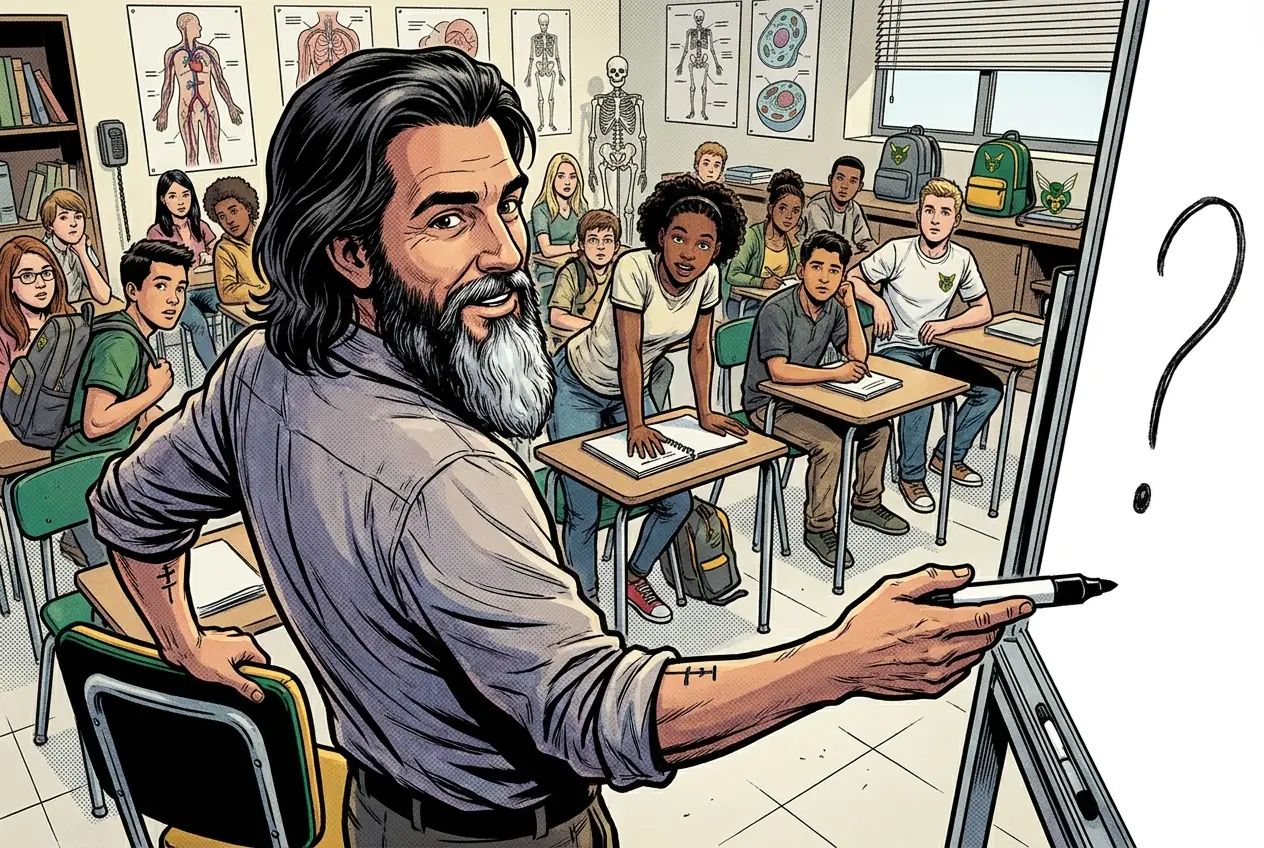
First day. No syllabus. Just one question on the board, and the news that we were going to spend a semester answering it ourselves.
MR. MENDOZA
How do we know what we know about the body, disease, and death?
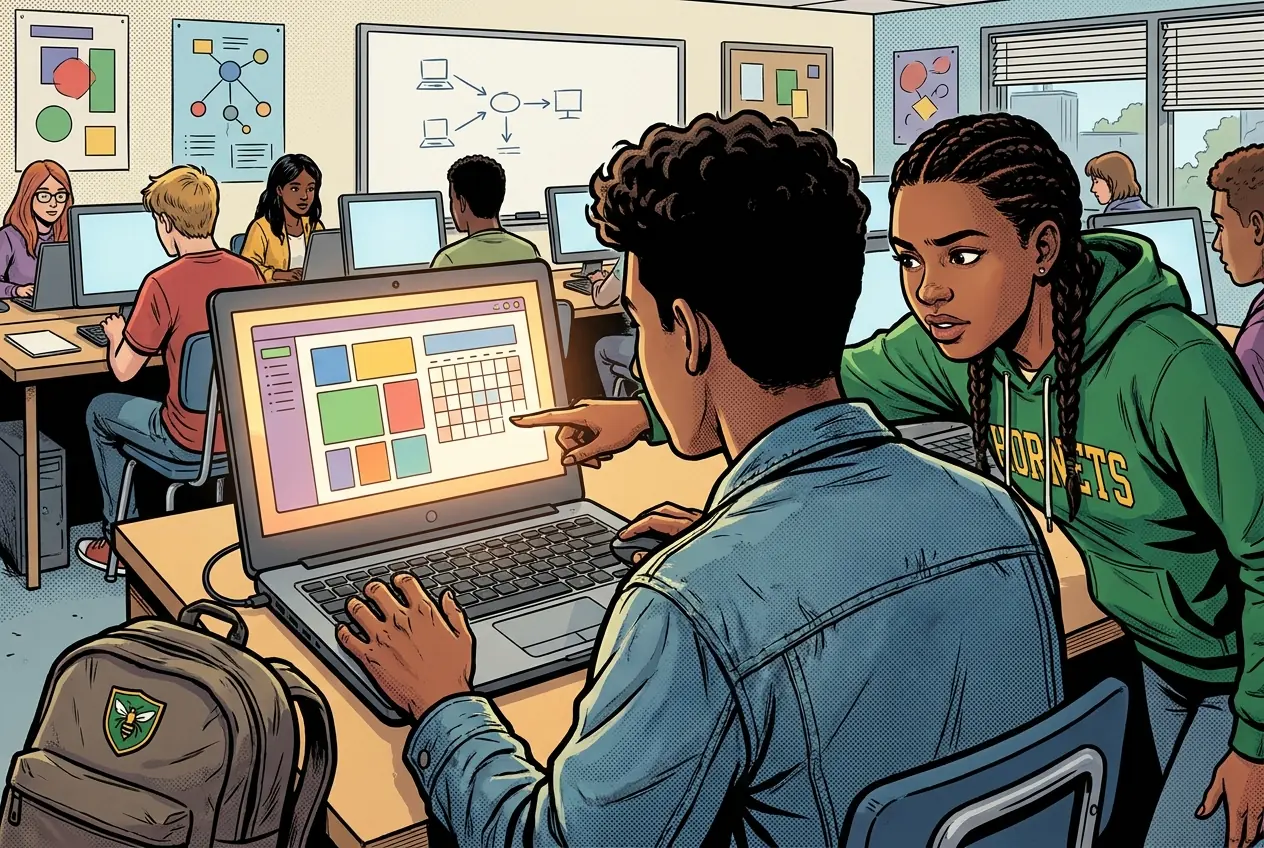
Logistics day. I was ready to be bored. Then he showed us the exact way to name a file, and said a name the computer can read is the difference between graded now and graded late.
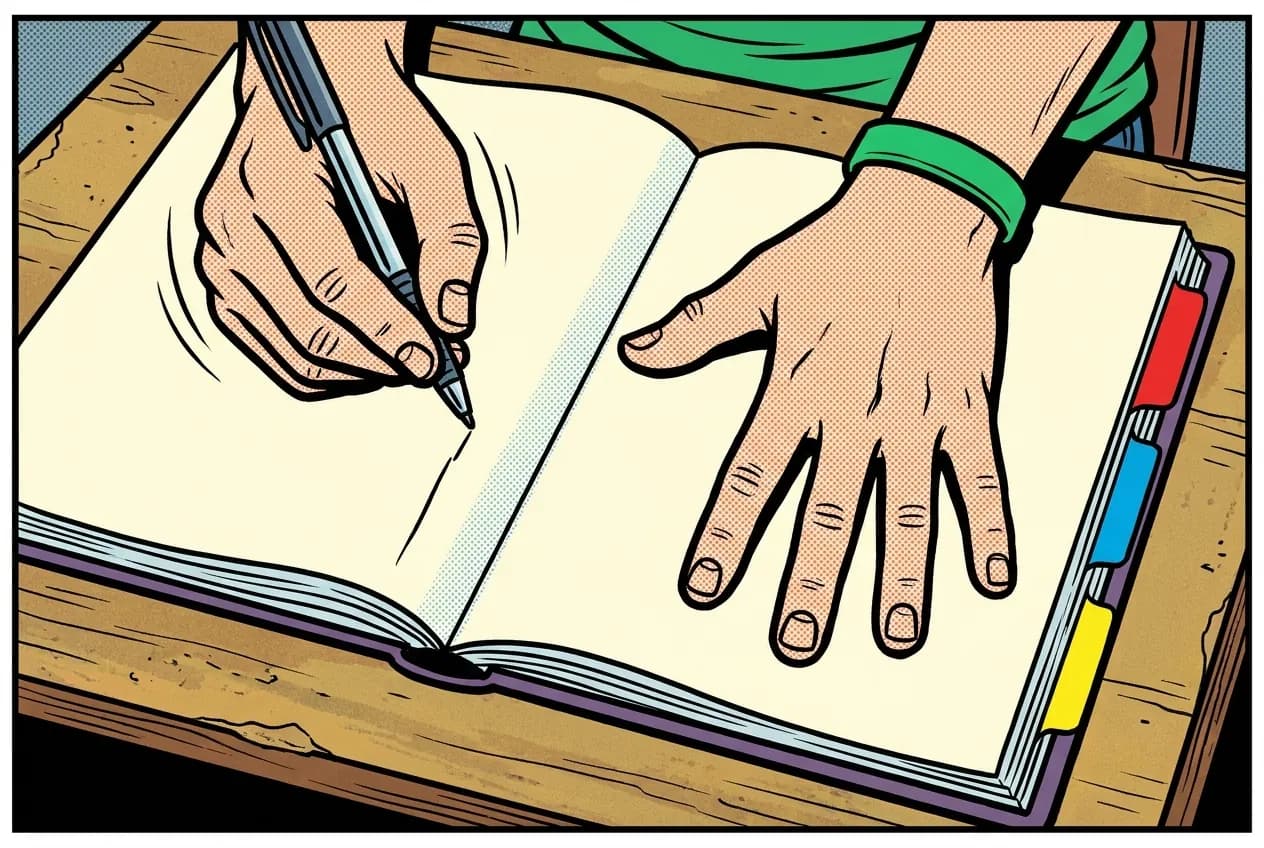
Cornell notes and the 6 Rs. Record, Reduce, Review, Reflect, Recite, Revise. I had written everything down and still could not say any of it back.
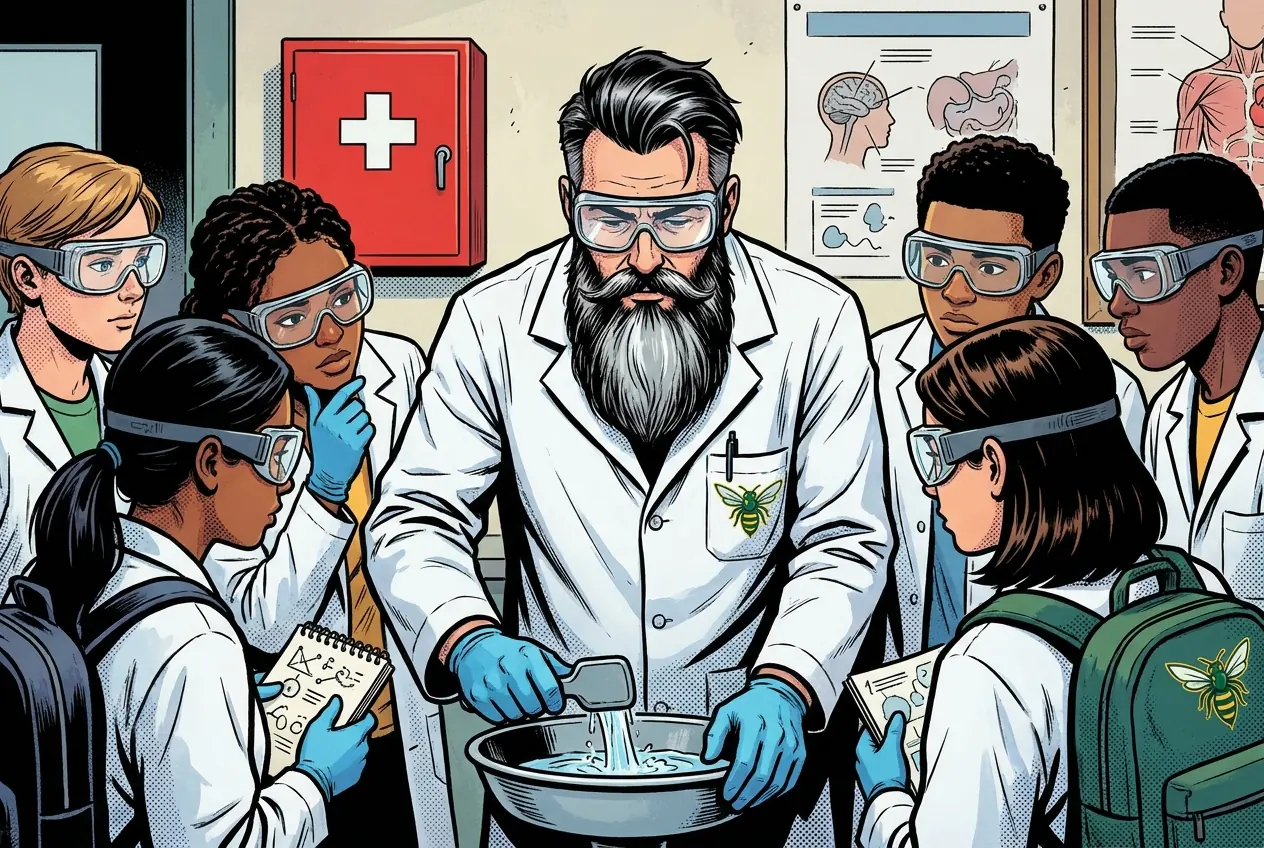
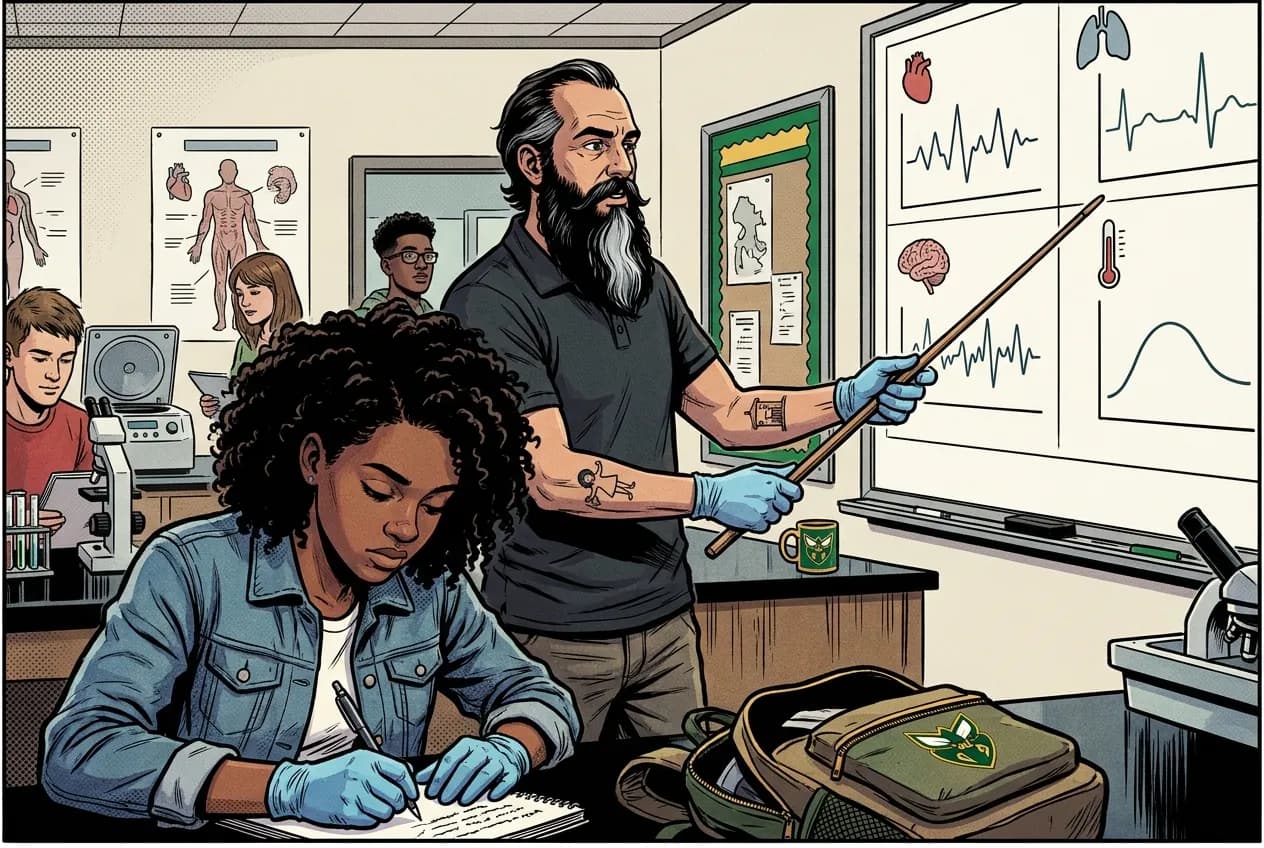
Safety day. The contract needs my signature and yours before I am allowed to touch anything.
MR. MENDOZA
No signature, no lab. That is not a formality.
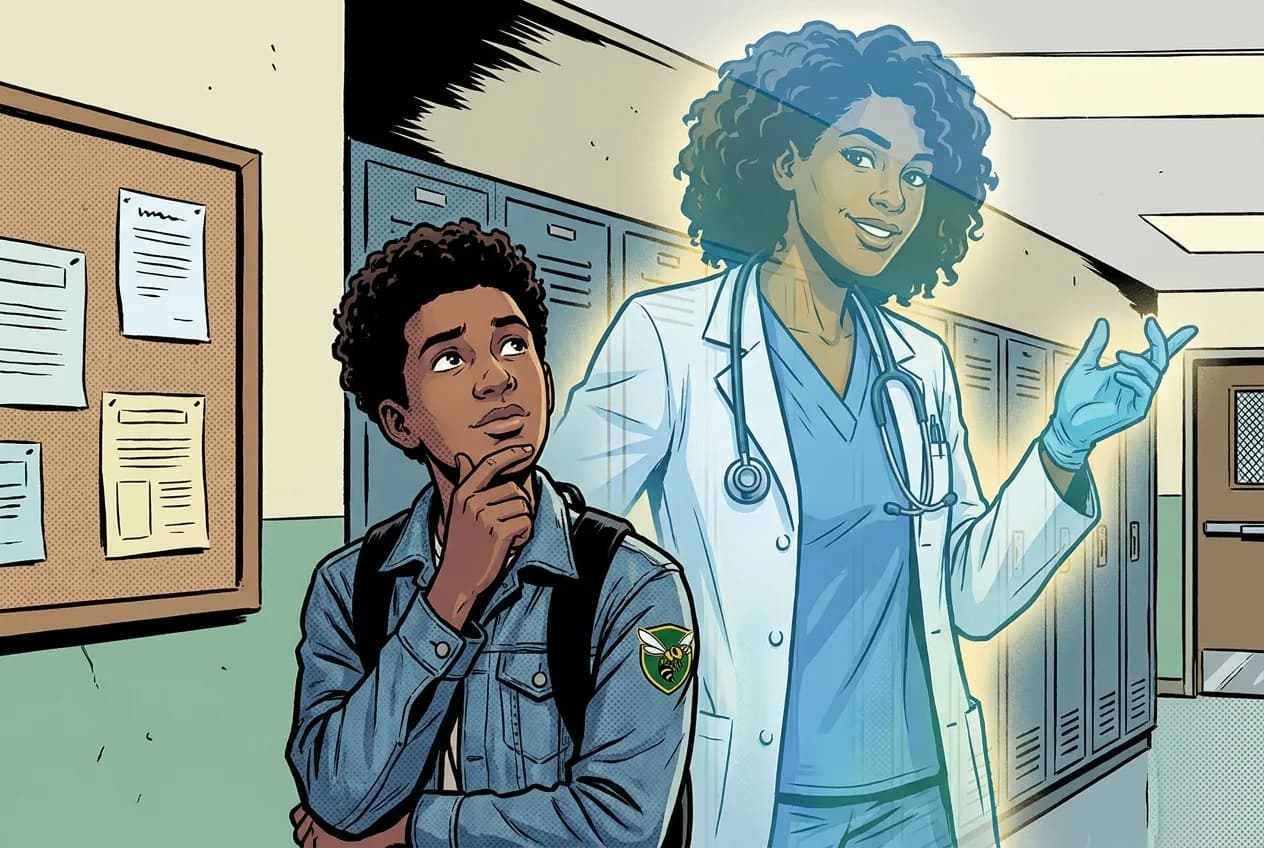
I want to be a doctor. I have wanted it since I sat in a hospital room for three days understanding nothing anyone said about my grandmother.
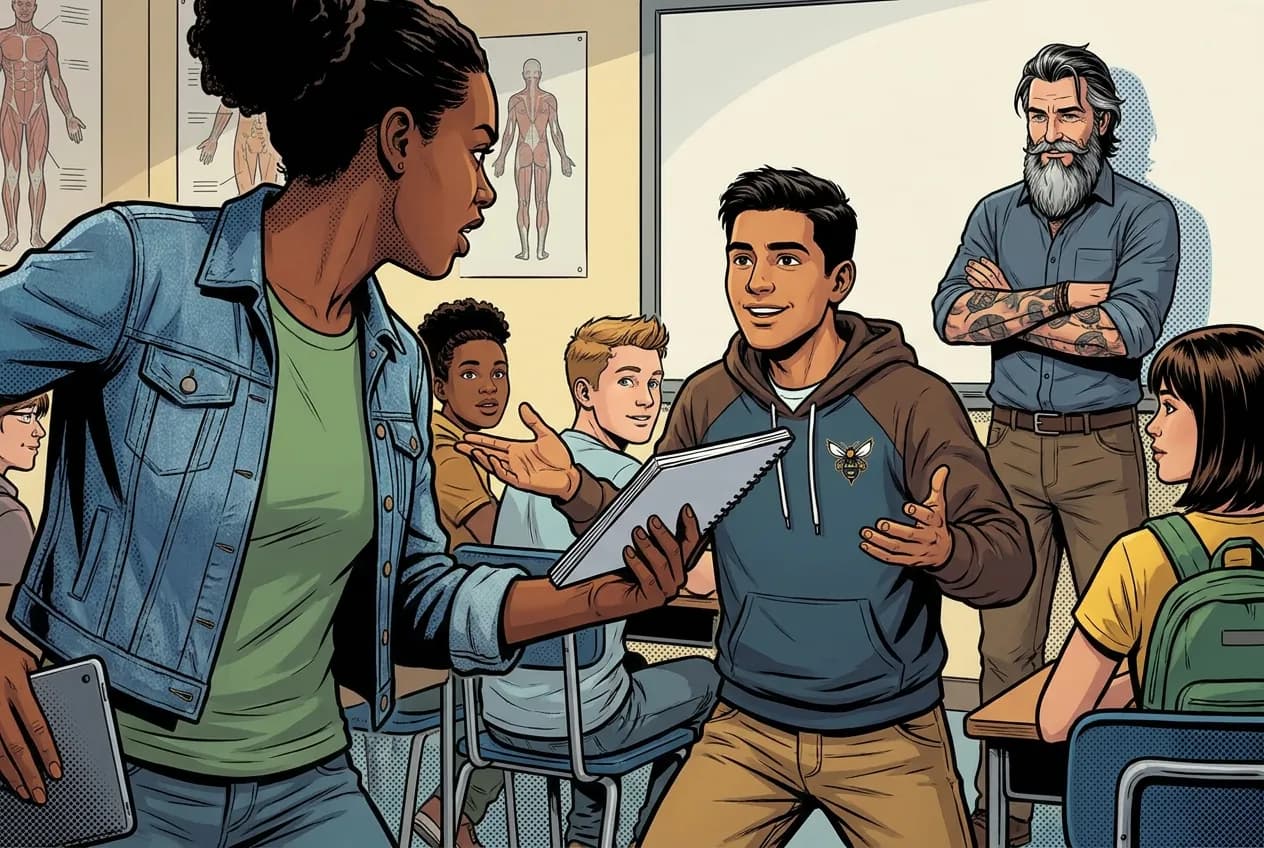
First real Monday. John Carroll was not here yet, so it was just us and him. Forensic labs have sent innocent people to prison on evidence everyone trusted.
CLASSMATE
A person loads the sample. A person labels it. The machine only answers the question a human asked.
Week 2 · The first real week
SEPTEMBER 1 TO 4
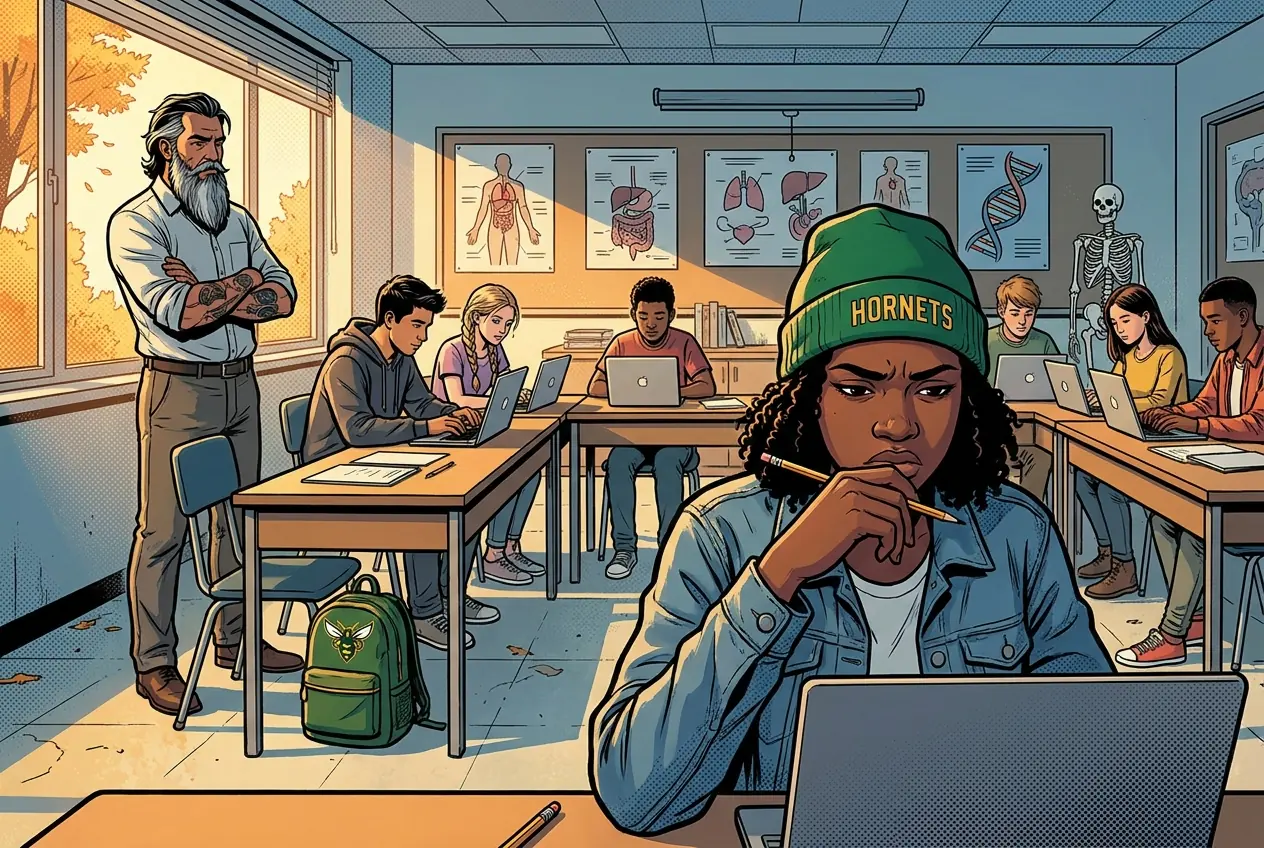
The WebXam pretest, in week one, cold. I did badly. Everyone did. That was the point.
MR. MENDOZA
This is not a grade. It is a baseline. In December we compare.
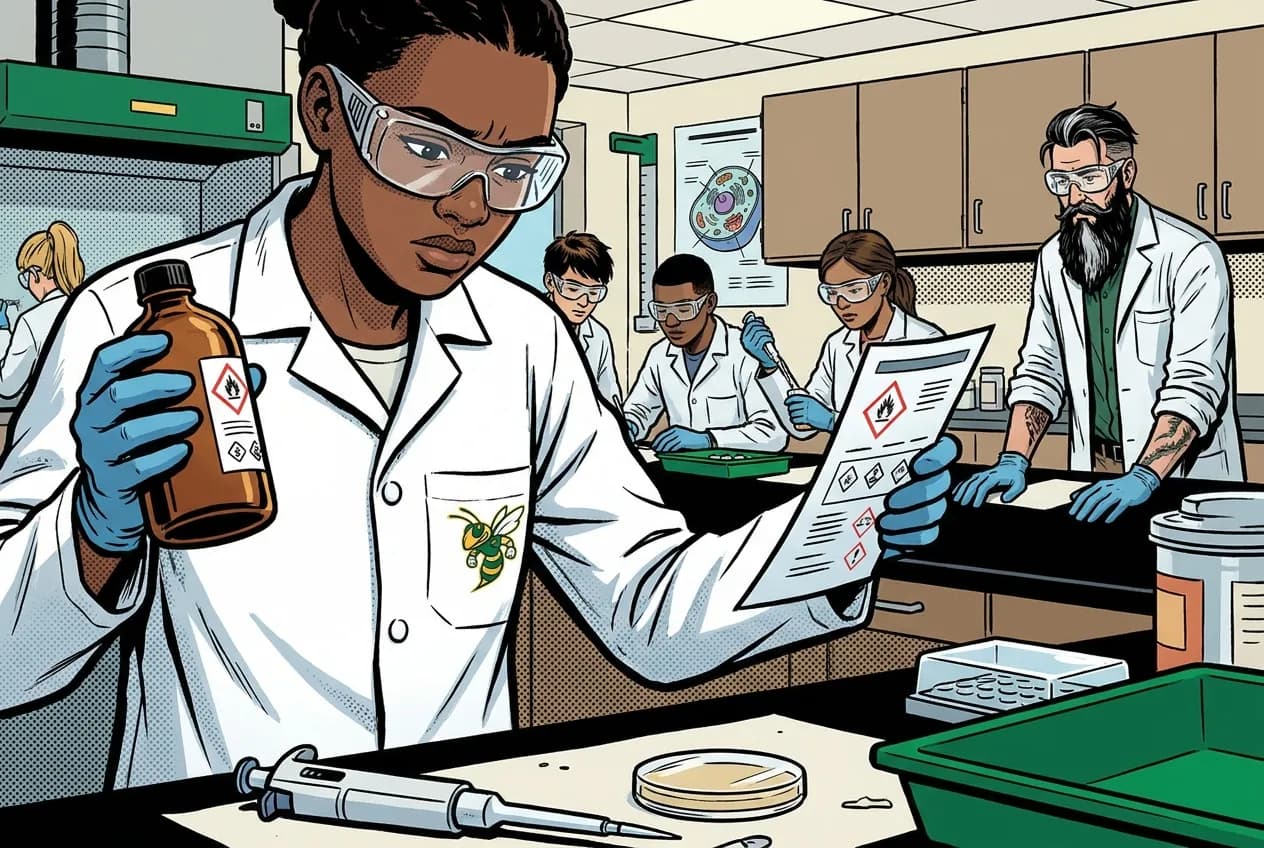
Sixteen sections in a Safety Data Sheet. You do not touch anything in a real lab until you can find the hazards and the first aid.
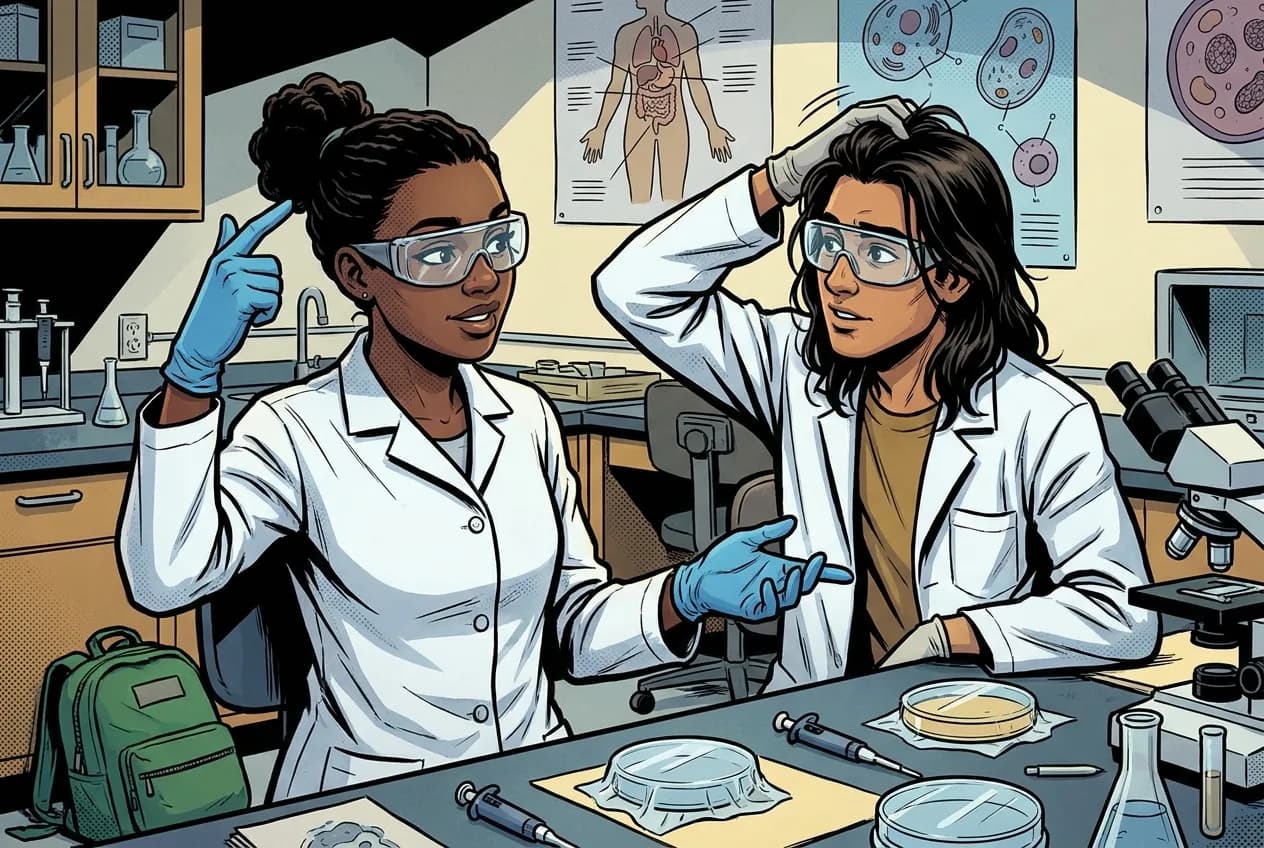
First lab. My partner caught that my hair was not tied back before I reached the open flame station.
PARTNER
Nobody can see their own blind spot. That is why there are two of us.
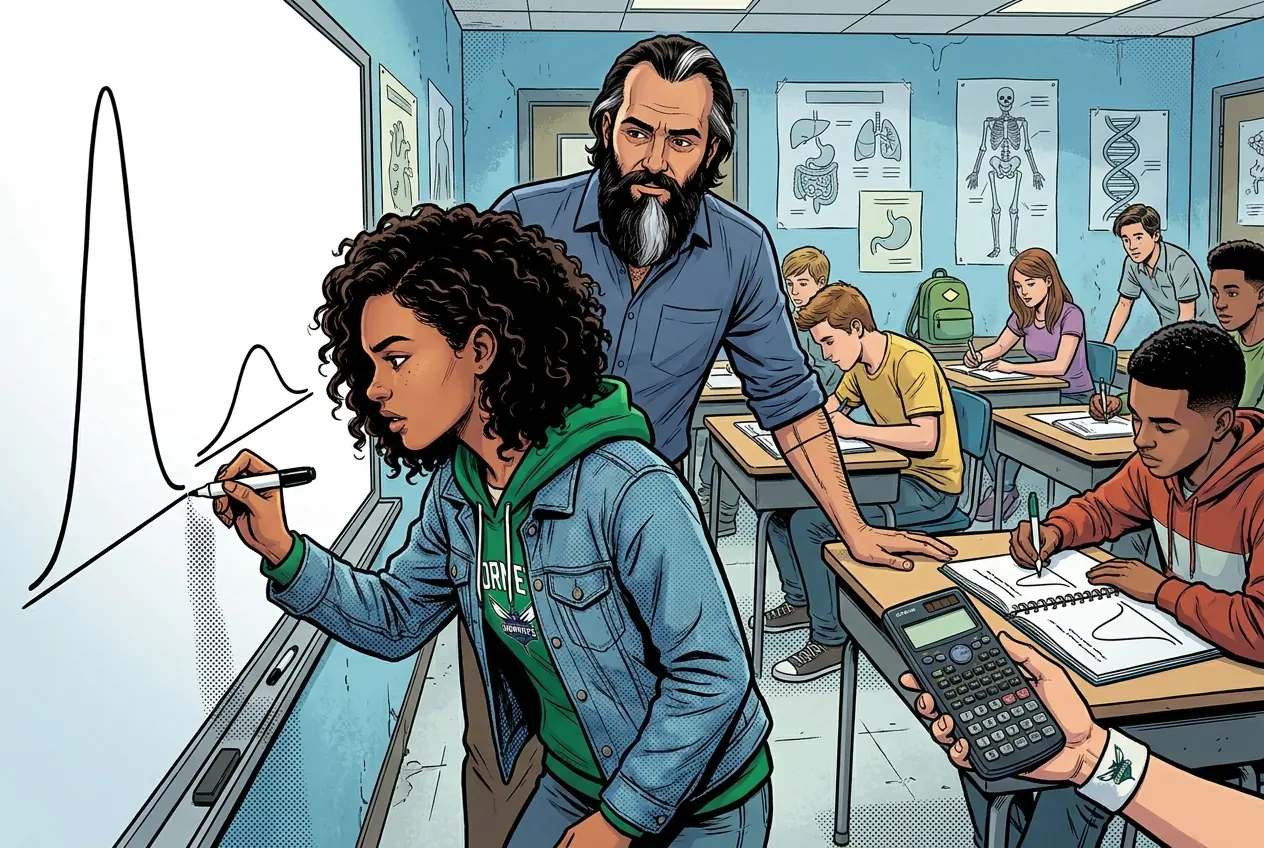
Two data sets, same average, completely different stories. The spread is what gave it away. I had never thought of standard deviation as anything but a formula.
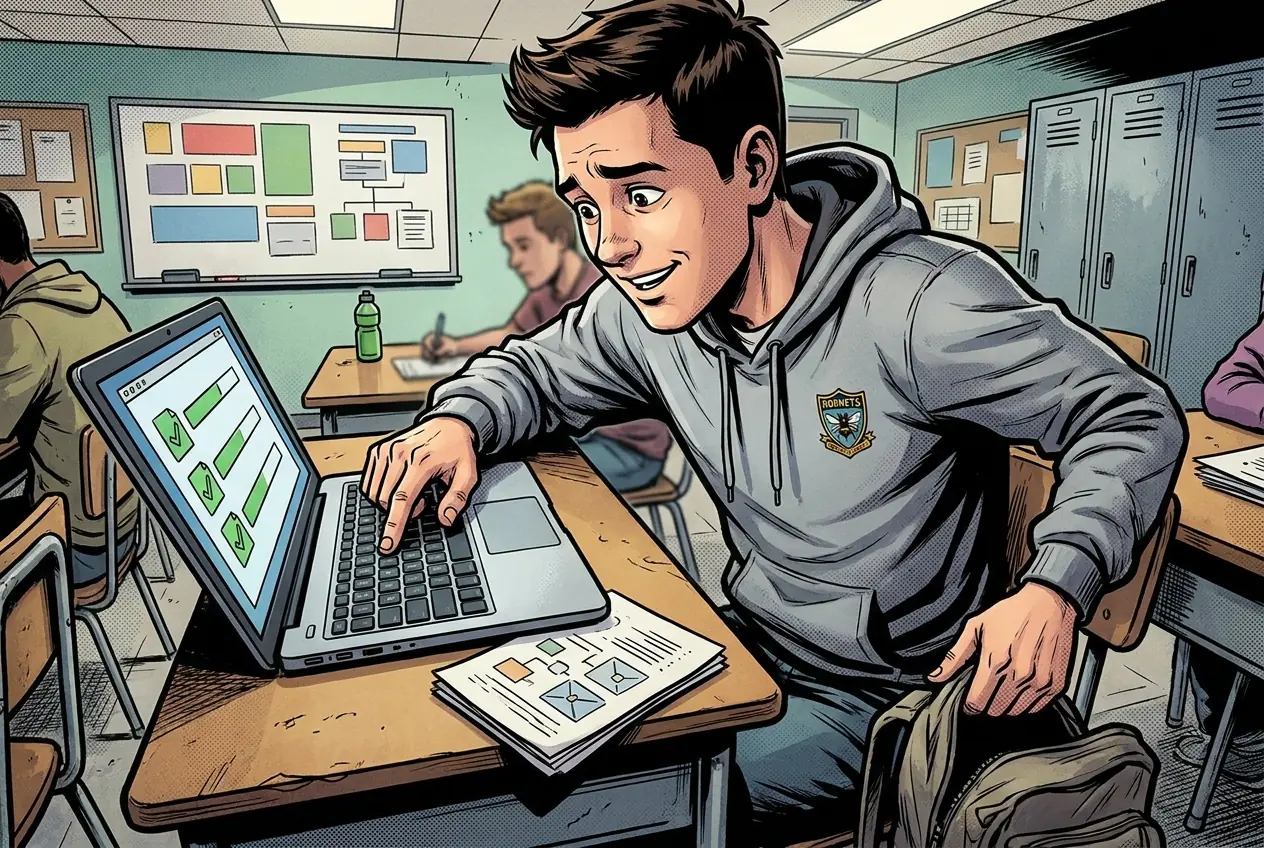
Friday is packet day. I was missing the SDS card. I had done it and never uploaded it. I would not have noticed without the checklist.
Week 3 · The scene
SEPTEMBER 8 TO 14
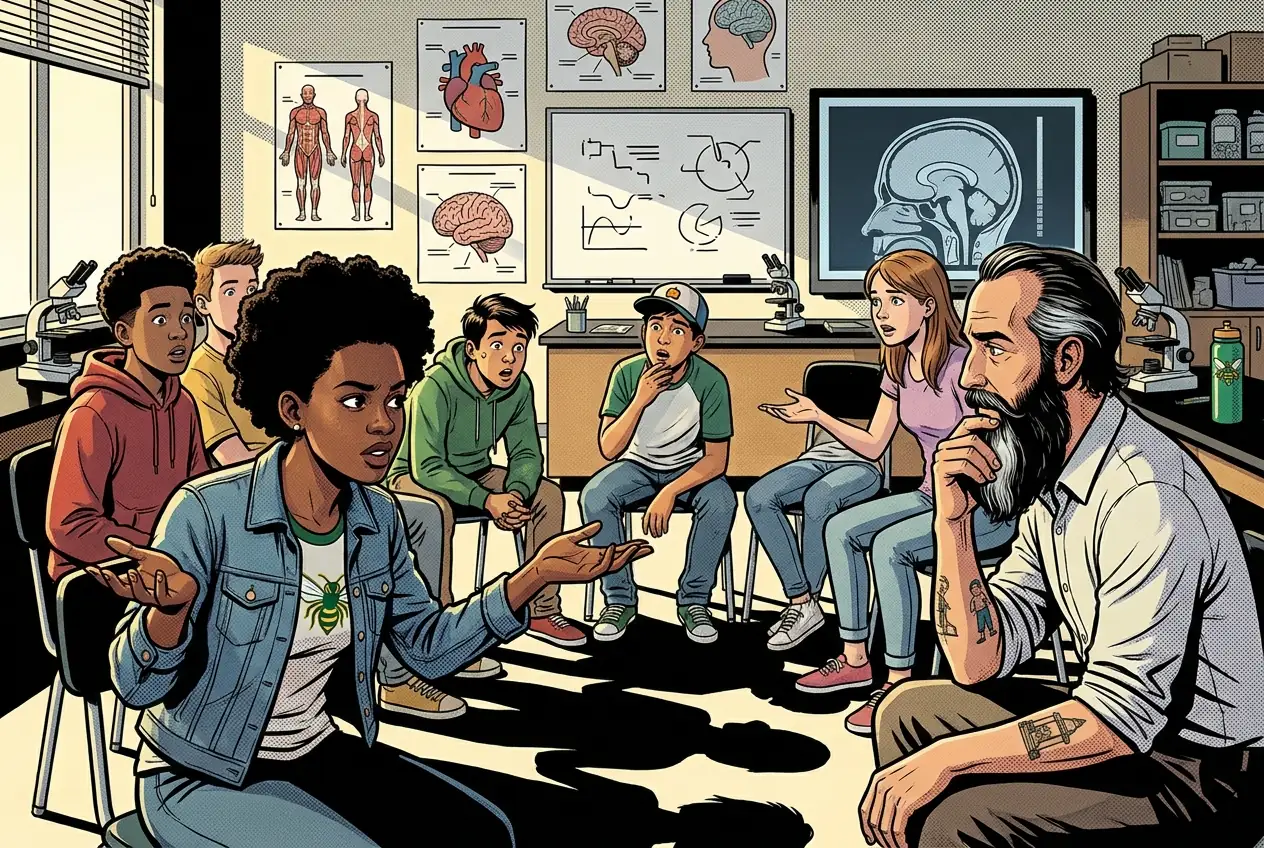
No school Monday, so the ethics debate moved. When does collecting evidence cross into destroying it? To lift a fiber you have to move the carpet.
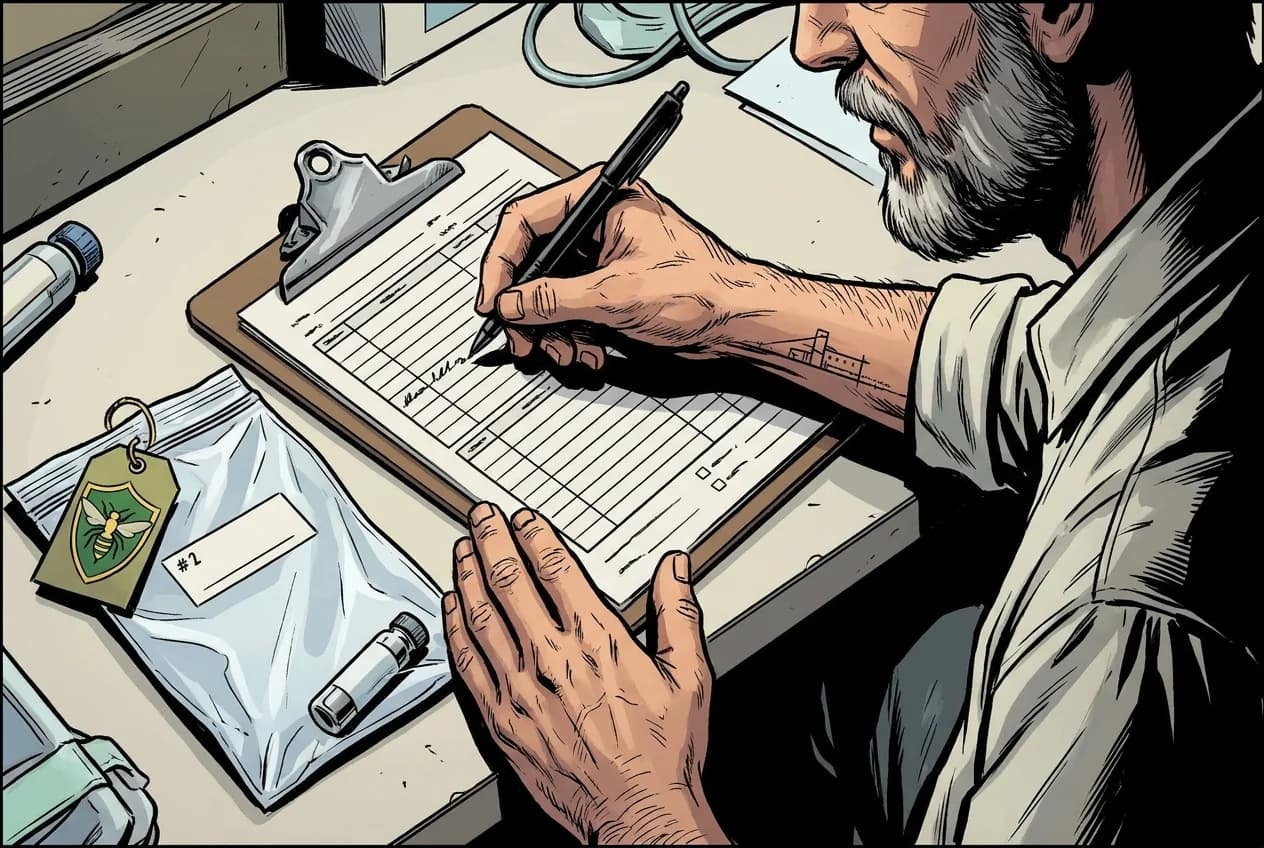
Photograph, sketch, log, collect. In that order, because every step after the first one changes the room.
MR. MENDOZA
In forensic science, the documentation is the evidence.
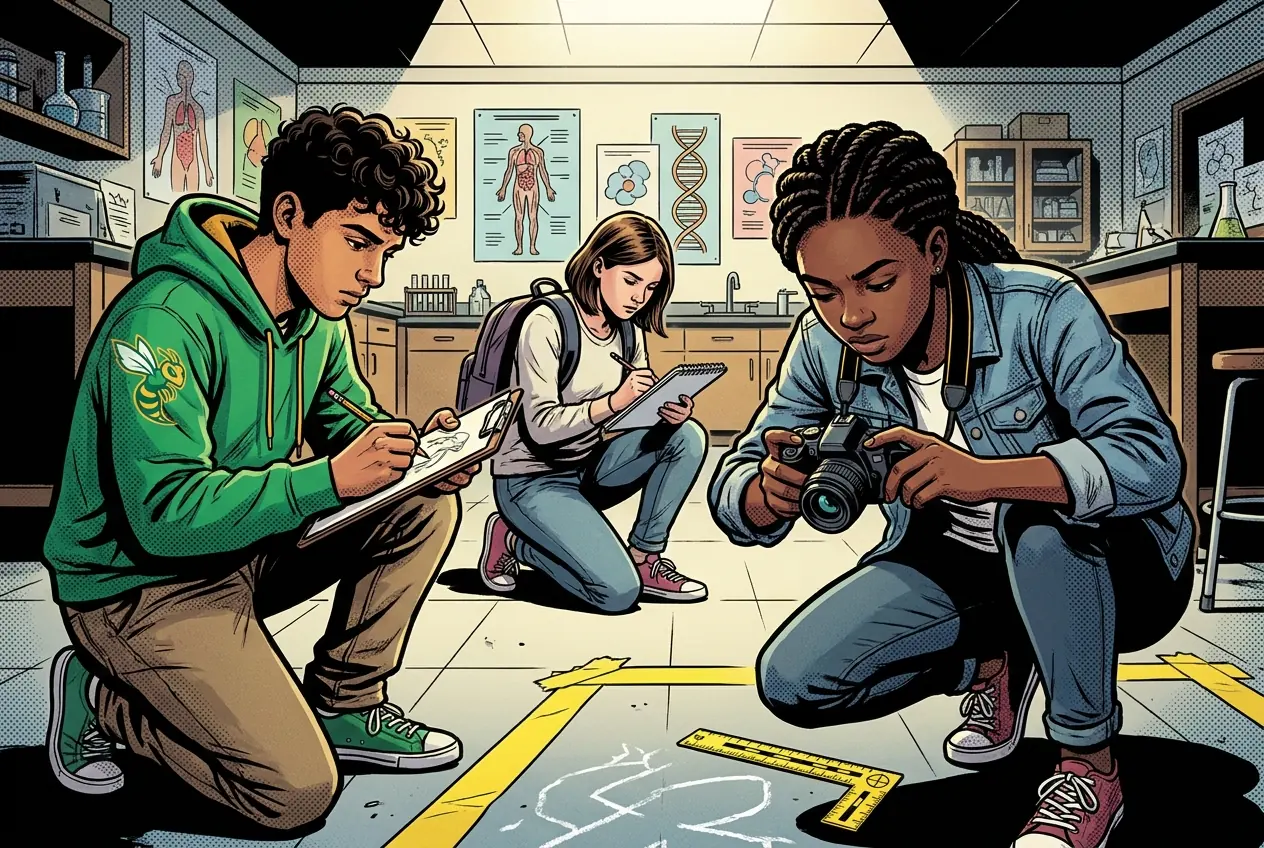
I was the logger. It sounded like the boring job. Then our photographer shot the whole scene before the scale marker was set, and the sketch did not match.
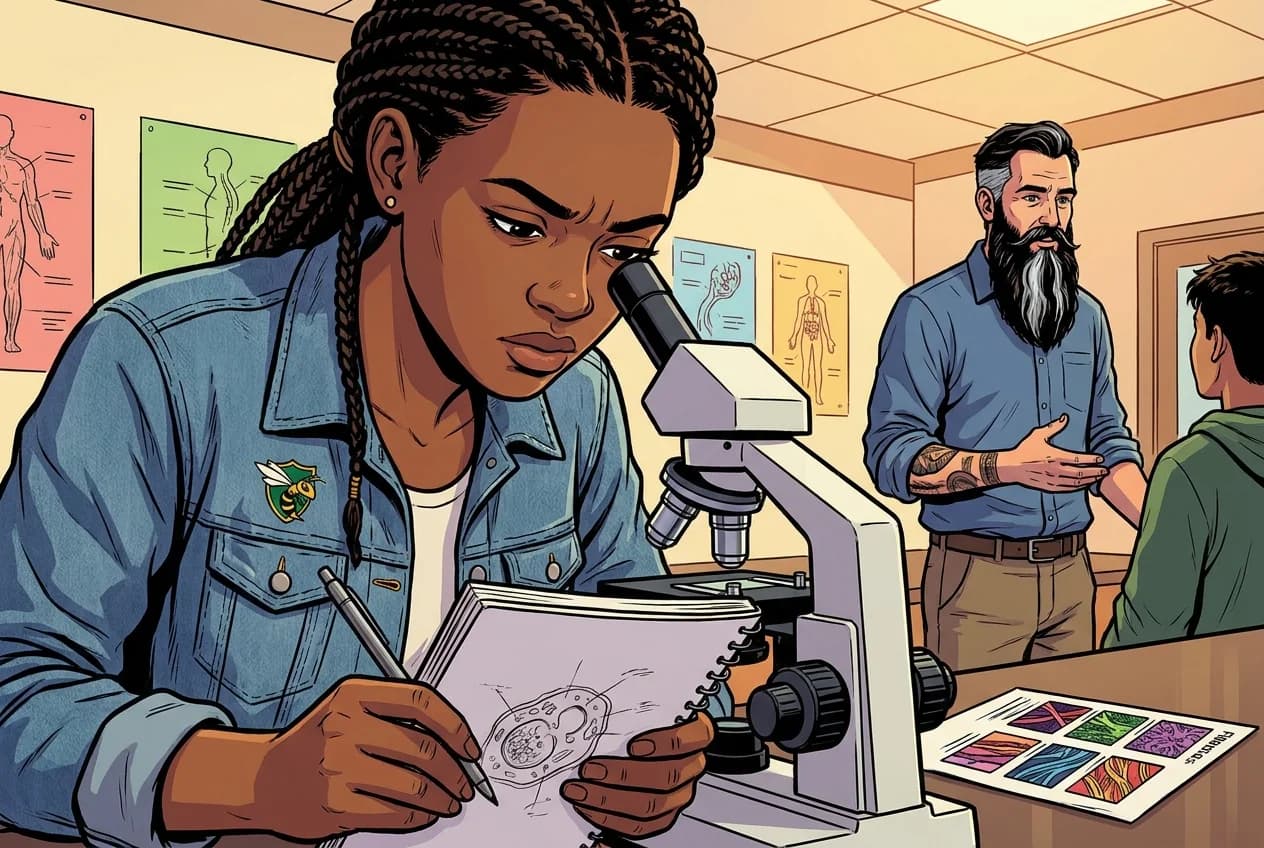
We reshot and logged both versions. It cost us the period.
MR. MENDOZA
The fix was not better photography. Three of you worked in parallel and nobody sequenced it.
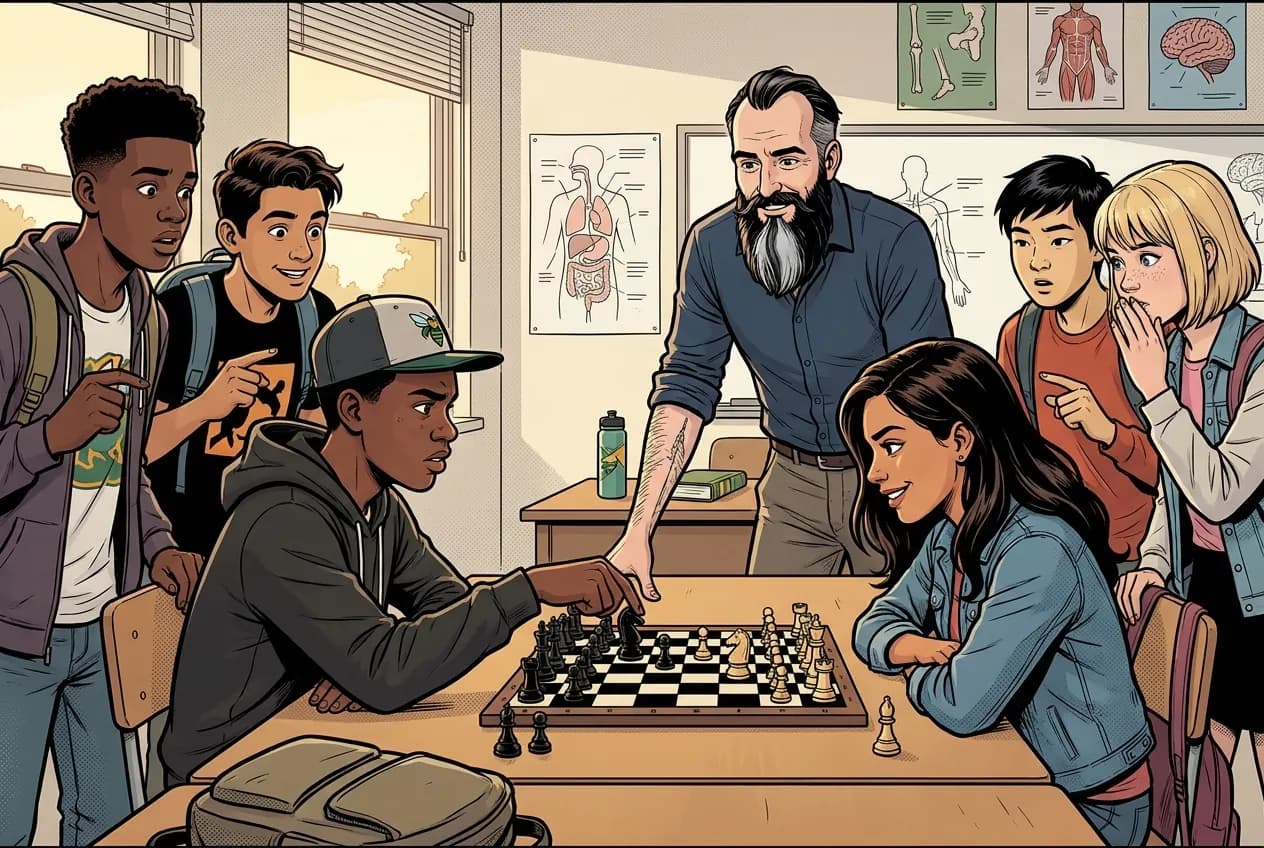
Chess on Thursday. I lost twice to a sophomore who did not gloat, which somehow made it worse.
CLASSMATE
You are three moves ahead on your own pieces and zero moves ahead on mine.
Week 4 · Evidence and biomolecules
SEPTEMBER 15 TO 18
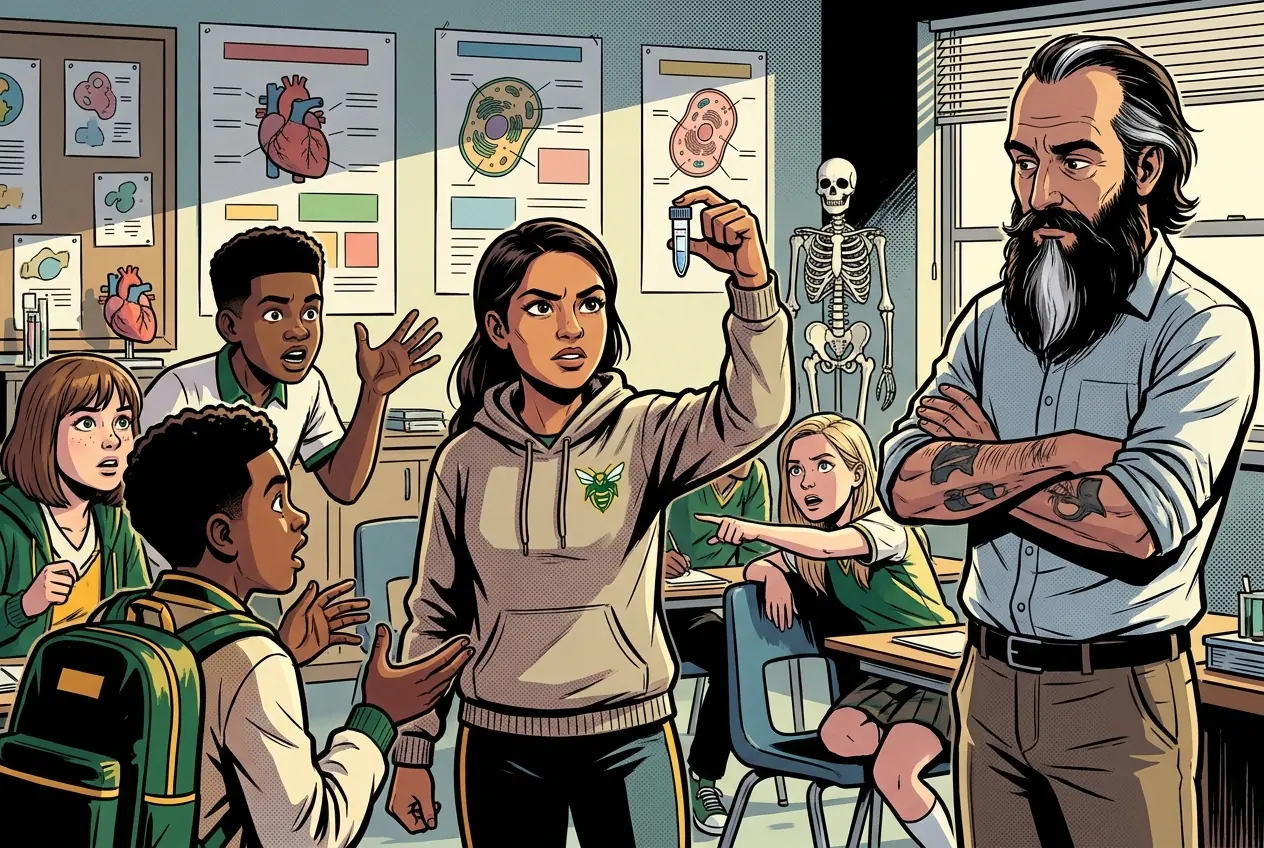
Should you run every test a sample allows? Samples are finite. Every test uses some up.
CLASSMATE
Test without a hypothesis and you are fishing. Run enough tests and something comes back positive by luck.
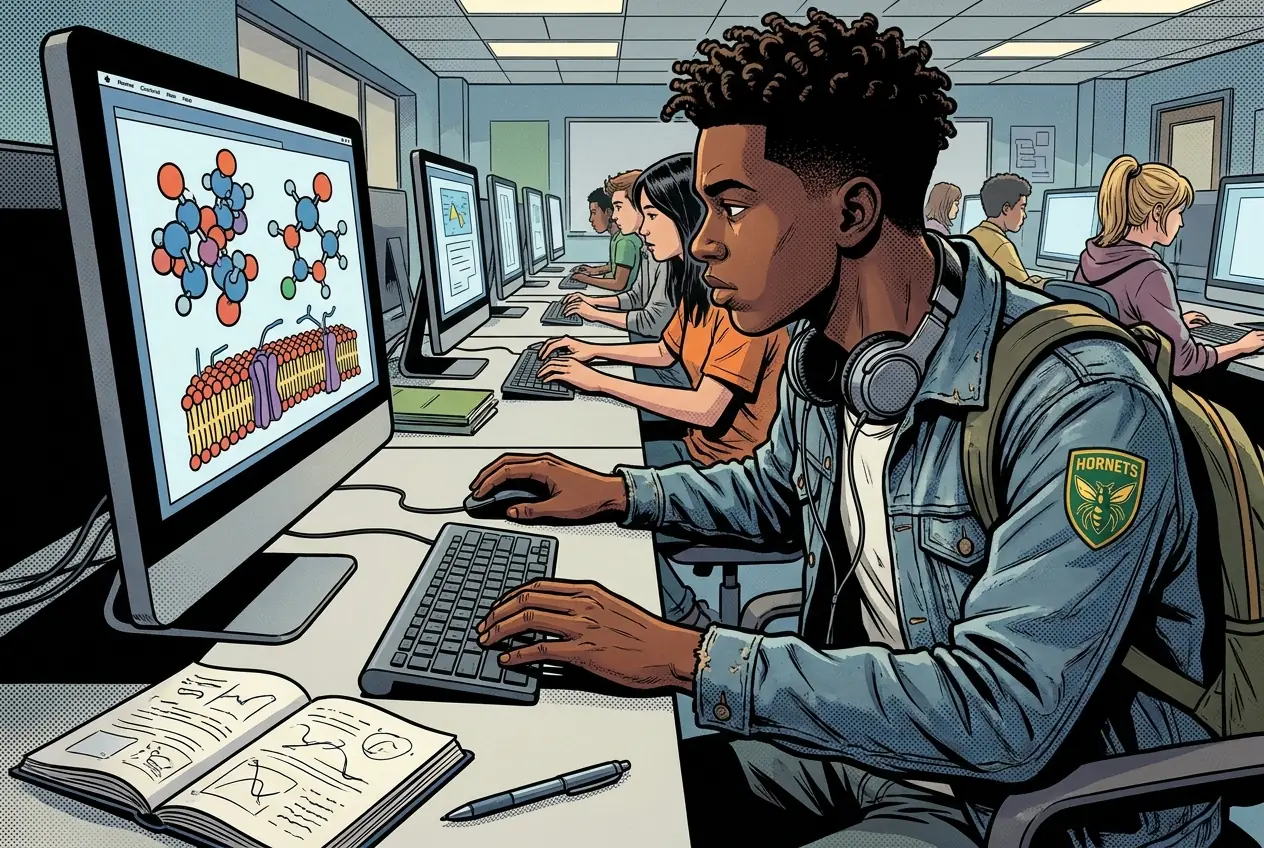
myPLTW in the computer lab. The platform work runs alongside everything all semester and nobody reminds you daily.
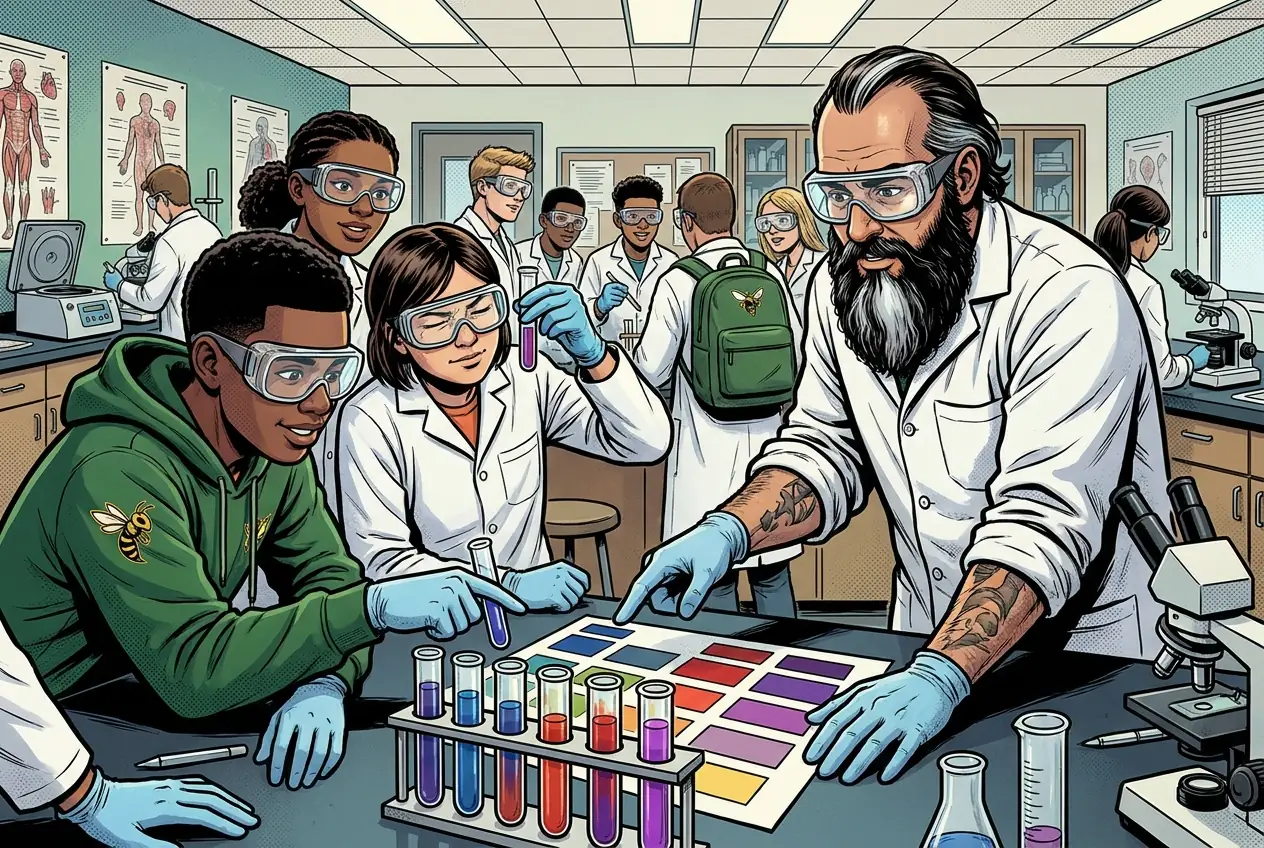
Benedict's, iodine, Biuret, Sudan. Four indicators, four colours. The group beside us had a negative control come up positive and had to throw out the whole run.
MR. MENDOZA
Good. You caught it. The dangerous version is the group that never ran a control.
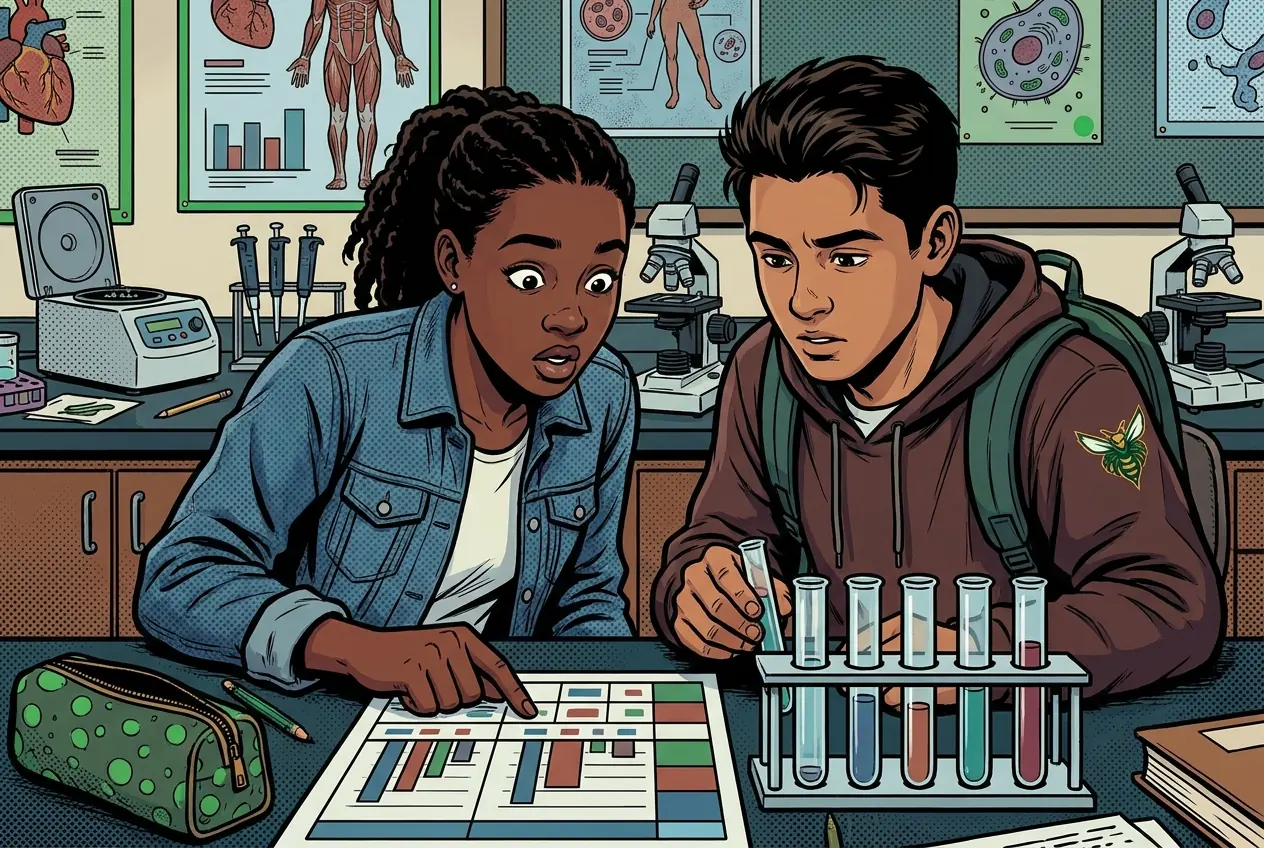
The dose makes the poison. Almost anything is harmless at a low enough concentration. I had been sorting chemicals into safe and not safe.
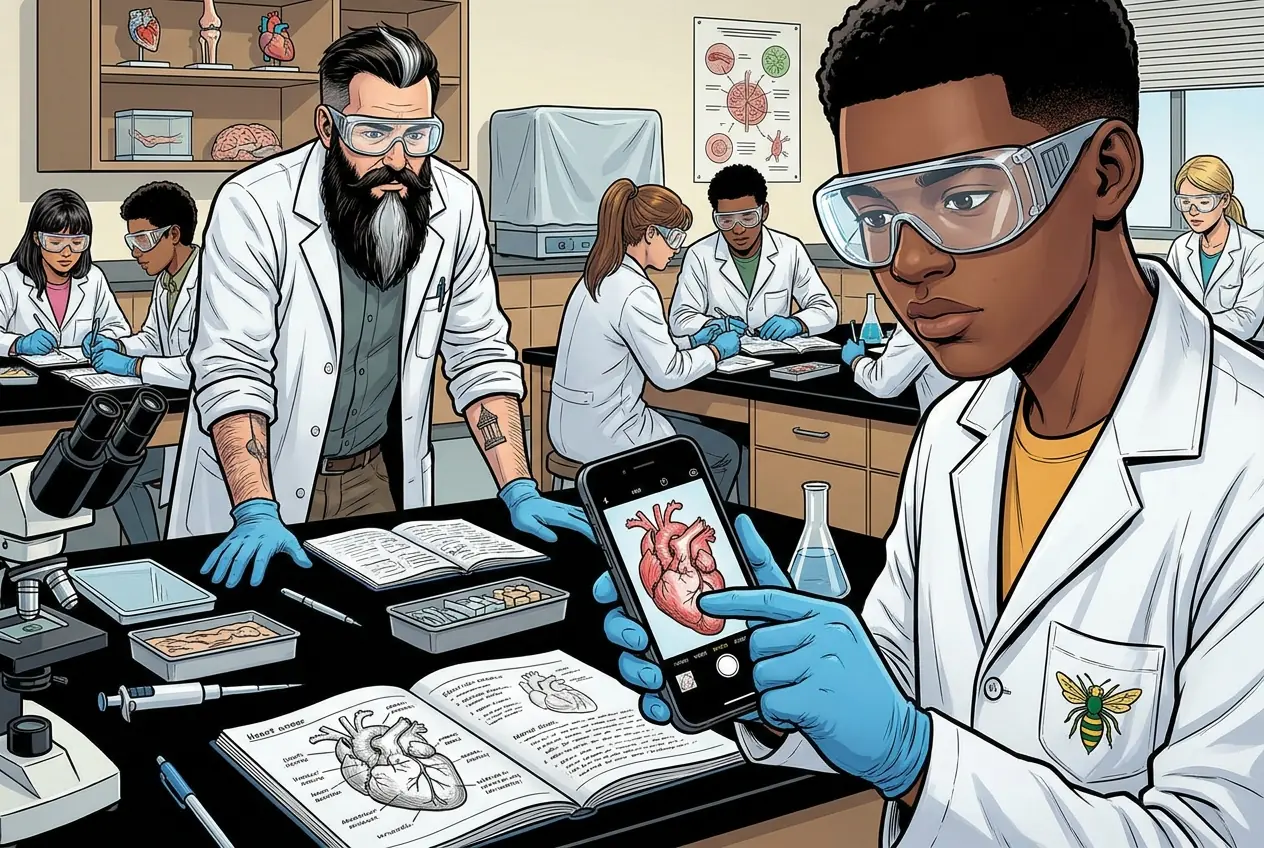
Limitations are now a required part of everything. Writing down that my control was clean is a sentence that actually means something.
Week 5 · The morgue
SEPTEMBER 21 TO 25
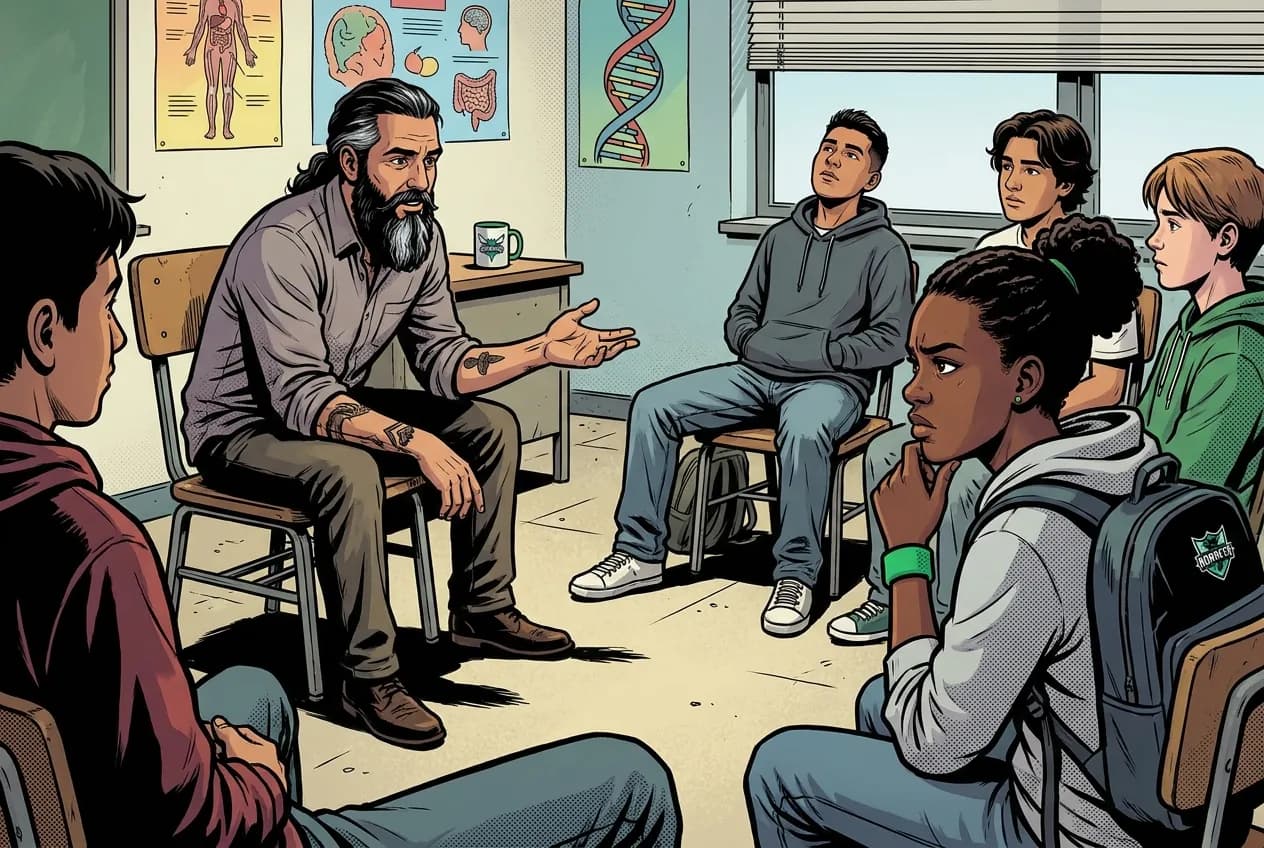
John Carroll started today. They do not argue back and they never tell you when you are right.
FACILITATOR
You said the family decides. Could a family block an autopsy that would reveal a murder?
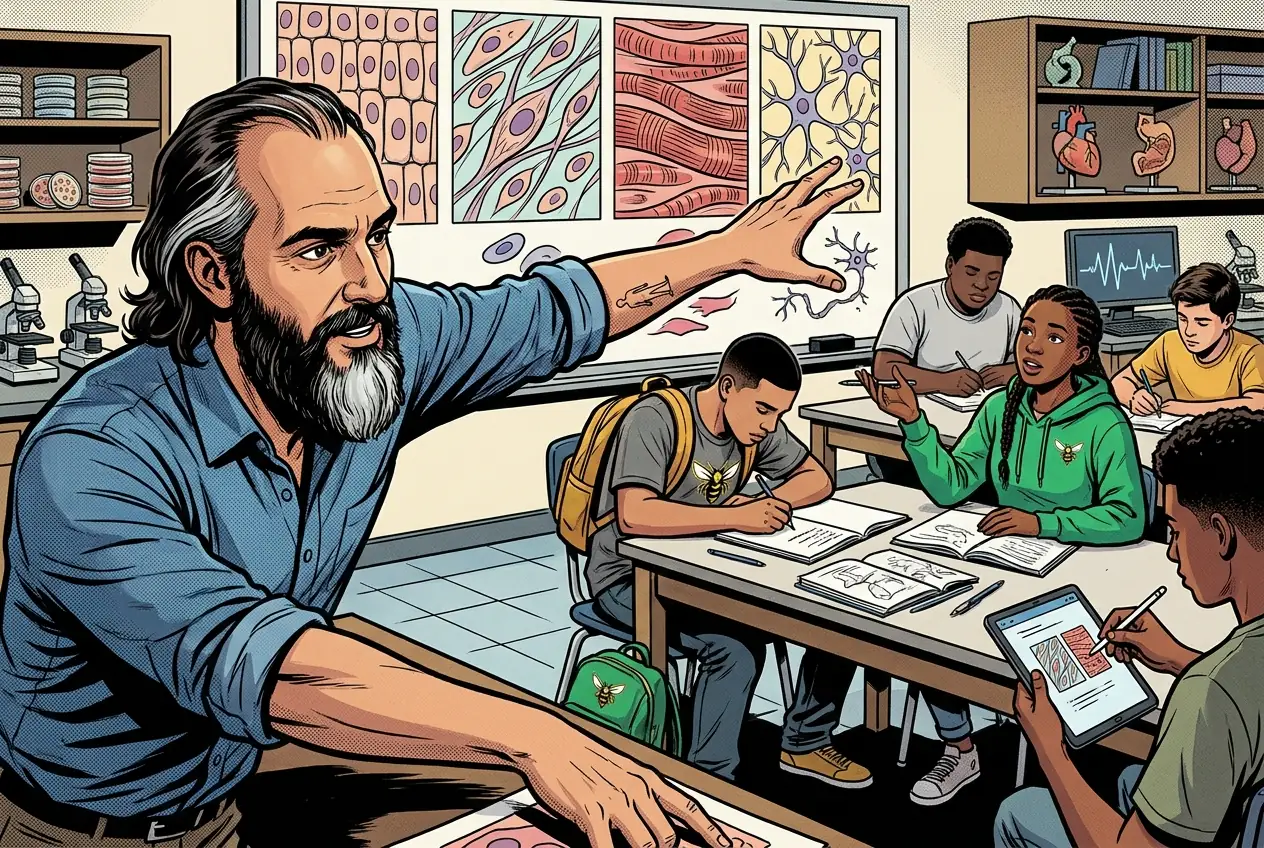
Every organ in the body is built from combinations of just four tissue types. That made the whole body feel more knowable than it had an hour earlier.
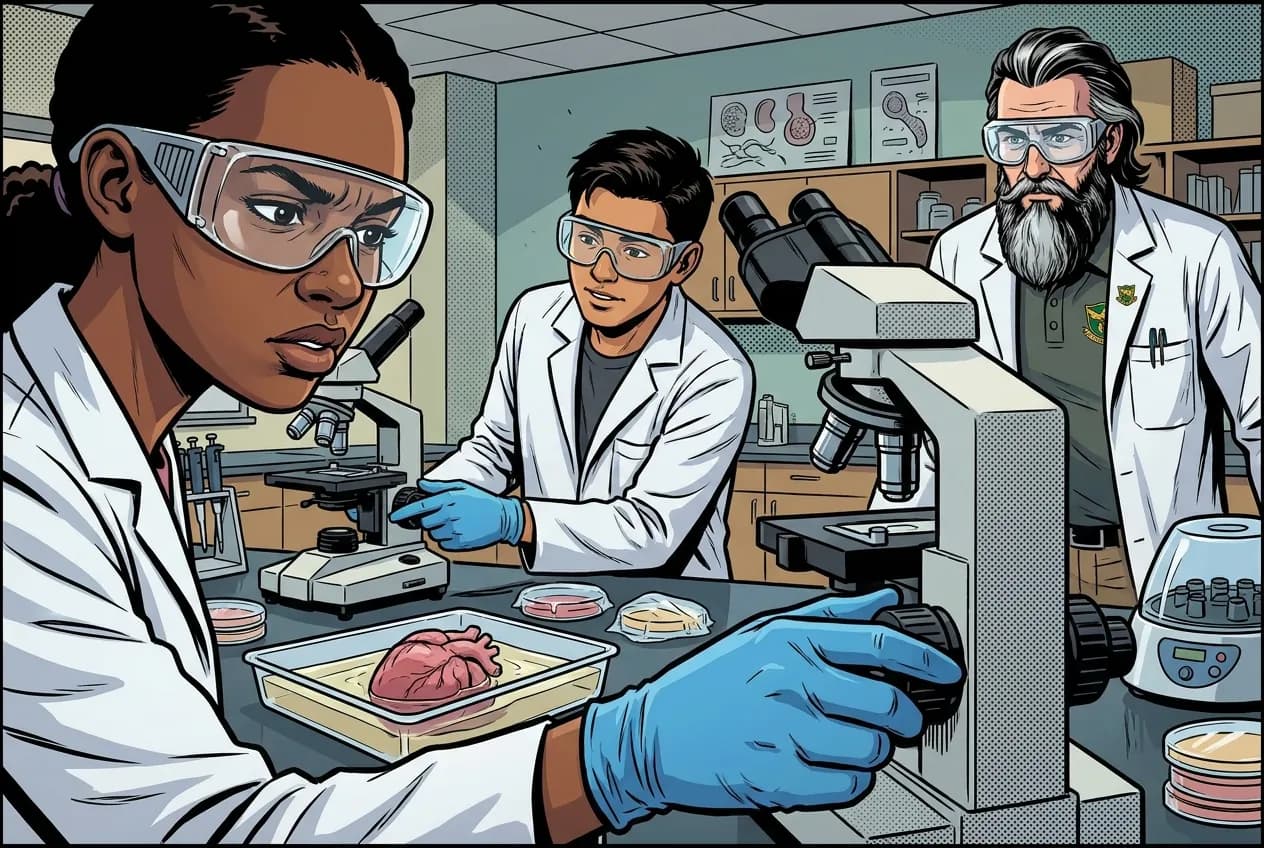
I kept driving the objective down past the specimen. Twenty minutes lost because I was too proud to ask.
PARTNER
Focus at low power first. Center it. Then go up.
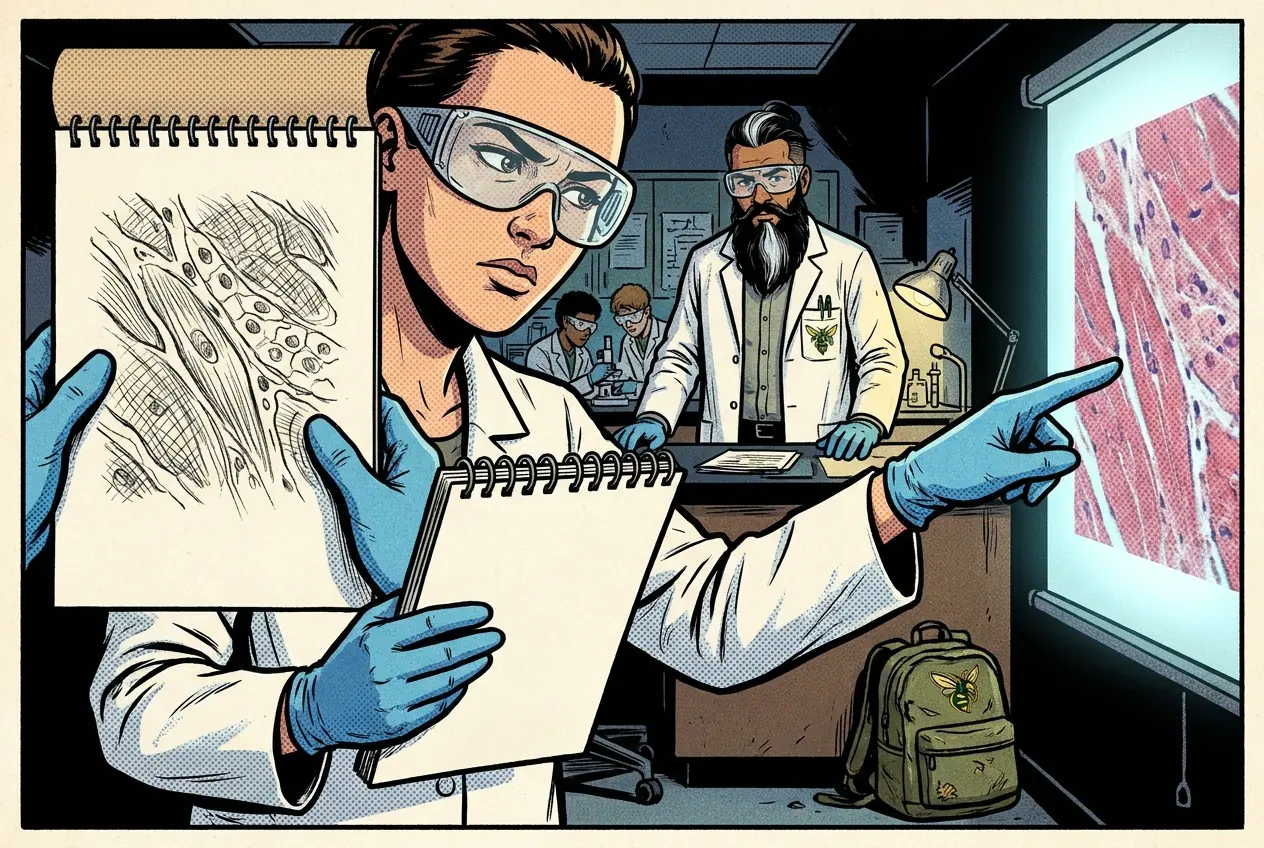
My sketches were rougher than the reference images, and I could not always tell if a difference was real or just my bad drawing. I wrote that down.
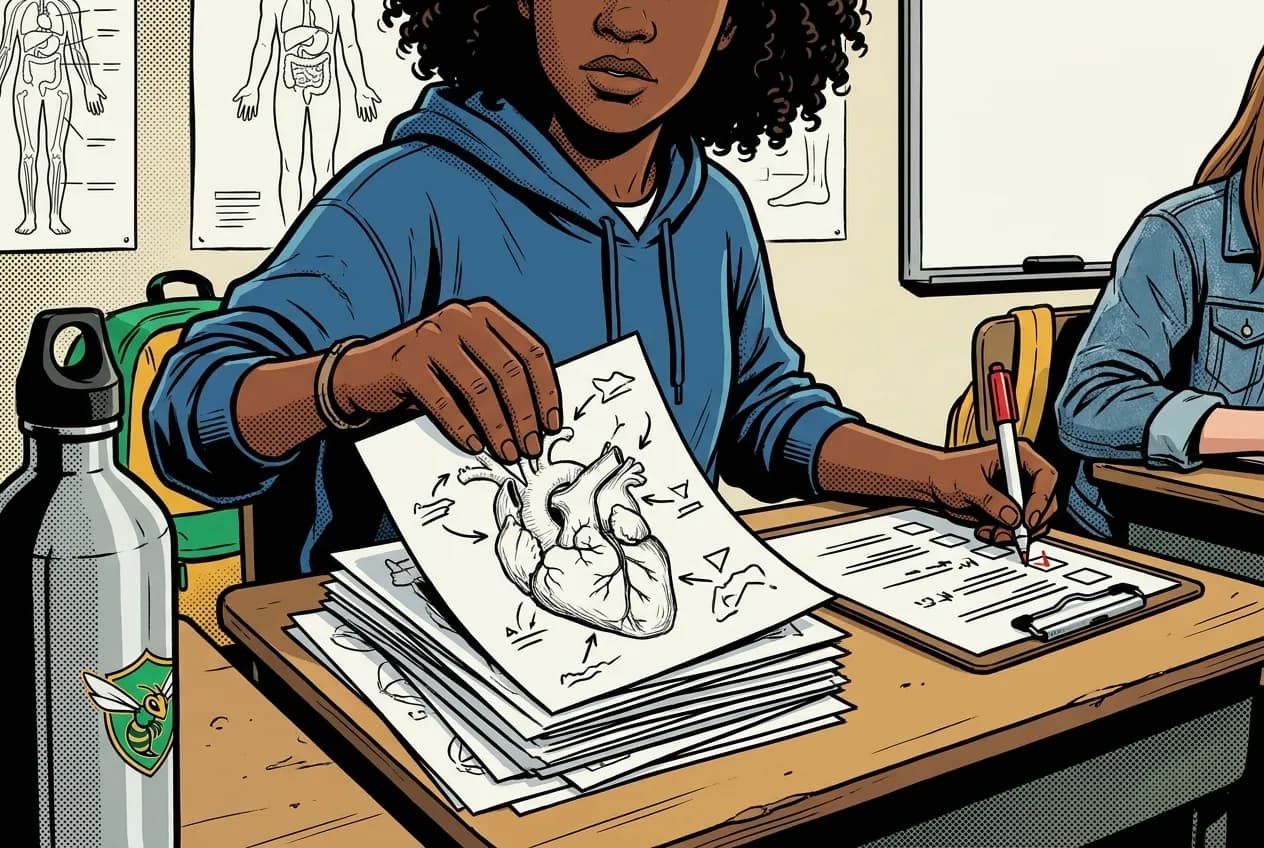
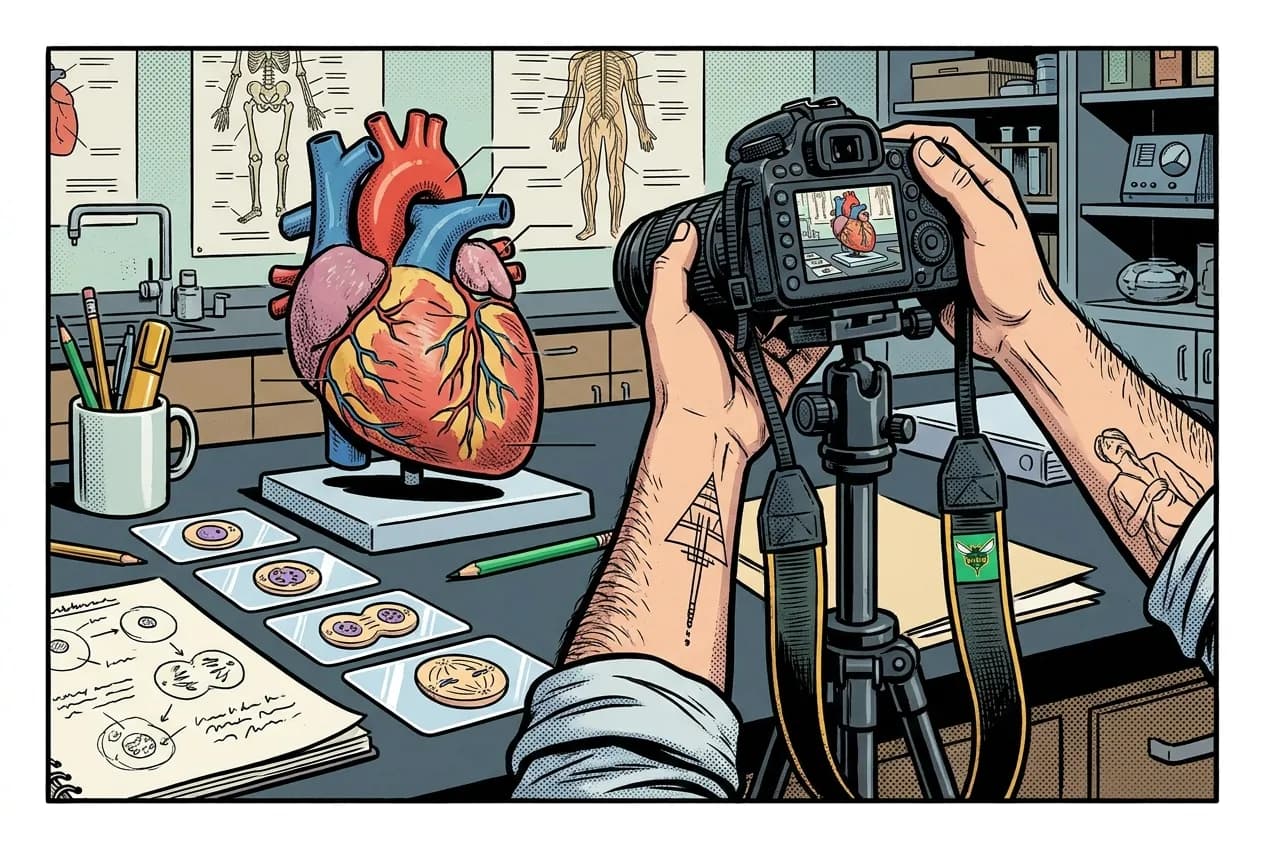
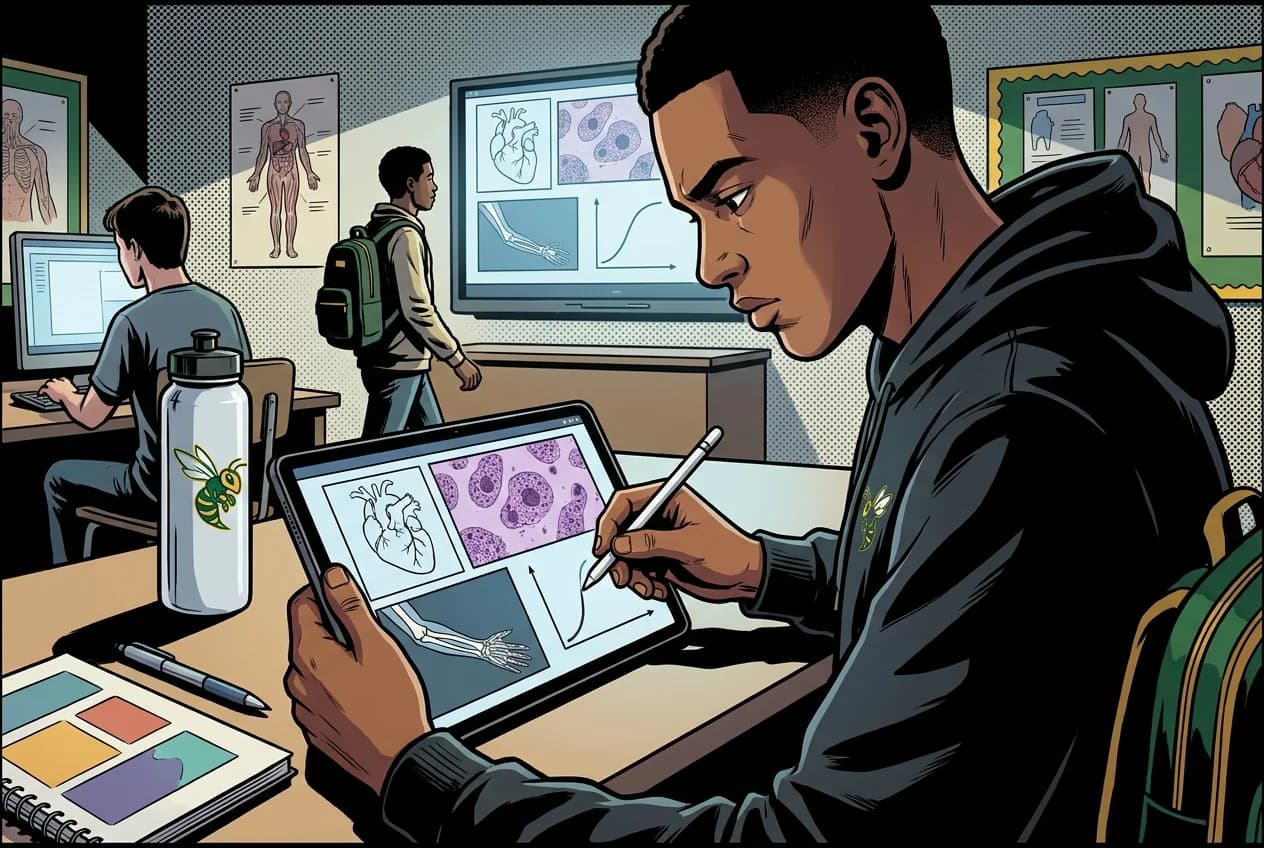
Four tissue sketches and a heart diagram. Microscopic evidence explaining an organ you can hold.
Week 6 · Open investigation
SEPTEMBER 28 TO OCTOBER 2
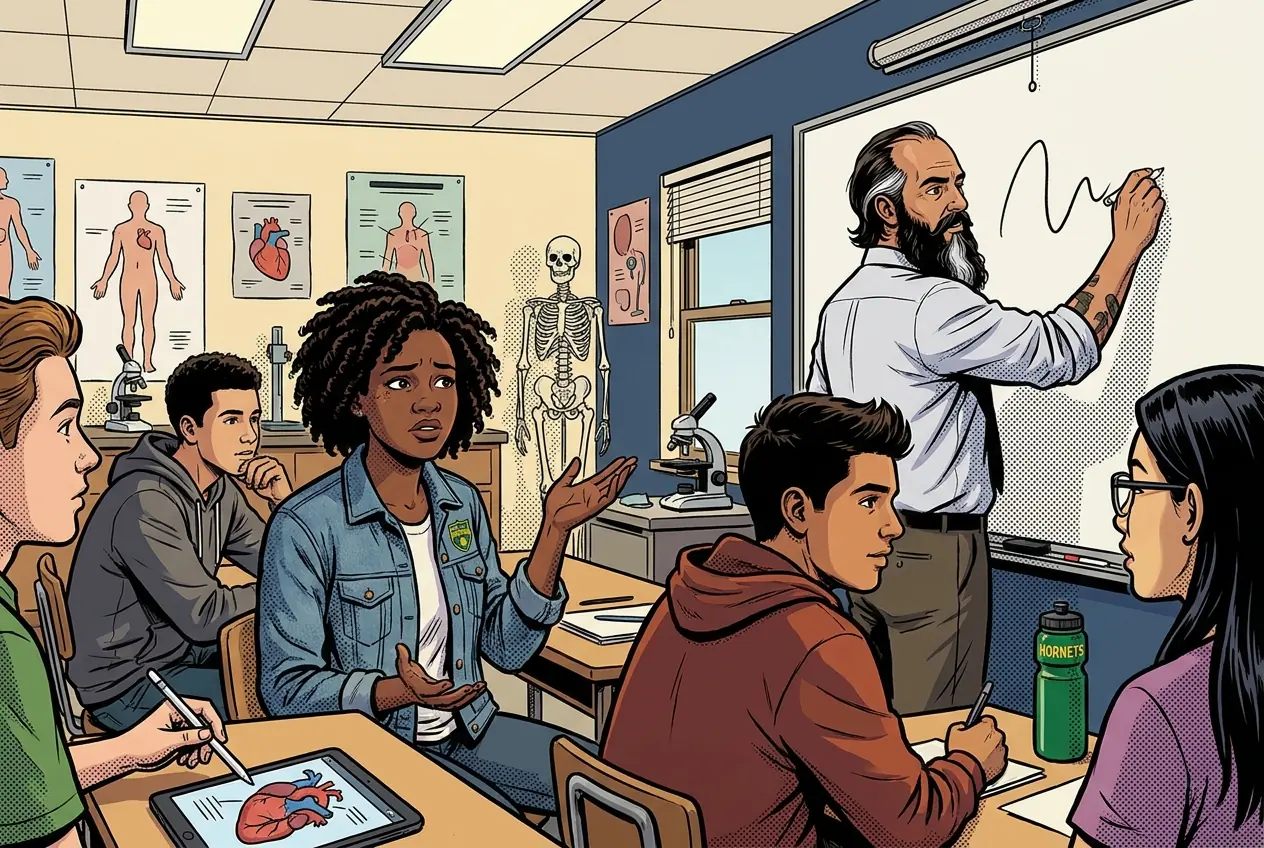
How much evidence is enough to name a cause of death? Conclude too early and you ruin someone. Never conclude and a family gets no answer.
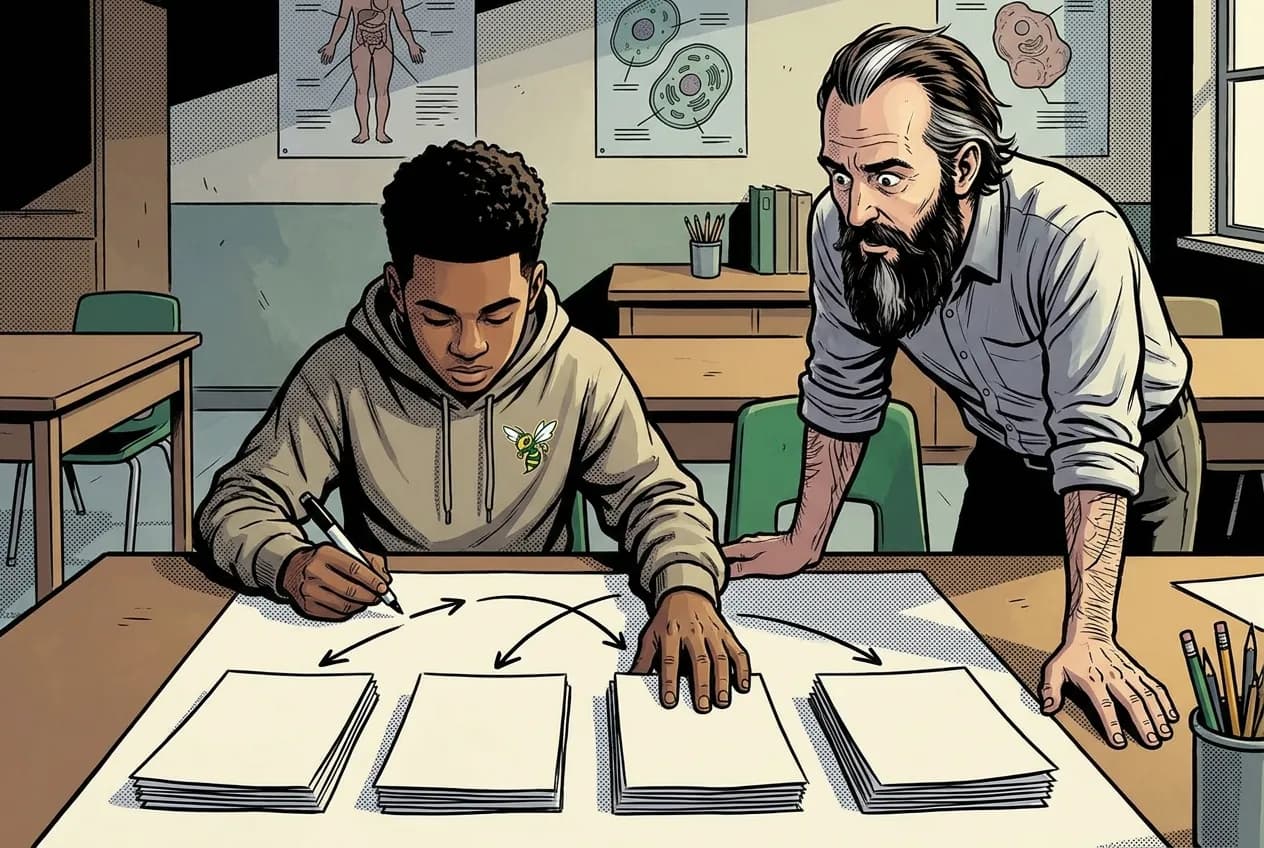
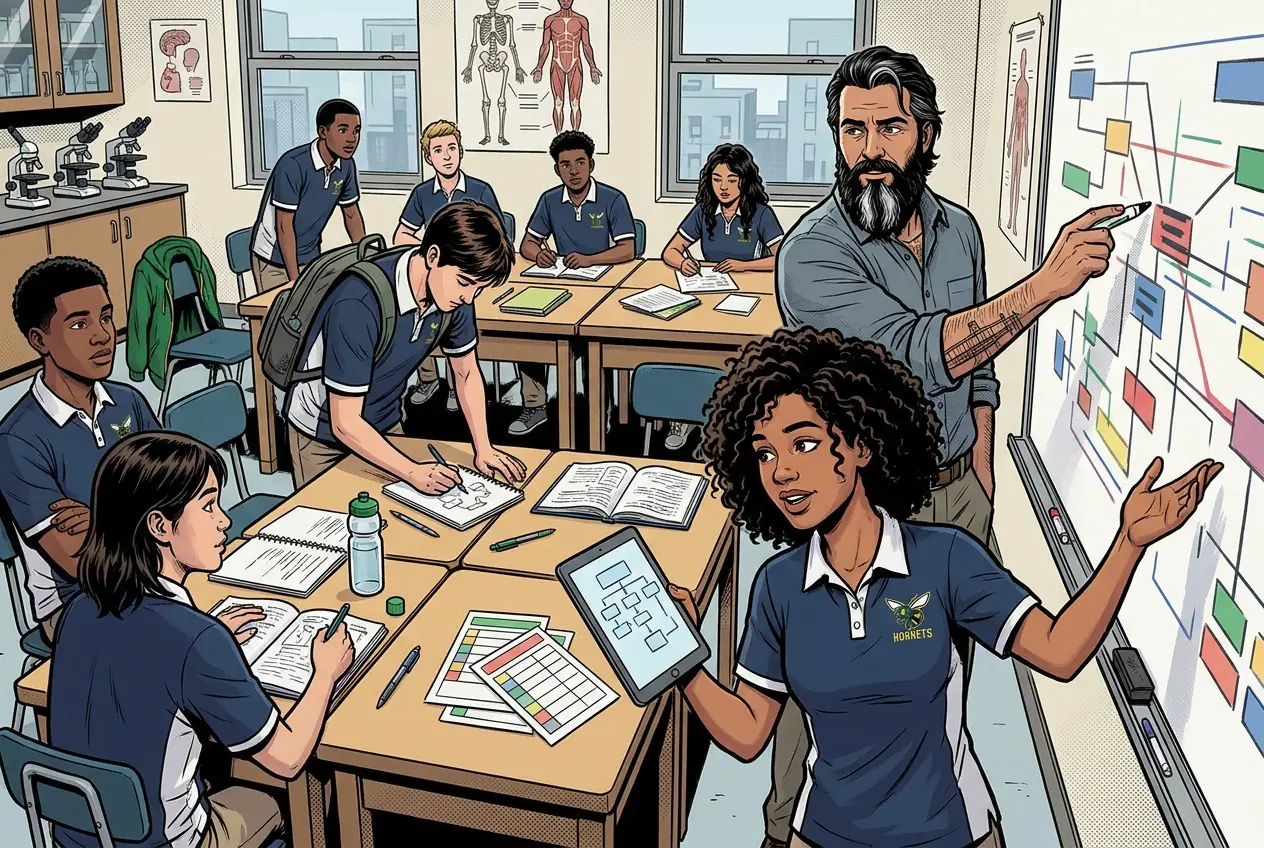
Four evidence streams: the scene, the lab, the suspect, the autopsy. They are not equally reliable and pretending they are is how you get a confident wrong answer.
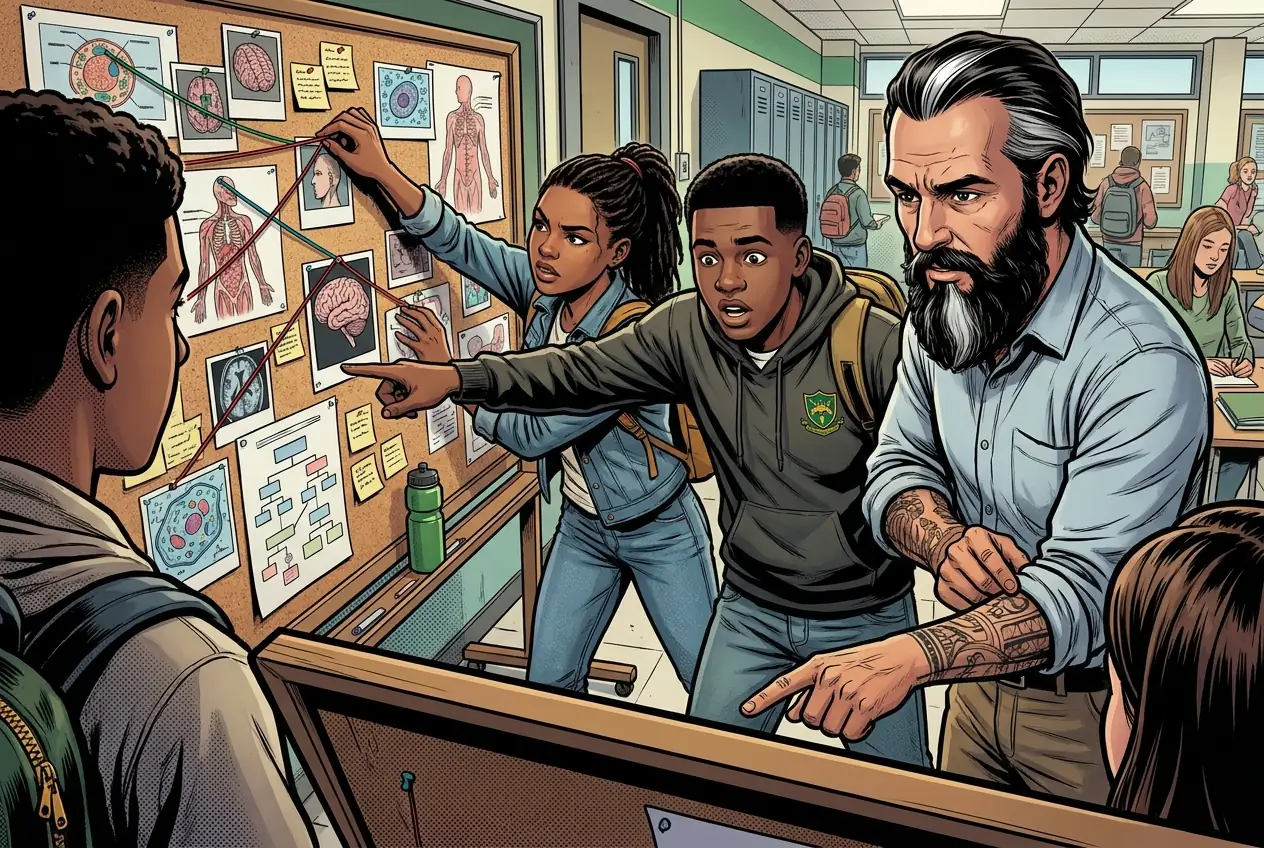
Best day of the semester. Two of us read the same tissue finding differently, so we drew both on the board with a conflict marker between them.
MR. MENDOZA
Right call. A board that hides a disagreement is lying.
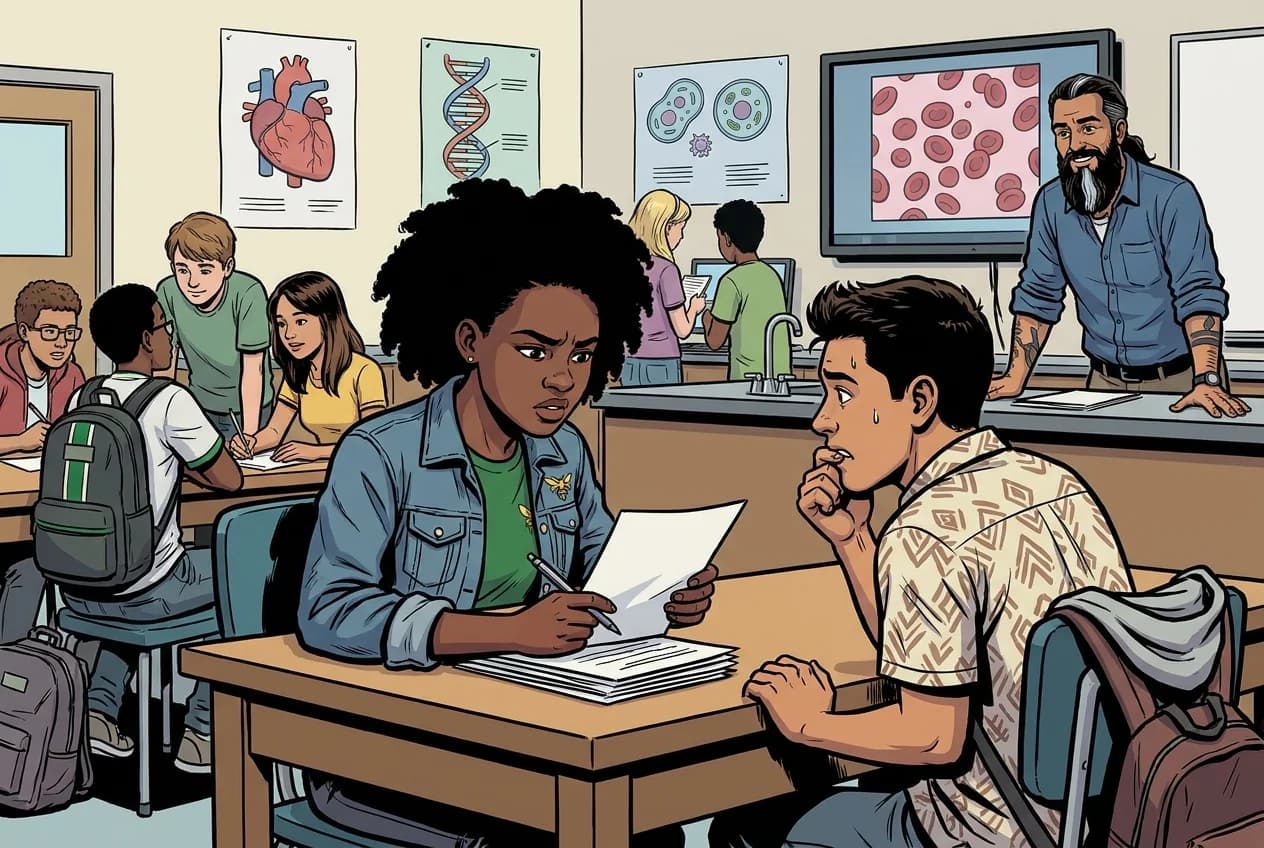
Peer review before submitting.
CLASSMATE
You explained three of your four streams and just listed the fourth.
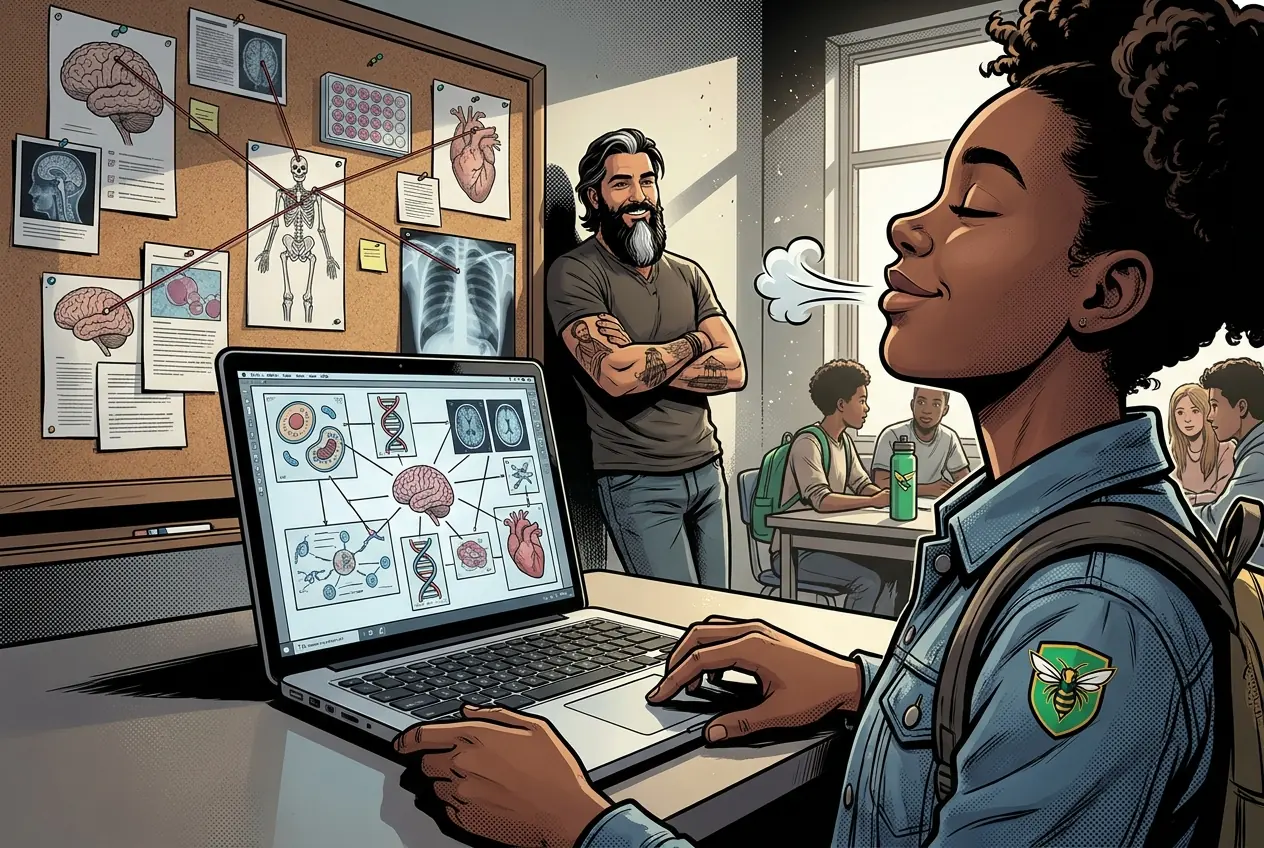
Six weeks ago I did not know what a CER was. Today I wrote a four-stream investigative argument with a limitations section.
Week 7 · Clinical communication
OCTOBER 6 TO 8
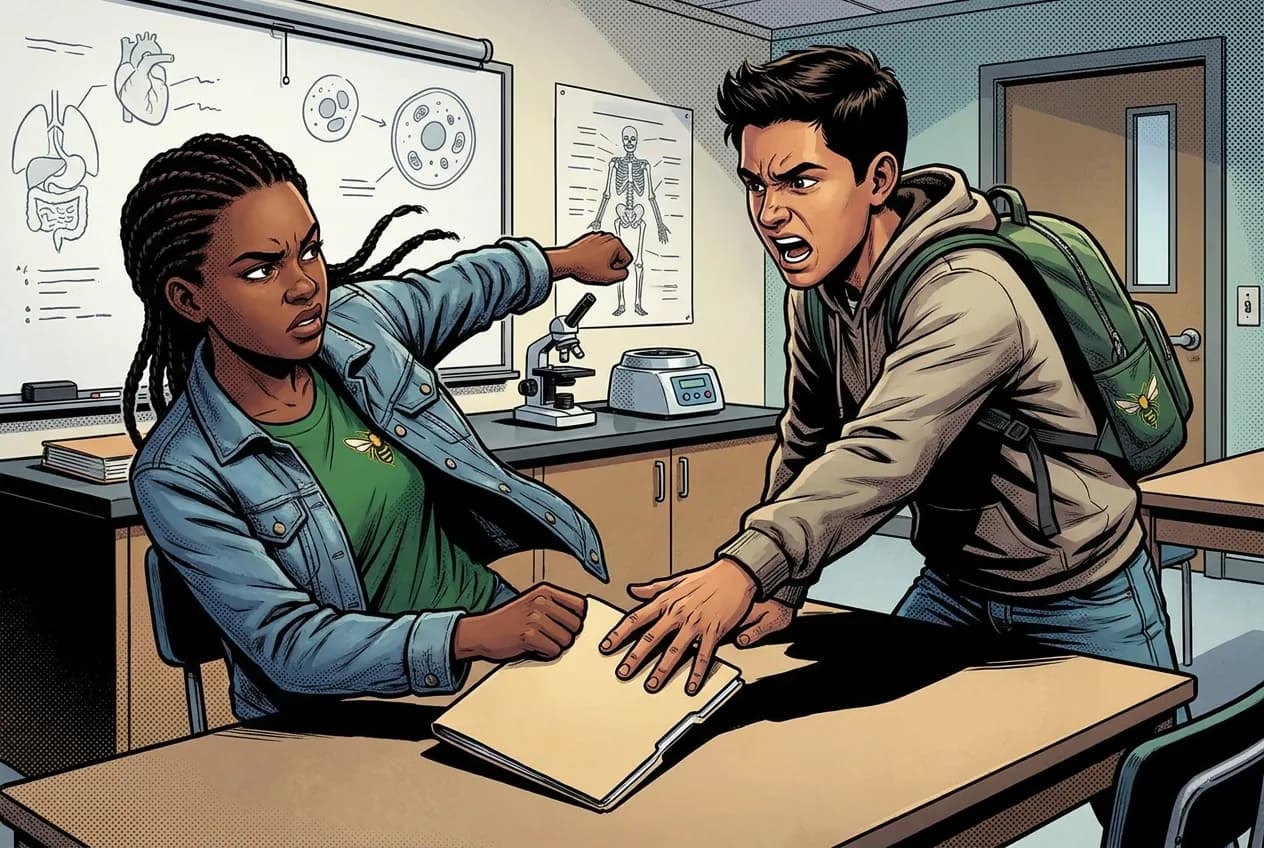
Should a doctor ever share patient information without consent? HIPAA protects it, and then public health carves out exceptions. That gap is the whole argument.
Four vital signs, four normal ranges, and one column for how each measurement could go wrong. That last column is what made me think.
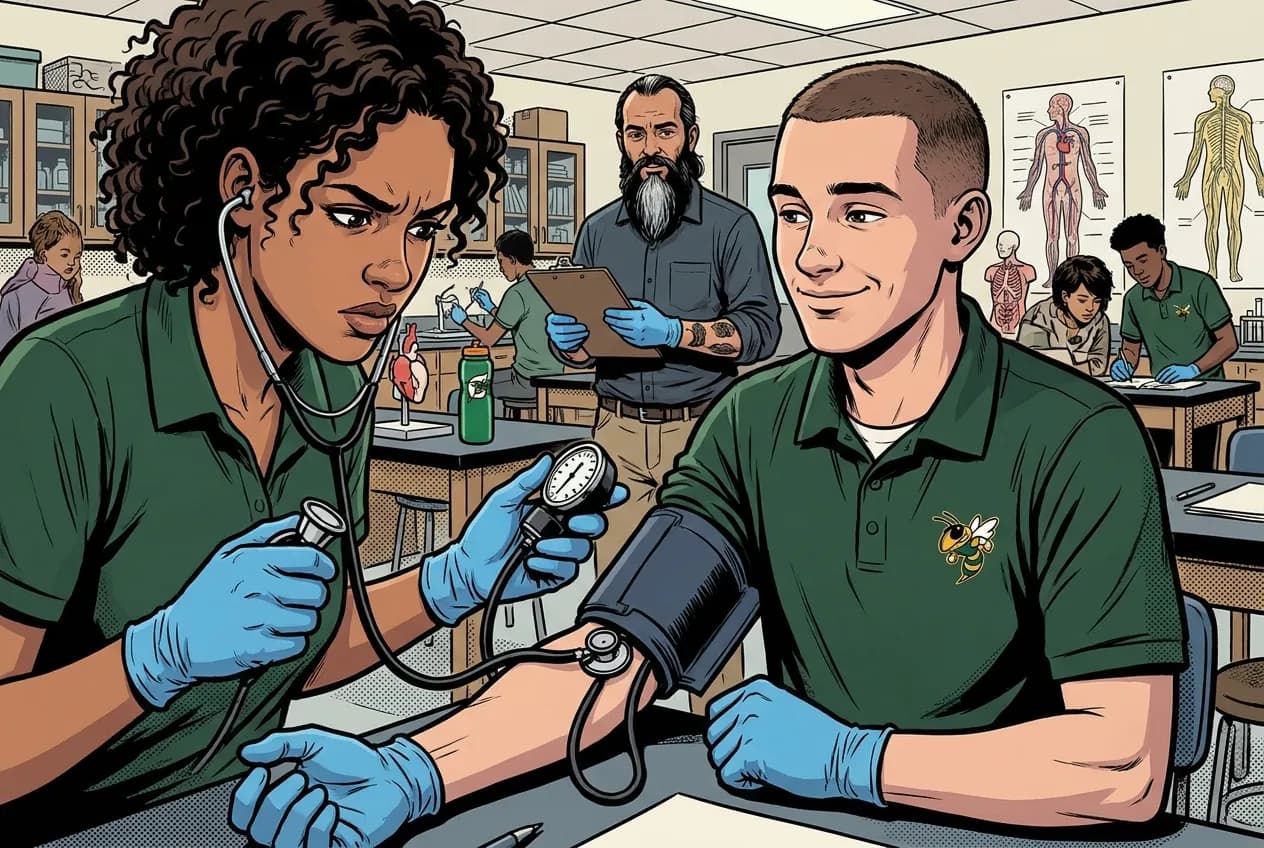
Measuring on a person is different from measuring a sample. He could tell I was nervous, and that changed his pulse, which is itself an error worth noting.
I could not hear it on the first two tries. I got it on the third and recorded the failed attempts too, because the SOP says document what happened.
HOSA on Wednesday. I am looking at medical terminology, partly because the vocabulary is most of what is on the WebXam. Two things at once is the only way I get everything done.
Week 8 · Clinical data
OCTOBER 12 TO 16
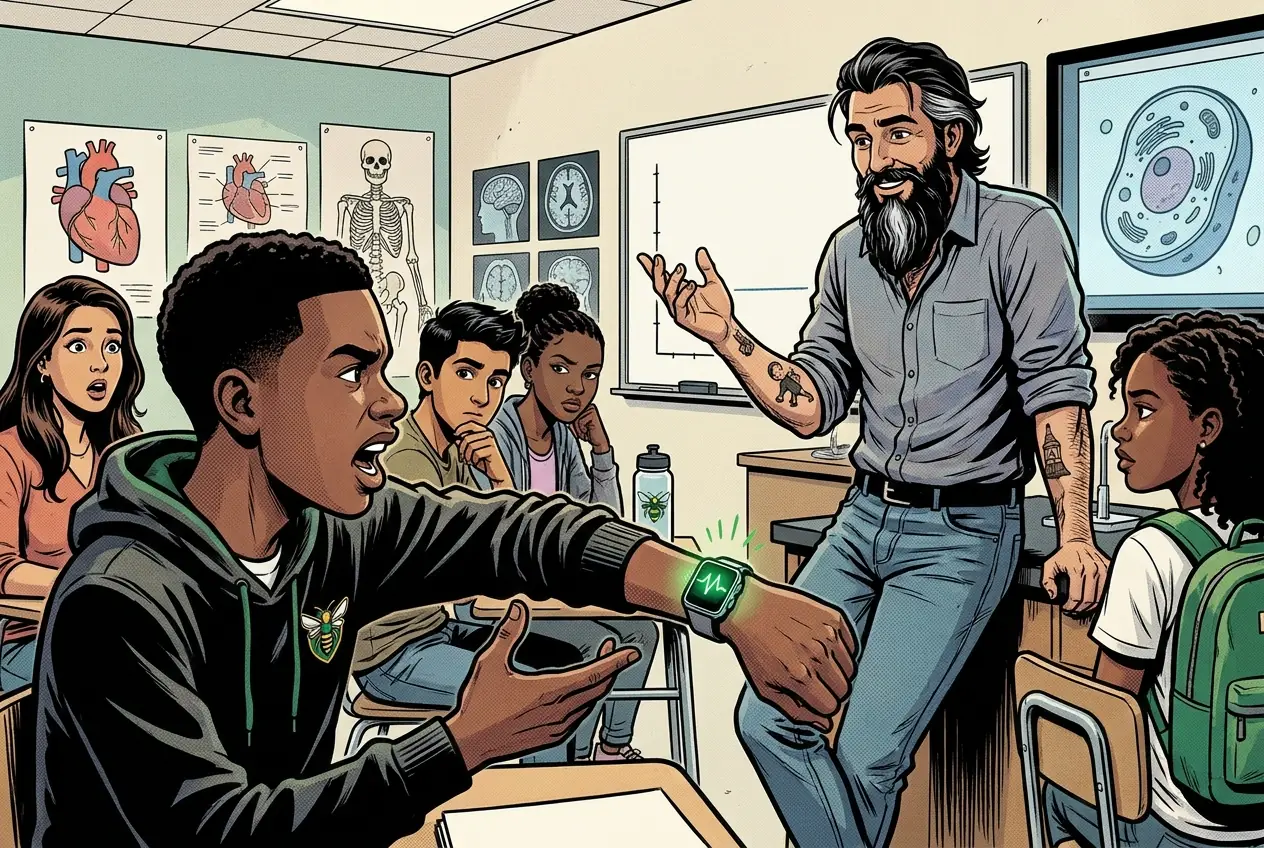
Do wearables make us healthier or just more anxious? Most of the room said more data is obviously better. I did not.
ME
A number you cannot act on mostly produces worry. The benefit is the interpretation, and nobody guarantees you that.
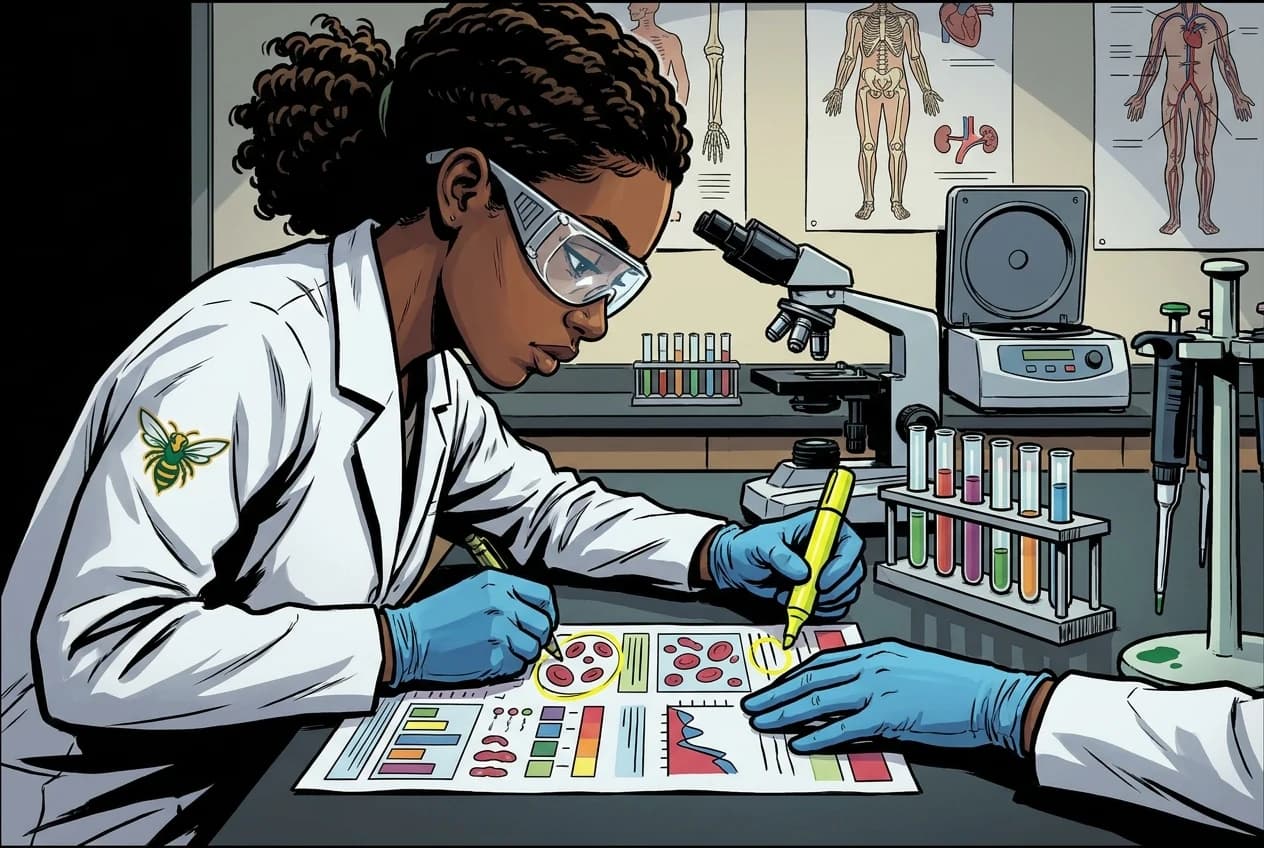
The same glucose number is fine or alarming depending on whether the patient just ate. Context is part of the measurement.
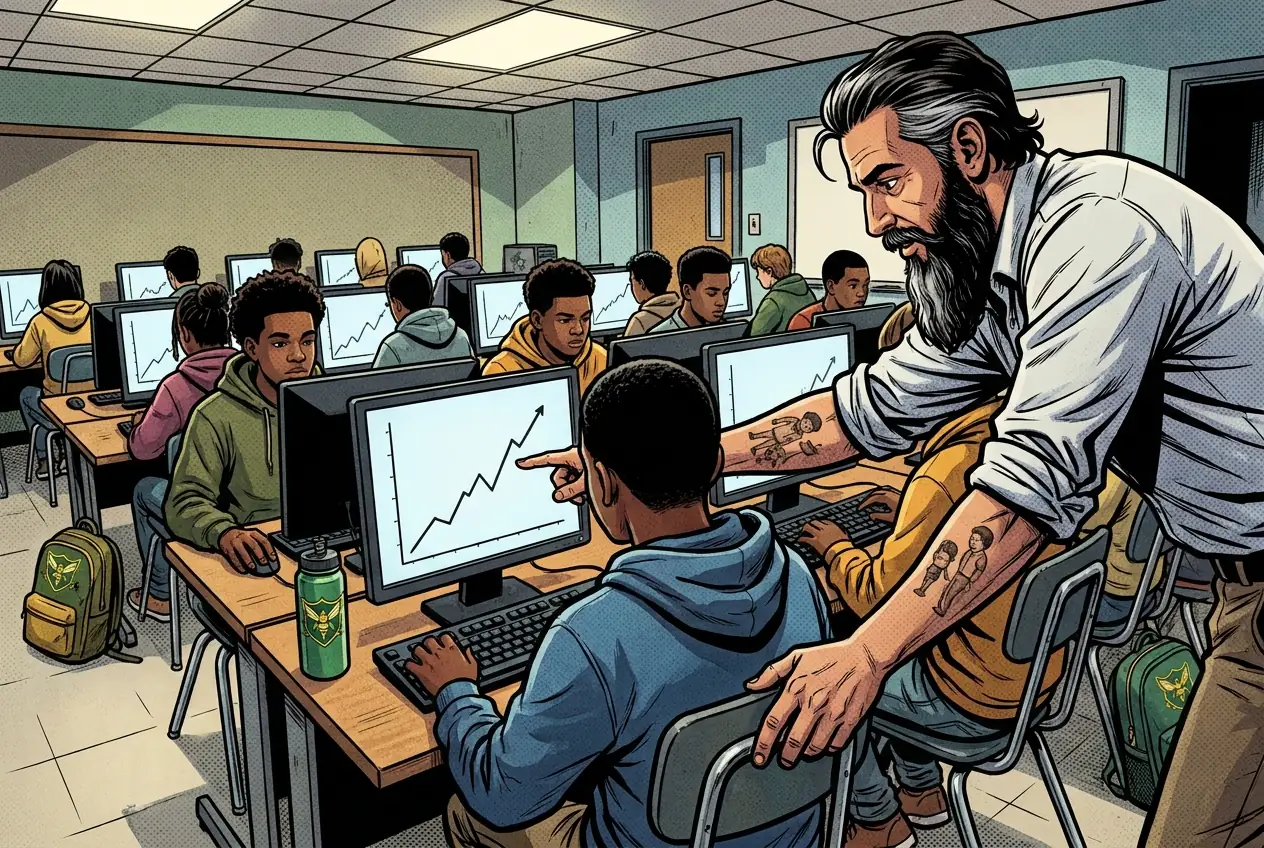
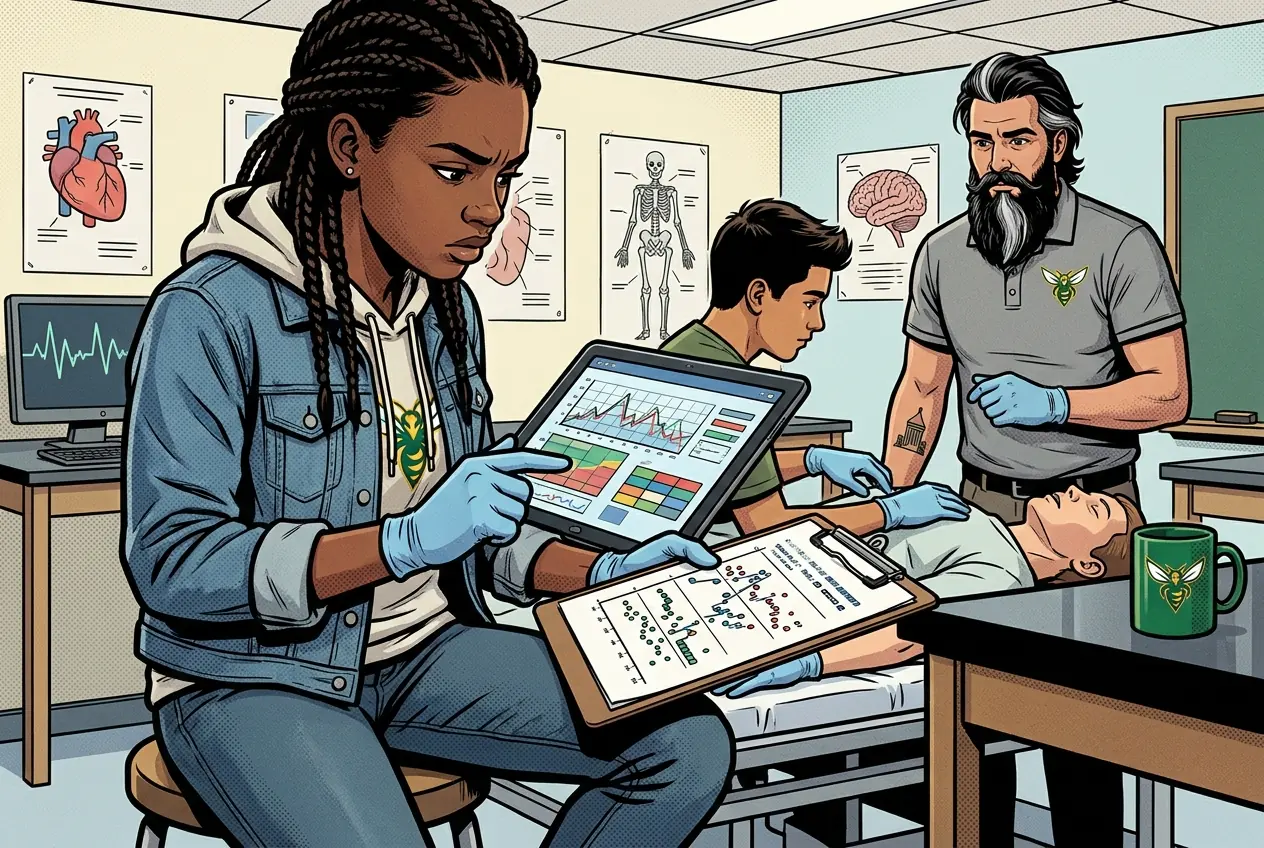
My first time-series graph had uneven spacing on the x-axis, so a steady rise looked like a sudden spike. A visually wrong graph made of correct numbers.
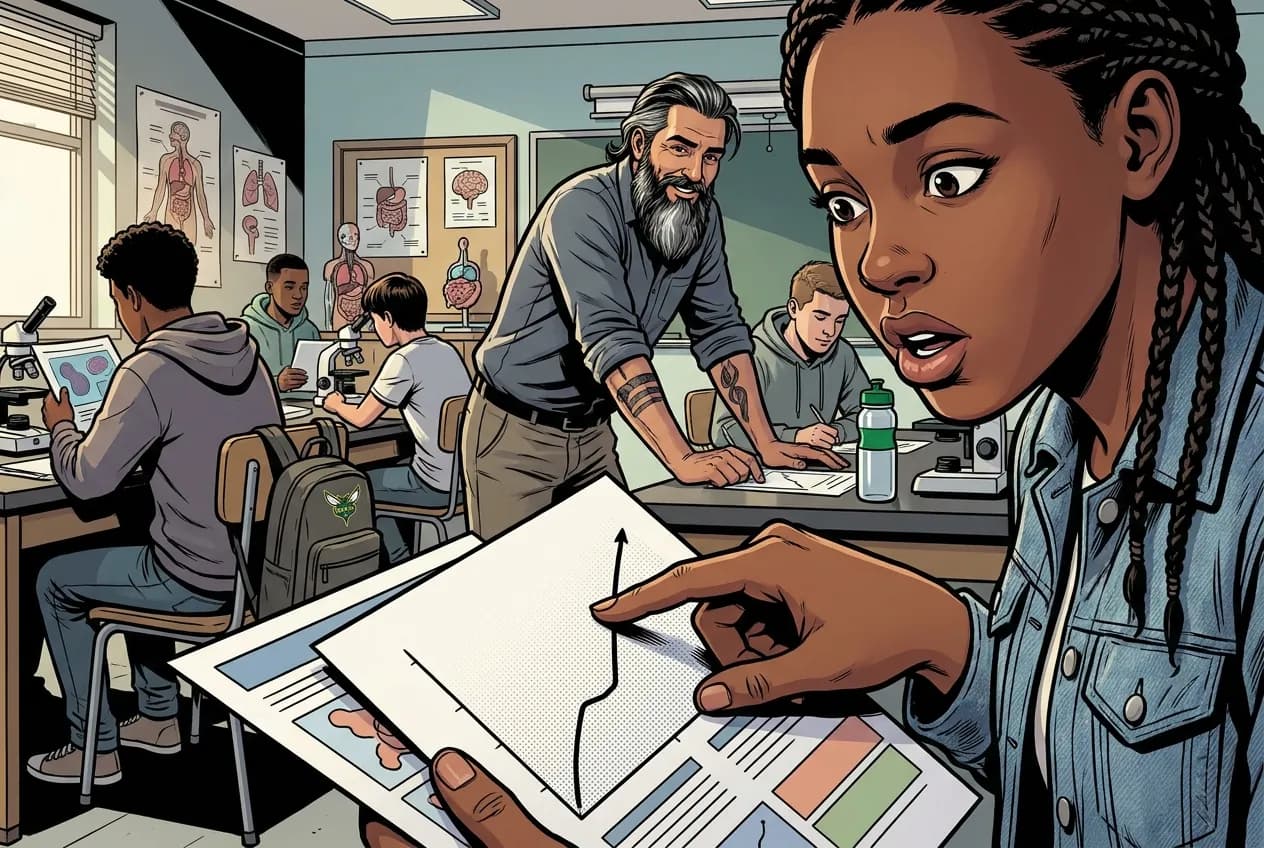
One reading is a snapshot. Only the trend tells you where the patient is heading.
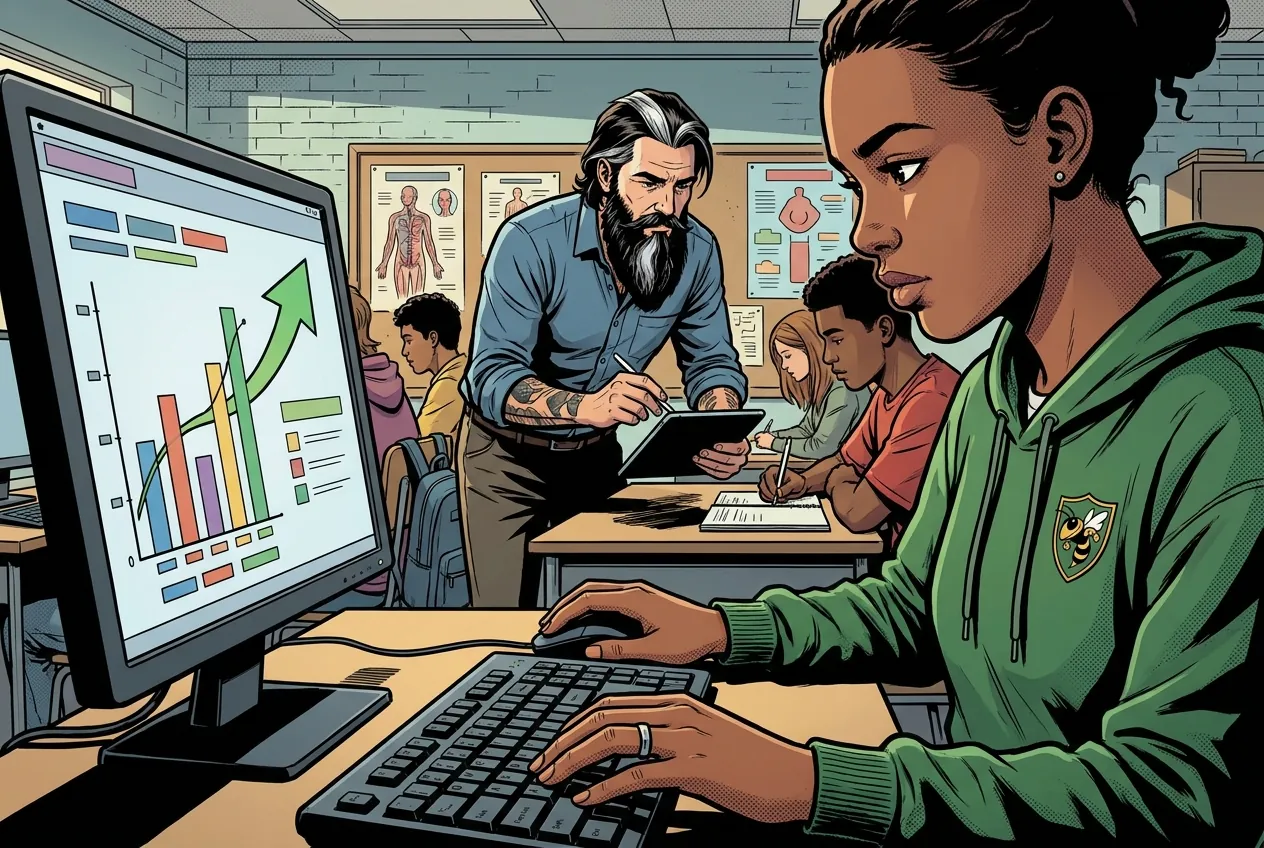
Marking the normal range as a band behind the line makes the graph readable at a glance. I would not have thought of that.
Week 9 · DNA and protein
OCTOBER 20 TO 22
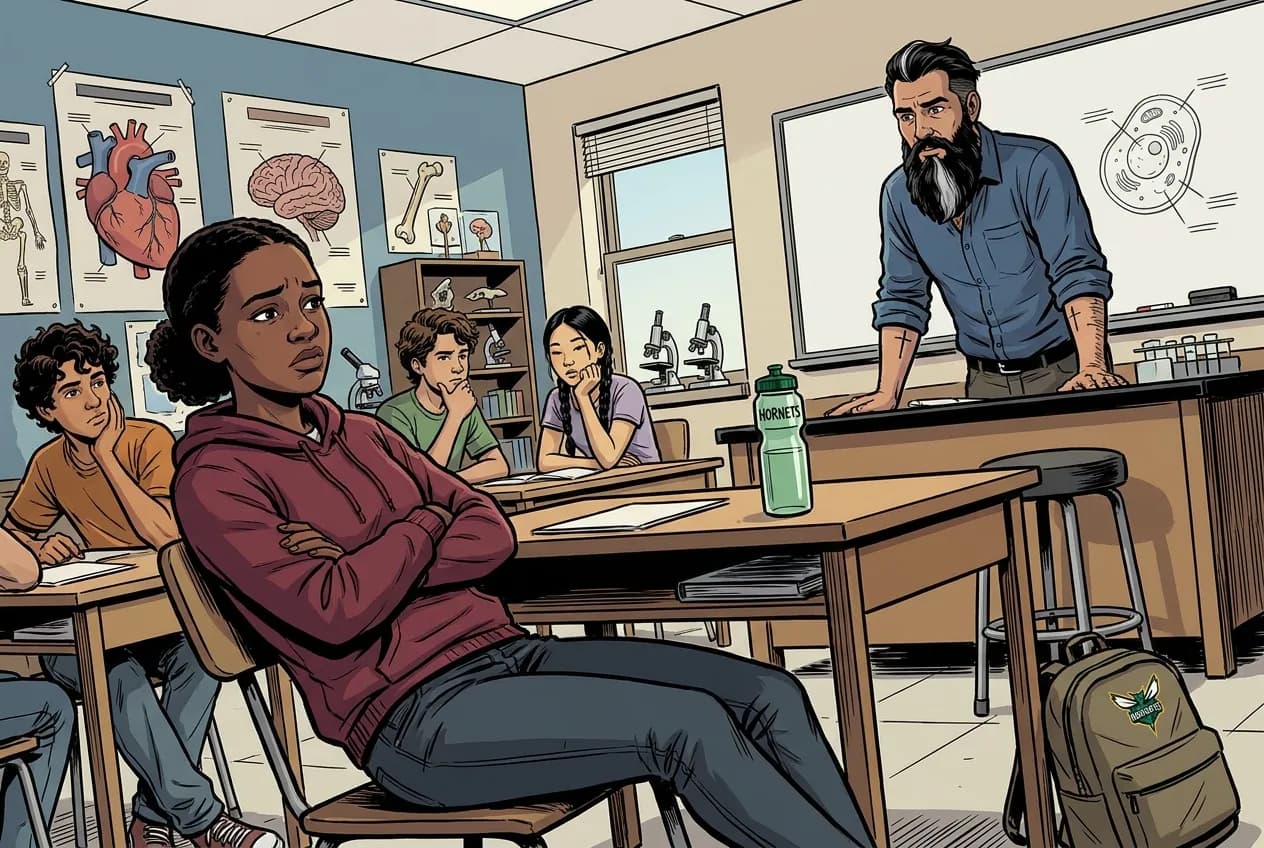
If your DNA reveals a risk, do your relatives have a right to know? A result about me is partly a result about you. Hardest Monday yet.
MR. MENDOZA
An honest unresolved position beats a tidy fake one.
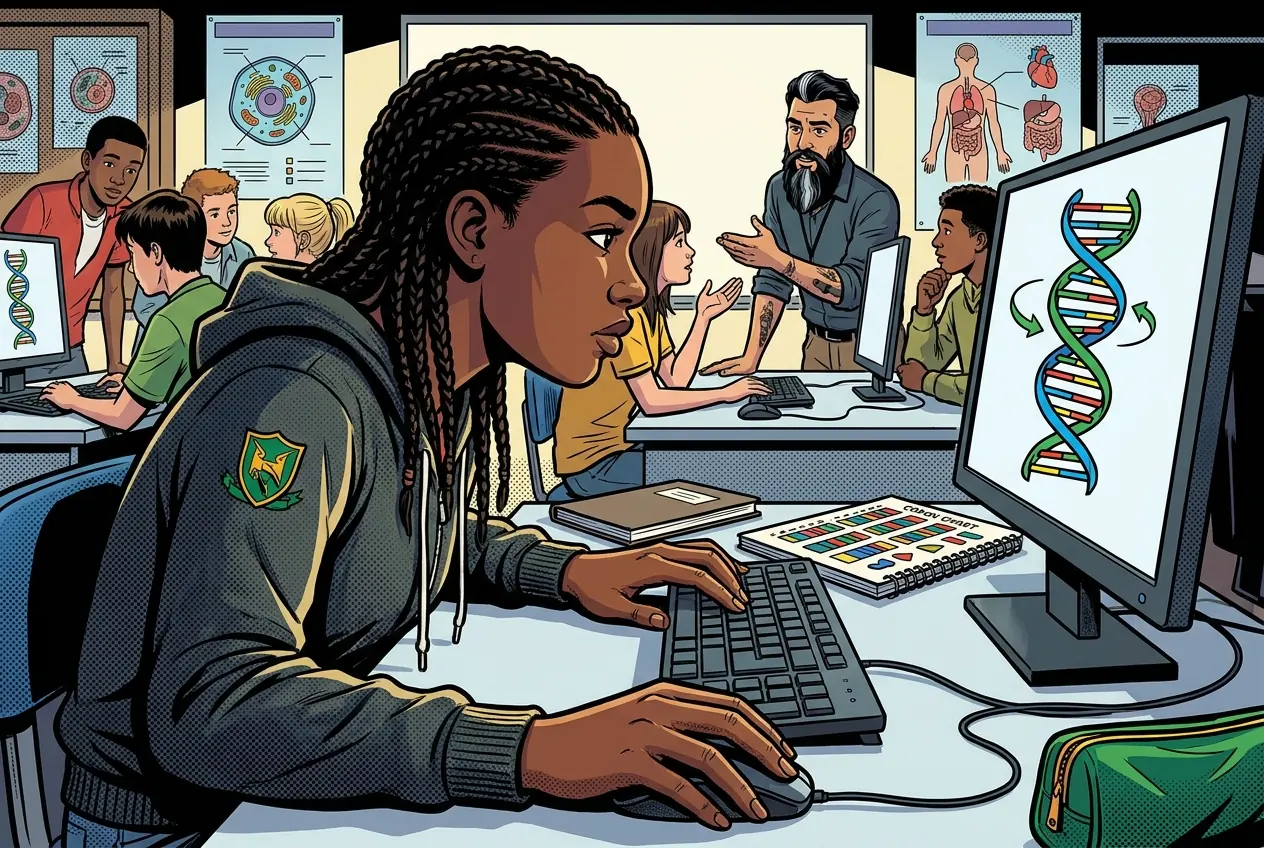
DNA to RNA to protein. I built the mutation plan on paper first, so the lab tomorrow is checking my work instead of guessing.
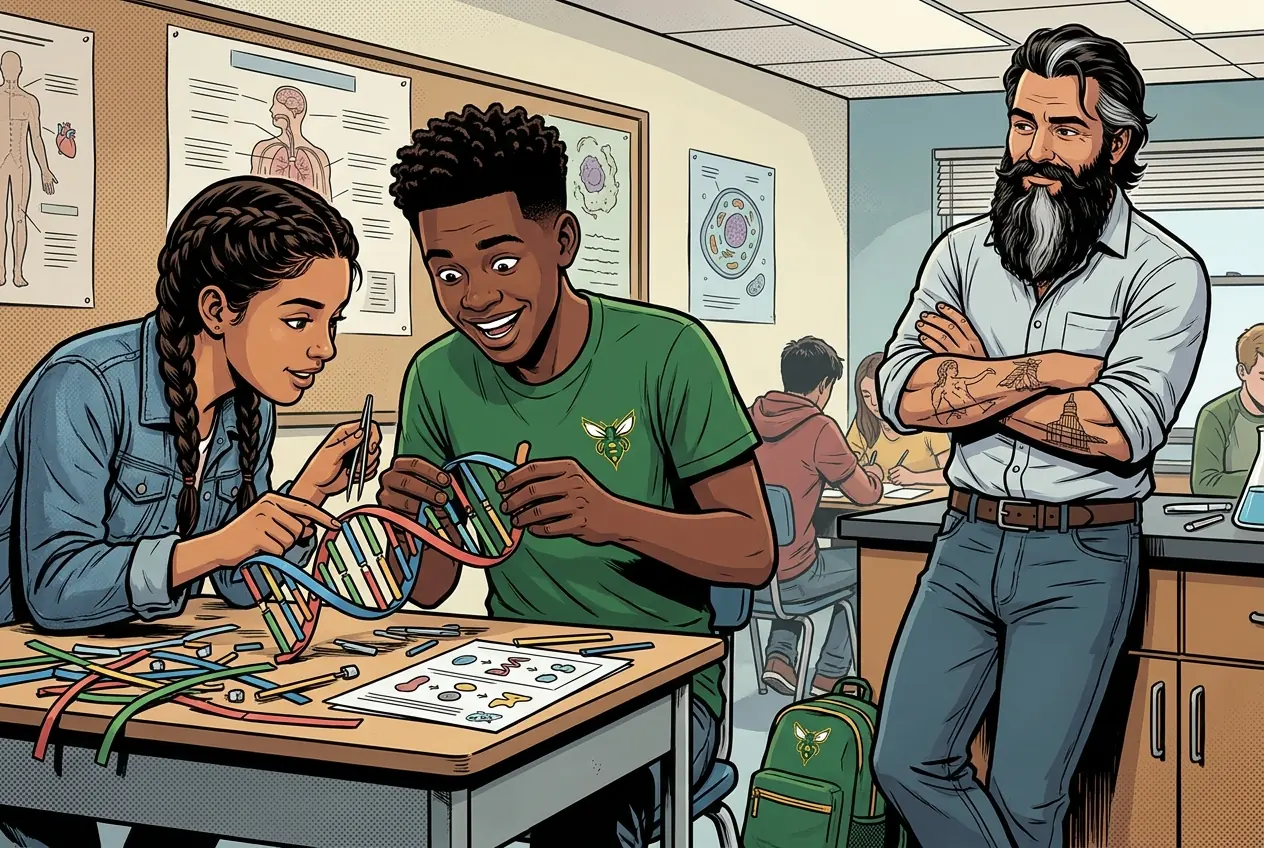
I changed one base and the amino acid did not change at all. I thought I had done it wrong. The genetic code is redundant. Some mutations are silent.
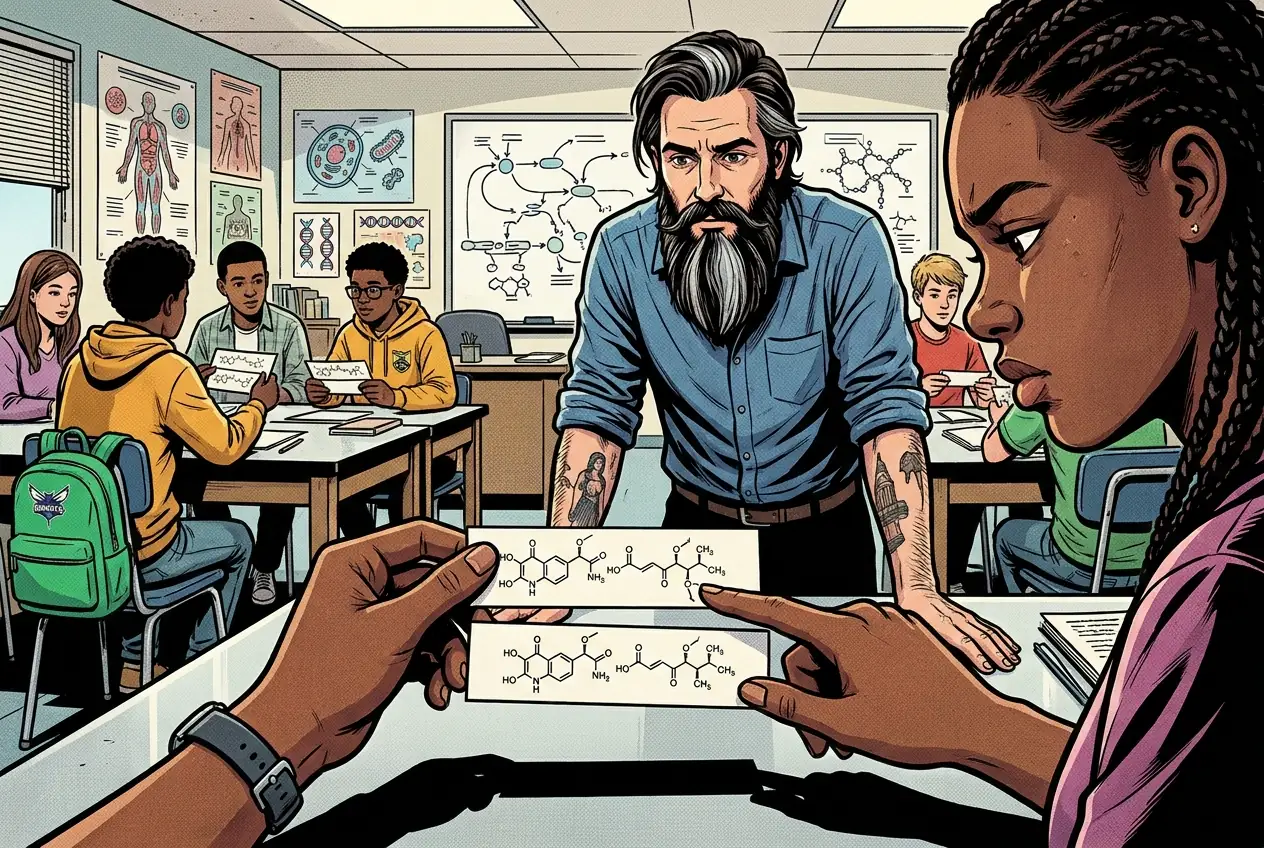
The person next to me changed one base and got a stop codon. Same size change, completely different consequence.
The central dogma is the spine of everything after this. This is the packet I will come back to.
Week 10 · Genetic risk
OCTOBER 26 TO 28
The exit ticket was different. Instead of defending my position I had to write down the strongest argument against it. That is much harder.
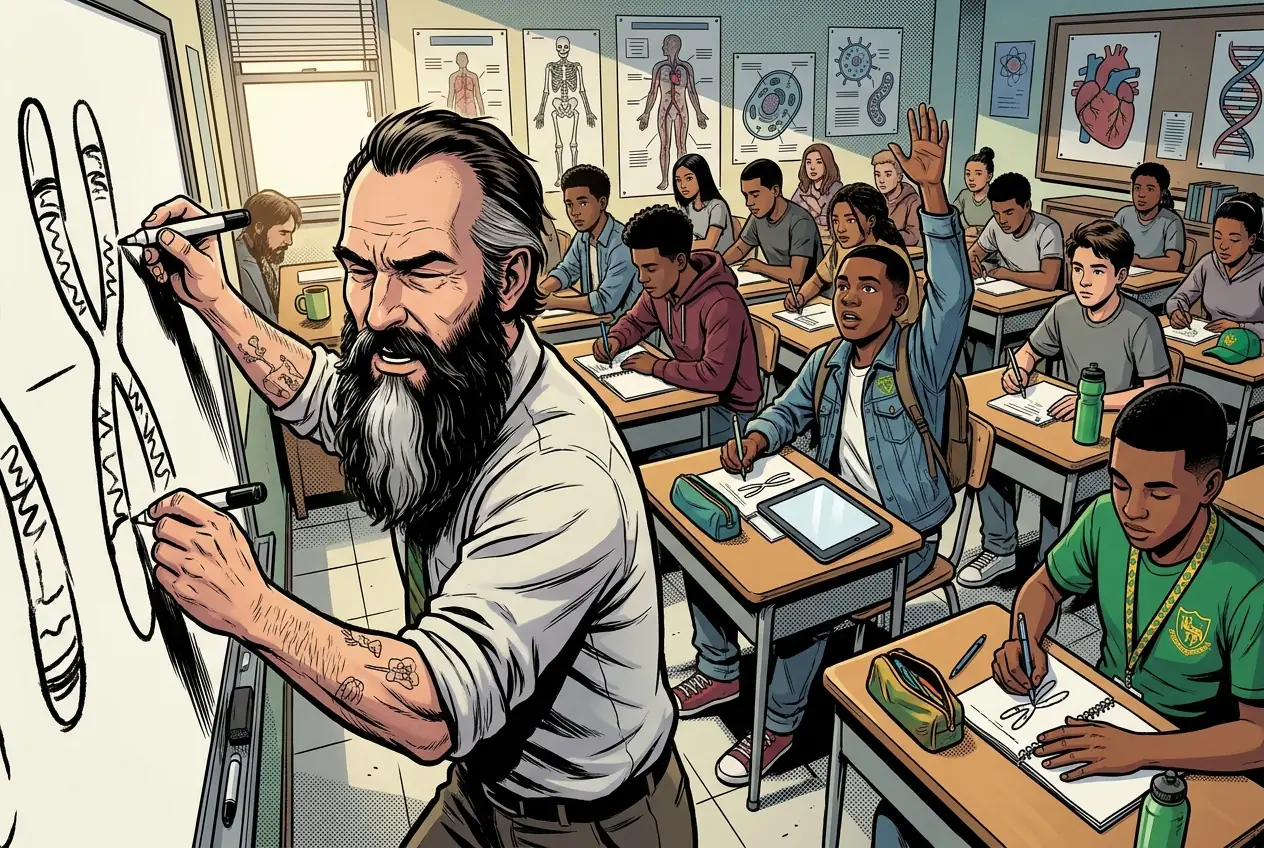
Chromosome number, autosomes, sex chromosomes, and what happens when the count is wrong.
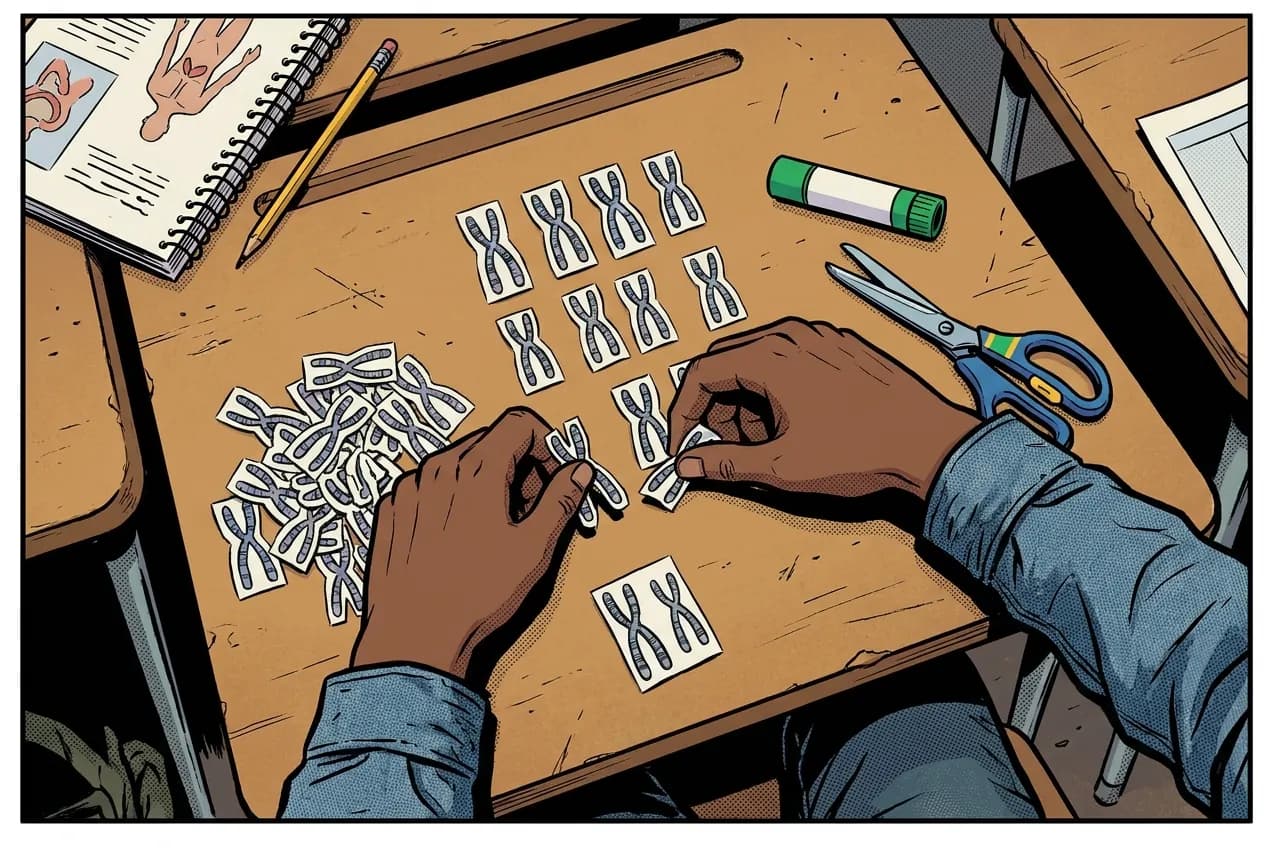
Sorting by size sounds easy. It is not. I misplaced one pair, which shifted two others, and did not notice until my count came out wrong.
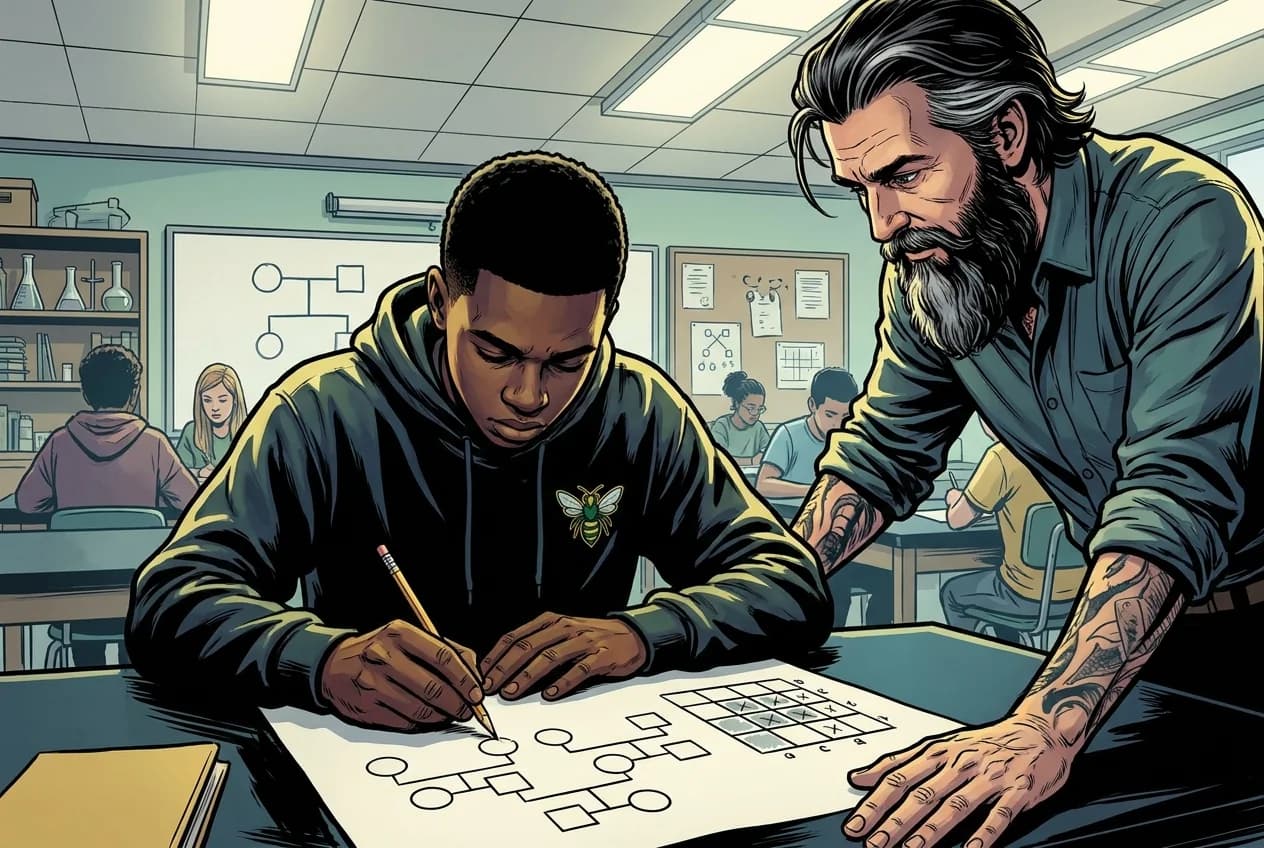
First CER where the claim is a number. A Punnett square gives the probability for each pregnancy independently, which is genuinely counterintuitive.
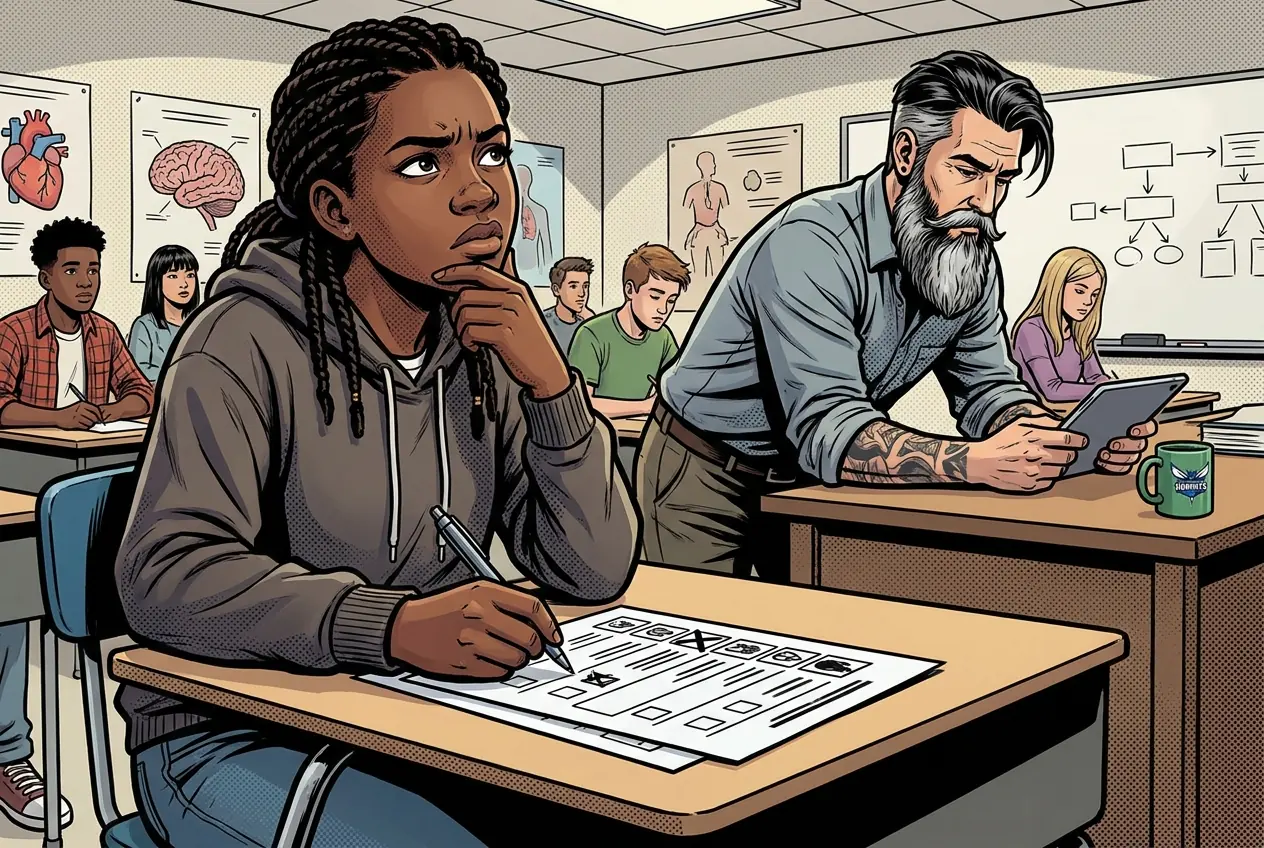
The tracker asks me to rate my own confidence. Doing that honestly is harder than the work.
Week 11 · Diagnostic workup
OCTOBER 29 TO NOVEMBER 4
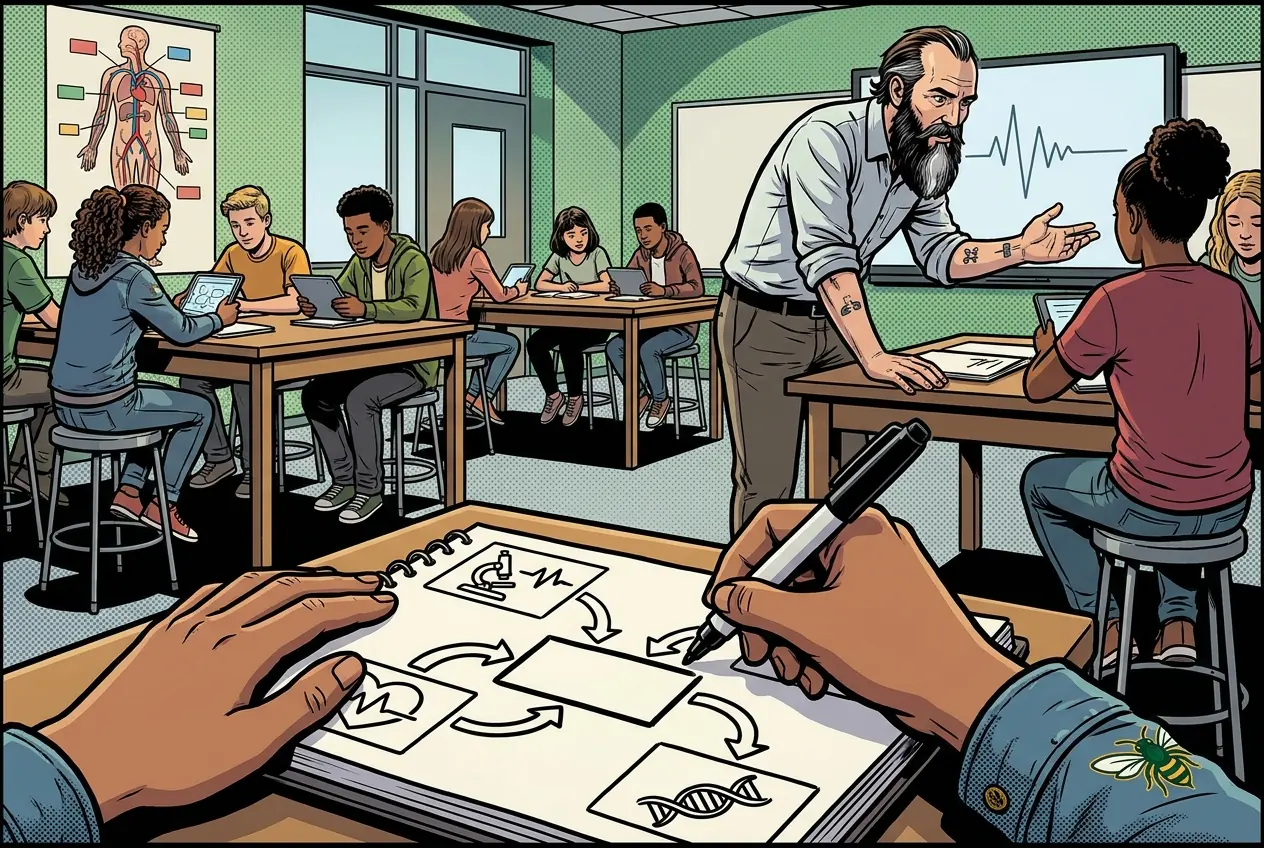
Out Monday and Tuesday, so three days carried five days of work. Every part of Unit 2 showed up as one process: history, vitals, bloodwork, genetics.
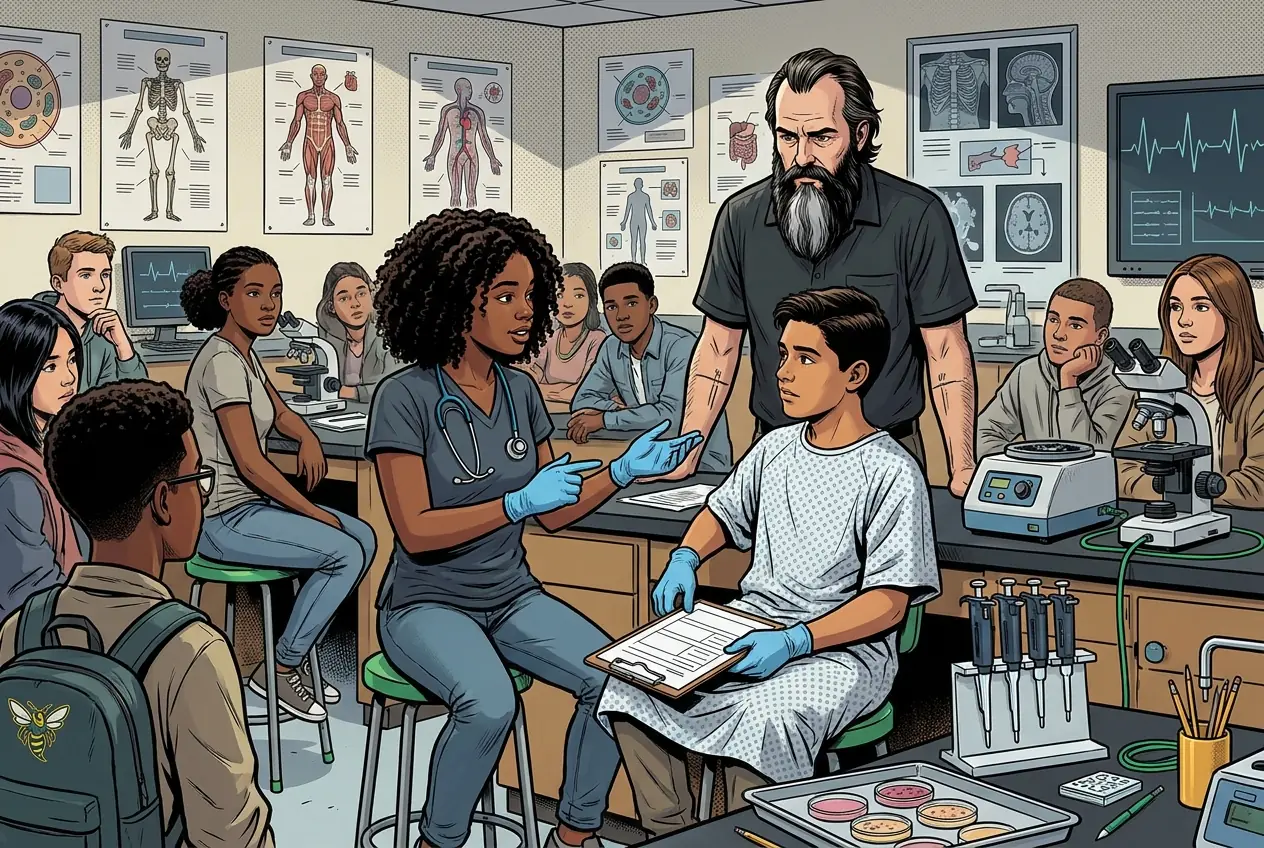
How much diagnostic uncertainty should a clinician share? Telling someone about a possibility you have not confirmed can cause real harm from a thing that turns out not to exist.
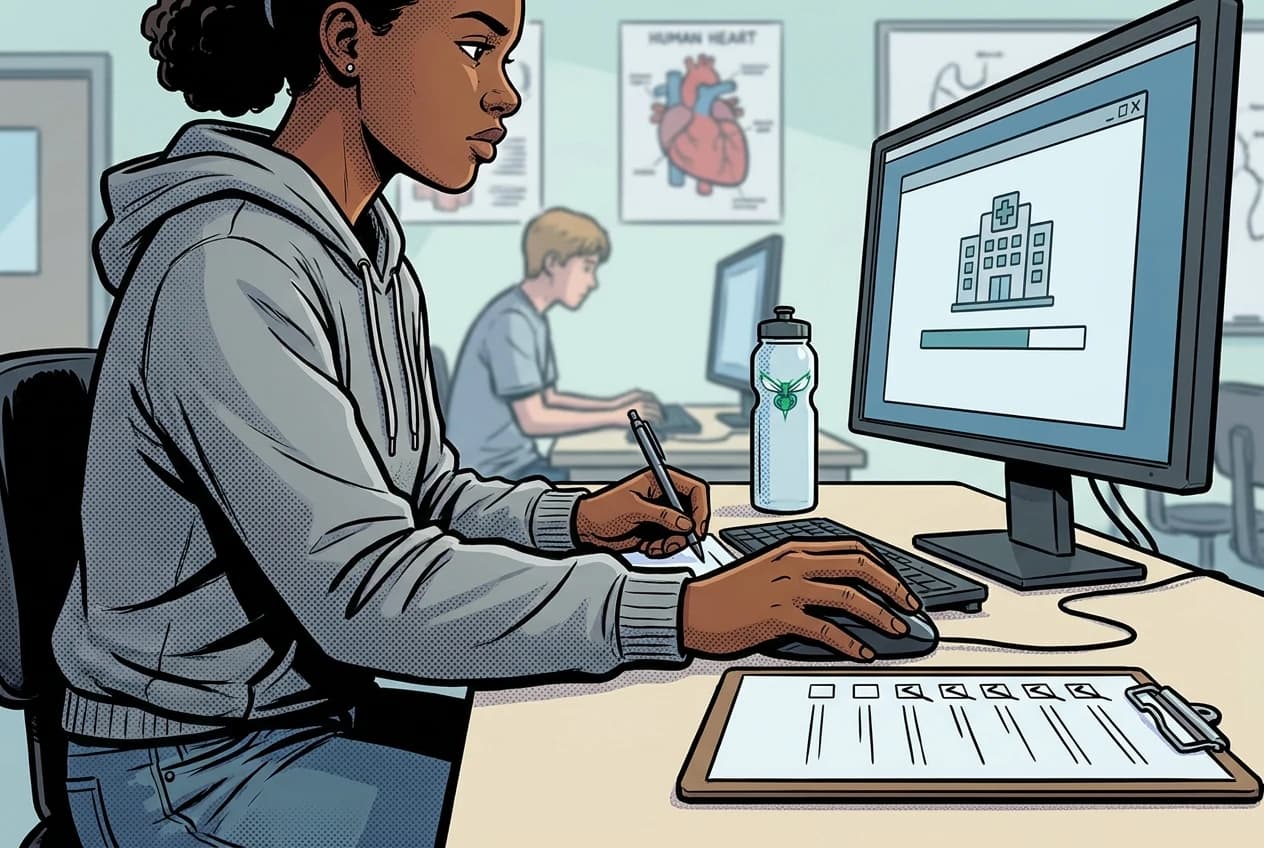
The Cleveland Clinic onboarding is a real process with real paperwork. Background check, modules, health requirements, in order.
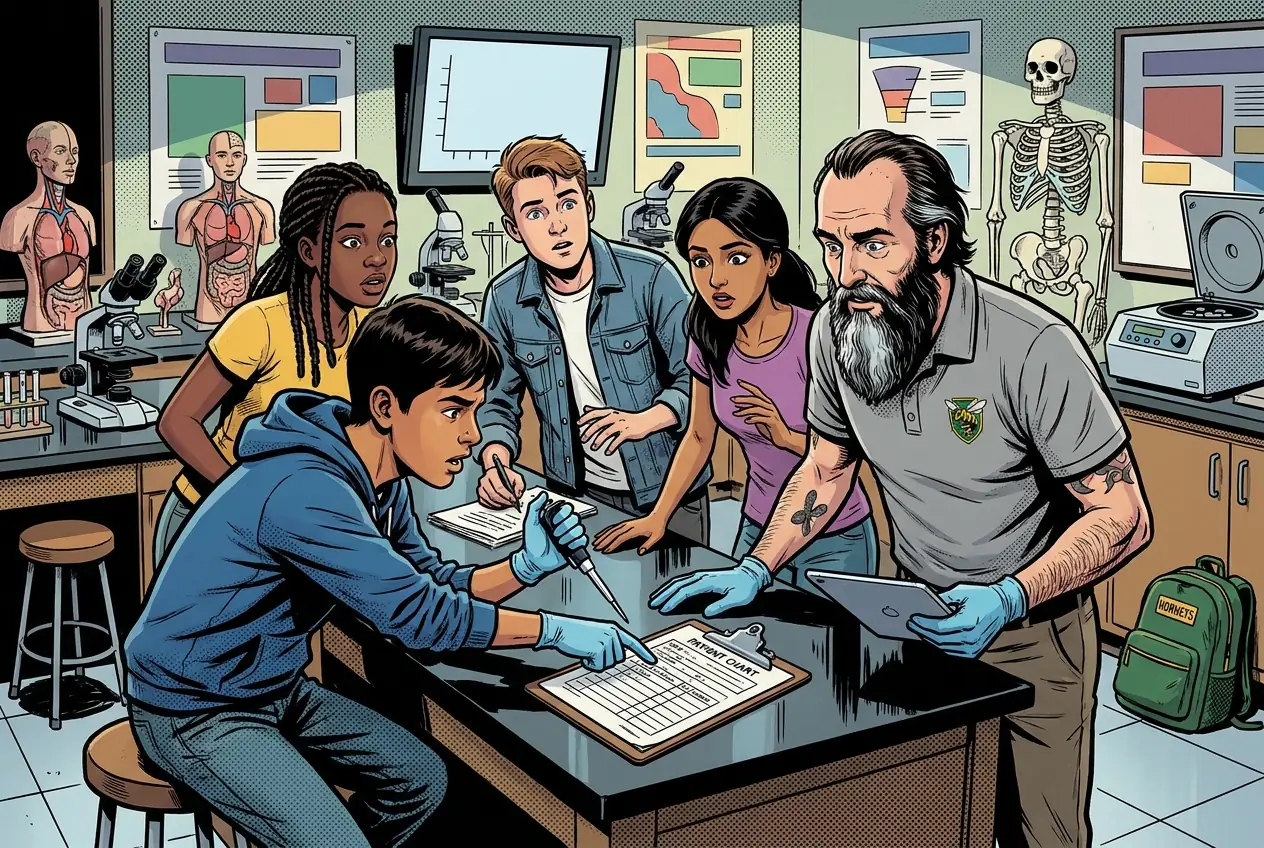
We talked over the one person weighting the patient history. He was right. A detail in the history explained the lab value we had been treating as the main finding.
ME
You said that ten minutes ago and I talked over you. Sorry.
Week 12 · Infection
NOVEMBER 6 TO 13
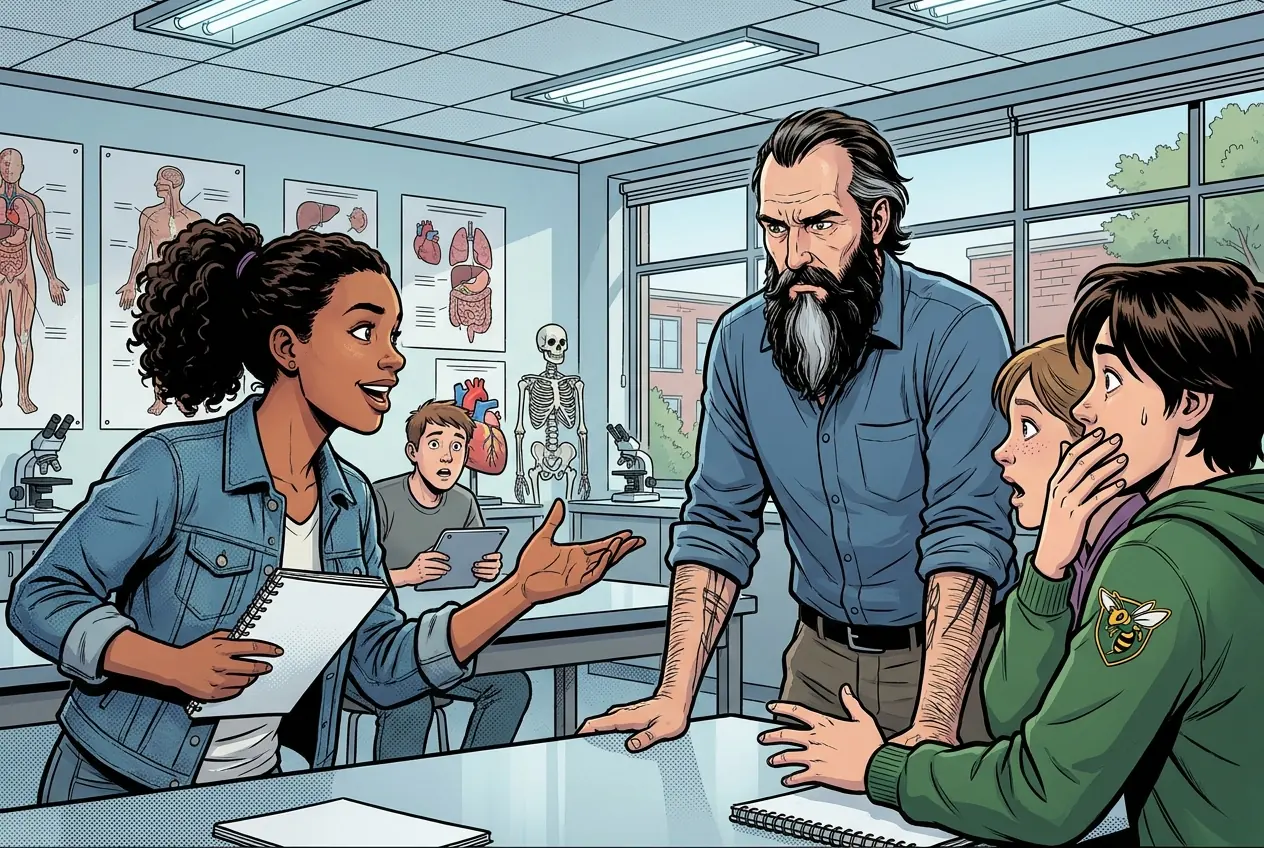
Should hospitals have to publish their infection rates? Best point made in the room all semester came from someone else.
CLASSMATE
If reporting is punished, hospitals test less. Better numbers, worse care.
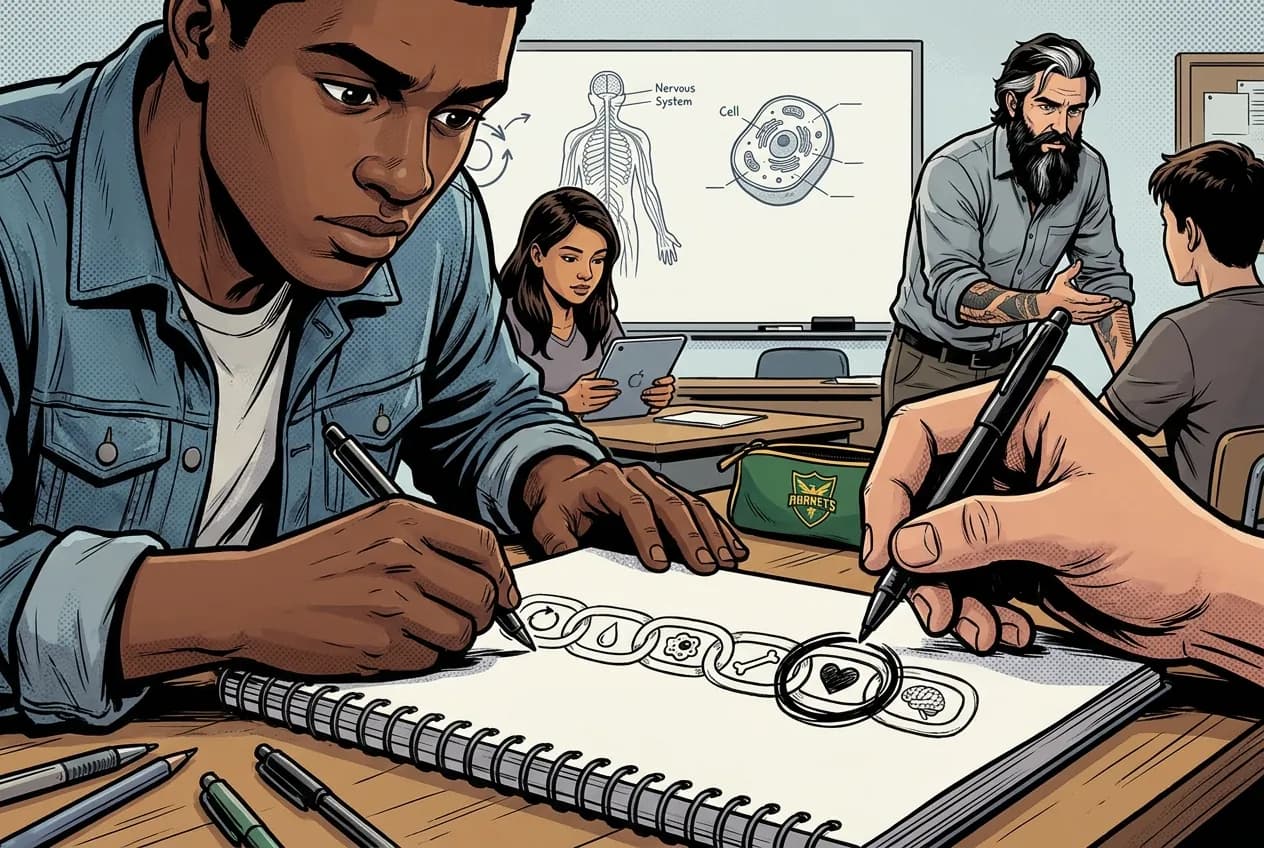
Six links in the chain of infection. You do not have to break all six. Break any one and transmission stops.
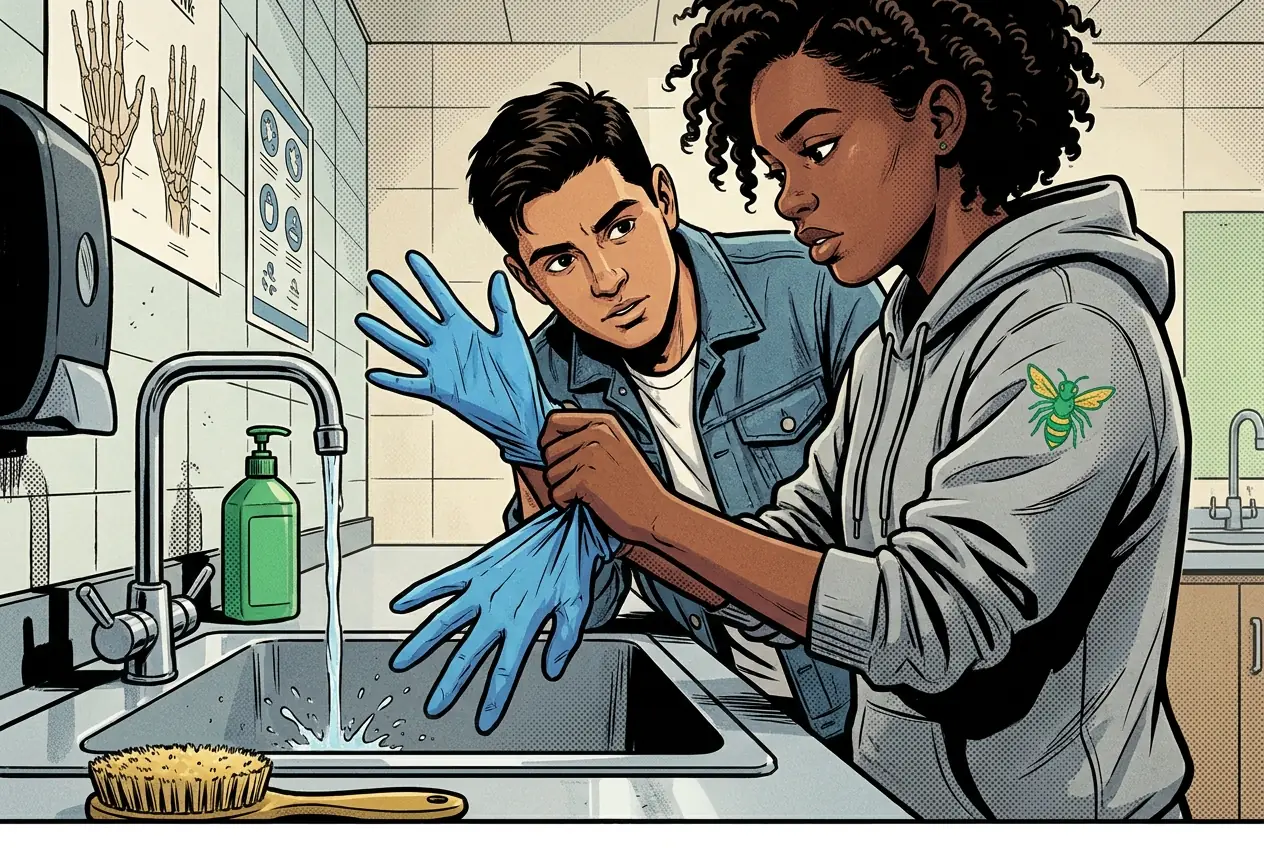
The weakest link in my scenario was not the dramatic one. It was hand hygiene between two routine tasks.
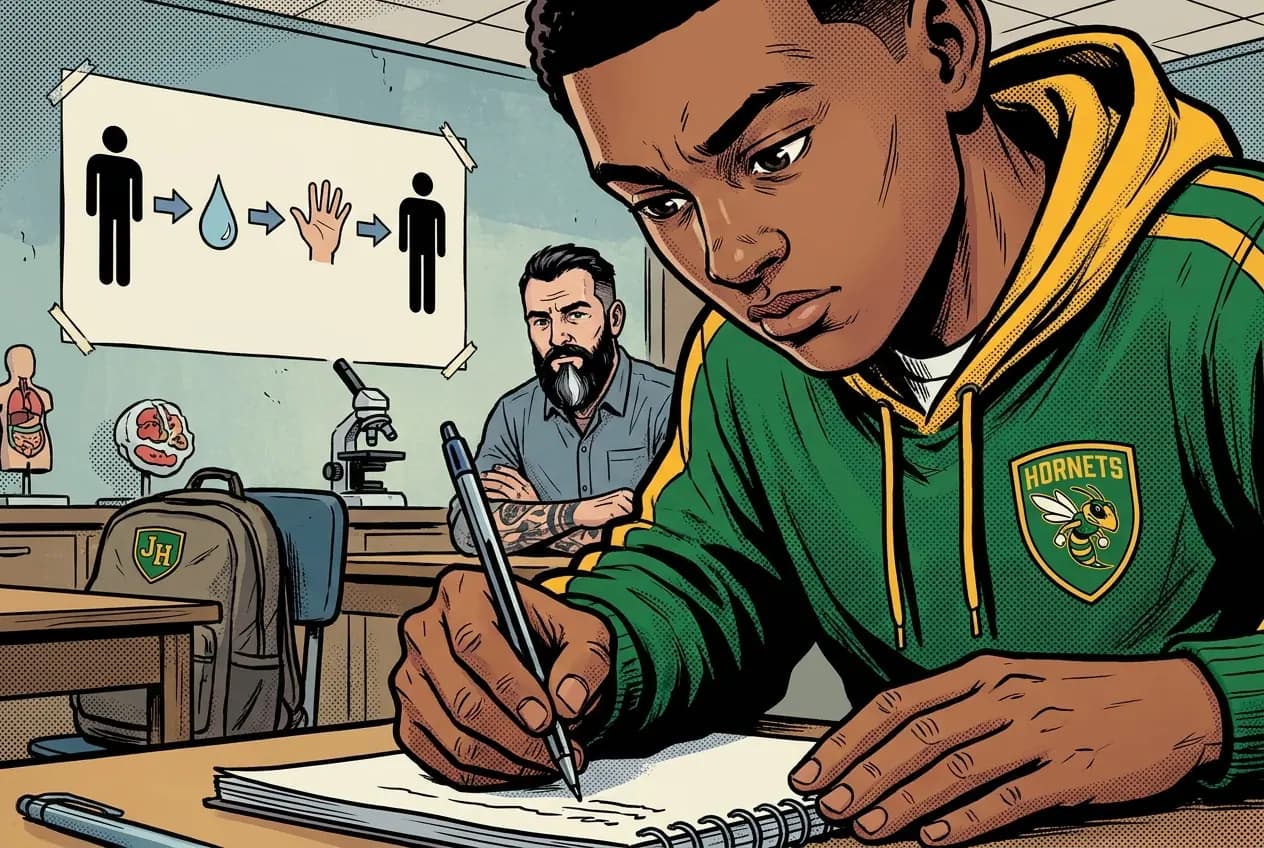
Wash your hands more is not an argument. Name the mechanism, predict the outcome, admit what you cannot rule out.
Week 13 · Outbreak
NOVEMBER 16 TO 19
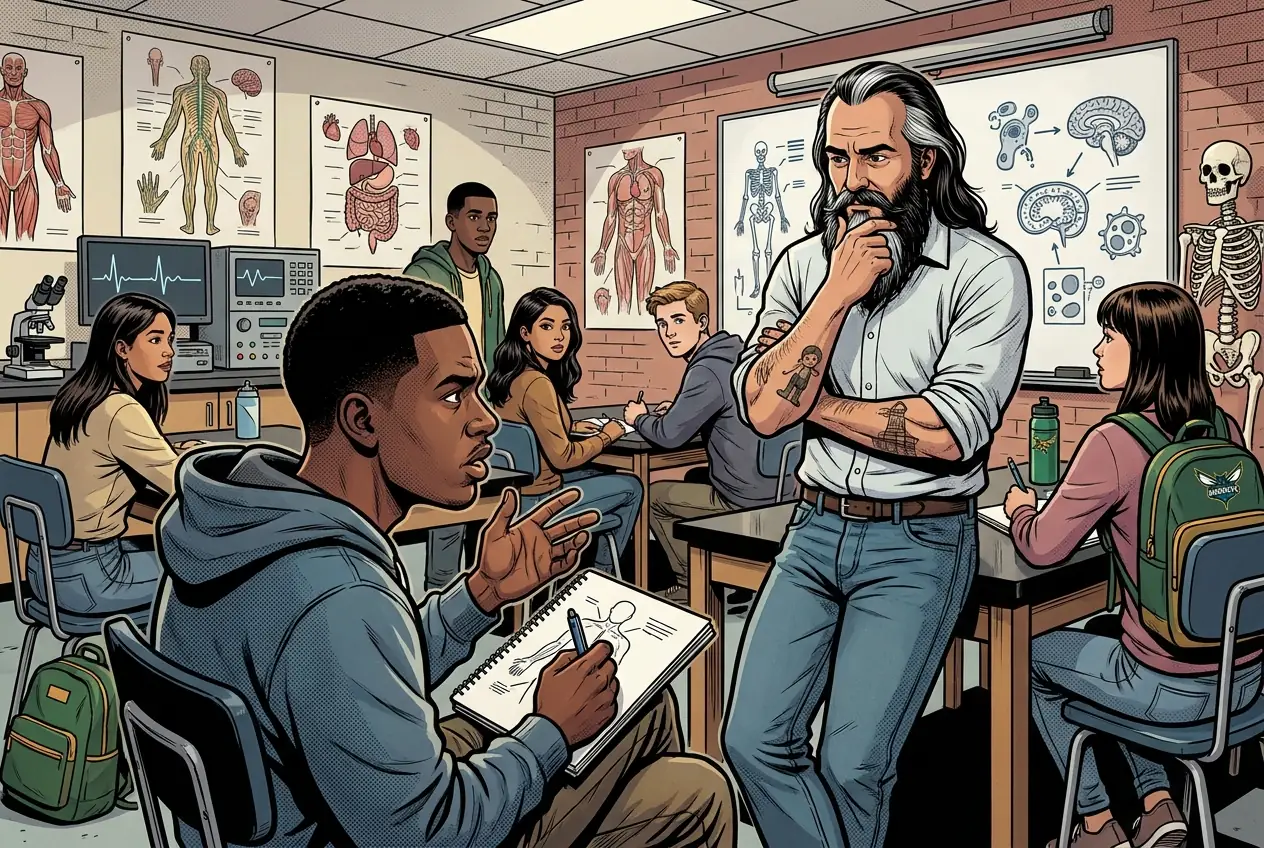
Third privacy debate this semester and my position has actually moved. I came in a strict privacy person. I am somewhere less satisfying and more honest now.
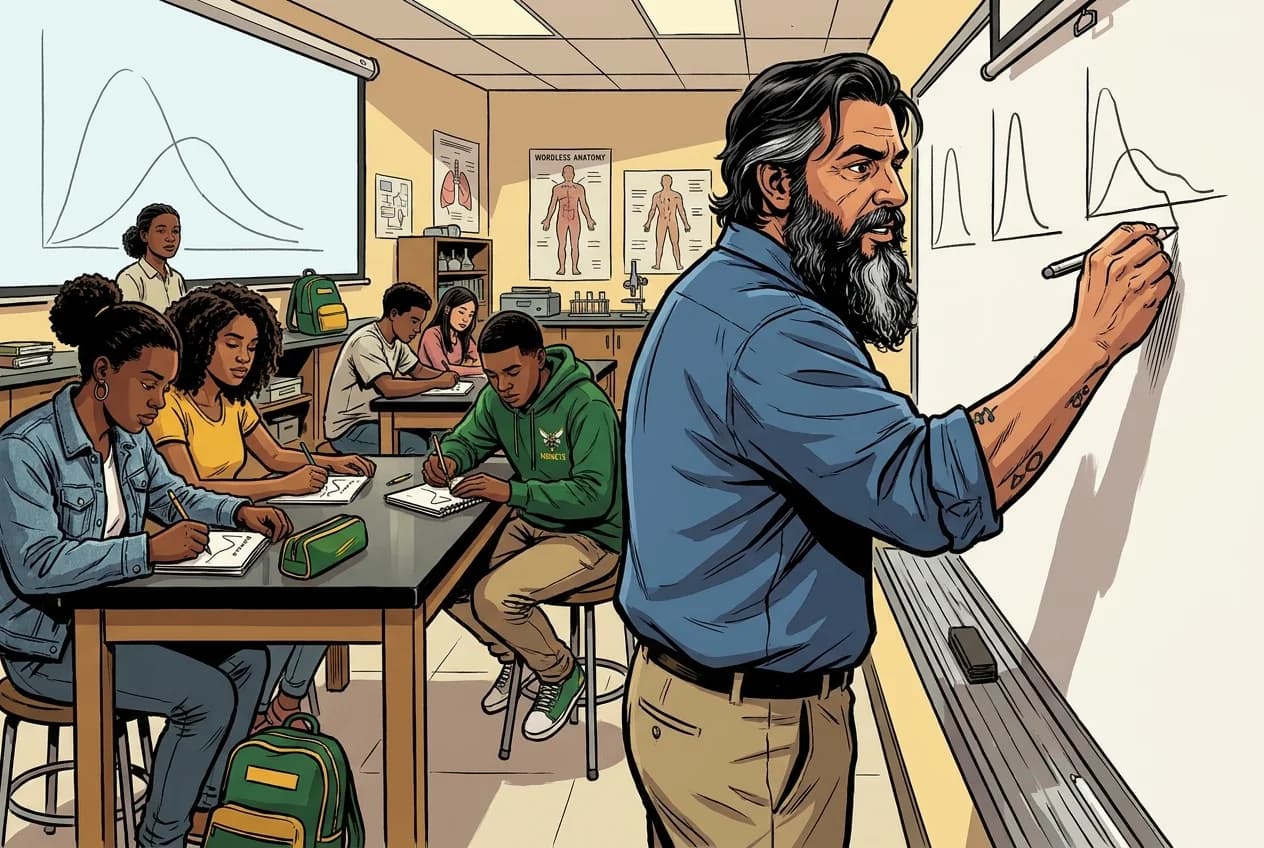
Incidence is new cases in a period. Prevalence is total cases at a point. I had been using those interchangeably my whole life.
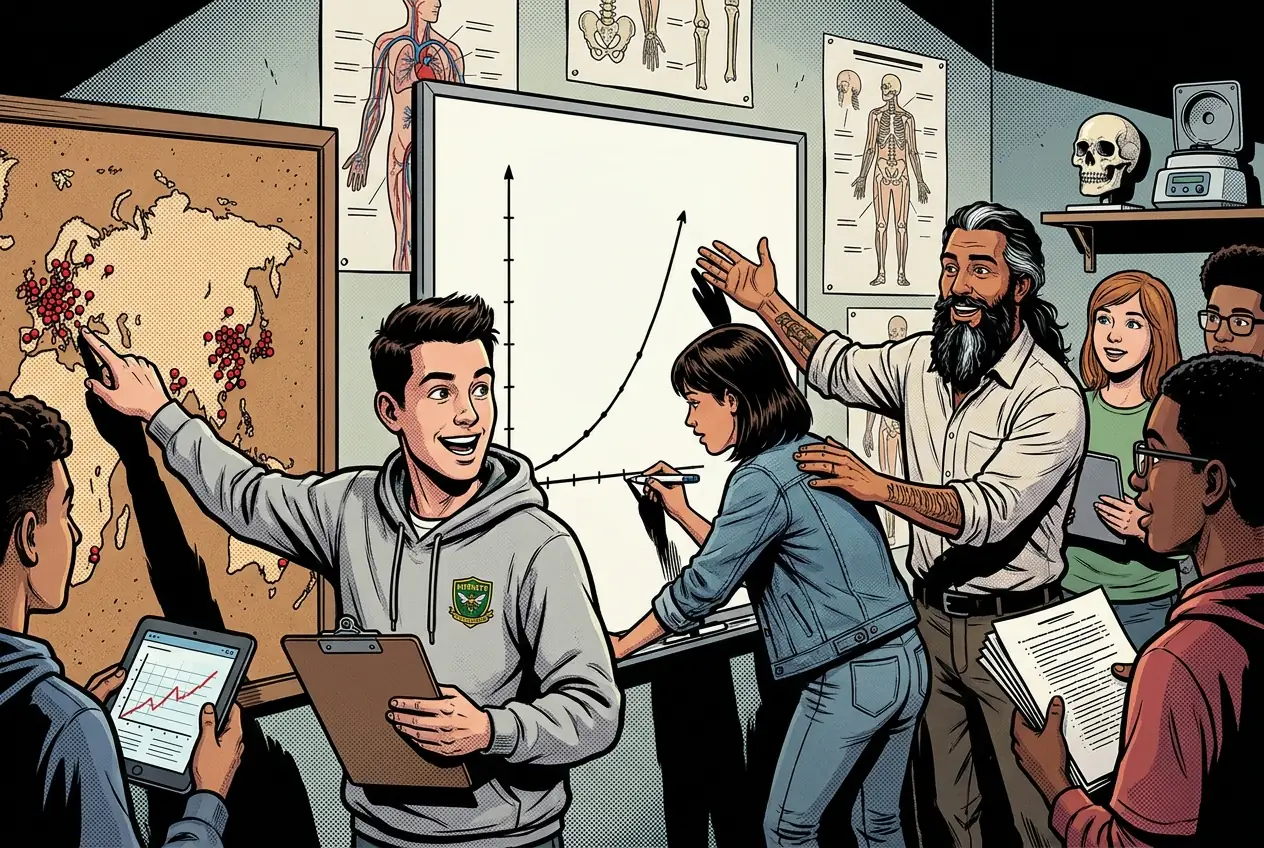
Best lab of the semester. A pile of case records became a curve with a shape, then a map with a cluster, and the two pointed at the same thing.
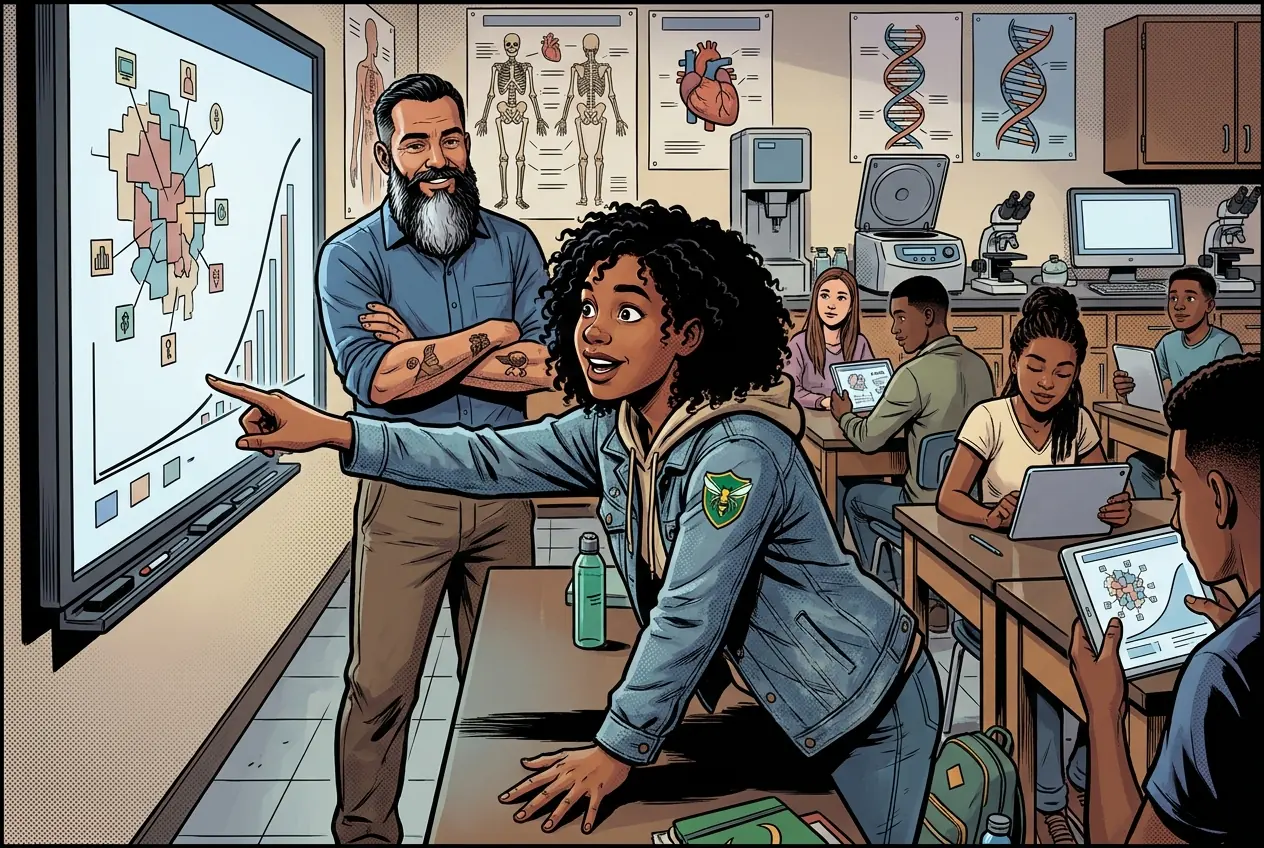
Three independent lines converging is what earns the claim. Same idea as the week six debate, arriving nine weeks later as a working method.
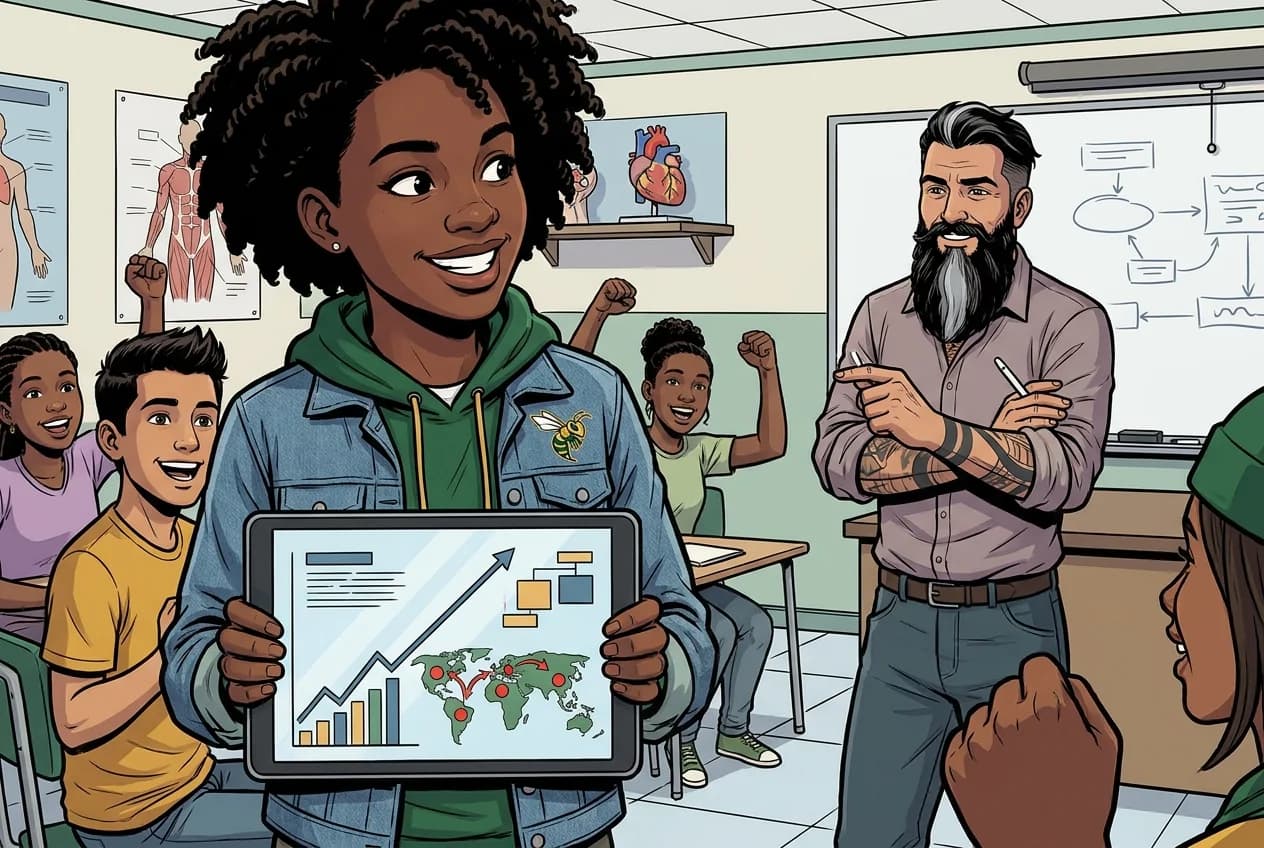
My confidence rating went up, and this is the first time it has been honest rather than optimistic.
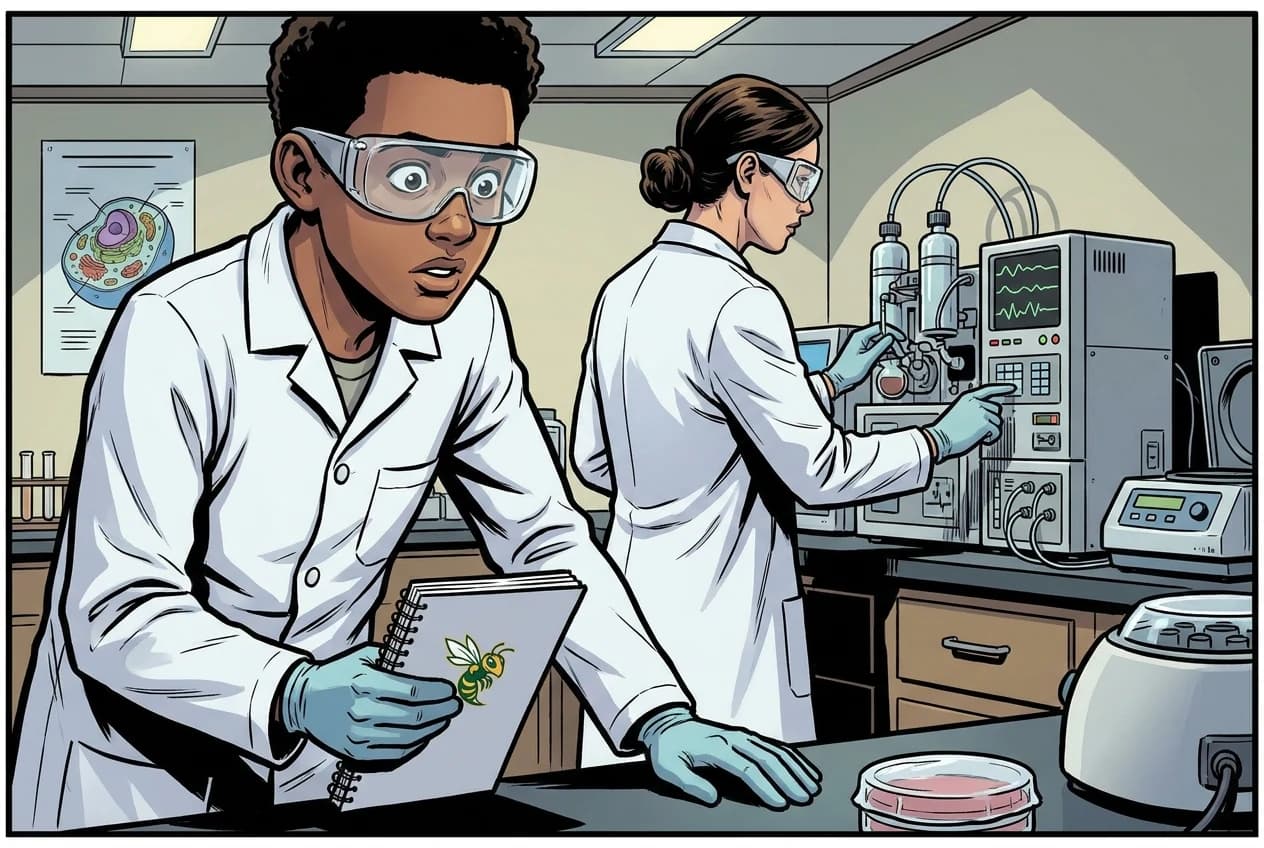
The research extra credit. A graduate researcher walked us through what she actually does. She let me pipette. I was bad at it. I want to do it again.
RESEARCHER
Most of my week is troubleshooting and rerunning things that did not work.
Week 14 · Emergency response
NOVEMBER 20 TO 20
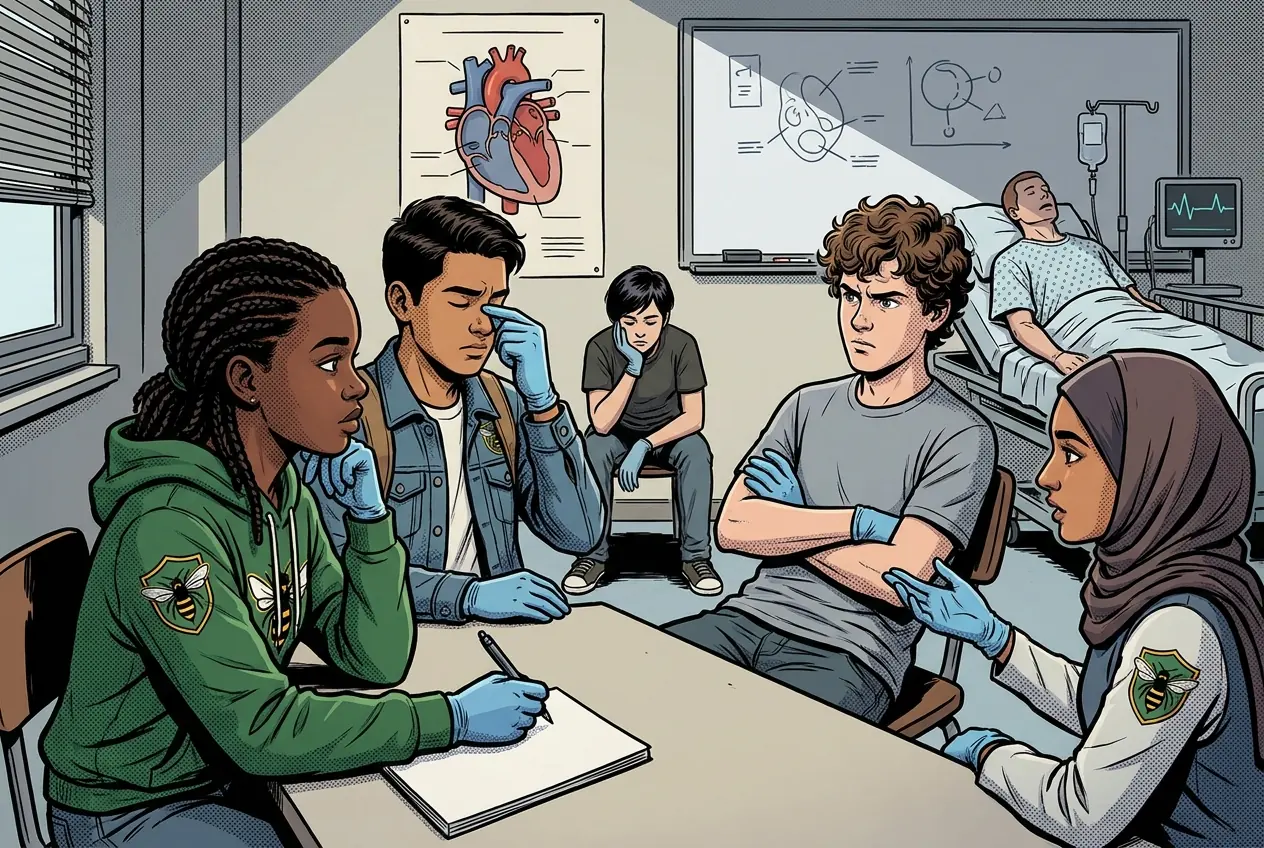
The quietest debate we have had. Not because nobody had opinions, but because everyone understood immediately that both answers are bad.
Assess, categorize, stabilize, treat. In that order, because doing them out of order is how people get missed.
Week 15 · Simulation and surge
NOVEMBER 24 TO DECEMBER 4
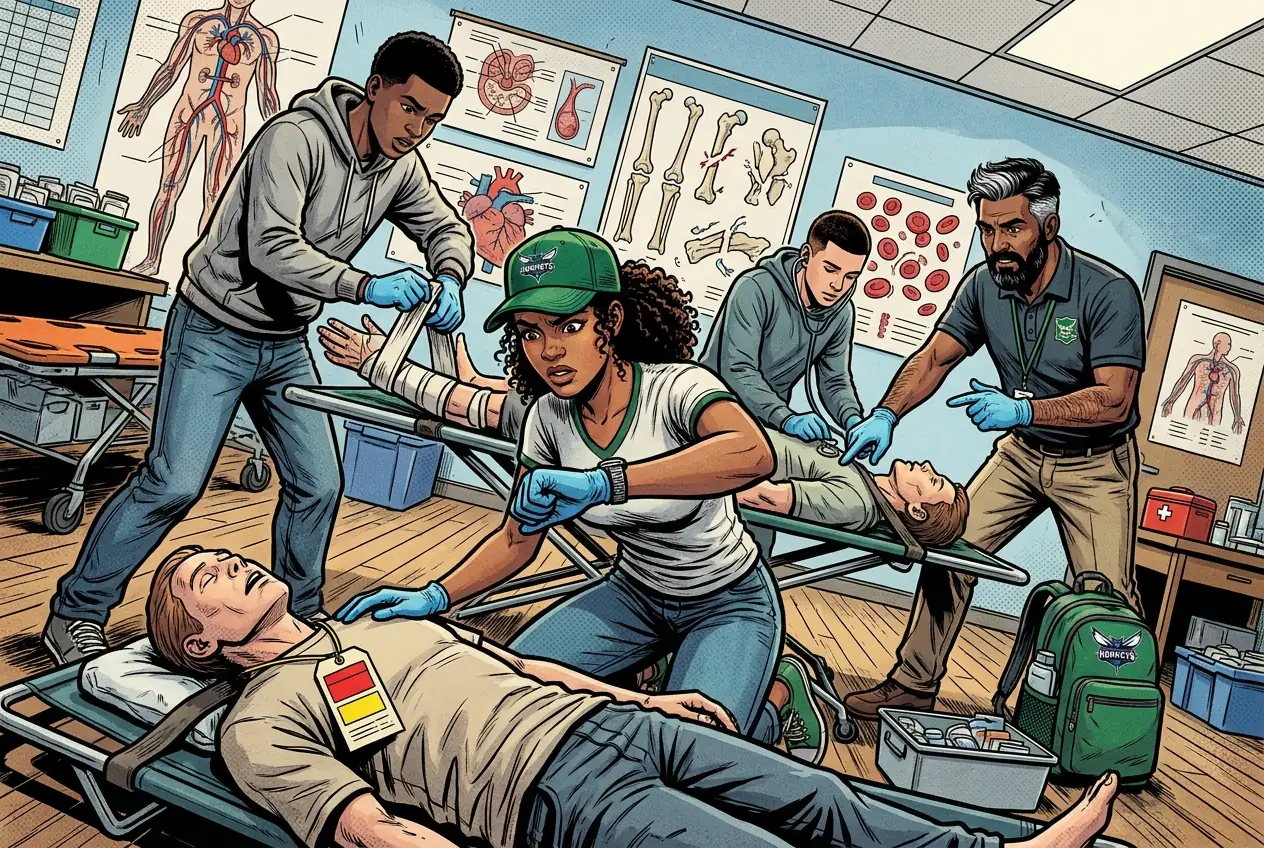
Multiple patients, a clock, and assigned roles. A second patient's situation changed, two of us went to help, and nobody was assessing the third.
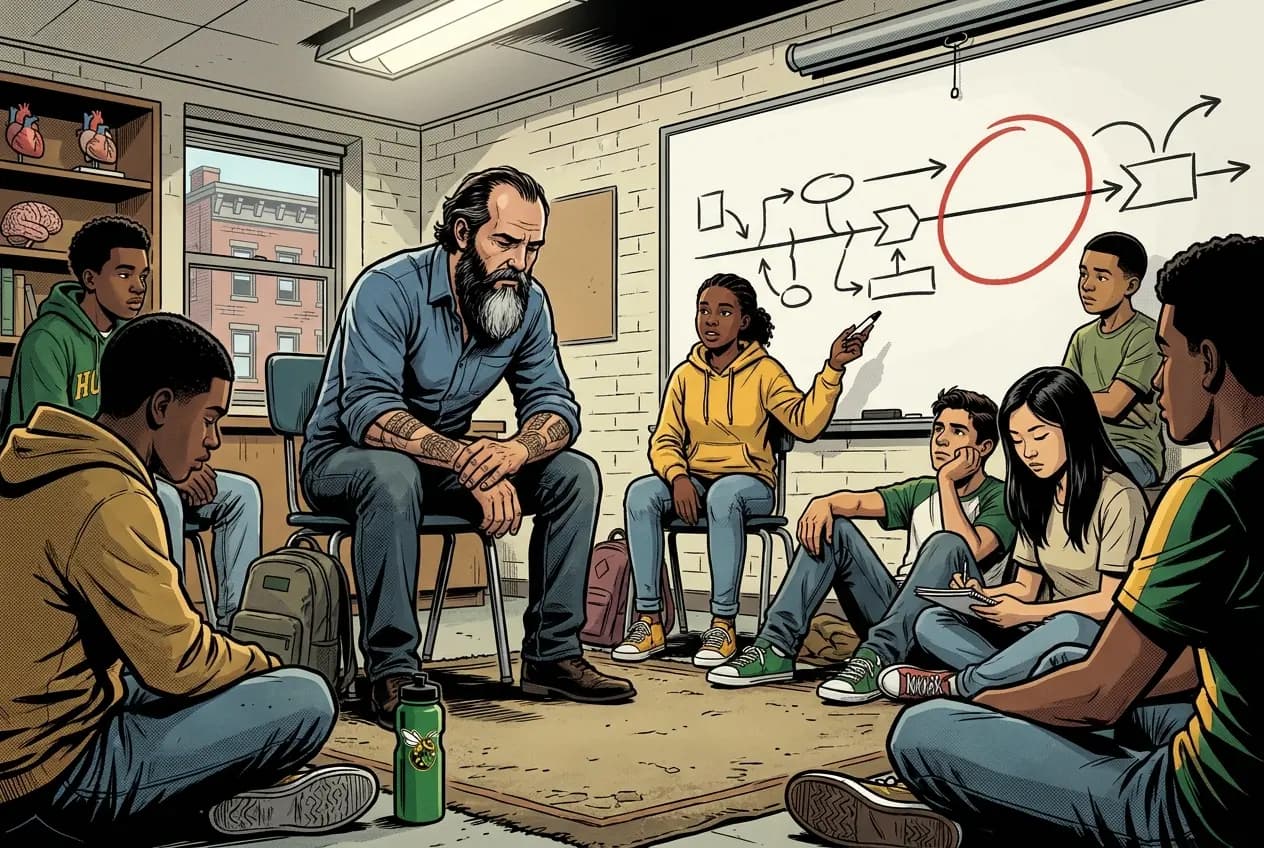
Our timing notes show a ninety second gap where the third patient had nobody.
MR. MENDOZA
You knew the protocol. You abandoned your roles the moment it got stressful.
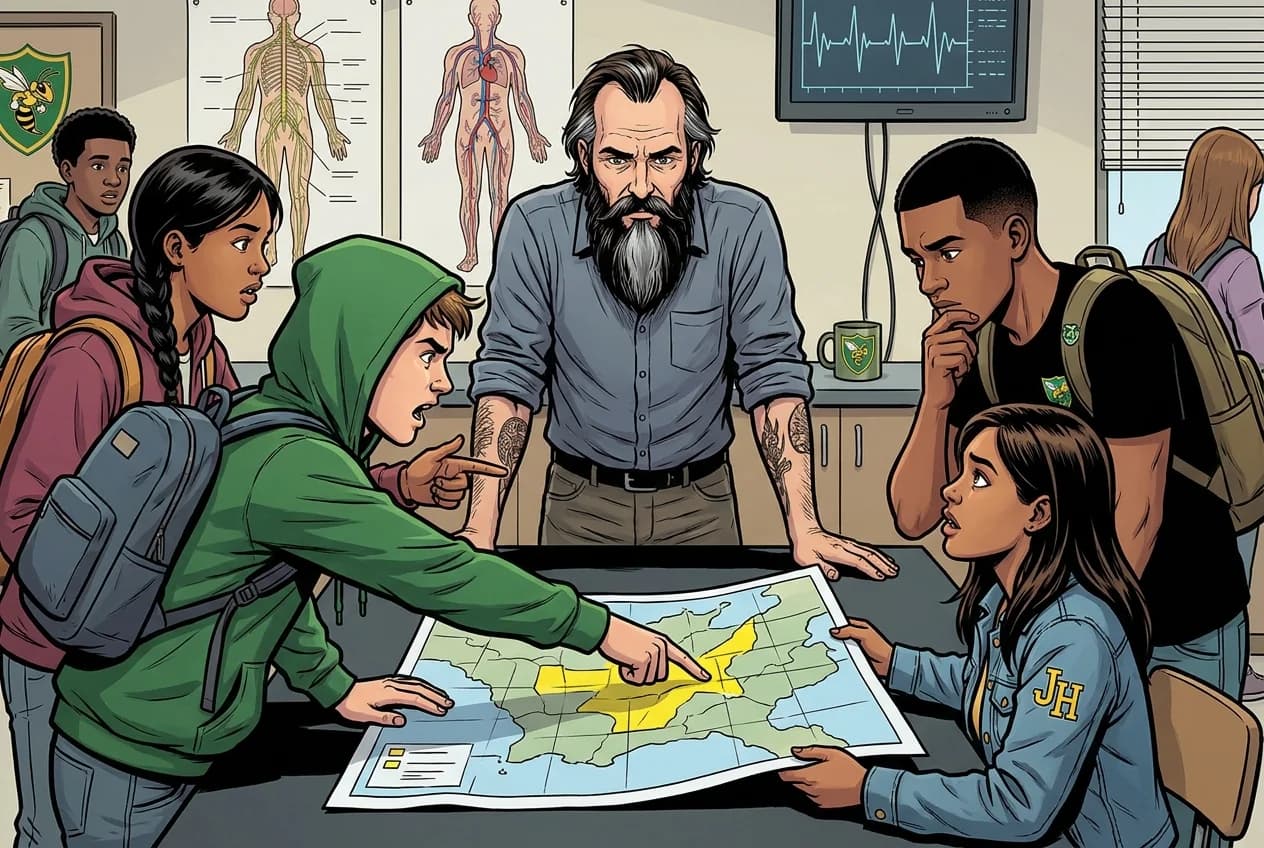
The equity version of the triage question, scaled from one room to a whole region. Same structure. I noticed the structure this time.
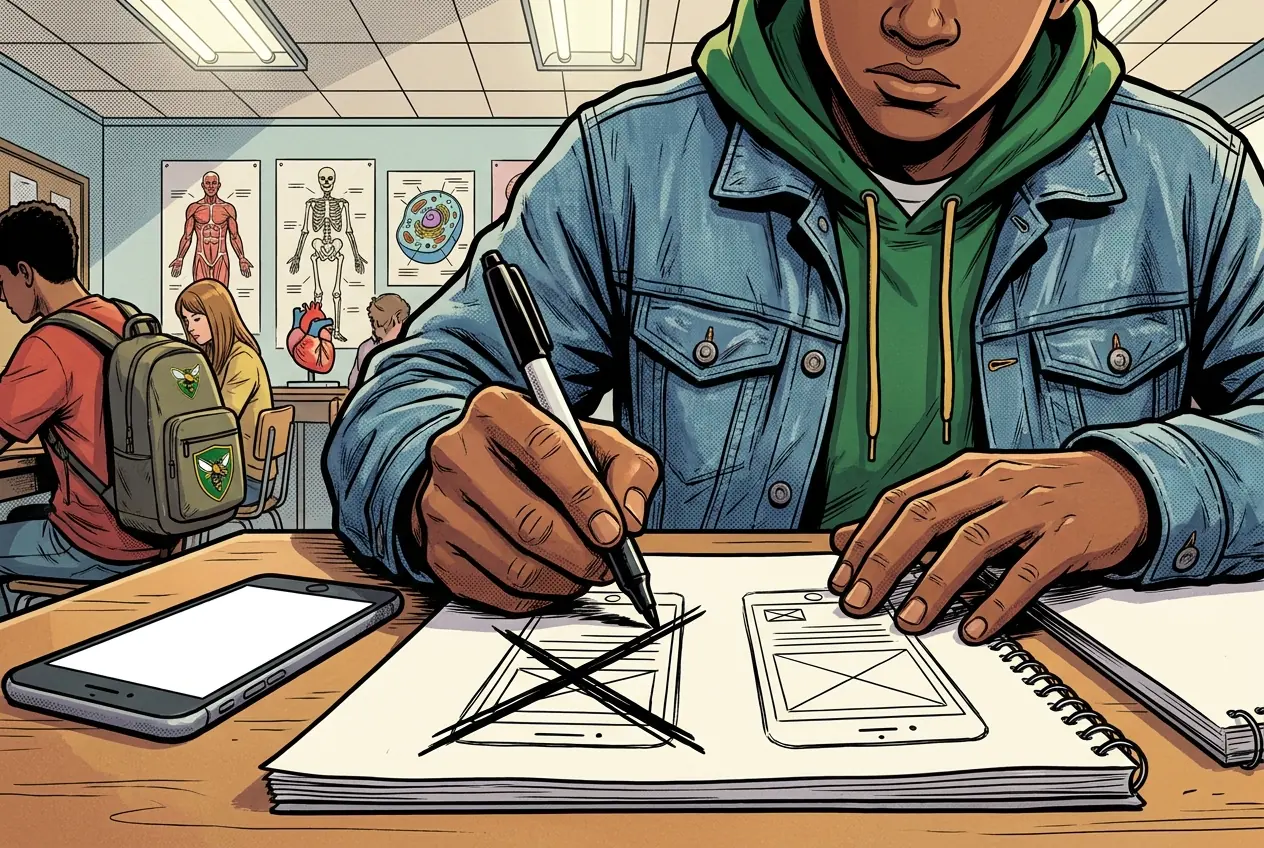
Public health communication fails when the message is accurate but the delivery is unusable.
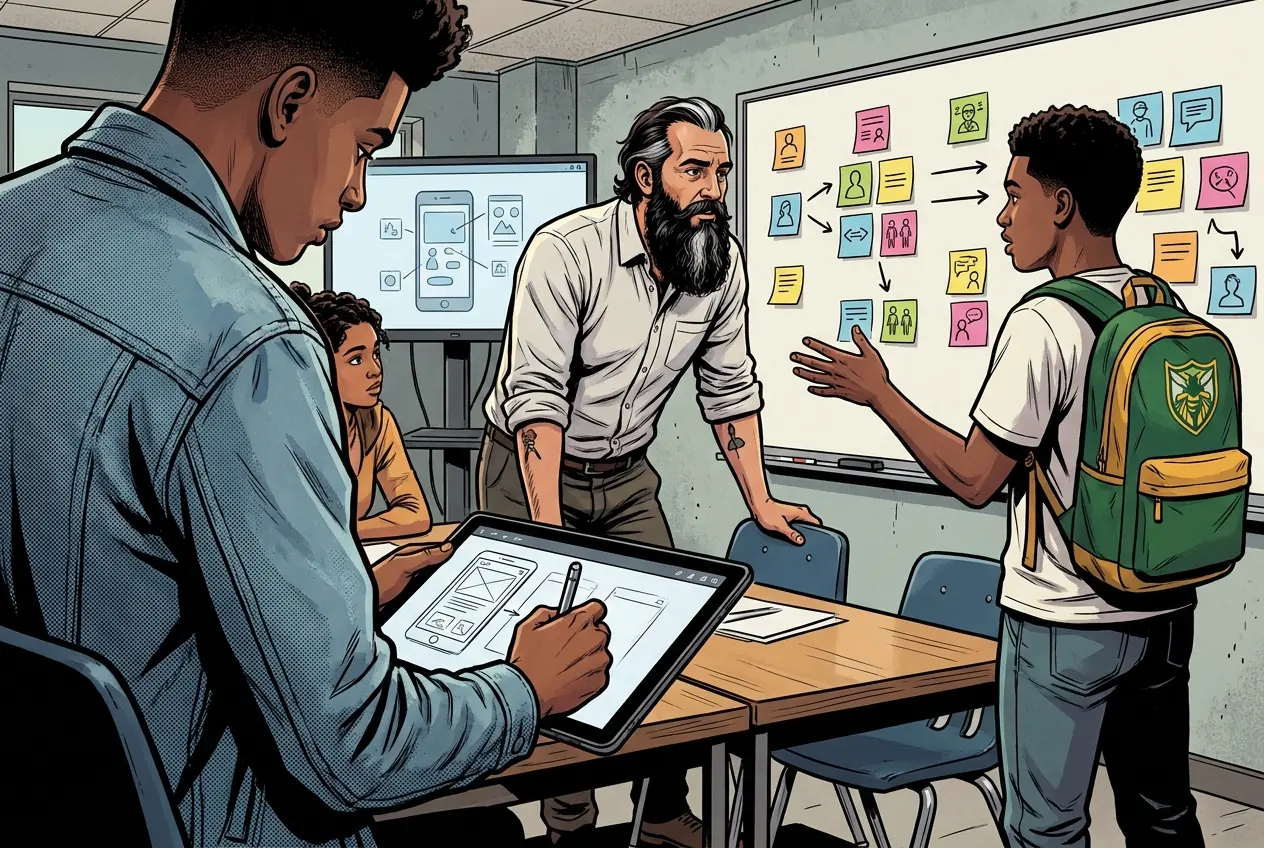
Our first personas were basically us.
TEAMMATE
Neither of us is an older man with no reliable internet. Half this feature list serves nobody but you.
Week 16 · Innovation
DECEMBER 10 TO 11
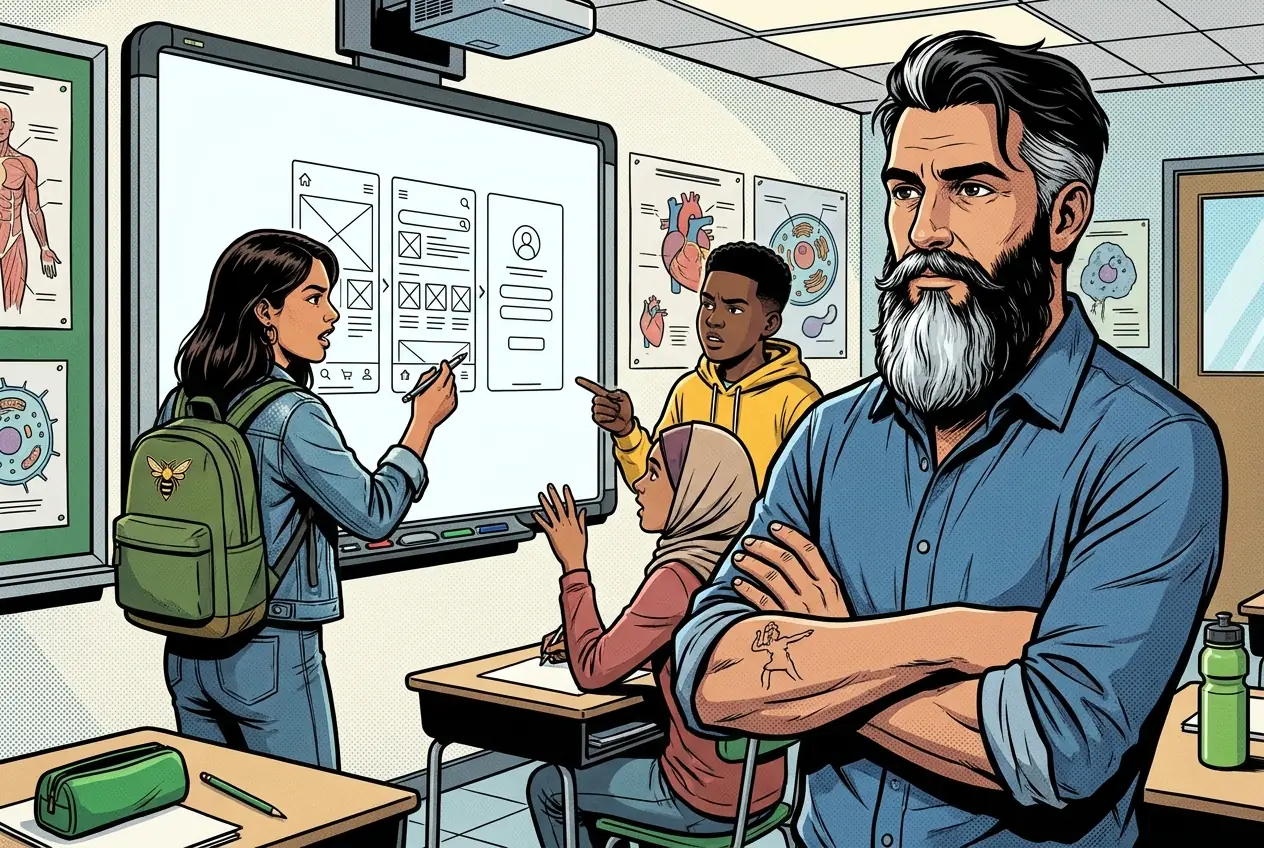
Speed and safety in direct tension. More testing protects people and delays access for people suffering right now.
CLASSMATE
The people harmed by delay are invisible. The ones harmed by a bad device are not.
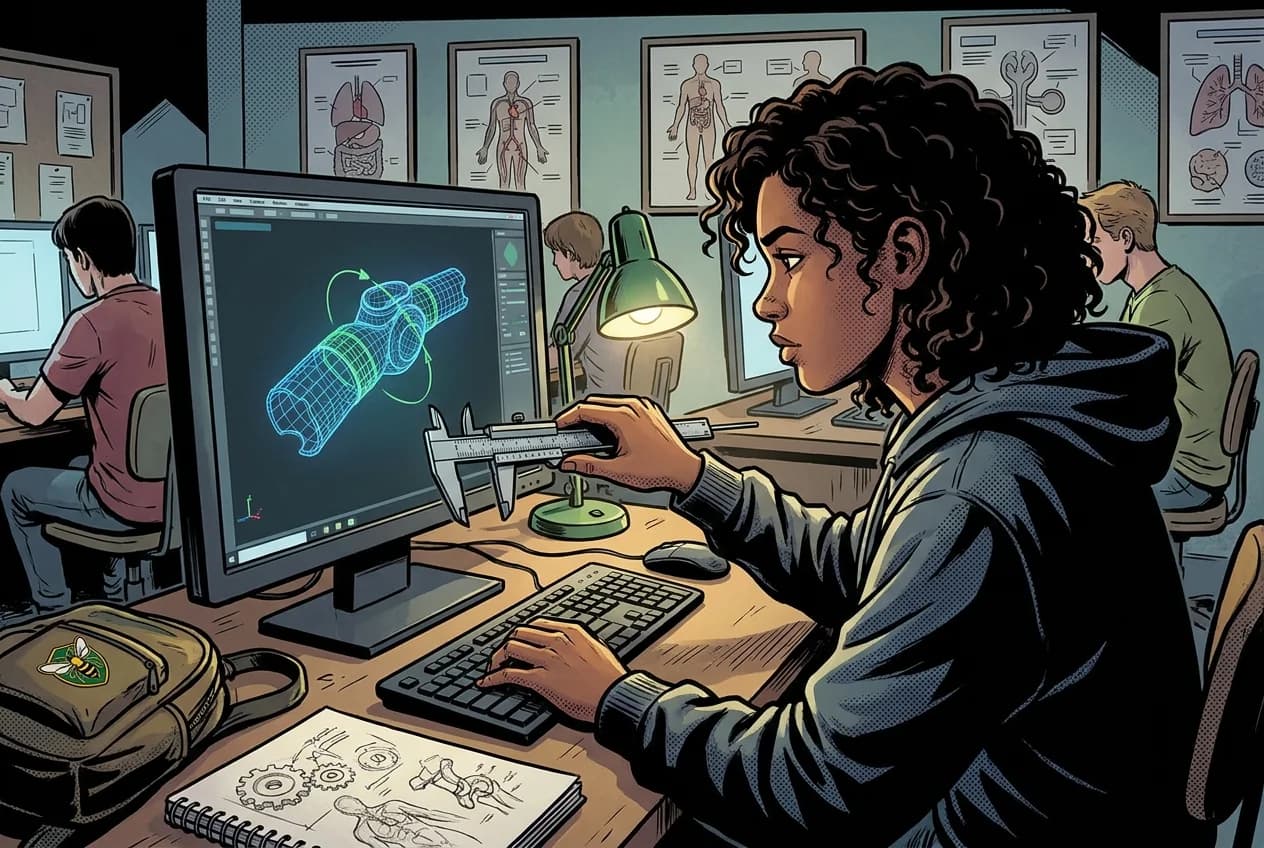
Design is a loop, not a line. A failed prototype is an input rather than an ending.
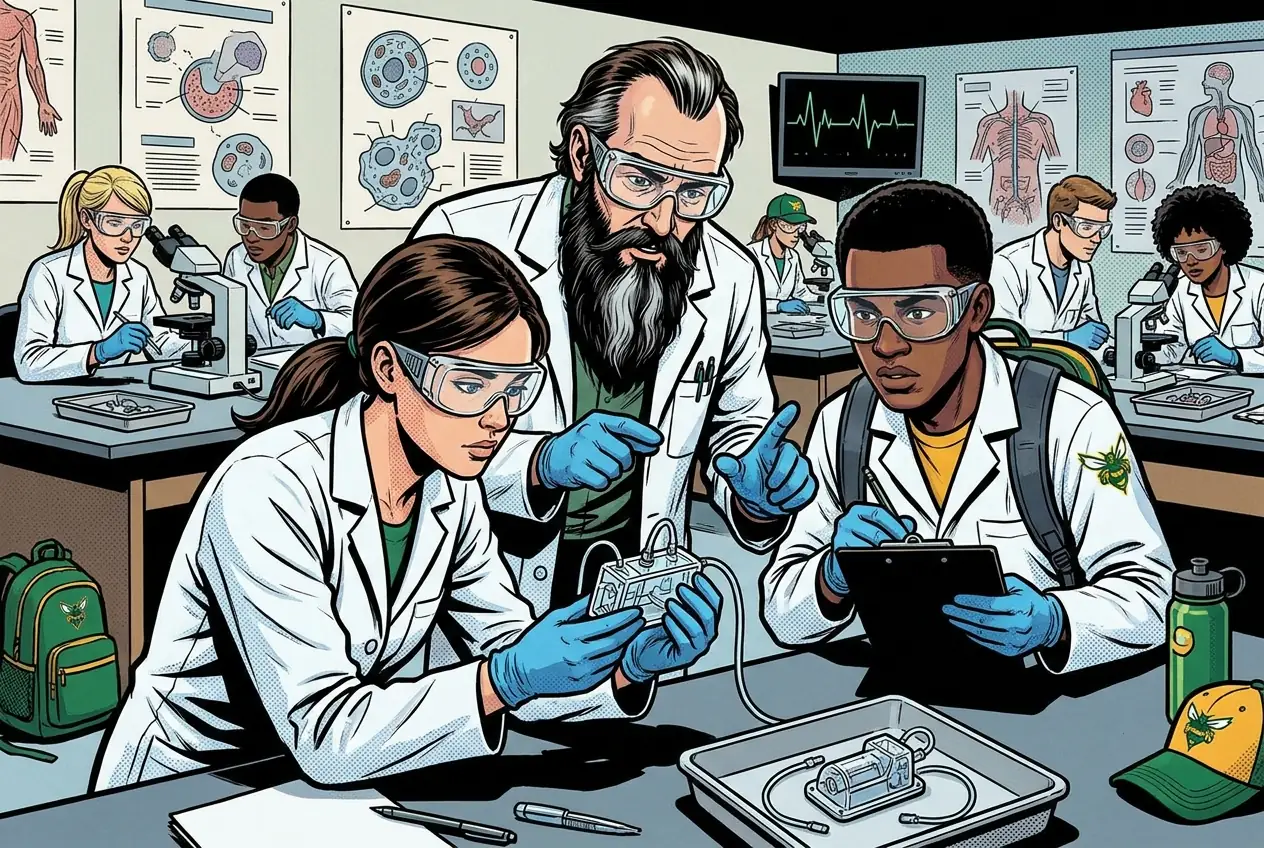
Our first build failed on trial one. We had not controlled a variable we did not know was a variable. One trial is a measurement. Three trials are evidence.
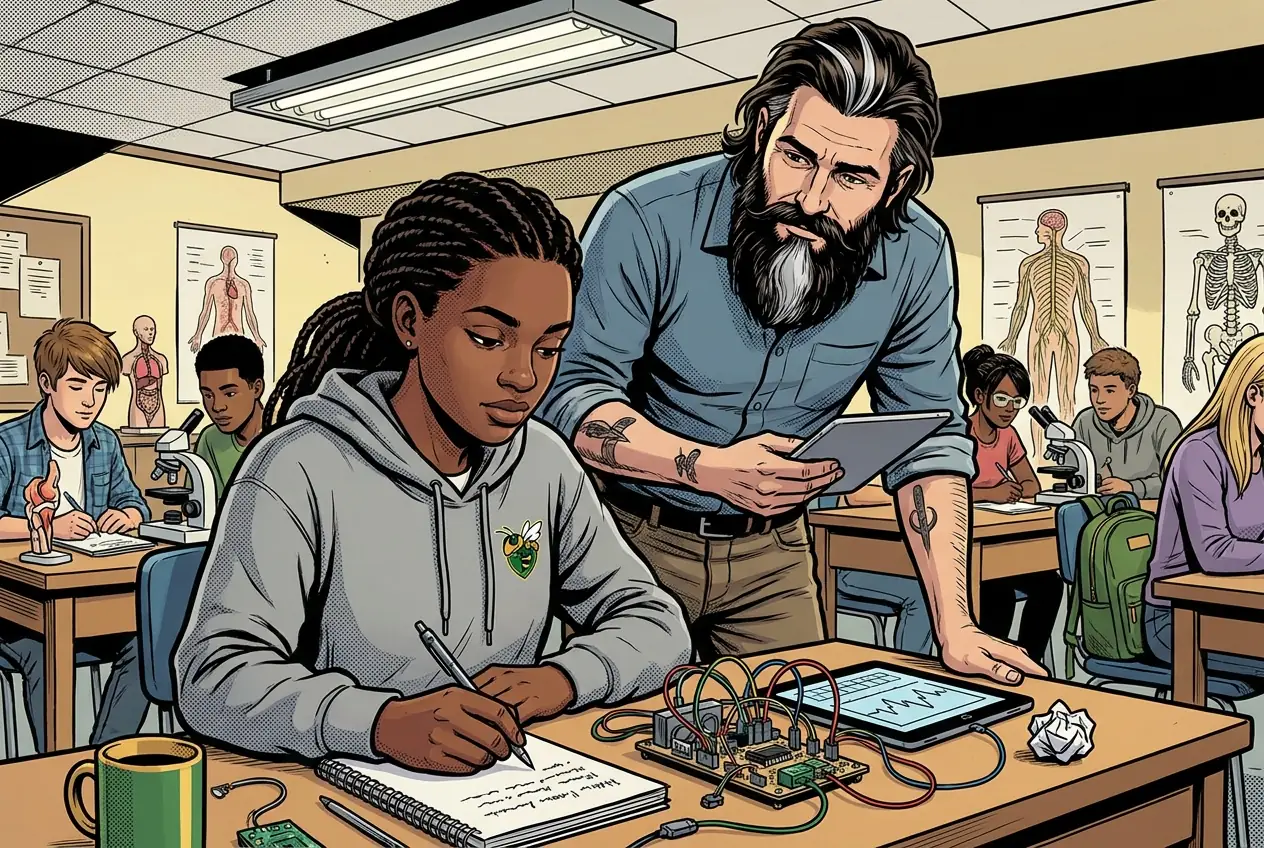
Ours partly met its goal and failed on one measure. Writing both, with a specific proposed change, is the assignment.
Model specs, trial data, CER. The honest version is more useful than the flattering one. That is the most repeated idea in this class.
Week 17 · Capstone
DECEMBER 14 TO 17
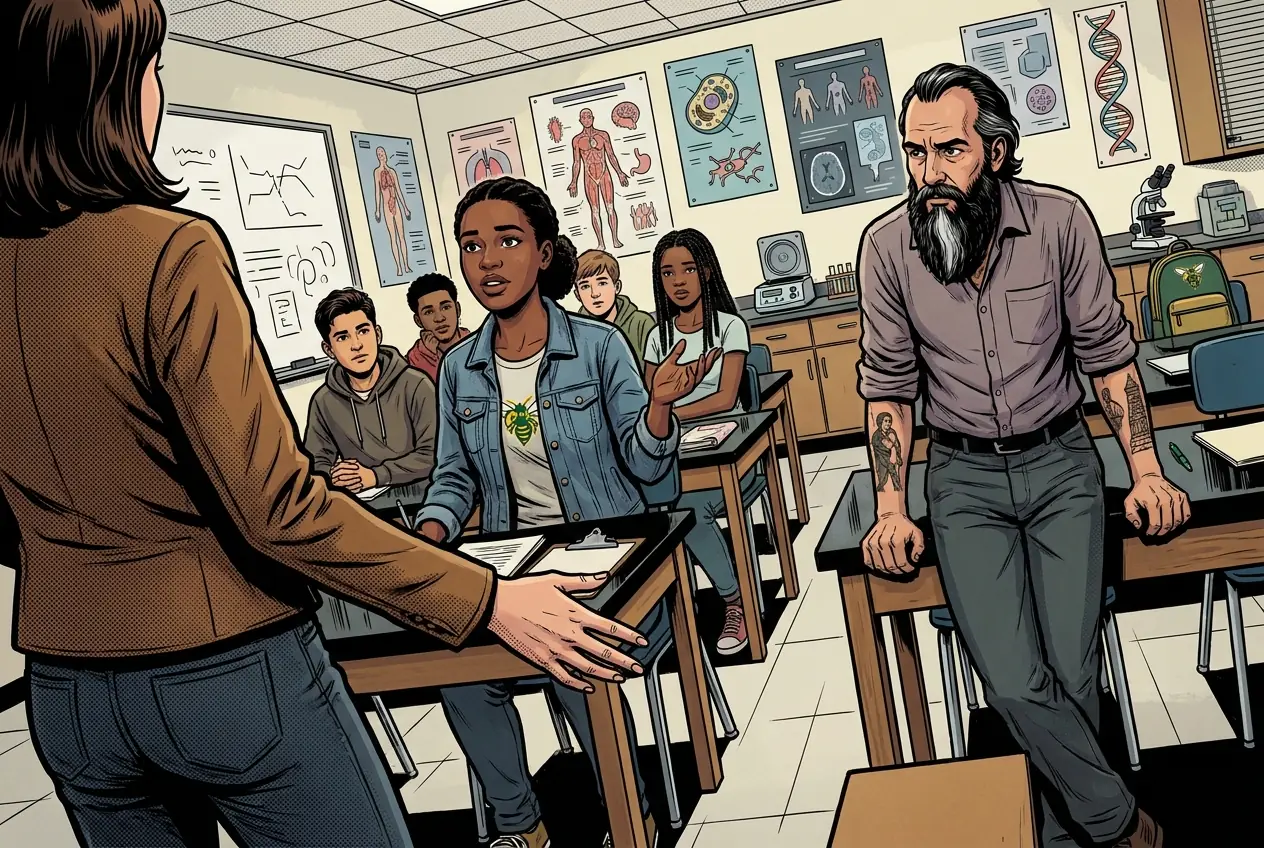
The last Monday. John Carroll asked us to name one position we had changed across the semester.
ME
Genetic privacy. I came in certain and I am leaving genuinely unsure. I think that is an improvement.
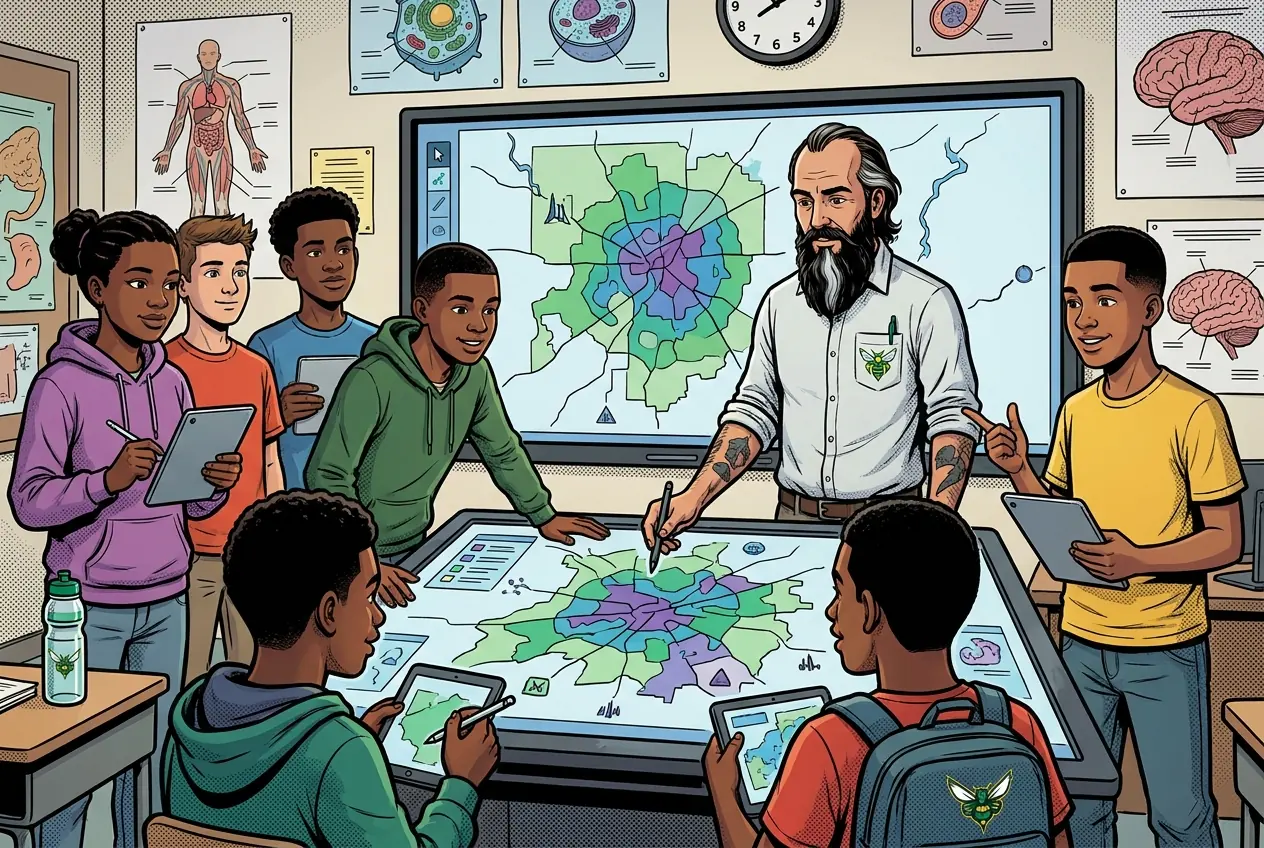
We pulled evidence from two prior units and had to reread our own work from September. Our outbreak map turned out to be directly useful.
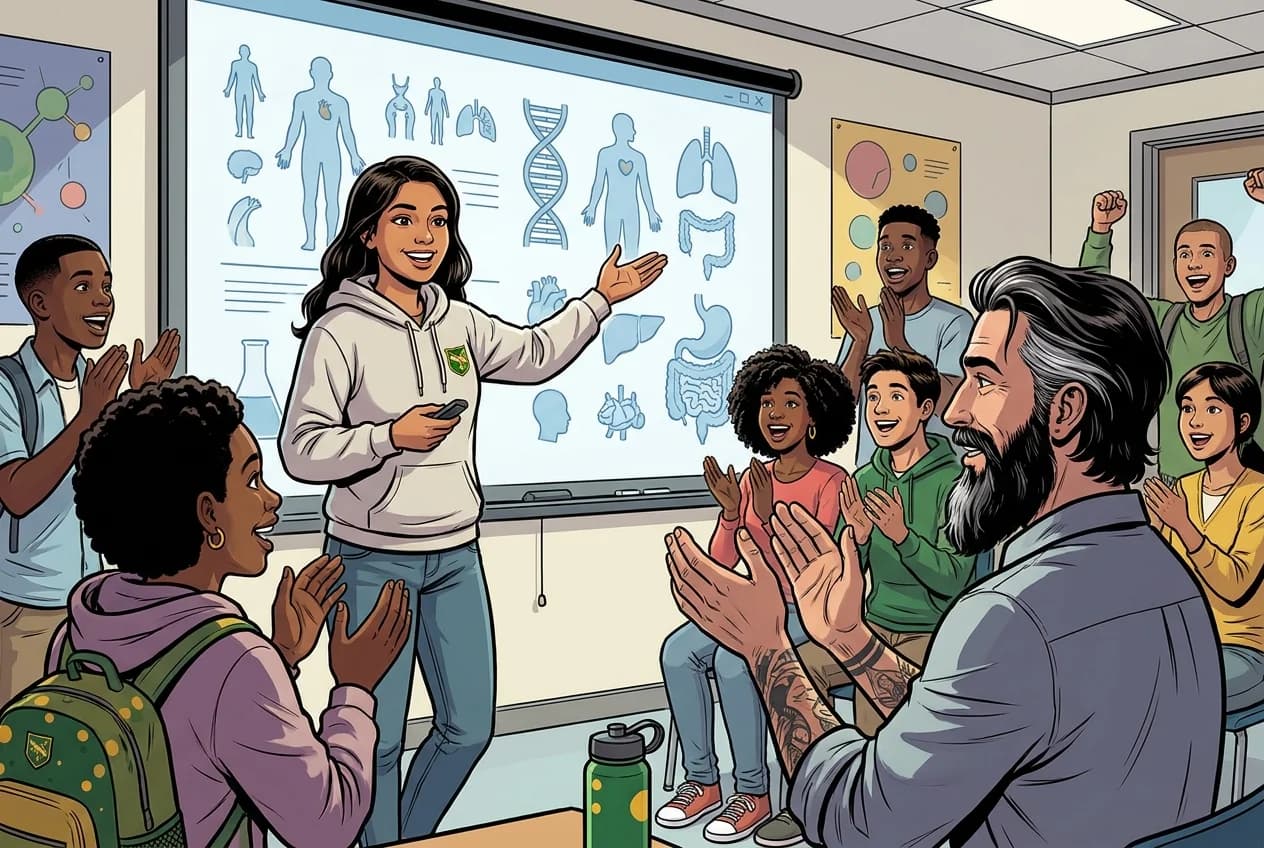
Last day. We retook the pretest from August 28. He put both scores side by side.
MR. MENDOZA
The gap between those two numbers is the semester.
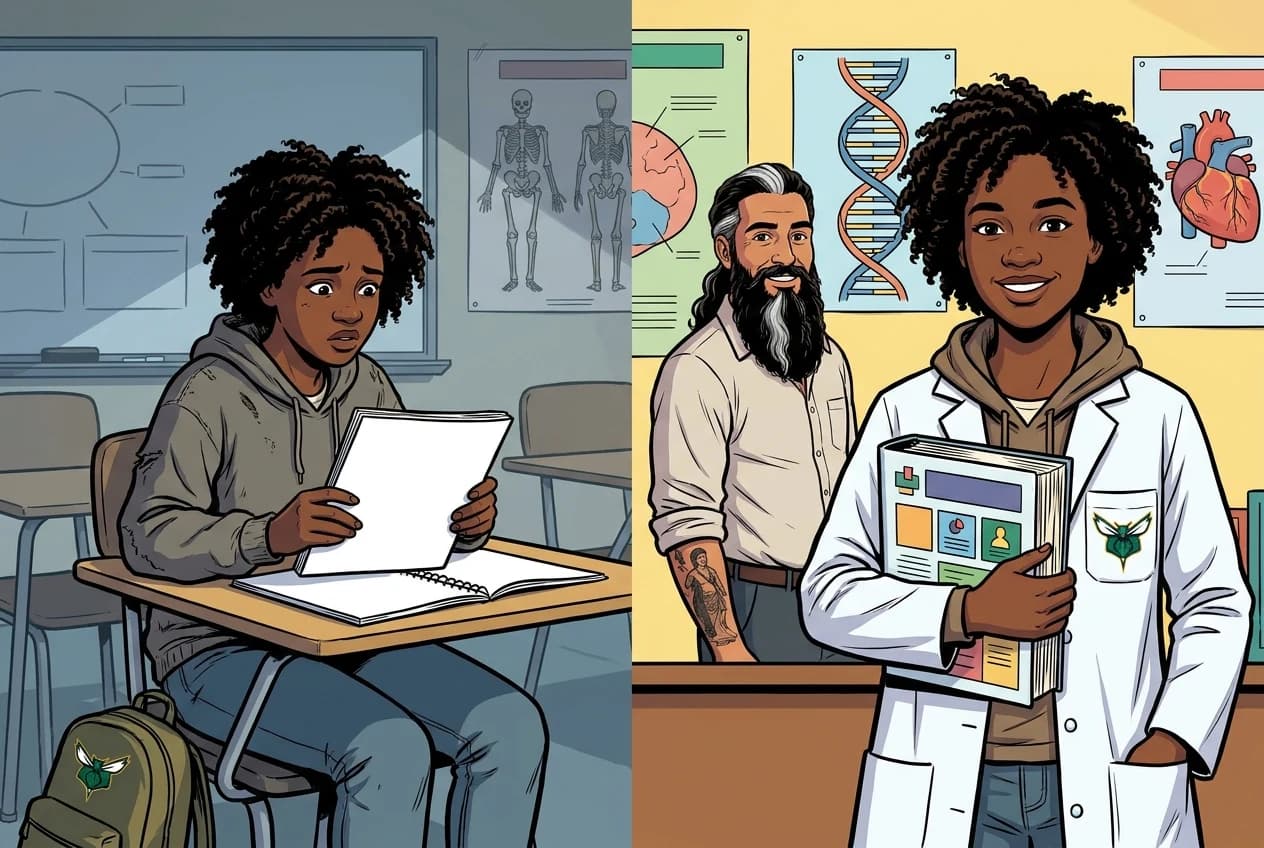
In August I could not answer my own questions off my own notes. In December I can. That took fifteen minutes a night and nothing heroic.
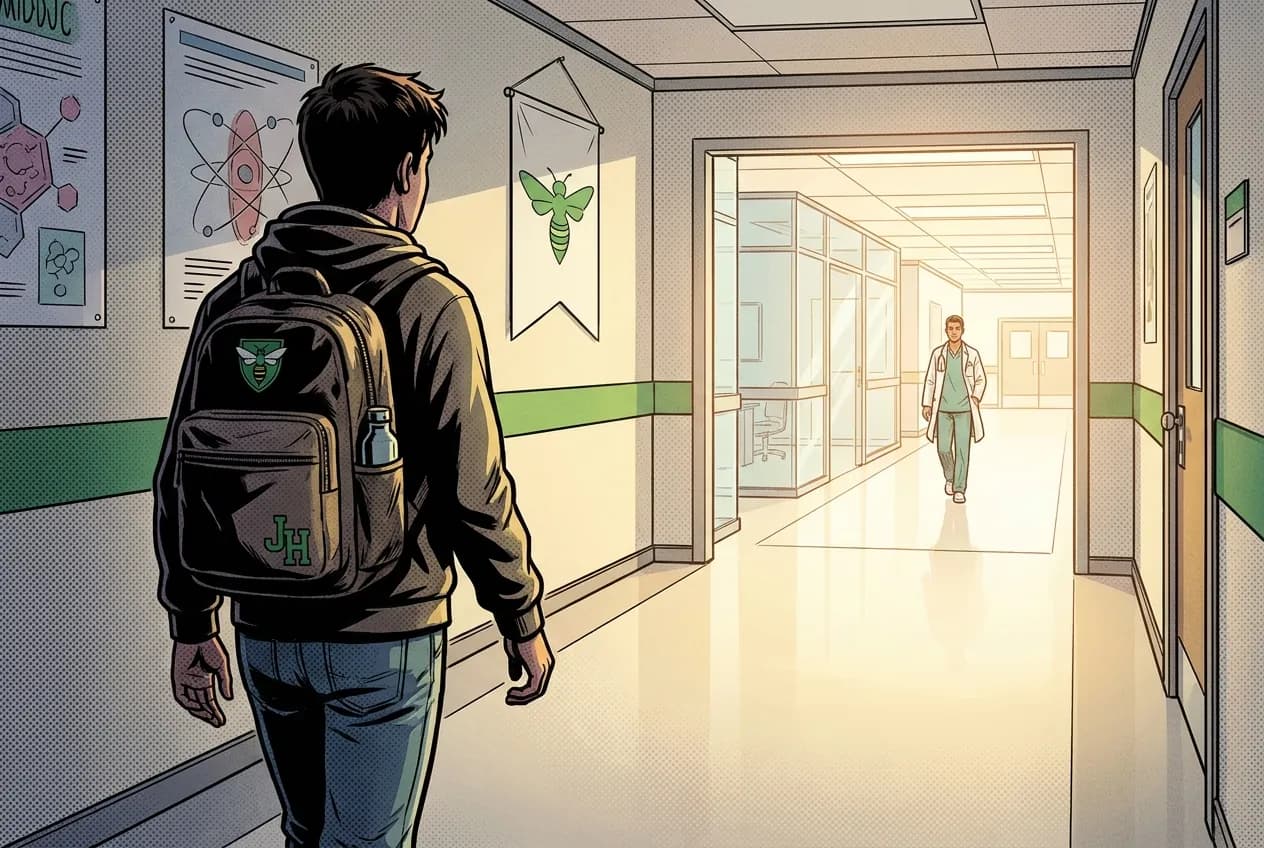
I still want to be a doctor. In August that was mostly a feeling. Now I can say why: careful documentation, arguing with people who disagree, admitting what your evidence cannot prove, and starting again when it fails.
Fiction. No real student, family, grade, or conversation appears here. The lessons, labs and dates are the real planned course.