
The comic
What We Hope The Year Will Be Like
Human Body Systems · 91 panels · the same year, drawn
Or read the whole semester in one scroll
91 panels · about 49 screens · it starts below
Week 1
JANUARY 19 TO 26
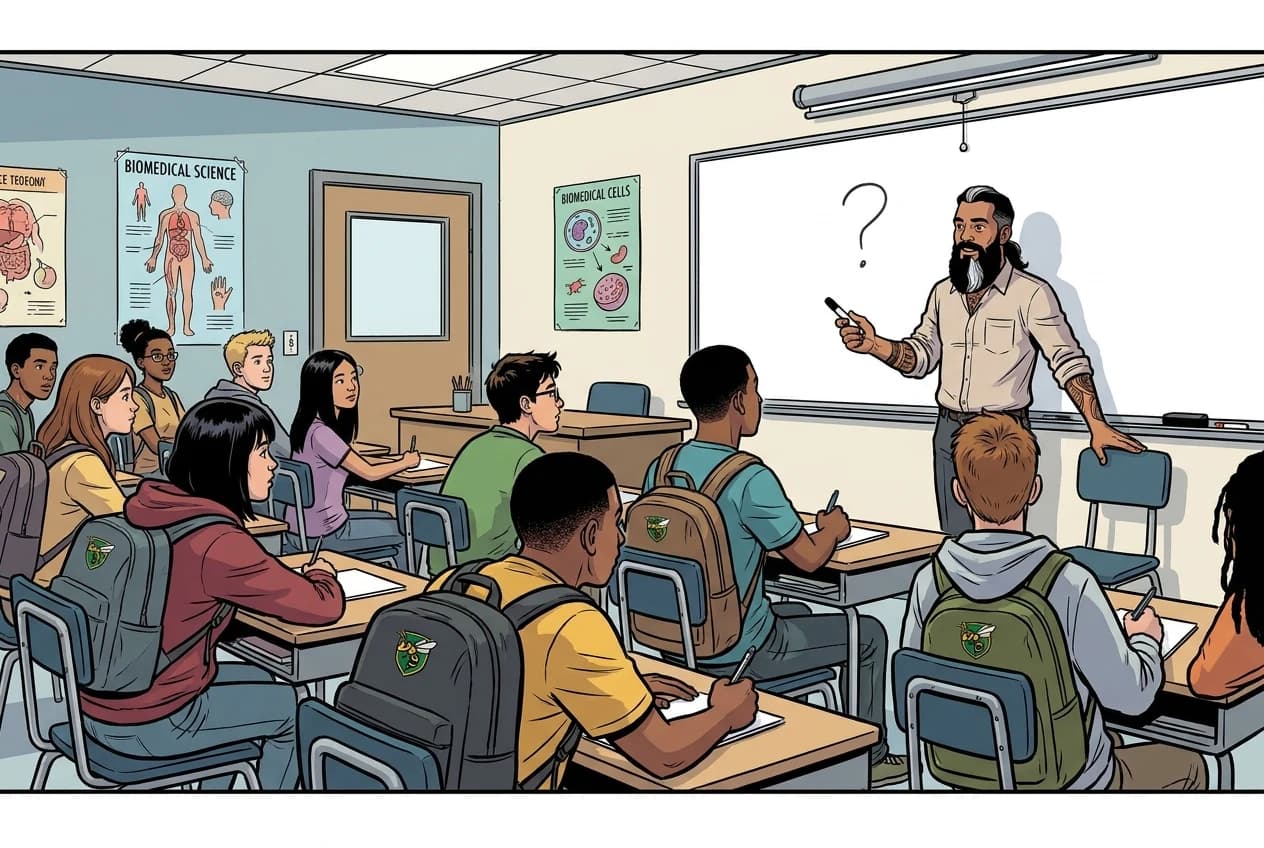
First day. No syllabus read out loud. He put a question on the board, let us list what we would need to know to answer it, then told us the list was the course. Eighteen weeks of the human body, and he started with who owns one.
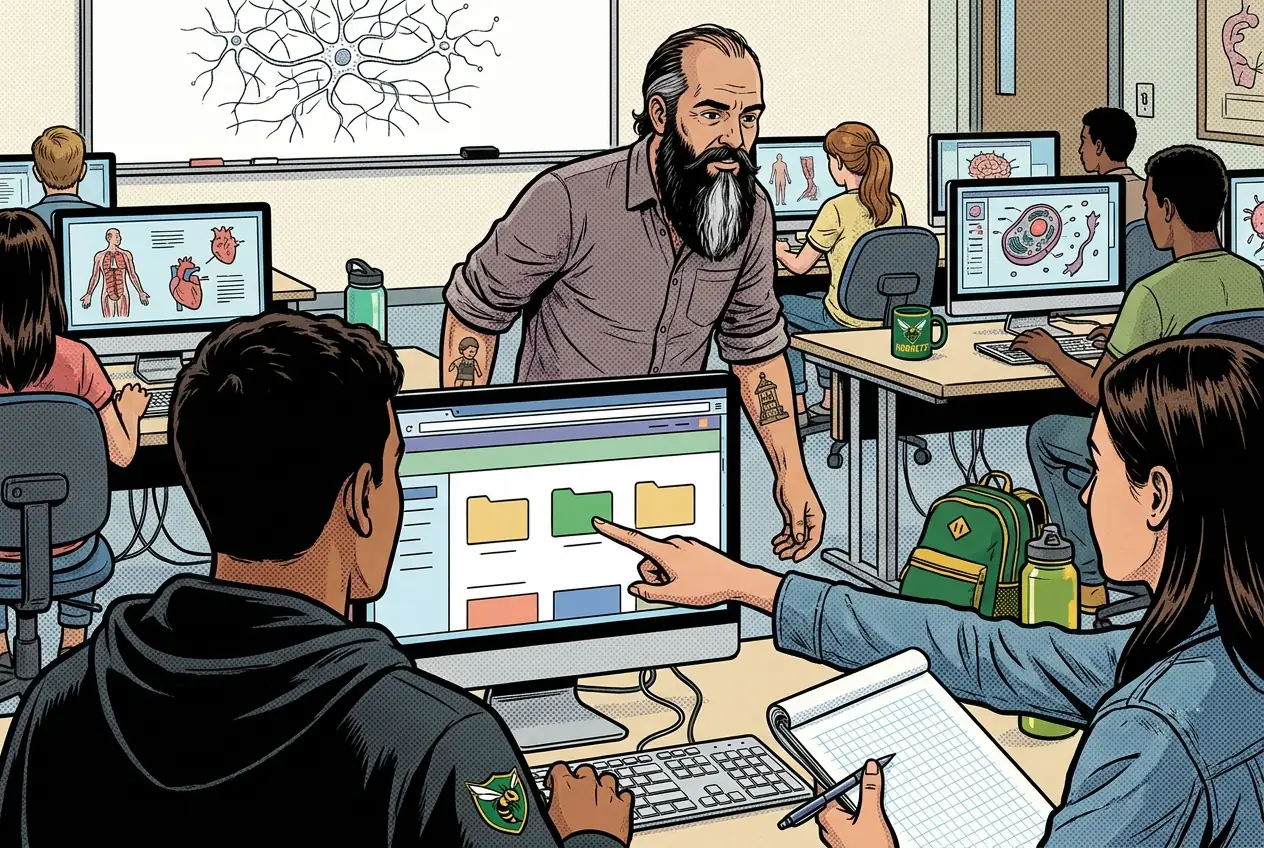
Website day. Where the lesson lives, where the glossary is, and which folder every kind of work goes to. The practice section is open from day two, which I did not expect.
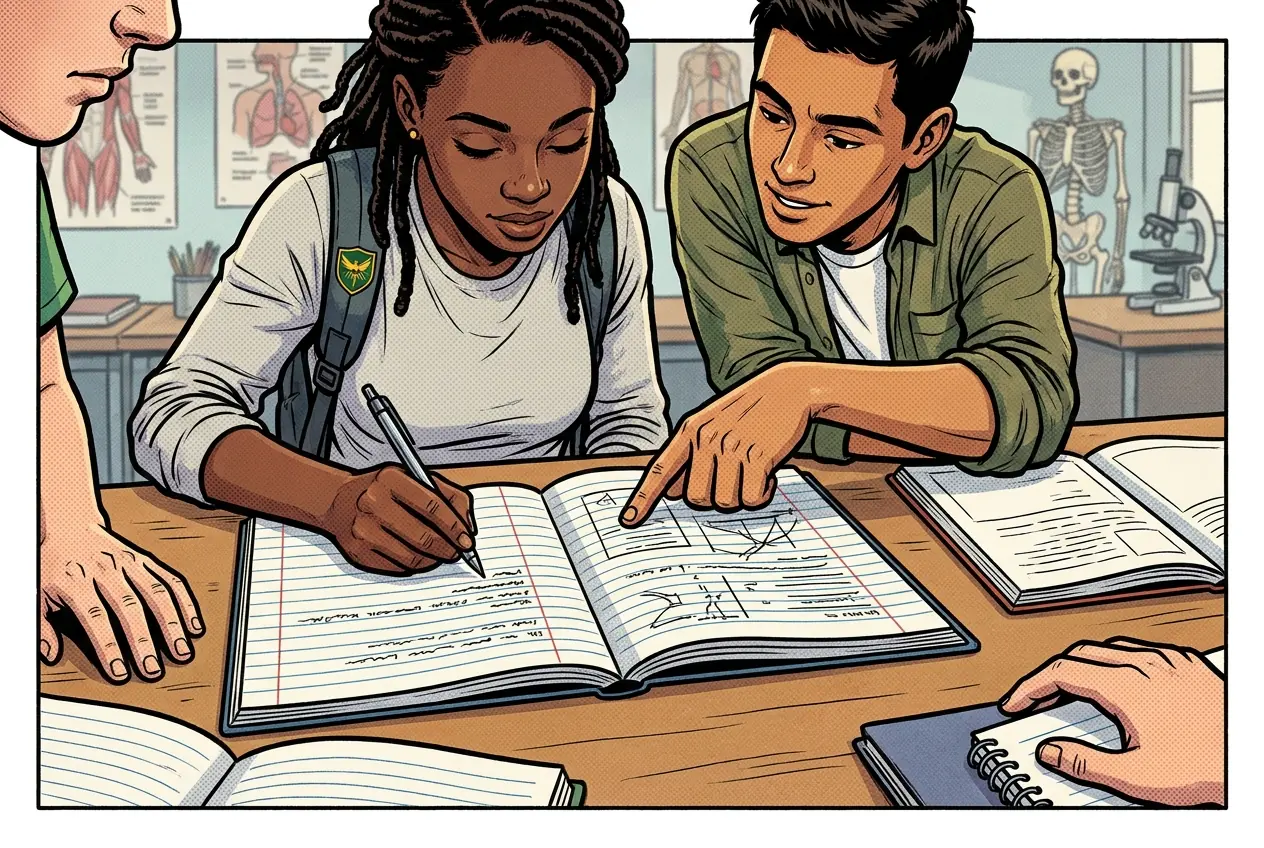
Record, Reduce, Review, Reflect, Recite, Revise. He made us Reduce notes we had just taken, and it showed how much I had written down and could not say back.
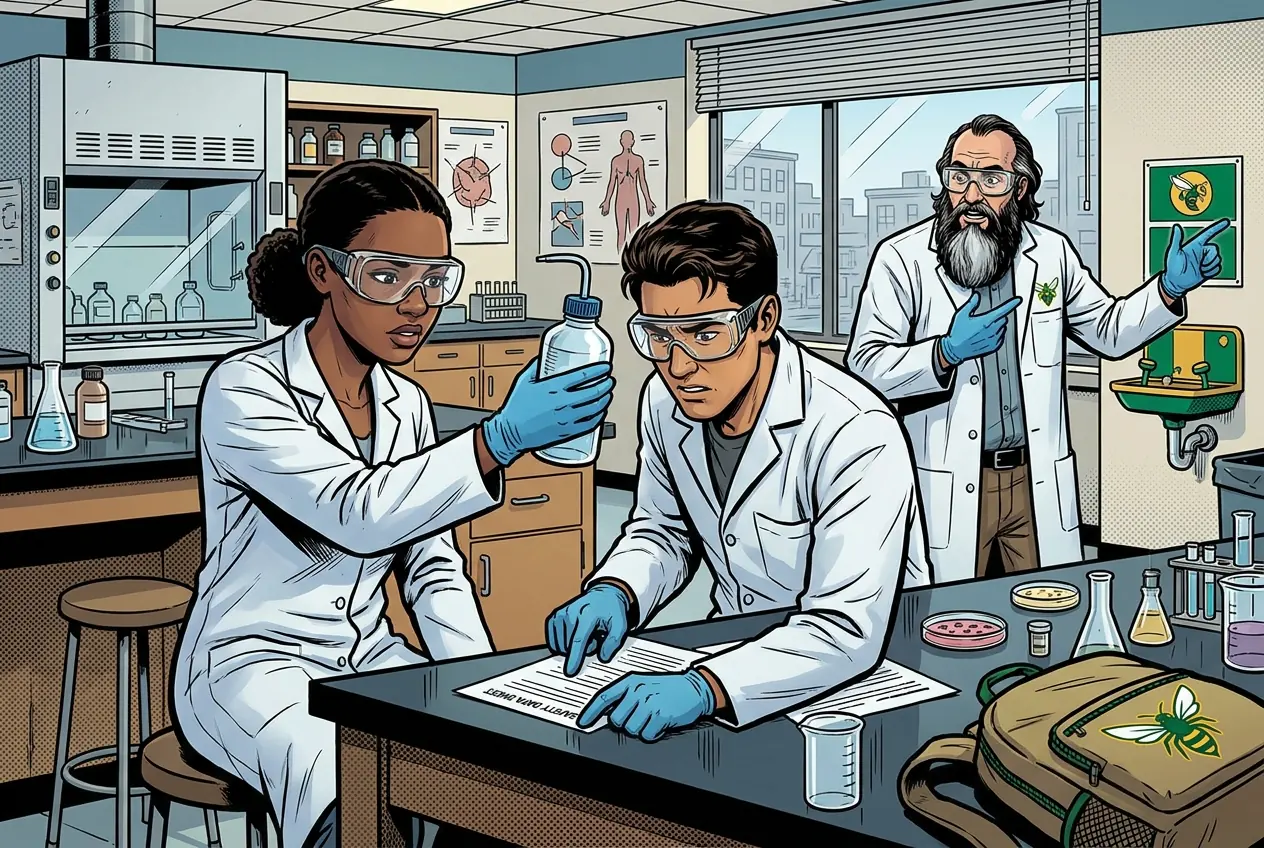
Safety, and not as a formality. Protective equipment, then finding the hazard and first aid sections on a real chemical before anyone touched anything.

The WebXam pretest in week one, cold. Mine was low. Everyone's was. Then we each wrote one habit down, and mine is fifteen minutes a night.
Week 2
JANUARY 28 TO FEBRUARY 3
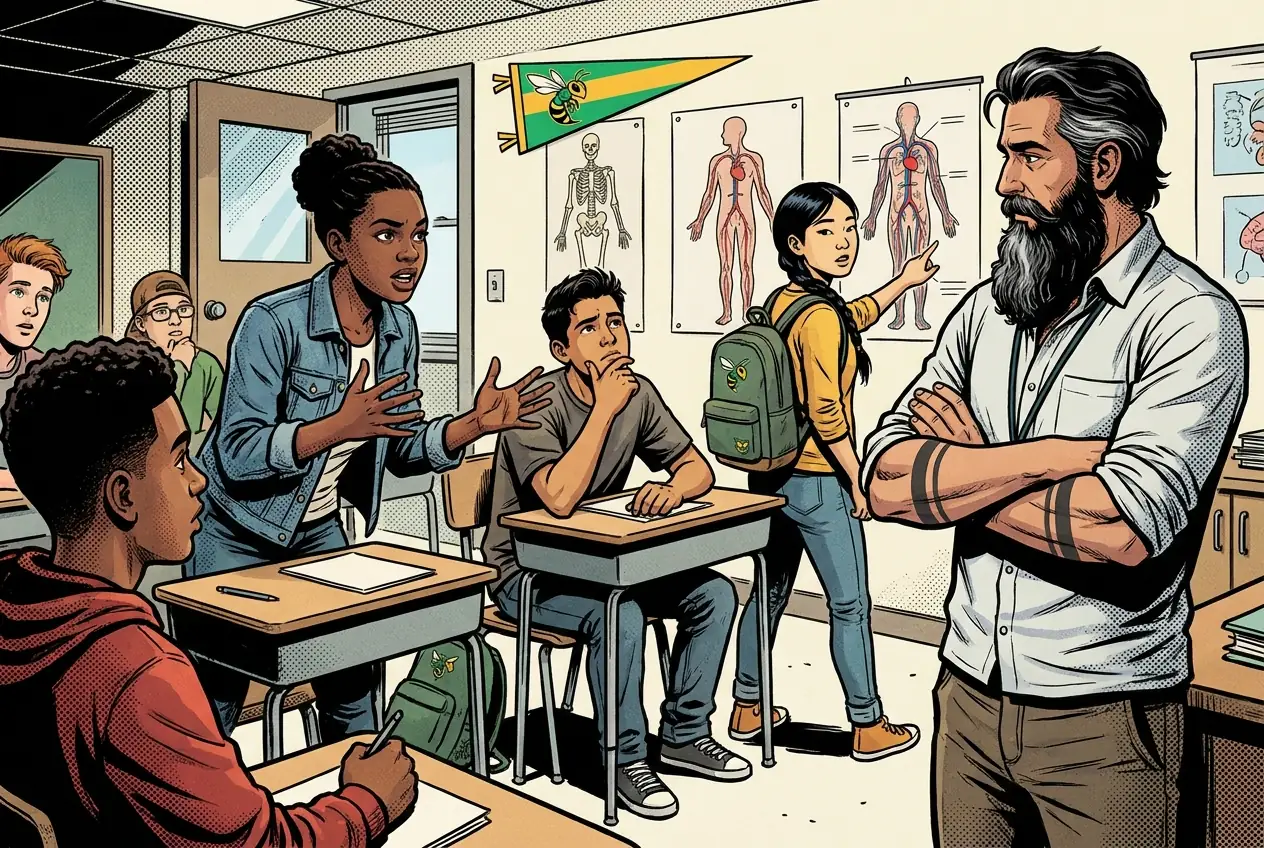
First day and we went straight into it. Should medical students learn anatomy on donated human bodies, or only on simulations?
MR. MENDOZA
This whole year runs on real bodies and real data. That is why the ethics question comes first.
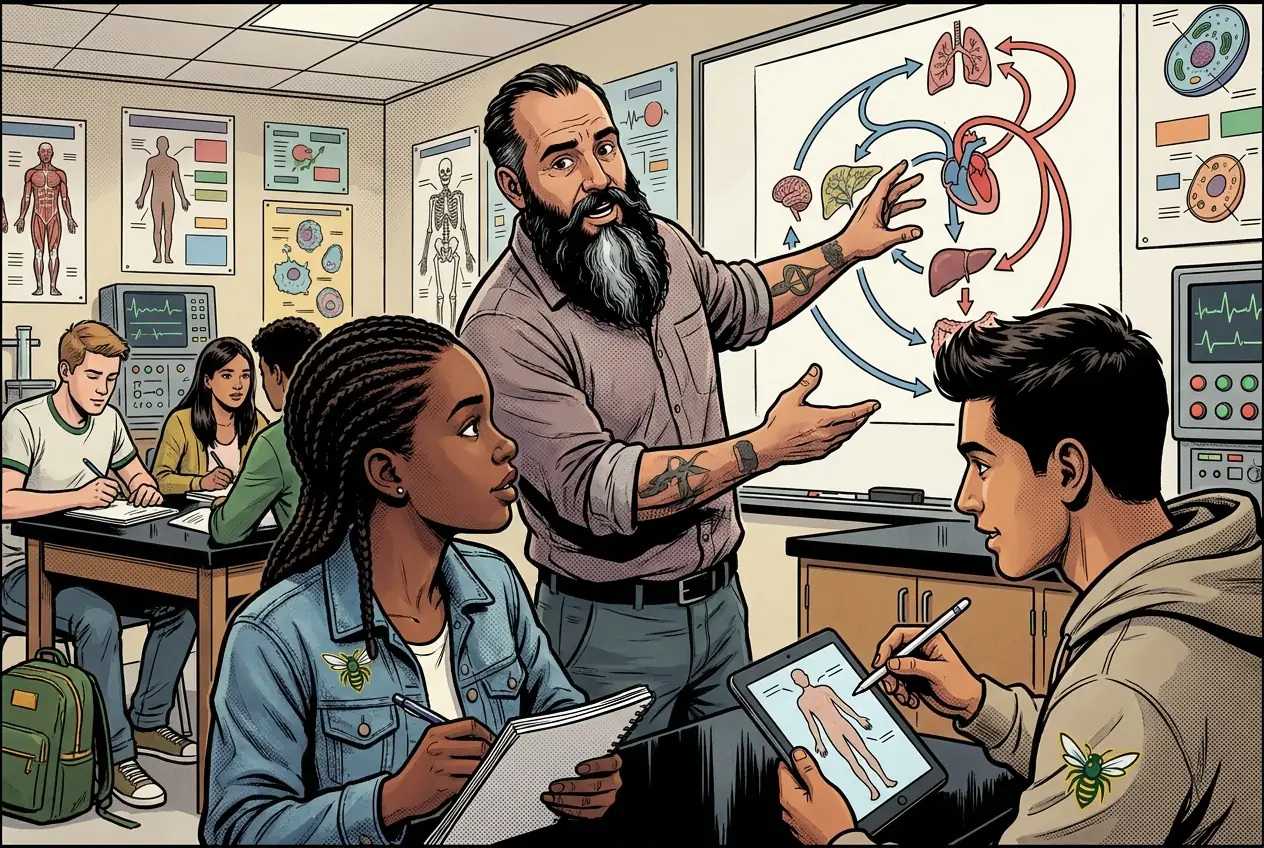
Anatomy is structure, physiology is function. Then homeostasis, which is the body holding itself steady, and the negative feedback loop that does it: stimulus, sensor, control, effector.
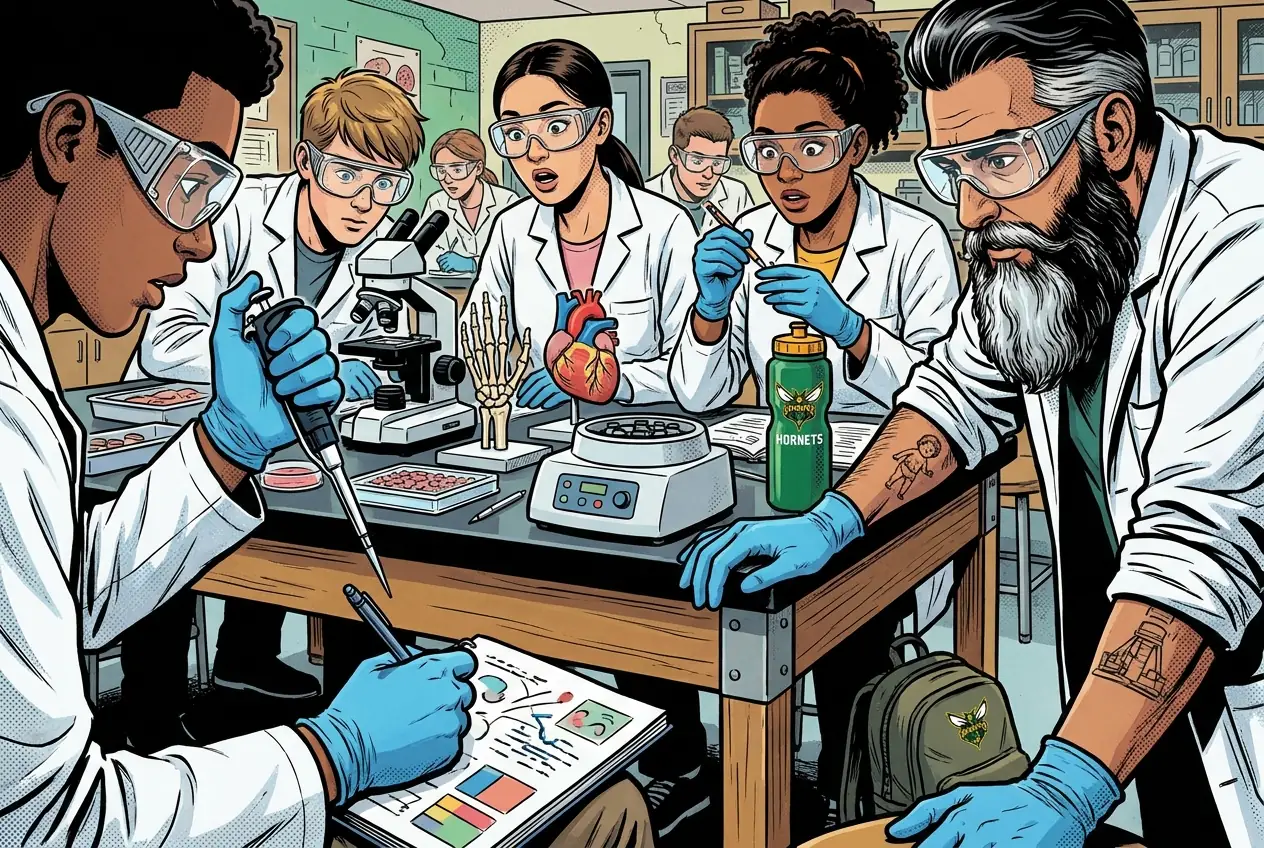
Notebook setup and the safety practical. Sections for objective, data, analysis, reflection, and page one dated.
MR. MENDOZA
Knowing where the eyewash is on a diagram is not the same as knowing where it is when something has gone wrong.
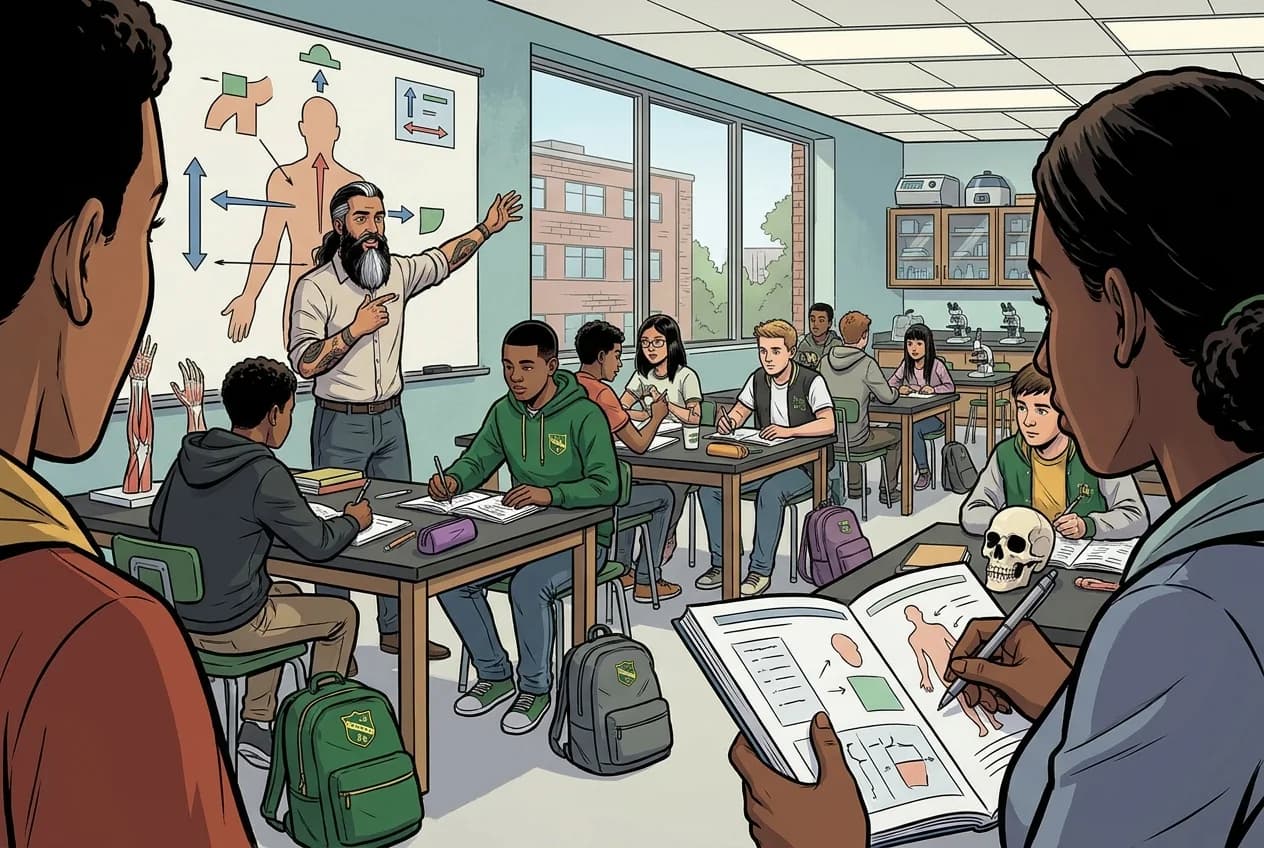
Superior and inferior, anterior and posterior, medial and lateral, proximal and distal. Paired terms, always relative to anatomical position.
MR. MENDOZA
Above the knee depends on how the patient is lying. Proximal to the knee means the same thing every time.
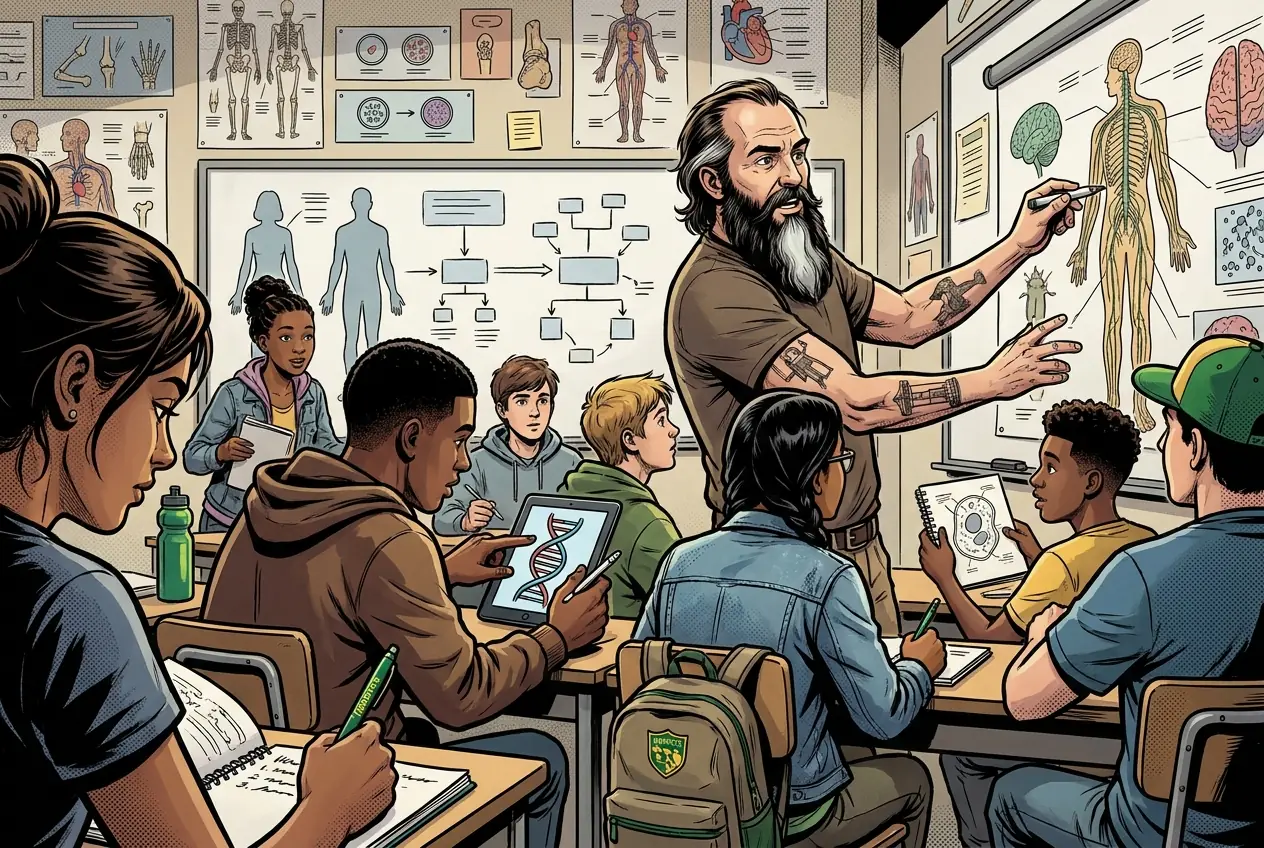
First packet: homeostasis loop, safety checklist, directional terms, all checked against the rubric for dating and labels. Undated work does not count, which sounds harsh and is exactly how a real chart works.

I want to be a nurse. Not a doctor, a nurse, and I am tired of people treating that like the smaller version of the same wish. The nurse is the one who is actually in the room.
Week 3
FEBRUARY 4 TO 10
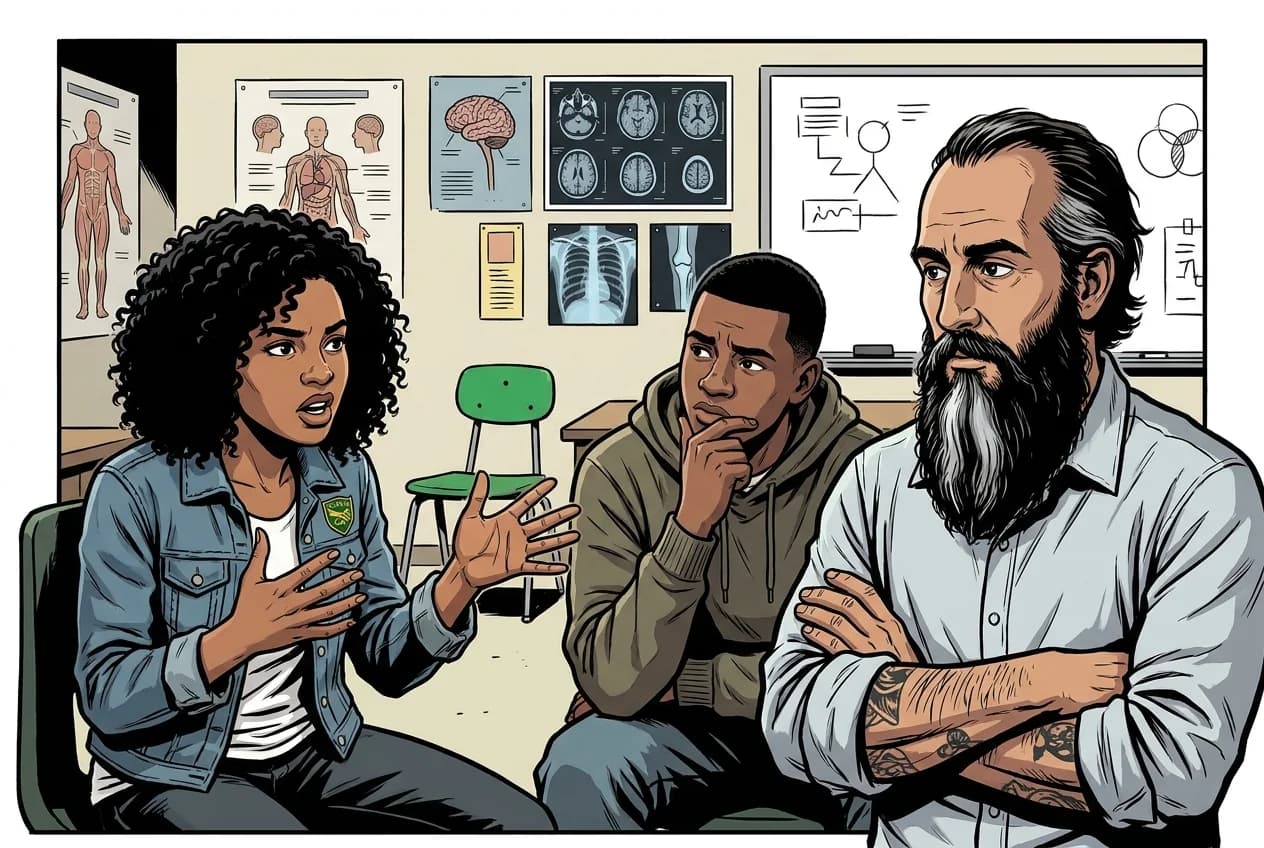
Should a hospital use real patient scans to teach students without asking permission again? The scan was taken for care. Teaching is a different purpose.
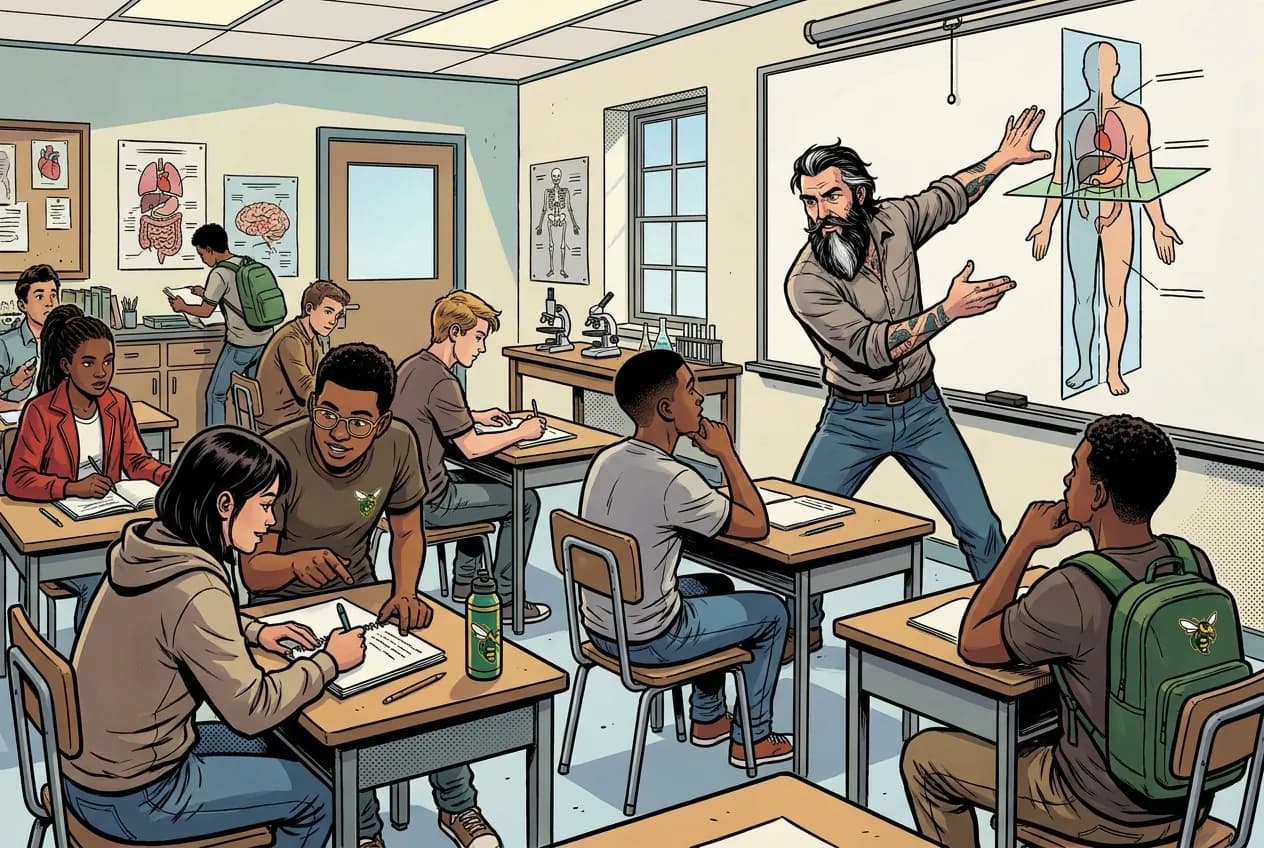
Sagittal, frontal, transverse. Then the dorsal and ventral cavities and what lives in each.
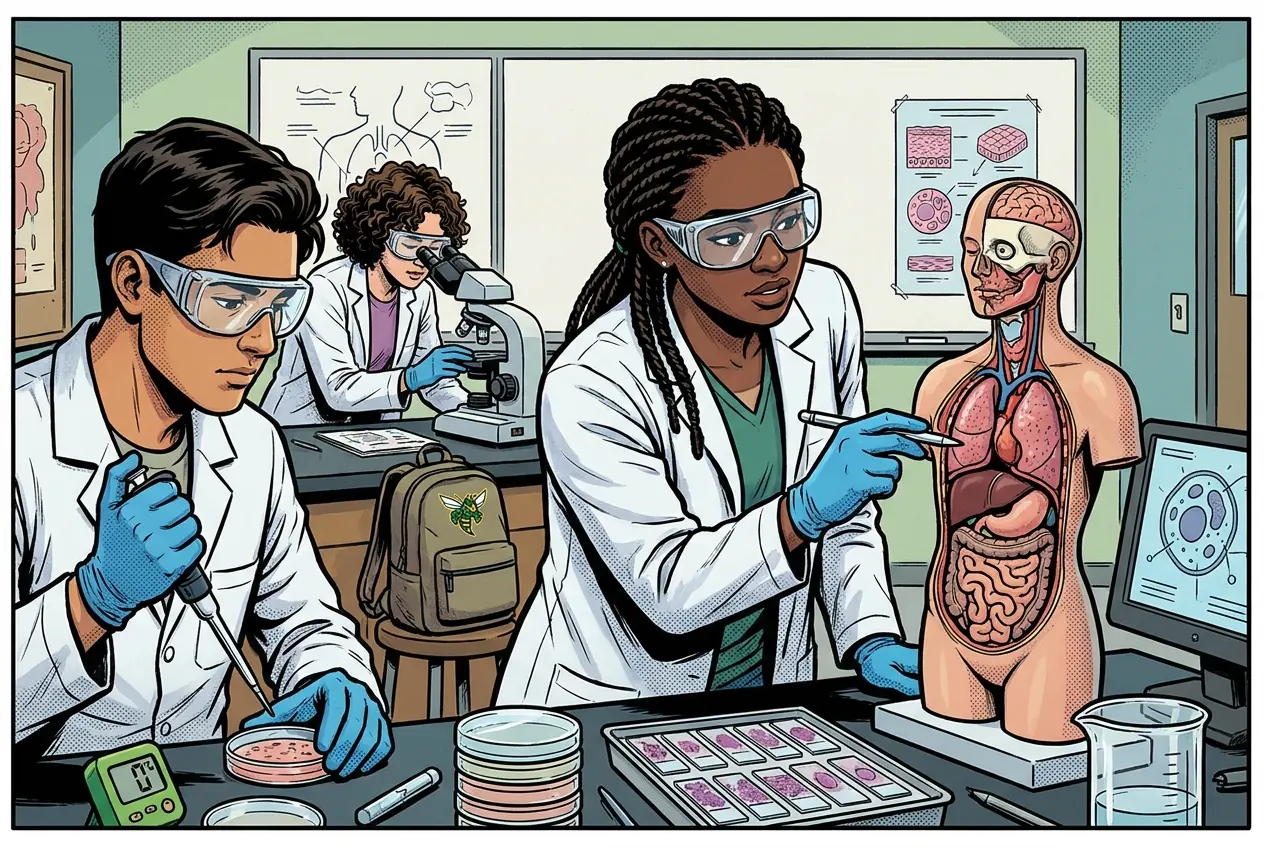
Four tissue types, and every organ we will meet this semester is some arrangement of them. Build the model once and you stop memorizing lists.
First time we applied the vocabulary to a person. A patient scenario with an injury site, and we had to mark the body region, the cavity, and the plane that best describe where it is.
Planes diagram, organization model, patient map. I was missing labels on the model photo and had to redo the picture, which is a two-minute problem that becomes a zero if you do not check.
Week 4
FEBRUARY 11 TO 18
When bone graft material is scarce, who gets it first? We had to name an actual allocation rule and then defend it, which is harder than saying it should be fair.
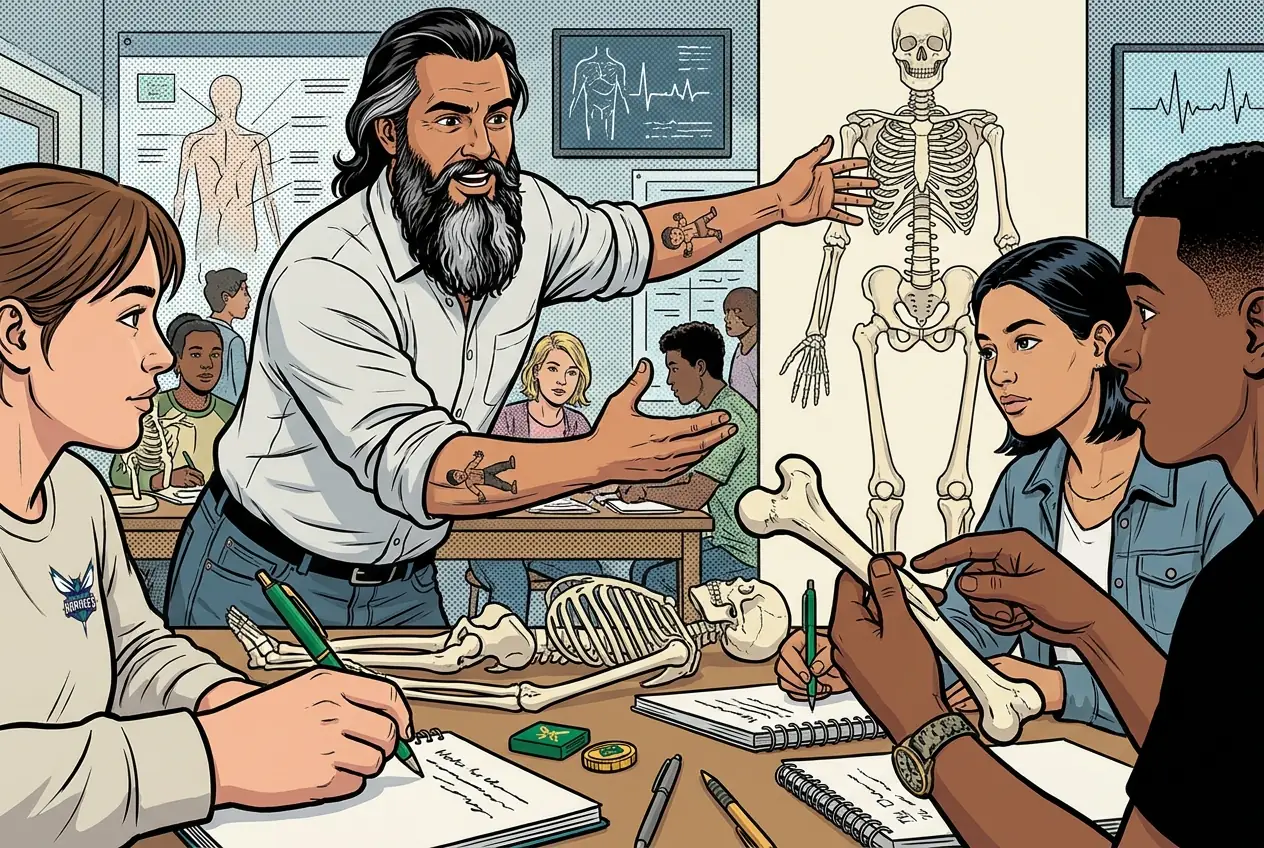
Osteoblasts build, osteoclasts break down, osteocytes maintain. Bone is not a rock, it is a tissue being continuously demolished and rebuilt by three cell types that have to stay in balance.
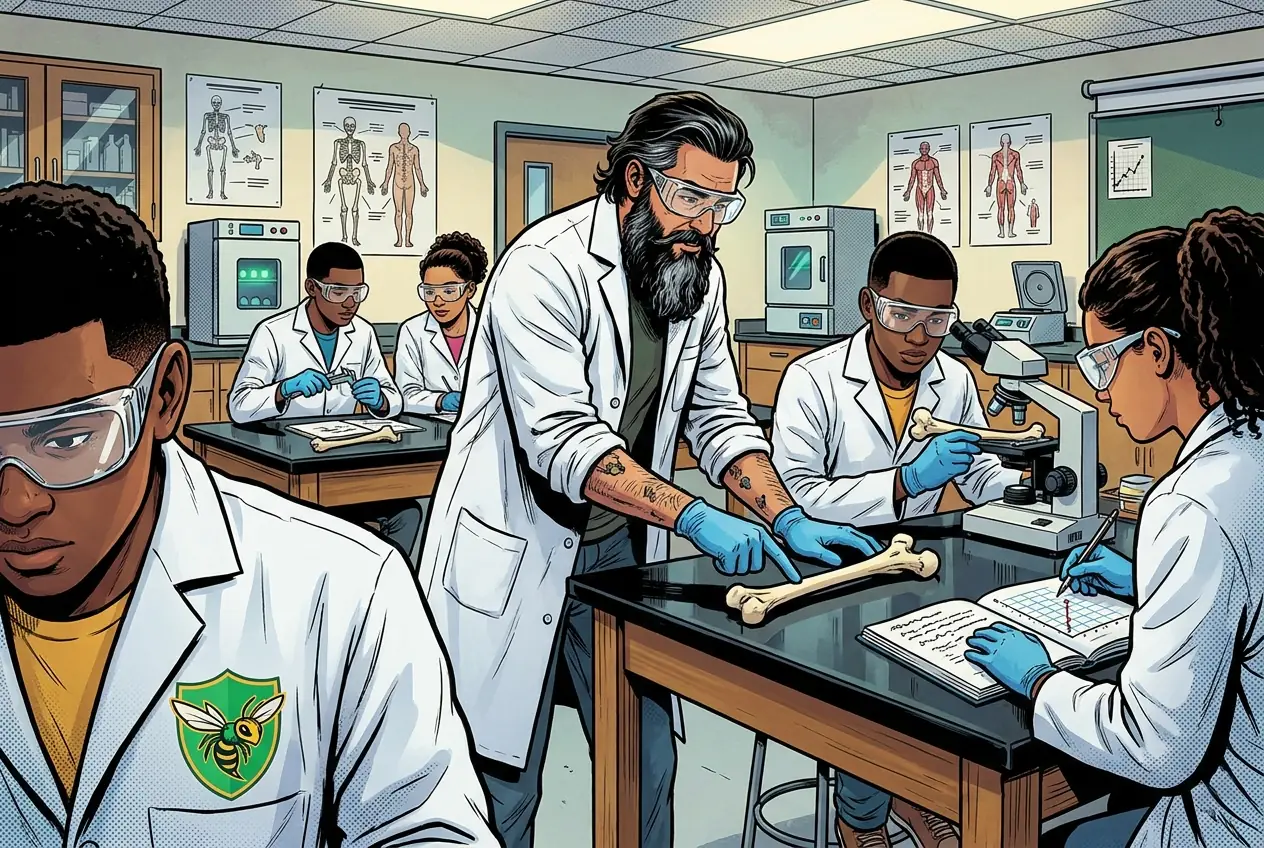
X-rays and fracture models. Greenstick, transverse, comminuted, spiral. We had to classify each break, name the nearest joint type, and describe the position using the directional terms from week one.
CLASSMATE
The bone recorded how it was broken. You are reading an event that already happened.
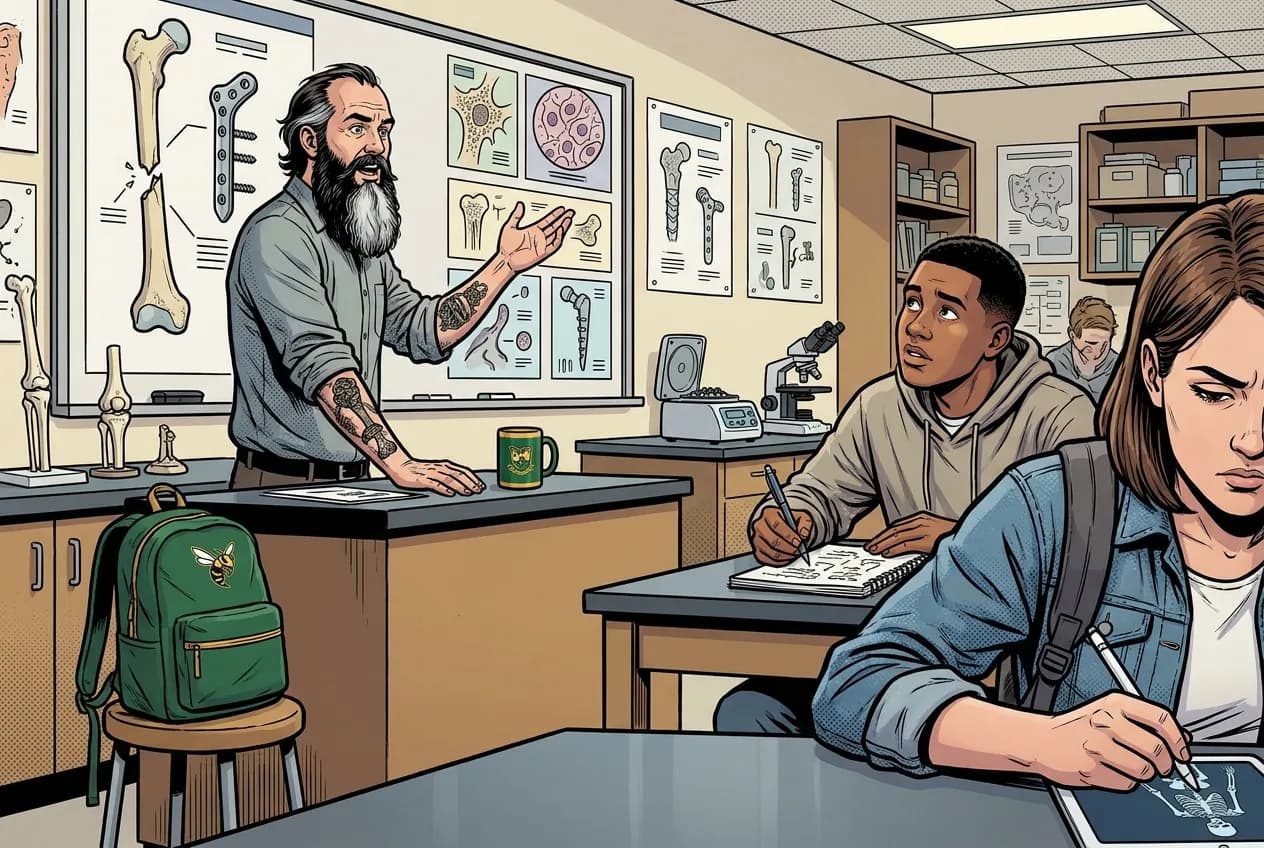
Four stages of healing: hematoma, soft callus, hard callus, remodeling. Then matching each stage to the bone cells doing the work, which ties straight back to Tuesday.
Bone cell chart, fracture table, repair CER.
Week 5
FEBRUARY 19 TO 24

Should athletes be allowed drugs that build muscle faster? I said no and got asked why training at altitude is fine but a drug is not, since both are deliberate manipulation of physiology.
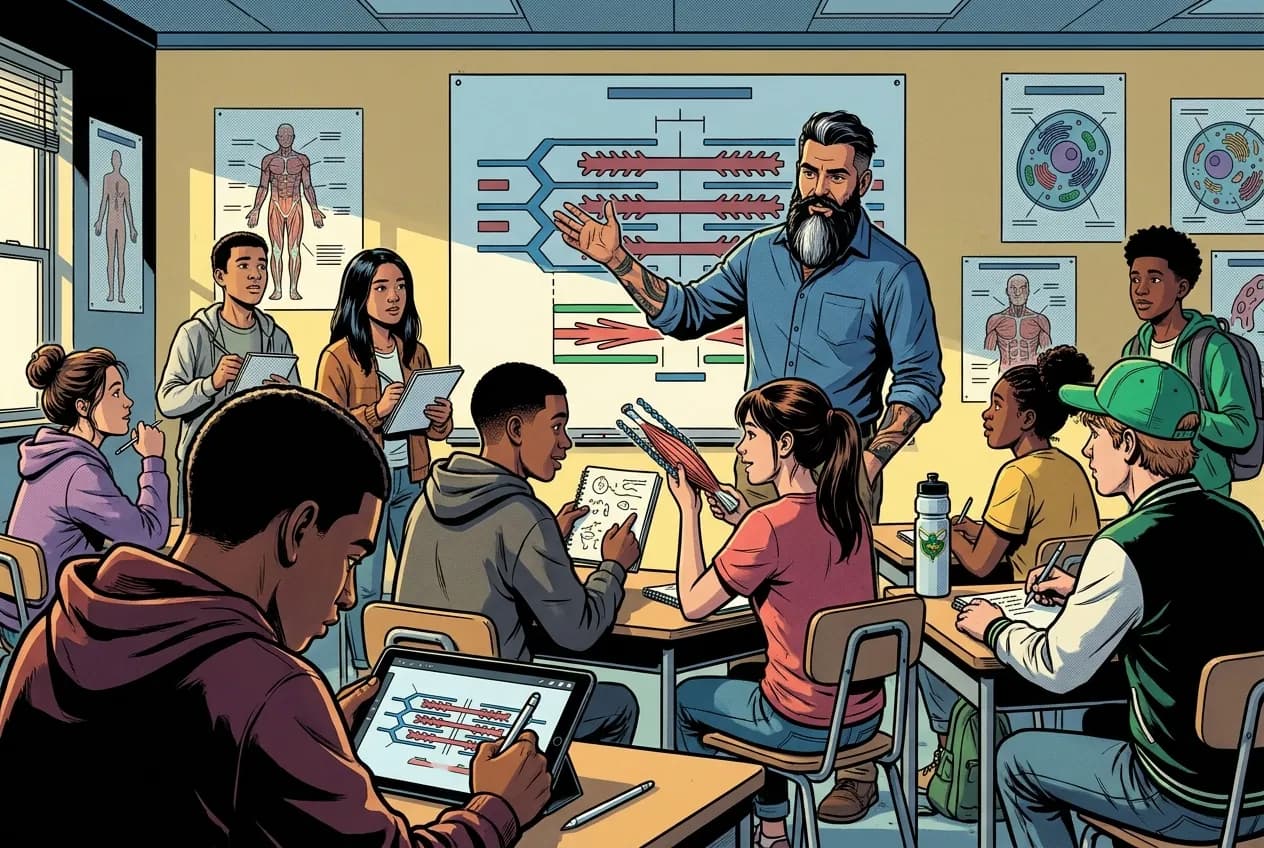
The sarcomere. Actin and myosin, Z-lines, A-band, I-band, and the sliding filament model.
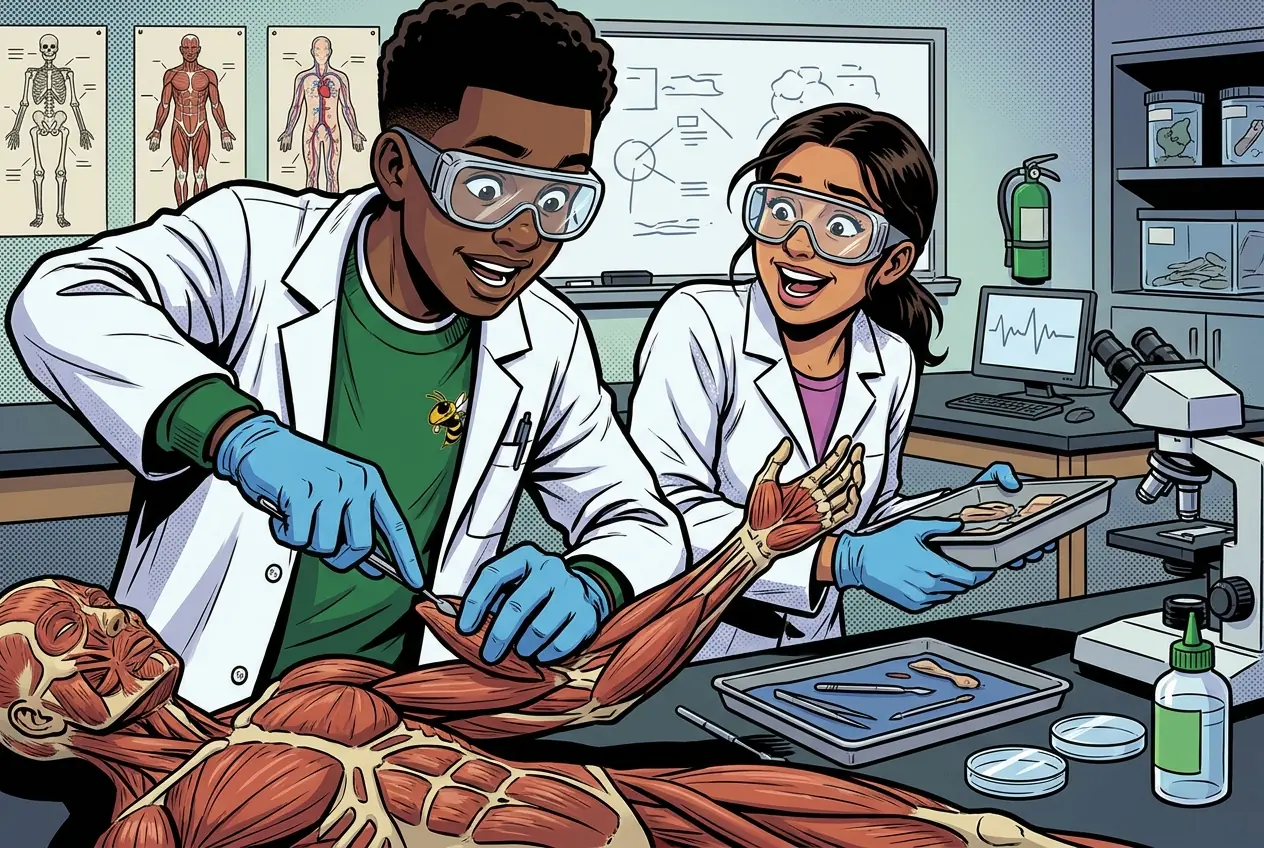
This is the one people told me about. You roll actual clay muscles and place them on a skeleton model, in anatomical order, from origin to insertion.
PARTNER
That muscle is on backwards. The action you just described would be impossible.
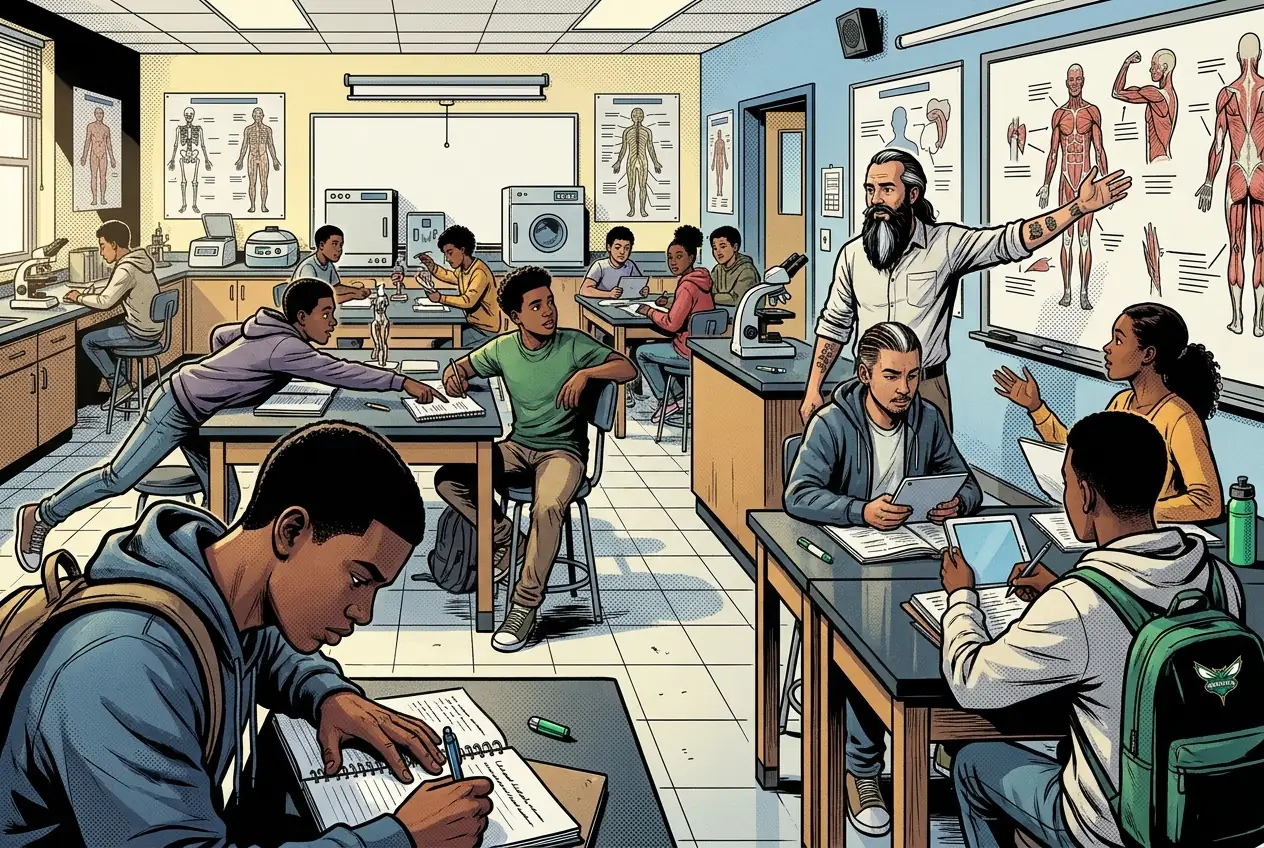
Agonist, antagonist, synergist. Nothing in the body moves by one muscle contracting. One pulls, one resists, others stabilize, and the resistance is what makes the movement controlled instead of a spasm.
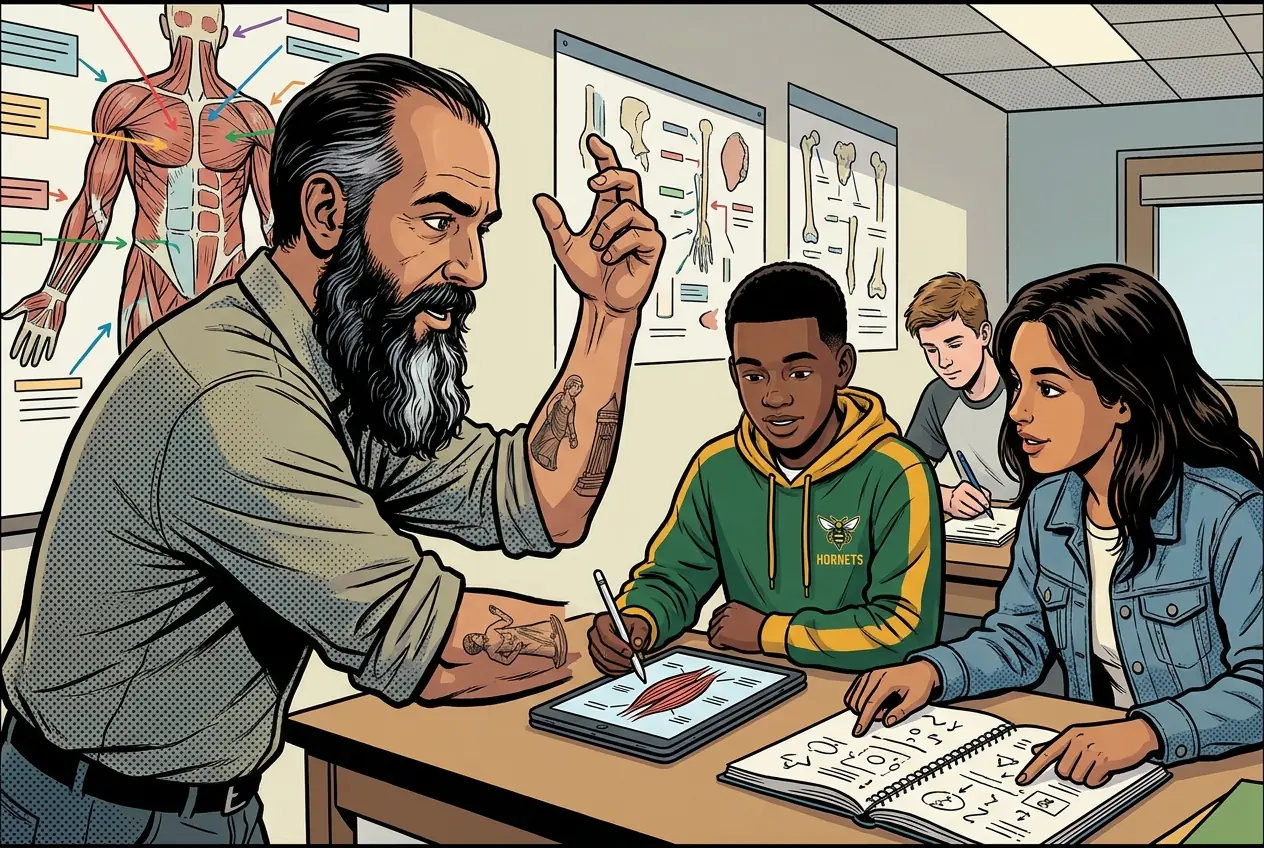
Sarcomere diagram, Maniken photos, muscle pair analysis. The packet works across scales, from filaments sliding to a whole joint moving, which is the point of the week.
Week 6
FEBRUARY 25 TO MARCH 2

Should an employer be allowed to see the data from a wellness wearable they paid for? The wearable is a gift with a sensor in it.
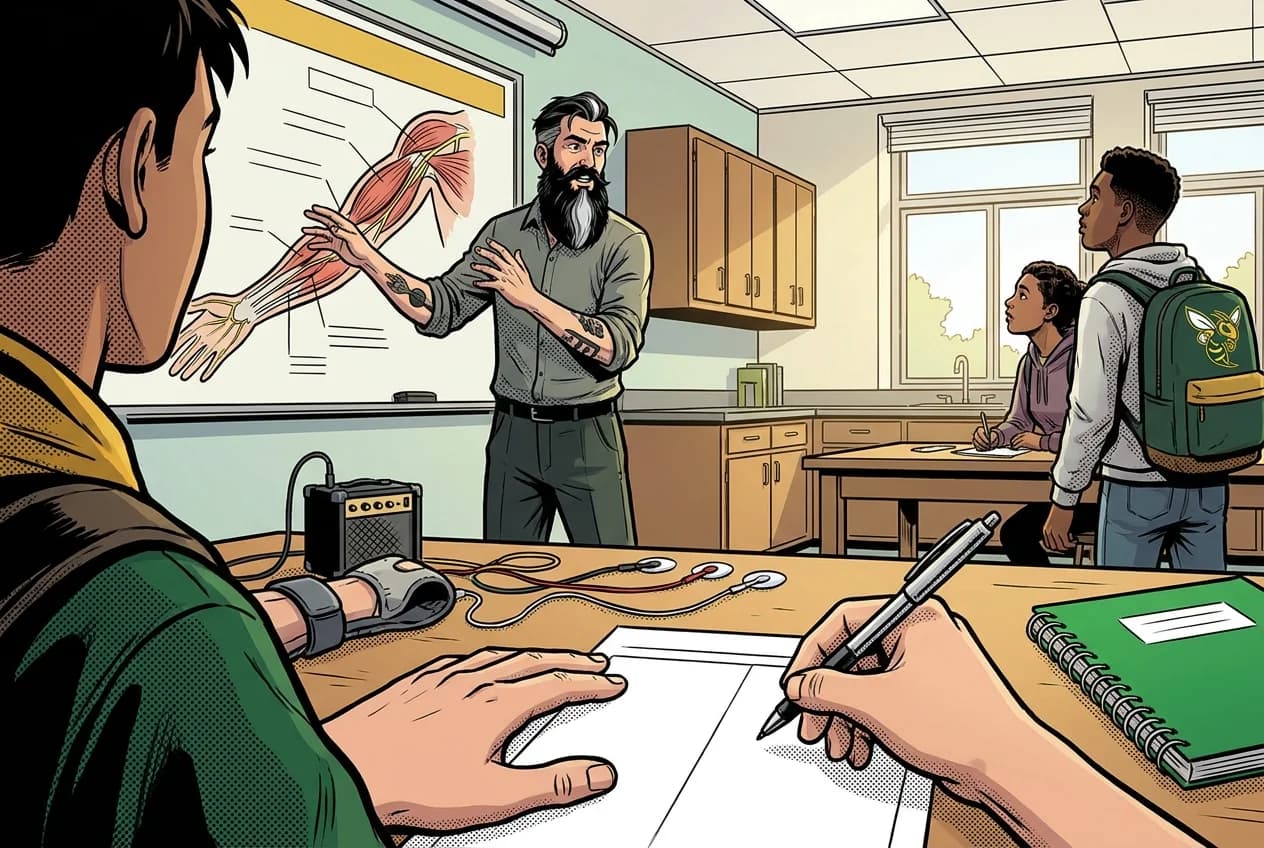
Electromyography. Muscles produce a measurable electrical signal when they fire, and as they fatigue the signal changes in a predictable way.
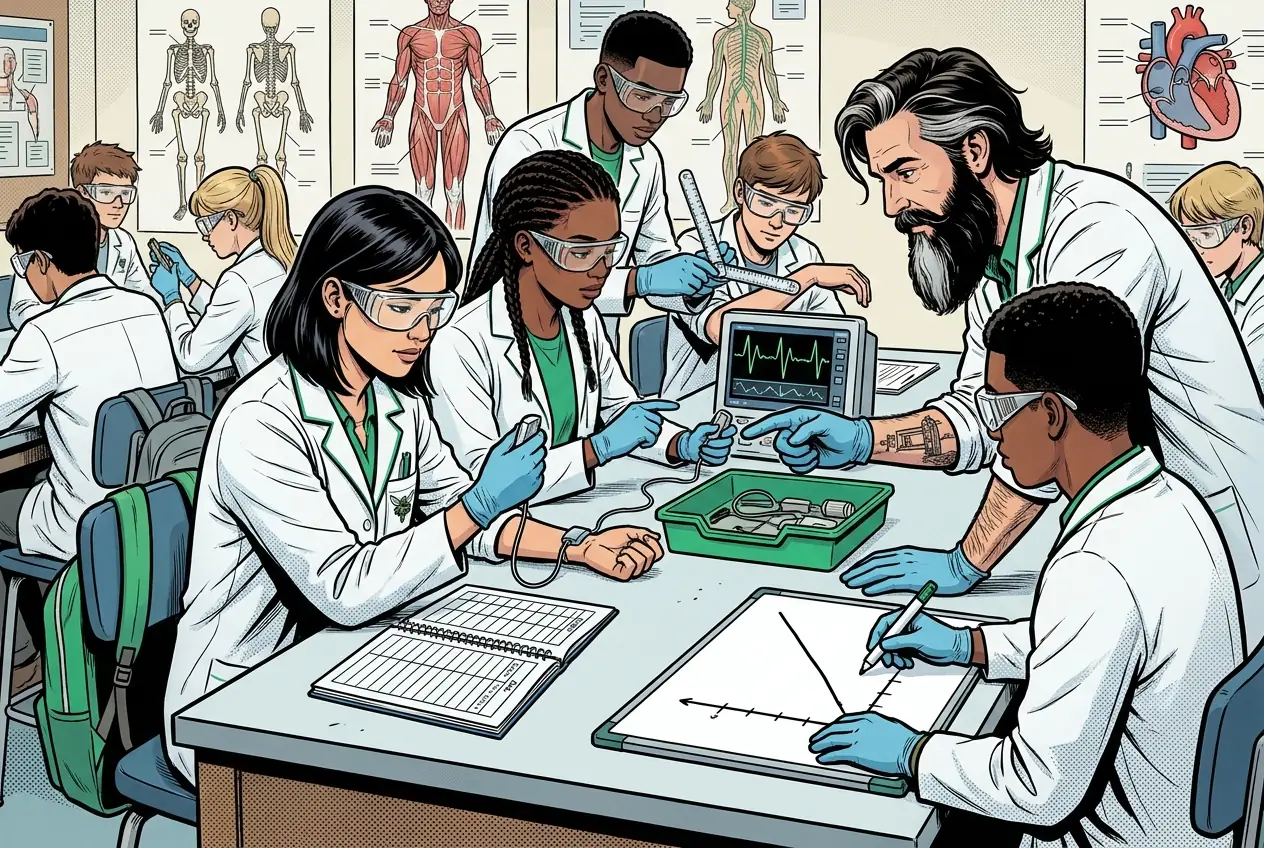
Real sensors, real numbers, units on everything. The EMG signal in millivolts, grip force in newtons, joint angle in degrees, multiple trials.
ME
We were measuring our own setup, not the muscle. Start over and seat it the same way each time.

Graph of force or angle against trial number, then a CER claiming what the trend shows about fatigue.
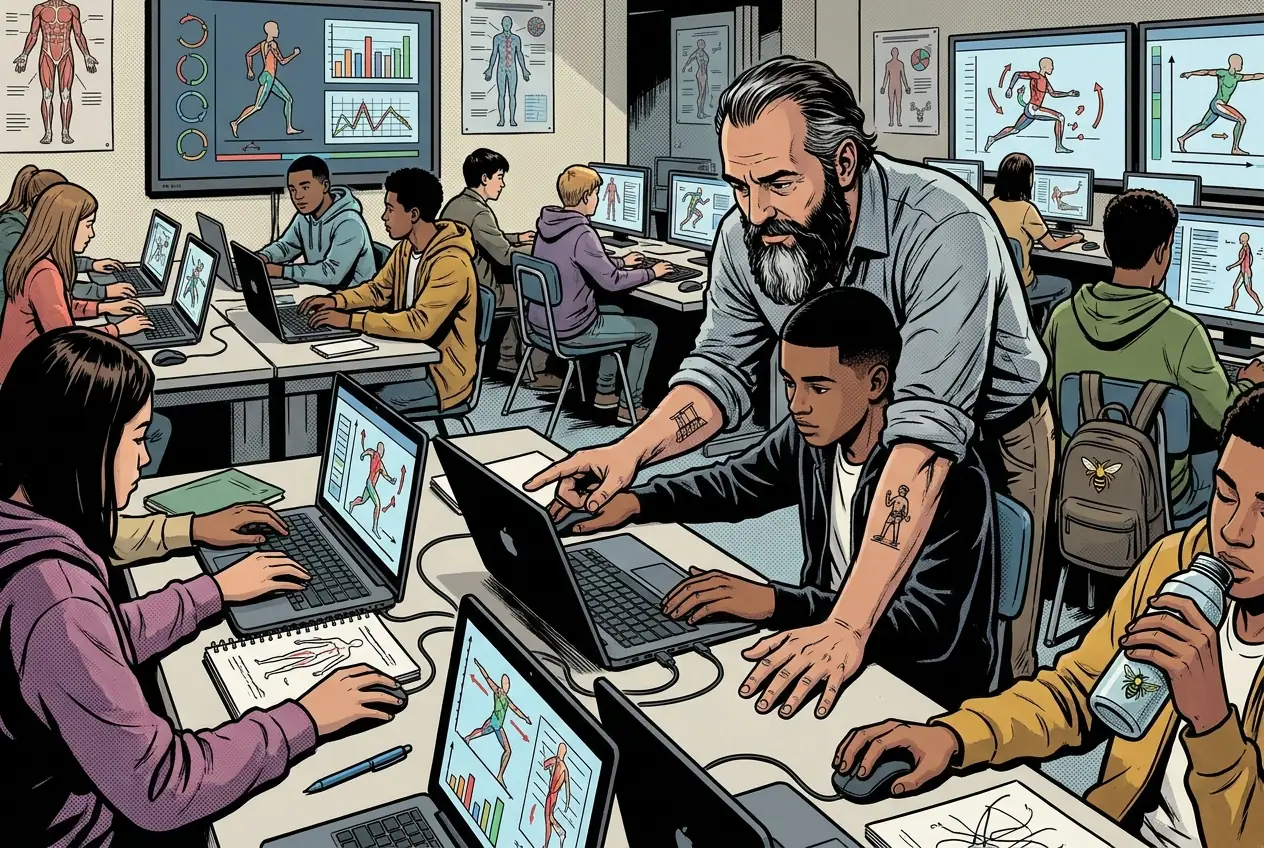
Raw table, labeled graph, fatigue CER, and a limitations line about the sensor placement problem.
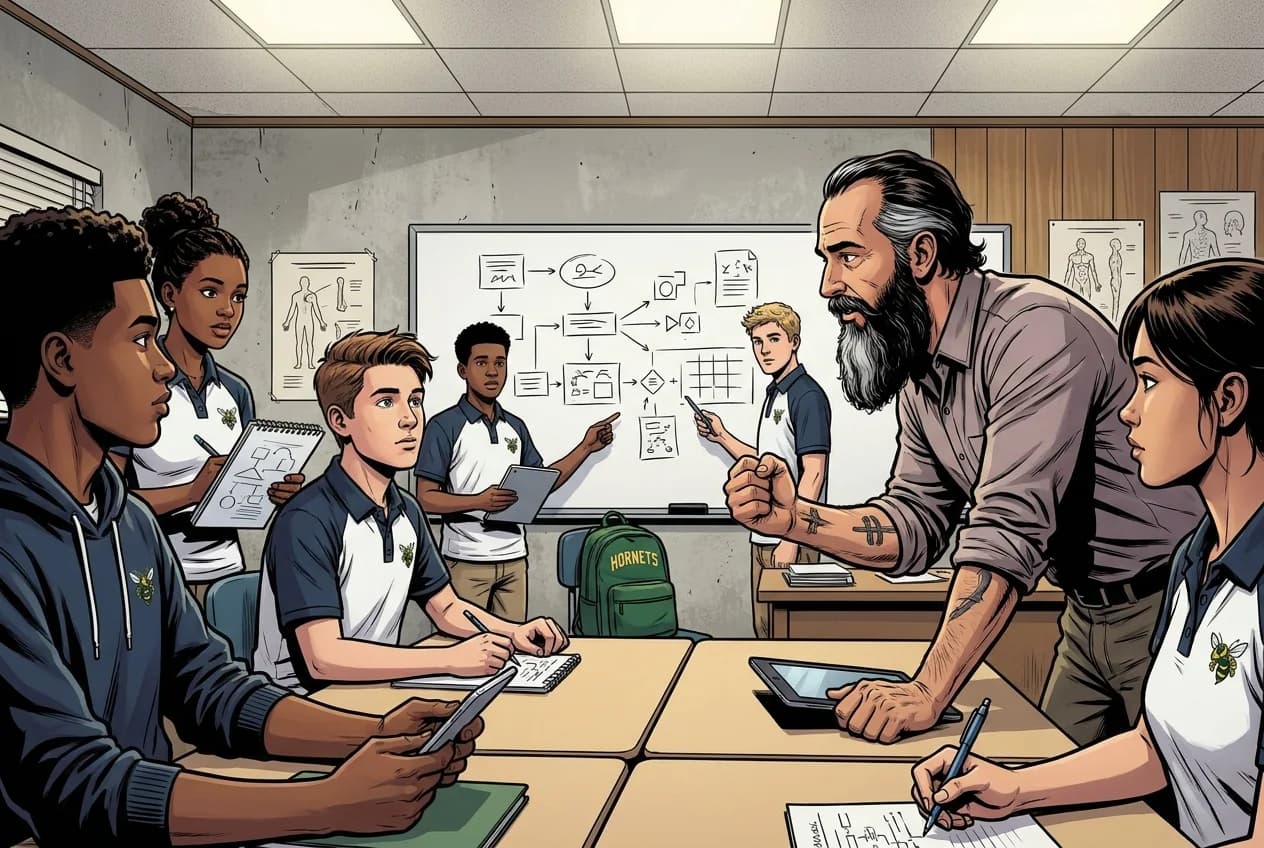
First real HOSA meeting. We are choosing competitive events and I am looking at the one on medical terminology, partly because the vocabulary overlaps almost exactly with what this class is already making me learn.
Week 7
MARCH 3 TO 8
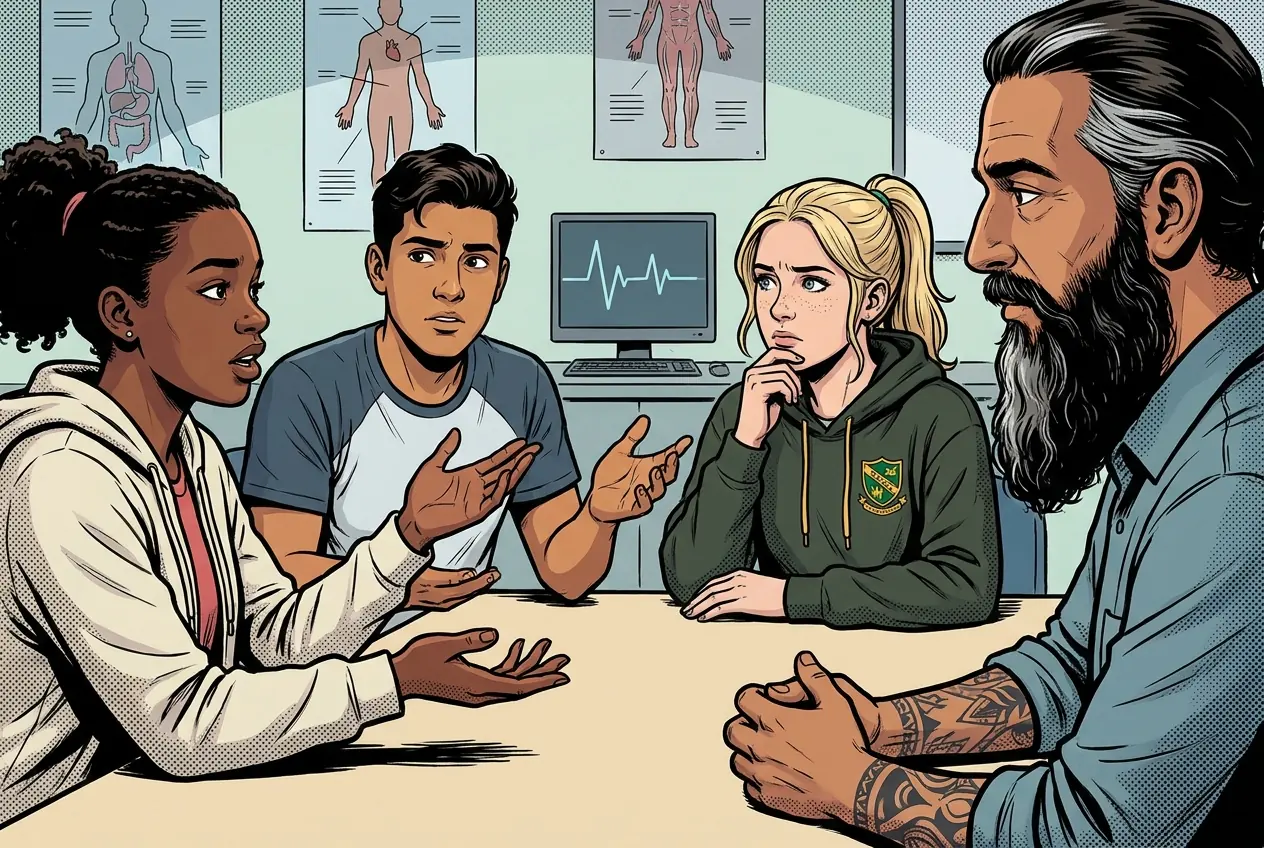
Should insurance be allowed to cap the number of rehabilitation sessions a patient gets? The cap is not a medical judgment, it is a budget, and it lands on the person who needs the most.
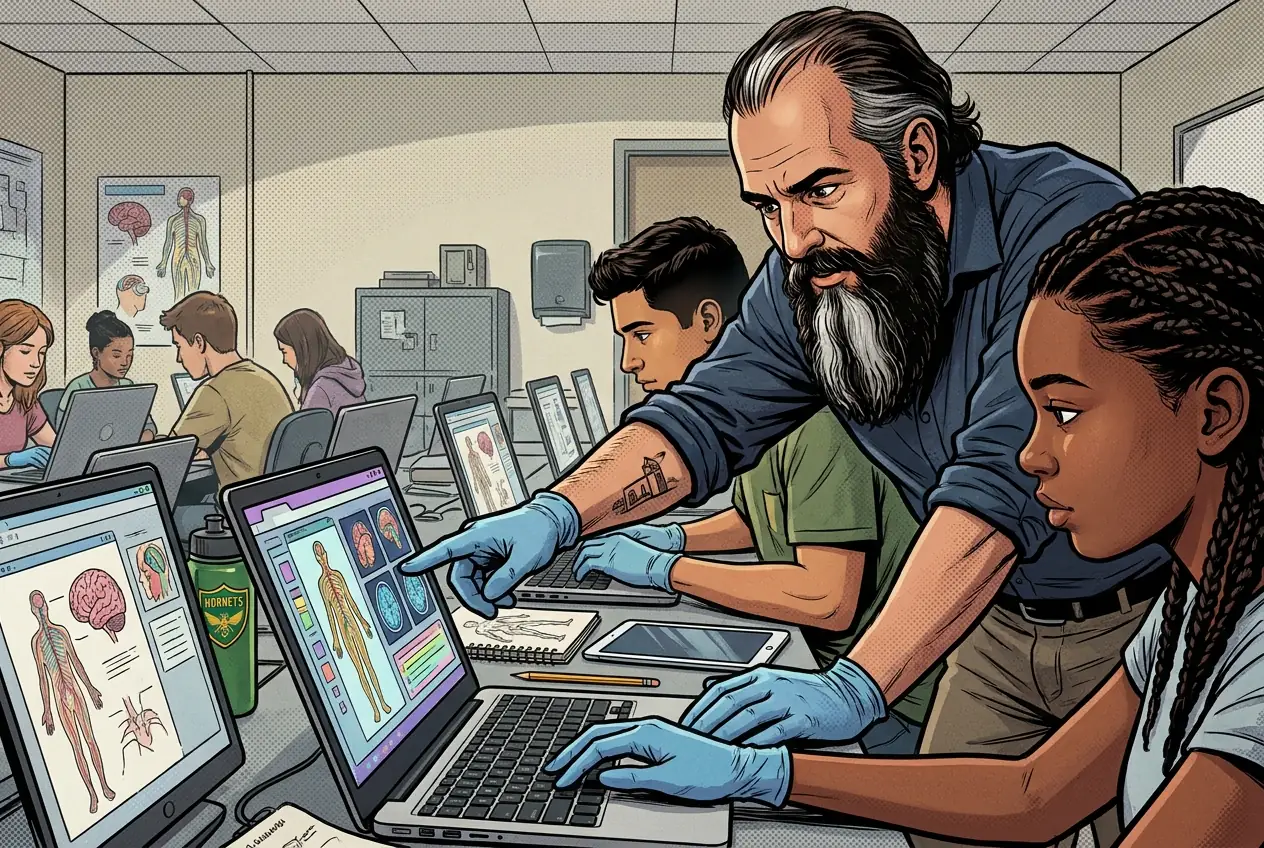
We were given a patient record and had to annotate it for diagnosis, limits, and goals. The goals column is the one that changed the week.
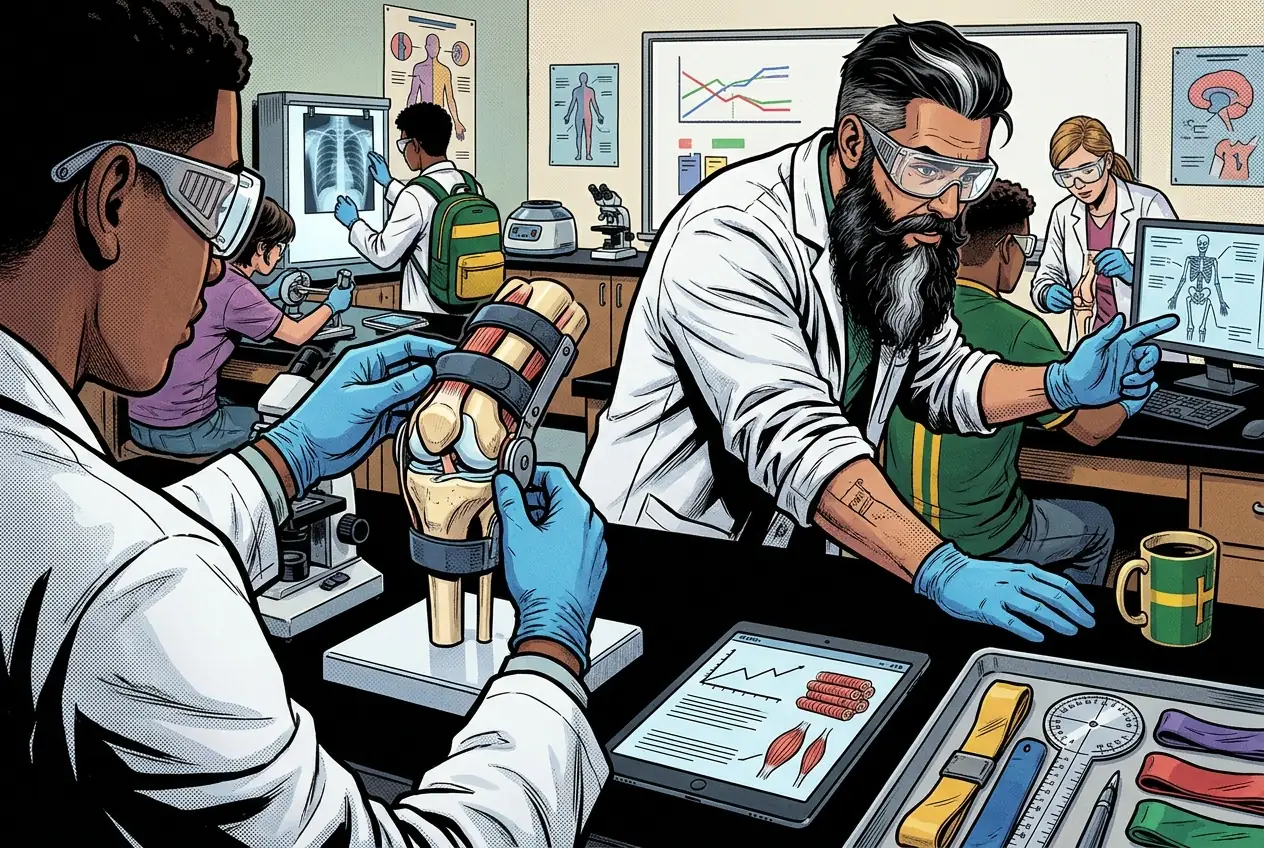
Teams building an actual week-by-week rehabilitation plan: two exercises, one assistive device, and a timeline.
TEAMMATE
A plan the patient abandons in week two is worse than a slower plan they finish.
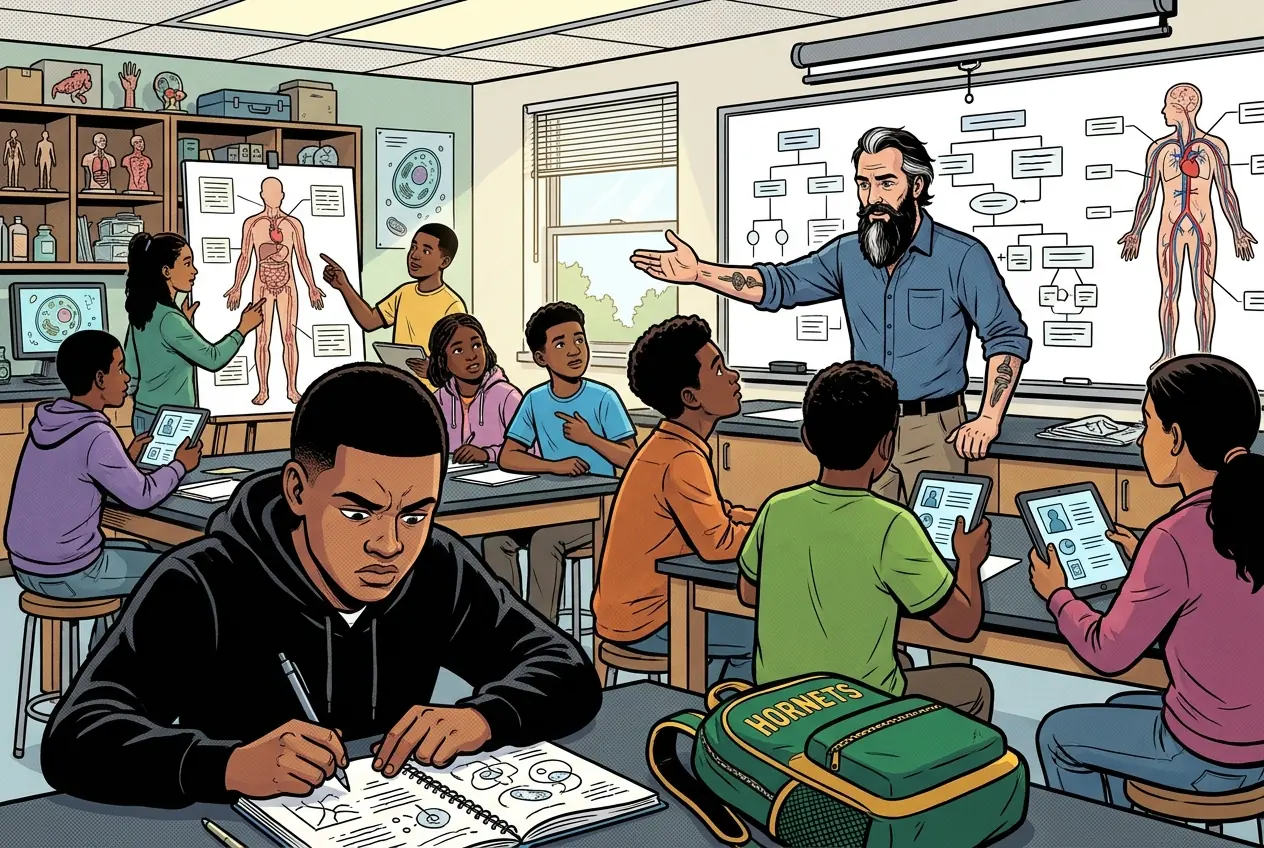
Peer review, then revision with the changes documented. We had to show at least two specific changes we made because of feedback, and why.

Empathy notes, original plan, revised plan, rationale. This is the first packet where the artifact is a plan for a person rather than a measurement of a thing.
Week 8
MARCH 9 TO 12
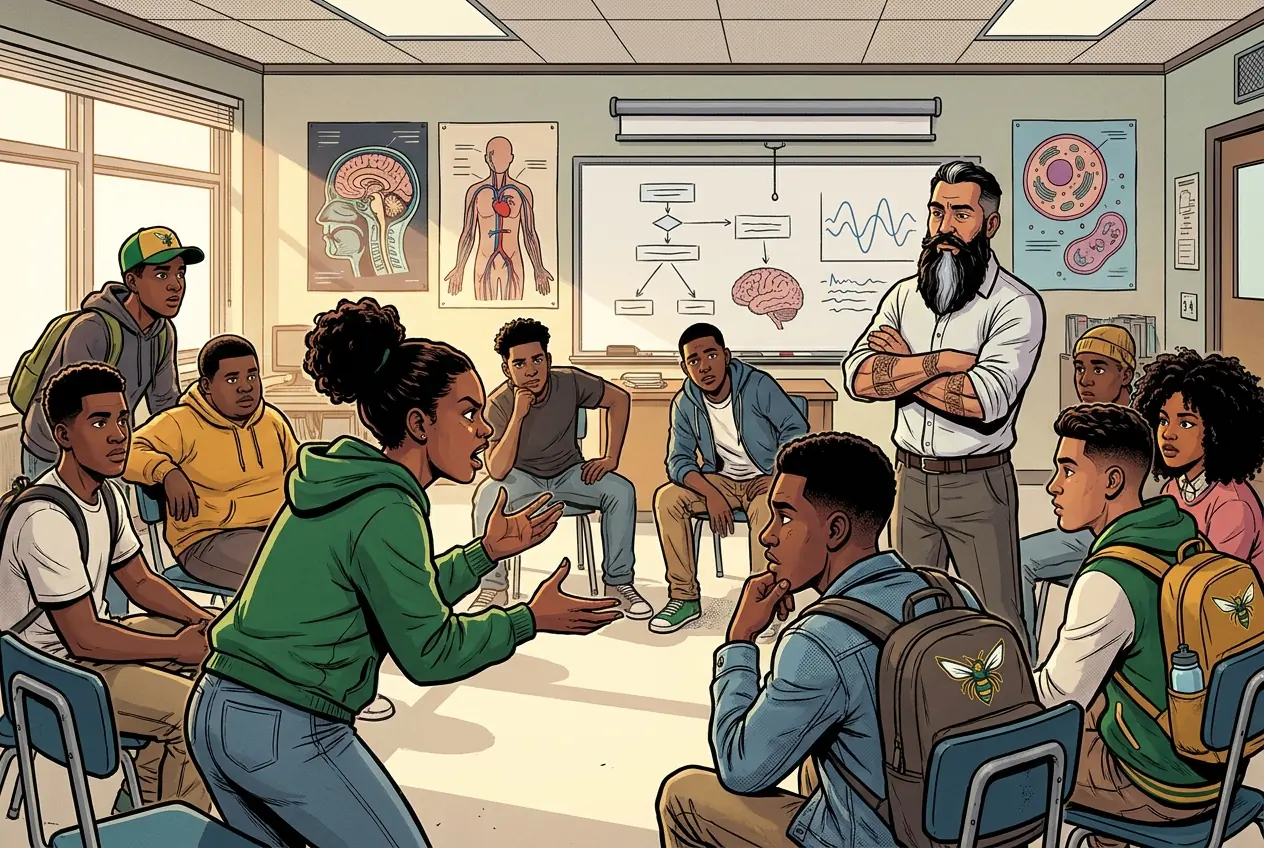
Should brain scan data be usable for anything beyond the reason it was collected? A brain scan is closer to a person than most medical data.
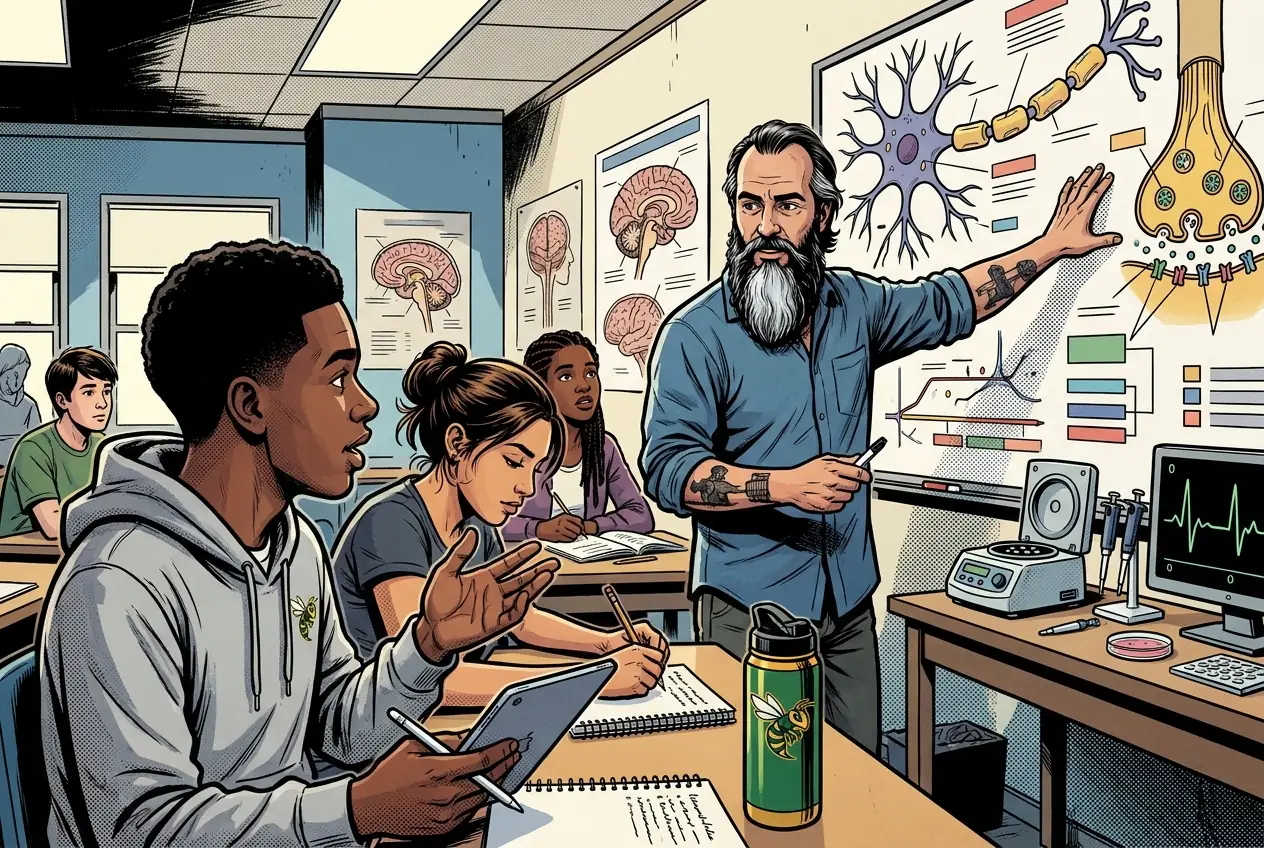
Dendrites, cell body, axon, myelin, terminals, with the signal direction marked. Then the synapse, where the signal stops being electrical and becomes chemical and then electrical again.
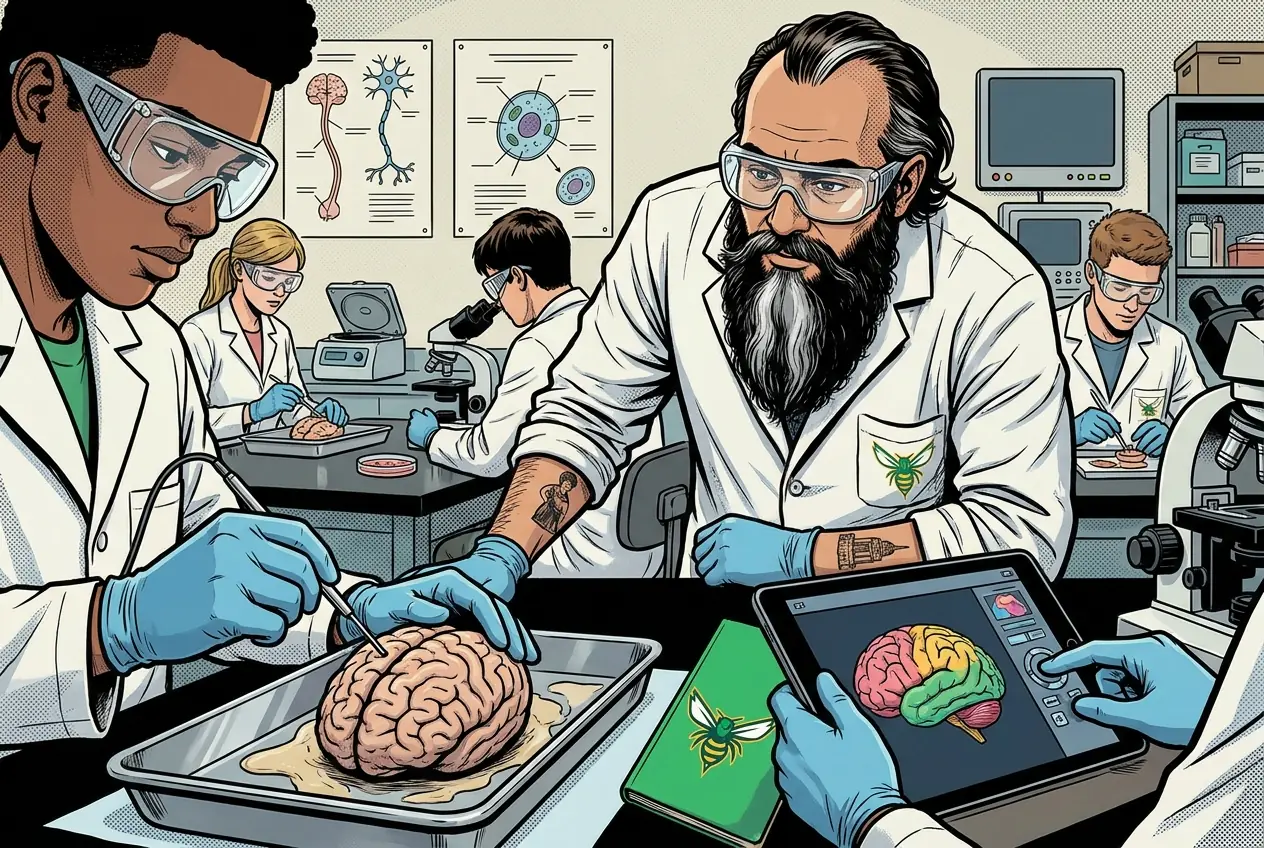
Brain day. The virtual option is right there and nobody has to explain why they took it. I took the specimen and my hands were not steady.
MR. MENDOZA
Take the virtual version. Nobody has to explain themselves for that.
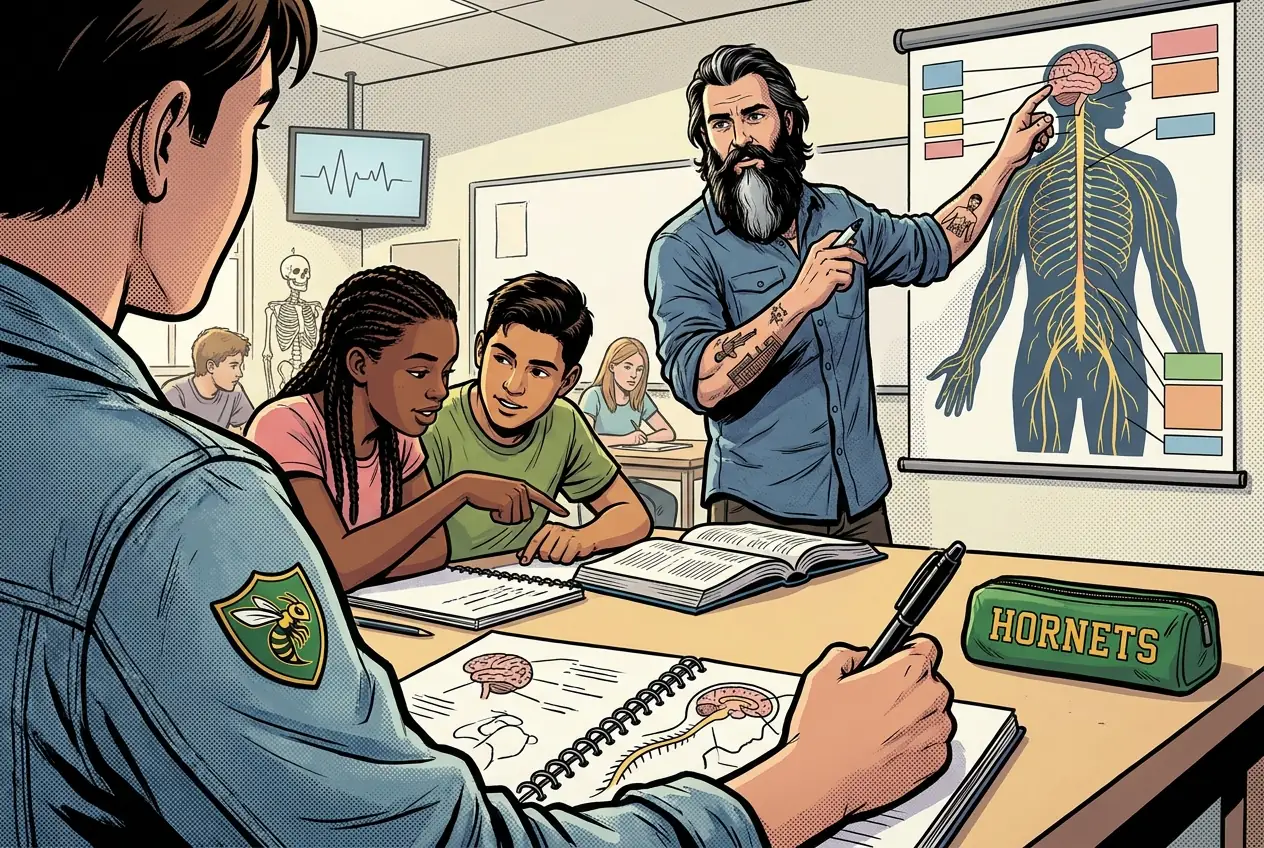
Sorting five body actions into central and peripheral with a justification for each. Sorting is easy, justifying is where you find out whether you understand it.
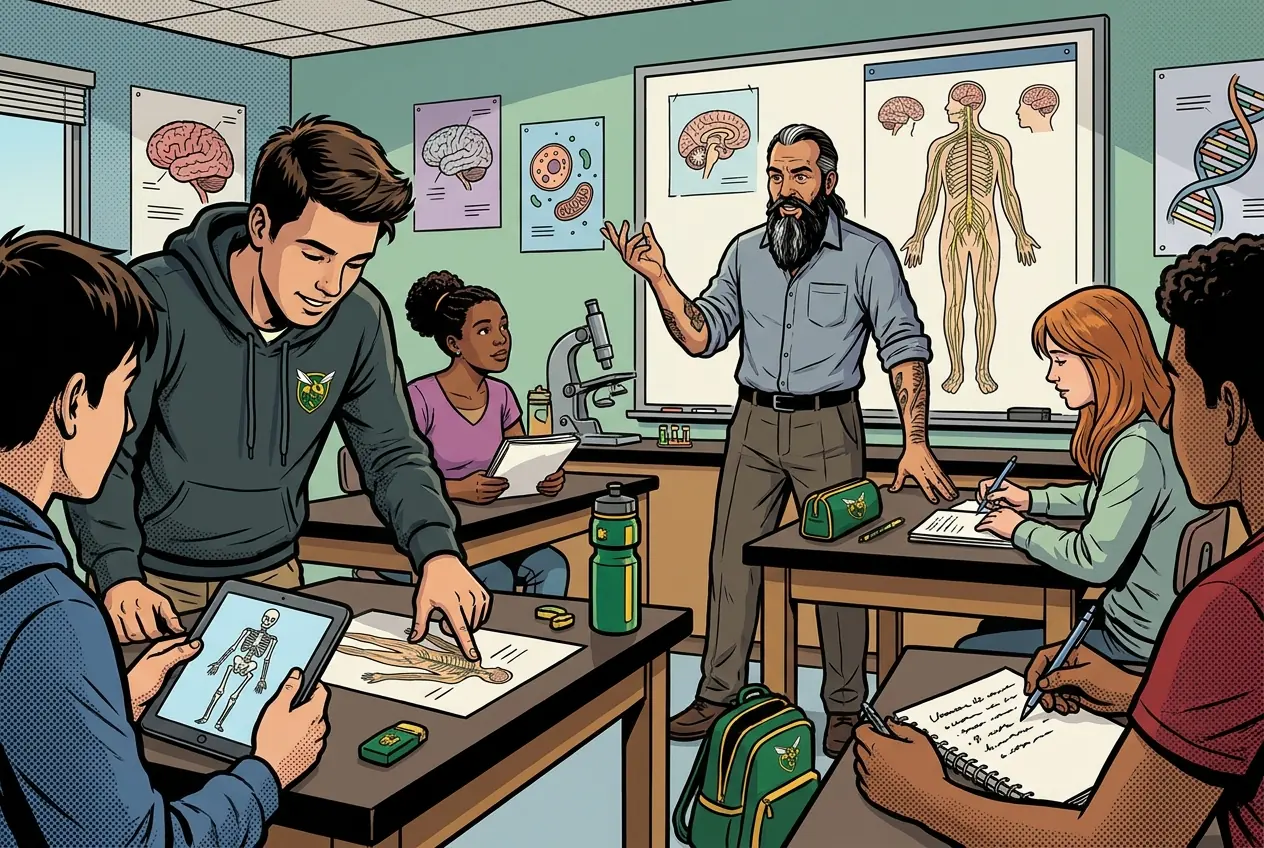
Neuron diagram, brain map, sorting table.
Week 9
MARCH 16 TO 18
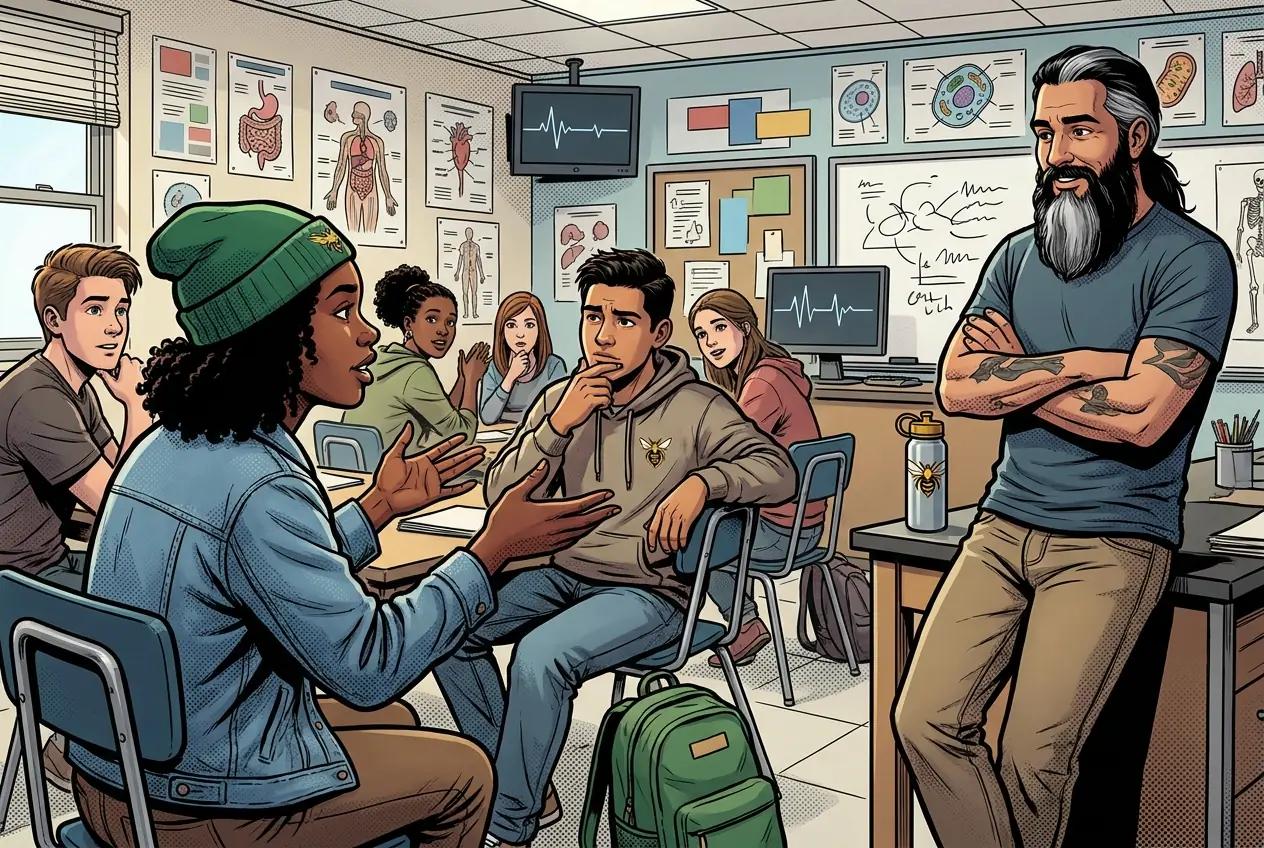
Should a driver impaired by a legally prescribed medication be treated the same as one impaired by alcohol? They did nothing wrong in obtaining it and the effect on reaction time can be comparable.
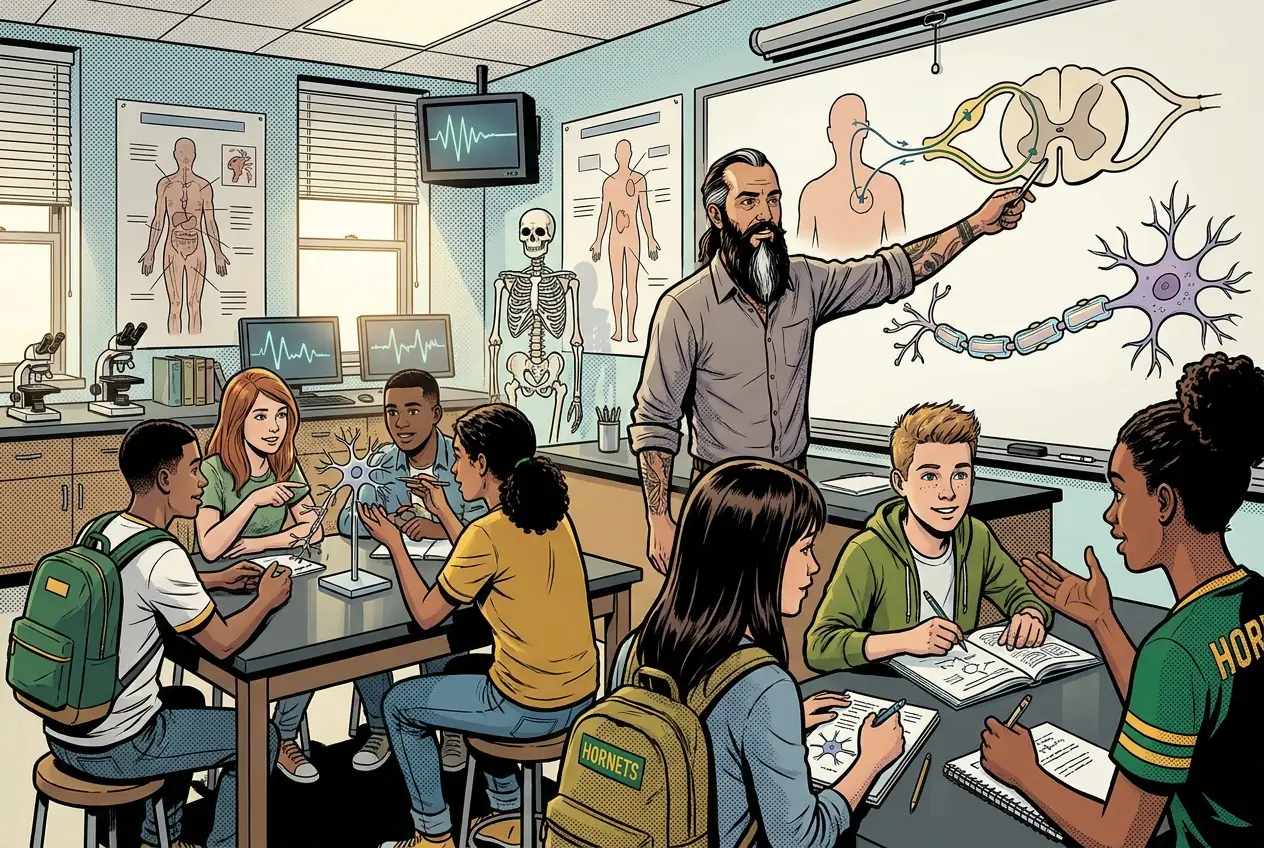
Five components: receptor, sensory neuron, integration center, motor neuron, effector.
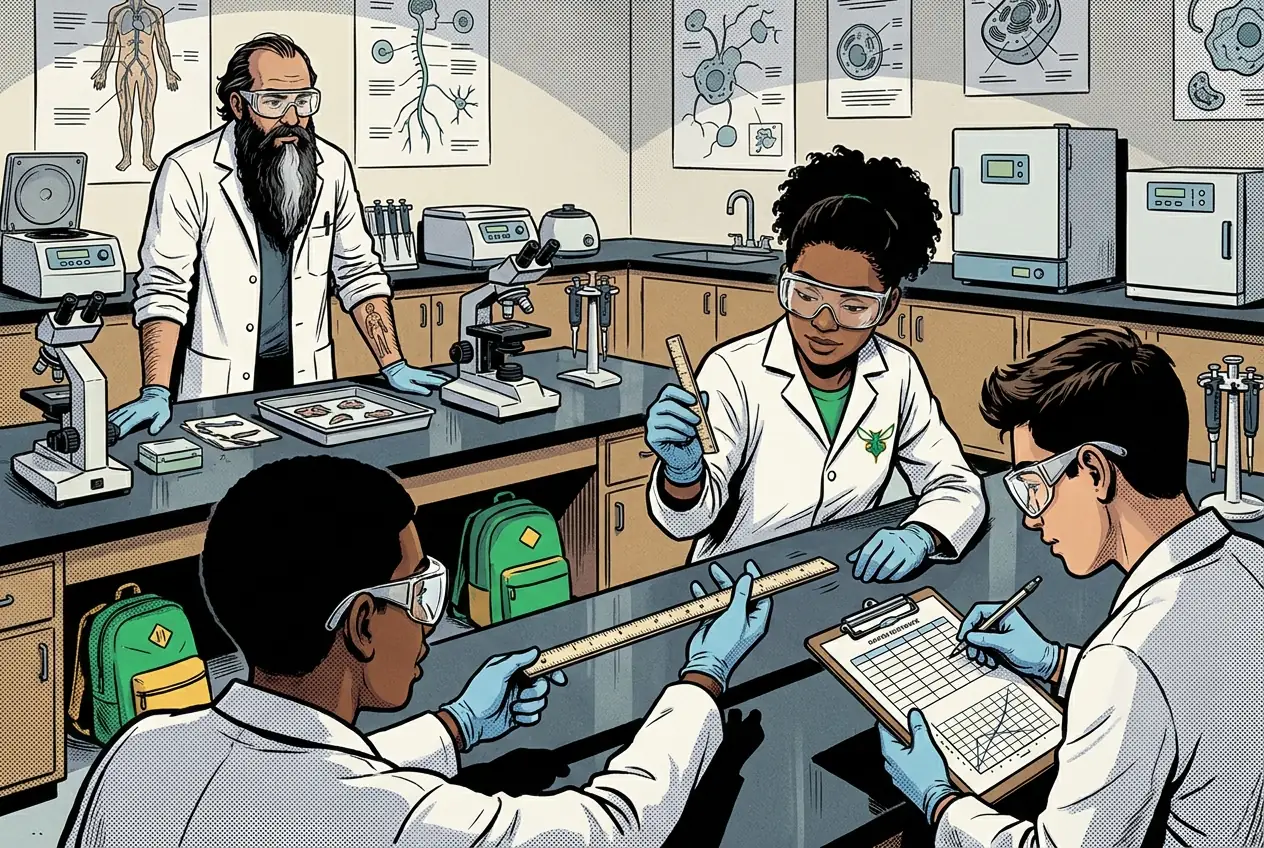
Measuring our own reaction times, baseline against a distraction condition, multiple trials each.
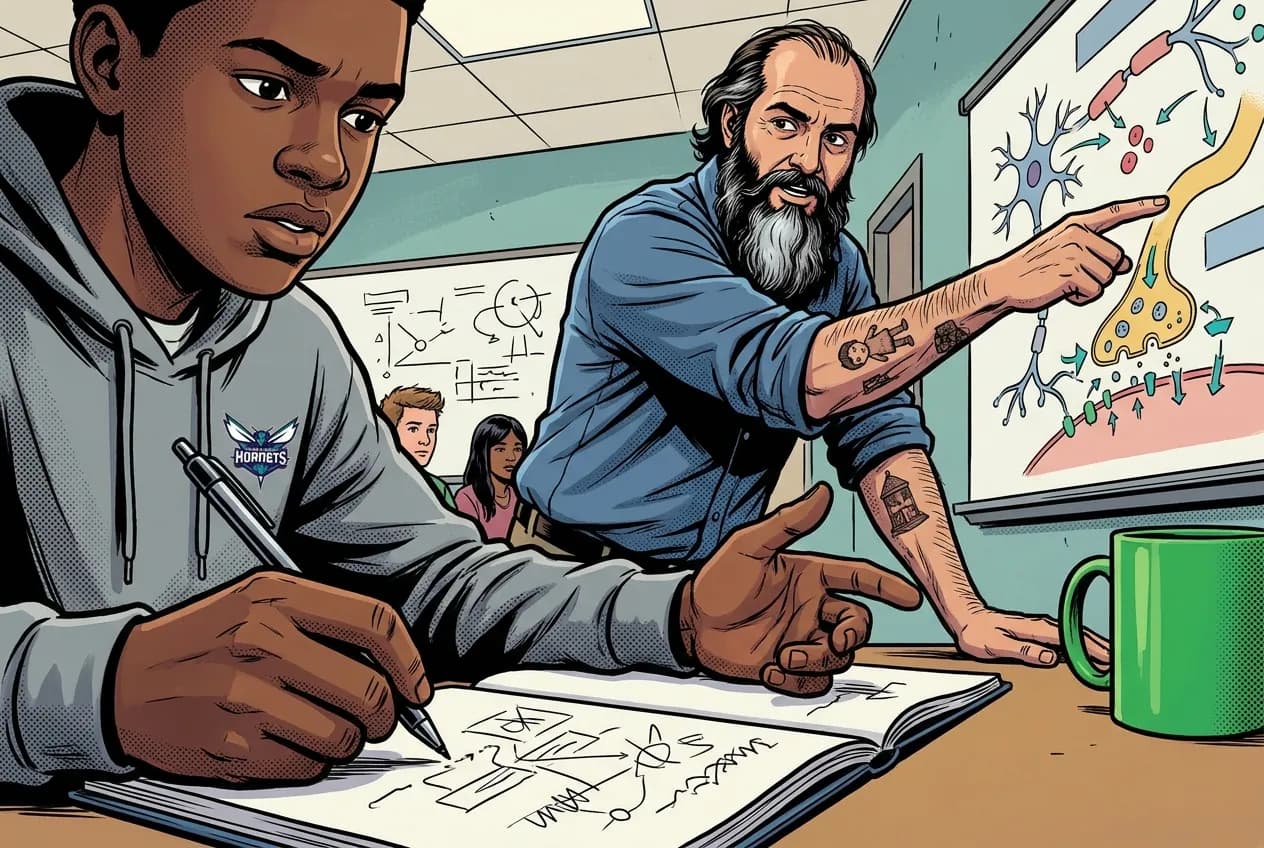
Bar graph of baseline against distraction, with error noted, then a CER about what it means for signaling.
ME
I did not feel any slower. The stopwatch says I was.
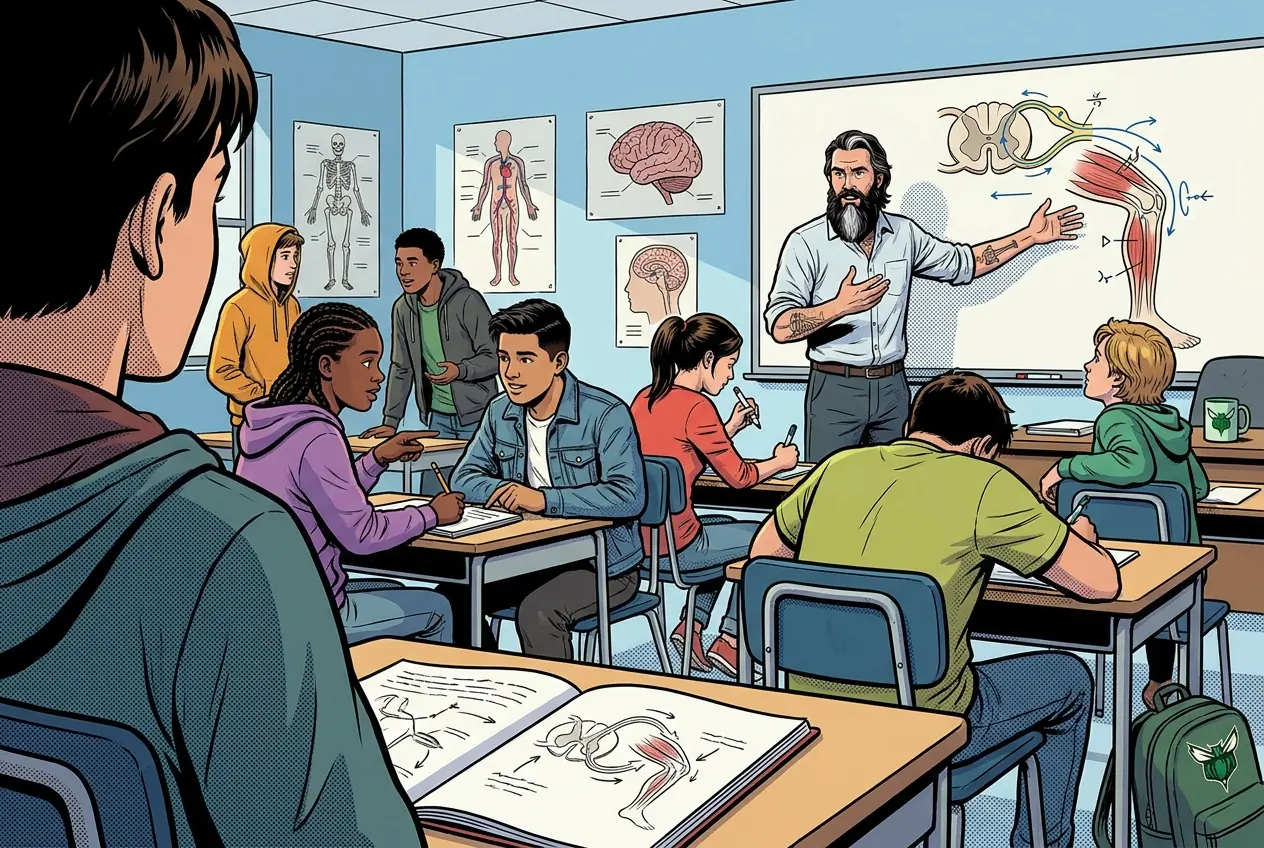
Reflex arc diagram, reaction time table, comparison graph, CER.

Chess on Thursday. I am still losing, but I lost slower this time. Somebody watching pointed out that I only look at my own plan and never at what my opponent is setting up.
Week 10
MARCH 22 TO APRIL 5
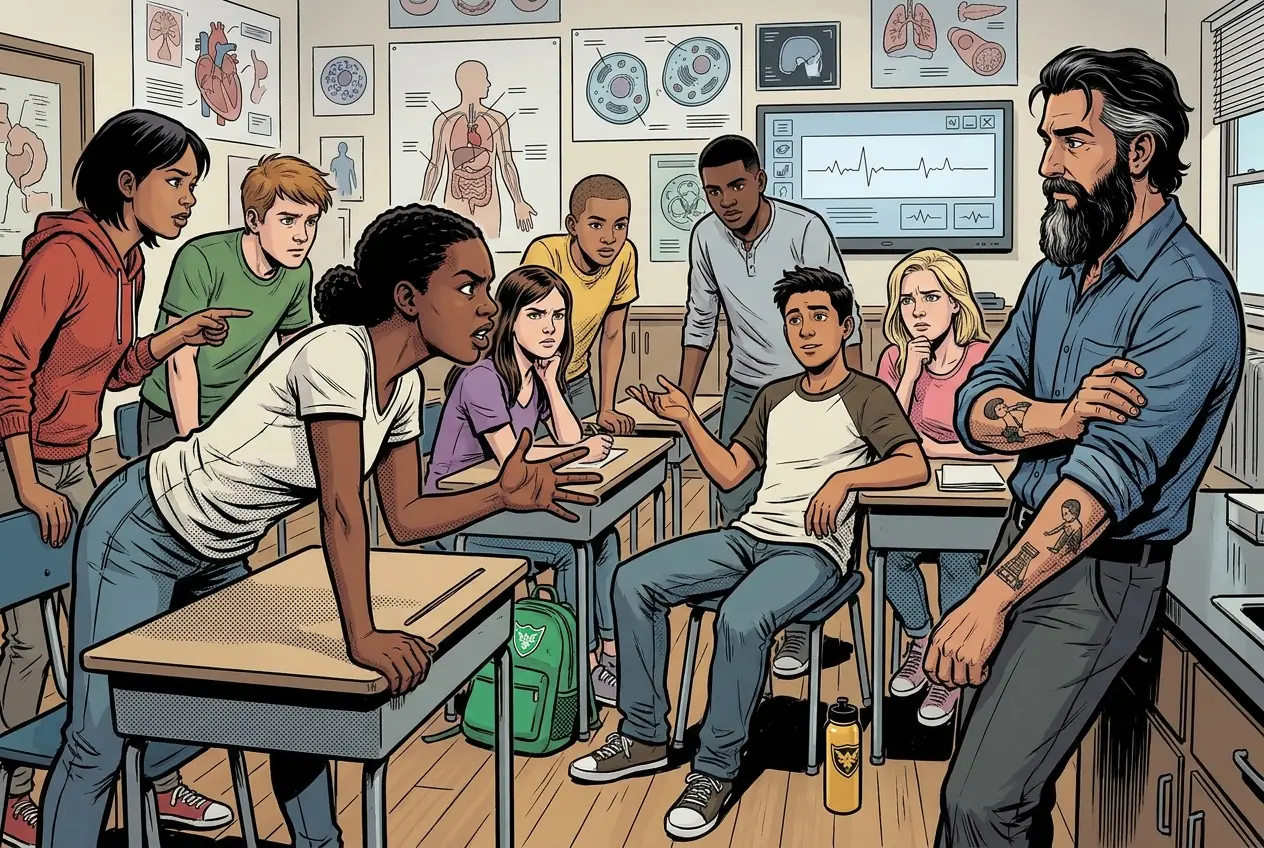
Whether a minor can consent to hormone therapy. This was the most careful the room has ever been, and Mr.

Four glands minimum on a body diagram with the hormone each releases. The endocrine system is the slow control system, chemical instead of electrical, and it reaches everywhere the blood does.
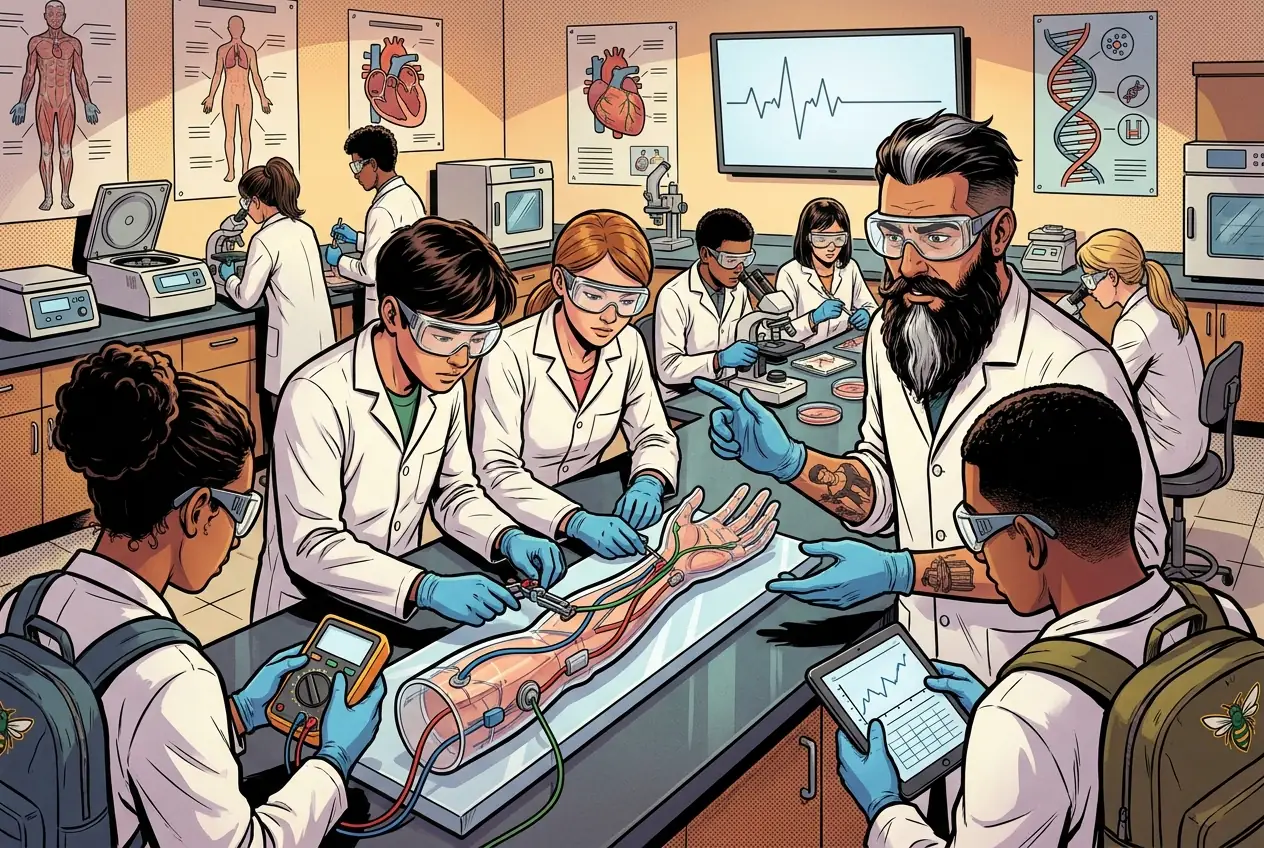
Insulin and glucagon, both directions. Blood sugar too high, insulin brings it down. Too low, glucagon brings it up. Two opposing loops holding one number steady.
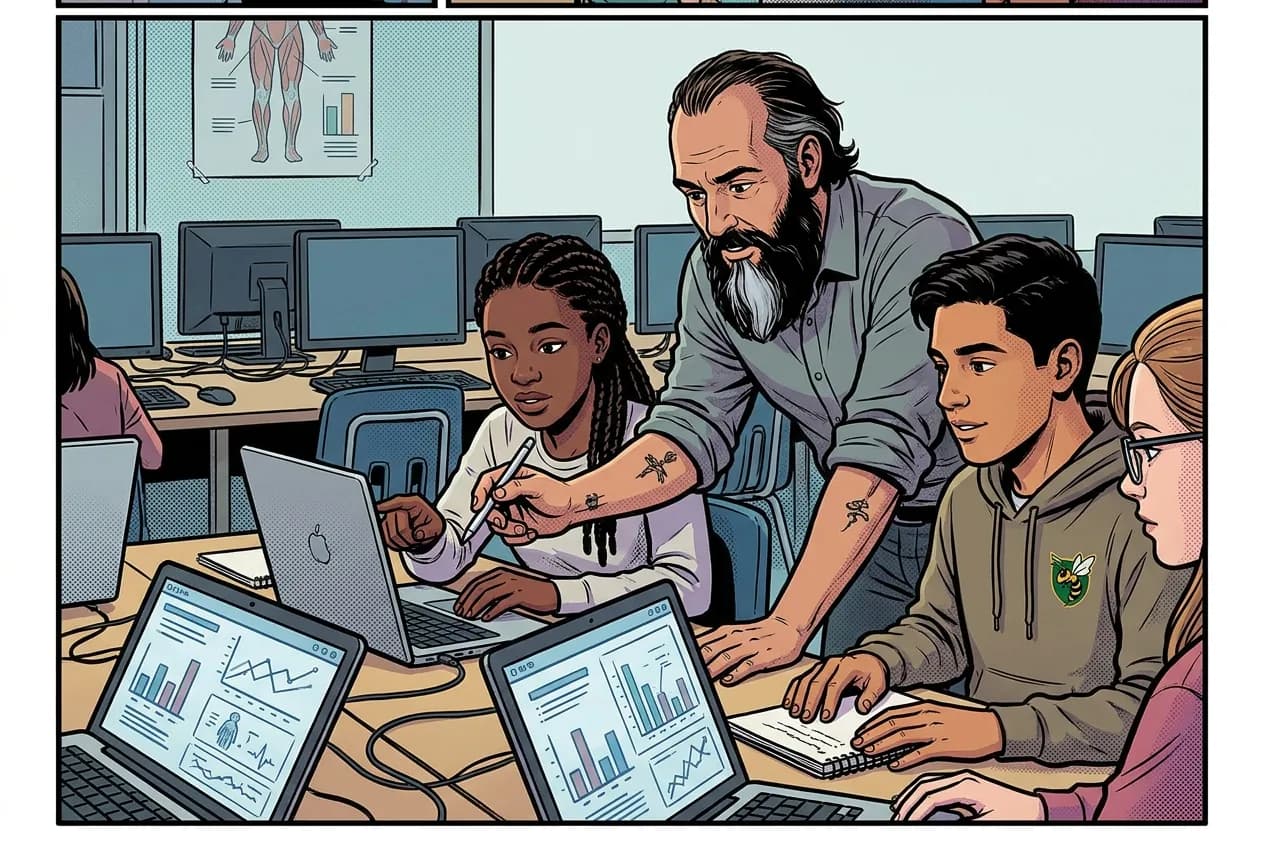
Real blood glucose graph data, and a CER claiming whether homeostasis is being maintained. The answer is not in any single reading, it is in whether the value returns to range and how fast.
Sunday packet. The tracker caught a lab report I thought I had uploaded and had not.
Week 11
APRIL 6 TO 12

Using C. elegans, a roundworm about a millimetre long, in research. Does a simpler nervous system change the ethics, and where exactly is the line?
Independent, dependent, controlled, labeled on a sample experiment. I have half known this since middle school and never had to be precise about it.
Teams writing an actual research design: testable question, defined variables, target sample size.
CLASSMATE
Our sample size is optimistic. This paper used four times as many.
Find a credible source, name one strength and one weakness of our design against it. Reading a real paper is hard.
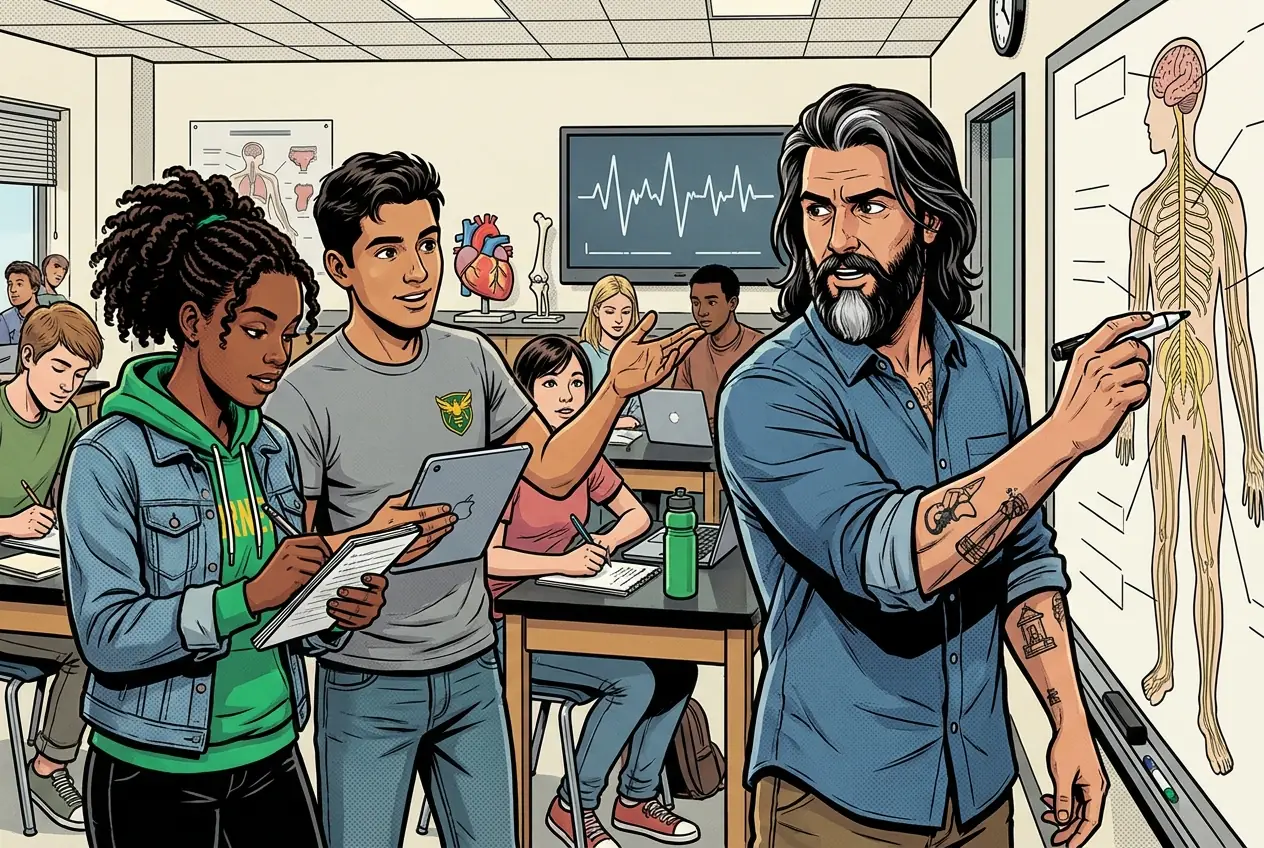
Sunday packet. I have started doing the audit before the work instead of after, which takes ten minutes and saves an argument.
Week 12
APRIL 13 TO 16
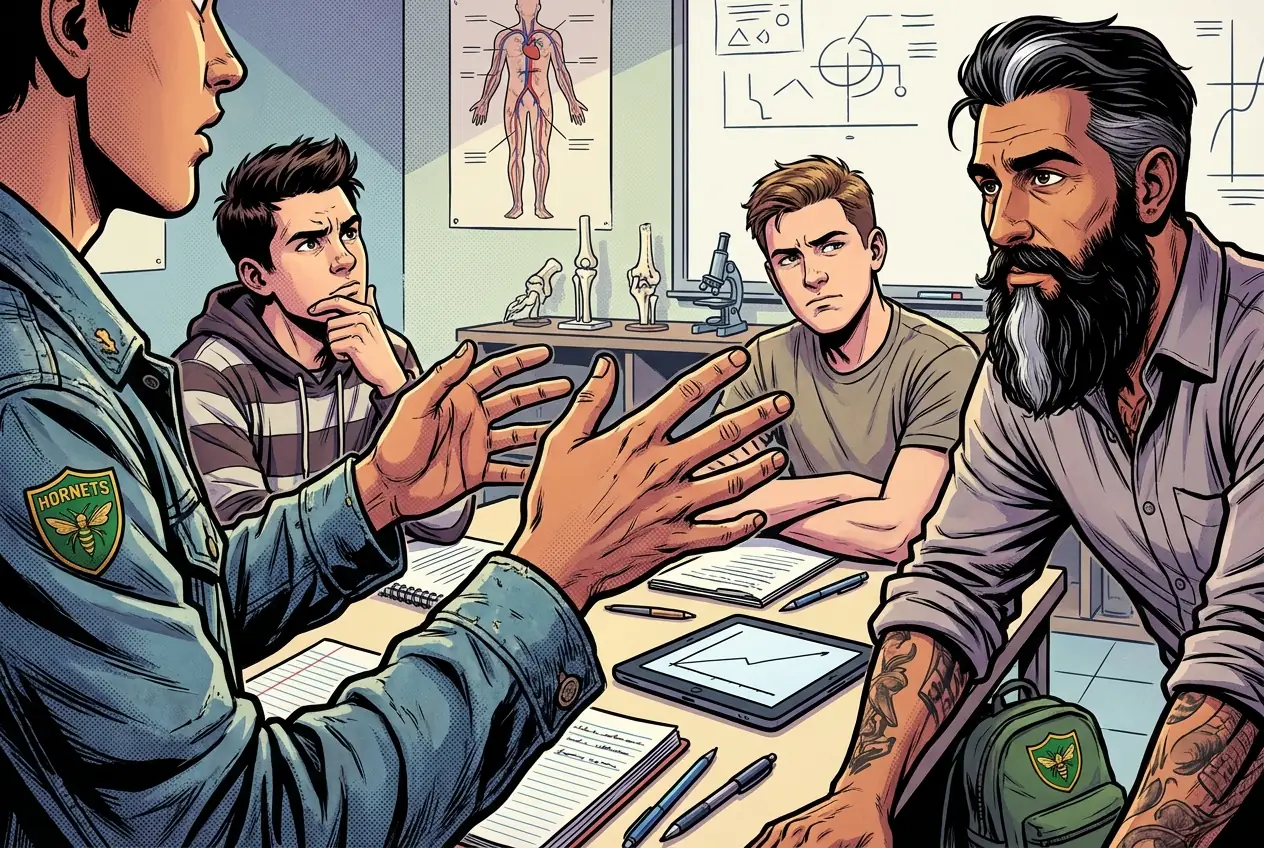
Who is responsible when a community is exposed to heavy metals? The company, the regulator, or the system that let both fail slowly enough that nobody had to decide.
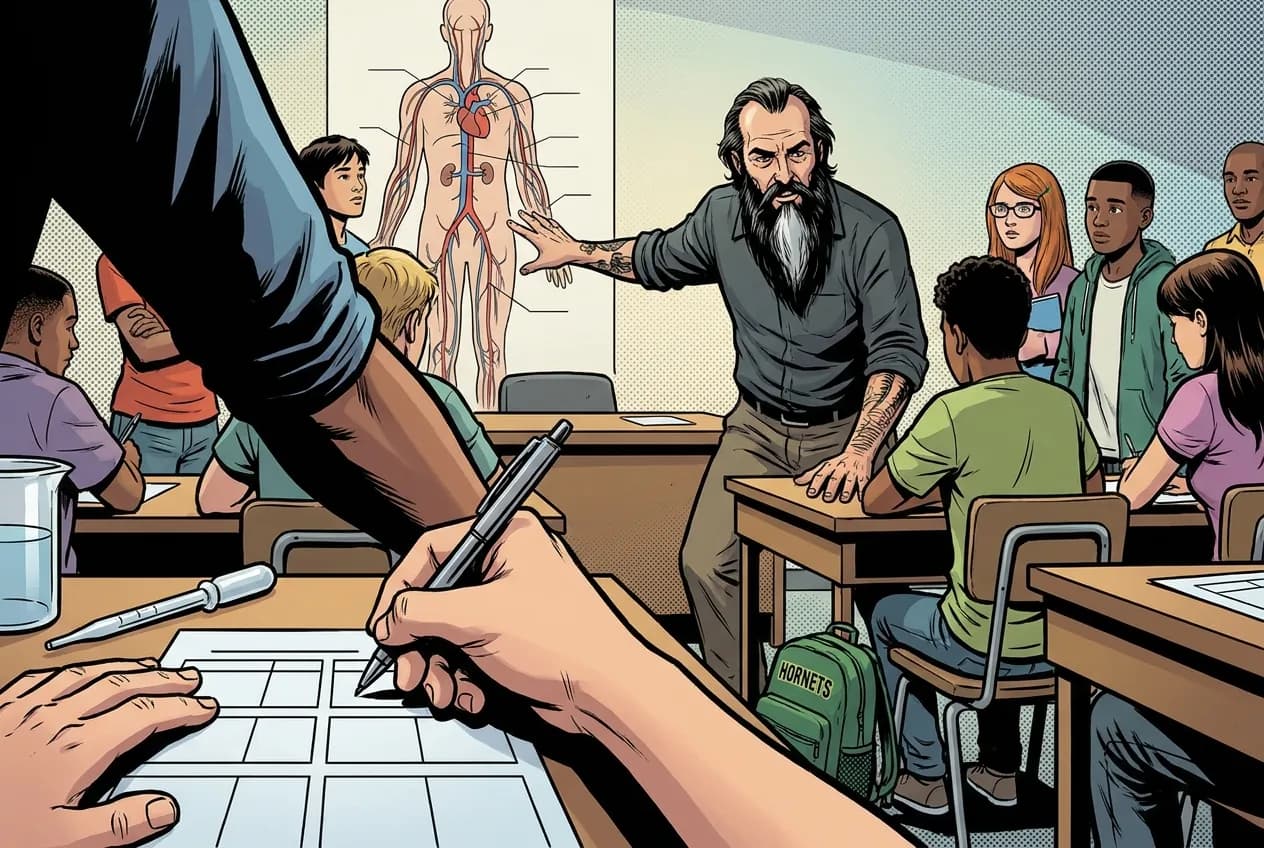
If-then hypothesis, full materials list, step by step procedure. Written so somebody else could run it without asking us a single question, which is the actual test of a protocol.
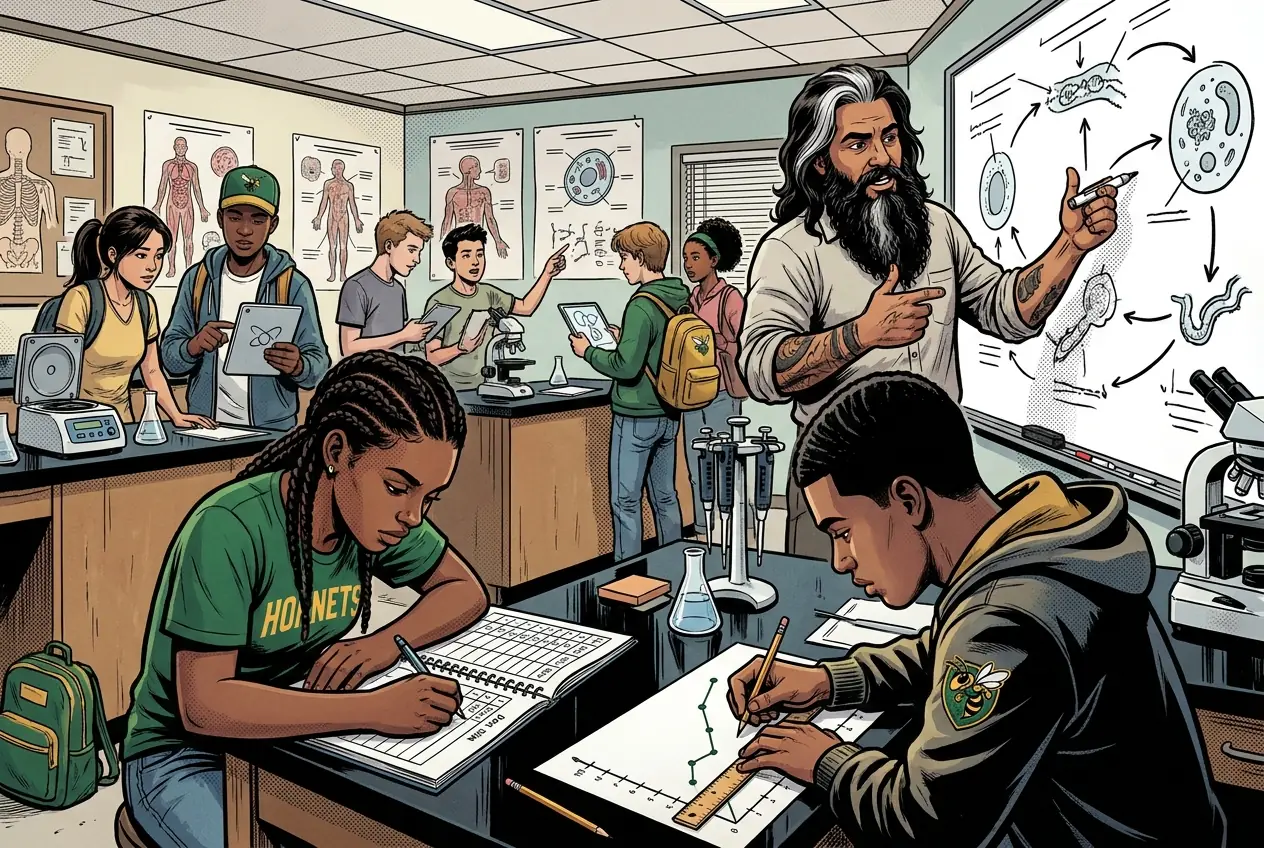
Our own design, our own protocol, multiple treatment concentrations. This is the first time all semester the experiment was ours rather than handed to us.
TEAMMATE
We ran that concentration second to last. It had been sitting. Time was a variable and we never controlled it.
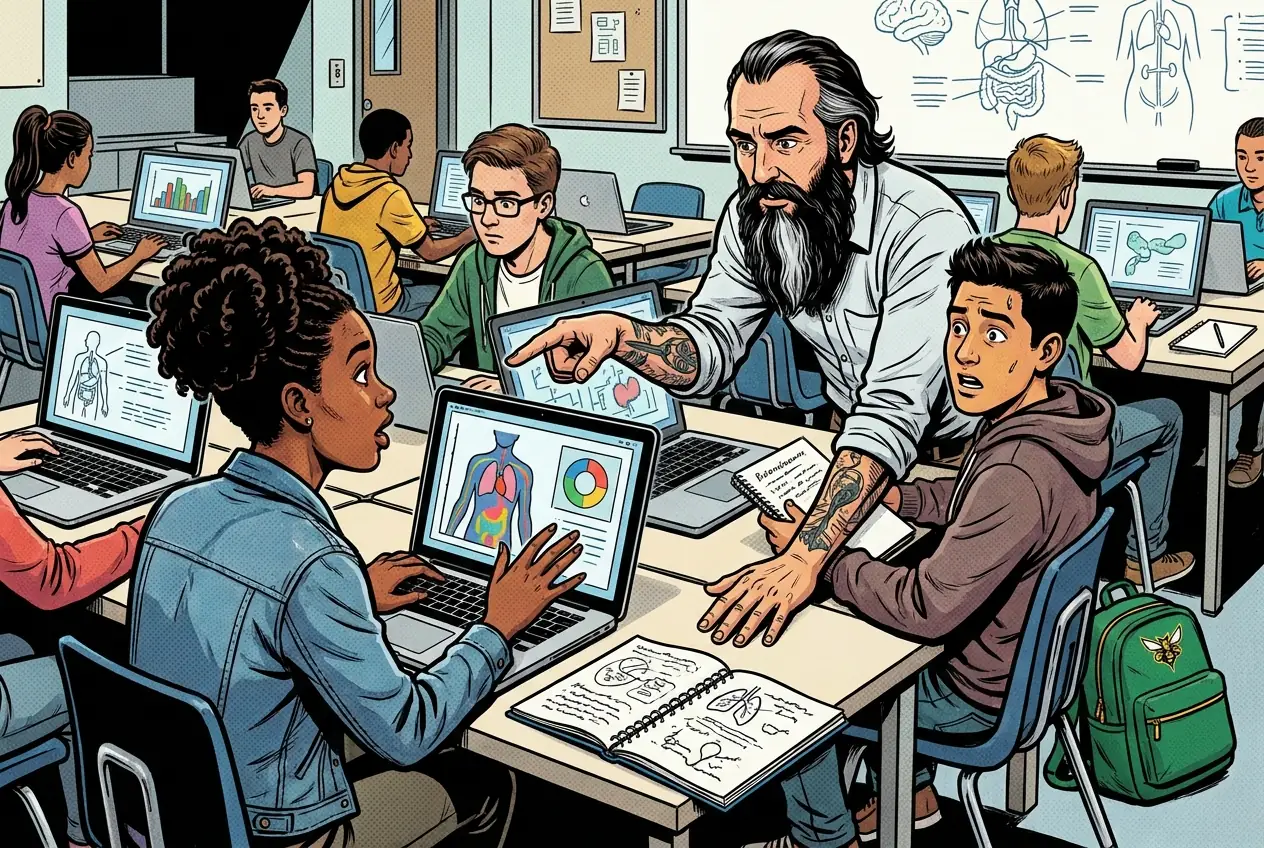
Dose response claim, two specific data points as evidence, and a limitations section that had to name the timing problem honestly.
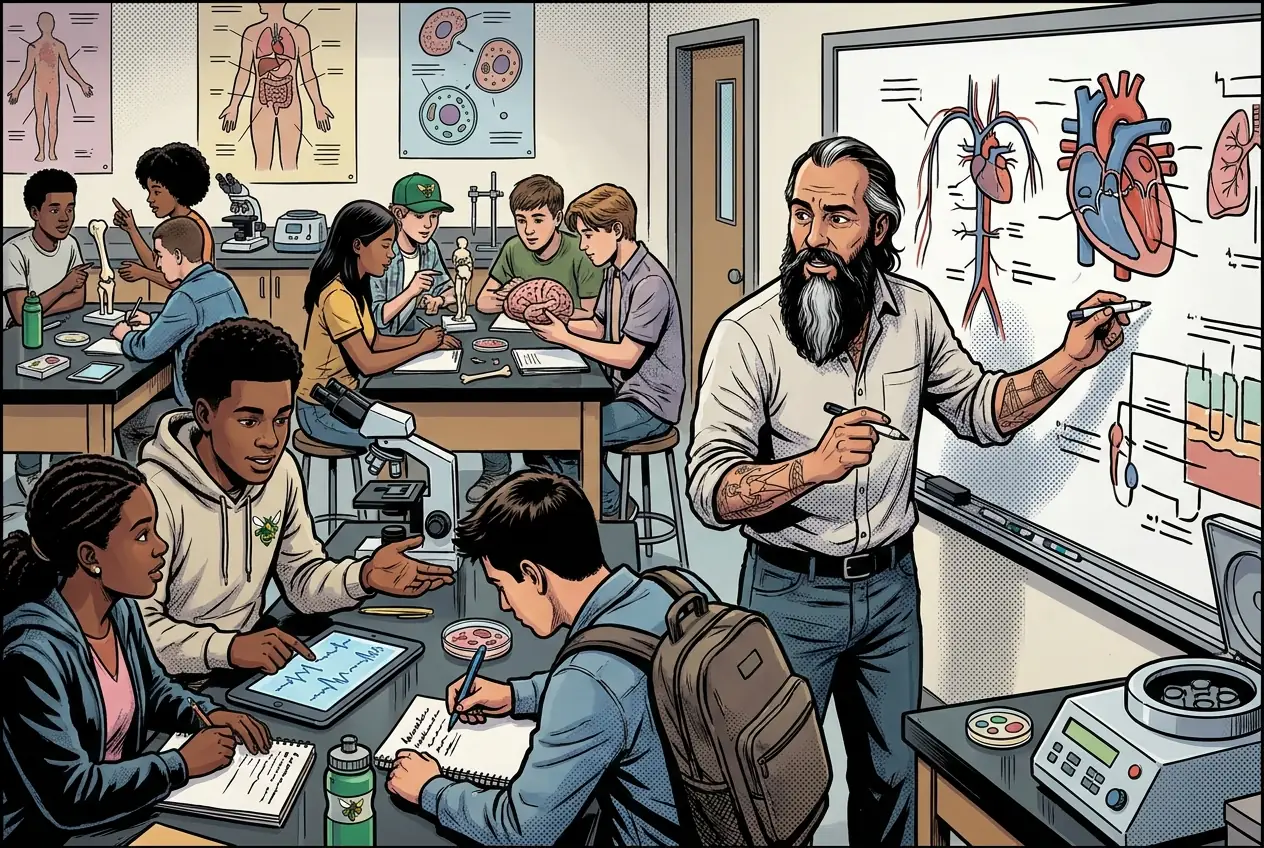
Sunday packet. Two things missing, both from the week I was out. Making them up is on me, not on him to remind me.
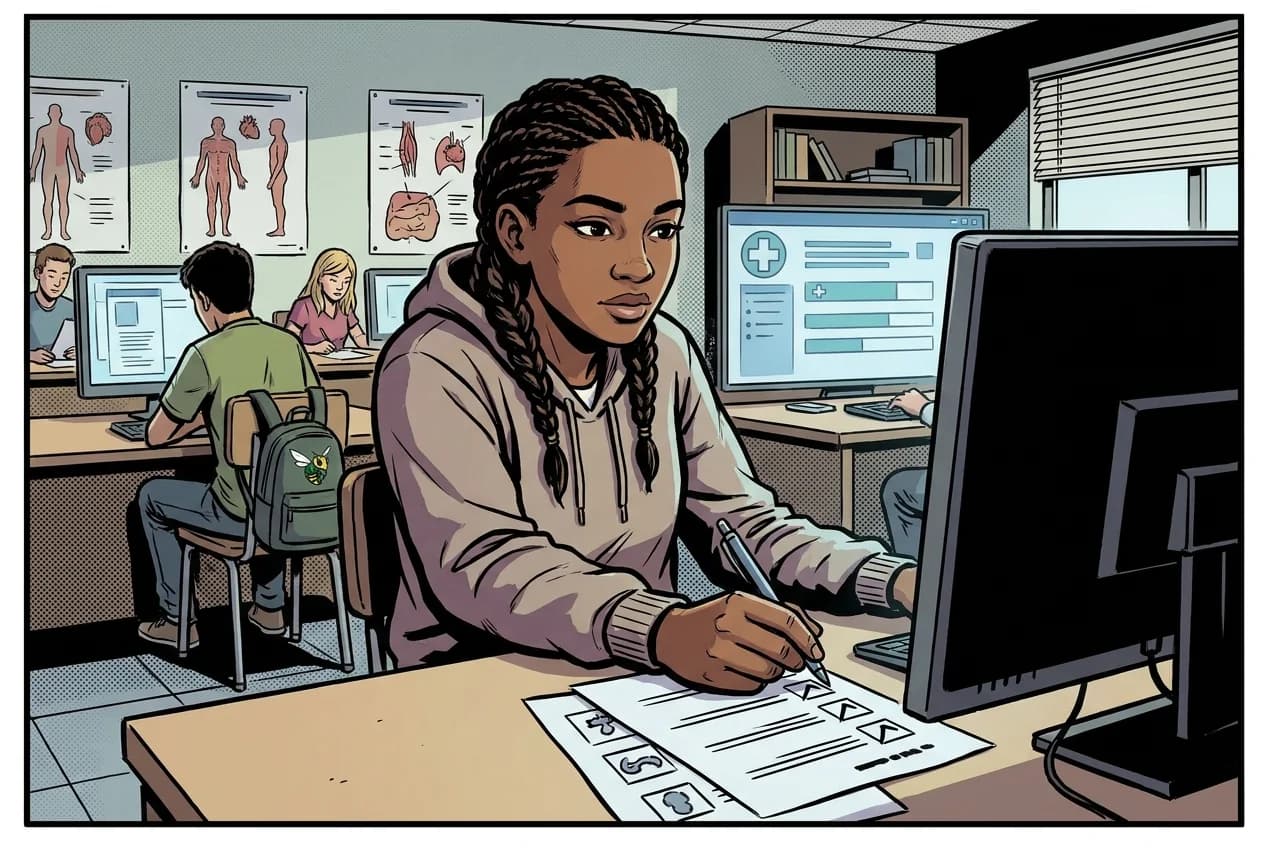
My Clinic onboarding cleared. Background check, modules, health requirements, all signed off. Eleven weeks from when I started, which is why he told us to begin in January.
ME
Eleven weeks of paperwork. In the spring I am in an actual hospital with an actual badge.
Week 13
APRIL 19 TO 22
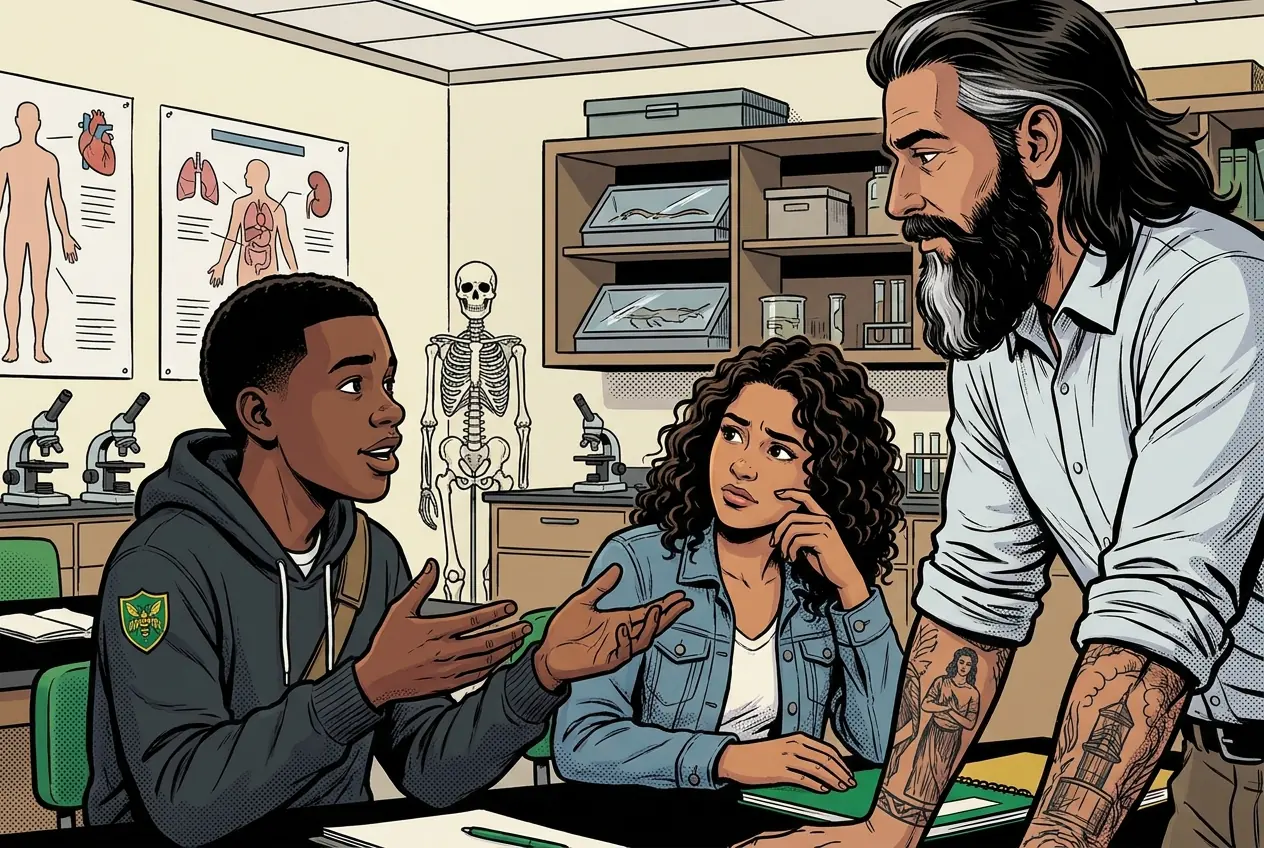
Rank the allocation criteria and defend the ranking in one sentence. Medical urgency, likelihood of success, time on the list, age.
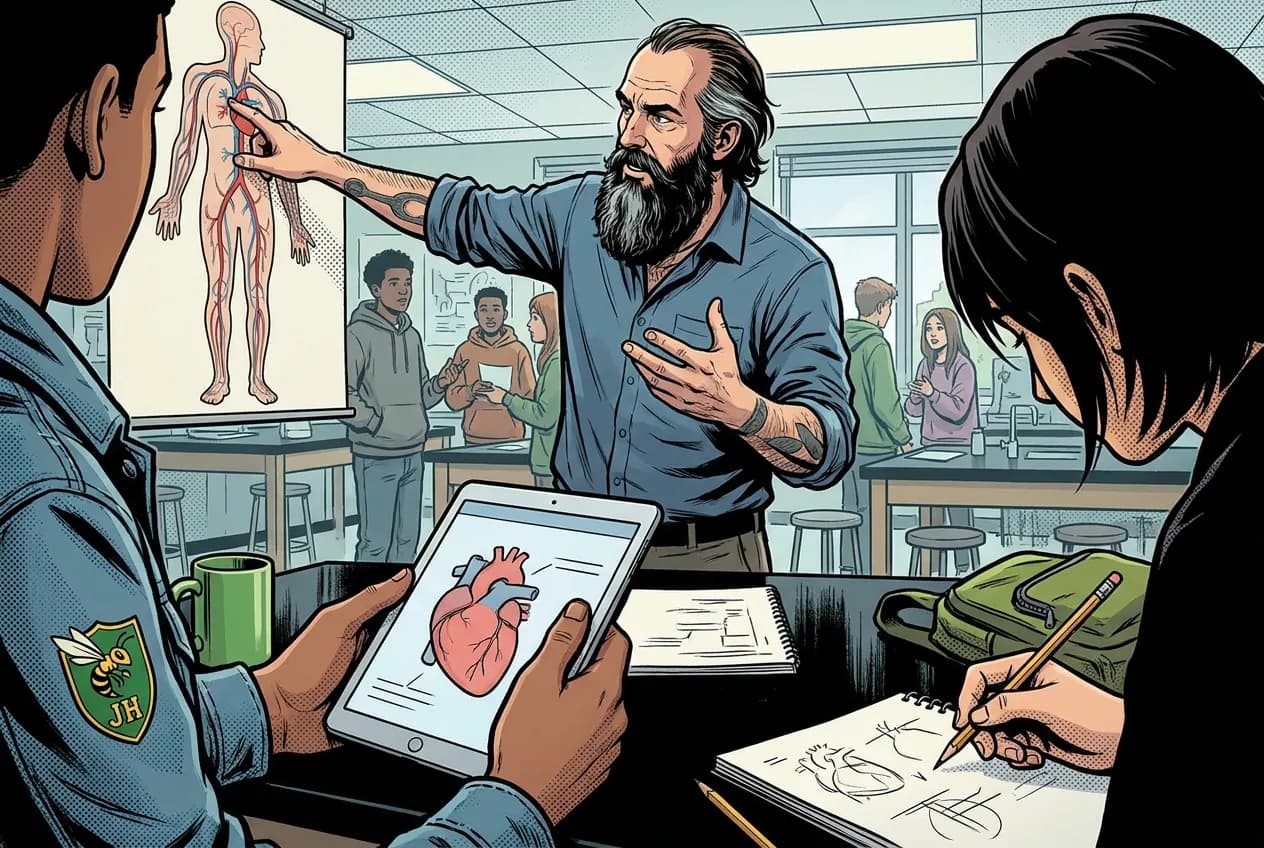
Tracing the blood path from the right atrium all the way through and back. Four chambers, two circuits, valves that only open one way.
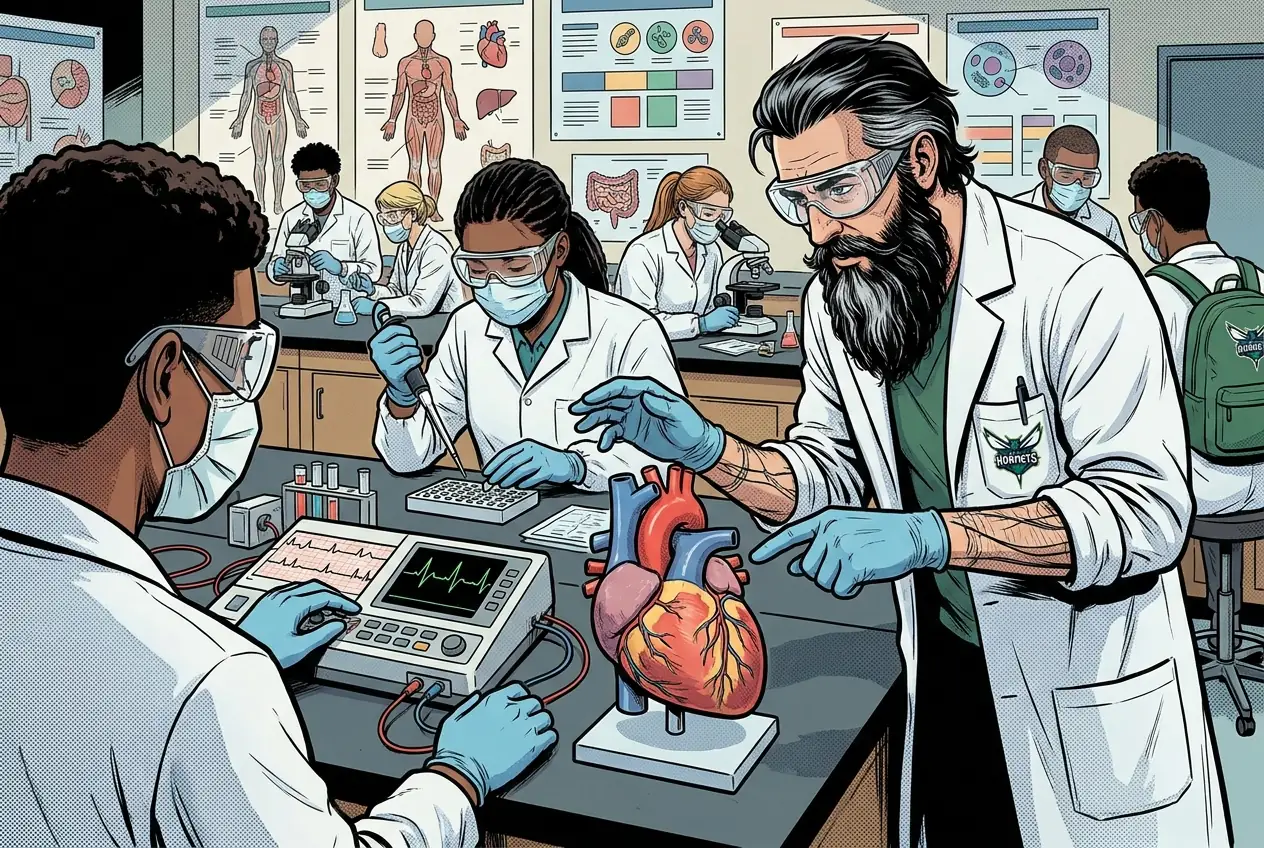
Real EKG traces, labeling P, QRS and T, and linking each to what the heart is physically doing at that instant.
ME
The right side goes to the lungs. The left side has to reach your foot. That is why the wall is thicker.

Comparing EKG and blood pressure data against normal reference ranges and arguing what it shows.
Sunday packet. First clean week. Nothing outstanding, and it took less time than the weeks I let pile up.
Week 14
APRIL 23 TO 28
The same shape as the transplant question and somehow heavier, because a ventilator decision happens in hours rather than months.
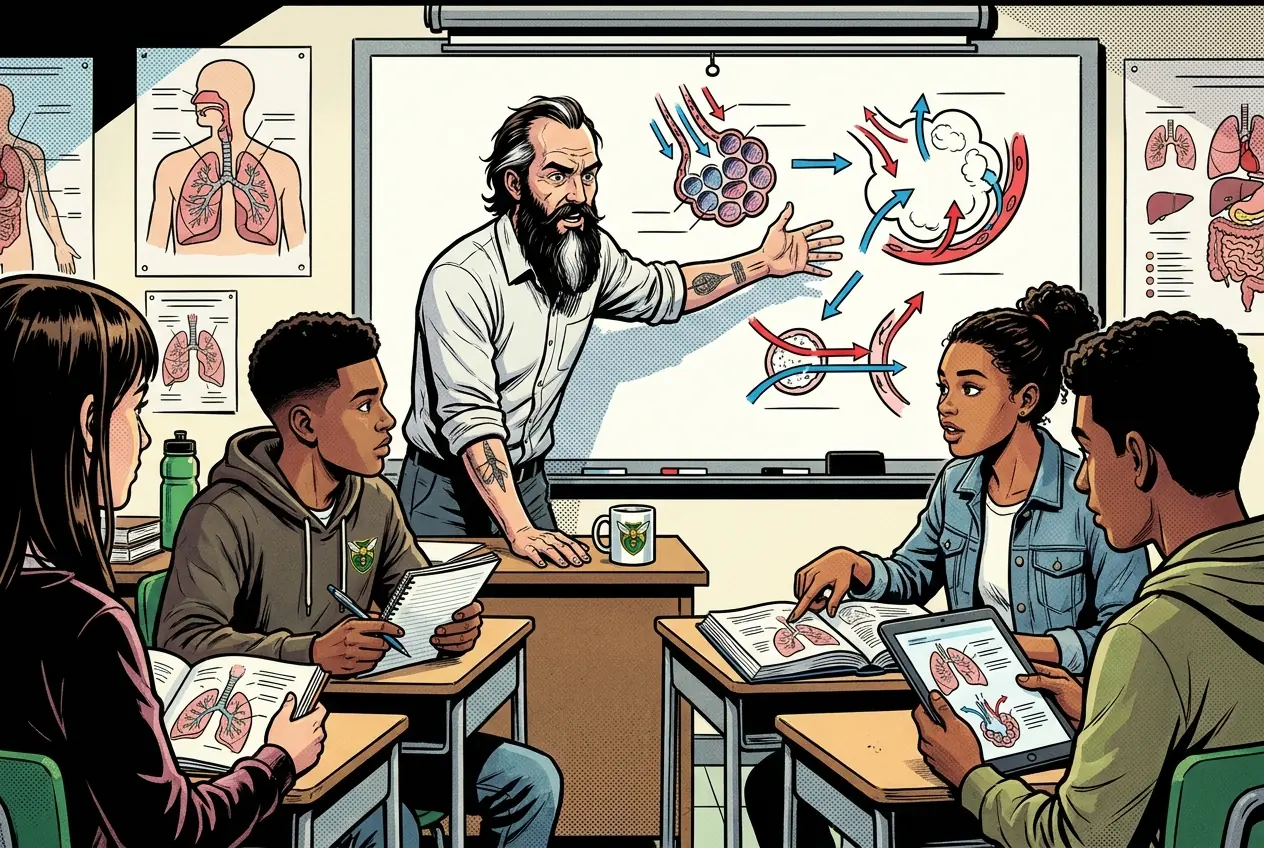
Oxygen in, carbon dioxide out, both moving by diffusion down their own gradients across a membrane about half a micrometer thick, two flattened cells and their shared basement membrane.
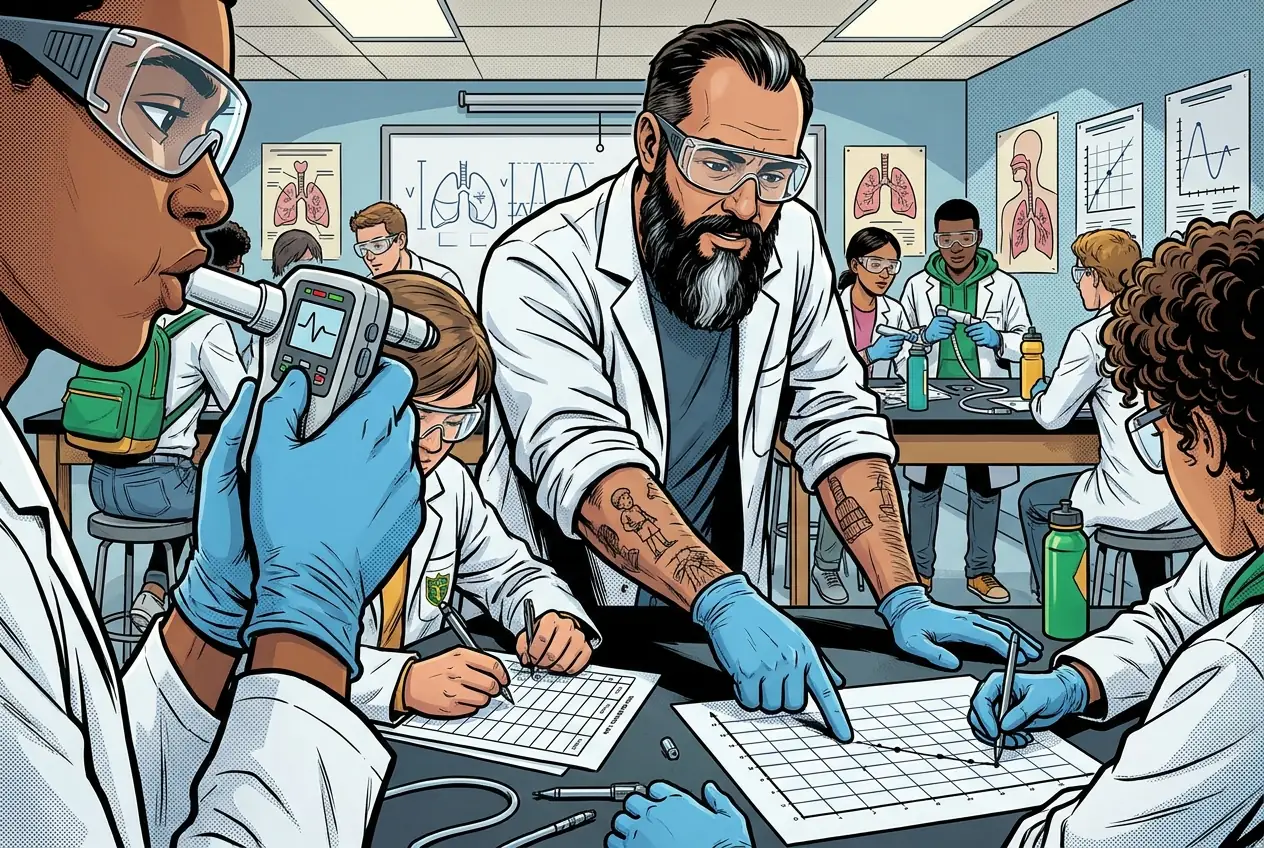
Measuring our own lung volumes. Tidal volume across three trials, then vital capacity.
ME
I did not fully exhale first. That is why trial one was low, not my lungs.
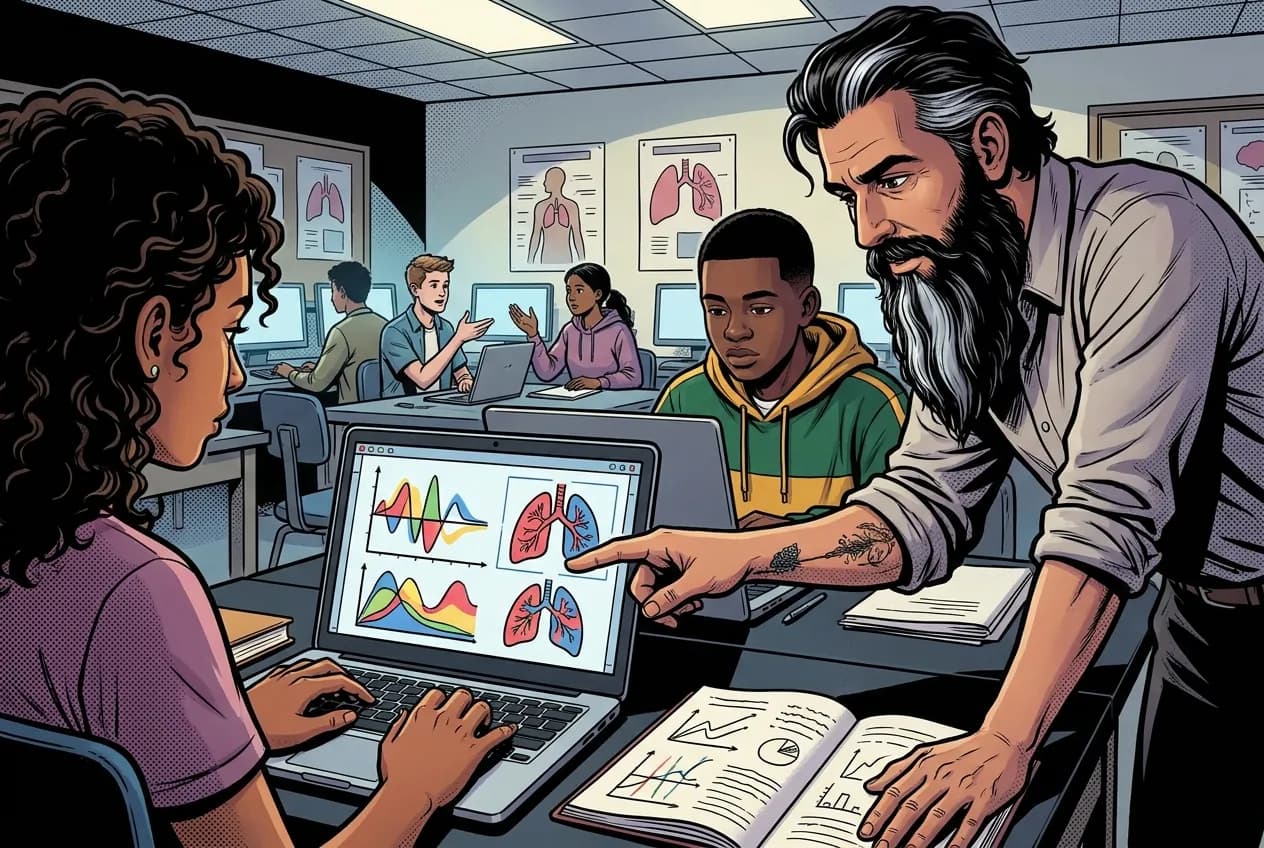
A claim about respiratory capacity using my own numbers, compared to predicted values for height and age.
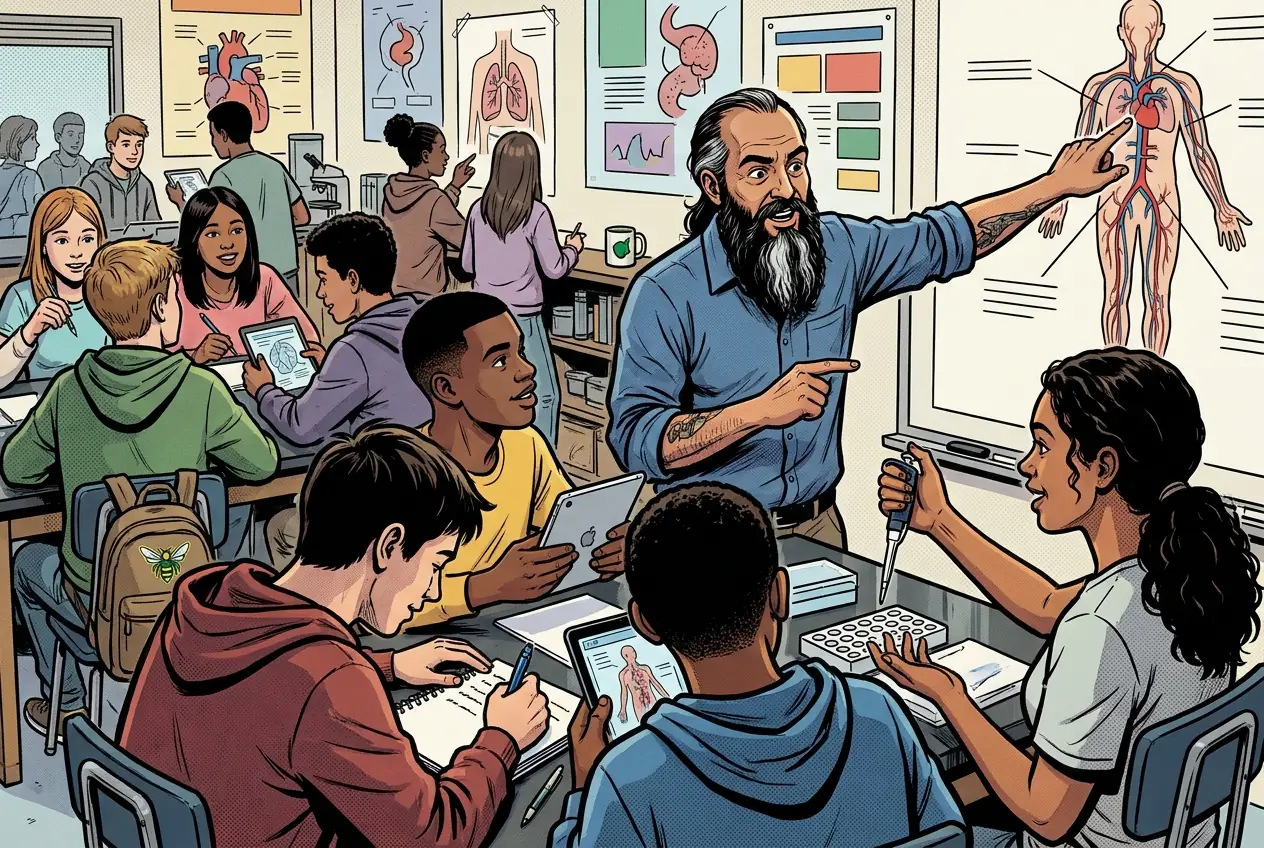
Sunday packet. The CER from Thursday needed a second pass. I had written the claim and called it done.
Week 15
APRIL 29 TO MAY 4

Position on vaccine mandates citing one scientific reason, which forced the argument onto ground we could actually check. Herd immunity thresholds are a number, not an opinion.
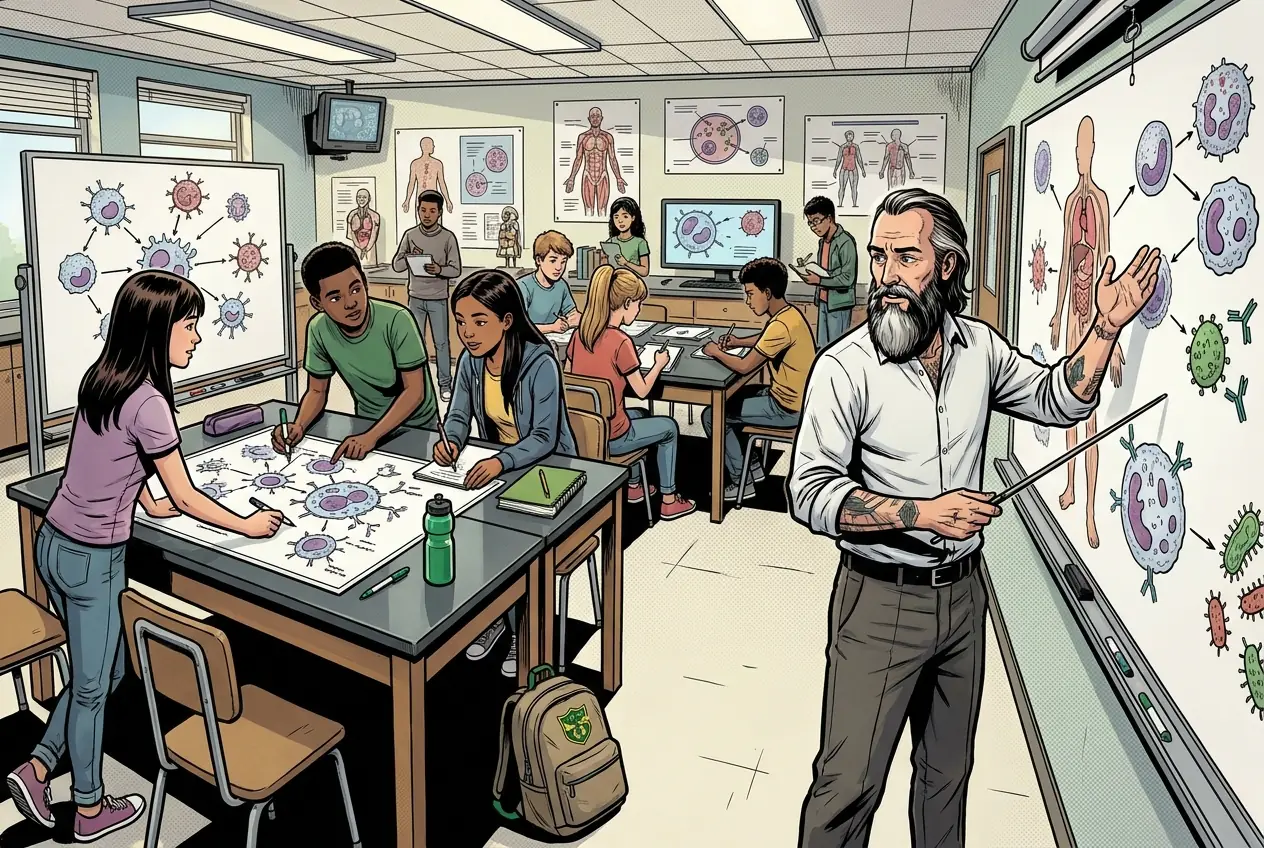
Innate is fast and general, adaptive is slow and specific and remembers. Then the lymphatic system, nodes and vessels labeled.
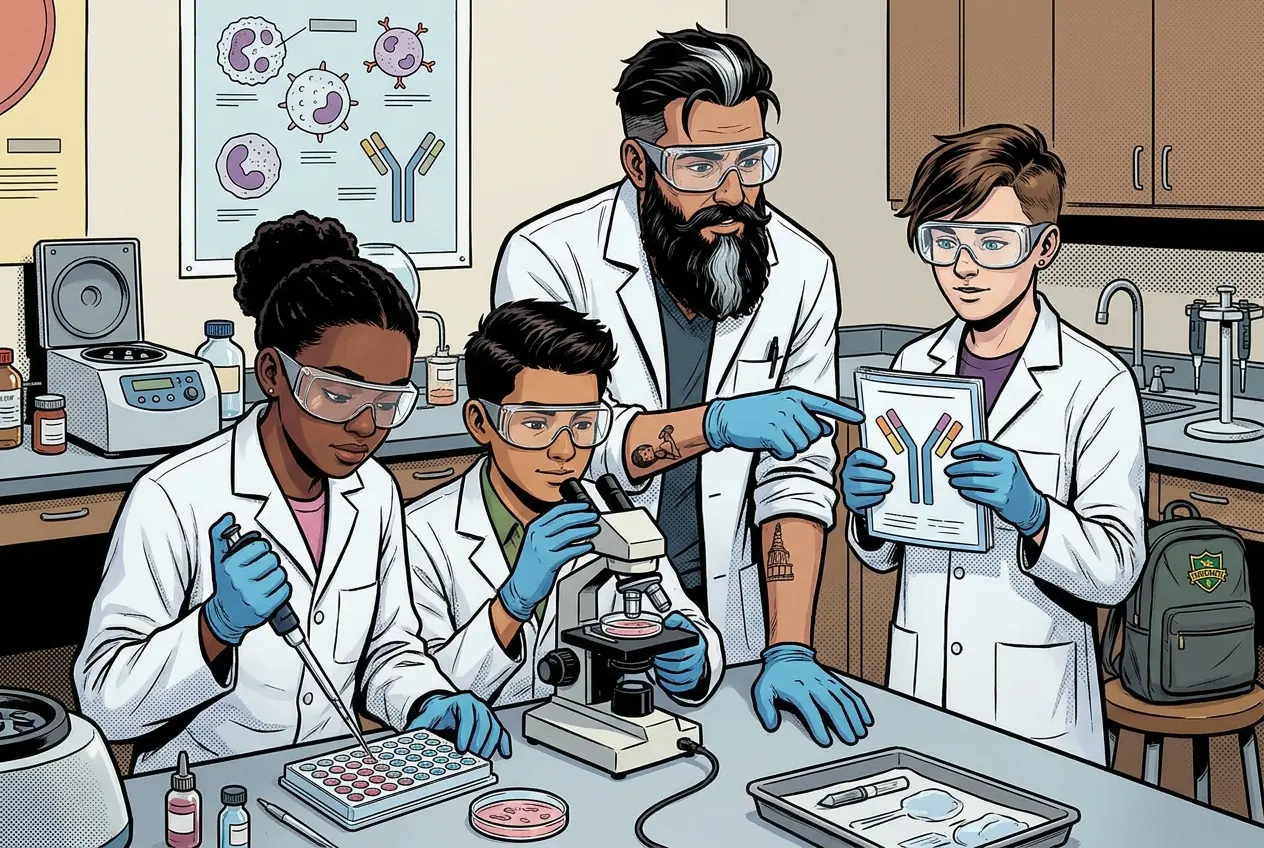
The lab that moved. Comparing the primary and secondary immune response, with the timing and magnitude difference drawn out.

Antibody graph, and a CER about how vaccination produces protection without the illness.
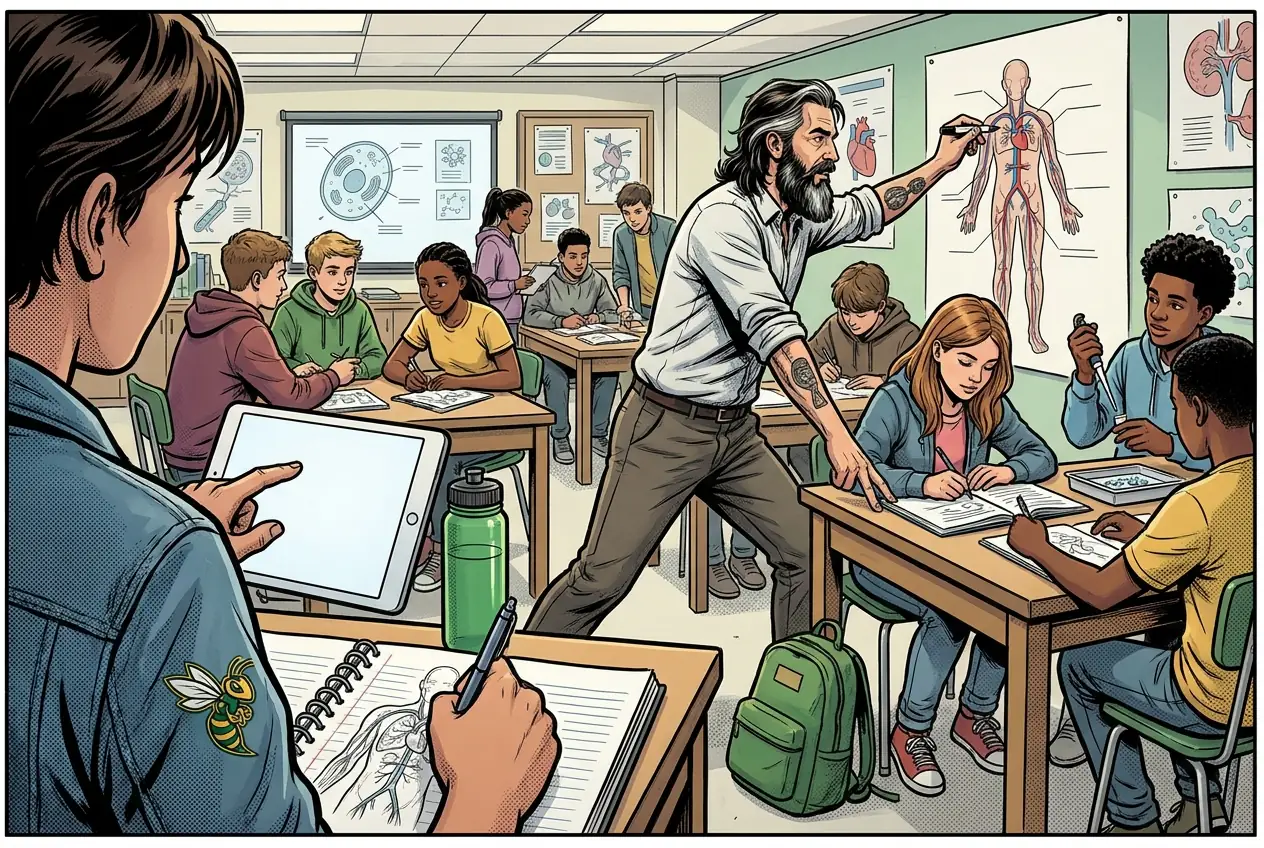
Sunday packet plus WebXam practice. The practice section is starting to feel less like a chore and more like a score I can move.
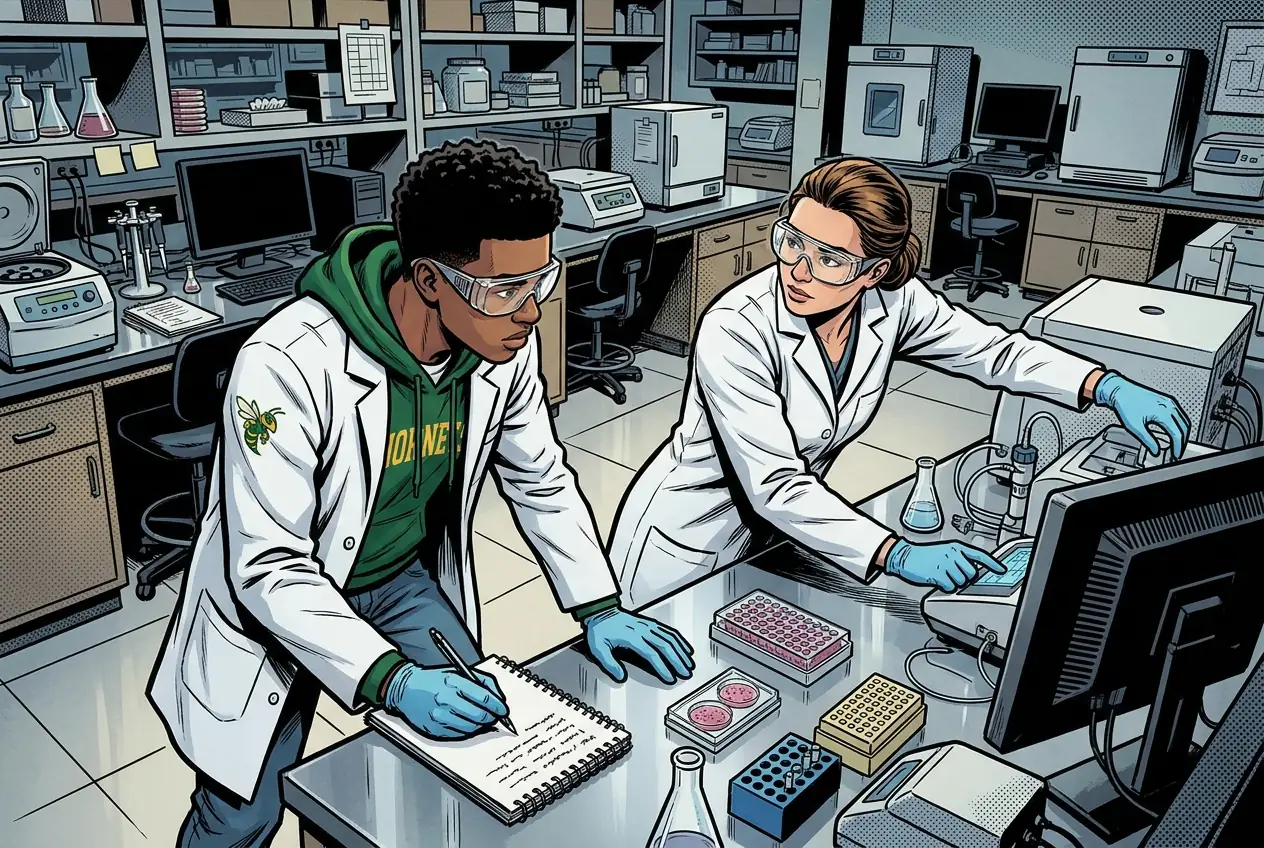
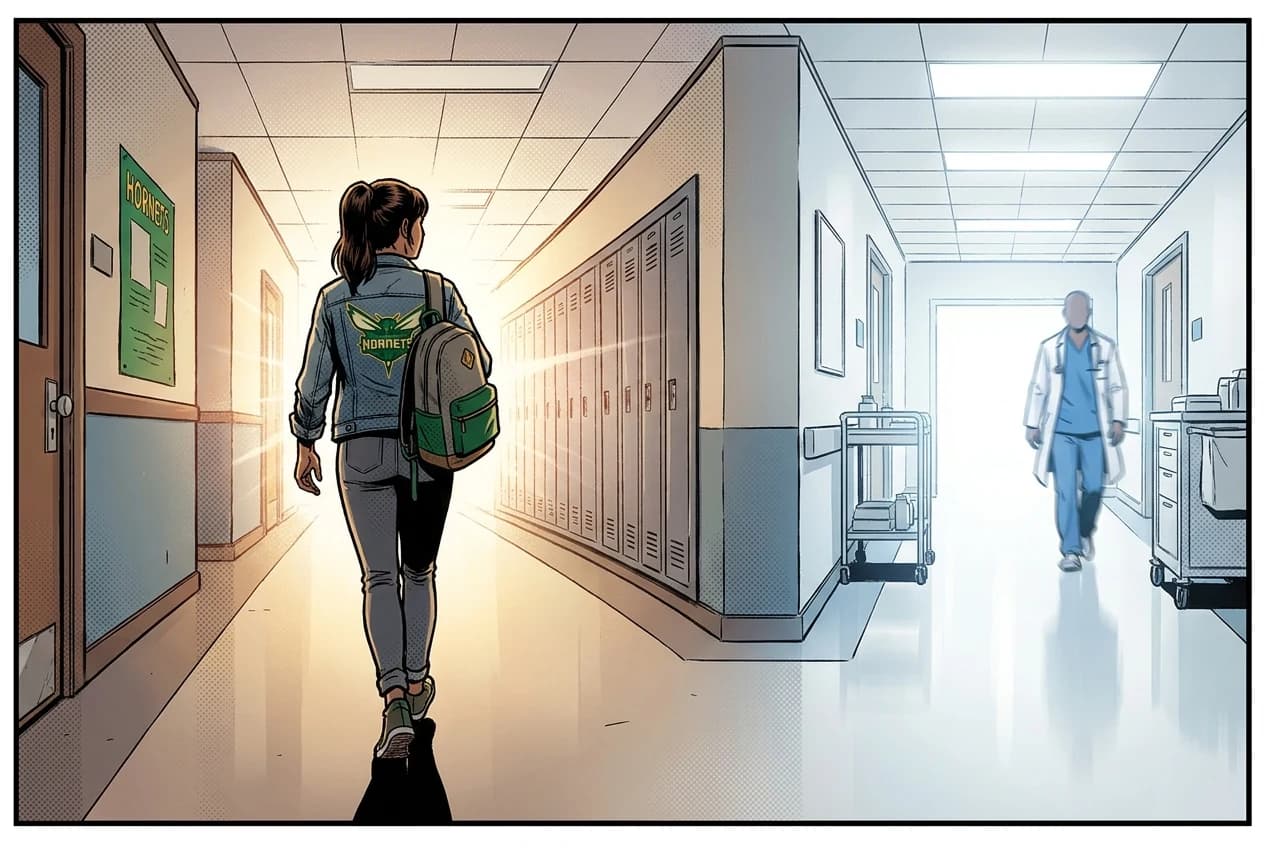
I did the optional research extra credit on Saturday. A university lab hosted a few of us and a graduate researcher walked us through her actual project.
RESEARCHER
Most of my week is troubleshooting and rerunning things that did not work.
Week 16
MAY 5 TO 10
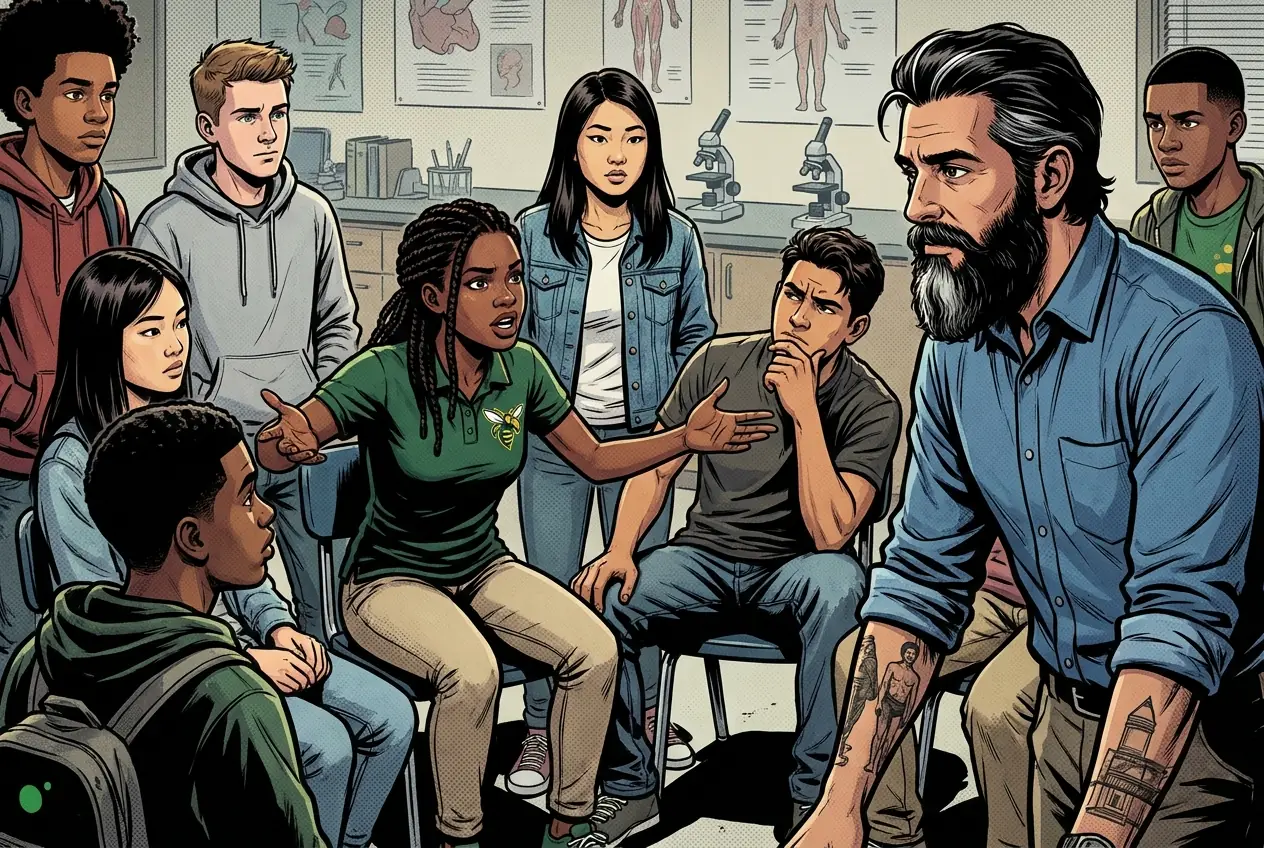
Who is responsible for rescue when someone knowingly enters an extreme environment? Altitude, deep water, remote cold.

Viral replication cycle with the points where an antiviral can intervene. You cannot design a drug without knowing which step you are trying to block.
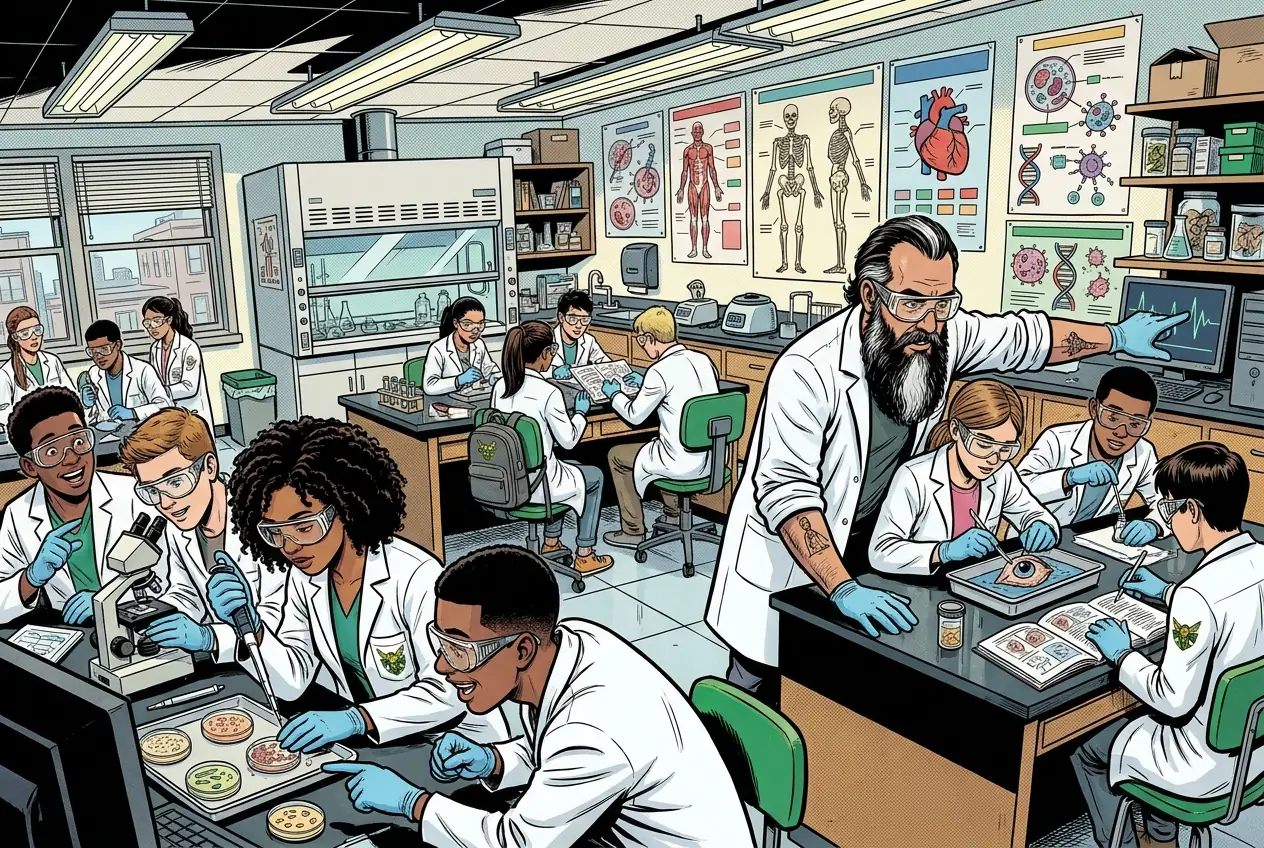
Two labs in one block, and he was blunt that the plaque assay is a simulation.
MR. MENDOZA
Nothing on this bench is infectious. If it were, everything we just practiced would be the difference between a lab and an outbreak.

Antiviral data. The claim was easy. Finding evidence that survived a second look at the error bars was not.
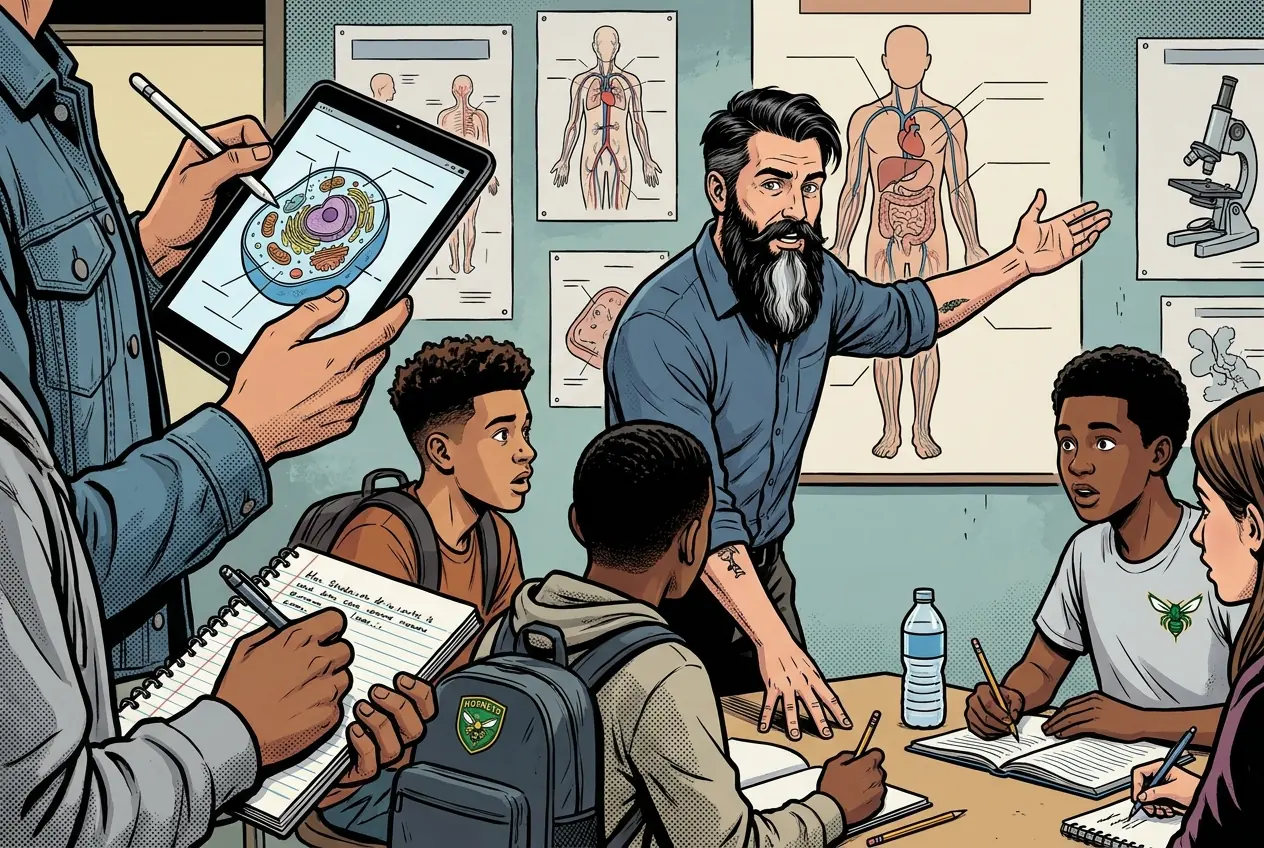
Sunday packet. Eleven weeks in, the folder names are automatic now. I do not think about where anything goes.
Week 17
MAY 11 TO 14
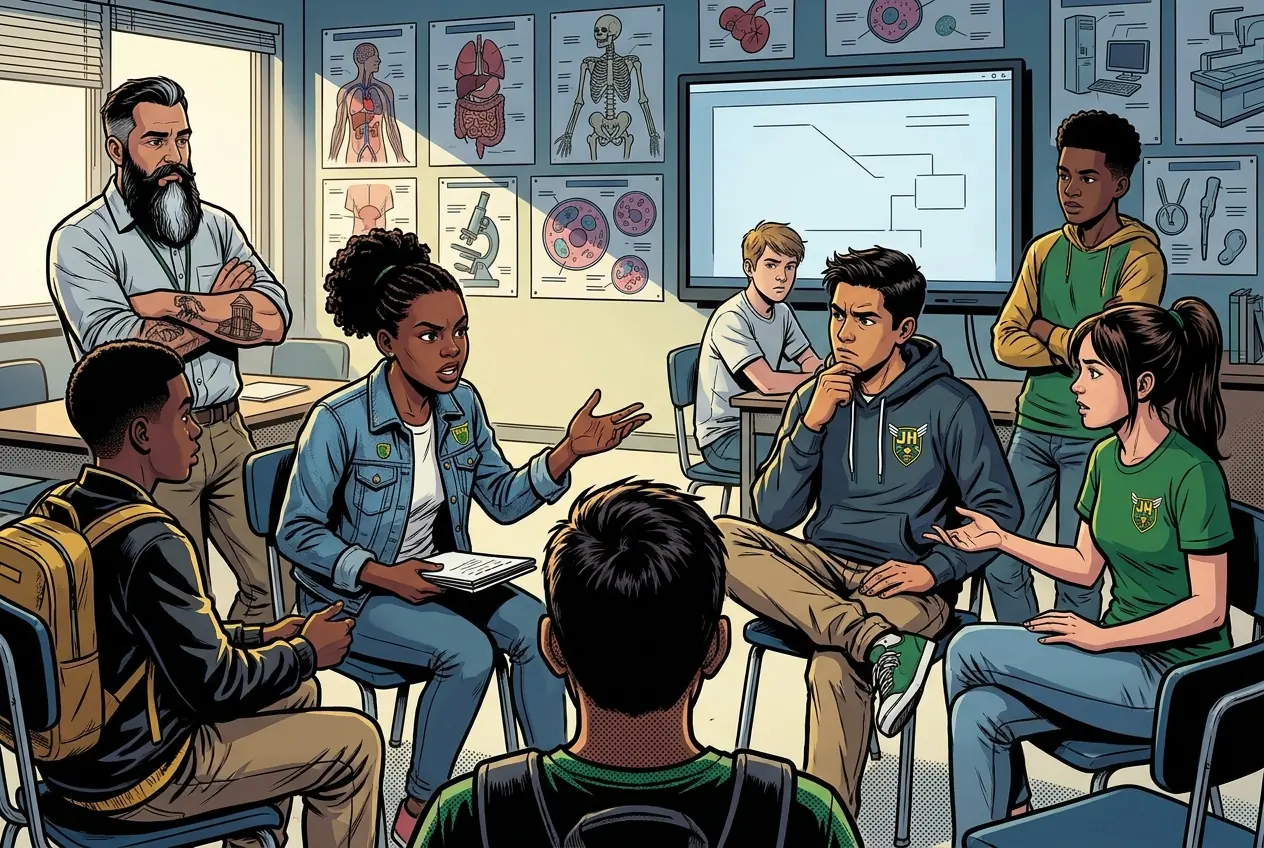
The last Monday, and it is the allocation question one more time, now about kidneys. Third time this semester we have argued about who gets a scarce thing.
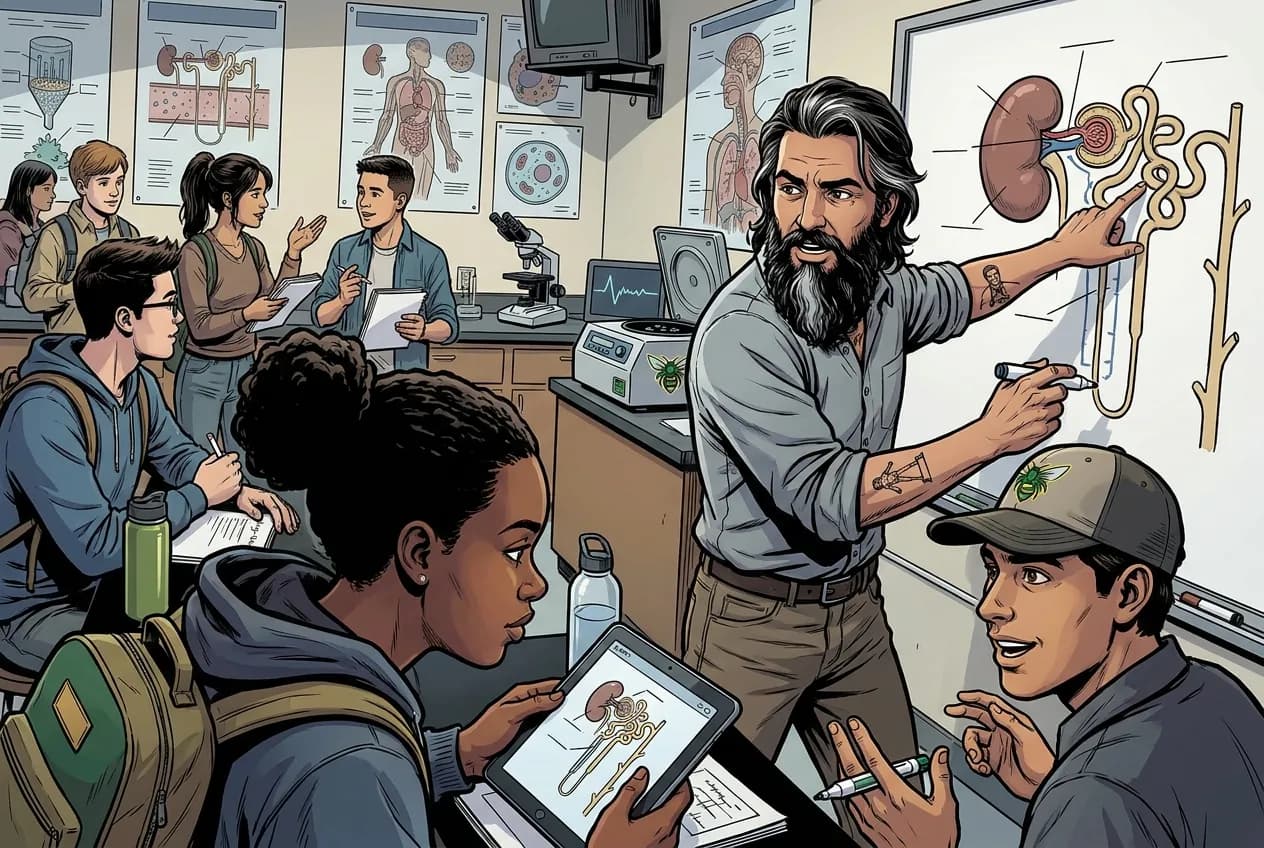
The nephron in order: filtration, reabsorption, secretion, excretion. The kidney filters almost everything out and then deliberately takes most of it back.
MR. MENDOZA
Filter everything and reclaim what you want. It is easier than removing only what you do not.
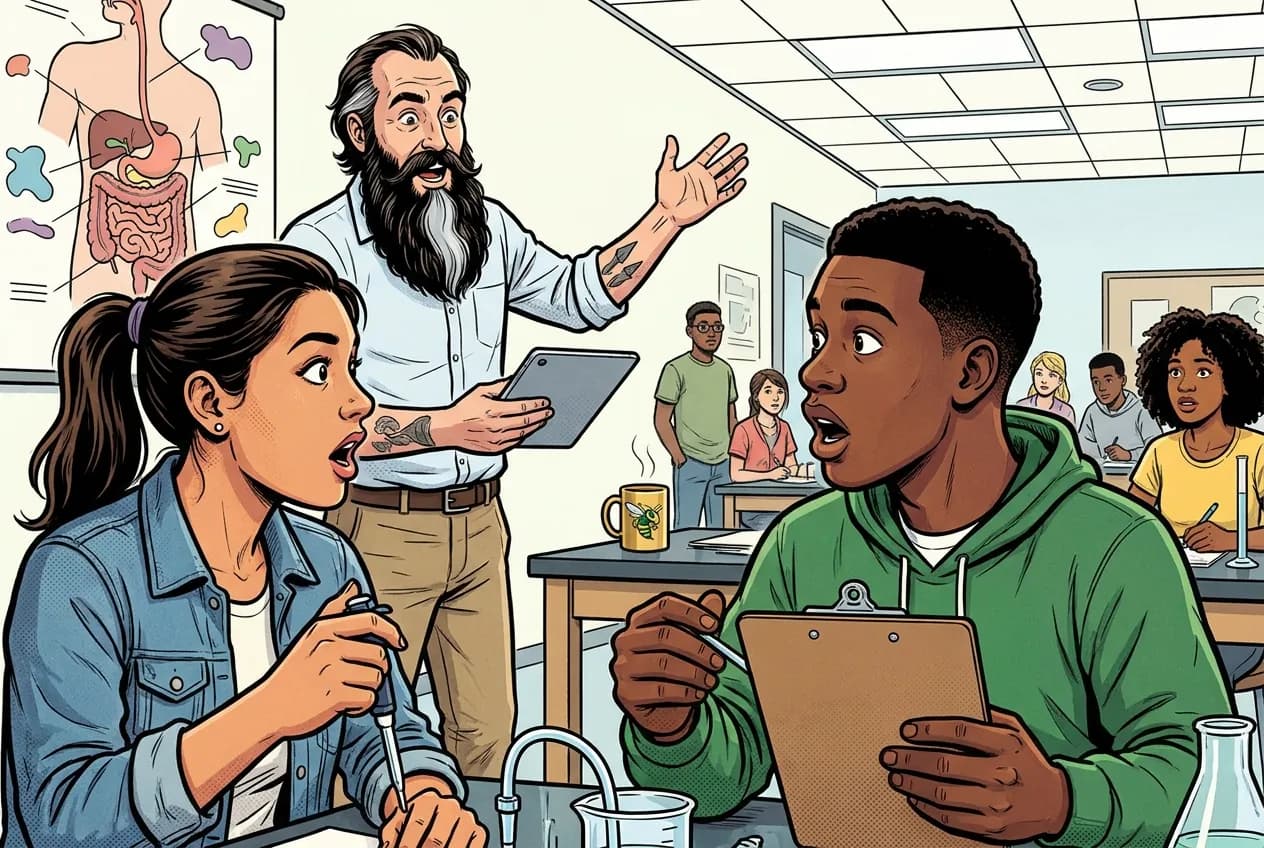
Urinalysis dipsticks on simulated urine, and an enzyme digestion assay, in one block. Nobody's actual sample goes anywhere near this room.
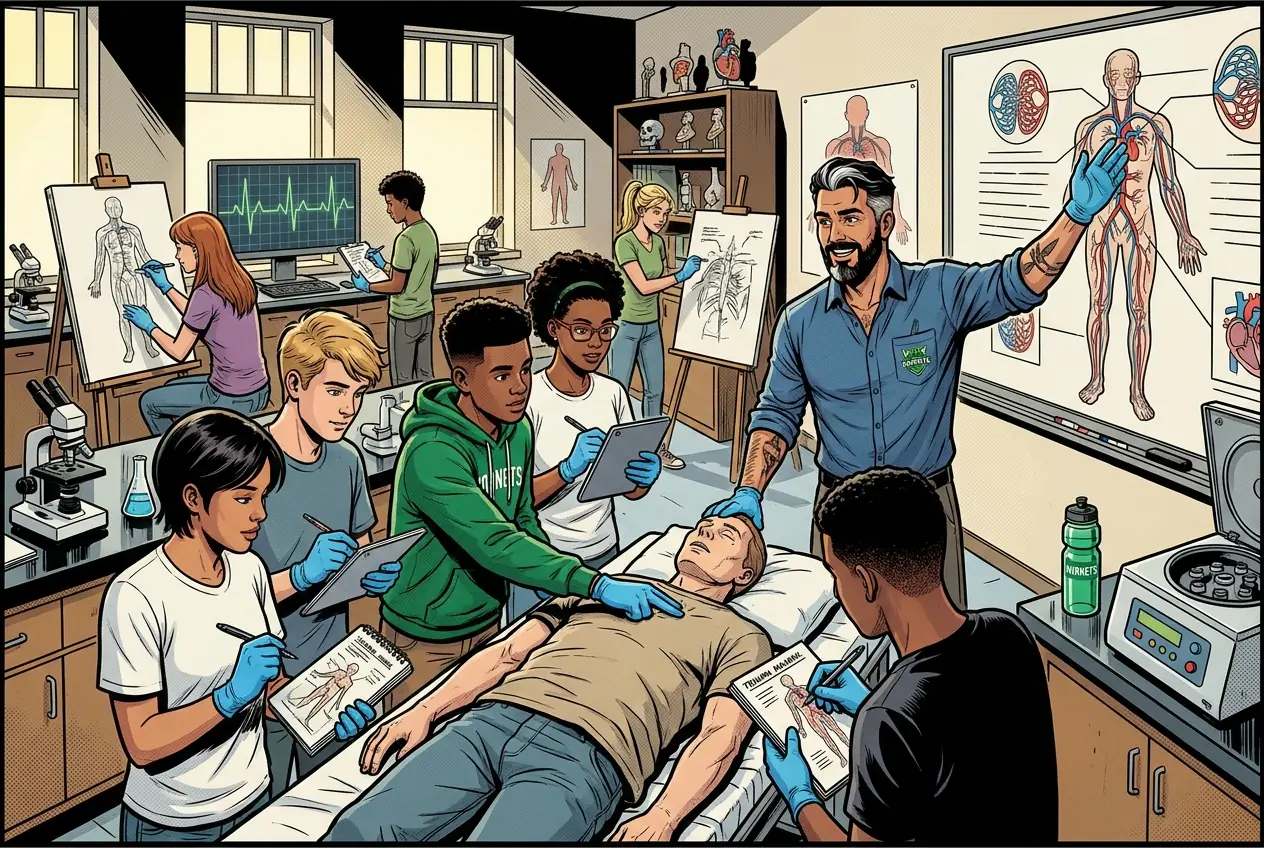
The capstone. A patient narrative in one sentence, then three pieces of evidence from different systems across the whole semester that explain what is happening to them.
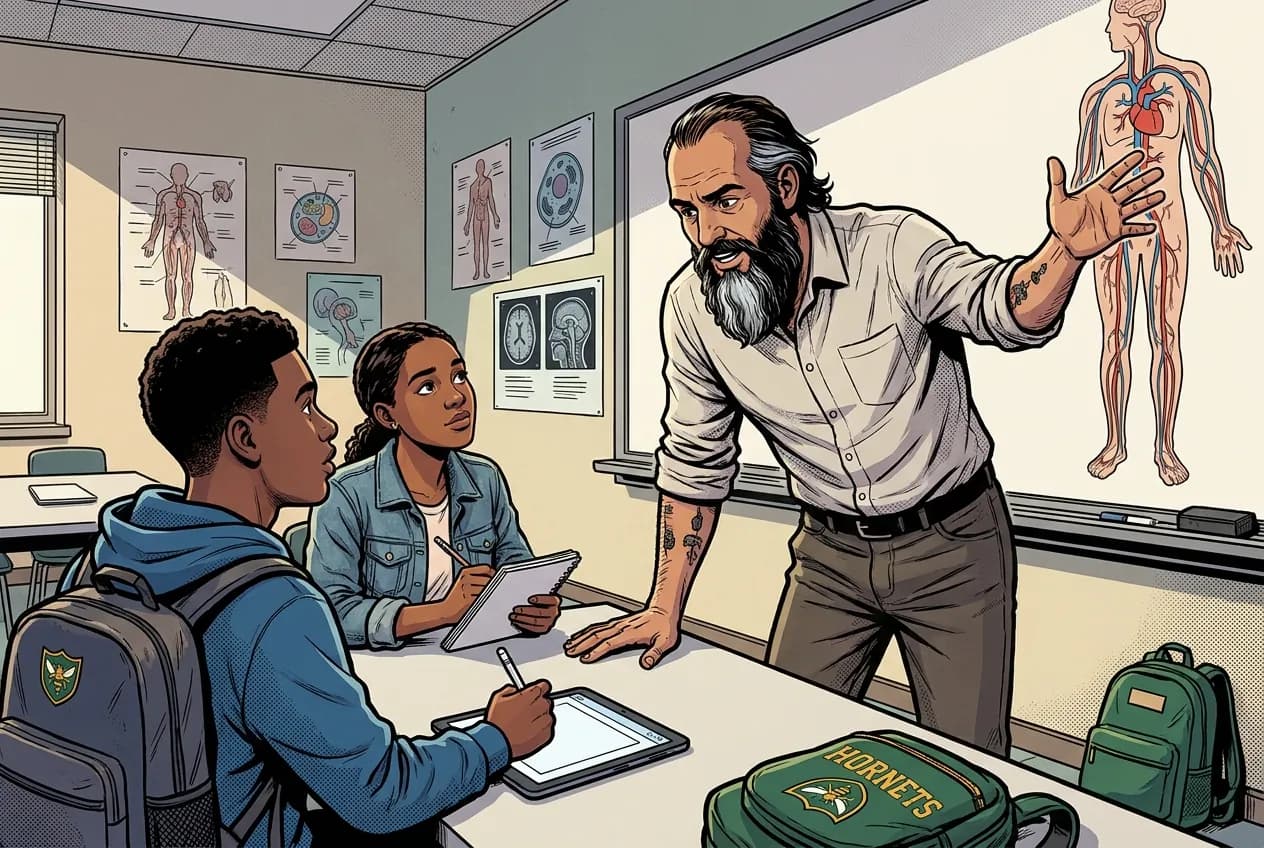
Last packet. I went back through the whole semester of submissions to build the exhibit and found the exact week I started doing this properly.
I did the optional research extra credit on Saturday. A university lab hosted a few of us and a graduate researcher walked us through her actual project.
Fiction. No real student, family, grade, or conversation appears here. The lessons, labs and dates are the real planned course.