Rough draft.This research track is under review with Dr. Atit's lab. Content and sequence may still change.
Craniofacial Research Track
Session 13Reading the Evidence, DecemberLens: Genetics of Disease

ClinVar: which IRF6 changes cause disease?

Discovery question

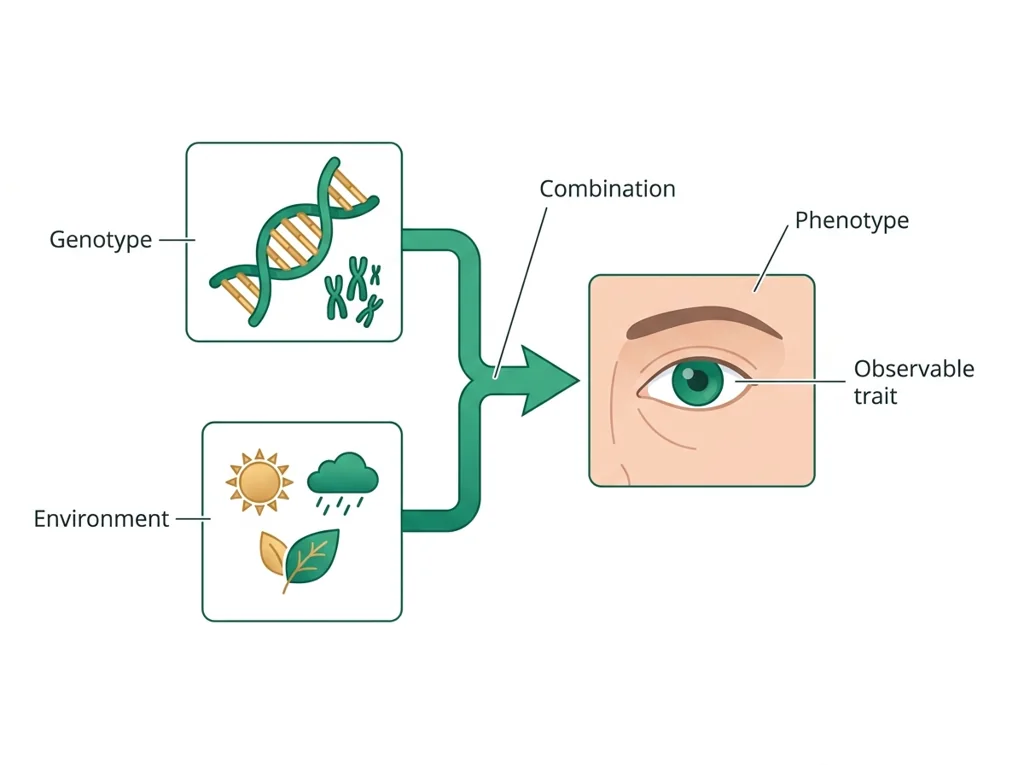
Lots of people carry small differences in IRF6 and are fine. How do scientists decide which IRF6 changes actually cause a , like Mateo's, and which do not matter?

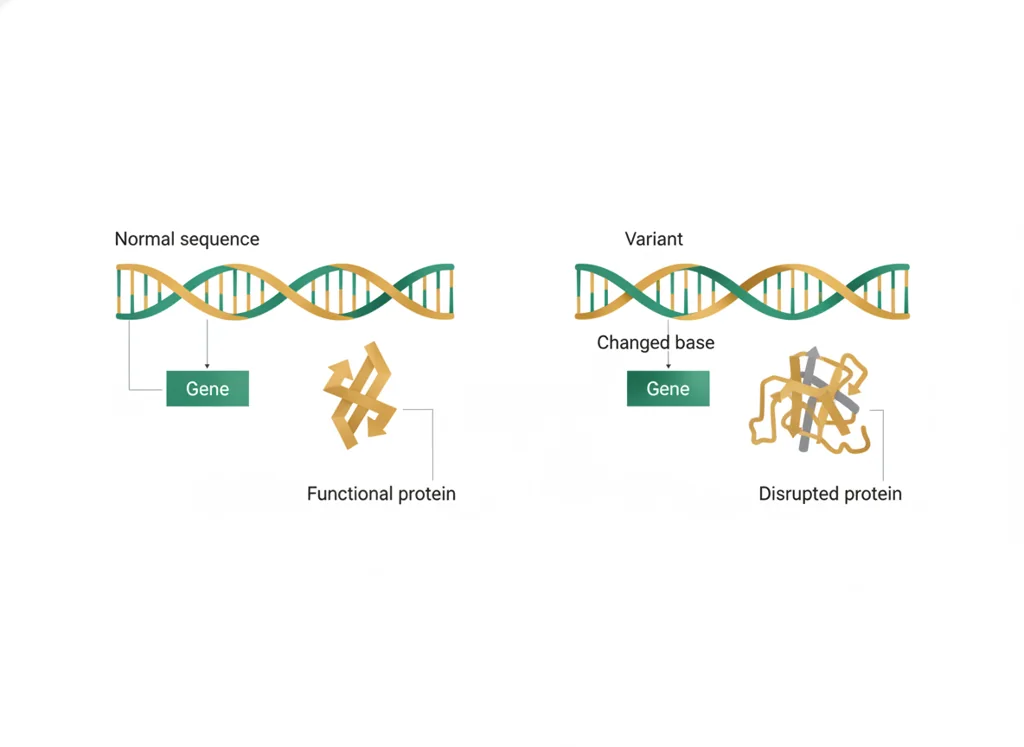
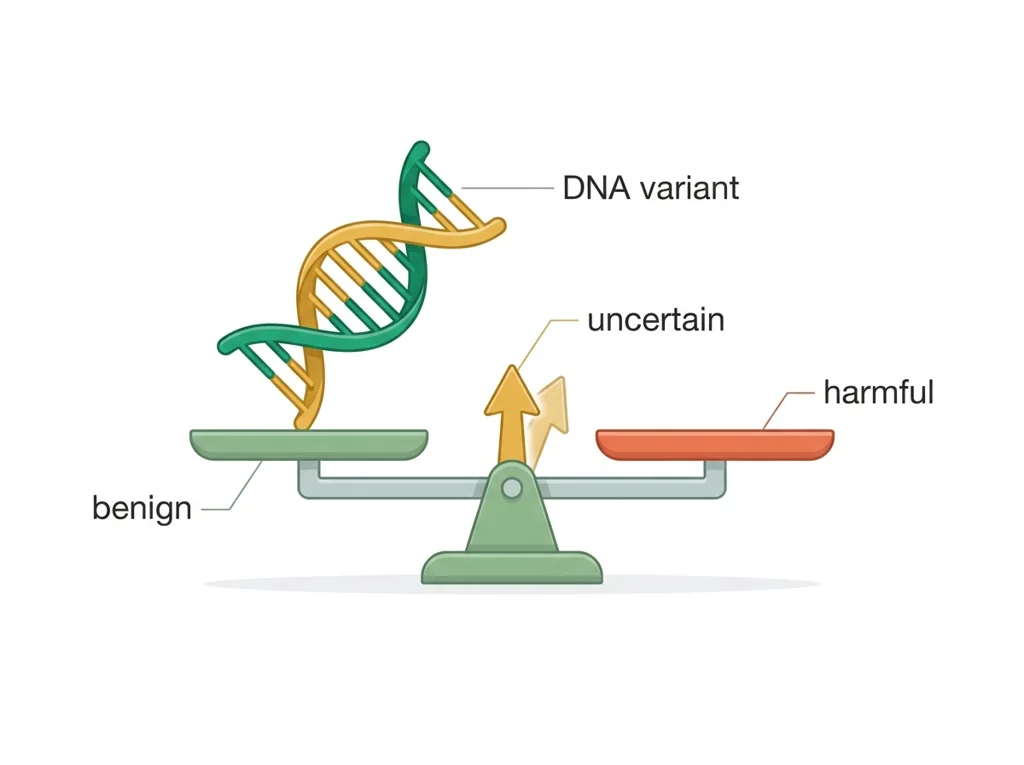
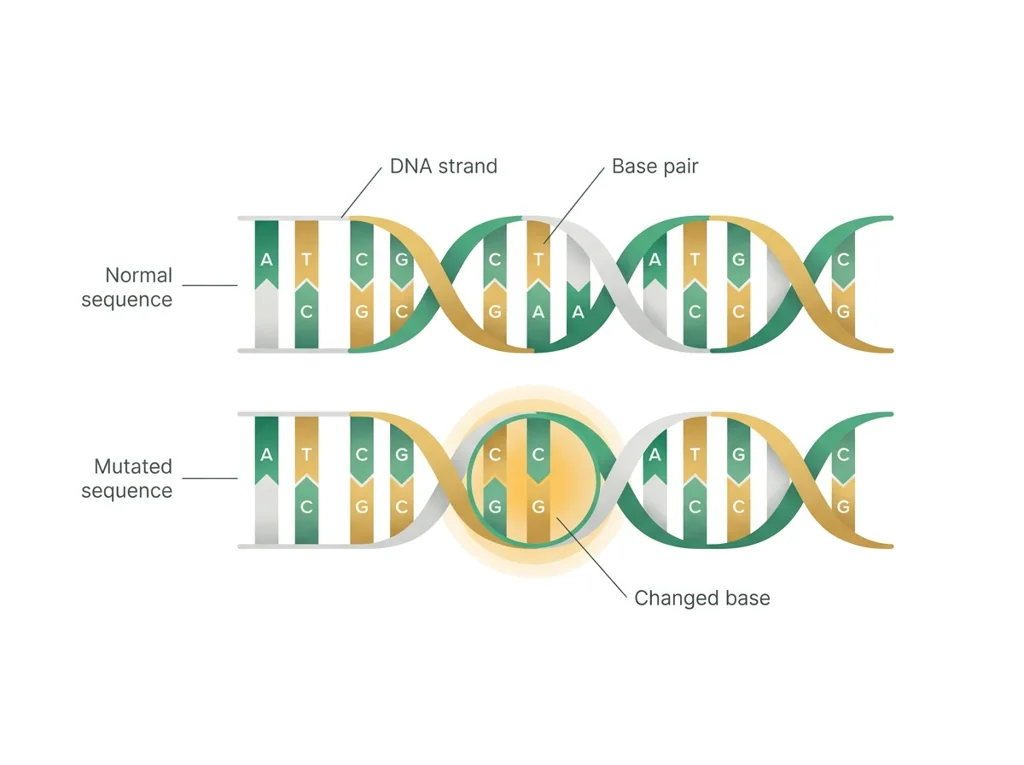
Not every matters. ClinVar collects reported variants and labels each one, pathogenic, benign, or uncertain, so doctors and families can tell signal from noise.

The plan

Prerequisite check

Before this page, you should know
  • predicts a 's 3D structure and colors each part by confidence (pLDDT), dark blue is very high, orange is low.
  • A domain is a distinct functional part of a ; IRF6 has a near its front (N-terminal) end.
Today's new idea is only
Not every matters. ClinVar collects reported variants and labels each one, pathogenic, benign, or uncertain, so doctors and families can tell signal from noise.
Learn first

What to learn

Goal: Search IRF6 in ClinVar, filter for pathogenic versus uncertain variants, read one variant record, and build a small table of three variants with their clinical significance.

Know by the end
  • ClinVar is a public archive of reported genetic variants and what they mean for health.
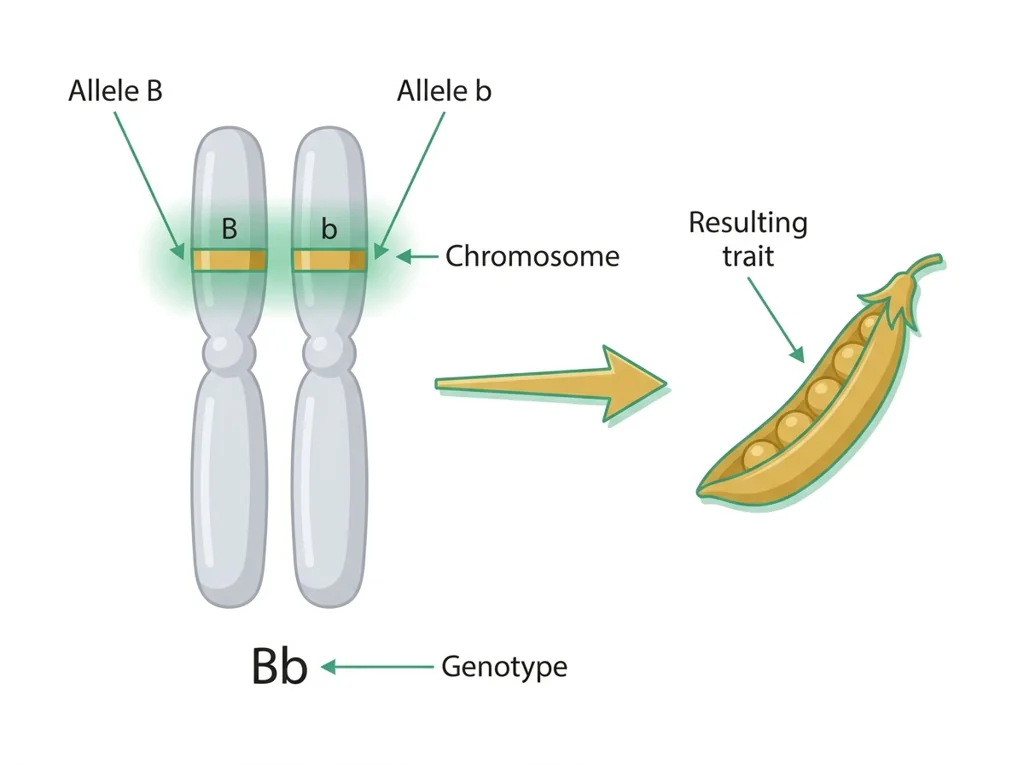
  • A is classified as disease-causing; a has an unknown effect.
  • Each ClinVar record lists the variant, the gene, the condition, and the clinical significance.
  • Filtering by clinical significance separates the IRF6 changes that cause clefting from the ones that probably do not.
The plan

Guided notes

1

Search and filter

Model start: Searching IRF6 in ClinVar returns a long list of reported variants, which I can narrow with the filters on the left.
  • Search IRF6 in ClinVar and write how many variants are reported (a rough count is fine).
  • Use the Clinical significance filter to show only Pathogenic, then only Uncertain significance.
2

Read one record

Model start: One pathogenic IRF6 variant is linked to and is classified as Pathogenic.
  • Open one pathogenic IRF6 variant and write the variant name, the condition it is linked to, and its clinical significance.
  • Note whether the record lists a review status (how many sources support it).
3

Build the table

  • Make a small table with three IRF6 variants: variant name, condition, and clinical significance.
  • Include at least one pathogenic and one uncertain (VUS) so the contrast is clear.
Explore

Reading the Research

What to read
Read the title and the abstract only, not the whole paper. Peer-reviewed literature on IRF6 in clefting (PubMed)
Why this source matters
This is the published evidence behind today's idea: Not every matters. ClinVar collects reported variants and labels each one, pathogenic, benign, or uncertain, so doctors and families can tell signal from noise.
Reading moves
  1. Skim the title and abstract first to get the gist.
  2. Circle the one sentence that states the main claim.
  3. Box the evidence the authors give for that claim.
  4. Mark one sentence that confuses you, and move on.
Stop point
You do not need the methods or statistics yet. If a sentence is about lab technique or math you have not learned, mark it and skip it.
Your output
Write one claim-evidence sentence: what this source claims, and the one piece of evidence that backs it up.
Lab day

Use the real database

clinvar

  1. Open ClinVar at https://www.ncbi.nlm.nih.gov/clinvar/?term=IRF6%5Bgene%5D (this searches the gene IRF6). If you start from https://www.ncbi.nlm.nih.gov/clinvar/ instead, type IRF6[gene] into the search box and press Search.
  2. Look at the result count at the top and note roughly how many IRF6 variants are reported.
  3. In the Filters panel on the left, open classification (clinical significance) and check Pathogenic to show only disease-causing variants.
  4. Pick one from the list and click its name to open the full record.
  5. On the record page, write down the variant name, the Gene (IRF6), the Condition(s) it is linked to (for example ), and the classification (Pathogenic).
  6. Note the Review status (the star rating, showing how many sources agree), then click your browser Back button to return to the list.
  7. Go back to the Filters and switch the classification to Uncertain significance to find a VUS, and record one of those variants for your table.
Turn in: A small table of three IRF6 variants, each row giving the variant name, the linked condition, and the clinical significance, with at least one Pathogenic and one Uncertain significance (VUS) so the contrast is clear.
Lab day

Using the database (what to capture)

Lists DNA variants that have been reported, the condition each is linked to, and a clinical-significance call.

When you use this: Use this when you have a specific DNA change and need to know whether anyone has reported it before and whether it was called harmful.
What the screen looks like
ncbi.nlm.nih.gov/clinvar IRF6[gene] 1 Variant record: IRF6 R84C 2 Clinical significance + review status Pathogenic (multiple submitters) 3 1 Search IRF6[gene]. 2 Open one variant (e.g. R84C). 3 Read the significance and how many labs agree.
A labeled map of the screen. The circled numbers match the steps.
Step by step
  1. 1Open ncbi.nlm.nih.gov/clinvar and search IRF6[gene].
  2. 2Open one variant from the list (for example R84C).
  3. 3Read its clinical significance and the review status (how many labs agree).
Capture these fields
  • Variant name: R84C (or c.250C>T)
  • Condition: Popliteal pterygium syndrome
  • Clinical significance: Pathogenic
  • VUS vs pathogenic call: Pathogenic, not a VUS, because it recurs in many affected families
How to read it: A pathogenic call means strong evidence the variant causes disease; benign means evidence it does not; a means there is not enough evidence yet. A call can change as more families are reported, so always note the date.
Lost? ClinVar overview
NCBI Gene
Open the tool

The full reference record for a gene: its official symbol, ID, location, and what it does.

When you use this: Use this first, when you have a gene name and need its official ID and address. It is the home base every other database points back to.
What the screen looks like
ncbi.nlm.nih.gov/gene IRF6 1 Gene record: IRF6 2 Official symbol / Gene ID / Location IRF6 · ID 3664 · 1q32.2 3 1 Type the gene symbol and search Gene. 2 Open the top human result. 3 Read symbol, Gene ID, and location at the top.
A labeled map of the screen. The circled numbers match the steps.
Step by step
  1. 1Go to ncbi.nlm.nih.gov/gene and type the gene symbol IRF6 in the search box, then press Search.
  2. 2Open the top result whose organism is Homo sapiens (human).
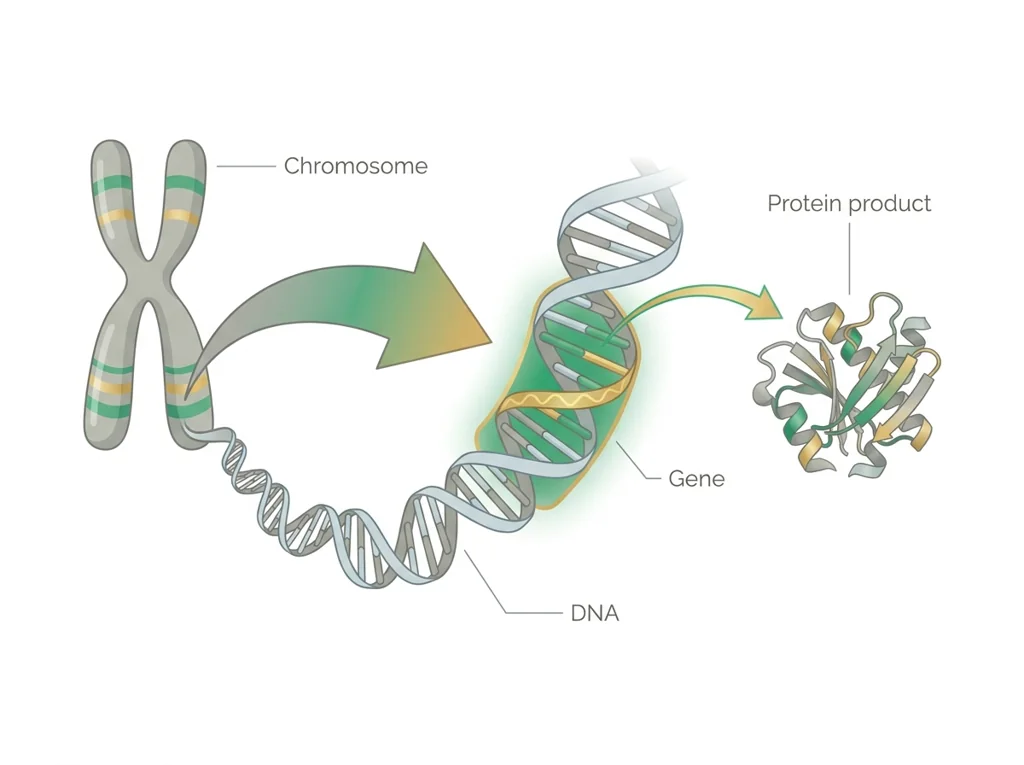
  3. 3At the top of the record, read three things and write them down: the official symbol, the Gene ID number, and the location ( band).
Capture these fields
  • Symbol (official gene name): IRF6
  • Gene ID (the stable number): 3664
  • Location (chromosome band): 1q32.2
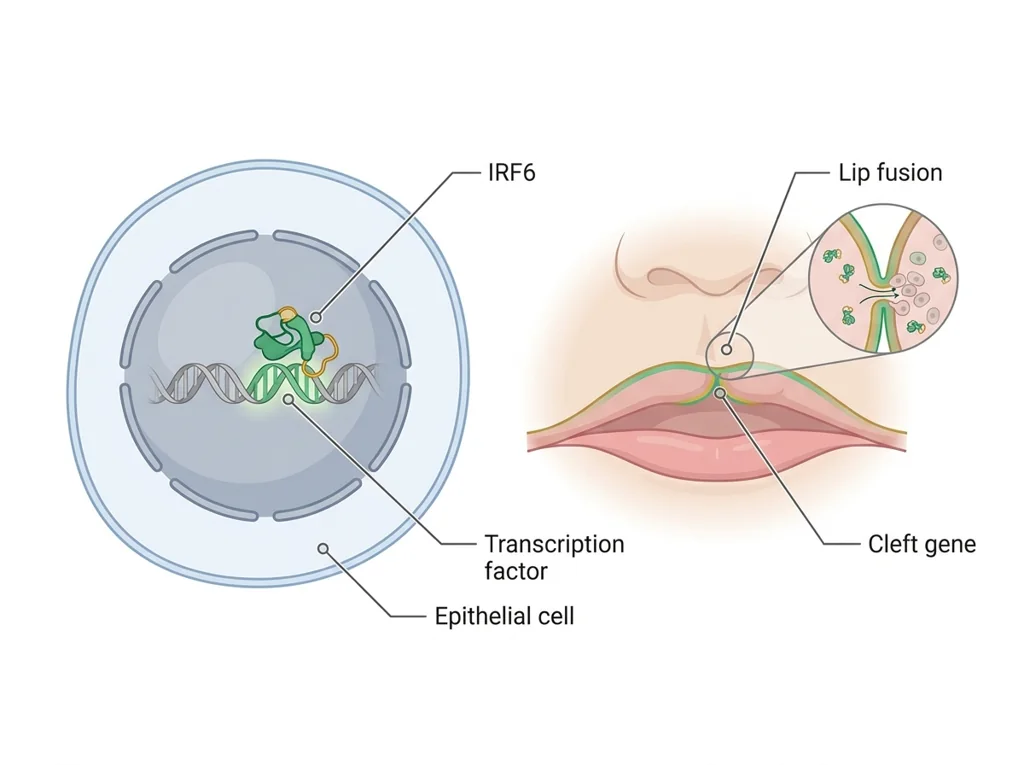
  • Summary (one line on its job): A transcription factor needed for the skin-surface cells that let the lip and palate fuse.
How to read it: The symbol and Gene ID let you find the exact same gene in every other database. The location should match the band you mapped (1q32). The summary tells you the gene's job in one sentence.
Lost? NCBI Gene help manual (how to use the Gene database)
Words

Vocabulary (the same words your classes use)

/FEE-noh-type//JEE-noh-type/
Learn first

Pick your level

Level 1, Guided

Use the sentence starters, a word bank from the vocabulary, a labeled diagram, and the exact source link.

Level 2, Collaborative

Complete a partly blank model or table and explain it.

Level 3, Independent

Make a claim from a new example or an unfamiliar entry in ClinVar.

The plan

Work as a research team

Team roles
  • Manager: keeps the group moving
  • Recorder: writes the shared model or table
  • Evidence checker: verifies each claim against the source
  • Reporter: explains the group's reasoning
Process reflection
  • What evidence changed your thinking today?
  • What did your group disagree about, and how did you resolve it?
  • What question is still unresolved?
Check yourself

Demonstration of learning

By the end of this session, submit ONE of: a labeled diagram with a 2-sentence explanation; a claim, evidence, reasoning paragraph; a completed data table from a real database; or a one-question exit ticket using today's vocabulary.

Recommended here: A small table of three IRF6 variants, each row giving the variant name, the linked condition, and the clinical significance, with at least one Pathogenic and one Uncertain significance (VUS) so the contrast is clear.

Meets standard if your explanation correctly connects structure, timing, gene or protein function, or evidence source to Mateo's case: Search IRF6 in ClinVar, filter for pathogenic versus uncertain variants, read one variant record, and build a small table of three variants with their clinical significance.
How this is graded (rubric)
For: A small table of three IRF6 variants, each row giving the variant name, the linked condition, and the clinical significance, with at least one Pathogenic and one Uncertain significance (VUS) so the contrast is clear.
CriterionProficientDevelopingBeginning
CompleteEvery required part of the artifact is present and filled in.Most parts are present, but one is missing or left blank.Several parts are missing.
AccurateThe science and data are correct and match the evidence.Mostly correct, with a small factual slip.Key science or data is wrong.
Scientific reasoning (CER)States a claim, backs it with specific evidence, and explains the reasoning.Has a claim and evidence, but the reasoning is thin or missing.Gives an answer with no evidence or reasoning.
Professional communicationClear, organized, and labeled the way a clinician or scientist would write it.Readable but disorganized or missing labels.Hard to follow.
SubmittedTurned in the right way (Schoology for routine work) and confirmed.Turned in, but in the wrong place or unconfirmed.Not turned in.
How the model answer scores against this rubric
  • CompleteProficient: Nothing is left blank: the model fills every part of "A small table of three IRF6 variants, each row giving the variant name, the linked condition, and the clinical significance, with at least one Pathogenic and one Uncertain significance (VUS) so the contrast is clear.".
  • AccurateProficient: Every number and claim matches the case evidence.
  • Scientific reasoning (CER)Proficient: It names a claim, cites the specific evidence, and explains the reasoning, not just the answer.
  • Professional communicationProficient: It is organized and labeled like a real chart note.
  • SubmittedProficient: It would be turned in on Schoology and confirmed.