Rough draft.This research track is under review with Dr. Atit's lab. Content and sequence may still change.
The Baby Mateo Case
Genetics domainMedical Interventions (MI), with PBS overlapLesson 11 of 20Your seat: Bioinformatician

Is This Gene Important Across Species?

Discovery question

If we line up the IRF6 from many animals, which parts stay the same, and what does staying the same tell us about importance?

💡 High conservation is evidence of high functional importance: the parts evolution never changes are usually the parts the body cannot live without.

The plan

Prerequisite check

Before this page, you should know
  • A is a part of a that folds on its own and does a specific job.
  • IRF6 (467 amino acids) has a (residues 7 to 115, a winged-helix fold) and a C-terminal -binding (SMIR/IAD) domain, joined by a disordered linker (residues 121 to 156).
Today's new idea is only
High conservation is evidence of high functional importance: the parts evolution never changes are usually the parts the body cannot live without.
Learn first

What you will learn

Goal: Use a multi-species and the logic of conservation to argue which parts of the IRF6 are functionally essential, then flag a variant of unknown meaning as likely important or likely tolerated using conservation alone.

Know by the end
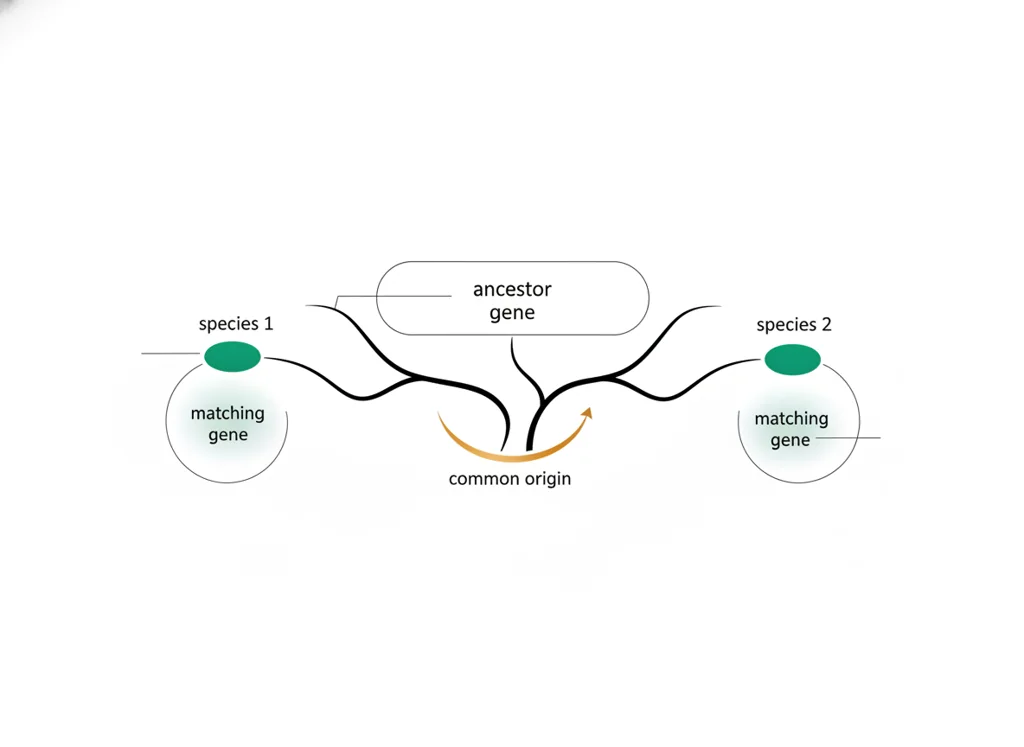
  • An ortholog is the matching version of the same gene or in a different species.
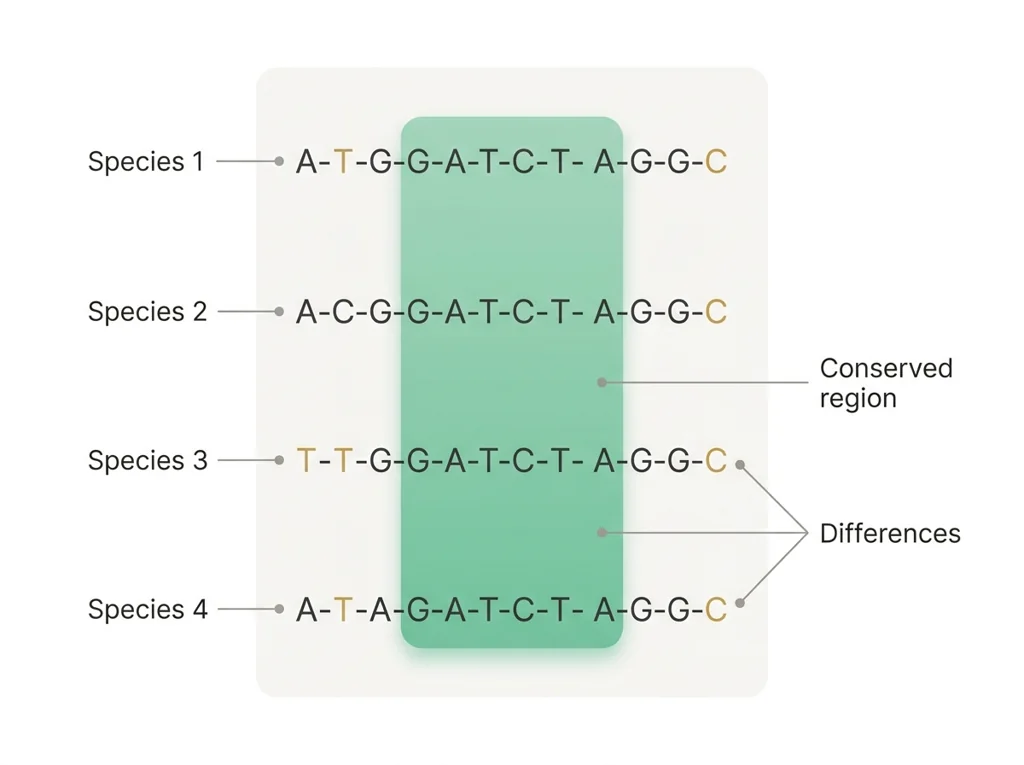
  • Conservation is how unchanged a sequence stays across species; high conservation means evolution protected it.
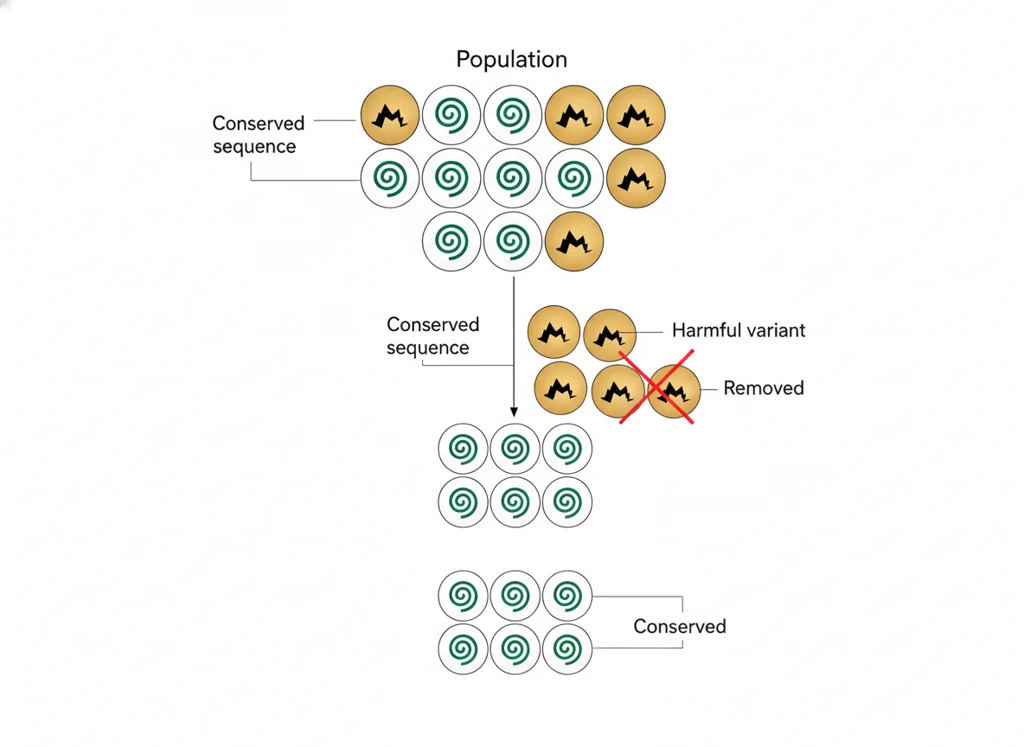
  • removes harmful changes from a population, which keeps important regions nearly identical across distant species.
  • The IRF6 is strongly conserved across 17 species and is exactly where the most damaging disease mutations cluster, including the R84 hotspot.
Learn first

Model: A multi-species alignment of two stretches of IRF6

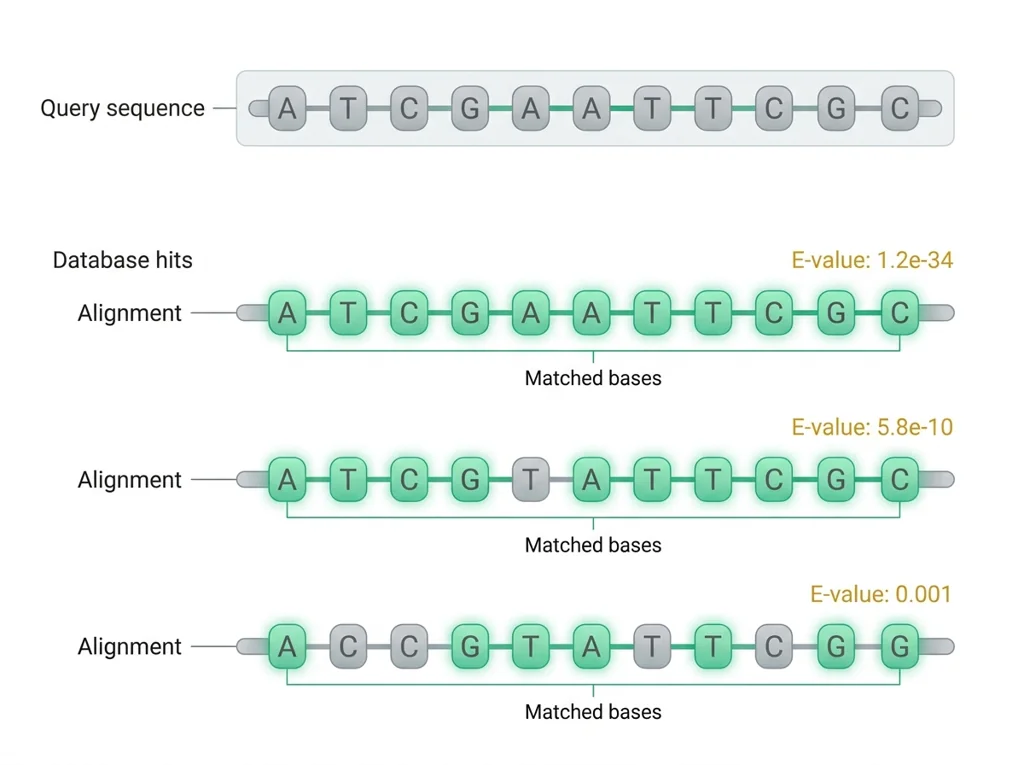
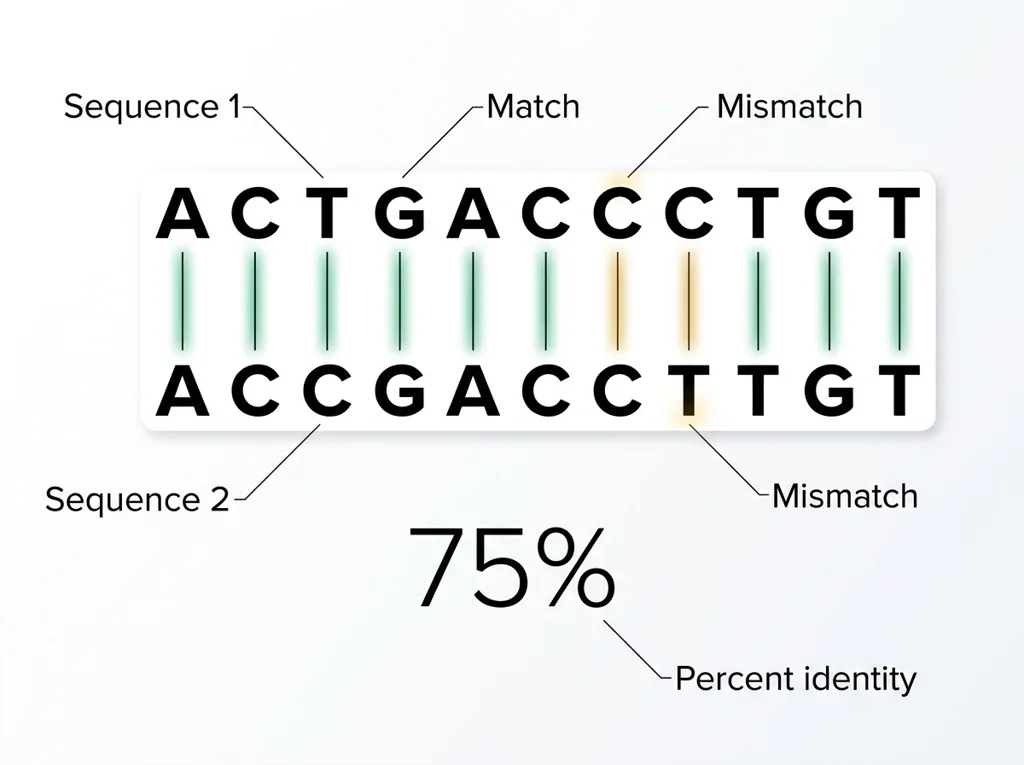
is a computer tool that lines up two sequences and reports the , the fraction of positions that match. Here two short stretches of IRF6 are lined up across human, mouse, chicken, frog, and zebrafish, each a different ortholog. A dot means the same amino acid as human; a letter means that species differs.

The first stretch sits inside the , around position 84, where the grips DNA. Across all five species shown it reads almost entirely as dots: essentially no change. The second stretch sits in the floppy linker that connects the two domains (residues 121 to 156), and it is full of letters: many species differ at many positions. These animals last shared an ancestor hundreds of millions of years ago, so a stretch that stays frozen across all of them is not a coincidence. The real Leslie 2012 study aligned IRF6 across 17 species and found the DNA-binding domain almost unchanged.

Read this in pieces, one chunk at a time
Do the work

Explore (work the model before reading on)

  1. In the model, which of the two stretches barely changes across species, and which changes a lot?
  2. Position 84 is exactly where the grips DNA, and the linker is a floppy spacer. How does the job of each region match how much it is allowed to change?
  3. These five species last shared an ancestor hundreds of millions of years ago. Why might one region stay frozen while the other drifts freely?
  4. Suppose you found a brand-new region of IRF6 that is identical in all 17 species but you do not yet know its job. What would you predict about its importance, and why study it first?
  5. Predict: if the conserved domain is the one disease mutations crowd into, what would you expect to happen to the when one of those protected amino acids, like position 84, is swapped for the wrong one?
The plan

Guided notes

1

Conservation and the tools to measure it

Model start: Random typos appear everywhere when DNA copies itself. Where a typo does no harm it can stick around, so over millions of years those regions drift and look different across species.
  • In regions the organism cannot survive without, almost every typo is harmful, so it is removed from the population. This removal of harmful changes is called ____ selection.
  • The result is that the most important regions stay nearly identical across distant species; we call that staying-the-same ____.
  • The matching version of the same gene in another species is called an ____.
2

Reading the IRF6 alignment

  • The IRF6 is ____ (strongly / weakly) conserved across species, while the floppy linker is ____ (strongly / weakly) conserved.
  • The big idea: high conservation is evidence of high ____ importance.
  • That same conserved is where the most damaging human disease mutations ____ (cluster / avoid), including the R84 hotspot.
Explore

Reading the Research

What to read
Read the title and the abstract only, not the whole paper. Leslie et al. 2012, IRF6 variants in VWS and PPS, 17-species conservation (Genet Med)
Why this source matters
This is the published evidence behind today's idea: High conservation is evidence of high functional importance: the parts evolution never changes are usually the parts the body cannot live without.
Reading moves
  1. Skim the title and abstract first to get the gist.
  2. Circle the one sentence that states the main claim.
  3. Box the evidence the authors give for that claim.
  4. Mark one sentence that confuses you, and move on.
Stop point
You do not need the methods or statistics yet. If a sentence is about lab technique or math you have not learned, mark it and skip it.
Your output
Write one claim-evidence sentence: what this source claims, and the one piece of evidence that backs it up.
Lab day

Using the database (what to capture)

Part of today's expected outcome is to actually open the tool below and write down the value it gives you. That captured value is the evidence you will use in your Claim, Evidence, Reasoning. Follow the steps, use the labeled screenshot so you do not get lost, and record each field.

The reference record for a : its length, its domains, and what each part does.

When you use this: Use this when you need to know which PART of the a variant hits, so you can predict whether it breaks a working region.
What the screen looks like
uniprot.org/uniprotkb/O14896 IRF6 human 1 Protein entry: IRF6 2 Length + domains 467 aa · DNA-binding + SMIR domains 3 1 Open the IRF6 entry (O14896). 2 Go to the Family & Domains section. 3 Read the length and which domains exist.
A labeled map of the screen. The circled numbers match the steps.
Step by step
  1. 1Open uniprot.org and search IRF6 human, then open entry O14896.
  2. 2Scroll to the Family and Domains section.
  3. 3Read the length and which domains exist (for example the ).
Capture these fields
  • Accession (the protein's ID): O14896
  • Length (amino acids): 467 aa
  • Domains / regions: A DNA-binding domain and a protein-partner (SMIR) domain
How to read it: The domains tell you which part of the does which job. A variant that lands inside the is more likely to break IRF6's -factor function than one in a spacer region.
Lost? UniProt help: reading protein domains
Where this fits
Tested on (Ohio WebXam)
Genetics of Disease · 072130
PLTW lesson
MI · Genetics domain · Molecular biology and bioinformatics; sequence comparison
WebXam domain
Bio-Molecular Technology
Evidence to produce
You are handed BLAST results for two positions where a variant of unknown meaning was found. Position A is identical in all 17 species and sits in the DNA-binding domain; Position B differs in 9 of 17 species and sits in the floppy linker. Write a one-line recommendation for each ("flag, investigate first" or "likely tolerated") and justify each using conservation, not guesswork.
Lab / skill
Medical Interventions (MI) · AP Biology
Words

Vocabulary (the same words your classes use)

(Basic Local Alignment Search Tool)
The plan

Track your progress today

Check these off as you work through the lesson, then submit. This tells Mr. Mendoza how you're doing so he can help the class. It does not replace turning in your producible.

Use the code Mr. Mendoza gave you, not your name. Saved on this device.

Check off as you finish
  • Read the Model and answered the Explore questions.
  • Filled in the guided notes in my own words.
  • Defined the new vocabulary with an example.
  • Opened UniProt and recorded the value it gave me.
  • Built the producible: You are handed BLAST results for two positions where a variant of unknown meaning was found. Position A is identical in all 17 species and sits in the DNA-binding domain; Position B differs in 9 of 17 species and sits in the floppy linker. Write a one-line recommendation for each ("flag, investigate first" or "likely tolerated") and justify each using conservation, not guesswork.
  • Wrote my Claim, Evidence, and Reasoning exit ticket.
Pick your period and code first.
Check yourself

Exit ticket (Claim, Evidence, Reasoning)

  • Claim: The of IRF6 is functionally essential (state whether you agree).
  • Evidence: Across species the shows ____ change while the linker shows ____ change.
  • Reasoning: Conservation across distant species is evidence of importance, because ____ selection removes harmful changes from the regions the organism cannot do without.
How this is graded (rubric)
For: You are handed BLAST results for two positions where a variant of unknown meaning was found. Position A is identical in all 17 species and sits in the DNA-binding domain; Position B differs in 9 of 17 species and sits in the floppy linker. Write a one-line recommendation for each ("flag, investigate first" or "likely tolerated") and justify each using conservation, not guesswork.
CriterionProficientDevelopingBeginning
CompleteEvery required part of the artifact is present and filled in.Most parts are present, but one is missing or left blank.Several parts are missing.
AccurateThe science and data are correct and match the evidence.Mostly correct, with a small factual slip.Key science or data is wrong.
Scientific reasoning (CER)States a claim, backs it with specific evidence, and explains the reasoning.Has a claim and evidence, but the reasoning is thin or missing.Gives an answer with no evidence or reasoning.
Professional communicationClear, organized, and labeled the way a clinician or scientist would write it.Readable but disorganized or missing labels.Hard to follow.
SubmittedTurned in the right way (Schoology for routine work) and confirmed.Turned in, but in the wrong place or unconfirmed.Not turned in.
How the model answer scores against this rubric
  • CompleteProficient: Nothing is left blank: the model fills every part of "You are handed BLAST results for two positions where a variant of unknown meaning was found. Position A is identical in all 17 species and sits in the DNA-binding domain; Position B differs in 9 of 17 species and sits in the floppy linker. Write a one-line recommendation for each ("flag, investigate first" or "likely tolerated") and justify each using conservation, not guesswork.".
  • AccurateProficient: Every number and claim matches the case evidence.
  • Scientific reasoning (CER)Proficient: It names a claim, cites the specific evidence, and explains the reasoning, not just the answer.
  • Professional communicationProficient: It is organized and labeled like a real chart note.
  • SubmittedProficient: It would be turned in on Schoology and confirmed.
Explore

Where this leads: careers

Bioinformatician Computational Biologist

What's next: We found that the is conserved across species, so it must be essential. But if those exact amino acids are protected across hundreds of millions of years, what actually happens to the when one of them, like position 84, is swapped for the wrong letter? We chase that next.