
Is This Gene Important Across Species?
This reading contains every idea and every piece of evidence needed for today's decision. The research links at the end are optional.
Why this matters
Animal studies can guide cleft research only when the shared part and the limits of the comparison are both clear.
The question you are trying to answer
Why do scientists compare the same instruction across animals before deciding a change matters?
Begin with the idea you already earned
Protein domains are specialized working regions, so a variant's position helps predict which function may fail.
Study the analogy before the biology
- Which parts remain unchanged across every edition?
- What does repeated preservation suggest?
- Can preservation alone prove a new edit is harmful?
Turn the analogy into three rules
Limit: Evolution selects organisms and populations, not words in a book.
Map those rules onto the biology
Orthologs are related genes in different species that came from a shared ancestral gene.
Sequence alignment places comparable amino acids in columns. Positions that remain the same across distant species are conserved.
Conservation suggests importance, but classification also needs population, clinical, computational, or functional evidence.
Read Mateo's labeled case evidence
IRF6 orthologs occur across many vertebrate species.
The gene is evolutionarily shared.
The DNA-binding domain has highly conserved residues, including Arg84.
Those positions tolerated little change.
Some conserved-position variants have different clinical effects.
Conservation is one evidence line, not a complete verdict.
Make the concrete decision
You are reviewing a new missense variant at a conserved IRF6 residue.
The residue is identical in five vertebrates, but no patient or functional data exist.
- Use conservation as supporting evidence and keep classification uncertain.
- Call it pathogenic from conservation alone.
- Call it benign because only one amino acid changed.
Choose the classification stance and cite both support and limit.
Claim ceiling: You may say the site is constrained. You may not make conservation the only pathogenicity criterion.
Write the 10-year takeaway
Evolutionary conservation marks positions that tolerated little change, adding evidence that a new change may matter.
- What does conservation suggest?
- Why does it not finish classification?
Glossary in plain English
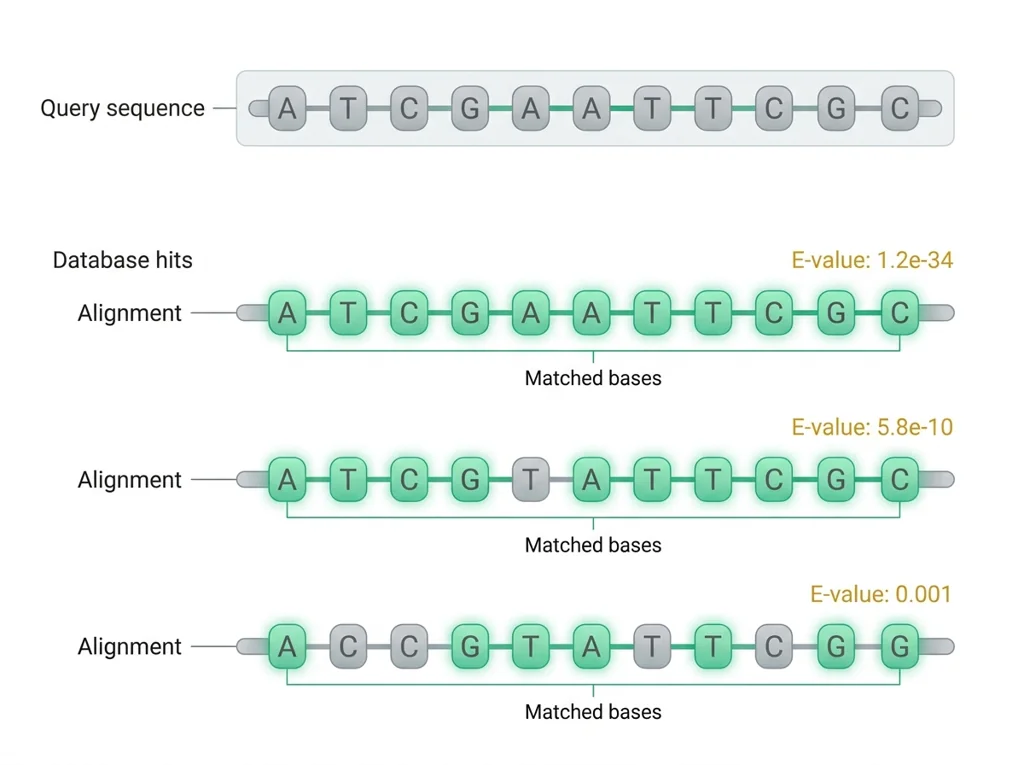
A search tool (Basic Local Alignment Search Tool) that compares a DNA or protein sequence against a database to find regions of local similarity, not necessarily evolutionary relatives or a definitive identity.
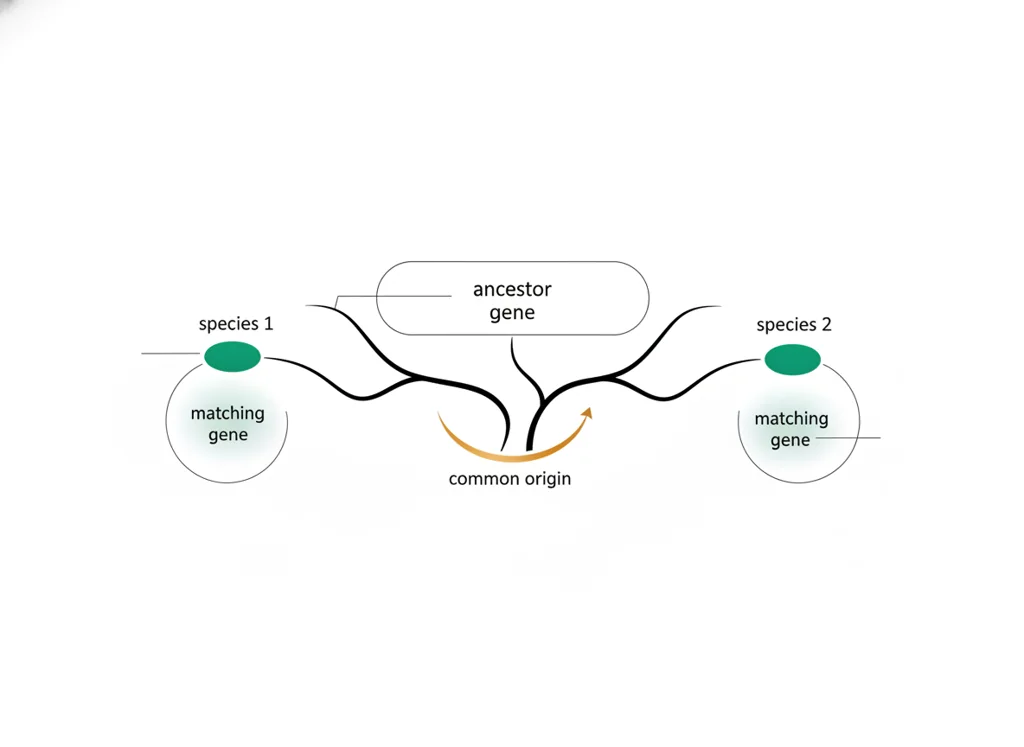
The matching version of a gene found in a different species, descended from the same gene in a common ancestor.
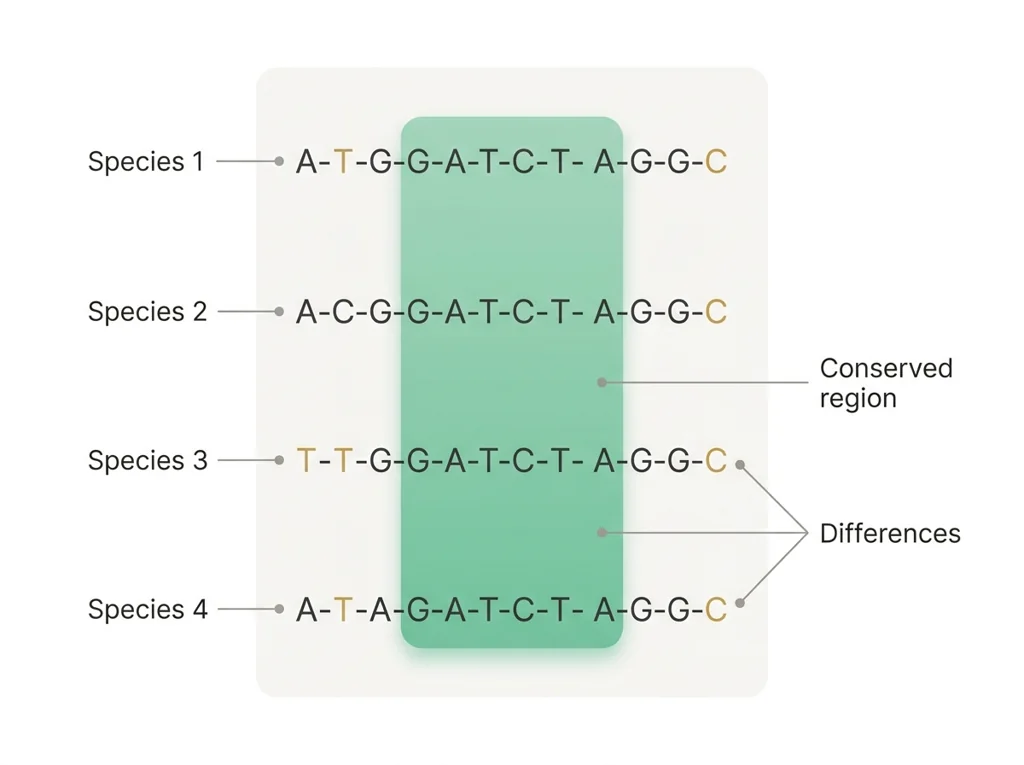
When a DNA or protein sequence stays similar across many species, a strong sign that it does an essential biological job.
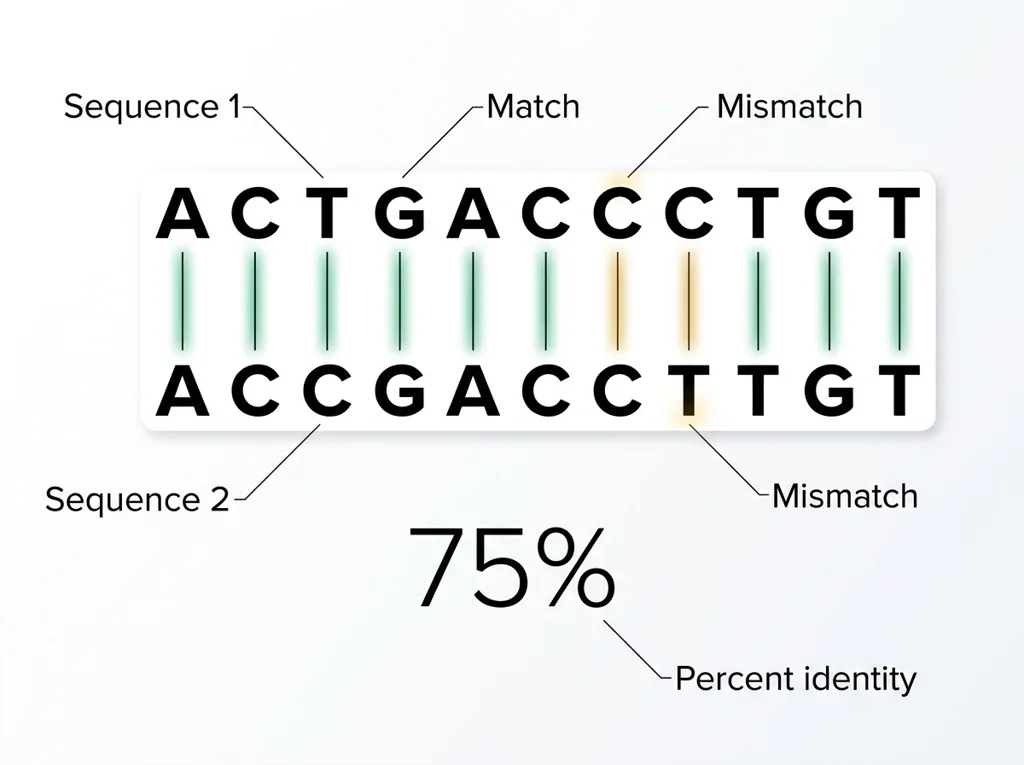
In a sequence comparison, the share of positions that exactly match between two DNA or protein sequences; a higher value means they are more alike.
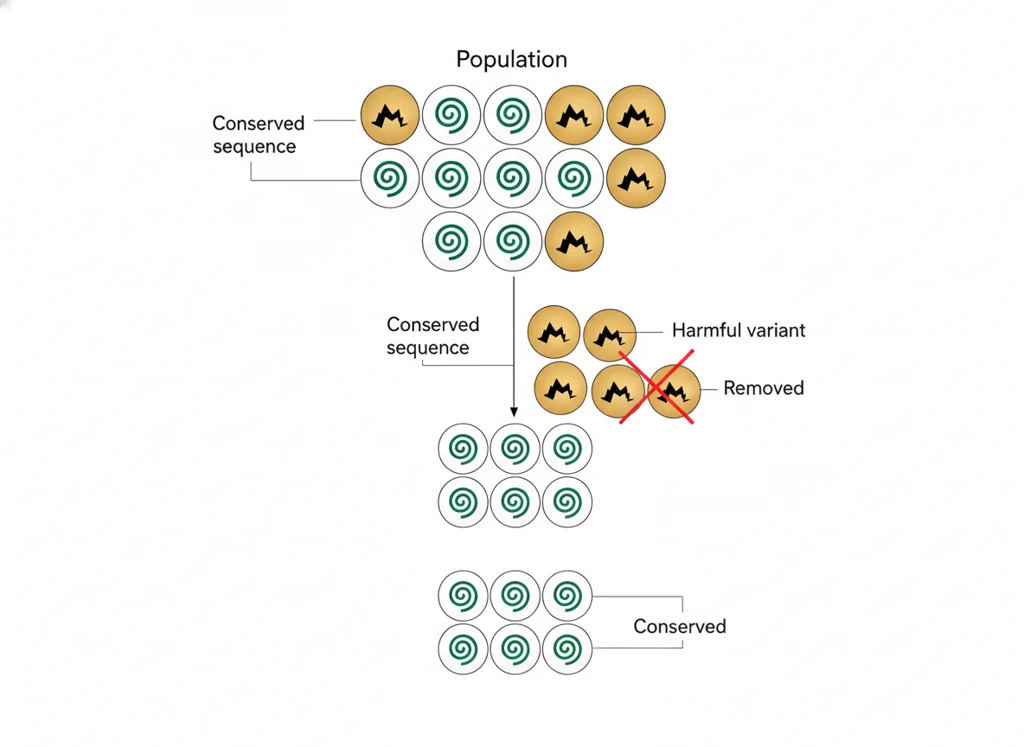
Natural selection that removes harmful mutations over time, which is why important DNA and protein sequences stay highly conserved across species.
Research citation trail (advanced)
You do not need these papers or database records to finish the lesson. They document where the plain-language explainer's claims come from and are intended for teachers or advanced readers.