Rough draft.This research track is under review with Dr. Atit's lab. Content and sequence may still change.
The Baby Mateo Case
Disease domainShared clinical backbone (the cleft team)Lesson 15 of 20Your seat: Pediatrician (cleft team)

Is Mateo Growing Well?

Discovery question

Why are infants at risk for poor growth, and how does the pediatrician keep track of whether Mateo is growing and developing well?

💡 Repairing the parts is not enough; someone has to watch the whole child grow and develop, and trends over time tell you more than any single check.

The plan

Prerequisite check

Before this page, you should know
  • A lip and runs through the , the tooth-bearing bone of the upper jaw, right where the upper forms.
  • Common dental findings near the include (a missing tooth), supernumerary (extra) teeth, a peg-shaped or microdont , enamel , ectopic eruption and , and reduced upper-jaw growth.
Today's new idea is only
Repairing the parts is not enough; someone has to watch the whole child grow and develop, and trends over time tell you more than any single check.
Learn first

What you will learn

Goal: Students will explain why infants are at risk for poor feeding and slow growth, and how the pediatrician uses growth charts and developmental checks to keep the whole child on track.

Know by the end
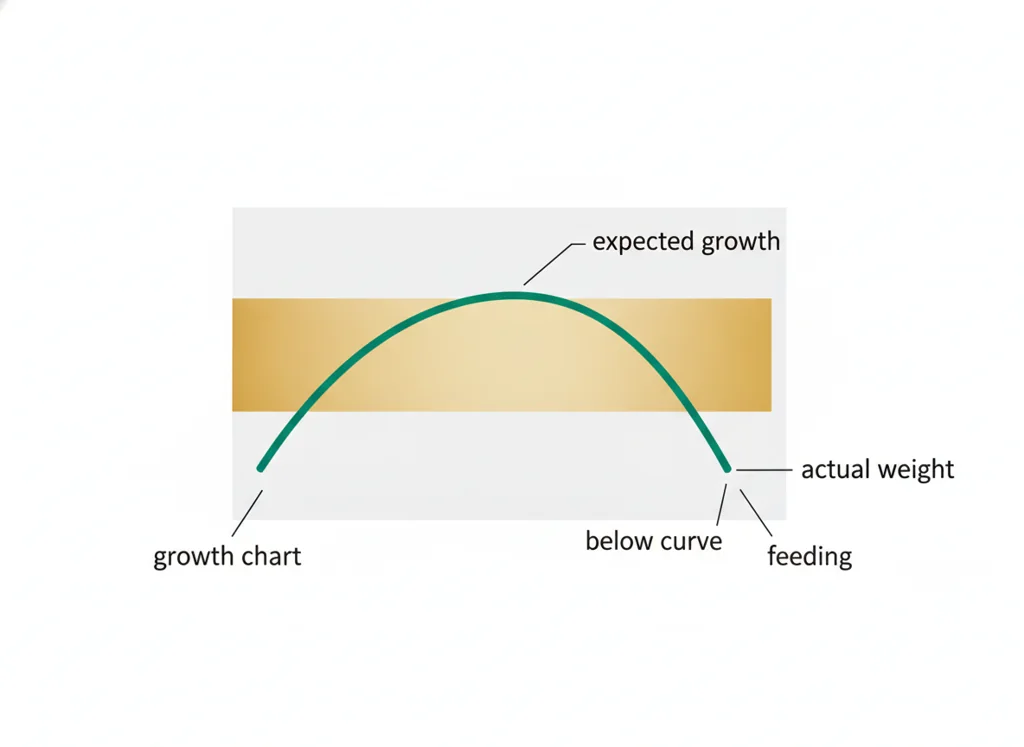
  • To suck, a baby needs a lip seal and an intact roof of the mouth to build pressure; Mateo's weakens both, so he can take in too few calories and fall behind on weight ().
  • Most infants feed successfully once the team provides specialized cleft bottles and nipples and proper positioning, with no surgery required for feeding.
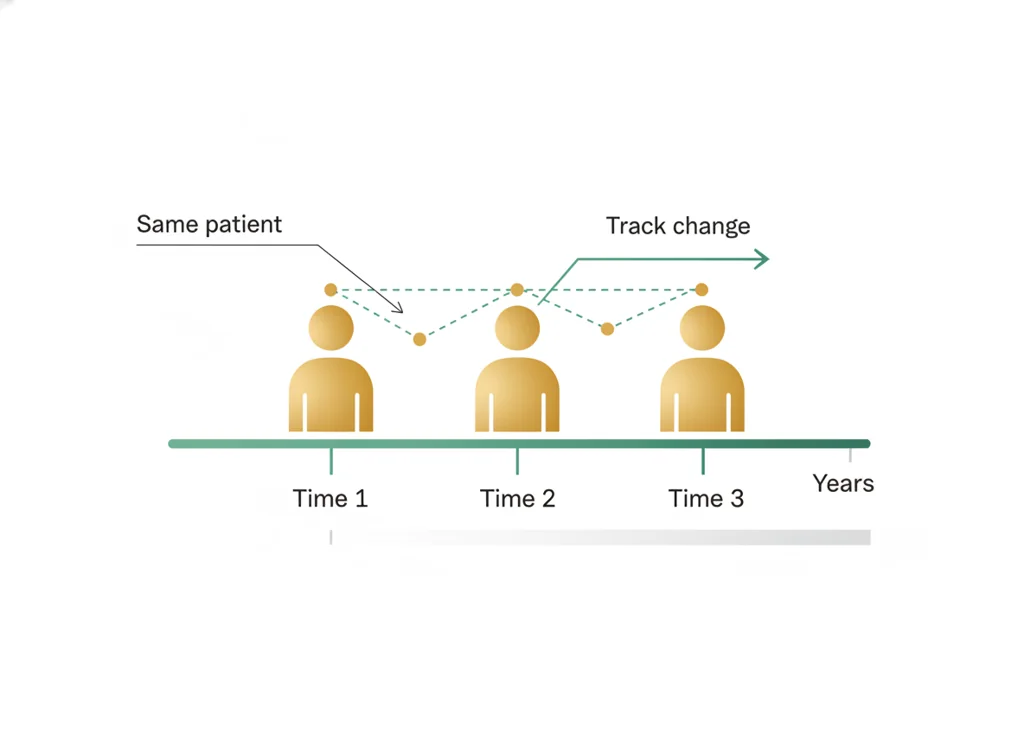
  • The pediatrician tracks growth over time on a growth chart (weight, length, head size as percentiles) and watches developmental milestones, which is the heart of .
  • -specific watch points fold in too: hearing and speech progress, and , which can lag after repair and is followed long term.
Learn first

Model: Why feeding is hard at the start, and two ways to watch the whole child

Recall from earlier in Mateo's story: to feed well, a baby builds suction by sealing the lips and pressing the tongue against an intact roof of the mouth. Mateo's lip weakens the lip seal, and his open means he cannot build the suction pressure needed to draw milk. So before his repairs he can tire out during feeds, swallow air, and take in fewer calories than he needs; if that is not managed, a baby can fall behind on weight, called . The good news from the literature: most cleft infants feed successfully once the team provides specialized cleft bottles and nipples and proper positioning.

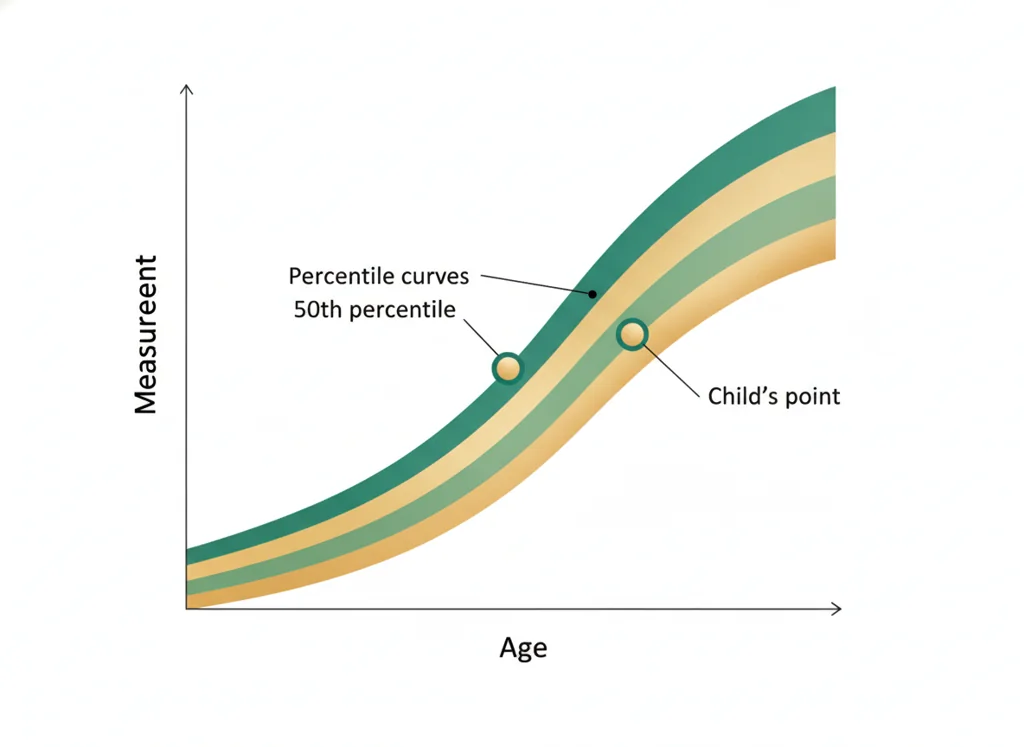
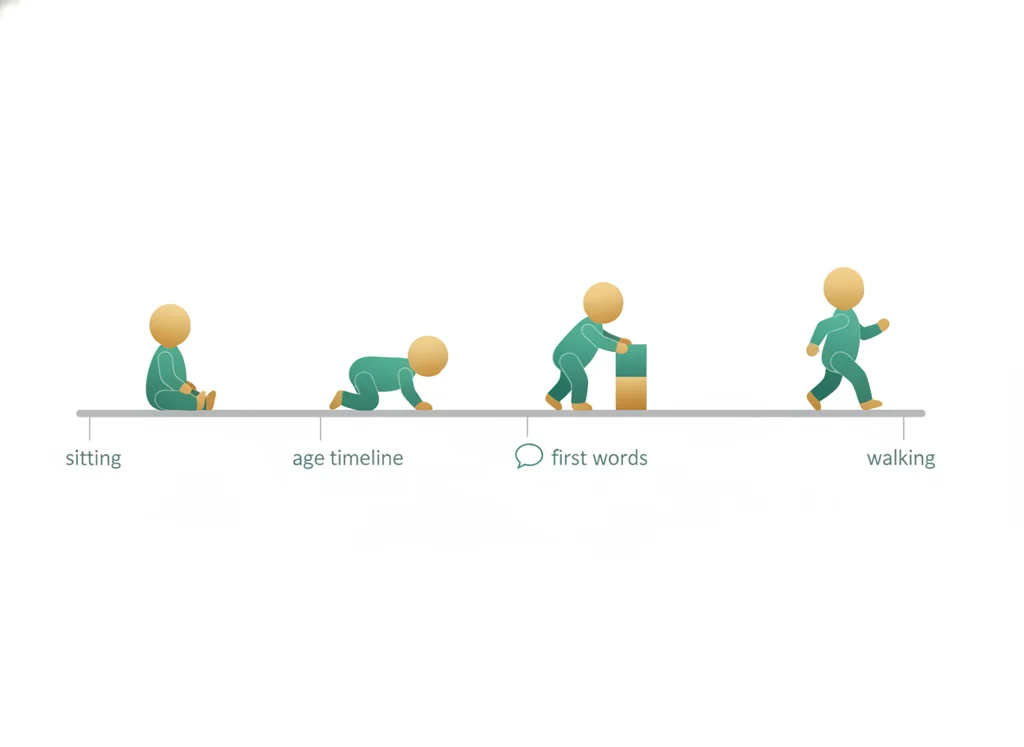
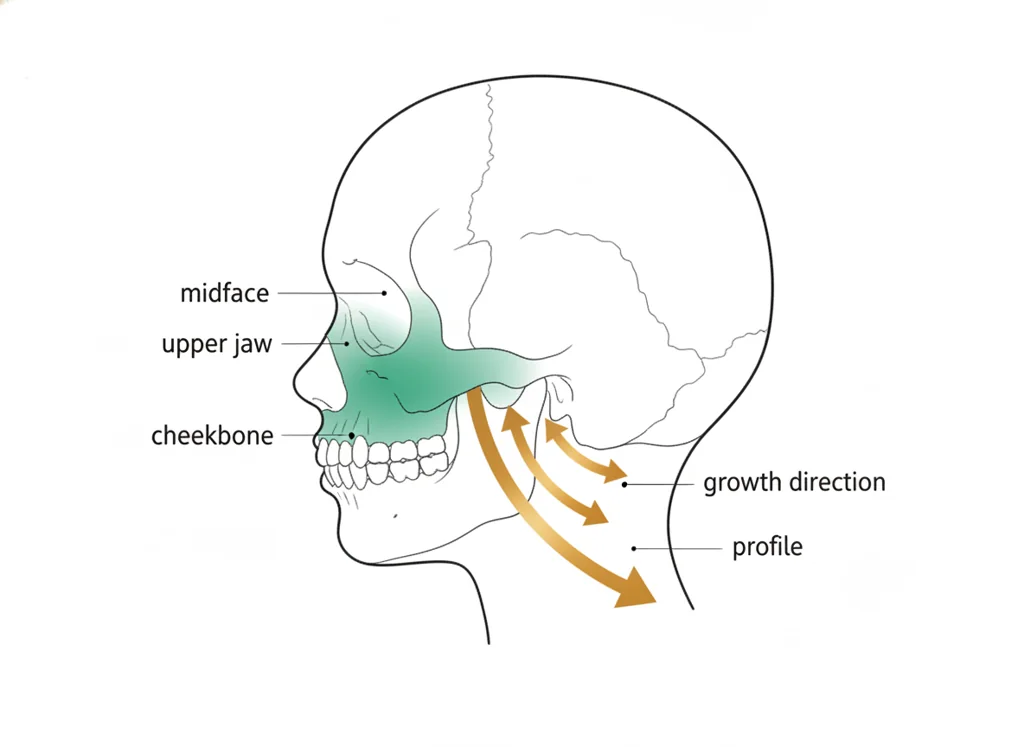
The pediatrician tracks two things over time. A growth chart plots weight, length, and head size against age as percentiles, showing whether Mateo is gaining steadily and staying on his own curve or falling off it. Developmental milestones (smiling, sitting, babbling, first words, walking) show whether his motor, social, and early-language skills arrive roughly on time. Two -specific watch points feed in: hearing and speech progress, because ear fluid or VPI can slow language, and over the years, because upper-jaw growth can lag after repair and is followed long term.

Read this in pieces, one chunk at a time
Do the work

Explore (work the model before reading on)

  1. Name the two parts of Mateo's that make early feeding hard.
  2. What are the two main tools the pediatrician uses to watch the whole child over time?
  3. Sucking needs a sealed mouth and an intact roof to build pressure. Using that, explain why a lip and can lead to fewer calories and slow weight gain.
  4. The pediatrician plots Mateo's weight on a growth chart at every visit instead of weighing him once. Why does watching the trend over time tell you more than a single weight?
  5. Suppose Mateo's weight was tracking fine, then drops off his curve over two months. Predict two different -related causes the pediatrician might check, thinking back to feeding, ears, and the recent surgeries.
  6. In one sentence, what pattern did your team find about keeping a child growing and developing well?
The plan

Guided notes

1

Why feeding is the early risk

Model start: Someone has to make sure the whole child is growing and developing well, which is the pediatrician's job.
  • To suck, a baby needs a lip ______ (seal) and an intact roof of the mouth to build pressure; Mateo's weakens both.
  • Too few calories and falling behind on weight is called ______ to thrive, and most infants do well with specialized bottles and positioning.
2

Watching the whole child over time

  • A growth chart plots weight, length, and head size as ______ (percentiles), so the team watches the trend, not a single number.
  • Developmental ______ (milestones) like babbling, first words, and walking should arrive at roughly typical ages.
3

Cleft-specific watch points

  • Hearing and speech progress are folded in, because ear fluid or VPI can slow ______ development.
  • ______ growth (the upper jaw and middle of the face) can lag after repair and is monitored long term.
Explore

Reading the Research

What to read
Why this source matters
This is the published evidence behind today's idea: Repairing the parts is not enough; someone has to watch the whole child grow and develop, and trends over time tell you more than any single check.
Words to unlock first
failure to thrivegrowth chart (percentile)developmental milestonemidface growthlongitudinal monitoring
Reading moves
  1. Skim the title and abstract first to get the gist.
  2. Circle the one sentence that states the main claim.
  3. Box the evidence the authors give for that claim.
  4. Mark one sentence that confuses you, and move on.
Stop point
You do not need the methods or statistics yet. If a sentence is about lab technique or math you have not learned, mark it and skip it.
Your output
Write one claim-evidence sentence: what this source claims, and the one piece of evidence that backs it up.
Where this fits
Tested on (Ohio WebXam)
Genetics of Disease · 072130
PLTW lesson
MI · Disease domain · Medical Interventions (MI), longitudinal whole-child monitoring
WebXam domain
Bio-Molecular Technology
Evidence to produce
As Mateo's pediatrician at a well-child visit, explain to a parent in three short sentences: (1) why feeding and weight gain need close watching at the start, (2) what a growth chart tells you that a single weigh-in cannot, and (3) one developmental milestone you are checking for. Use the words 'suction,' 'growth chart,' and 'milestone.'
Lab / skill
Clinical backbone (cleft team) · Clinical backbone (cleft team)
Words

Vocabulary (the same words your classes use)

The plan

Track your progress today

Check these off as you work through the lesson, then submit. This tells Mr. Mendoza how you're doing so he can help the class. It does not replace turning in your producible.

Use the code Mr. Mendoza gave you, not your name. Saved on this device.

Check off as you finish
  • Read the Model and answered the Explore questions.
  • Filled in the guided notes in my own words.
  • Defined the new vocabulary with an example.
  • Built the producible: As Mateo's pediatrician at a well-child visit, explain to a parent in three short sentences: (1) why feeding and weight gain need close watching at the start, (2) what a growth chart tells you that a single weigh-in cannot, and (3) one developmental milestone you are checking for. Use the words 'suction,' 'growth chart,' and 'milestone.'
  • Wrote my Claim, Evidence, and Reasoning exit ticket.
Pick your period and code first.
Check yourself

Exit ticket (Claim, Evidence, Reasoning)

  • Claim: Repairing Mateo's is ____ (enough / not enough) on its own; the team must also track that he is growing and developing well.
  • Evidence: One feeding risk is ____ (from weak suction), and one monitoring tool the pediatrician uses over time is the ____.
  • Reasoning: Watching trends over time (growth and milestones) beats a single check because ____.
How this is graded (rubric)
For: As Mateo's pediatrician at a well-child visit, explain to a parent in three short sentences: (1) why feeding and weight gain need close watching at the start, (2) what a growth chart tells you that a single weigh-in cannot, and (3) one developmental milestone you are checking for. Use the words 'suction,' 'growth chart,' and 'milestone.'
CriterionProficientDevelopingBeginning
CompleteEvery required part of the artifact is present and filled in.Most parts are present, but one is missing or left blank.Several parts are missing.
AccurateThe science and data are correct and match the evidence.Mostly correct, with a small factual slip.Key science or data is wrong.
Scientific reasoning (CER)States a claim, backs it with specific evidence, and explains the reasoning.Has a claim and evidence, but the reasoning is thin or missing.Gives an answer with no evidence or reasoning.
Professional communicationClear, organized, and labeled the way a clinician or scientist would write it.Readable but disorganized or missing labels.Hard to follow.
SubmittedTurned in the right way (Schoology for routine work) and confirmed.Turned in, but in the wrong place or unconfirmed.Not turned in.
How the model answer scores against this rubric
  • CompleteProficient: Nothing is left blank: the model fills every part of "As Mateo's pediatrician at a well-child visit, explain to a parent in three short sentences: (1) why feeding and weight gain need close watching at the start, (2) what a growth chart tells you that a single weigh-in cannot, and (3) one developmental milestone you are checking for. Use the words 'suction,' 'growth chart,' and 'milestone.'".
  • AccurateProficient: Every number and claim matches the case evidence.
  • Scientific reasoning (CER)Proficient: It names a claim, cites the specific evidence, and explains the reasoning, not just the answer.
  • Professional communicationProficient: It is organized and labeled like a real chart note.
  • SubmittedProficient: It would be turned in on Schoology and confirmed.
Explore

Where this leads: careers

Pediatrician Pediatric dietitian Developmental specialist

What's next: We answered how the team keeps Mateo growing and developing well. His body and growth are well cared for. But a child is more than a body. Mateo and his parents face stares, worry, the stress of many appointments, and questions about how he will feel about himself. How do we support Mateo and his family beyond the body?