Rough draft.This research track is under review with Dr. Atit's lab. Content and sequence may still change.
The Baby Mateo Case
Disease domainShared clinical backbone (the cleft team)Lesson 14 of 20Your seat: Dentist / orthodontist (cleft team)

Caring for Mateo's Teeth and Bite

Discovery question

Why does a lip and change the teeth and bite, and why is dental care spread across many years?

💡 Mateo's tooth differences come from where the runs (through the tooth-bearing bone), so they are predictable and treated in a staged plan, not all at once.

The plan

Prerequisite check

Before this page, you should know
  • The drains and ventilates through one tube, the Eustachian tube, which is normally closed and opens briefly when you swallow or yawn.
  • A muscle, the tensor veli palatini, pulls the Eustachian tube open; in a palate this muscle is interrupted, so the tube does not open and drain well.
Today's new idea is only
Mateo's tooth differences come from where the runs (through the tooth-bearing bone), so they are predictable and treated in a staged plan, not all at once.
Learn first

What you will learn

Goal: Students will describe the dental anomalies common in lip and and explain why dental and orthodontic care is staged across childhood, including .

Know by the end
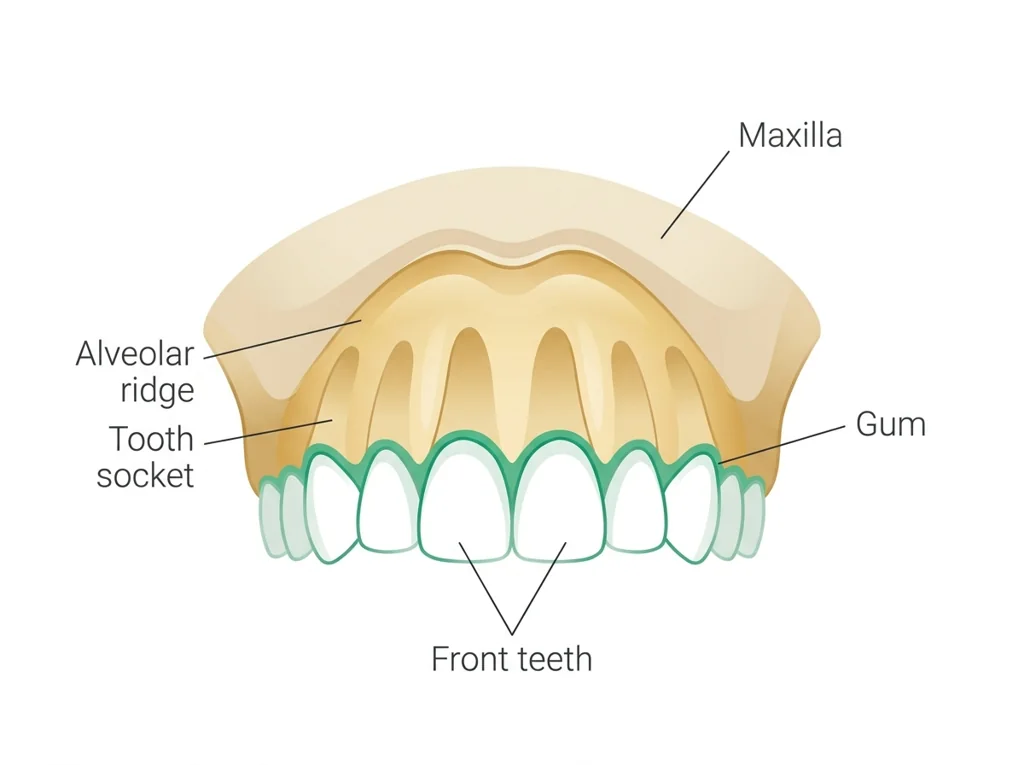
  • A lip and runs through the , the tooth-bearing bone of the upper jaw, right where the upper forms.
  • Common dental findings near the include (a missing tooth), supernumerary (extra) teeth, a peg-shaped or microdont , enamel , ectopic eruption and , and reduced upper-jaw growth.
  • Dental care is staged across childhood because teeth erupt over years and the face keeps growing.
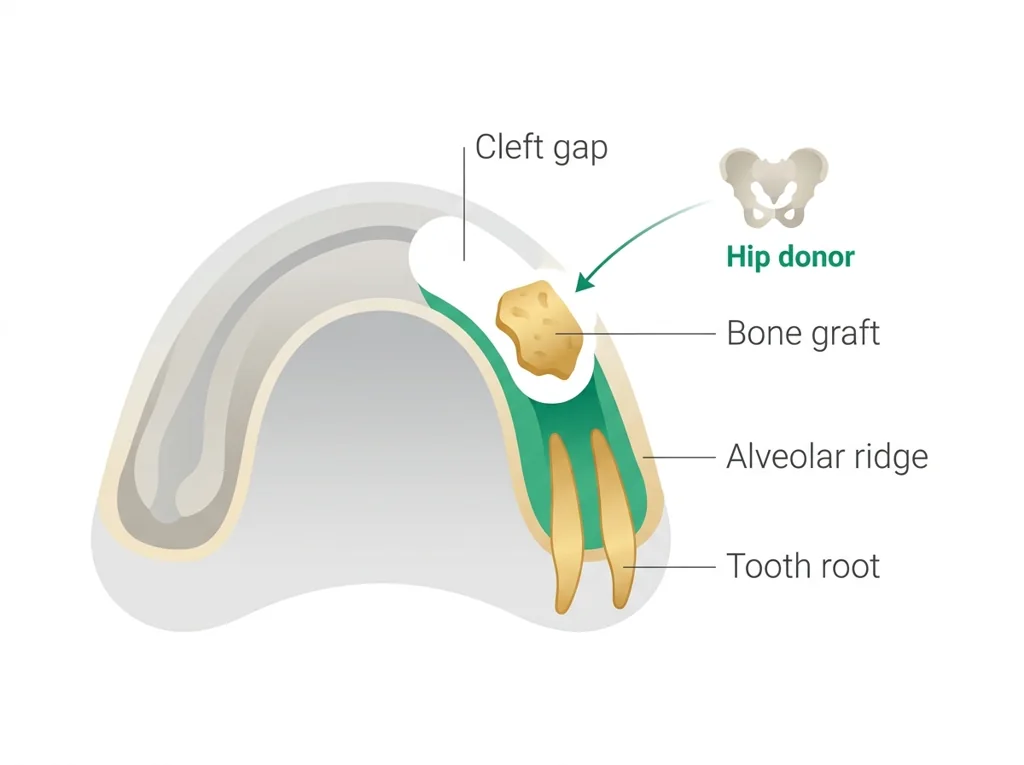
  • in the mixed- years (about 7 to 11) places bone into the alveolar gap so a permanent tooth can erupt and anchor there; definitive orthodontics and jaw surgery come later.
Learn first

Model: Where the cleft runs, and what it does to teeth

Look at where Mateo's passes. A lip and runs through the , the curved ridge of bone in the upper jaw that holds the teeth. The tooth that normally sits right at that spot is the upper , the tooth just beside the two front teeth. So the cleft does not just split lip and palate; it also splits the exact piece of bone where certain teeth are supposed to form and anchor.

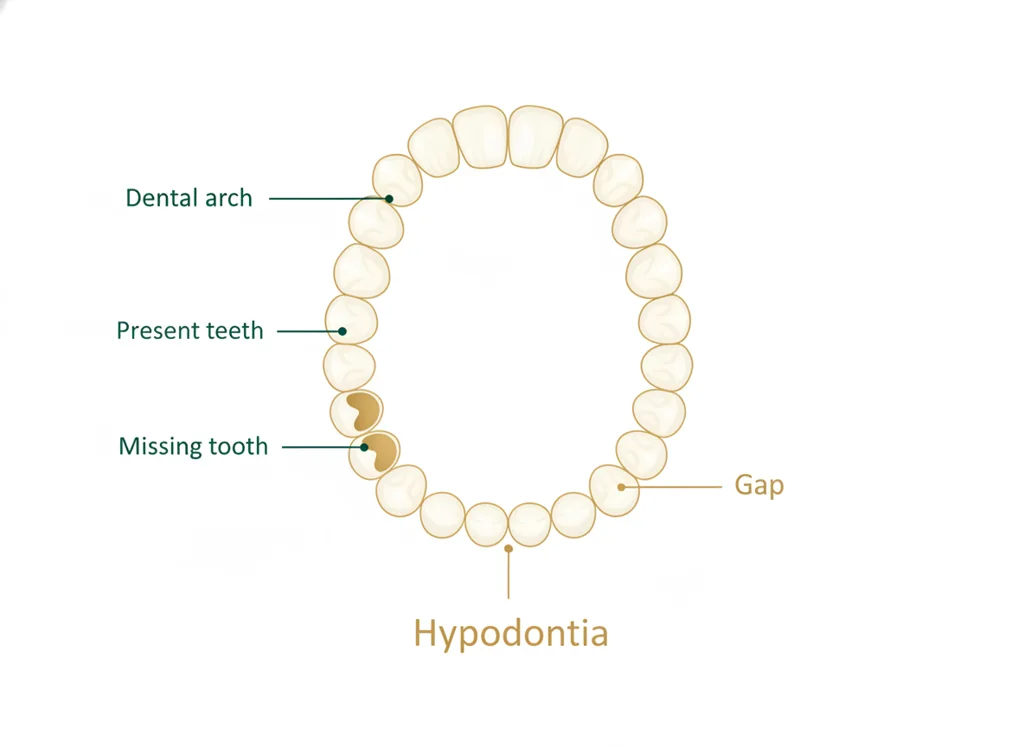
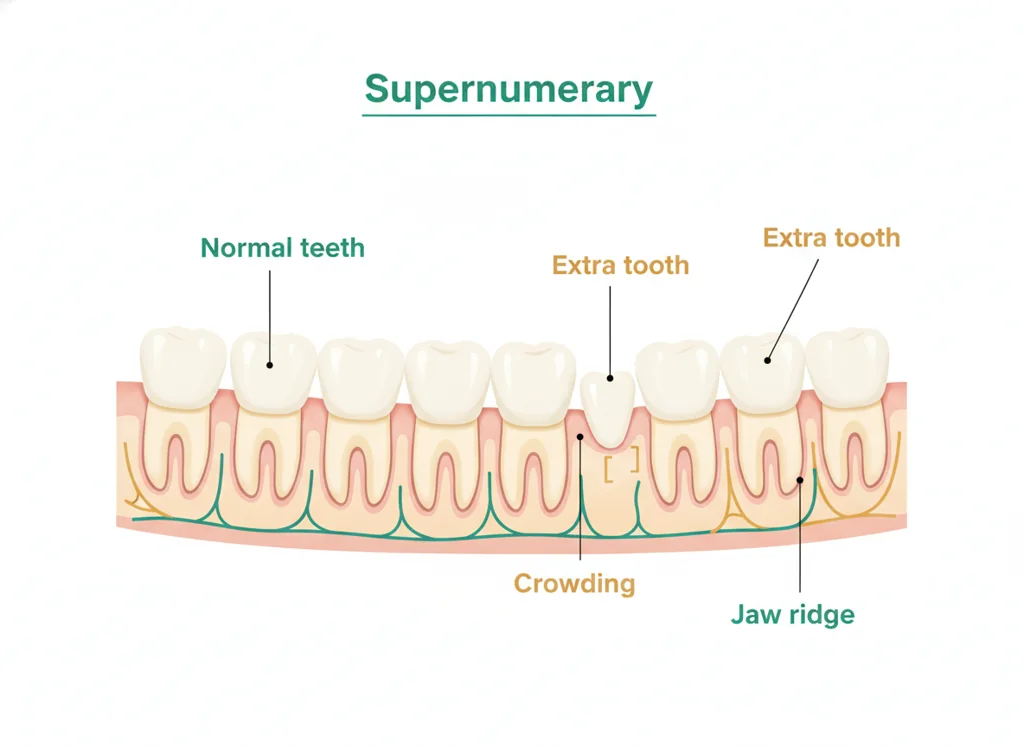
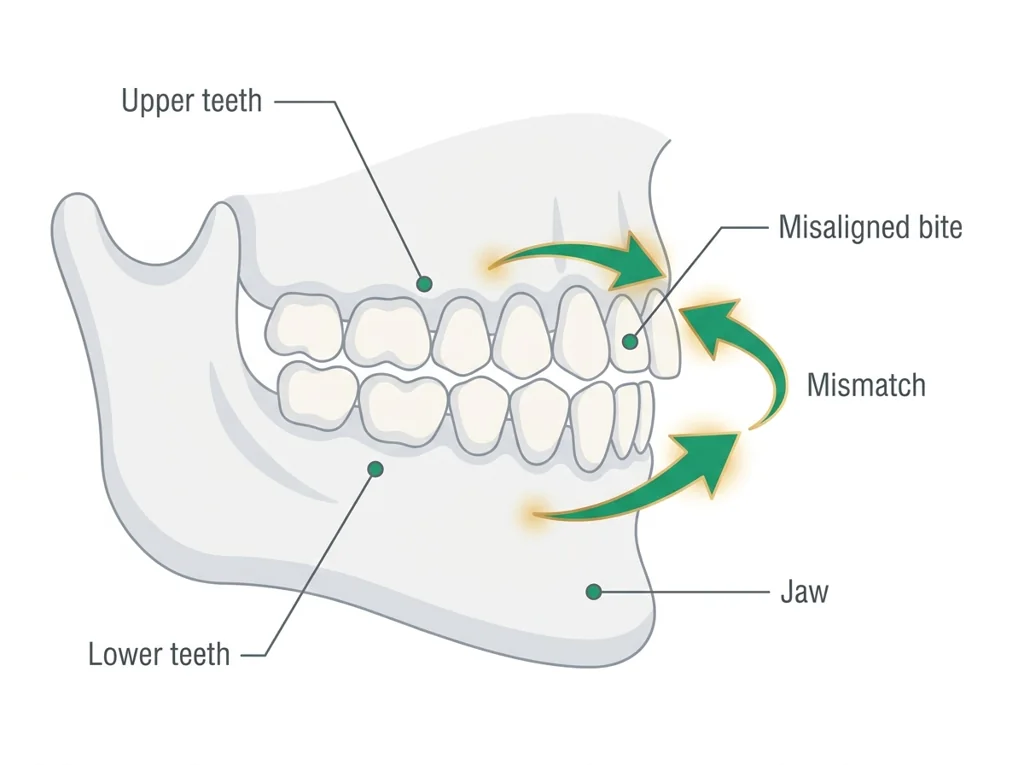
From the clinical literature, reported dental findings near the cleft include: missing teeth, often the (), a tooth that should be there never forms; extra teeth (supernumerary); a peg-shaped or very small (microdont) lateral incisor; enamel , thin or poorly formed enamel; ectopic eruption, crooked teeth, and , where upper and lower teeth do not meet correctly; and maxillary (upper-jaw) hypoplasia, where the upper jaw grows less and affects the bite over time. These are common because the cleft disturbs the very ridge where the teeth and bone develop. Dental care is staged: a key step around ages 7 to 11 is , placing bone into the alveolar gap so a permanent tooth can erupt into and anchor in that spot.

Read this in pieces, one chunk at a time
Do the work

Explore (work the model before reading on)

  1. What is the , and which tooth sits right where the runs?
  2. List two different ways a tooth near the might be abnormal.
  3. The runs through the bony ridge where teeth form and anchor. Why does that location explain why a tooth there might be missing, tiny, or out of place?
  4. Mateo's adult teeth come in over years, and his jaw keeps growing. Why might the dentist not try to fix everything in one visit when he is little?
  5. The team plans to place bone in the alveolar gap around ages 7 to 11, when certain adult teeth are about to come in. Predict why putting bone there at that time could help a permanent tooth erupt into the area.
  6. In one sentence, what pattern did your team find about the and Mateo's teeth and bite?
The plan

Guided notes

1

Where the cleft runs

Model start: A lip and is also a dental condition, because the cleft runs through the tooth-bearing bone.
  • A lip and is also a dental condition, because the cleft runs through the ______ (the alveolar ridge), the tooth-bearing bone of the upper jaw.
  • The tooth right at that spot is the upper ______ incisor, which is why it is the one most often missing or undersized.
2

Common dental findings

  • means a tooth (often the ) is ______ (does not form); supernumerary teeth means ______ (extra) teeth in the area.
  • Other findings include a microdont , enamel , crooked teeth, and ______, where upper and lower teeth do not meet correctly.
3

Staged dental care

  • Dental care is ______ across childhood because teeth erupt over years and the face keeps growing.
  • Around ages 7 to 11, alveolar bone ______ places bone into the gap so a permanent tooth can erupt and anchor; braces and jaw surgery come later.
Explore

Reading the Research

What to read
Why this source matters
This is the published evidence behind today's idea: Mateo's tooth differences come from where the runs (through the tooth-bearing bone), so they are predictable and treated in a staged plan, not all at once.
Words to unlock first
alveolus (alveolar ridge)hypodontiasupernumerary toothmalocclusionalveolar bone grafting
Reading moves
  1. Skim the title and abstract first to get the gist.
  2. Circle the one sentence that states the main claim.
  3. Box the evidence the authors give for that claim.
  4. Mark one sentence that confuses you, and move on.
Stop point
You do not need the methods or statistics yet. If a sentence is about lab technique or math you have not learned, mark it and skip it.
Your output
Write one claim-evidence sentence: what this source claims, and the one piece of evidence that backs it up.
Where this fits
Tested on (Ohio WebXam)
Genetics of Disease · 072130
PLTW lesson
MI · Disease domain · Medical Interventions (MI), staged dental and orthodontic management
WebXam domain
Bio-Molecular Technology
Evidence to produce
As Mateo's cleft-team dentist, explain to a parent in three short sentences: (1) why some teeth near the cleft look different (tie it to the alveolus), (2) why the dental work is spread out over years instead of done now, and (3) what alveolar bone grafting is for and roughly when it happens. Use the words 'alveolus,' 'staged,' and 'bone grafting.'
Lab / skill
Clinical backbone (cleft team) · Clinical backbone (cleft team)
Words

Vocabulary (the same words your classes use)

The plan

Track your progress today

Check these off as you work through the lesson, then submit. This tells Mr. Mendoza how you're doing so he can help the class. It does not replace turning in your producible.

Use the code Mr. Mendoza gave you, not your name. Saved on this device.

Check off as you finish
  • Read the Model and answered the Explore questions.
  • Filled in the guided notes in my own words.
  • Defined the new vocabulary with an example.
  • Built the producible: As Mateo's cleft-team dentist, explain to a parent in three short sentences: (1) why some teeth near the cleft look different (tie it to the alveolus), (2) why the dental work is spread out over years instead of done now, and (3) what alveolar bone grafting is for and roughly when it happens. Use the words 'alveolus,' 'staged,' and 'bone grafting.'
  • Wrote my Claim, Evidence, and Reasoning exit ticket.
Pick your period and code first.
Check yourself

Exit ticket (Claim, Evidence, Reasoning)

  • Claim: Mateo's tooth differences come from the ____ of his , not poor dental hygiene.
  • Evidence: The runs through the ____, and two dental findings it can cause are ____ and ____.
  • Reasoning: Dental and orthodontic care must be staged over years, including bone grafting around ages 7 to 11, because ____.
How this is graded (rubric)
For: As Mateo's cleft-team dentist, explain to a parent in three short sentences: (1) why some teeth near the cleft look different (tie it to the alveolus), (2) why the dental work is spread out over years instead of done now, and (3) what alveolar bone grafting is for and roughly when it happens. Use the words 'alveolus,' 'staged,' and 'bone grafting.'
CriterionProficientDevelopingBeginning
CompleteEvery required part of the artifact is present and filled in.Most parts are present, but one is missing or left blank.Several parts are missing.
AccurateThe science and data are correct and match the evidence.Mostly correct, with a small factual slip.Key science or data is wrong.
Scientific reasoning (CER)States a claim, backs it with specific evidence, and explains the reasoning.Has a claim and evidence, but the reasoning is thin or missing.Gives an answer with no evidence or reasoning.
Professional communicationClear, organized, and labeled the way a clinician or scientist would write it.Readable but disorganized or missing labels.Hard to follow.
SubmittedTurned in the right way (Schoology for routine work) and confirmed.Turned in, but in the wrong place or unconfirmed.Not turned in.
How the model answer scores against this rubric
  • CompleteProficient: Nothing is left blank: the model fills every part of "As Mateo's cleft-team dentist, explain to a parent in three short sentences: (1) why some teeth near the cleft look different (tie it to the alveolus), (2) why the dental work is spread out over years instead of done now, and (3) what alveolar bone grafting is for and roughly when it happens. Use the words 'alveolus,' 'staged,' and 'bone grafting.'".
  • AccurateProficient: Every number and claim matches the case evidence.
  • Scientific reasoning (CER)Proficient: It names a claim, cites the specific evidence, and explains the reasoning, not just the answer.
  • Professional communicationProficient: It is organized and labeled like a real chart note.
  • SubmittedProficient: It would be turned in on Schoology and confirmed.
Explore

Where this leads: careers

Orthodontist Pediatric dentist Dental hygienist

What's next: We answered why the changes Mateo's teeth and bite and why dental care is staged. But now Mateo has a lot going on at once: surgeries, speech therapy, ear care, and dental visits. With all of that, how do we make sure the most basic thing is still on track, that he is actually growing and developing well overall?