
Critical Timing Windows, When the Door Closes
This reading contains every idea and every piece of evidence needed for today's decision. The research links at the end are optional.
Why this matters
The face is built in a few short weeks early in pregnancy, so timing can separate a possible cause from a story that does not fit.
The question you are trying to answer
Why does the timing of a disruption change which part of the face is affected?
Begin with the idea you already earned
A cleft pattern narrows the failed developmental checkpoint, but it rarely identifies one unique cause.
Study the analogy before the biology
- Why can the scenery move only during the blackout?
- What happens if the crew arrives after the curtain opens?
- How could the same delay matter in one scene but not another?
Turn the analogy into three rules
Limit: Biological windows can overlap and vary; they are not controlled by a stage clock.
Map those rules onto the biology
A critical window is a period when a structure or process is especially sensitive because it is actively changing.
The upper lip closes before the secondary palate finishes. An event after lip closure is less compatible with directly causing cleft lip.
Compatible timing is necessary for many causal claims, but it is not sufficient proof by itself.
Read Mateo's labeled case evidence
Upper-lip fusion occurs earlier than completion of secondary-palate fusion.
The two structures have different timing windows.
A disruption must overlap a sensitive process to affect that process directly.
Exposure timing is part of causal reasoning.
After a cleft is established in utero, later normal growth does not automatically fuse the gap.
Subsequent development builds around the open structure.
Make the concrete decision
You are reviewing an exposure timeline without naming the exposure.
Exposure A occurred after upper-lip closure but during palatal fusion. Exposure B occurred before both windows.
- Prioritize A for a direct palate-window hypothesis, while keeping other explanations open.
- Claim A directly caused Mateo's cleft lip.
- Claim timing never matters.
Choose the timing hypothesis and cite the window evidence.
Claim ceiling: You may judge timing compatibility. You may not prove causation from timing alone.
Write the 10-year takeaway
A developmental risk matters most when it acts during the short window for the process it can disrupt.
- What makes an exposure timing compatible with a developmental outcome?
- Why does compatible timing not prove causation?
Glossary in plain English
A lesson term defined by the surrounding model and case evidence.
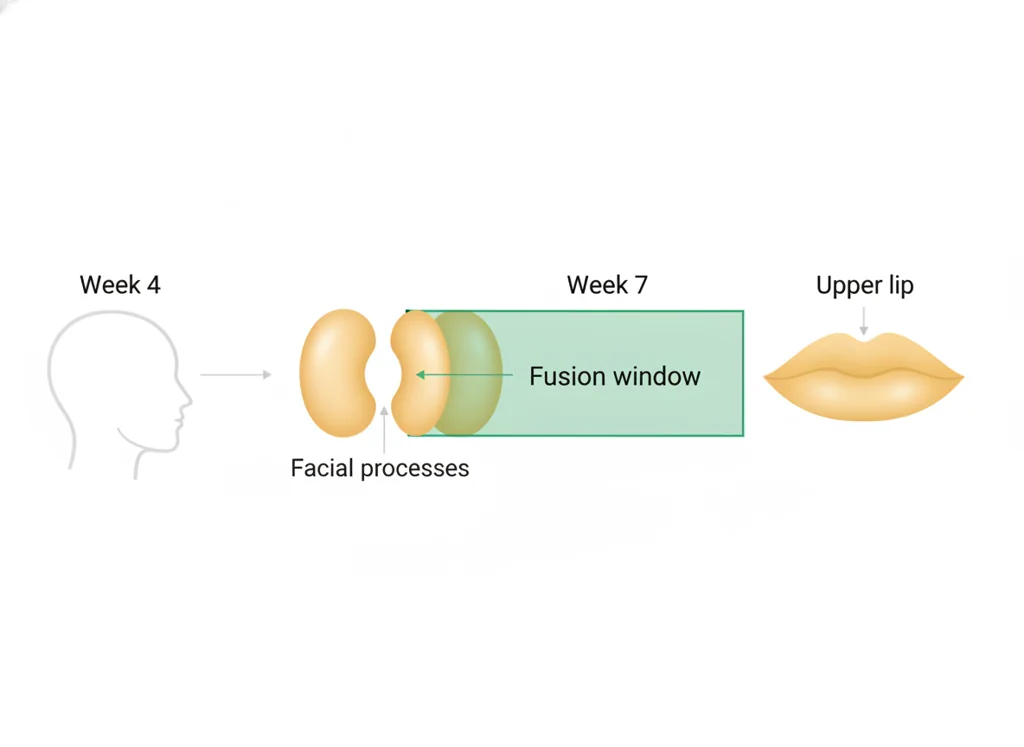
The brief stretch of early development when the facial processes must join to form the upper lip, around weeks four to seven.
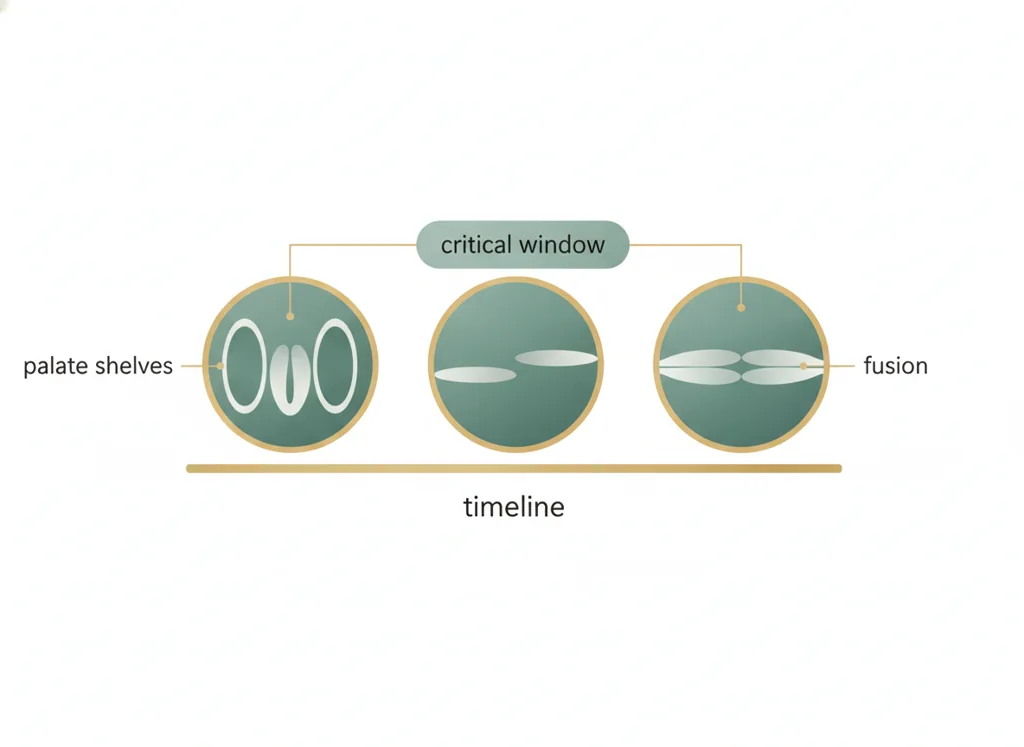
The limited stretch of embryo development when the palate shelves must rise and join; missing this window leaves a cleft palate.
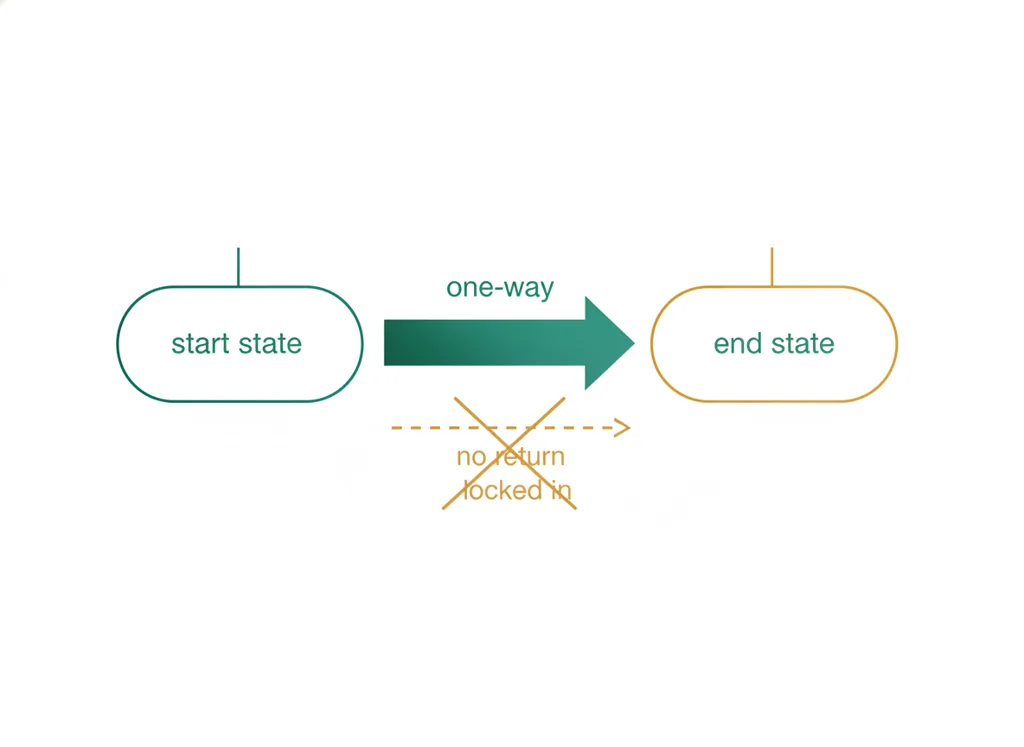
Describing a change or step that cannot be undone once it has happened, locking the outcome in place.
Research citation trail (advanced)
You do not need these papers or database records to finish the lesson. They document where the plain-language explainer's claims come from and are intended for teachers or advanced readers.