

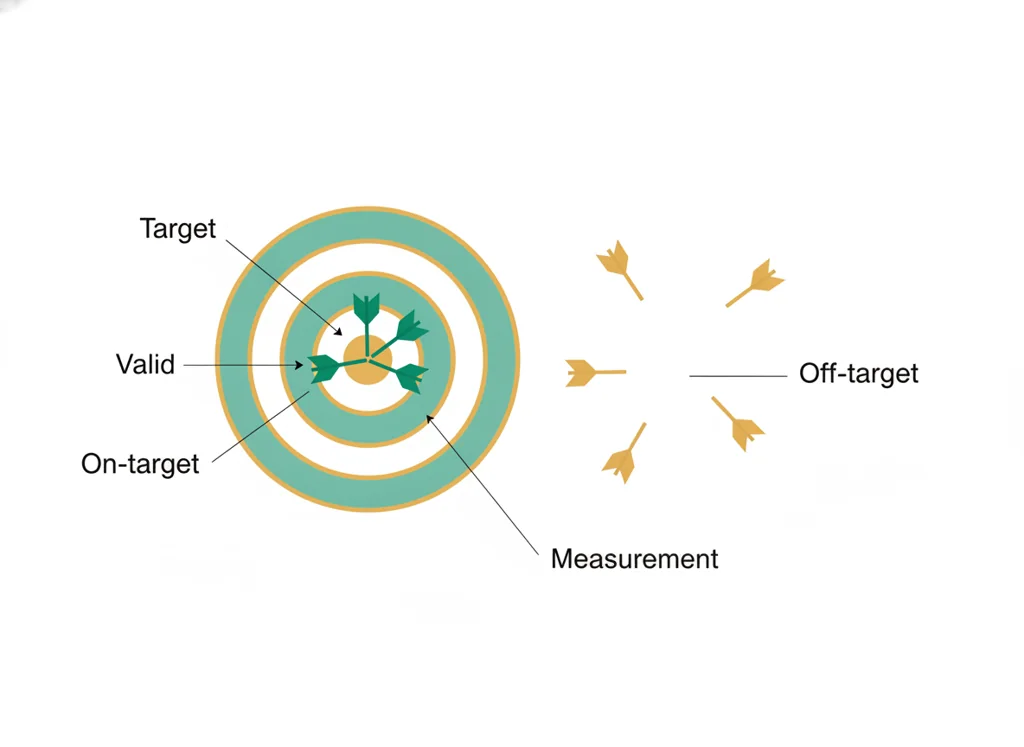
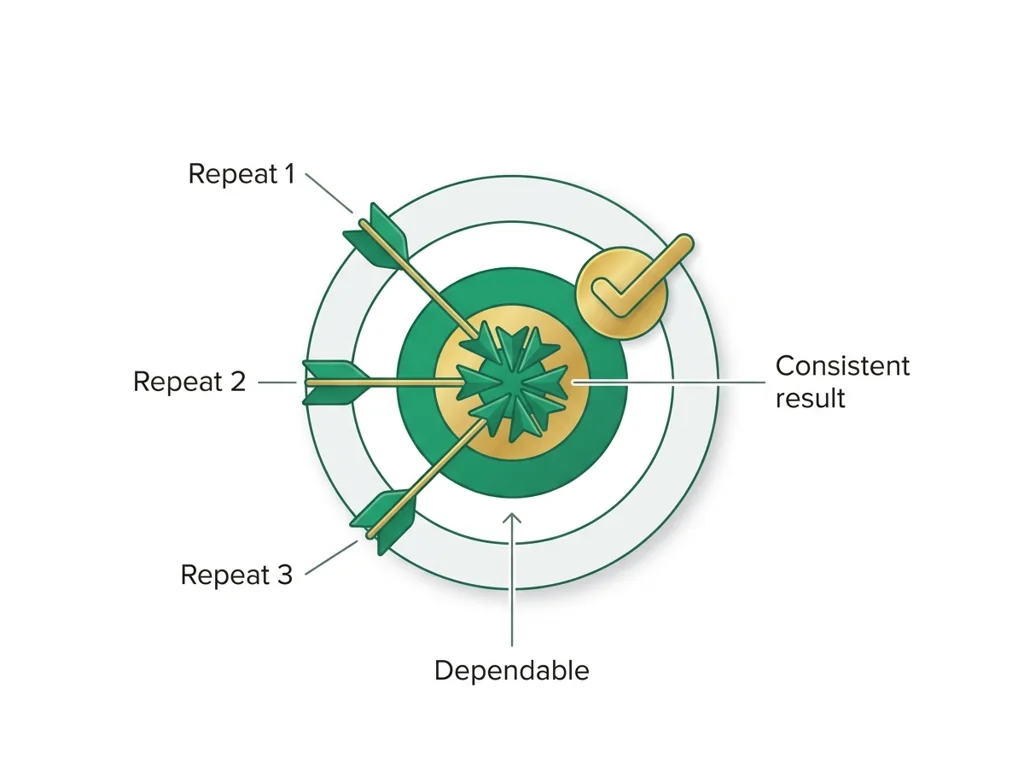
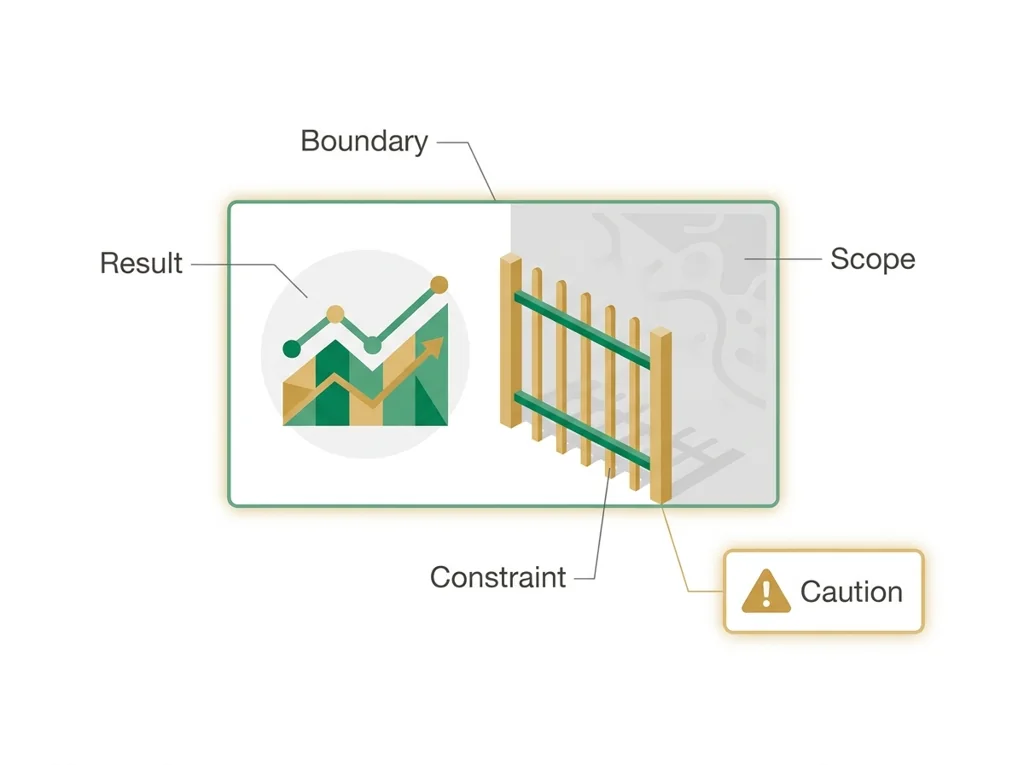
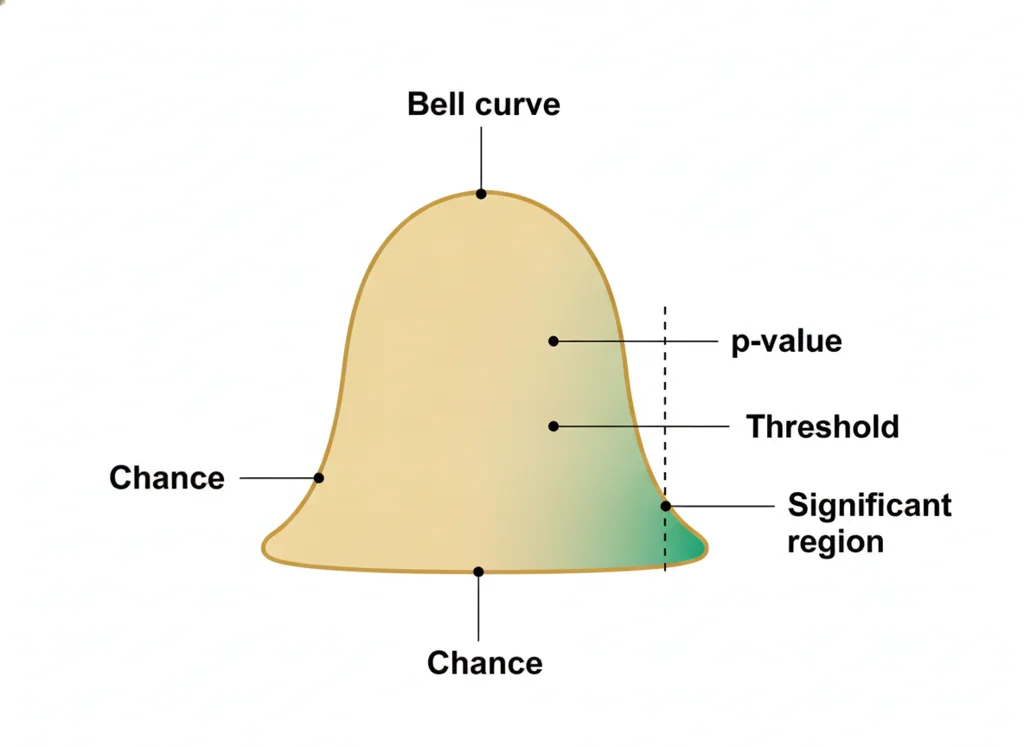
T-test purpose, validity, reliability, limitations, CER conclusion.
Your PLTW coursework: Biomedical Innovation ▸ Problem 2: Exploring Human Physiology ▸ "Activity 2.1.3 Making Results Meaningful"
What to do if absent- CER:
- Claim, Evidence, Reasoning: make a claim, back it with evidence, explain your reasoning.
- SOP:
- Standard Operating Procedure, the exact steps to follow (especially in a lab).
- Tracker:
- Your PLTW progress log where you record completed evidence.
- myPLTW:
- The PLTW course site where you do the online activities. Find it in Clever with your Microsoft sign-in, right next to Schoology.
Analyze your physiology dataset for bias and error, choose the right graph, and write a CER conclusion that names limitations and .
- 1Reopen your dataset and list one possible source of bias and one possible source of error.
- 2Choose the graph type that best fits your data and explain in one line why it fits.
- 3Build that graph in the spreadsheet with labeled axes and a clear title.
- 4Decide whether your two groups differ enough to call the result statistically significant.
- 5Write a CER conclusion: state a claim, give the data evidence, and explain the reasoning.
- 6Add one sentence naming a limitation of your study and how replication would help.
- • You will be able to identify bias and error in a dataset.
- • You will be able to choose and build an appropriate graph.
- • You will be able to write a CER conclusion that names limitations.
Open any day for its full lesson, the work due that day, and guided notes.
Problem 2 CER analysis mini-report: specific claim, statistical evidence with values, reasoning, and at least two honest limitations.
CER contribution arguing the most important criterion for evaluating a medical innovation, plus two questions and a reflection connecting the criterion to your proposed innovation.
Innovation problem definition: specific problem statement supported by cited evidence, and a named list of affected stakeholders.
Innovation design proposal: assembled problem statement, criteria and constraints, chosen concept, feasibility check, expected benefit, and one major risk.
- Hook: the same data can tell two different stories, so the honest analyst names the bias and the limits.
- Today's goal: turn your physiology numbers into a defensible, evidence-based conclusion.
- Monday's bioethics debate on biometric privacy connects: who should ever see your heart-rate data?
- Reminder: your graded analysis and CER conclusion live in the PLTW course shell.
Do this: Advance PLTW Problem 2 by completing your statistical analysis and CER conclusion in myPLTW.
- • Bias systematically pushes results in one direction; error is random scatter.
- • means data this extreme would be unlikely IF there were no real effect. It is not the probability that the result is due to chance.
- • Choose a graph type that matches the data.
- • Write a CER conclusion that names study limitations.
📋 PLTW evidence due: completed spreadsheet analysis, labeled graph, and CER conclusion in the course shell.
All PLTW activities are completed inside the PLTW course environment: this page only gives direction.
Use this chart to keep your place. Nothing on it is turned in through the portal.
| Day | Work | Turn in |
|---|---|---|
| Monday · Mon, Mar 15 | Evidence for | |
| Tuesday · Tue, Mar 16 | CER mini-report | Problem 2 CER analysis mini-report: specific claim, statistical evidence with values, reasoning, and at least two honest limitations. |
| Wednesday · Wed, Mar 17 | Innovation debate | CER contribution arguing the most important criterion for evaluating a medical innovation, plus two questions and a reflection connecting the criterion to your proposed innovation. |
| Thursday · Thu, Mar 18 | Problem definition | Innovation problem definition: specific problem statement supported by cited evidence, and a named list of affected stakeholders. |
| Friday · Fri, Mar 19 | Submit innovation proposal | Innovation design proposal: assembled problem statement, criteria and constraints, chosen concept, feasibility check, expected benefit, and one major risk. |
- T: stats practice
- W: graph refine
- Th: CER draft
- F: analysis submit
Turn in: T-test purpose, validity, reliability, limitations, CER conclusion. weekly work due Problem 2 analysis.
Go to Schoology to turn this in.
Submit one PDF. Schoology attaches your name to your upload; on the page itself, write your period and code. Name the file: FirstName LastName - Assignment Title - YYYY-MM-DD.pdf.
Open Schoology PDF upload helpIf you cannot get in, see Mr. Mendoza. Do not skip the work.
4 panels from the illustrated semester.

Fiction. There is no such student. The lessons, labs and dates are the real planned course; the student, the classmates and the conversations are invented.
This explainer accompanies the PLTW lab protocol: watch it before lab.
Most days, this class is your PLTW coursework: and PLTW is online and individual. So being out usually just means doing exactly what we did in class, from home.
Open Clever, then myPLTWSign in to Clever with your district Microsoft account to open Schoology or myPLTW. Follow today's posted steps. If myPLTW will not open, use the posted alternative and tell Mr. Mendoza. Turn in your completed work through the Schoology assignment.
You can't do those from home: do this instead: Spreadsheet dataset.
Class still runs. A substitute will post today's plan: complete the online activity above; it's built to be self-guided. Need the concept taught without a teacher? Use this authoritative explainer:
Khan Academy Statistics and Probability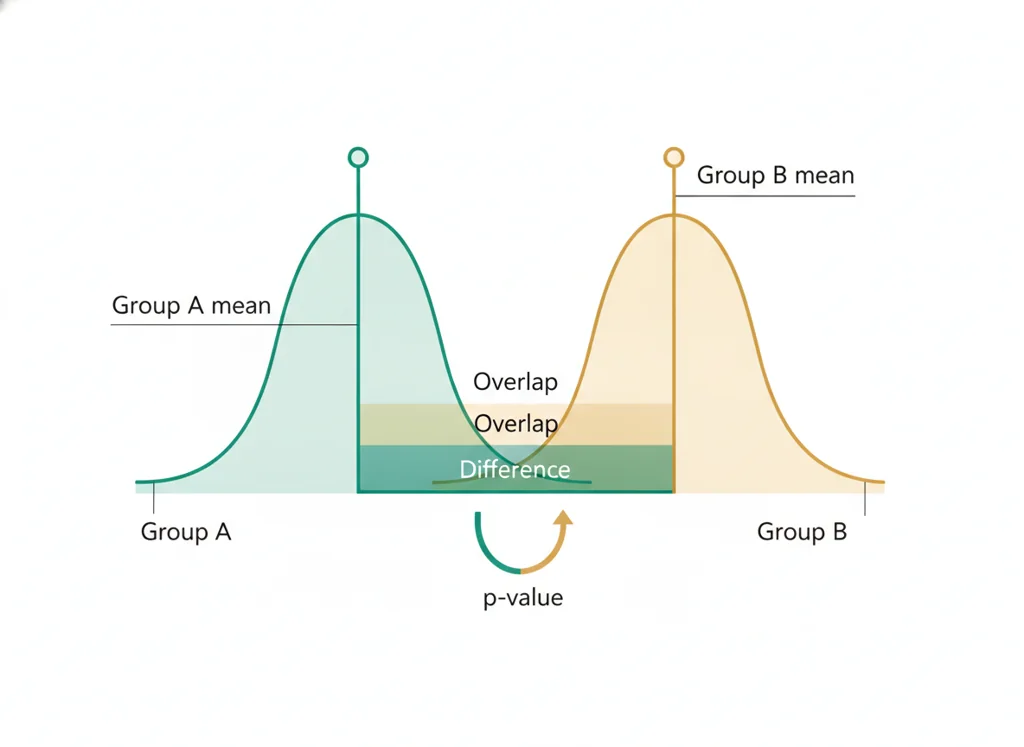
Classroom documents for this lesson are posted in Schoology. Open Clever, then Schoology, and find each one by the name shown on its card.
Use this if you were absent, got stuck, or need another pass before you submit the lesson artifact.
Use this if you were absent, got stuck, or need another pass before you submit the lesson artifact.
Open this when the class reaches this activity and use it to complete the required lesson artifact.
Sign in to Clever with your district Microsoft account to open Schoology or myPLTW. Follow today's posted steps. If myPLTW will not open, use the posted alternative and tell Mr. Mendoza. Turn in your completed work through the Schoology assignment.