


Debate the dilemma.
Weekly bioethics seminars and student debates with John Carroll University. Real questions, like who gets the organ and when gene editing is allowed. No experience needed.
Weekly for 11 weeks · in your PLTW course · kickoff Aug 28 with JCU
Take a sideTake a real biomedical dilemma, build a case from claim, evidence, and reasoning, and defend it out loud against the other side's best point.
Practice arguing honestly on organ allocation, gene editing, clinical trial ethics, and AI in medicine, with John Carroll faculty in the room.
No experience, and it happens inside your PLTW course, not as one more thing after school. First-timers are paired with experienced debaters, and nobody is thrown in cold.
What a seminar looks like
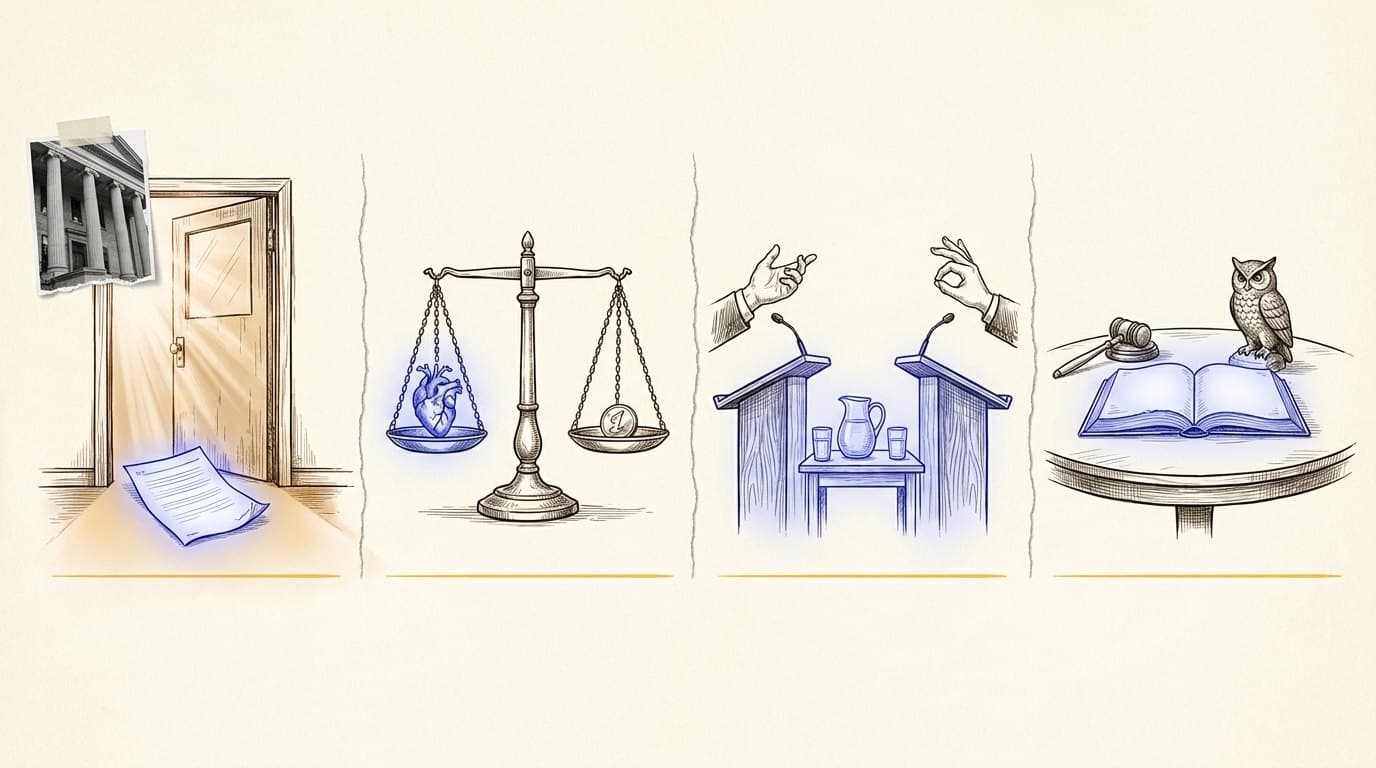
- 01Read ahead
The case worksheet is posted the week before. Read it and you walk in with something to say.
- 02Frame the dilemma
John Carroll faculty and students lay out the real question: organ allocation, gene editing, a trial that has to stay ethical.
- 03Make the case
Claim, evidence, reasoning. You state your position and show the work that carries it.
- 04Answer the best objection
Take on the strongest point the other side has, and keep it respectful.
The first time you defend a claim out loud, your voice will shake. By the second seminar you are asking the hard follow-up.
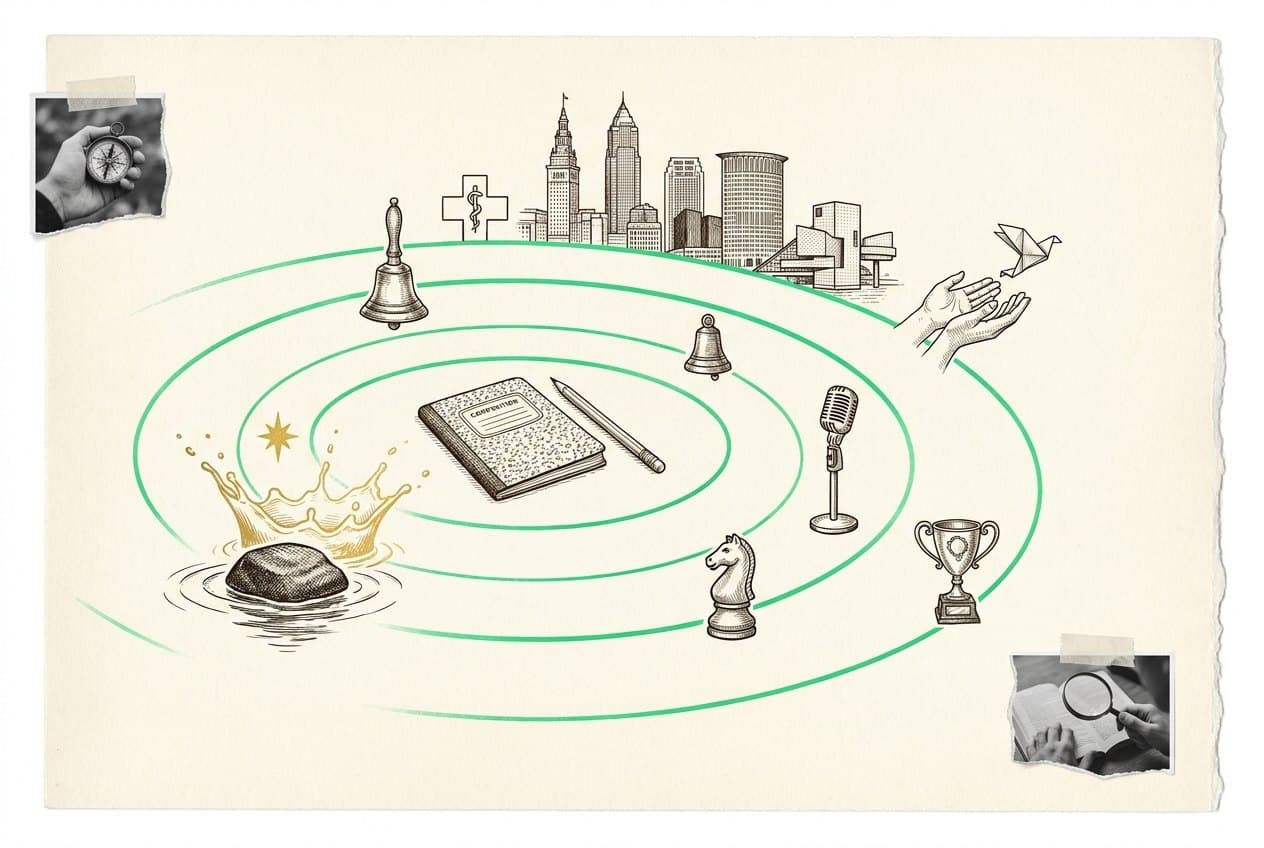
You
You practice the skill under every hard conversation: state a claim, back it with evidence, and change your mind when the evidence does. Members often say it is the first class where being wrong out loud stopped being scary.
John Hay
Philosophy for Kids brings John Carroll University philosophy faculty into the PLTW courses every week for eleven weeks and closes the year with a symposium. It gives John Hay students a university-level room to argue in.
Medicine
Hospitals, ethics boards, and trial teams make these calls for real, on deadlines, about actual patients. The reasoning you practice here is the reasoning those rooms use.
Careers
Where this points
The skills you practice here are the same ones these jobs run on. Every card carries pay and outlook read straight from O*NET, the US Department of Labor's occupation site, the schools that train for it, and an honest read on what AI is likely to change.
- Healthcare Social Worker
- Genetic Counselor
- Epidemiologist
Next meeting
No confirmed date posted yet.
Check this card again after the group calendar is updated. Current schedule note: Aug 28, Kickoff with John Carroll University (Philosophy4Kidz).
Inside Philosophy for Kids




Explore & practice
Philosophy for Kids calendar
When we meet
Year at a glance
Community boards
- • Celebrate specifically. Shoutouts name the win, not just the person.
- • Ask anything. No question is too basic, and families are welcome.
- • Protect privacy. First names and last initials only. Never post a phone number, address, grade, or health detail.
No bulletin posts yet.
Turn in: Your bulletin post, discussion topic, or reply
Go to Schoology to turn this in.
Submit one PDF. Schoology attaches your name to your upload; on the page itself, write your period and code. Name the file: FirstName LastName - Assignment Title - YYYY-MM-DD.pdf.
Open Schoology PDF upload helpIf you cannot get in, see Mr. Mendoza. Do not skip the work.
Vetted resources
Our JCU partner department.
The Hastings CenterThe founding bioethics research institute.
Kennedy Institute of Ethics (Georgetown)A leading academic bioethics center.
NIH: Department of BioethicsFederal bioethics resources and cases.
AMA Journal of EthicsCase-based ethics articles, ideal for debate prompts.
Questions families ask
Then this is good practice, and it is built to be safe. You are paired with an experienced debater, the worksheet comes a week early, and the room is graded on reasoning, not on winning.
No. The whole point is learning to argue from claim, evidence, and reasoning. First-timers are paired with experienced debaters.
Real biomedical dilemmas: organ allocation, gene editing, clinical trial ethics, AI in medicine. The same territory as PLTW coursework, argued out loud.
Mr. Mendoza with philosophy faculty and students from John Carroll University, every week for eleven weeks, on Fridays for Period 6A-7B and Thursdays for Periods 1-2 and 3-4B, embedded in the PLTW courses, plus a spring symposium.
Take a side at the next seminar.
Weekly for 11 weeks · in your PLTW course · kickoff Aug 28 with JCU
Turn in: Philosophy for Kids submission
Go to Schoology to turn this in.
Submit one PDF. Schoology attaches your name to your upload; on the page itself, write your period and code. Name the file: FirstName LastName - Assignment Title - YYYY-MM-DD.pdf.
Open Schoology PDF upload helpIf you cannot get in, see Mr. Mendoza. Do not skip the work.