
All careers
Career

Biomedical Engineer

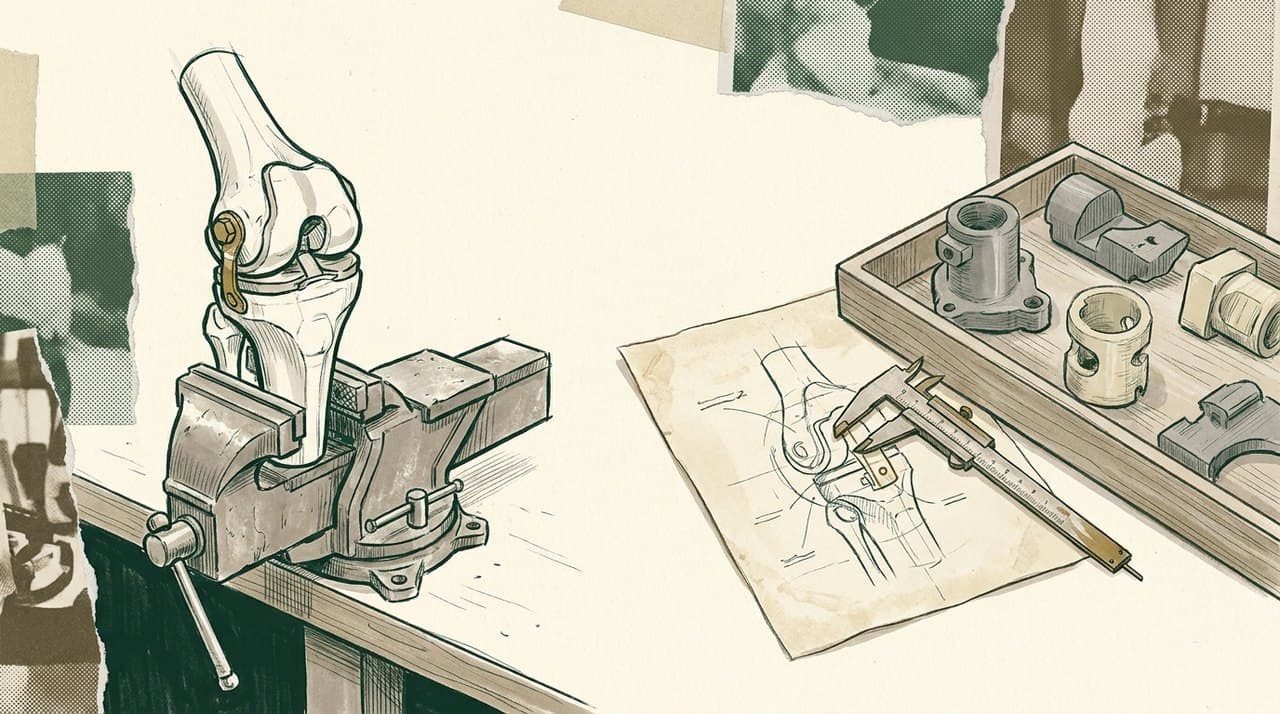
Biomedical engineers design the machines and parts that keep people alive and moving, things like imaging scanners, artificial joints, insulin pumps, and surgical tools, and then they test those designs until they are safe enough to use on a real patient.

Median pay (US)

$109,370

2025 · $52.58 an hour

O*NET source

Job outlook

Faster than average

O*NET's band for this category is 5% to 6%, 2024-2034

O*NET source

To get in the door

Bachelor's degree

Most of these occupations require a four-year bachelor's degree, but some do not.

Openings a year

1,300

projected, nationally

O*NET source

What the day actually looks like

  • Design or improve a piece of medical equipment, often in CAD software like SolidWorks or AutoCAD, then run the numbers in MATLAB or Python before anything gets built (O*NET task and software lists for 17-2031.00).
  • Test whether a device is safe, accurate, and effective, and write up what the test showed. The US Department of Labor career video says making sure designs operate safely and correctly is a large part of the job (full transcript is printed on the CareerOneStop video page linked below).
  • Work alongside doctors, life scientists, and chemists on the engineering side of a biological problem, since the engineer rarely owns the whole question (O*NET task list).
  • Build computer models and simulations of a body system or a device before committing to hardware (O*NET task list).
  • Live inside long loops. The Department of Labor video describes spending many hours, even years, on one project in a cycle of researching, developing, testing, and trying again.

Skills you need first

  • Biology, chemistry, and physics, plus math through calculus. Ohio State's biomedical engineering department tells prospective students to get some background in calculus, chemistry, biology, and physics before they arrive (bme.osu.edu/biomedical-engineering-undergraduate-program/prospective-undergraduate-students).
  • Math strong enough to start college in precalculus or higher. Cleveland State asks engineering applicants for an ACT Math score of 23, an SAT Math score of 550, or placement into Math 168 (Precalculus II) or above (engagecsu.com/freshmen).
  • CAD and coding. O*NET lists SolidWorks and AutoCAD among the software used in this job, along with MATLAB, Python, Java, and C++ (onetonline.org/link/summary/17-2031.00).
  • Comfort with problem solving, hands-on work, and group work. Ohio State's department tells applicants to expect an intensive work ethic and a significant amount of group work (bme.osu.edu prospective students page).

How long people stay

Honest answer: no verified statistics on tenure, turnover, retirement age, or burnout for this specific occupation were found. What is verified is the shape of the work. The US Department of Labor career video for this occupation says biomedical engineers can expect to spend many hours, even years, on a specific project in a cycle of researching, developing, testing, and trying again, and names patience among the qualities needed. It is a desk, lab, and manufacturing-floor career rather than a physically punishing one, which usually means a long runway, but that is an inference and not a cited finding. Treat any claim about how long biomedical engineers stay in the field as unverified until you see the number.

Where it is needed, and the different ways to do it

Real but small and competitive, which is the part most career pages leave out. The BLS Occupational Outlook Handbook page, read directly, lists 22,200 bioengineering and biomedical engineering jobs in the US in 2024, projects 5 percent growth from 2024 to 2034, and projects about 1,300 openings per year on average over the decade (bls.gov/ooh/architecture-and-engineering/biomedical-engineers.htm). O*NET and My Next Move flag the occupation as a Bright Outlook, with the plain-language line that new job opportunities are very likely in the future (mynextmove.org/profile/summary/17-2031.00). The device pipeline those engineers feed is genuinely large and active: the FDA maintains a public list of AI-enabled medical devices it has authorized, running through spring 2026, at fda.gov/medical-devices/software-medical-device-samd/artificial-intelligence-enabled-medical-devices. FDA states that list is not a comprehensive resource, and it does not publish a total count, so no count is given here. No credible source found here claims a biomedical engineer shortage, so this page does not claim one. With about 1,300 national openings a year, expect competition, and expect internships, co-ops, and a portfolio of built things to matter as much as the diploma.

Medical device manufacturers

Designing and validating products for market. The US Department of Labor career video names manufacturing as one of the three places most jobs are found. This is where a design has to survive FDA review, not just a class presentation.

Hospitals and health systems

Named as one of the three main employers in the Department of Labor career video. Someone has to install imaging systems, keep infusion pumps and monitors calibrated and safe, and troubleshoot the equipment clinicians are using that hour. In Cleveland this means large systems are on your doorstep.

Research laboratories and universities

Also one of the three main employers per the Department of Labor video. O*NET describes conducting research with life scientists, chemists, and medical scientists on the engineering aspects of biological systems. This is the path where a master's or PhD usually matters.

Regulatory, quality, and safety

A distinct career lane built around proving a device is safe. FDA's August 2025 final guidance on predetermined change control plans and its January 2025 draft guidance on AI-enabled device software functions both describe documentation and validation work that engineers, not lawyers, have to produce.

Imaging and diagnostics

O*NET's task list includes designing or developing medical diagnostic or clinical instrumentation, equipment, or procedures. The Department of Labor career video is the source for the imaging side, and it leads with imaging systems that let doctors see inside a patient's organs.

Prosthetics, implants, and rehabilitation

The Department of Labor career video names artificial limbs, organs, and joints among the things biomedical engineers design. This is the closest the field gets to designing for one named person at a time.

AI and this career

exposure: moderate

This is a career AI is changing from two directions at once, which is why the honest label is moderate rather than safe or doomed. Some tasks are clearly exposed: generating and iterating design geometry, running simulations, writing signal and image analysis algorithms by hand, and assembling the enormous documentation packages a device needs. At the same time, AI is creating work here. FDA maintains a public list of AI-enabled medical devices it has authorized, and it has issued specific guidance on how AI-enabled device software must be documented and how its post-market updates must be planned. Every one of those devices needs engineers who can prove it is safe. The tasks least exposed are the ones with a body or a legal signature on the other end: physical verification and validation, clinical collaboration, and named accountability for safety and effectiveness.

Tasks likely to change

  • Design iteration and simulation. AI-assisted and generative design tools may compress how many physical prototypes get built and shift the engineer's job from drawing the part to judging which generated option is actually manufacturable and safe.
  • Algorithm work. Writing hand-tuned rules for reading an image or a waveform is being replaced by training a model, which moves the labor to curating data, checking performance across different patient populations, and watching for drift. FDA's January 2025 draft guidance on AI-enabled device software functions (docket FDA-2024-D-4488) lays out documentation expectations across the total product life cycle for exactly this kind of work.
  • Documentation and regulatory submissions. Drafting and assembling submission evidence is text-heavy work that AI is likely to speed up, while the engineer remains the one who has to be right. FDA's guidance is explicit that these are non-binding recommendations attached to a real safety and effectiveness review.
  • New job content that barely existed before. FDA's August 2025 final guidance on Predetermined Change Control Plans (docket FDA-2022-D-2628) asks manufacturers to describe planned device modifications, the methodology to develop and validate them, and an impact assessment, up front. Planning how a model will be allowed to change after it ships is now an engineering deliverable.

Tasks that stay human

  • Physical verification and validation. A model can predict how a stent or a catheter behaves; it cannot substitute for bench testing, sterilization, biocompatibility, and human factors work on real hardware.
  • Accountability. FDA authorizes devices, and a named manufacturer answers for them. O*NET already lists evaluating the safety, efficiency, and effectiveness of biomedical equipment as a core task, and that responsibility does not transfer to a tool.
  • Figuring out what the device should do in the first place. O*NET describes the job as research conducted alongside life scientists, chemists, and medical scientists, and the Department of Labor career video describes years-long cycles with clinicians. Defining the real problem is still a human negotiation.
  • Hands-on work in hospitals. The Department of Labor career video notes biomedical engineers also keep existing devices running. Diagnosing why one imaging suite is producing artifacts remains a physical, on-site job.

What biomedical engineer work may look like

A day may start with something that already looks like today: a design review, a clinician on a call describing what went wrong in a procedure. The difference is likely to be what is already sitting on the screen. Overnight, tools may have generated a dozen viable versions of the bracket or the catheter tip you were sketching, run the stress cases, and flagged the three that fail. Your morning may be spent rejecting most of them for reasons a model cannot fully know, because the sterilization cycle warps that geometry, or because a nurse will be holding this thing with one gloved hand at 3 a.m. The afternoon may look less like writing and more like interrogating: reading a model's performance across patient subgroups, hunting for the population where accuracy quietly drops, deciding whether the drift you are seeing is real. Documentation that once took weeks may draft itself in an hour, and then you may spend two days checking it line by line, because your name is on the submission and FDA's review is of a device, not of a draft. Some tasks that used to fill a junior engineer's first two years may largely disappear, which could make entry into the field harder even while the field itself grows. The parts that seem likely to survive intact are the least automatable and the most human: standing in a lab watching a prototype fail in a way nobody predicted, and being the person who has to explain, to a regulator and eventually to a patient, why it is safe now.

Sources:[1][2][3][4][5]

Open questions on this career

  • No Ohio-specific pay or demand figure is on this card. None was verified on a page that was actually opened. Please do not let anyone fill that gap with an estimate; ask a school's career office or look up Ohio wages on the state data pages instead.
  • One claim credited imaging work to O*NET's task list. O*NET's task list does not use the word imaging; it covers diagnostic and clinical instrumentation. The imaging language comes from the Department of Labor career video, and the card now says so.
  • A direct quotation from Case Western Reserve's admission page had its punctuation changed. It is now paraphrased instead of quoted, because altering words inside quotation marks misrepresents a.

Pay and outlook come from O*NET, the US Department of Labor's occupation site, and every figure links back to it. We do not publish tuition or cost figures here: those change often, so use each school's own page and phone number below. Tell Mr. Mendoza if anything looks wrong.

Where you can train for it

3 programs

Read these as minimums, not targets.Meeting the numbers below is what lets you apply; it is not what gets you in. Selective programs admit far fewer people than apply, and admitted students are usually well above the minimum. Call the program and ask what last year's admitted class actually looked like. That one phone call is worth more than any number on this page.

Case Western Reserve University

Cleveland, OH · Bachelor of Science in Engineering (BSE) with a major in Biomedical Engineering

Biomedical Engineering, BSE

What they ask for

  • Test-optional. The first-year application page says there is no minimum GPA and no minimum test score, and that what matters most is how you have challenged yourself and prepared for success (paraphrased, not quoted). If you do submit scores, CWRU's SAT code is 1105 and its ACT code is 3244.
  • Required materials: official high school transcript, School Report, a counselor recommendation, and two teacher recommendations.
  • Deadlines as published: Early Action and Early Decision I November 1, Pre-Professional Scholars Program December 1, Early Decision II and Regular Decision January 15, Spring Entry November 15.

In University Circle, the same neighborhood as John Hay High School. Worth knowing before anything else: the same admission page carries the Cleveland Scholars Program, a four-year scholarship for eligible Cleveland-area high school graduates admitted as first-year students, which covers the full cost of attendance and includes a paid, mentored research or internship experience. John Hay is a Cleveland public high school, so ask Undergraduate Admission about eligibility. The phone listed is Undergraduate Admission (216.368.4450, admission@case.edu), printed on this same page. The Biomedical Engineering department prints 216.368.4063 and bmedept@case.edu on case.edu/bme/academics/undergraduate/undergraduate-admissions-faqs. Curriculum details are on the bulletin page, bulletin.case.edu/engineering/biomedical-engineering/biomedical-engineering-bse. You apply to the university, not directly to the major. For current costs, go to case.edu/admission/tuition-aid or call admission; this card lists no dollar figures on purpose.

Cleveland State University

Cleveland, OH · Bachelor of Science (B.S.) in Biomedical Engineering. Important: not yet ABET accredited, see notes

Bachelor of Science in Biomedical Engineering

What they ask for

  • General freshman admission requires a cumulative high school GPA of 2.3 plus 13 core academic units.
  • Engineering applicants specifically: students applying to Washkewicz College of Engineering programs should have a GPA above 2.80.
  • Math proficiency proven one of three ways: ACT Math score of 23 or higher, SAT Math score of 550 or higher, or placement into Math 168 (Precalculus II) or above on CSU's math placement test.
  • Ohio Core coursework for Ohio public and charter graduates: 4 units English, 4 units Math including Algebra II or equivalent, 3 units Science, 3 units Social Studies, 1 unit Fine Arts.

Read this before you apply: this is a new program and it is not ABET accredited yet. Under BME Accreditation Information, the program page says the new program is being developed to align with the criteria of EAC of ABET. For an engineering degree that matters, because ABET accreditation affects Professional Engineer licensure and some employers' hiring rules. Ask the department where the program stands in the accreditation process and what it means for the year your student would graduate. Downtown at 2121 Euclid Avenue, Fenn Hall 455, reachable by RTA from John Hay. The phone is the Chemical and Biomedical Engineering Department as printed on the program page; department email is che@csuohio.edu and the program director listed is Nolan B. Holland, PhD. The GPA and math-proficiency criteria above are printed on CSU's freshman admission page. Use the apex address, https://engagecsu.com/freshmen, because the www version of that address throws a browser security warning. For current tuition and fees, use csuohio.edu/tuition-and-fees or call the Bursar at 216.687.5411; this card lists no dollar figures on purpose.

The Ohio State University

Columbus, OH · Bachelor of Science in Biomedical Engineering, accredited by the Engineering Accreditation Commission of ABET under the commission's General Criteria and Program Criteria for Bioengineering and Biomedical Engineering

Biomedical Engineering Undergraduate Program

What they ask for

  • Two-step admission. A student admitted to the College of Engineering who declares an interest in Biomedical Engineering enters as a Pre-Biomedical Engineering major and must later be admitted to the BME major.
  • Enrollment-limited and competitive: approximately 110 students are admitted to the BME major each year.
  • Pre-major coursework taken first: Calculus, General Chemistry, Physics, and a First Year Engineering program.
  • High school preparation the department asks for: background in calculus, chemistry, biology, and physics, plus enjoyment of problem solving and hands-on work.

Listed because the ABET accreditation is stated on the department's own site (bme.osu.edu/biomedical-engineering-undergraduate-program) and because the two-step, roughly 110-seat structure is exactly the kind of detail that surprises families later. Phone is null because no phone number of any kind appears on either Ohio State page read for this card; the recruitment email printed on the site is eng-recruitment@osu.edu, and the department address is 2124 Fontana Labs, 140 W. 19th Ave, Columbus, OH 43210. The GPA and course-grade thresholds for admission to the BME major are not listed here because they were not read; the College of Engineering publishes them at advising.engineering.osu.edu/current-students/applying-your-major, which loads, so start there. For current costs, use Ohio State's Student Financial Aid site (sfa.osu.edu); this card lists no dollar figures on purpose.

Program page phone not confirmed: use the program page
Need help or have feedback?
Ask a question Family feedback