Rough draft.This research track is under review with Dr. Atit's lab. Content and sequence may still change.
The Baby Mateo Case
Experimental Design domainBiomedical Innovations (BI)Lesson 3 of 20Your seat: Principal Investigator (PI)

Why We Trust Some Studies More Than Others

Discovery question

When two studies disagree, what about a study's design tells us which result to trust more?

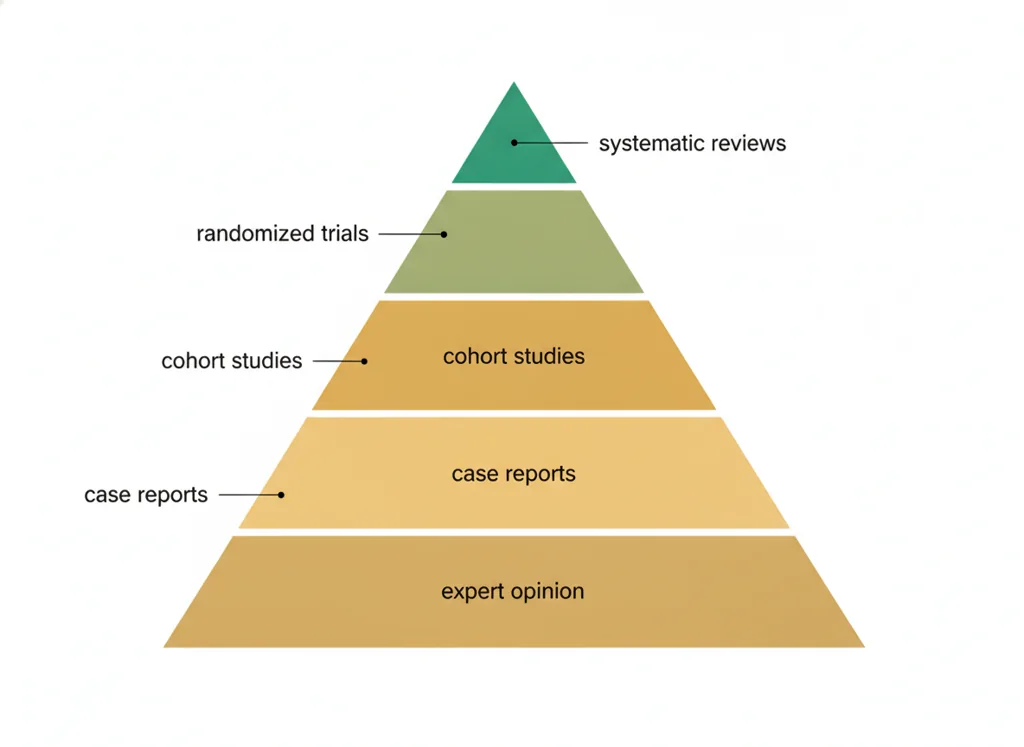
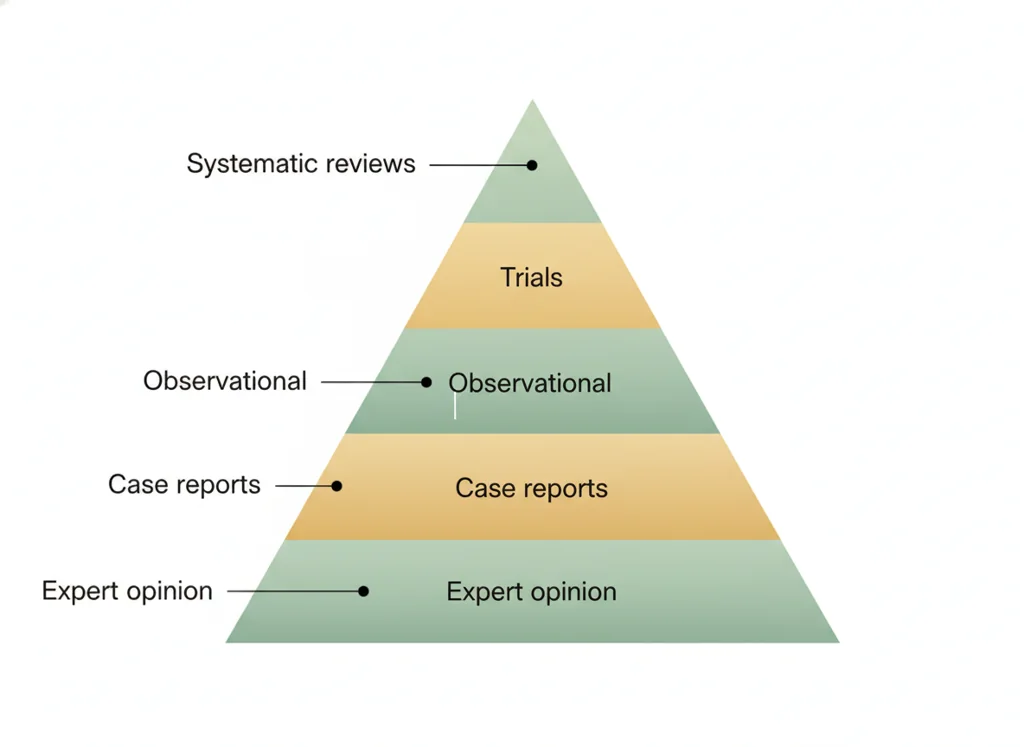
💡 The ranks designs by how well each defends against bias, and a randomized trial tops it for treatment questions.

The plan

Prerequisite check

Before this page, you should know
  • A hypothesis is a testable, predicted answer to a , and it must be falsifiable (some result could prove it wrong).
  • The is what the researcher changes; the is what is measured; controlled variables are held the same across groups.
Today's new idea is only
The ranks designs by how well each defends against bias, and a randomized trial tops it for treatment questions.
Learn first

What you will learn

Goal: Students will rank common study designs in the and justify the ranking by how much bias each design controls, for both treatment questions and cause questions.

Know by the end
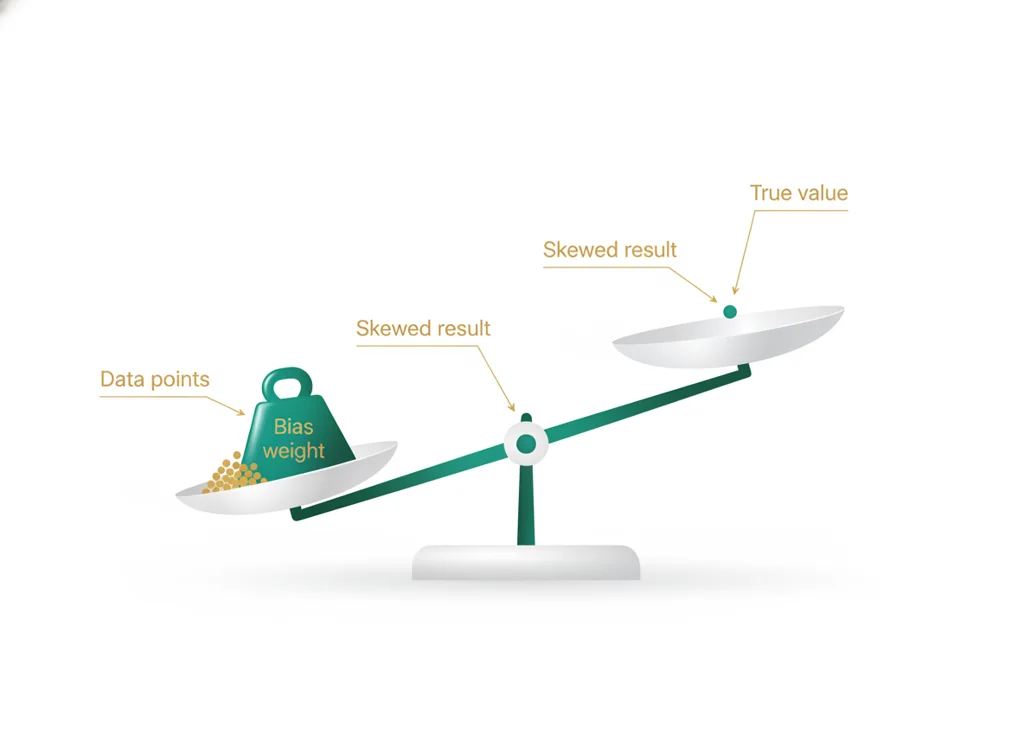
  • The () ranks designs from weaker to stronger by how well each controls bias, a feature that pushes a result away from the truth.
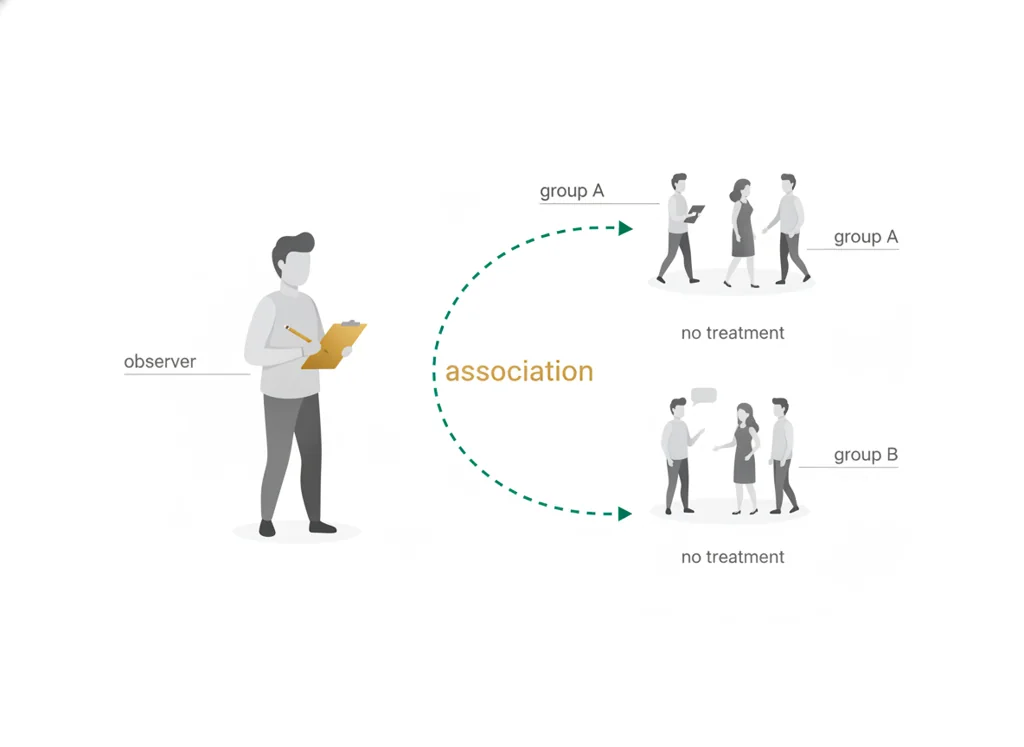
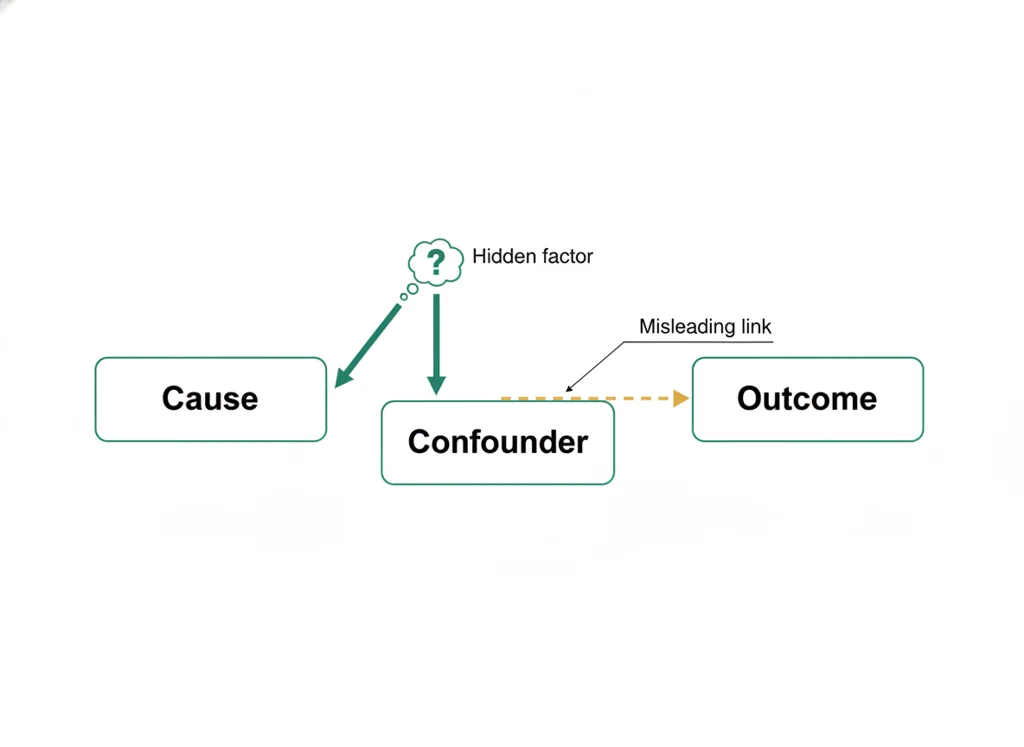
  • A has no comparison group; an (case-control, cohort) watches groups without assigning the exposure and can be misled by confounding.
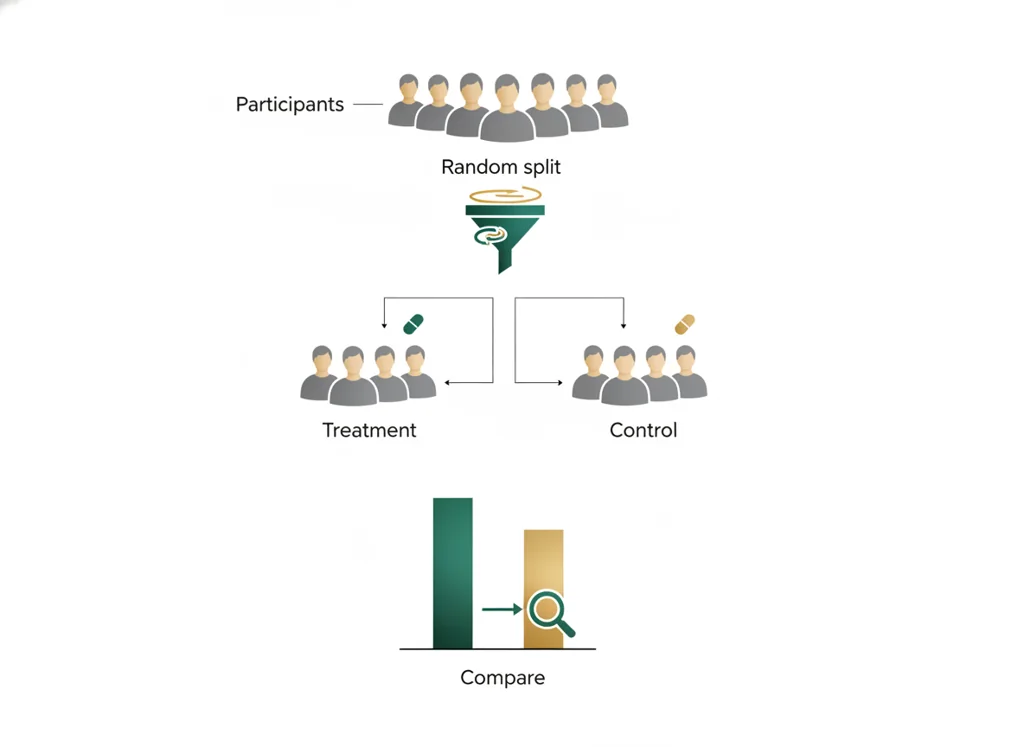
  • A uses chance to assign treatment, making groups alike on average even on unmeasured factors; it is the strongest single-study design for a treatment question.
  • A and meta-analysis tops the ladder for treatment questions, but for a cause you cannot randomize, the top realistic rung becomes a strong .
Learn first

Model: Four real studies, same field, very different strength

Each card is a real study stripped to its design. Card A (a single case description): a clinician writes up one baby with a cleft whose mother took a particular medicine during pregnancy, notes the timing, and asks whether the drug might be involved; no comparison baby is included.

Card B (a ) [PMID:37118740]: researchers in five Arab countries collected mothers of babies born with a (cases) and mothers of babies born without a cleft (controls), matched by hospital and month of birth, then asked both groups about pregnancy exposures. Card C (a , the TOPS trial) [PMID:37646677]: 558 infants with cleft were randomly assigned to repair at 6 or 12 months, with a standardized technique and blinded speech assessors measuring the outcome at age 5. Card D (a and meta-analysis) [PMID:33782057]: following a registered protocol and the PRISMA checklist, reviewers searched every database for all trials on a question, screened them in duplicate, judged each for bias, and pooled the trustworthy ones into a single combined estimate.

Read this in pieces, one chunk at a time
Do the work

Explore (work the model before reading on)

  1. Which card has no comparison group at all?
  2. In Card C, what step decides which babies go into which group, and did the researcher or chance pick it?
  3. In Card B the mothers remember exposures after the birth. Why might a mother of an affected baby remember pregnancy differently, and what does that do to the comparison?
  4. In Card C, chance assigns the groups. Explain how letting chance decide makes the two groups more alike on everything except the treatment.
  5. Card D combines existing studies rather than collecting new patients. Give one reason a careful summary of many trials could be more trustworthy than any single trial, and one reason it could still be wrong.
  6. In one sentence, what feature separates the stronger cards from the weaker cards?
The plan

Guided notes

1

What the ladder defends against

Model start: An ranks designs by how well each controls bias, the predictable pushing of a result away from the truth.
  • Studies can be ranked in an (): a ladder from weaker to stronger by how well each design defends against being fooled.
  • The thing each rung defends against is ____ (bias), any feature of a study that pushes the result away from the truth in a predictable direction.
2

From weaker to stronger

  • A ____ report (Card A) tells a story about one or a few patients with no comparison group; useful for raising a question, weak for answering one.
  • An (Card B) watches groups without assigning exposure and can be misled by ____ (a hidden third variable) and recall. A (Card C) uses ____ (chance) to assign treatment, so the groups match on average. A (Card D) combines all the good studies and tops the ladder for treatment questions.
3

The one caution

  • This ladder is for treatment-effect questions; for a cause question you usually cannot randomize, so the top realistic rung becomes a strong , not an RCT.
  • The ladder is a guide, not a law: a sloppy RCT can be worse than a careful cohort, so you still read the actual methods.
Explore

Reading the Research

Why this source matters
This is the published evidence behind today's idea: The ranks designs by how well each defends against bias, and a randomized trial tops it for treatment questions.
Words to unlock first
evidence hierarchylevels of evidencerandomized controlled trialobservational studycase report
Reading moves
  1. Skim the title and abstract first to get the gist.
  2. Circle the one sentence that states the main claim.
  3. Box the evidence the authors give for that claim.
  4. Mark one sentence that confuses you, and move on.
Stop point
You do not need the methods or statistics yet. If a sentence is about lab technique or math you have not learned, mark it and skip it.
Your output
Write one claim-evidence sentence: what this source claims, and the one piece of evidence that backs it up.
Where this fits
Tested on (Ohio WebXam)
Genetics of Disease · 072130
PLTW lesson
MI · Experimental Design domain · Evaluating evidence and the hierarchy of study designs
WebXam domain
Bio-Molecular Technology
Evidence to produce
Rank the four cards from least to most trustworthy for the question does earlier palate repair reduce later speech problems, writing one sentence per card naming the single biggest reason it sits where it does, then name which card's design becomes impossible to run for a cause question and why.
Lab / skill
Biomedical Innovations (BI) · Principles of Biomedical Science (PBS)
Words

Vocabulary (the same words your classes use)

The plan

Track your progress today

Check these off as you work through the lesson, then submit. This tells Mr. Mendoza how you're doing so he can help the class. It does not replace turning in your producible.

Use the code Mr. Mendoza gave you, not your name. Saved on this device.

Check off as you finish
  • Read the Model and answered the Explore questions.
  • Filled in the guided notes in my own words.
  • Defined the new vocabulary with an example.
  • Built the producible: Rank the four cards from least to most trustworthy for the question does earlier palate repair reduce later speech problems, writing one sentence per card naming the single biggest reason it sits where it does, then name which card's design becomes impossible to run for a cause question and why.
  • Wrote my Claim, Evidence, and Reasoning exit ticket.
Pick your period and code first.
Check yourself

Exit ticket (Claim, Evidence, Reasoning)

  • Claim: A is more trustworthy than a single for a treatment question.
  • Evidence: The RCT has ____ (random assignment of who gets the treatment), which the lacks; the case report has ____ comparison group.
  • Reasoning: Random assignment makes the groups alike on average even on unmeasured factors, so it protects the result from ____ in a way a single uncontrolled story cannot.
How this is graded (rubric)
For: Rank the four cards from least to most trustworthy for the question does earlier palate repair reduce later speech problems, writing one sentence per card naming the single biggest reason it sits where it does, then name which card's design becomes impossible to run for a cause question and why.
CriterionProficientDevelopingBeginning
CompleteEvery required part of the artifact is present and filled in.Most parts are present, but one is missing or left blank.Several parts are missing.
AccurateThe science and data are correct and match the evidence.Mostly correct, with a small factual slip.Key science or data is wrong.
Scientific reasoning (CER)States a claim, backs it with specific evidence, and explains the reasoning.Has a claim and evidence, but the reasoning is thin or missing.Gives an answer with no evidence or reasoning.
Professional communicationClear, organized, and labeled the way a clinician or scientist would write it.Readable but disorganized or missing labels.Hard to follow.
SubmittedTurned in the right way (Schoology for routine work) and confirmed.Turned in, but in the wrong place or unconfirmed.Not turned in.
How the model answer scores against this rubric
  • CompleteProficient: Nothing is left blank: the model fills every part of "Rank the four cards from least to most trustworthy for the question does earlier palate repair reduce later speech problems, writing one sentence per card naming the single biggest reason it sits where it does, then name which card's design becomes impossible to run for a cause question and why.".
  • AccurateProficient: Every number and claim matches the case evidence.
  • Scientific reasoning (CER)Proficient: It names a claim, cites the specific evidence, and explains the reasoning, not just the answer.
  • Professional communicationProficient: It is organized and labeled like a real chart note.
  • SubmittedProficient: It would be turned in on Schoology and confirmed.
Explore

Where this leads: careers

Principal investigator Evidence-based medicine specialist Clinical epidemiologist

What's next: A randomized trial sits near the top because we can assign who gets the treatment. But we could never assign a baby to a harmful chemical in the womb. So how does science study a cause it is forbidden to hand out?