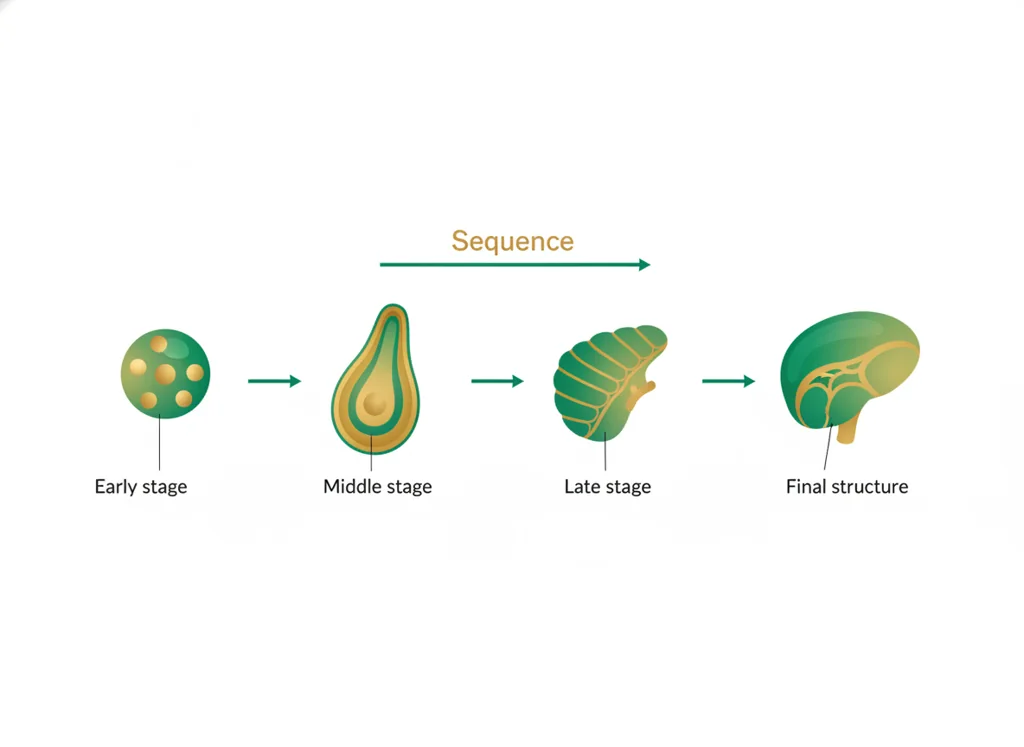
Clue 1: Orient yourself
Which cards establish sequence?
Use the labels and the picture's left-to-right, near-to-far, or before-and-after order. Name only what you can point to.
Why it matters: The face forms through a timed sequence of growth, movement, and joining. Locating the missed step helps researchers ask a testable question instead of treating every cleft as the same process. Today you practice the professional reasoning behind that work: Mateo's cleft is best explained as a developmental pathway outcome with bounded evidence, not as one proven cause.
Synthesizing evidence to classify a cleft as isolated and multifactorial
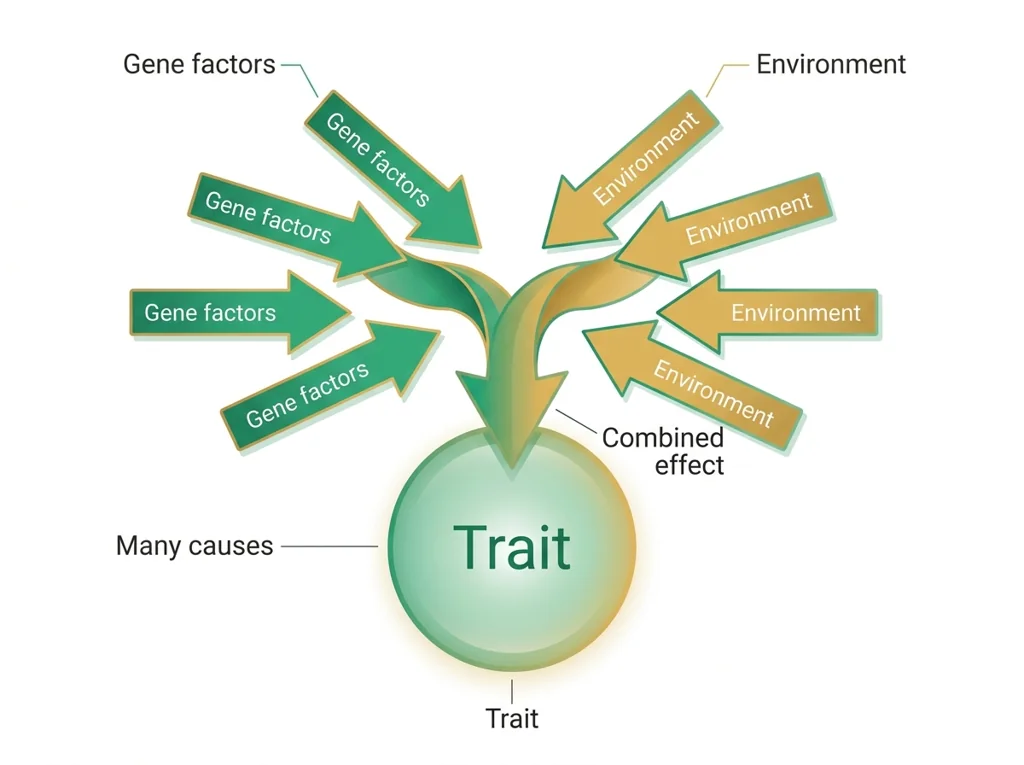
One result can have many causes; the outcome alone never tells you which.


Investigators place confirmed times, locations, and records in order. They can reconstruct a route while keeping an unknown cause labeled as unknown.
Do not jump to the biology yet. Treat the picture as a small system. Track its parts, follow one change at a time, and keep more than one explanation open until the picture supplies a way to separate them.
Which cards establish sequence?
Use the labels and the picture's left-to-right, near-to-far, or before-and-after order. Name only what you can point to.
Which cards identify a failed checkpoint?
Follow one object, stage, or path. Point to the first place where the situation changes instead of jumping to the ending.
What missing card prevents a one-cause conclusion?
List more than one explanation that still fits. Name the extra observation that would help you separate those possibilities.

Work from the visible evidence. A useful answer names the part of the picture that supports it and leaves unknown causes open.
Use the everyday picture to answer today's question in plain words: Which cards establish sequence?
You can complete today's required check without opening the technical details below.
Where the analogy stops: A developmental case is not a crime, and families are never responsible for a congenital difference.
A rescue experiment supports a mechanism when restoring one step restores the outcome, but it is not yet a human treatment.
Mateo's cleft is best explained as a developmental pathway outcome with bounded evidence, not as one proven cause.
Educational illustration, not a clinical photograph. Use the labels and evidence cards to make the biological claim.
The team must approve one paragraph for the family-facing case summary.
Choose the summary and cite the phenotype evidence plus the uncertainty evidence.
Everything required for today is above. Open these only if you want the explainer, source trail, or download files.
The everyday model and Tier 1 check are the complete required path for this lesson.
Use these checks to keep your place. They are not turned in through the portal.
Turn in: Developmental lesson 20: Mateo's Complete Developmental Story
Go to Schoology to turn this in.
Submit one PDF. Schoology attaches your name to your upload; on the page itself, write your period and code. Name the file: FirstName LastName - Assignment Title - YYYY-MM-DD.pdf.
Open Schoology PDF upload helpIf you cannot get in, see Mr. Mendoza. Do not skip the work.
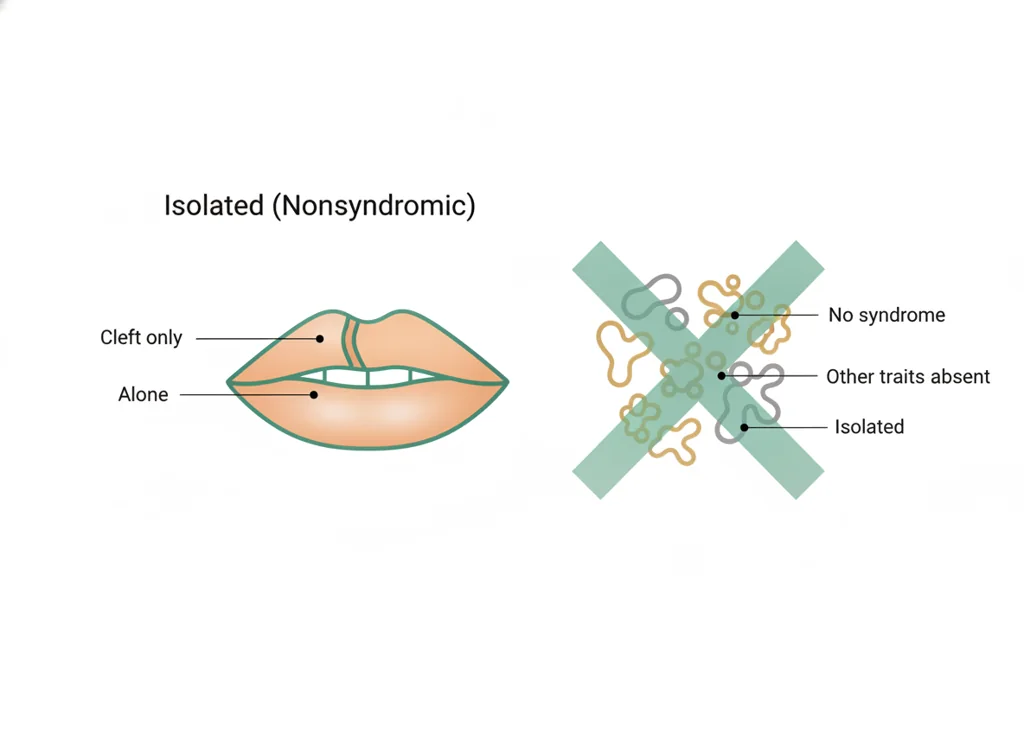
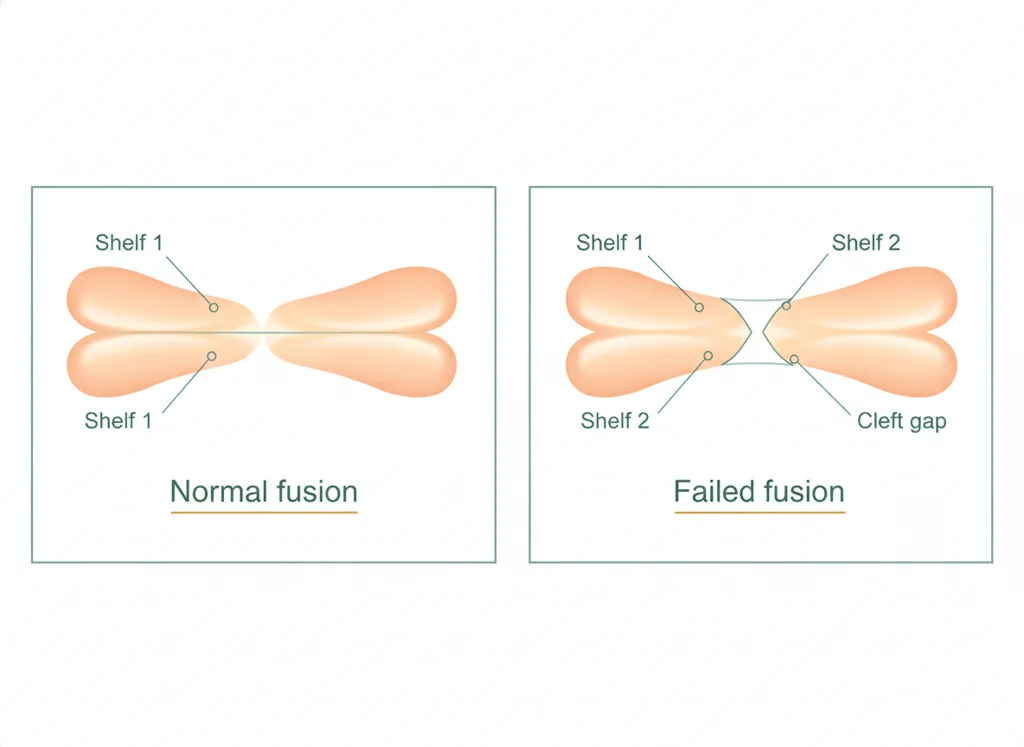
Goal: Assemble the twenty-lesson evidence into one normal-versus-failed developmental account of Mateo's , and conclude that it is an isolated failure of in a specific window (nonsyndromic, multifactorial), with the handed off to the other teams.
Everything you need for today is on this page. These links are optional.
Everything required for today's decision is already in the case file and plain-language explainer. The links below are original papers and database records for teachers and advanced readers, not assigned student reading.
| Criterion | Proficient | Developing | Beginning |
|---|---|---|---|
| Complete | Every required part of the artifact is present and filled in. | Most parts are present, but one is missing or left blank. | Several parts are missing. |
| Accurate | The science and data are correct and match the evidence. | Mostly correct, with a small factual slip. | Key science or data is wrong. |
| Scientific reasoning (CER) | States a claim, backs it with specific evidence, and explains the reasoning. | Has a claim and evidence, but the reasoning is thin or missing. | Gives an answer with no evidence or reasoning. |
| Professional communication | Clear, organized, and labeled the way a clinician or scientist would write it. | Readable but disorganized or missing labels. | Hard to follow. |
| Submitted | Turned in through the route named under Submit here and confirmed. | Turned in, but in the wrong place or unconfirmed. | Not turned in. |
What's next: Mateo's is an isolated, multifactorial failure of in the weeks 4 to 12 window, with the rest of development normal. The developmental team now hands his fusion-failure story to the genetics, anatomical, and clinical teams. Do their stories agree with ours?