
Mateo's Complete Developmental Story
This reading contains every idea and every piece of evidence needed for today's decision. The research links at the end are optional.
Why this matters
The final lesson teaches scientific restraint as part of expertise, not as a weakness.
The question you are trying to answer
Which cards establish sequence?
Begin with the idea you already earned
A rescue experiment supports a mechanism when restoring one step restores the outcome, but it is not yet a human treatment.
Study the analogy before the biology
- Which cards establish sequence?
- Which cards identify a failed checkpoint?
- What missing card prevents a one-cause conclusion?
Turn the analogy into three rules
Limit: A developmental case is not a crime, and families are never responsible for a congenital difference.
Map those rules onto the biology
Mateo's lip and palate pattern records missed joining across connected early developmental windows.
The unit shows several necessary processes: cell origin and fate, migration, tissue growth, shelf elevation, adhesion, signaling, and seam removal.
The composite case does not prove one cause. The strongest conclusion is a bounded developmental story that guides the next genetics and anatomy questions.
Read Mateo's labeled case evidence
Mateo has complete unilateral left cleft lip and palate with no broader anomaly pattern established in the composite file.
The phenotype is specific while the cause remains open.
Lip and palate formation require ordered growth, cell movement, signaling, adhesion, and seam removal.
Several developmental checkpoints can contribute to the final pattern.
The case file does not establish one causal variant, exposure, or syndrome.
The final explanation must remain multifactorial and bounded.
Make the concrete decision
You are the lead developmental biologist at the final case conference.
The team must approve one paragraph for the family-facing case summary.
- Describe the failed developmental outcomes and state that one cause is not established.
- Name one gene as proven without a case result.
- Say development offers no useful explanation.
Choose the summary and cite the phenotype evidence plus the uncertainty evidence.
Claim ceiling: You may synthesize the supported developmental pathway. You may not add a diagnosis, variant, or exposure absent from the case file.
Write the 10-year takeaway
Mateo's cleft is best explained as a developmental pathway outcome with bounded evidence, not as one proven cause.
- Which parts of Mateo's developmental story are supported?
- Which causal claim must remain open for the next domain?
Glossary in plain English
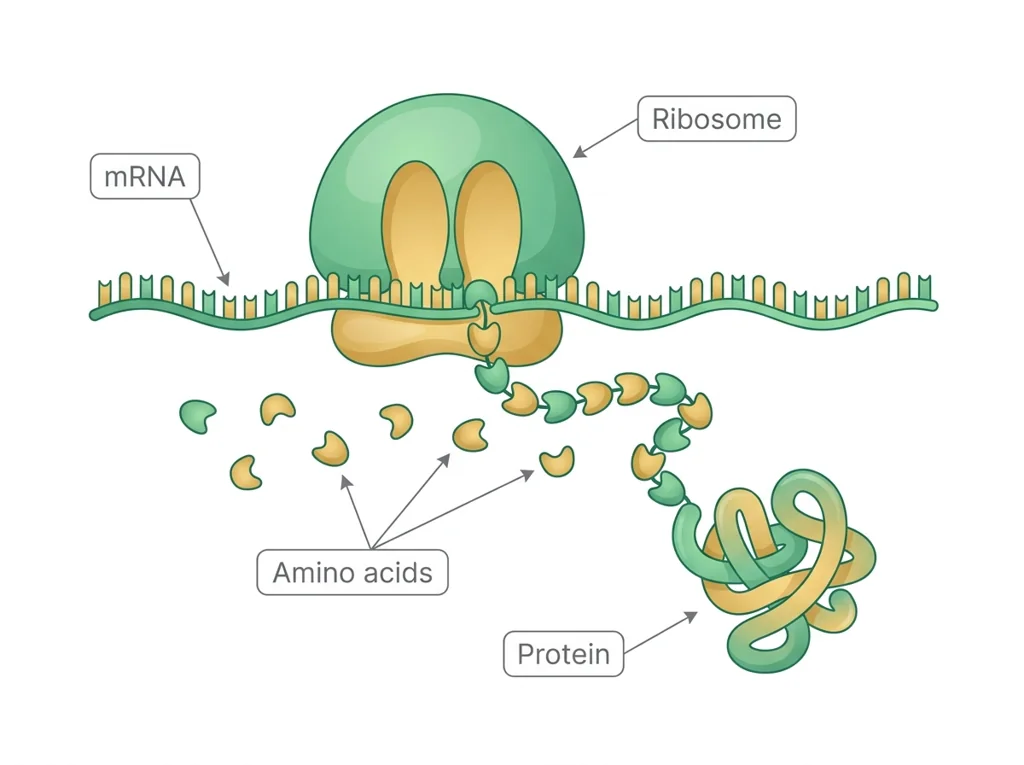
Building a molecule in the cell, as in protein synthesis (making a protein from mRNA).
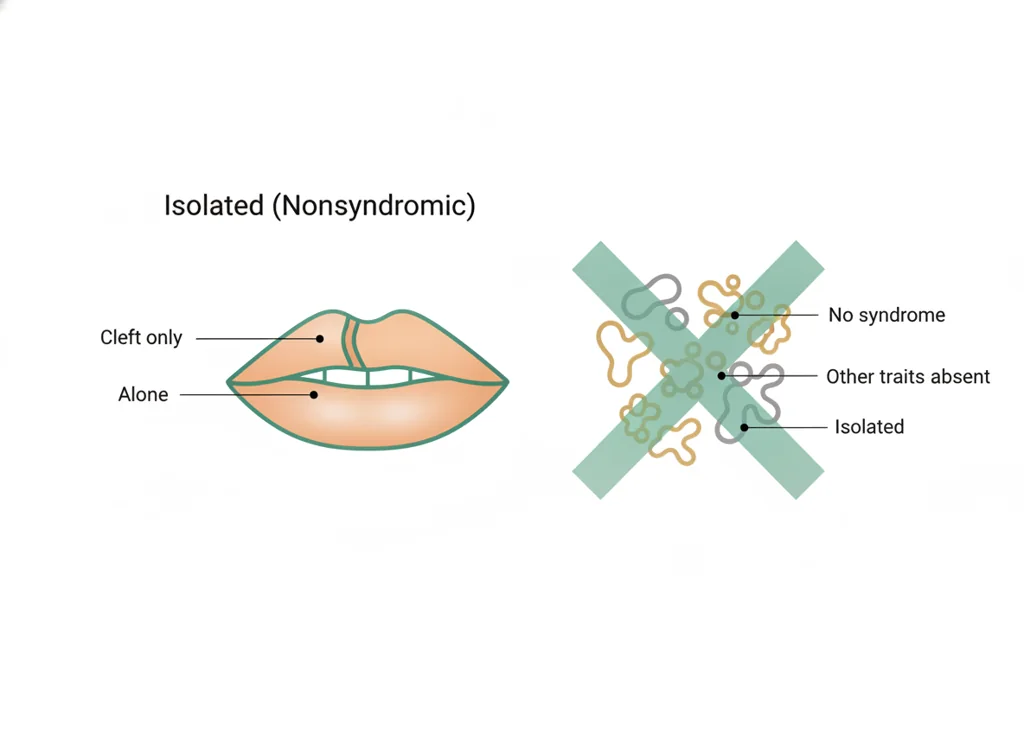
A cleft that occurs on its own, without other birth differences or a named syndrome accompanying it.
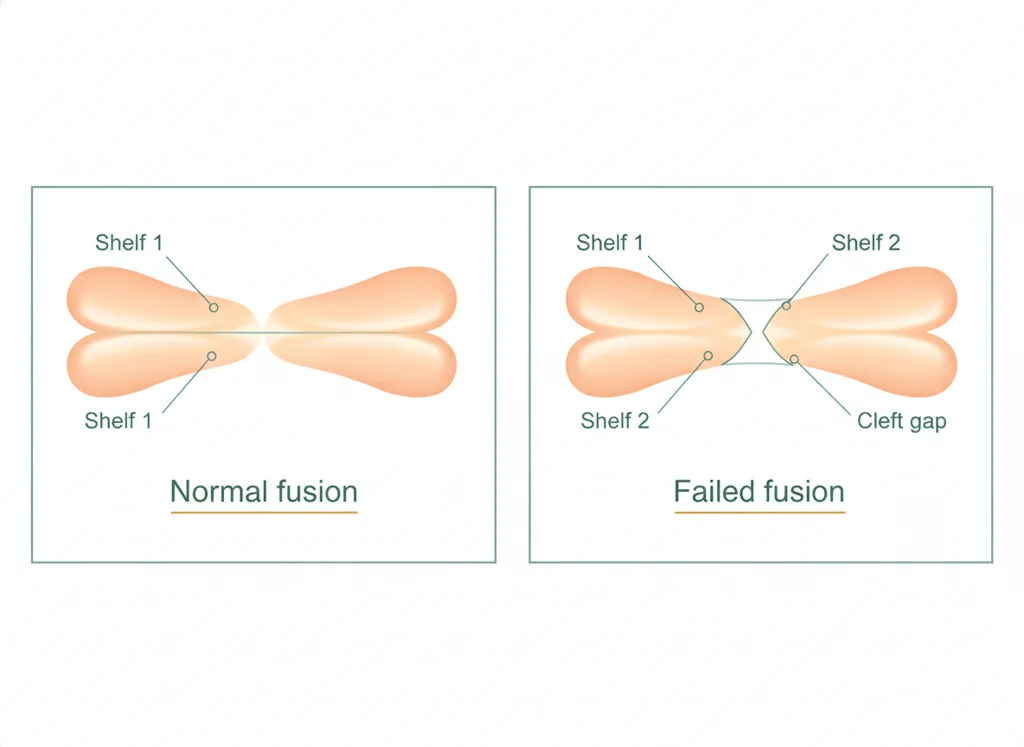
When tissue layers that should join during development do not merge, leaving a gap such as a cleft lip or palate.
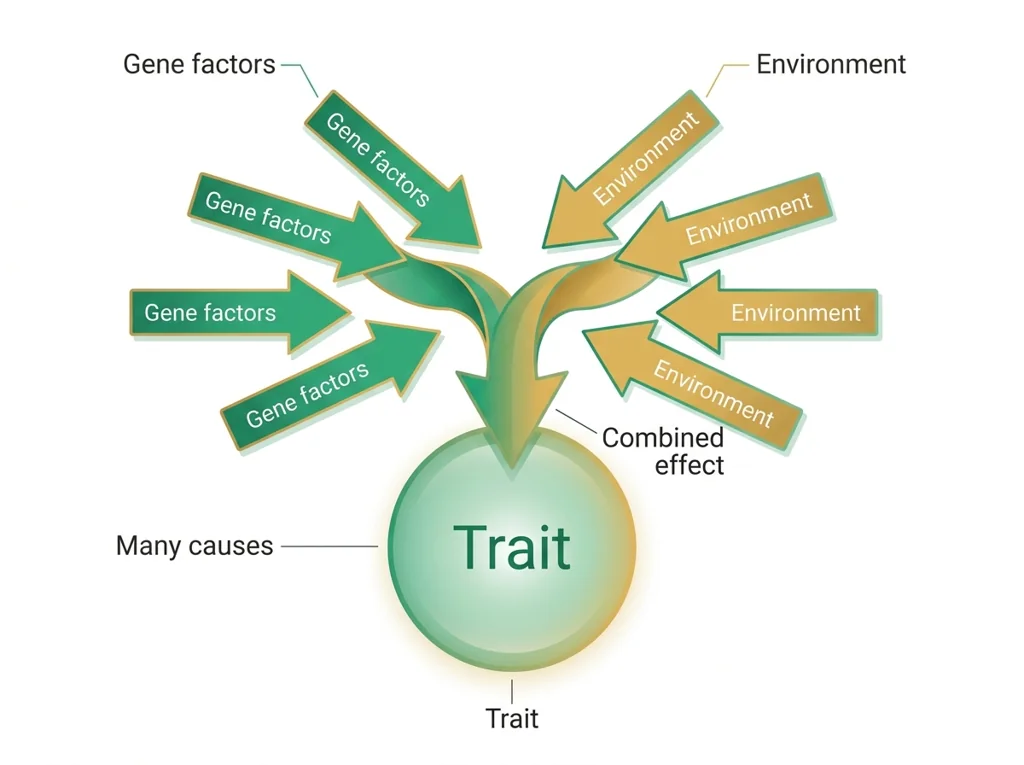
Caused by several genes acting together with environmental factors, not by a single gene alone.
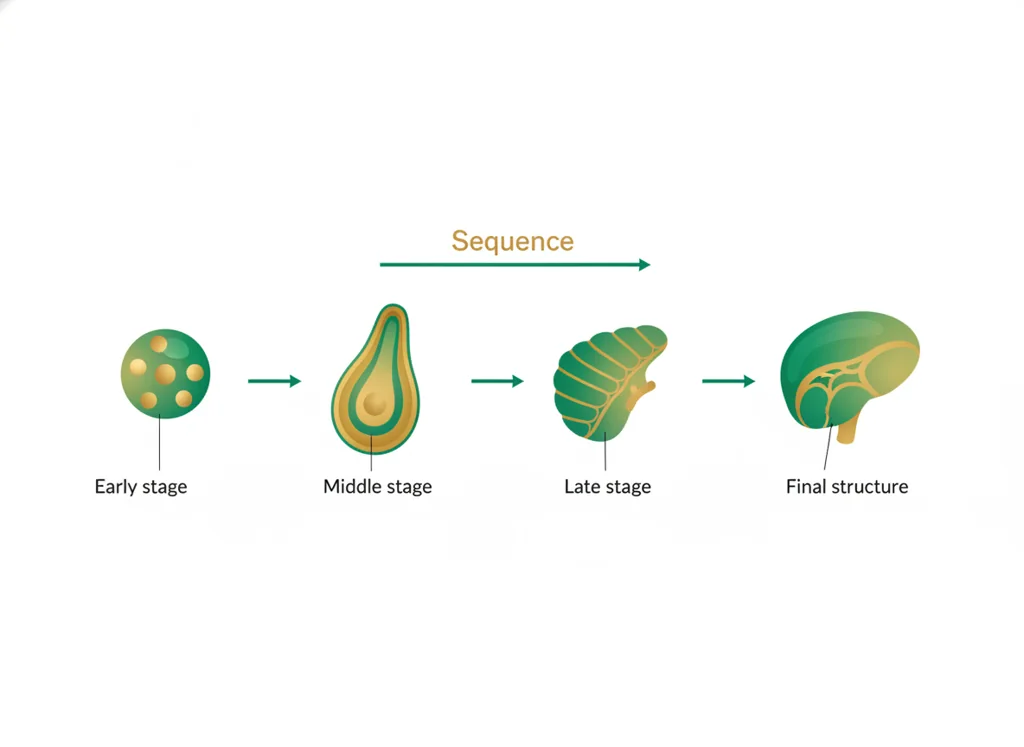
The step-by-step account of how a structure forms over time, linking each early event to the final feature it produces.
Research citation trail (advanced)
You do not need these papers or database records to finish the lesson. They document where the plain-language explainer's claims come from and are intended for teachers or advanced readers.
- Lan & Jiang 2015, Cellular and Molecular Mechanisms of Palatogenesis (Curr Top Dev Biol)
- Alvizi et al. 2017, Differential methylation in nonsyndromic cleft lip and palate and penetrance (Sci Rep)
- Zhang et al. 2002, Rescue of cleft palate in Msx1-deficient mice by transgenic Bmp4 (journal link; use class excerpt if blocked)