Clue 1: Orient yourself
Does the guide permanently join the pieces?
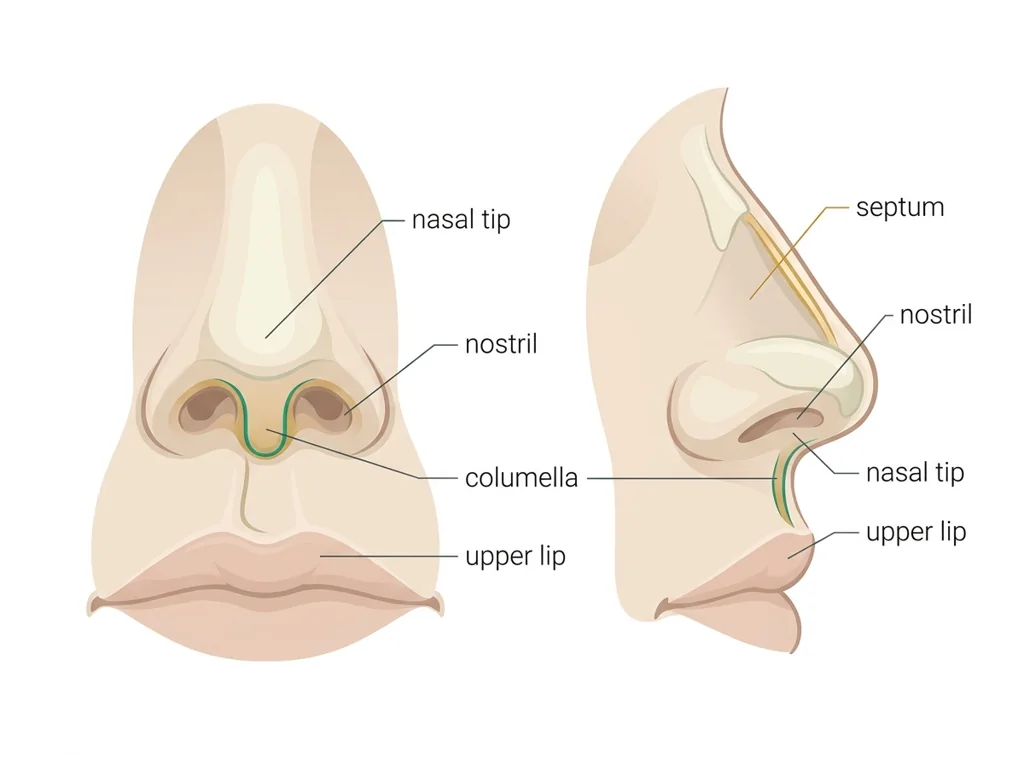
Use the labels and the picture's left-to-right, near-to-far, or before-and-after order. Name only what you can point to.
Why it matters: Structure affects feeding, breathing, hearing, speech, teeth, and surgical planning. Care teams need to connect the exact structure to the function a child is using every day. Today you practice the professional reasoning behind that work: Presurgical molding changes the starting geometry before repair; it does not fuse tissue, and long-term benefits remain uncertain.
Distinguishing what NAM does from how strong the evidence is
Having a gene is not the same as using it.


A jig is a temporary guide that holds pieces in the correct position. It helps alignment before glue, screws, or another permanent joint is added.
Do not jump to the biology yet. Treat the picture as a small system. Track its parts, follow one change at a time, and keep more than one explanation open until the picture supplies a way to separate them.
Does the guide permanently join the pieces?
Use the labels and the picture's left-to-right, near-to-far, or before-and-after order. Name only what you can point to.
Which measurements change before fastening?
Follow one object, stage, or path. Point to the first place where the situation changes instead of jumping to the ending.
What evidence would be needed to know whether the early change lasts?
List more than one explanation that still fits. Name the extra observation that would help you separate those possibilities.

Work from the visible evidence. A useful answer names the part of the picture that supports it and leaves unknown causes open.
Use the everyday picture to answer today's question in plain words: Does the guide permanently join the pieces?
You can complete today's required check without opening the technical details below.
Where the analogy stops: Infant tissues grow and respond biologically. They are not rigid workshop pieces.
A cleft palate limits suction because the mouth cannot seal from the nose, so feeding support changes flow rather than blaming effort.
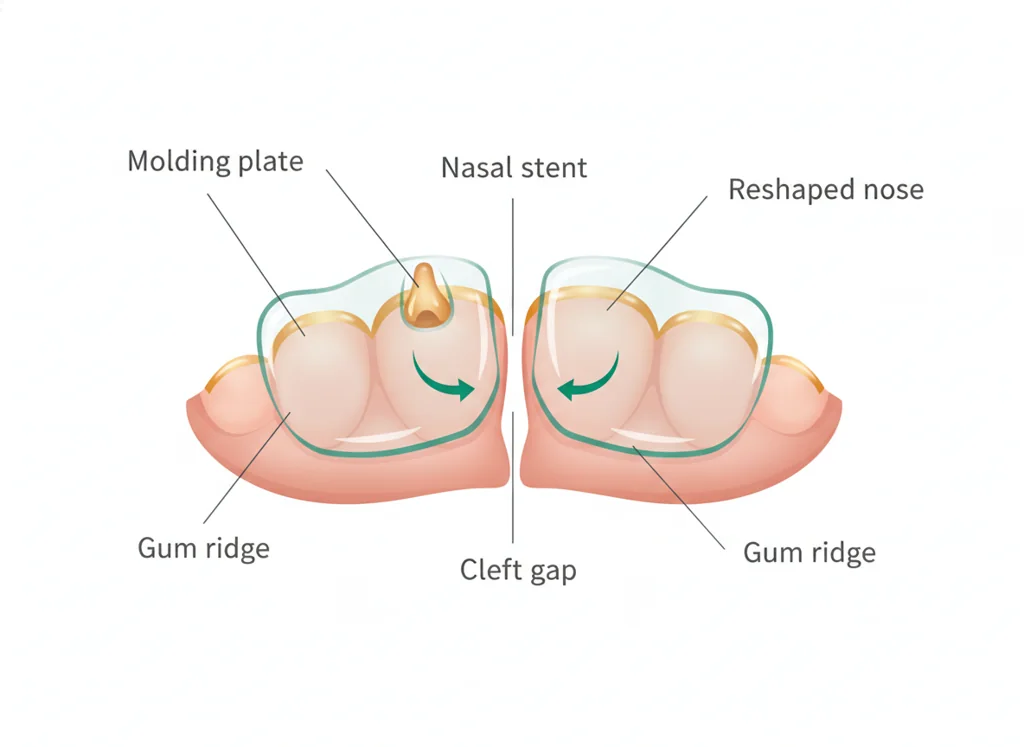
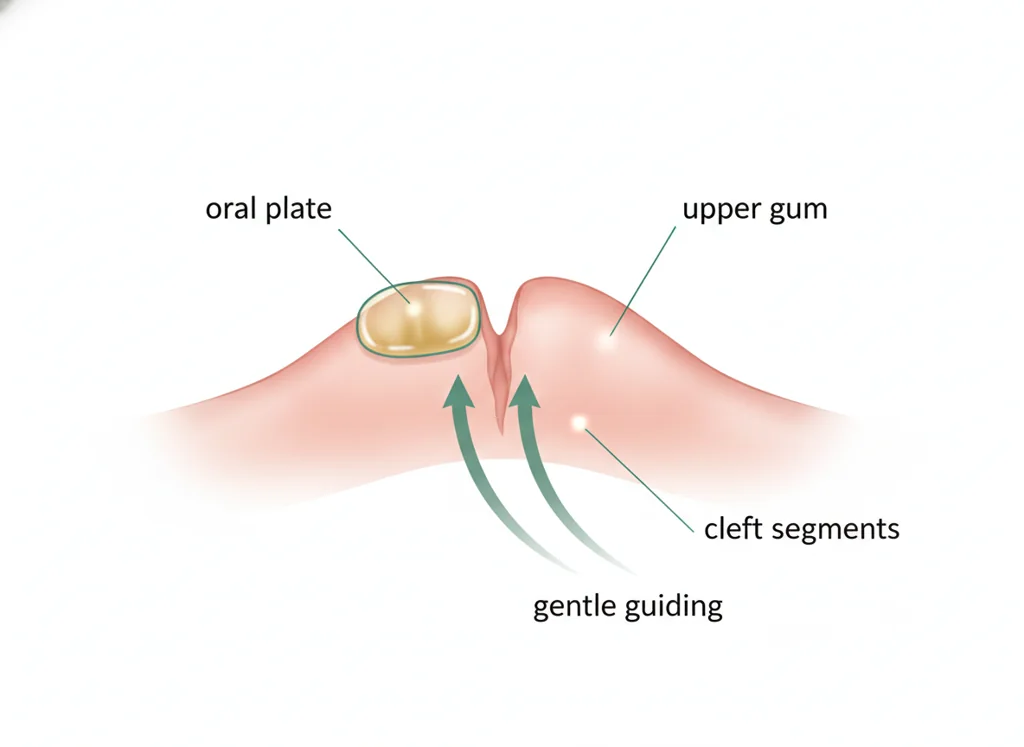
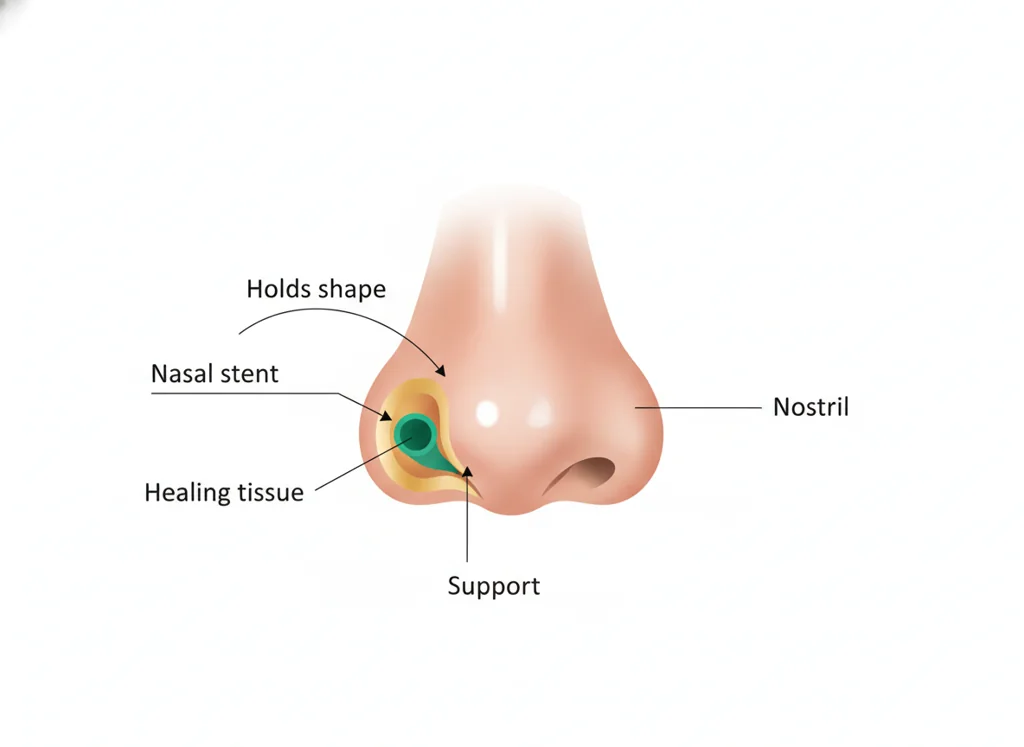
Presurgical molding changes the starting geometry before repair; it does not fuse tissue, and long-term benefits remain uncertain.
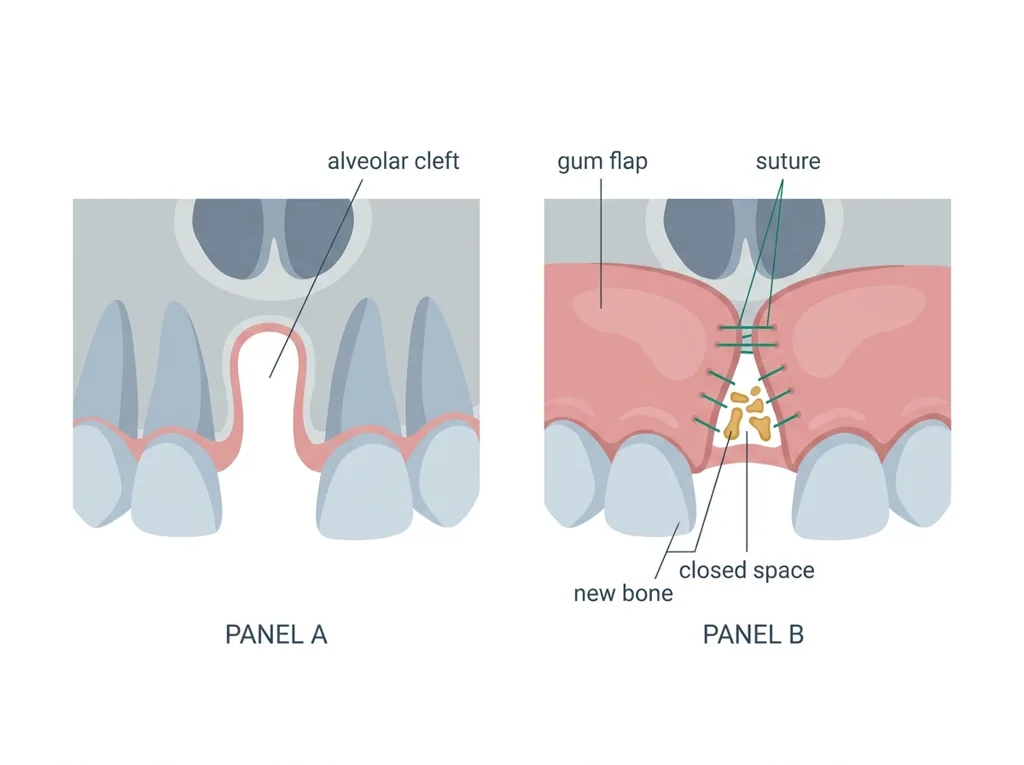
Educational illustration, not a clinical photograph, scan, or surgical plan. Use the labeled evidence cards and claim ceiling.
The family can attend frequent visits but was told molding will permanently fix the cleft and prevent all later surgery.
Choose the counseling statement and cite one measured benefit plus one uncertainty.
Everything required for today is above. Open these only if you want the explainer, source trail, or download files.
The everyday model and Tier 1 check are the complete required path for this lesson.
Use these checks to keep your place. They are not turned in through the portal.
Turn in: Anatomical lesson 7: Shaping the Gap Before Surgery
Go to Schoology to turn this in.
Submit one PDF. Schoology attaches your name to your upload; on the page itself, write your period and code. Name the file: FirstName LastName - Assignment Title - YYYY-MM-DD.pdf.
Open Schoology PDF upload helpIf you cannot get in, see Mr. Mendoza. Do not skip the work.
Goal: Explain how nasoalveolar molding narrows the alveolar gap and improves nasal symmetry before lip repair, and weigh the strength of the evidence behind it.
Everything you need for today is on this page. These links are optional.
Everything required for today's decision is already in the case file and plain-language explainer. The links below are original papers and database records for teachers and advanced readers, not assigned student reading.
| Criterion | Proficient | Developing | Beginning |
|---|---|---|---|
| Complete | Every required part of the artifact is present and filled in. | Most parts are present, but one is missing or left blank. | Several parts are missing. |
| Accurate | The science and data are correct and match the evidence. | Mostly correct, with a small factual slip. | Key science or data is wrong. |
| Scientific reasoning (CER) | States a claim, backs it with specific evidence, and explains the reasoning. | Has a claim and evidence, but the reasoning is thin or missing. | Gives an answer with no evidence or reasoning. |
| Professional communication | Clear, organized, and labeled the way a clinician or scientist would write it. | Readable but disorganized or missing labels. | Hard to follow. |
| Submitted | Turned in through the route named under Submit here and confirmed. | Turned in, but in the wrong place or unconfirmed. | Not turned in. |
What's next: We have shaped Mateo's into a better starting position and kept him feeding. The gap is narrower, but it is still open. How does the surgeon actually rebuild the lip, and especially the ring of muscle inside it, into a working, symmetric whole? We chase that next time.