
Shaping the Gap Before Surgery
This reading contains every idea and every piece of evidence needed for today's decision. The research links at the end are optional.
Why this matters
Students practice shared decision-making when a treatment has a plausible mechanism and incomplete long-term evidence.
The question you are trying to answer
Does the guide permanently join the pieces?
Begin with the idea you already earned
A cleft palate limits suction because the mouth cannot seal from the nose, so feeding support changes flow rather than blaming effort.
Study the analogy before the biology
- Does the guide permanently join the pieces?
- Which measurements change before fastening?
- What evidence would be needed to know whether the early change lasts?
Turn the analogy into three rules
Limit: Infant tissues grow and respond biologically. They are not rigid workshop pieces.
Map those rules onto the biology
Presurgical infant orthopedics can gently change the position of alveolar segments and nasal tissues before lip repair.
The appliance does not fuse the cleft. Surgery is still needed to reconstruct tissue continuity.
Studies support some short-term gap reduction, but long-term benefits and comparisons remain uncertain. Family burden, access, and preferences belong in the decision.
Read Mateo's labeled case evidence
The supplied model shows Mateo's alveolar gap narrowing during monitored appliance use.
The starting geometry can change before lip repair.
The appliance does not create tissue fusion or replace surgery.
Molding is positioning, not closure.
Systematic reviews report low or very low certainty for many long-term outcomes.
Short-term narrowing should not be sold as a guaranteed lifelong benefit.
Make the concrete decision
You are the team orthodontist counseling Mateo's parents.
The family can attend frequent visits but was told molding will permanently fix the cleft and prevent all later surgery.
- Offer it as an optional positioning tool with workload and evidence limits explained.
- Promise permanent closure and no later surgery.
- Say the appliance cannot change any preoperative measurement.
Choose the counseling statement and cite one measured benefit plus one uncertainty.
Claim ceiling: You may describe short-term positioning evidence. You may not guarantee long-term appearance, function, or fewer operations.
Write the 10-year takeaway
Presurgical molding changes the starting geometry before repair; it does not fuse tissue, and long-term benefits remain uncertain.
- What can molding change before surgery?
- What outcome should not be promised?
Glossary in plain English
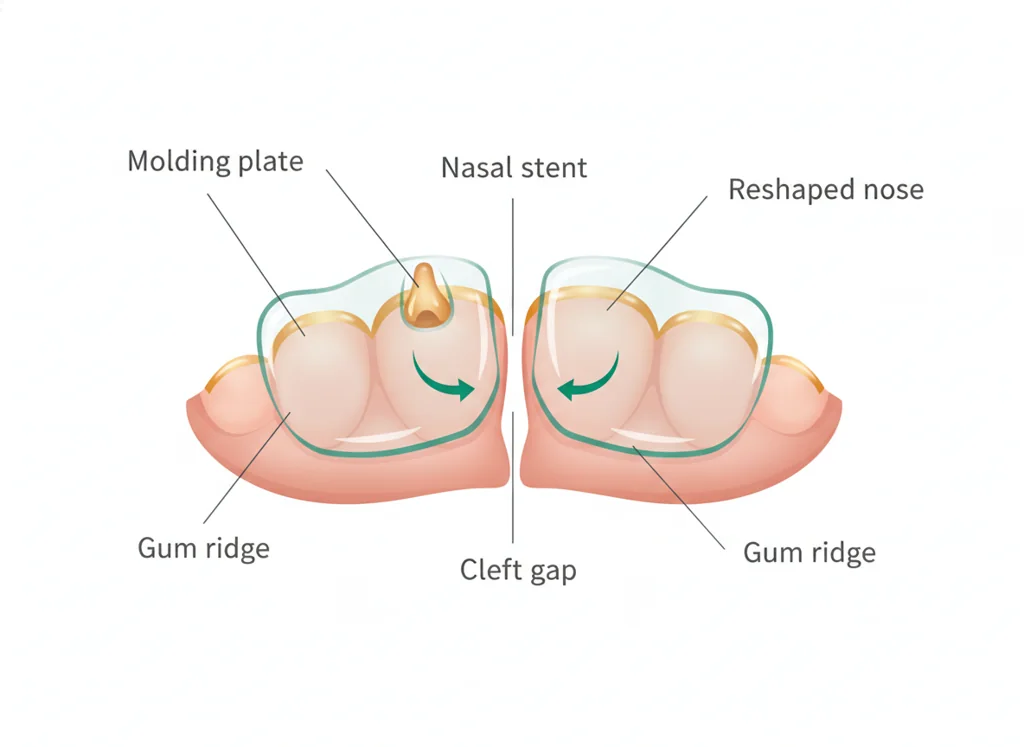
A custom plate worn before surgery that gradually reshapes a baby's gum and nose, narrowing the cleft to improve the repair.
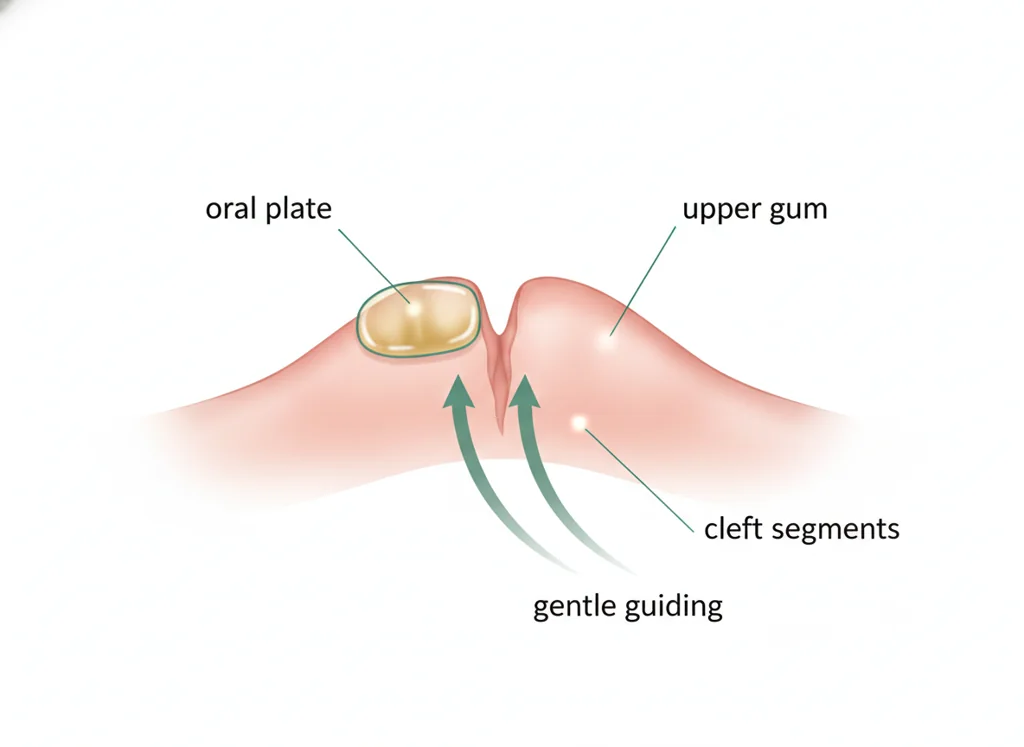
A custom plastic appliance fitted in an infant's mouth before surgery to gradually guide the cleft gum and lip into better position.
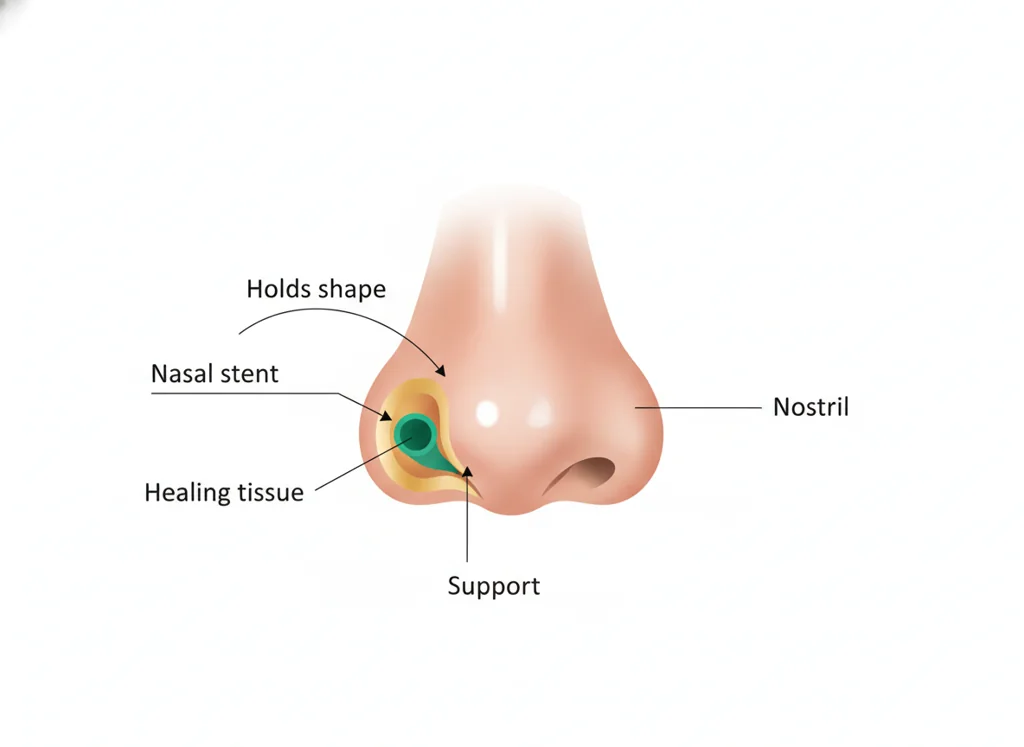
A small support placed in the nostril after cleft surgery to hold its shape open while the healing tissue settles.
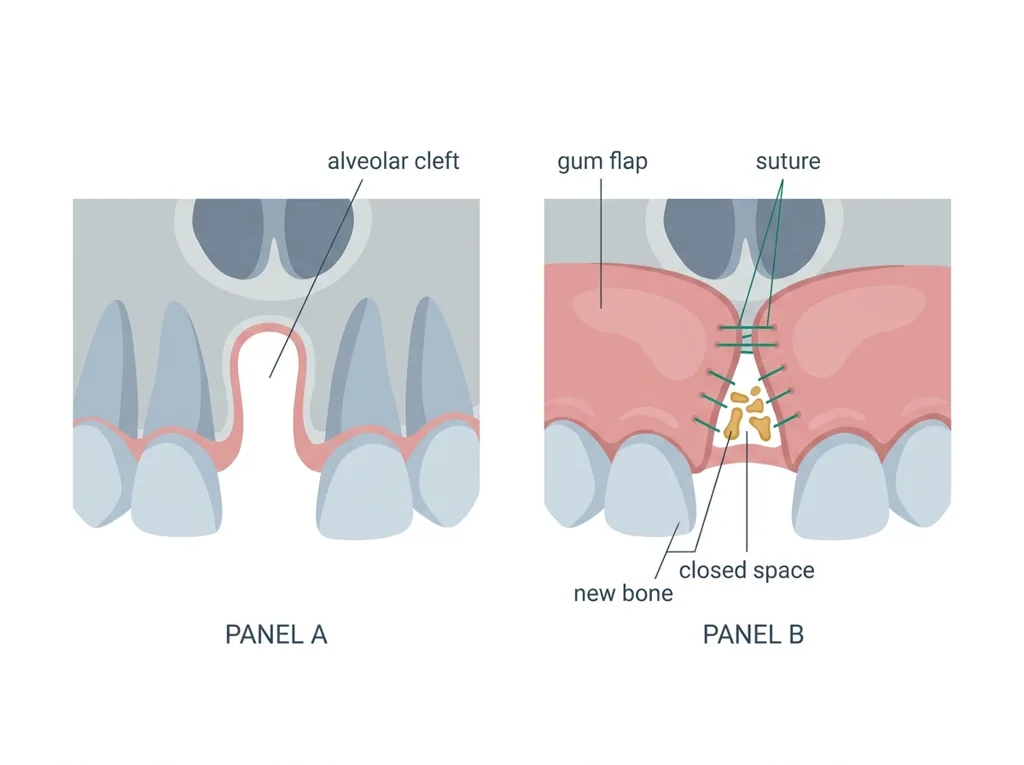
A surgery that closes the alveolar cleft with gum and lining tissue flaps to encourage new bone to bridge the gap, without a bone graft.
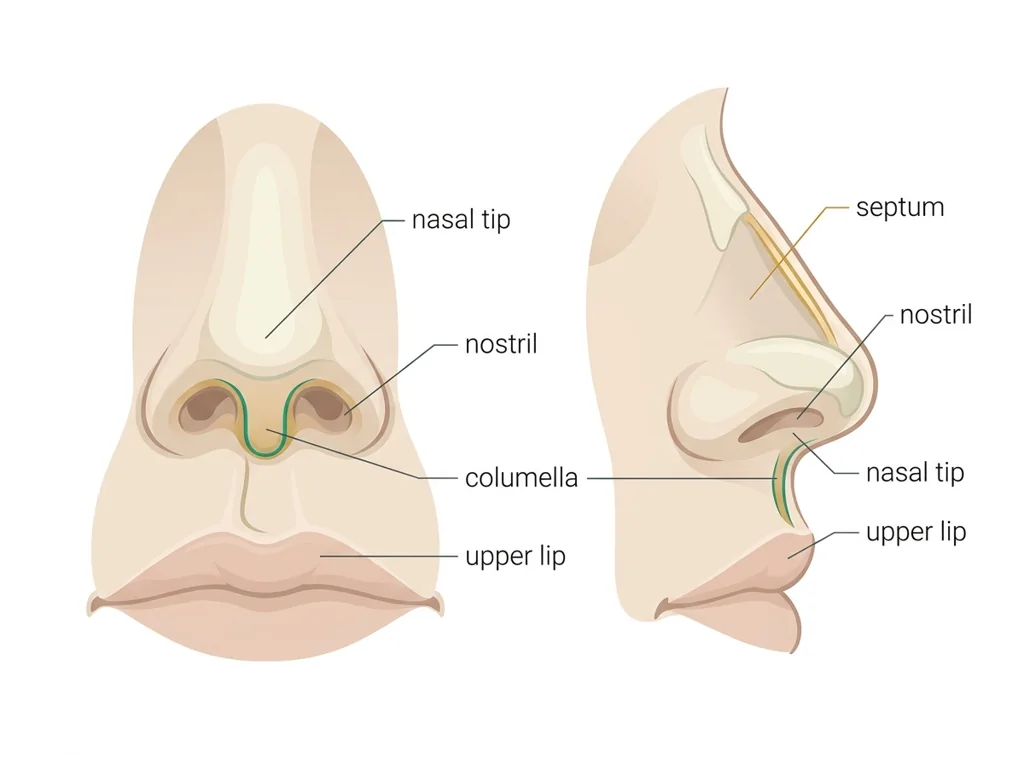
The thin strip of tissue between the two nostrils that connects the nasal tip to the upper lip and helps hold the nose's shape.
Research citation trail (advanced)
You do not need these papers or database records to finish the lesson. They document where the plain-language explainer's claims come from and are intended for teachers or advanced readers.
- American Cleft Palate Craniofacial Association. 2024 Parameters of Care.
- Esenlik et al. 2020, NAM Therapy: Evidence-Based Results (CPCJ)
- Yarholar et al. 2021, NAM Cleft Protocol: Long-Term Outcomes to Facial Maturity (Plast Reconstr Surg)
- Rossell-Perry et al. 2020, Surgical NAM for Bilateral Cleft and Systematic Review (PRS Glob Open)