Rough draft.This research track is under review with Dr. Atit's lab. Content and sequence may still change.
The Baby Mateo Case
Anatomical domainHuman Body Systems (HBS)Lesson 19 of 20Your seat: Lead Craniofacial Surgeon (team coordinator)

Who Does What, and When: Mateo's Care Timeline

Discovery question

When does each specialist act for a child like Mateo, and why is each step timed to a specific age?

💡 Every step in care is timed by two rules: repair when it helps most and harms growth least, and keep watching hearing and speech on a schedule.

The plan

Prerequisite check

Before this page, you should know
  • A is a residual or recurrent hole between the mouth and nose after repair; the pooled mean rate is about 9.94 percent and rises with .
  • Fistula rate climbs from about 2 percent in Veau I to about 12.5 percent in Veau IV, with about 8.3 percent.
Today's new idea is only
Every step in care is timed by two rules: repair when it helps most and harms growth least, and keep watching hearing and speech on a schedule.
Learn first

What you will learn

Goal: Build a staged, age-ordered timeline for a child with complete CL/P, naming who acts, when, and why each step is timed to growth and development.

Know by the end
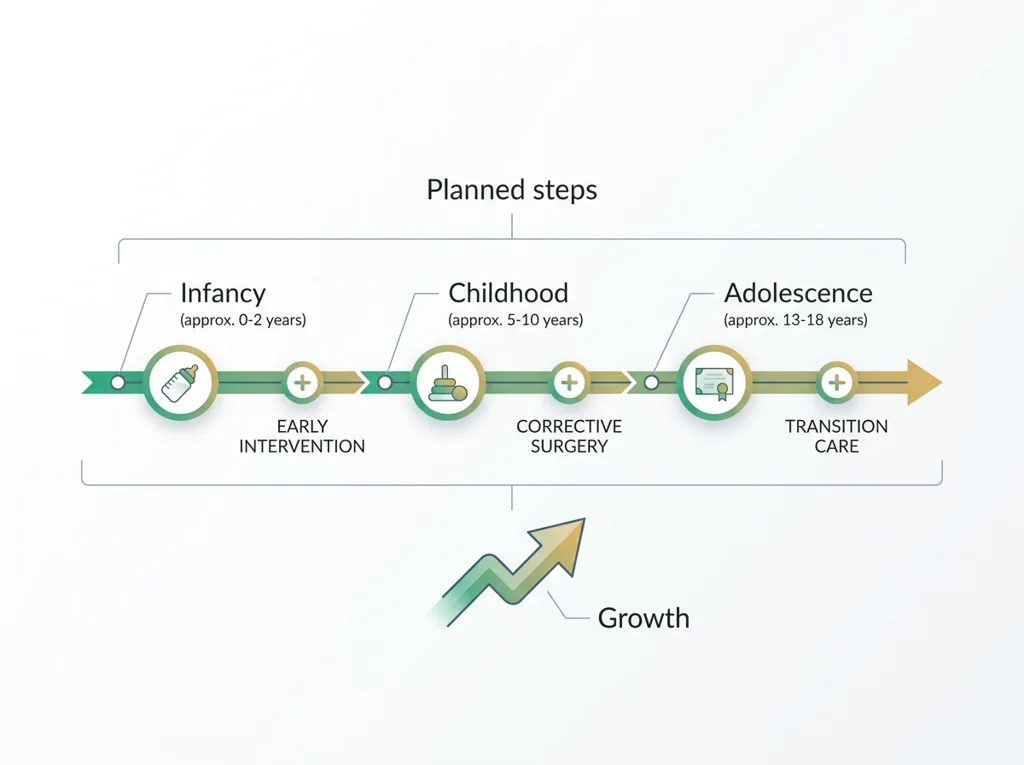
  • A child like Mateo is cared for by a multidisciplinary team working in a planned order called , each stage timed to growth, not a calendar date.
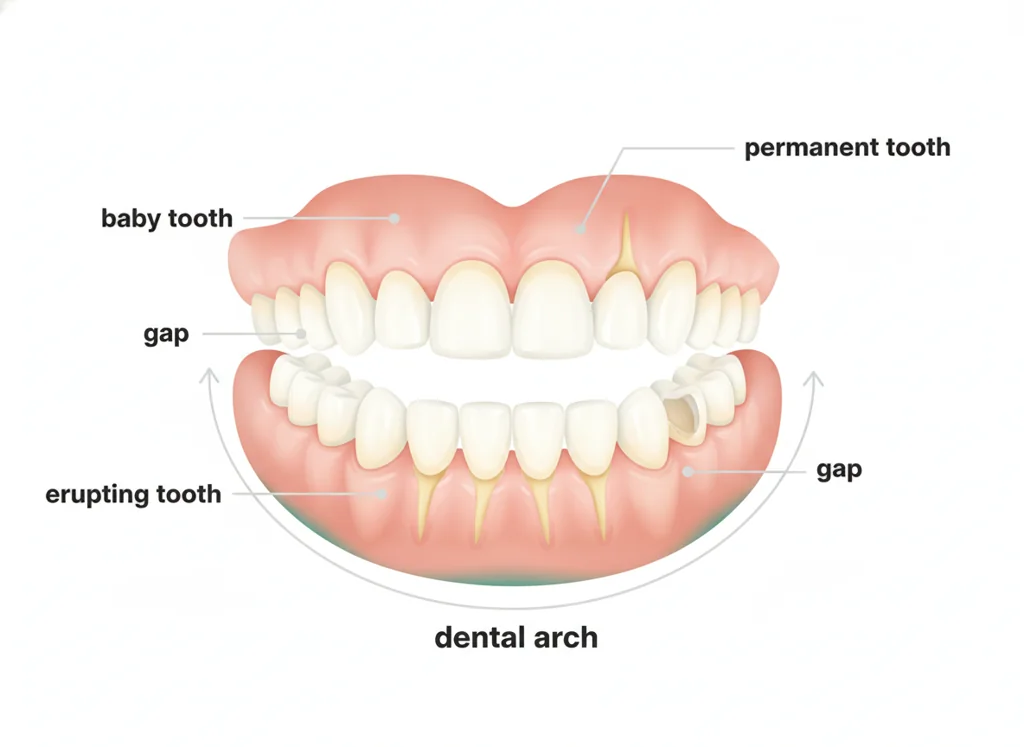
  • The usual order is NAM in the first weeks, lip repair around 3 to 6 months, repair around 10 to 14 months, then ear and speech surveillance, then alveolar bone graft in the before age 9, then bite and nose at .
  • The rule of growth: a structure is repaired at the age when the repair helps most and harms growth least.
  • The rule of surveillance: some problems (hearing, speech) are watched on a schedule for years, not fixed once.
Learn first

Model: The same repairs, in order, and the two rules behind every when

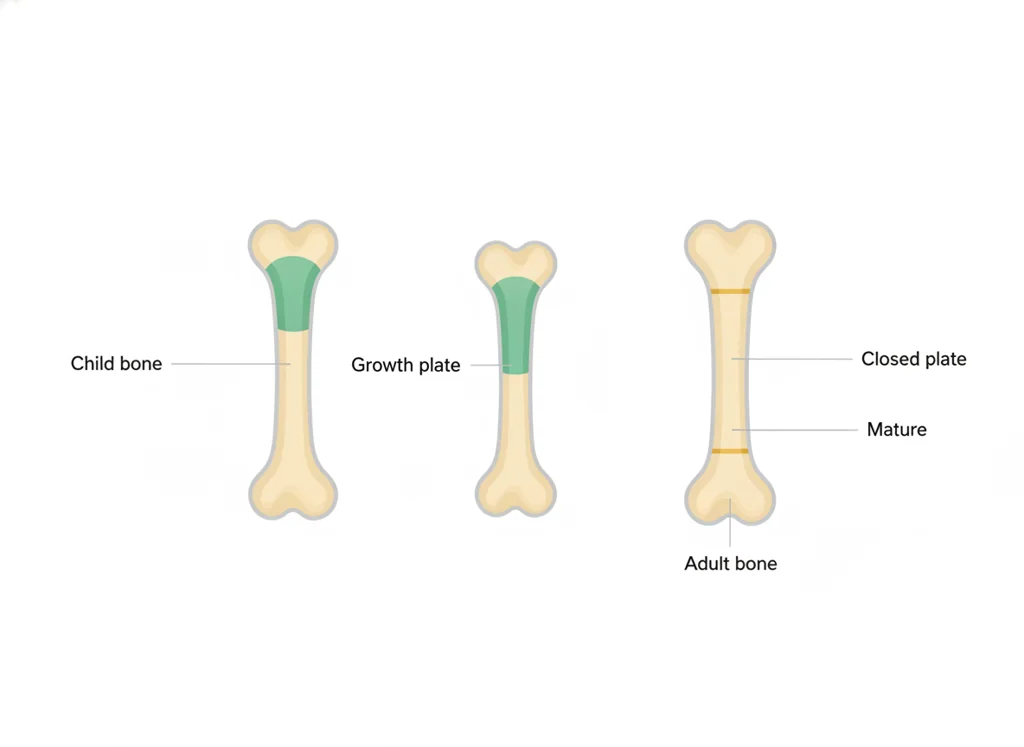
Here are the real care steps for complete CL/P, each with the timing the library gives. Notice that every when is tied to a stage of growth, not a calendar date. Nasoalveolar molding (orthodontist and feeding team) in the first weeks of life, to narrow the gap and shape the nose before surgery. Lip repair / (craniofacial surgeon) at about 3 to 6 months. repair / (craniofacial surgeon) at about 10 to 14 months, because delay worsens speech. Ear tubes and hearing checks (ENT and audiologist) often beginning at palate repair and then ongoing, because middle-ear fluid is near-universal and mostly appears after birth. Speech assessment and possible VPI surgery ( and surgeon) from preschool to school age, when VPI shows once the child is talking. Alveolar bone graft (oral surgeon and orthodontist) in the , ideally before age 9, since is about 86 percent and age over 9 is the main failure predictor. Definitive and, if needed, (craniofacial surgeon and orthodontist) at in the teen years, after the face stops growing.

Two simple rules explain every when. The rule of growth: a structure is repaired at the age when the repair helps the most and harms growth the least. Lip and are closed in infancy so feeding, hearing, and speech can develop; the bone graft waits for the so the canine can erupt into it; the nose and bite are finished in the teens, after the face stops growing. The rule of surveillance: some problems are not fixed once but watched for years. Hearing and middle-ear fluid are rechecked again and again, and speech is monitored as the child learns to talk. One honesty note: timing is not equal for everyone, since minority and non-English-speaking children have measurable delays reaching surgery in some US settings, which is an access point, not a biology point.

Read this in pieces, one chunk at a time
Do the work

Explore (work the model before reading on)

  1. Which step happens first in Mateo's life, and which happens last?
  2. Which step is timed to before age 9, and who leads it?
  3. Lip and are repaired in the first year, but the bone graft waits for the . Using the rule of growth, explain why the team does not graft the gum in infancy.
  4. Ear tubes and speech checks are not one-time fixes. Which of the two rules covers them, and why?
  5. Imagine Mateo's repair is delayed by two years. Predict one consequence and name the specialist who would notice it first.
The plan

Guided notes

1

Staged care

Model start: A multidisciplinary team works in a planned order called , each stage timed to growth and development, not a fixed calendar date.
  • NAM comes in the first ____ (weeks); lip repair around 3 to 6 months; repair around 10 to 14 months because delay worsens speech.
  • The alveolar bone graft is done in the ____ , ideally before age 9.
2

The two rules

  • The rule of ____ repairs a structure when it helps most and harms growth least.
  • The rule of ____ watches hearing and speech on a schedule, rather than assuming one fix is the end.
3

An honesty note

  • Minority and non-English-speaking children have measurable delays reaching surgery in some settings, which is an ____ point, not a biology point.
Explore

Reading the Research

Why this source matters
This is the published evidence behind today's idea: Every step in care is timed by two rules: repair when it helps most and harms growth least, and keep watching hearing and speech on a schedule.
Words to unlock first
multidisciplinary teamstaged caremixed dentitionskeletal maturitysurveillance
Reading moves
  1. Skim the title and abstract first to get the gist.
  2. Circle the one sentence that states the main claim.
  3. Box the evidence the authors give for that claim.
  4. Mark one sentence that confuses you, and move on.
Stop point
You do not need the methods or statistics yet. If a sentence is about lab technique or math you have not learned, mark it and skip it.
Your output
Write one claim-evidence sentence: what this source claims, and the one piece of evidence that backs it up.
Where this fits
Tested on (Ohio WebXam)
Genetics of Disease · 072130
PLTW lesson
MI · Anatomical domain · Body systems working together across the lifespan; coordinated care
WebXam domain
Bio-Molecular Technology
Evidence to produce
As the coordinator, put the eight care steps into a single age-ordered timeline for Mateo, from birth to the late teens. Next to each step write the leading specialist and one phrase saying why it sits there (for example, "before age 9 so the graft takes" or "after the face stops growing"). Mark the two steps that are surveillance, not one-time operations.
Lab / skill
Human Body Systems (HBS)
Words

Vocabulary (the same words your classes use)

multidisciplinary team
The plan

Track your progress today

Check these off as you work through the lesson, then submit. This tells Mr. Mendoza how you're doing so he can help the class. It does not replace turning in your producible.

Use the code Mr. Mendoza gave you, not your name. Saved on this device.

Check off as you finish
  • Read the Model and answered the Explore questions.
  • Filled in the guided notes in my own words.
  • Defined the new vocabulary with an example.
  • Built the producible: As the coordinator, put the eight care steps into a single age-ordered timeline for Mateo, from birth to the late teens. Next to each step write the leading specialist and one phrase saying why it sits there (for example, "before age 9 so the graft takes" or "after the face stops growing"). Mark the two steps that are surveillance, not one-time operations.
  • Wrote my Claim, Evidence, and Reasoning exit ticket.
Pick your period and code first.
Check yourself

Exit ticket (Claim, Evidence, Reasoning)

  • Claim: A child like Mateo is treated in a planned order, not all at once.
  • Evidence: Name three steps in the right age order and give the specialist for each.
  • Reasoning: Explain, using the rule of growth, why the bone graft waits for the while the is repaired in infancy.
How this is graded (rubric)
For: As the coordinator, put the eight care steps into a single age-ordered timeline for Mateo, from birth to the late teens. Next to each step write the leading specialist and one phrase saying why it sits there (for example, "before age 9 so the graft takes" or "after the face stops growing"). Mark the two steps that are surveillance, not one-time operations.
CriterionProficientDevelopingBeginning
CompleteEvery required part of the artifact is present and filled in.Most parts are present, but one is missing or left blank.Several parts are missing.
AccurateThe science and data are correct and match the evidence.Mostly correct, with a small factual slip.Key science or data is wrong.
Scientific reasoning (CER)States a claim, backs it with specific evidence, and explains the reasoning.Has a claim and evidence, but the reasoning is thin or missing.Gives an answer with no evidence or reasoning.
Professional communicationClear, organized, and labeled the way a clinician or scientist would write it.Readable but disorganized or missing labels.Hard to follow.
SubmittedTurned in the right way (Schoology for routine work) and confirmed.Turned in, but in the wrong place or unconfirmed.Not turned in.
How the model answer scores against this rubric
  • CompleteProficient: Nothing is left blank: the model fills every part of "As the coordinator, put the eight care steps into a single age-ordered timeline for Mateo, from birth to the late teens. Next to each step write the leading specialist and one phrase saying why it sits there (for example, "before age 9 so the graft takes" or "after the face stops growing"). Mark the two steps that are surveillance, not one-time operations.".
  • AccurateProficient: Every number and claim matches the case evidence.
  • Scientific reasoning (CER)Proficient: It names a claim, cites the specific evidence, and explains the reasoning, not just the answer.
  • Professional communicationProficient: It is organized and labeled like a real chart note.
  • SubmittedProficient: It would be turned in on Schoology and confirmed.
Explore

Where this leads: careers

Craniofacial Team Coordinator Cleft Care Nurse Navigator

What's next: We can now lay every step out in order. But putting them in order means we have assembled the entire anatomical and surgical picture, from the first finding at birth to the last revision in the teens, and we have never once been handed a diagnosis. What is Mateo's complete anatomical and surgical story, told as one piece, and what does the whole picture finally tell us about what he has? We answer that next time.