
Who Does What, and When: Mateo's Care Timeline
This reading contains every idea and every piece of evidence needed for today's decision. The research links at the end are optional.
Why this matters
The lesson turns 18 prior decisions into one coherent system instead of a disconnected list of specialists.
The question you are trying to answer
Why do all sections need the same score?
Begin with the idea you already earned
A fistula is a tissue opening, while velopharyngeal insufficiency is a moving-valve problem; each needs different evidence and treatment planning.
Study the analogy before the biology
- Why do all sections need the same score?
- What happens if one section enters too early?
- Which signals tell a section when to act?
Turn the analogy into three rules
Limit: Cleft care is shared decision-making with a patient and family, not a performance controlled by one conductor.
Map those rules onto the biology
Cleft care often spans infancy through adulthood. Different problems become important at different developmental stages.
The team may include surgery, pediatrics, nursing, feeding, speech, audiology, ENT, dentistry, orthodontics, genetics, psychology, and care coordination.
A shared plan lists goals, triggers, responsible roles, family choices, and follow-up. Not every patient needs every procedure.
Read Mateo's labeled case evidence
Mateo needs feeding and hearing support in infancy before definitive dental or jaw procedures.
Some needs are immediate while others depend on later development.
Lip and palate repair, speech review, grafting, orthodontics, jaw, and nasal decisions have different developmental triggers.
Sequence prevents conflicting or premature care.
ACPA recommends interdisciplinary coordination, family participation, and long-term outcome monitoring.
The team plan must remain shared and revisable.
Make the concrete decision
You are the cleft-team care coordinator.
A new family receives six separate specialty plans with conflicting dates and no owner for surveillance.
- Create one shared timeline with responsible roles, triggers, and follow-up measures.
- Let every specialty schedule independently.
- List surgeries only and omit hearing, speech, dental, and family support.
Choose the coordination plan and place five supplied milestones in order.
Claim ceiling: You may build the composite educational timeline. You may not imply that every patient needs every procedure.
Write the 10-year takeaway
Cleft care is a coordinated timeline because each specialty acts when anatomy, function, and development make its decision useful.
- Why is one shared timeline safer than separate specialty calendars?
- Which needs require surveillance between surgeries?
Glossary in plain English
A lesson term defined by the surrounding model and case evidence.
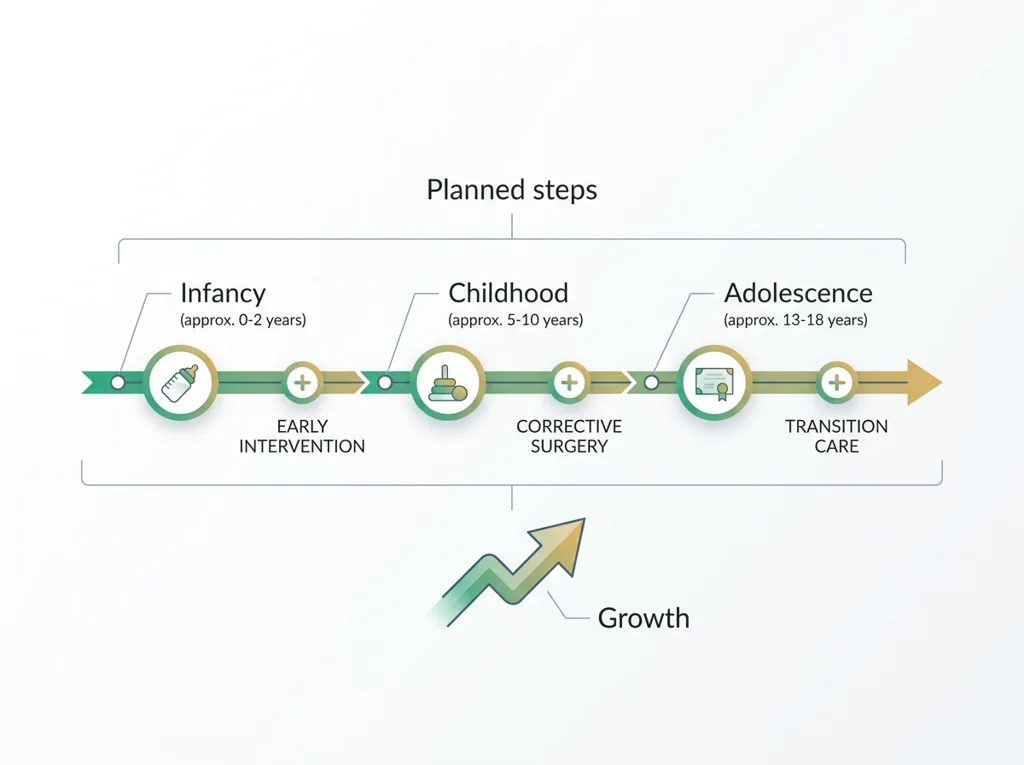
A treatment plan delivered in planned steps across years, matching each procedure to the right point in a child's growth.
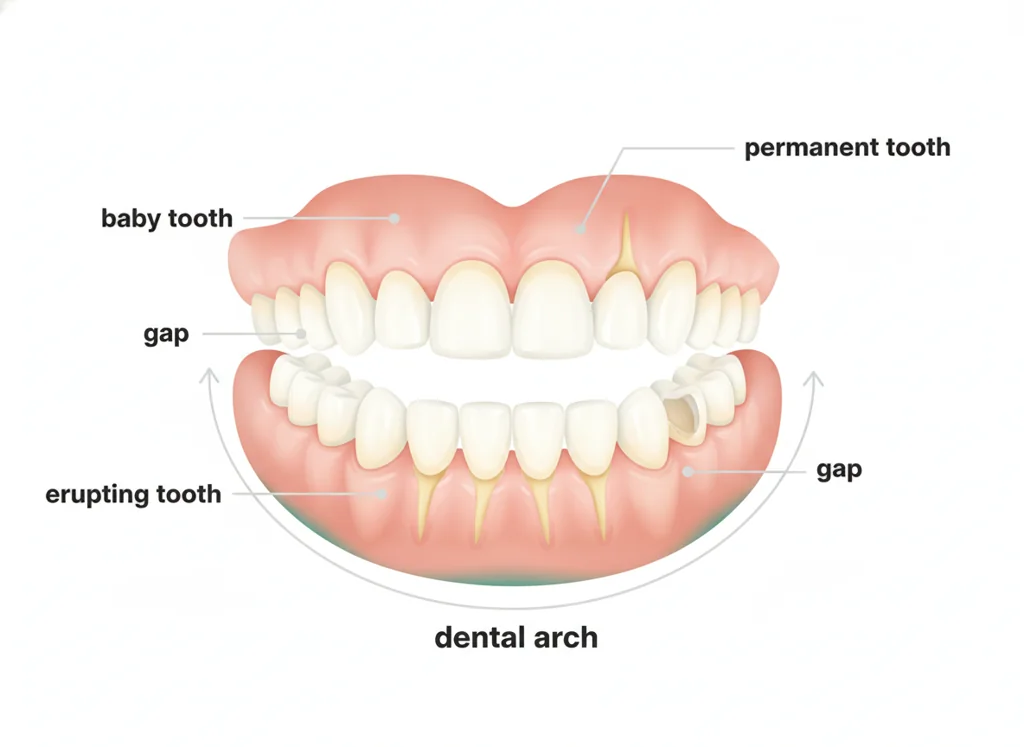
The childhood stage when baby teeth and permanent teeth are present in the mouth at the same time.
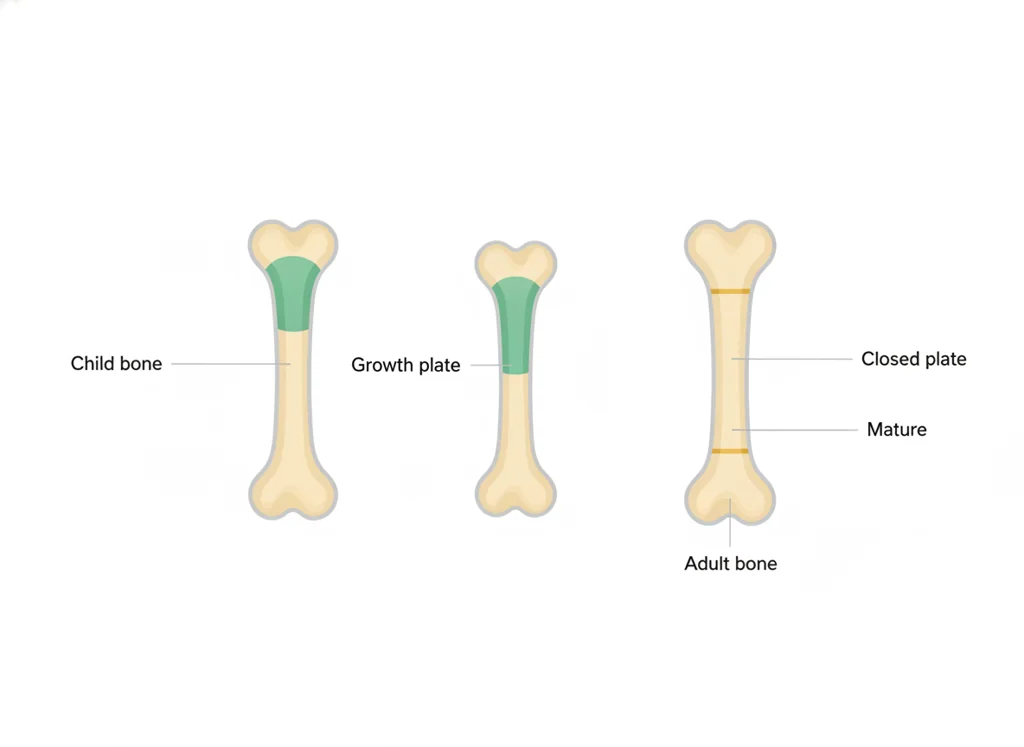
How fully the bones have grown and hardened, used to decide when jaw growth is finished enough for certain surgeries.
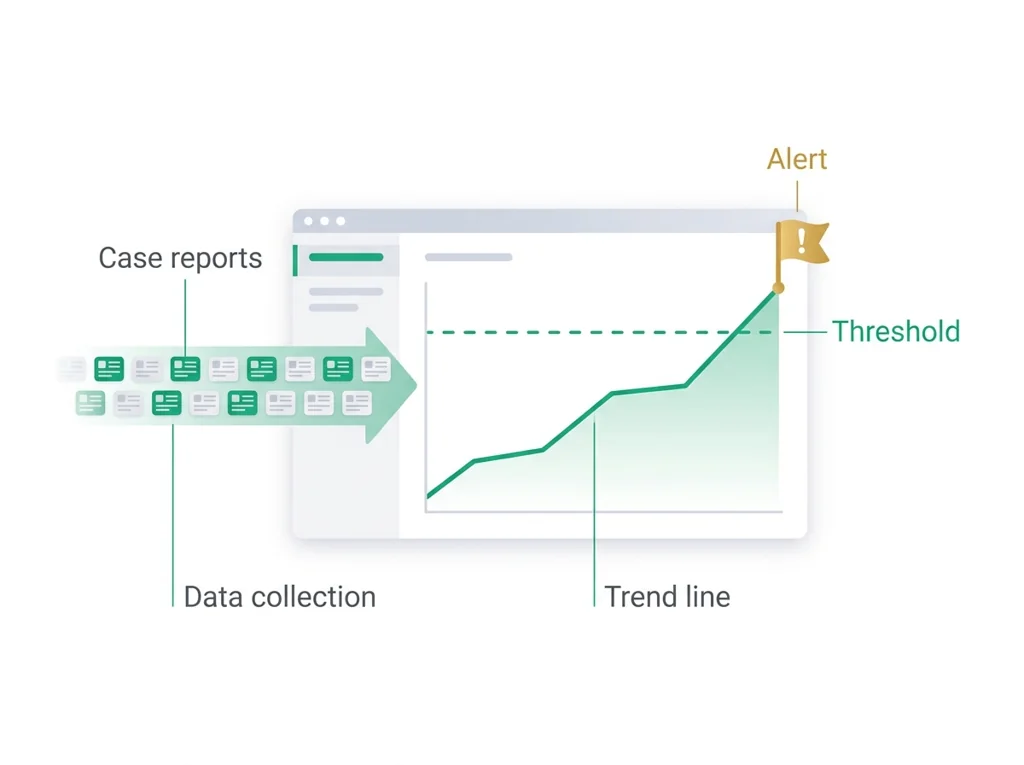
The ongoing, systematic collection and analysis of health data to detect disease early, track its trends, and trigger a timely public health response.
Research citation trail (advanced)
You do not need these papers or database records to finish the lesson. They document where the plain-language explainer's claims come from and are intended for teachers or advanced readers.
- American Cleft Palate Craniofacial Association. 2024 Parameters of Care.
- Lindeborg et al. 2020, Optimizing Speech Outcomes for Cleft Palate (Curr Opin Otolaryngol Head Neck Surg)
- Kimia et al. 2022, Secondary Alveolar Bone Grafting in UCLP and BCLP: 3D CBCT Evaluation (Plast Reconstr Surg)
- Zaluzec et al. 2019, Delay in Cleft Lip and Palate Surgical Repair: Cleft Health Disparities (J Craniofac Surg)