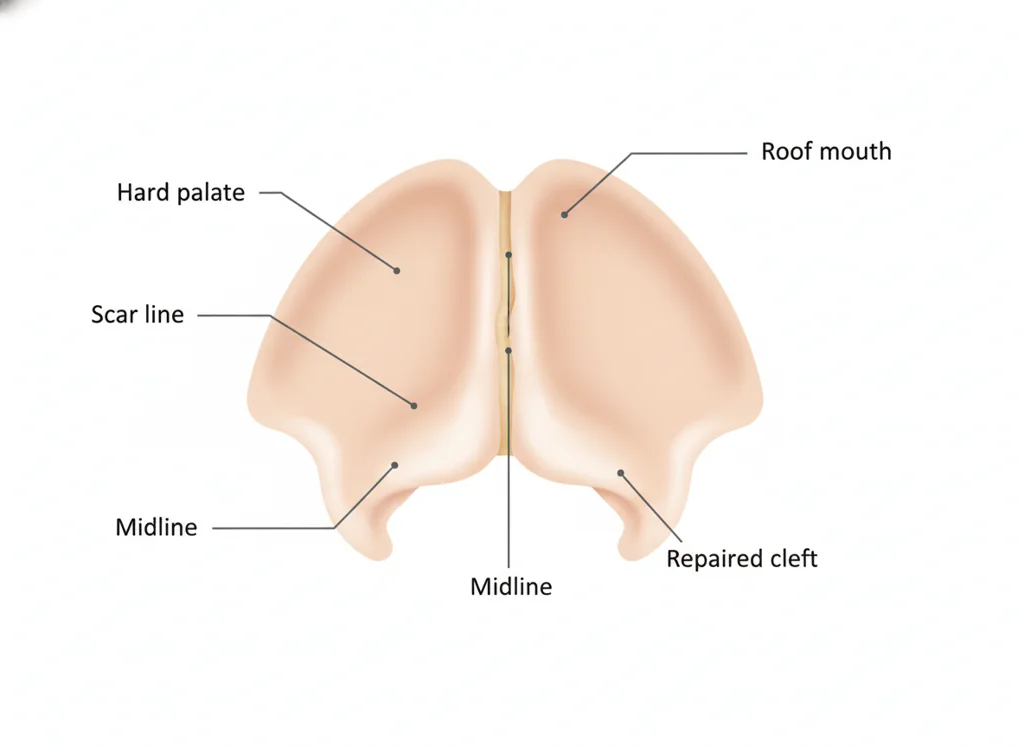
Clue 1: Orient yourself
Which feature existed before the ties?
Use the labels and the picture's left-to-right, near-to-far, or before-and-after order. Name only what you can point to.
Why it matters: Structure affects feeding, breathing, hearing, speech, teeth, and surgical planning. Care teams need to connect the exact structure to the function a child is using every day. Today you practice the professional reasoning behind that work: Cleft-related midface undergrowth can reflect both underlying anatomy and treatment history, so scar alone should not be treated as a proven single cause.
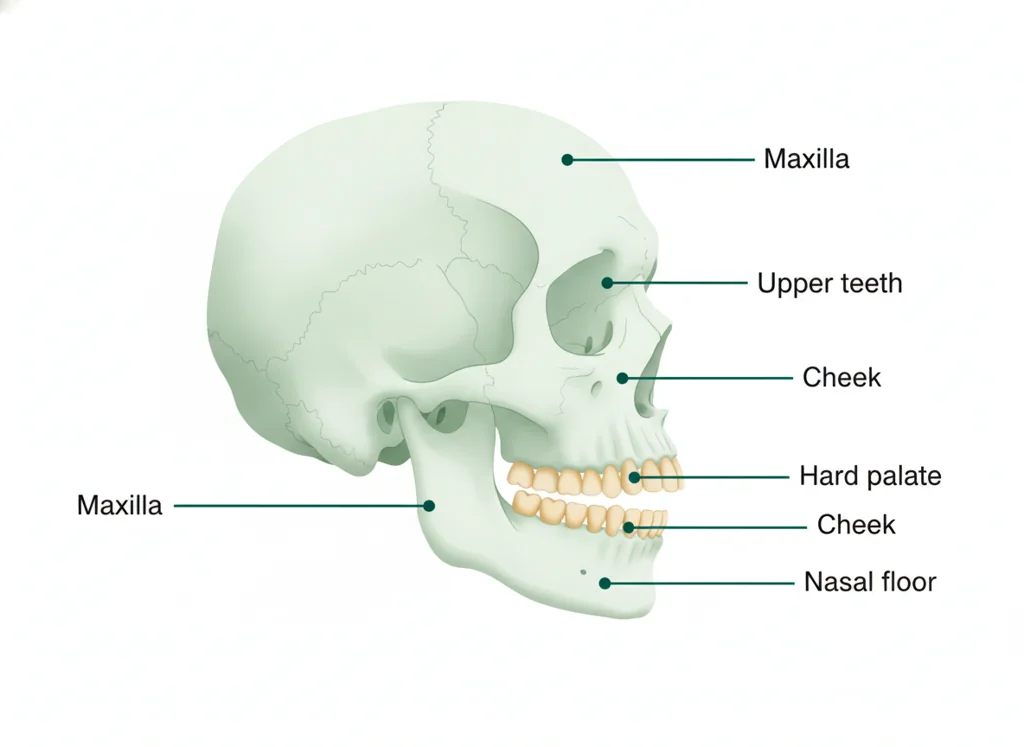
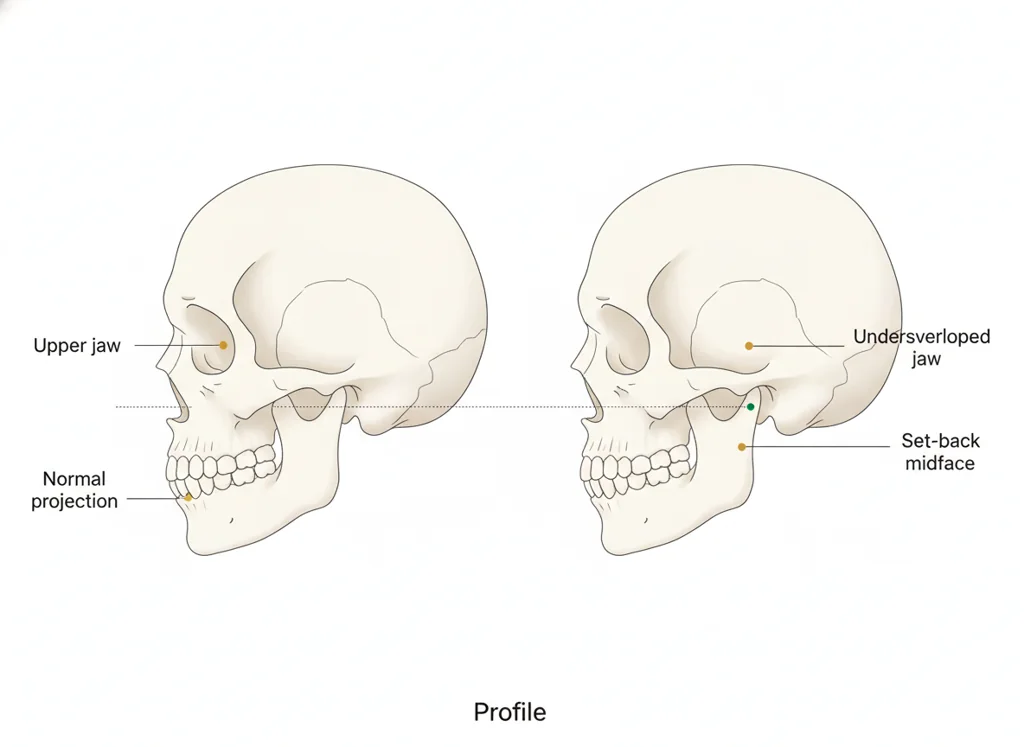
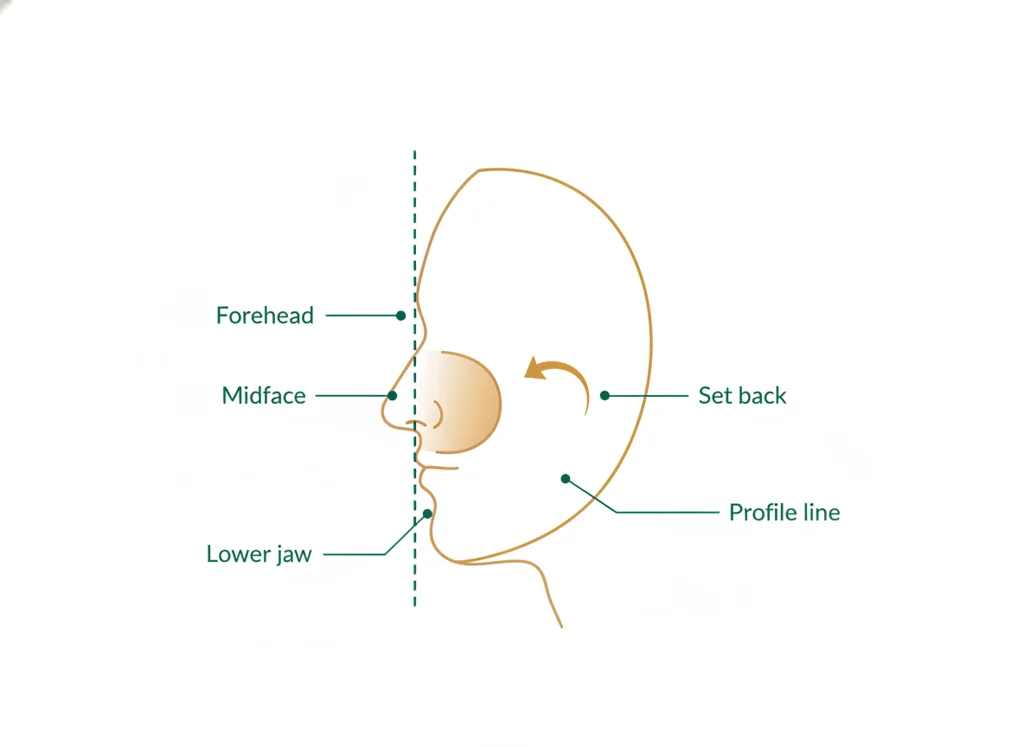
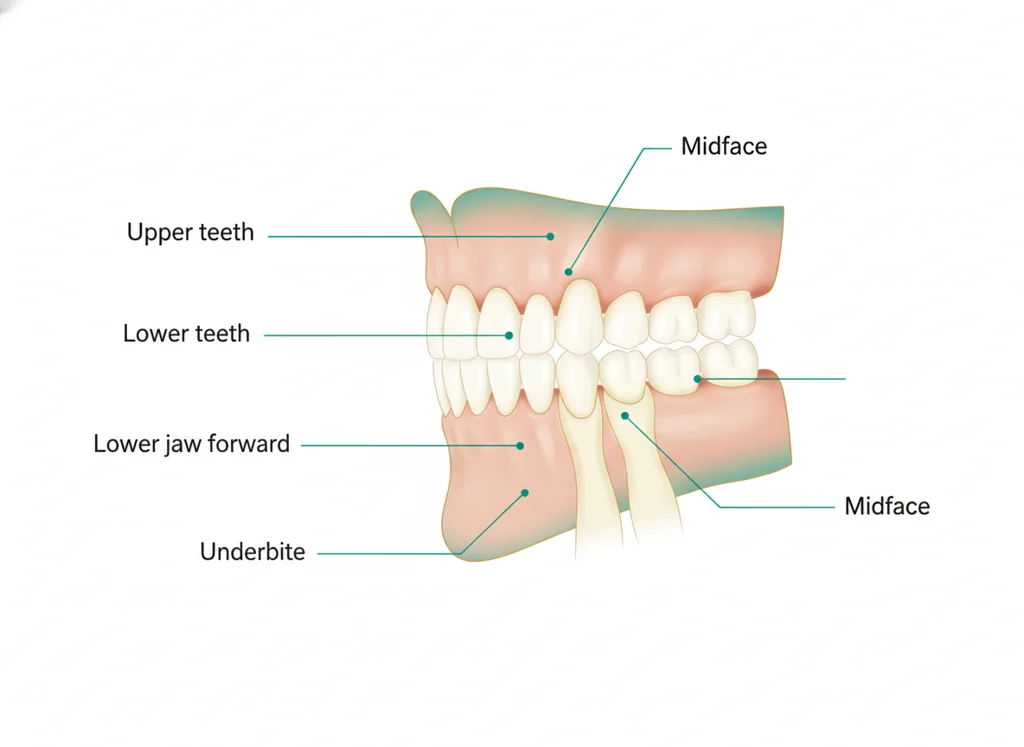
Explaining the Class III pattern from poor forward growth of the repaired maxilla
To find the cause, change one thing and watch what changes.


A young tree grows from its original shape while wind, ties, and nearby supports guide it. Later form records both growth and outside forces.
Do not jump to the biology yet. Treat the picture as a small system. Track its parts, follow one change at a time, and keep more than one explanation open until the picture supplies a way to separate them.
Which feature existed before the ties?
Use the labels and the picture's left-to-right, near-to-far, or before-and-after order. Name only what you can point to.
How could the ties change later direction?
Follow one object, stage, or path. Point to the first place where the situation changes instead of jumping to the ending.
What comparison would separate the two influences?
List more than one explanation that still fits. Name the extra observation that would help you separate those possibilities.

Work from the visible evidence. A useful answer names the part of the picture that supports it and leaves unknown causes open.
Use the everyday picture to answer today's question in plain words: Why might a repaired face grow differently even when surgery went well?
You can complete today's required check without opening the technical details below.
Where the analogy stops: Facial growth involves sutures, bone remodeling, muscles, teeth, and treatment, not plant growth.
Alveolar graft timing follows dental development, usually before the adjacent permanent canine erupts, so living bone can support tooth movement.
Cleft-related midface undergrowth can reflect both underlying anatomy and treatment history, so scar alone should not be treated as a proven single cause.
Educational illustration, not a clinical photograph, scan, or surgical plan. Use the labeled evidence cards and claim ceiling.
A teammate says the palate scar alone definitely caused every millimeter of maxillary retrusion.
Choose the interpretation and cite longitudinal plus evidence-limit cards.
Everything required for today is above. Open these only if you want the explainer, source trail, or download files.
The everyday model and Tier 1 check are the complete required path for this lesson.
Use these checks to keep your place. They are not turned in through the portal.
Turn in: Anatomical lesson 15: Why the Repaired Midface Grows Backward
Go to Schoology to turn this in.
Submit one PDF. Schoology attaches your name to your upload; on the page itself, write your period and code. Name the file: FirstName LastName - Assignment Title - YYYY-MM-DD.pdf.
Open Schoology PDF upload helpIf you cannot get in, see Mr. Mendoza. Do not skip the work.
Goal: Explain how a repaired grows poorly forward, why scar adds a restraining effect, and how this produces a flat midface and a Class III (underbite) tendency.
Everything you need for today is on this page. These links are optional.
Everything required for today's decision is already in the case file and plain-language explainer. The links below are original papers and database records for teachers and advanced readers, not assigned student reading.
| Criterion | Proficient | Developing | Beginning |
|---|---|---|---|
| Complete | Every required part of the artifact is present and filled in. | Most parts are present, but one is missing or left blank. | Several parts are missing. |
| Accurate | The science and data are correct and match the evidence. | Mostly correct, with a small factual slip. | Key science or data is wrong. |
| Scientific reasoning (CER) | States a claim, backs it with specific evidence, and explains the reasoning. | Has a claim and evidence, but the reasoning is thin or missing. | Gives an answer with no evidence or reasoning. |
| Professional communication | Clear, organized, and labeled the way a clinician or scientist would write it. | Readable but disorganized or missing labels. | Hard to follow. |
| Submitted | Turned in through the route named under Submit here and confirmed. | Turned in, but in the wrong place or unconfirmed. | Not turned in. |
What's next: We found out why Mateo's midface grows backward and ends up flat, leaving an underbite as a teenager. We can name the problem, but we have not fixed it: the lip, , and gum graft are all done, yet his upper jaw still sits too far back. How do we correct the bite and midface later? We chase that next time.