
Why the Repaired Midface Grows Backward
This reading contains every idea and every piece of evidence needed for today's decision. The research links at the end are optional.
Why this matters
Care can continue to about age 18, so the team must separate normal growth, the starting shape, and treatment effects.
The question you are trying to answer
Why might a repaired face grow differently even when surgery went well?
Begin with the idea you already earned
Alveolar graft timing follows dental development, usually before the adjacent permanent canine erupts, so living bone can support tooth movement.
Study the analogy before the biology
- Which feature existed before the ties?
- How could the ties change later direction?
- What comparison would separate the two influences?
Turn the analogy into three rules
Limit: Facial growth involves sutures, bone remodeling, muscles, teeth, and treatment, not plant growth.
Map those rules onto the biology
The maxilla forms the upper jaw and much of the midface. If it grows less forward than the mandible, an anterior crossbite or underbite can develop.
Cleft-related anatomy and the effects of surgery and scarring may both contribute to later growth patterns.
Research comparing techniques is mixed and often limited. A careful team measures the pattern and says where causal evidence stops.
Read Mateo's labeled case evidence
Mateo's serial records show the maxilla falling behind the mandible during growth.
The result is midface flattening and anterior crossbite.
Cleft anatomy and primary surgery both precede the later growth pattern.
More than one plausible contributor is present.
Systematic reviews find conflicting or limited evidence that one palate-repair technique determines facial growth.
Scar effects should be discussed without claiming one proven single pathway.
Make the concrete decision
You are presenting Mateo's growth conference.
A teammate says the palate scar alone definitely caused every millimeter of maxillary retrusion.
- Report the observed growth pattern and identify both intrinsic and treatment-related contributors.
- Assign all growth change to scar without comparison evidence.
- Deny that treatment could influence growth.
Choose the interpretation and cite longitudinal plus evidence-limit cards.
Claim ceiling: You may describe association and plausible contributors. You may not assign a single cause from this composite record.
Write the 10-year takeaway
Cleft-related midface undergrowth can reflect both underlying anatomy and treatment history, so scar alone should not be treated as a proven single cause.
- What bite pattern can maxillary retrusion create?
- Why is scar alone an overclaim?
Glossary in plain English
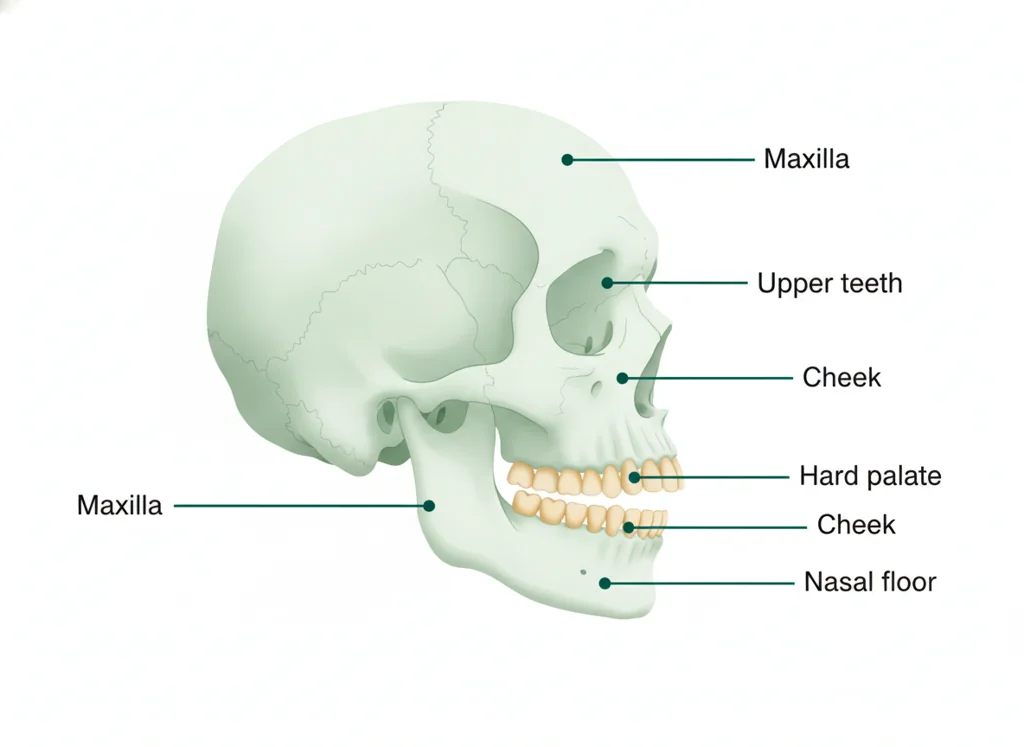
The paired upper jaw bone that forms the front of the hard palate, holds the upper teeth, and shapes the middle of the face.
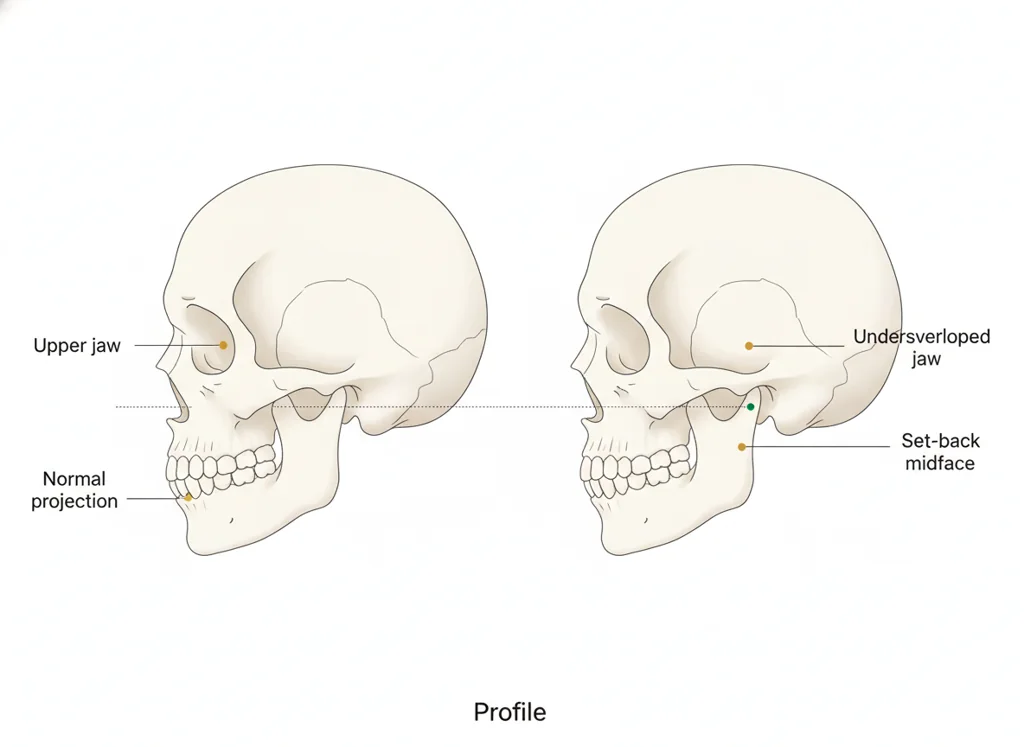
Underdevelopment of the upper jaw, leaving the midface small or set back, a frequent late issue after cleft repair.
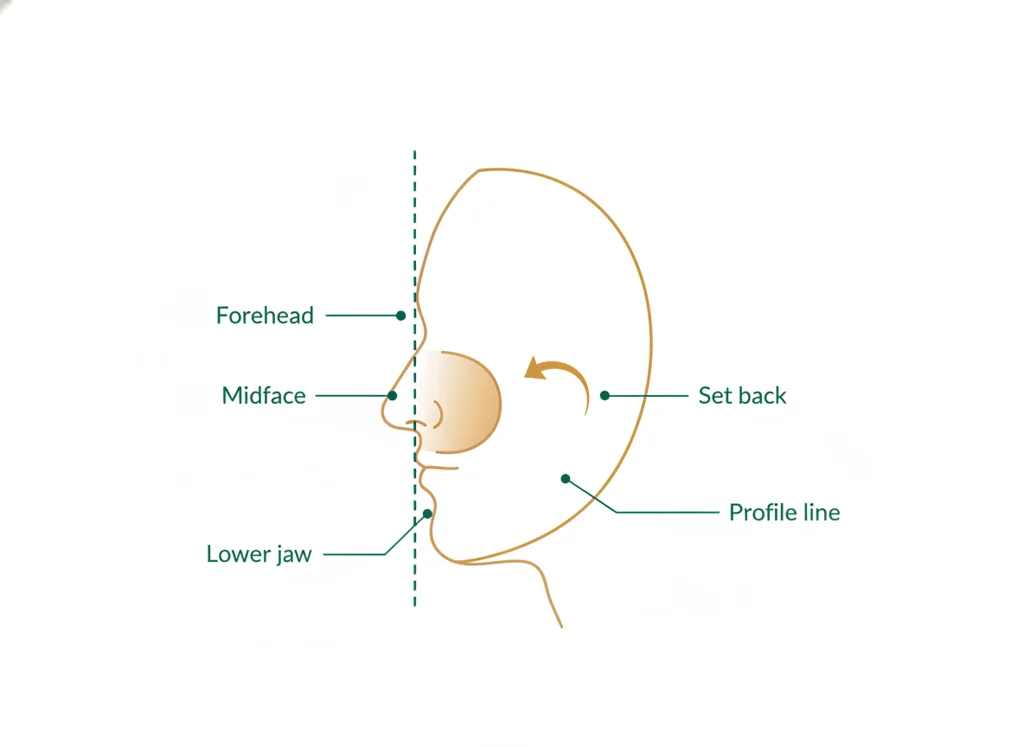
A backward position of the middle of the face relative to the forehead and lower jaw, often following cleft palate repair.
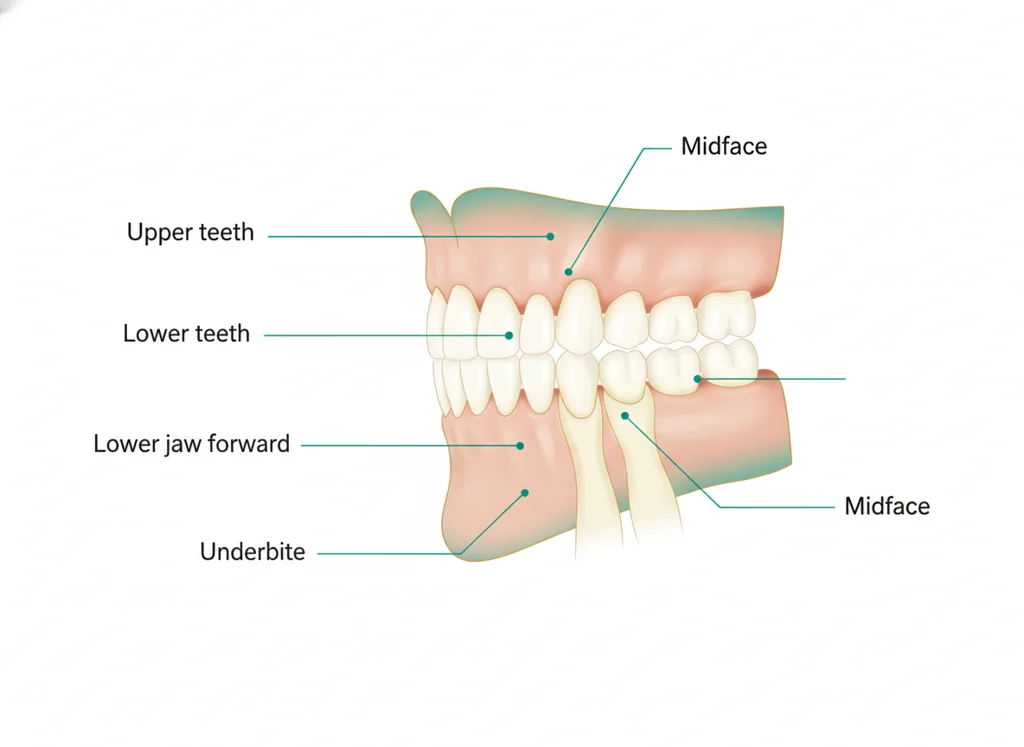
A bite where the lower teeth and jaw sit too far forward of the upper teeth, often seen when the midface is underdeveloped.
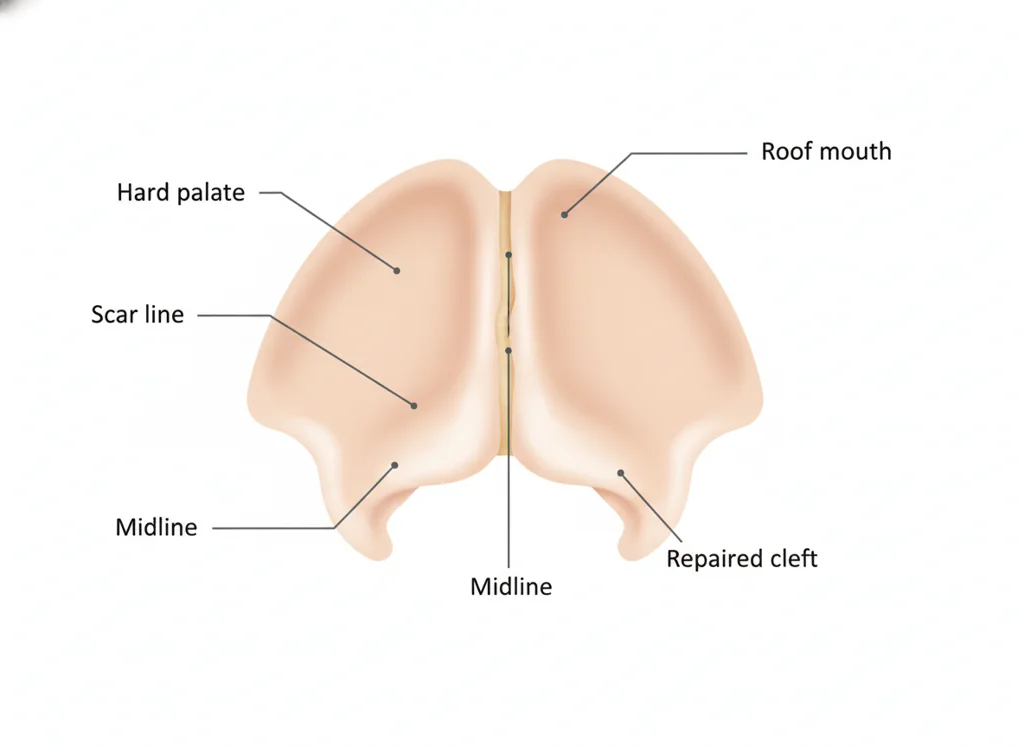
Scar tissue left on the roof of the mouth after cleft palate surgery, which can restrict upper-jaw growth over time.
Research citation trail (advanced)
You do not need these papers or database records to finish the lesson. They document where the plain-language explainer's claims come from and are intended for teachers or advanced readers.
- American Cleft Palate Craniofacial Association. 2024 Parameters of Care.
- Dissaux et al. 2016, Evaluation of 5-Year-Old Children With Complete CLP, Part 2 (J Craniomaxillofac Surg)
- Fisher et al. 2024, Risk Assessment of Sleep-Disordered Breathing in Cleft Lip and/or Palate (Cleft Palate Craniofac J)
- Powell et al. 2022, Does Early Secondary ABG Influence Need for Maxillary Advancement (Cleft Palate Craniofac J)