Rough draft.This research track is under review with Dr. Atit's lab. Content and sequence may still change.
Craniofacial Research Track
Session 8The Molecular Cause, NovemberLens: Genetics of Disease

The cleft gene set: more than one way to interrupt a face

Discovery question

If Mateo's IRF6 turned out to be normal, would that close the case? What other genes could interrupt the same face, and do they all break the same step?

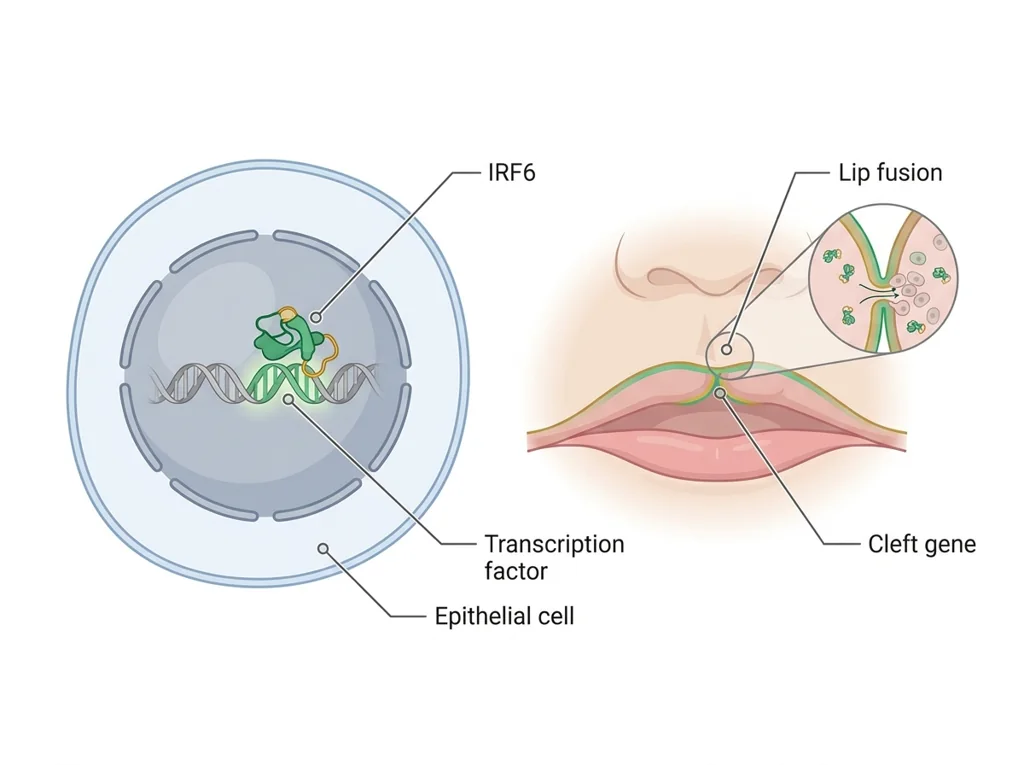
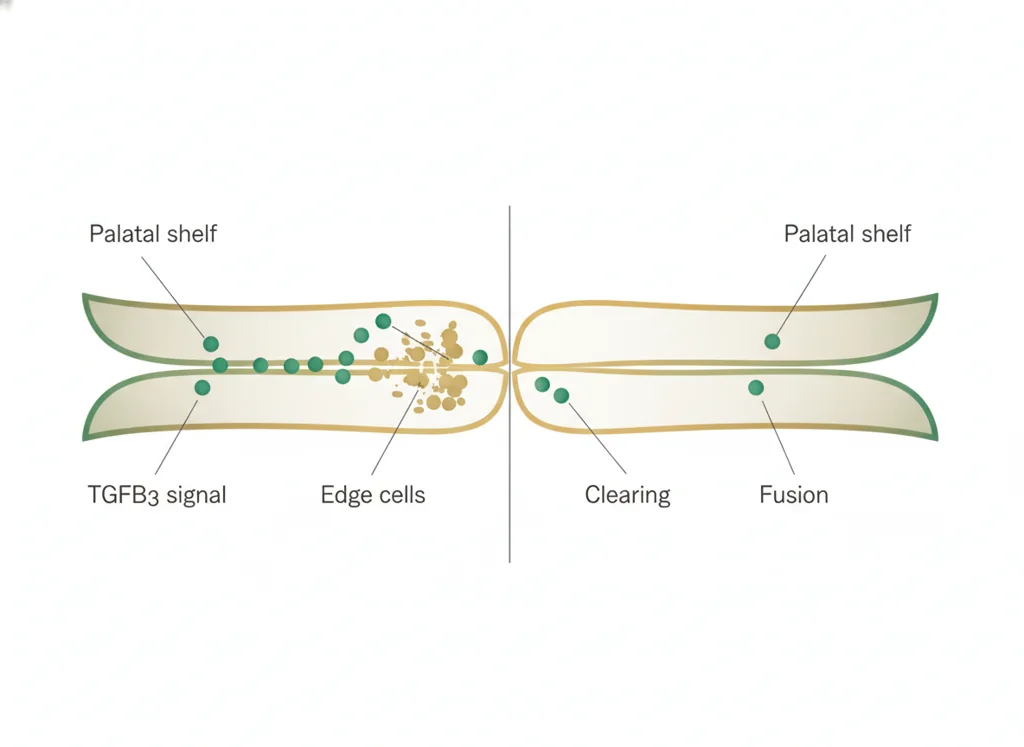
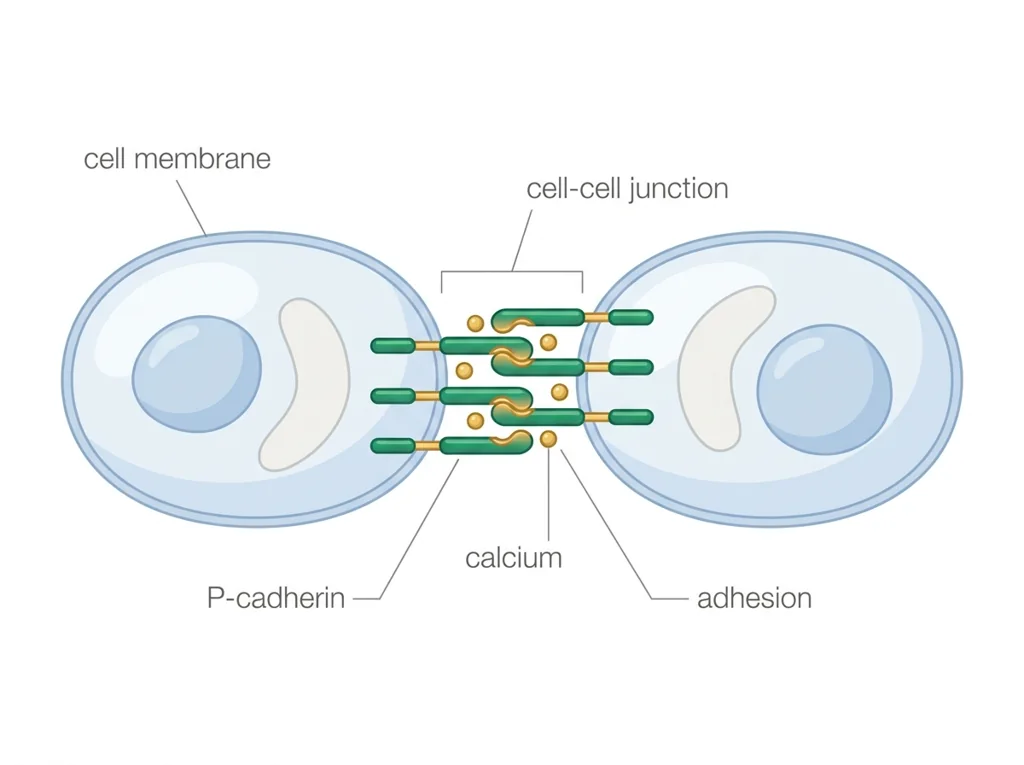
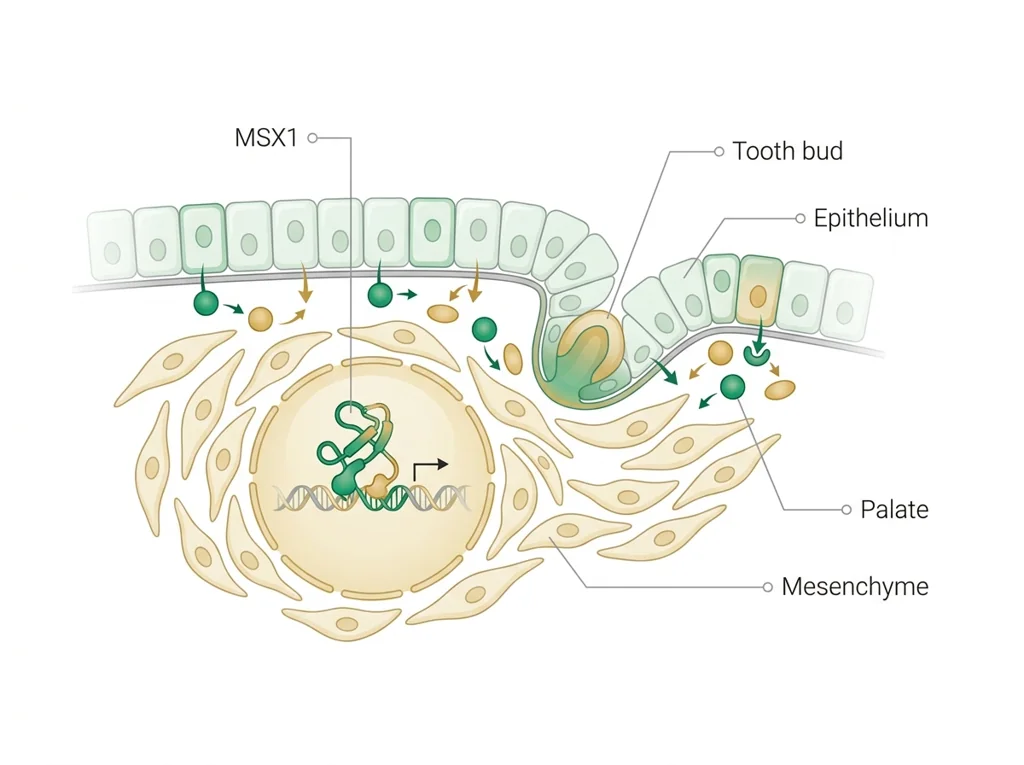
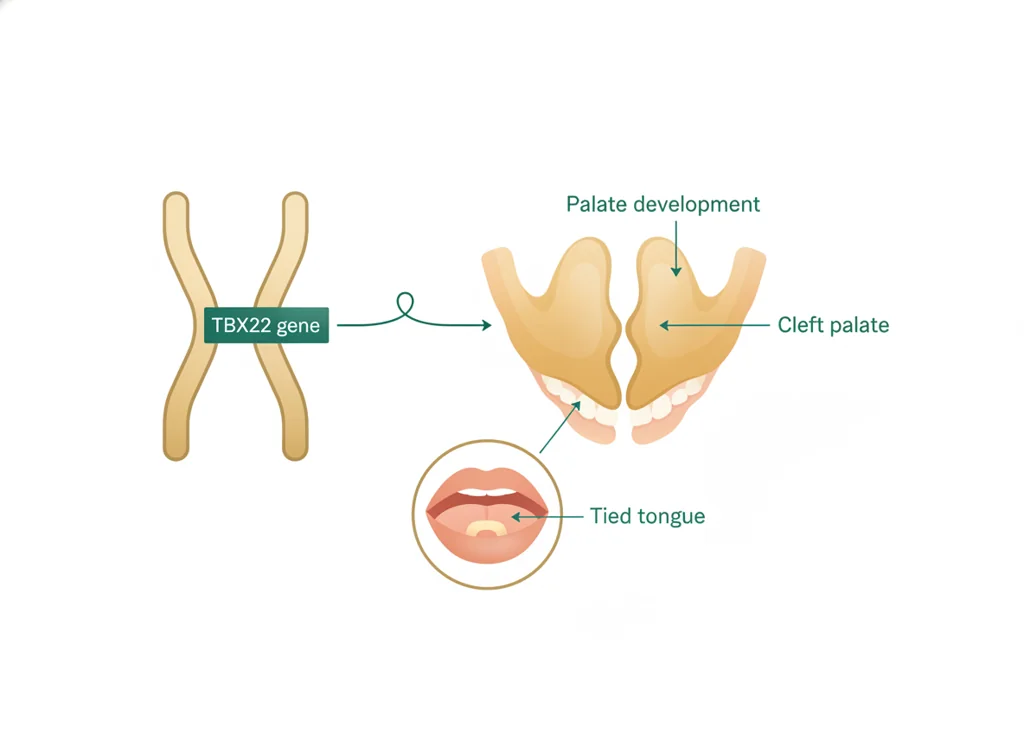
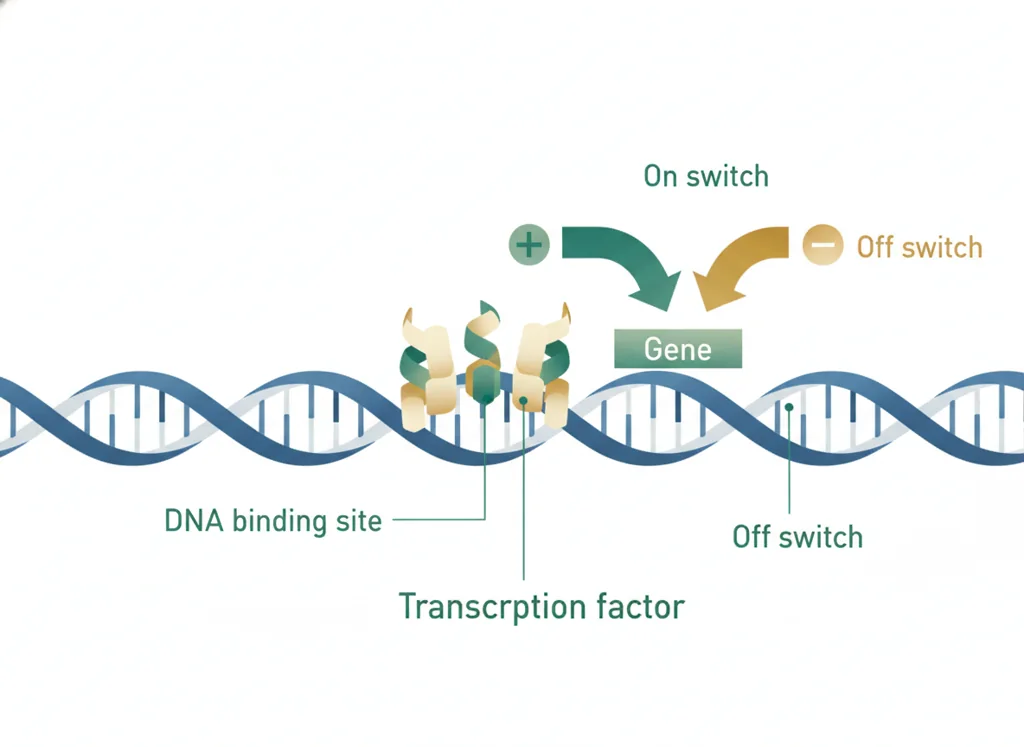
IRF6 is not the only gene behind clefting. , CDH3, MSX1, and each disrupt a different step, signaling, , or , yet all can converge on the same outcome, a . Clefting is often multifactorial.

The plan

Prerequisite check

Before this page, you should know
  • A gene is a stretch of DNA that carries the instruction for one product, usually a .
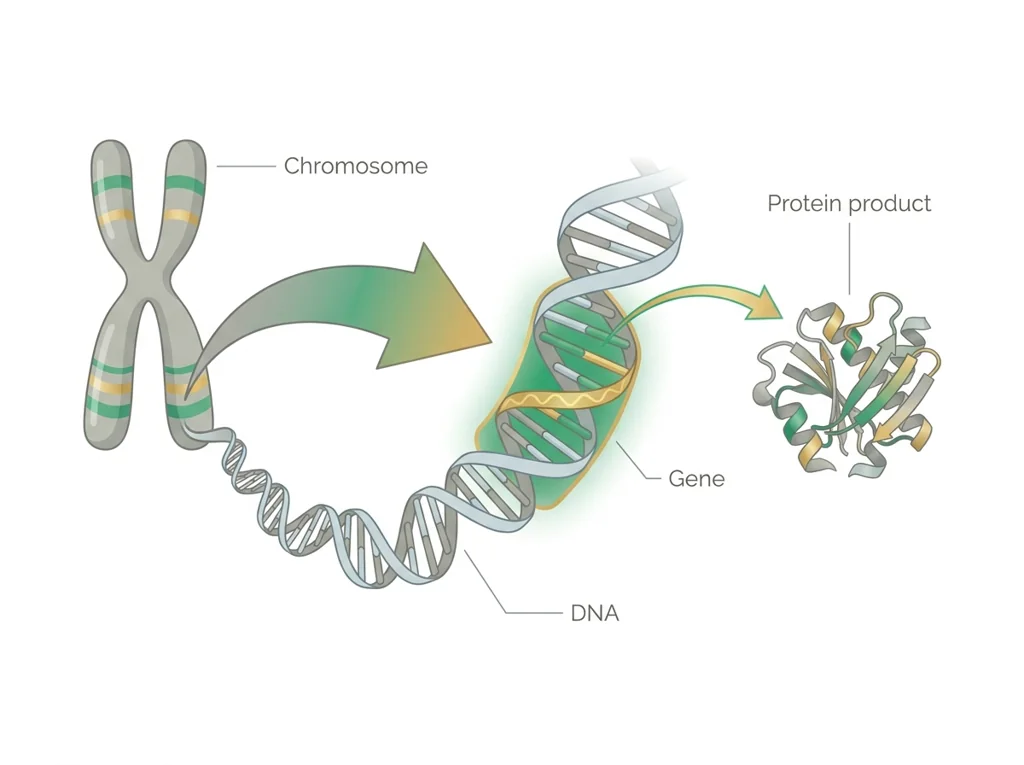
  • The cell copies the gene into mRNA, then reads the mRNA to assemble a : DNA to mRNA to protein.
Today's new idea is only
IRF6 is not the only gene behind clefting. , CDH3, MSX1, and each disrupt a different step, signaling, , or , yet all can converge on the same outcome, a . Clefting is often multifactorial.
Learn first

What to learn

Goal: Compare five -linked genes and explain how disrupting different steps (, signaling, ) can all lead to one shared phenotype.

Know by the end
  • Several genes are linked to clefts, including IRF6, , CDH3, MSX1, and .
  • These genes act in different steps: some are factors, one is a signal, and one helps cells stick together.
  • Different broken steps can converge on the same outcome, because needs all the steps to work.
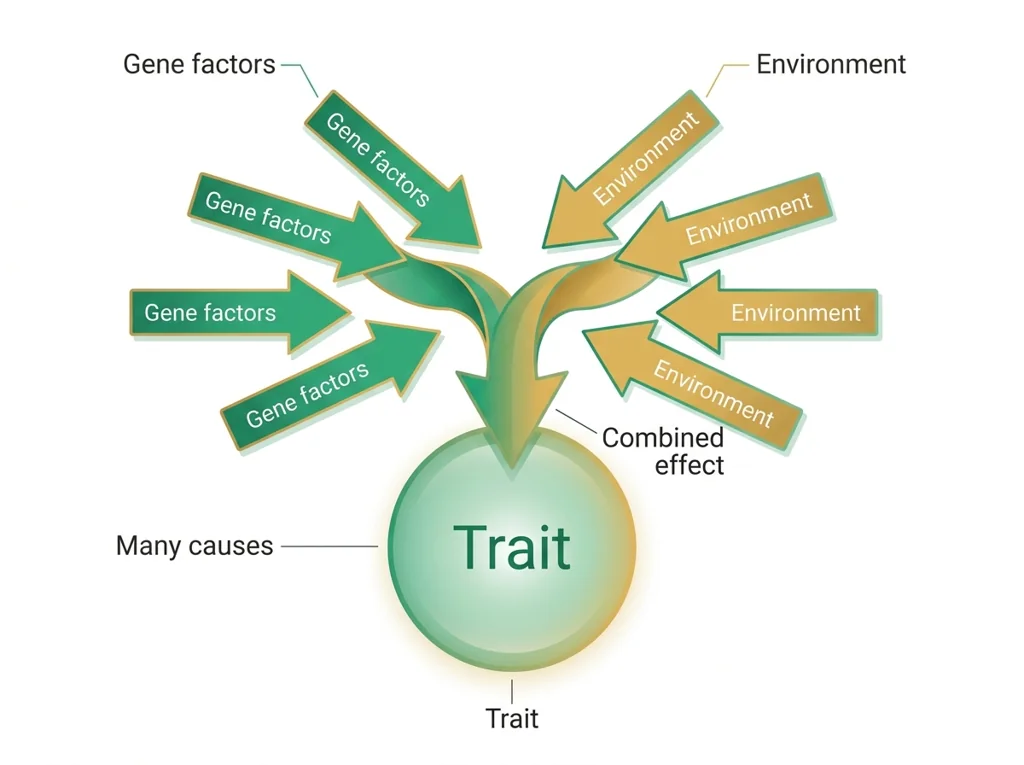
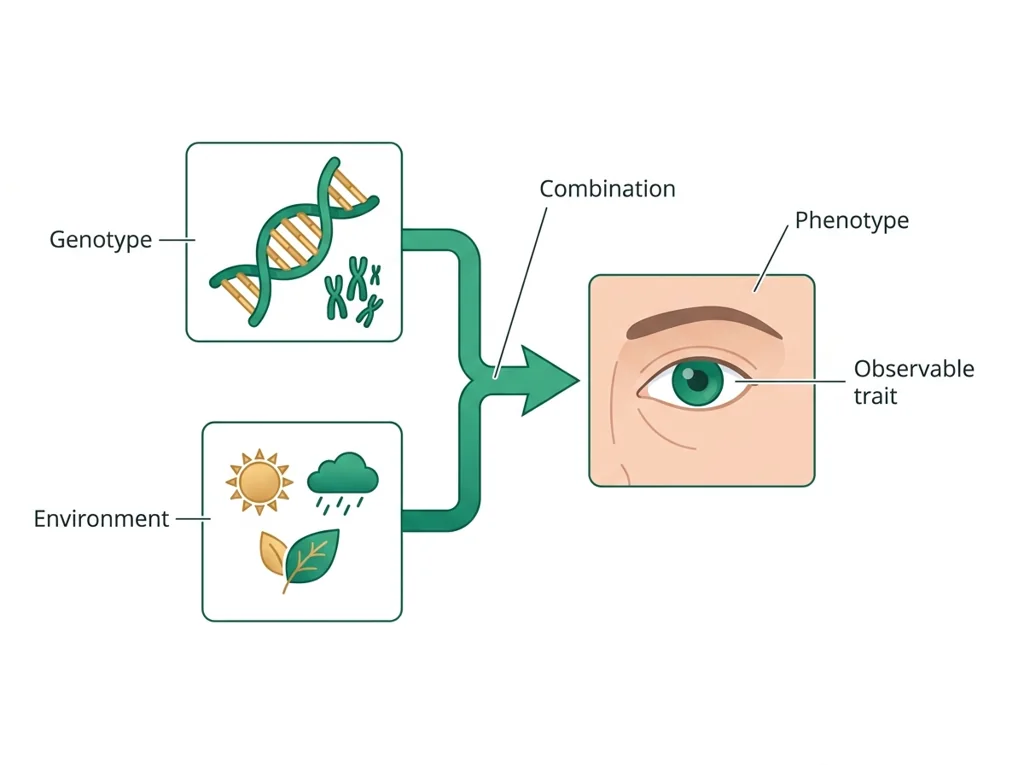
  • Most clefts are multifactorial, meaning several genes and environmental factors combine rather than one gene acting alone.
The plan

Guided notes

1

Build the compare-the-genes table

Model start: IRF6 | | switches on genes the fusing cells need; | signal | tells the edges to clear.
  • Make a table with three columns: gene, the kind of job it does, and the step it disrupts.
  • Fill in rows for IRF6, , CDH3, MSX1, and using the gene cards.
2

Different steps, same outcome

Model start: CDH3 is about , is about signaling, and IRF6, MSX1, and are about , but needs all three to go right.
  • Group the five genes into three jobs: , signaling, .
  • Explain in one sentence how breaking any one of these steps can still leave a .
3

Multifactorial, not a single switch

Model start: Multifactorial means several genes together with the environment, so the same can have more than one molecular path to it.
  • Define multifactorial in your own words.
  • Predict: why might two people with the same carry changes in different genes?
Explore

Reading the Research

What to read
Read the title and the abstract only, not the whole paper. Peer-reviewed literature on IRF6 in clefting (PubMed)
Why this source matters
This is the published evidence behind today's idea: IRF6 is not the only gene behind clefting. , CDH3, MSX1, and each disrupt a different step, signaling, , or , yet all can converge on the same outcome, a . Clefting is often multifactorial.
Words to unlock first
Reading moves
  1. Skim the title and abstract first to get the gist.
  2. Circle the one sentence that states the main claim.
  3. Box the evidence the authors give for that claim.
  4. Mark one sentence that confuses you, and move on.
Stop point
You do not need the methods or statistics yet. If a sentence is about lab technique or math you have not learned, mark it and skip it.
Your output
Write one claim-evidence sentence: what this source claims, and the one piece of evidence that backs it up.
Lab day

Using the database (what to capture)

MedlinePlus
Open the tool

Plain-language explanations of a gene or condition, written for patients and families.

When you use this: Use this when a research paper is too dense, or when you need to explain a finding to Mateo's family in everyday words.
What the screen looks like
medlineplus.gov/genetics IRF6 gene 1 Plain-language gene page 2 What the gene does + linked conditions Helps the face join · cleft, VWS 3 1 Search the gene or condition. 2 Read the summary in everyday words. 3 Note the conditions it links to.
A labeled map of the screen. The circled numbers match the steps.
Step by step
  1. 1Open medlineplus.gov/genetics and search the gene or condition (IRF6).
  2. 2Read the summary written in everyday words.
  3. 3Note the conditions the gene is linked to at the bottom of the page.
Capture these fields
  • Topic: IRF6 gene
  • Plain-language summary: IRF6 helps the tissues of the face join correctly before birth.
  • Linked conditions: Van der Woude syndrome; nonsyndromic cleft
How to read it: Start here when a research paper is too dense. MedlinePlus gives you the gist in everyday words so you can go back to the harder source knowing what it is about.
Lost? About MedlinePlus Genetics
NCBI Gene
Open the tool

The full reference record for a gene: its official symbol, ID, location, and what it does.

When you use this: Use this first, when you have a gene name and need its official ID and address. It is the home base every other database points back to.
What the screen looks like
ncbi.nlm.nih.gov/gene IRF6 1 Gene record: IRF6 2 Official symbol / Gene ID / Location IRF6 · ID 3664 · 1q32.2 3 1 Type the gene symbol and search Gene. 2 Open the top human result. 3 Read symbol, Gene ID, and location at the top.
A labeled map of the screen. The circled numbers match the steps.
Step by step
  1. 1Go to ncbi.nlm.nih.gov/gene and type the gene symbol IRF6 in the search box, then press Search.
  2. 2Open the top result whose organism is Homo sapiens (human).
  3. 3At the top of the record, read three things and write them down: the official symbol, the Gene ID number, and the location ( band).
Capture these fields
  • Symbol (official gene name): IRF6
  • Gene ID (the stable number): 3664
  • Location (chromosome band): 1q32.2
  • Summary (one line on its job): A transcription factor needed for the skin-surface cells that let the lip and palate fuse.
How to read it: The symbol and Gene ID let you find the exact same gene in every other database. The location should match the band you mapped (1q32). The summary tells you the gene's job in one sentence.
Lost? NCBI Gene help manual (how to use the Gene database)
Words

Vocabulary (the same words your classes use)

/FEE-noh-type/
Learn first

Pick your level

Level 1, Guided

Use the sentence starters, a word bank from the vocabulary, a labeled diagram, and the exact source link.

Level 2, Collaborative

Complete a partly blank model or table and explain it.

Level 3, Independent

Make a claim from a new example or an unfamiliar entry in the same database.

The plan

Work as a research team

Team roles
  • Manager: keeps the group moving
  • Recorder: writes the shared model or table
  • Evidence checker: verifies each claim against the source
  • Reporter: explains the group's reasoning
Process reflection
  • What evidence changed your thinking today?
  • What did your group disagree about, and how did you resolve it?
  • What question is still unresolved?
Check yourself

Demonstration of learning

By the end of this session, submit ONE of: a labeled diagram with a 2-sentence explanation; a claim, evidence, reasoning paragraph; a completed data table from a real database; or a one-question exit ticket using today's vocabulary.

Meets standard if your explanation correctly connects structure, timing, gene or protein function, or evidence source to Mateo's case: Compare five cleft-linked genes and explain how disrupting different steps (adhesion, signaling, transcription) can all lead to one shared phenotype.
How this is graded (rubric)
For: Compare five cleft-linked genes and explain how disrupting different steps (adhesion, signaling, transcription) can all lead to one shared phenotype.
CriterionProficientDevelopingBeginning
CompleteEvery required part of the artifact is present and filled in.Most parts are present, but one is missing or left blank.Several parts are missing.
AccurateThe science and data are correct and match the evidence.Mostly correct, with a small factual slip.Key science or data is wrong.
Scientific reasoning (CER)States a claim, backs it with specific evidence, and explains the reasoning.Has a claim and evidence, but the reasoning is thin or missing.Gives an answer with no evidence or reasoning.
Professional communicationClear, organized, and labeled the way a clinician or scientist would write it.Readable but disorganized or missing labels.Hard to follow.
SubmittedTurned in the right way (Schoology for routine work) and confirmed.Turned in, but in the wrong place or unconfirmed.Not turned in.
How the model answer scores against this rubric
  • CompleteProficient: Nothing is left blank: the model fills every part of "Compare five cleft-linked genes and explain how disrupting different steps (adhesion, signaling, transcription) can all lead to one shared phenotype.".
  • AccurateProficient: Every number and claim matches the case evidence.
  • Scientific reasoning (CER)Proficient: It names a claim, cites the specific evidence, and explains the reasoning, not just the answer.
  • Professional communicationProficient: It is organized and labeled like a real chart note.
  • SubmittedProficient: It would be turned in on Schoology and confirmed.