Clue 1: Orient yourself
What are the main parts, stages, or choices in this model?
Use the labels and the picture's left-to-right, near-to-far, or before-and-after order. Name only what you can point to.
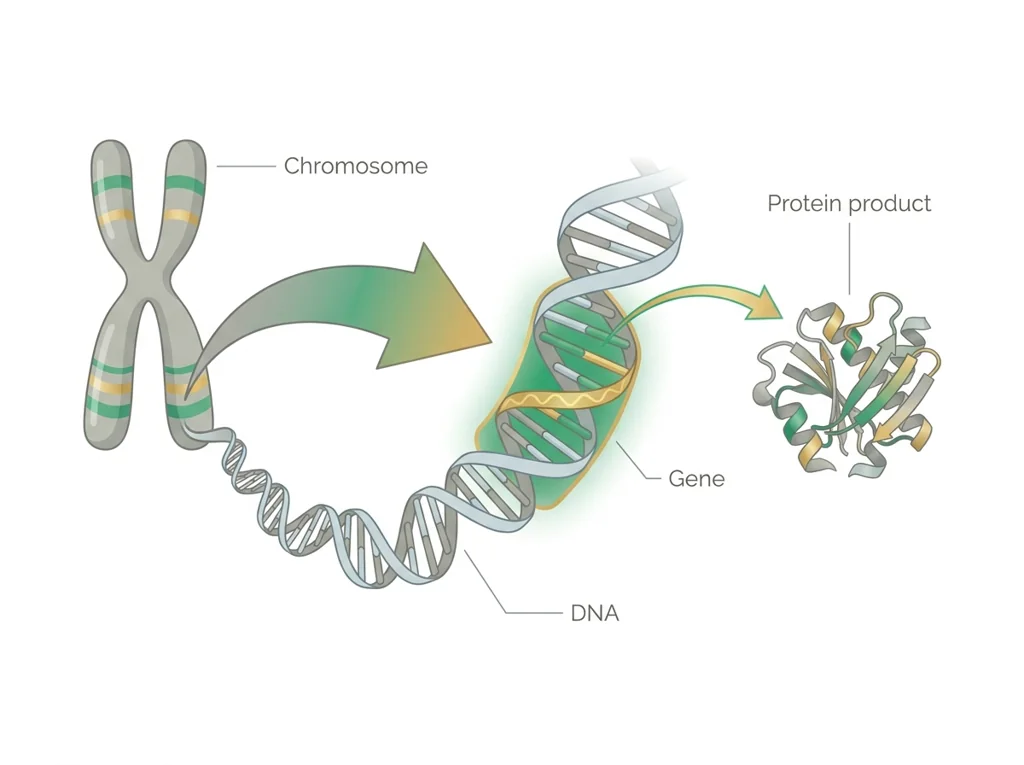
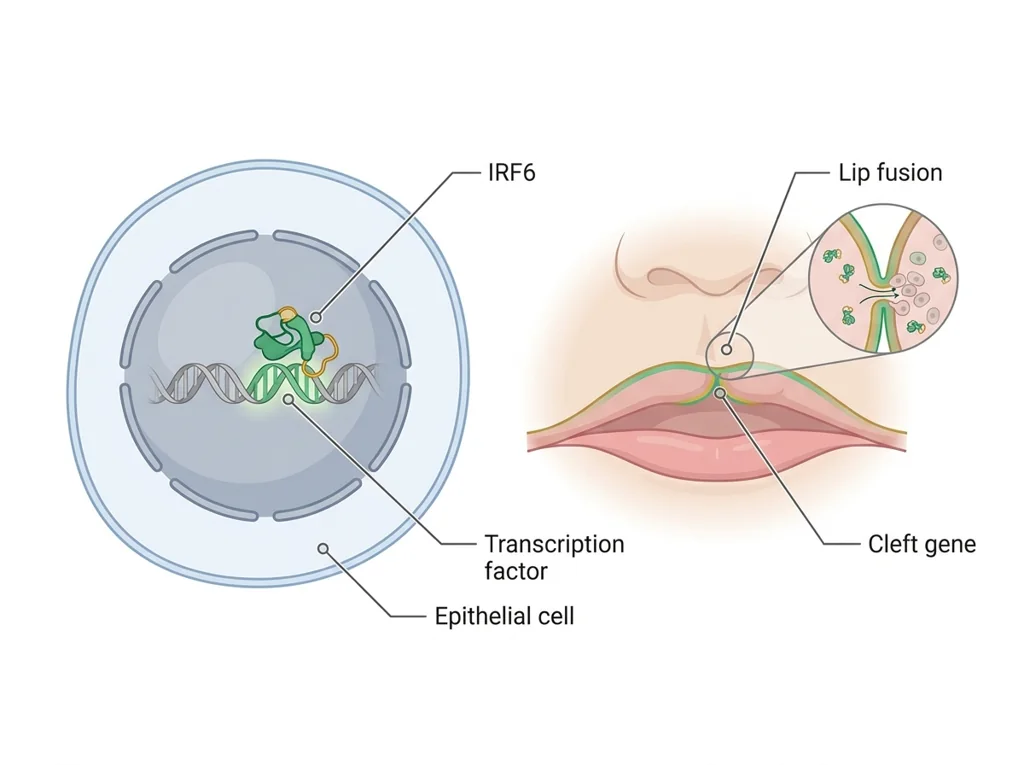
Why it matters: A genetic test becomes useful only when a team can connect a DNA change to a changed protein and a changed process. That chain supports variant interpretation, diagnosis, and research without pretending one gene explains everything.
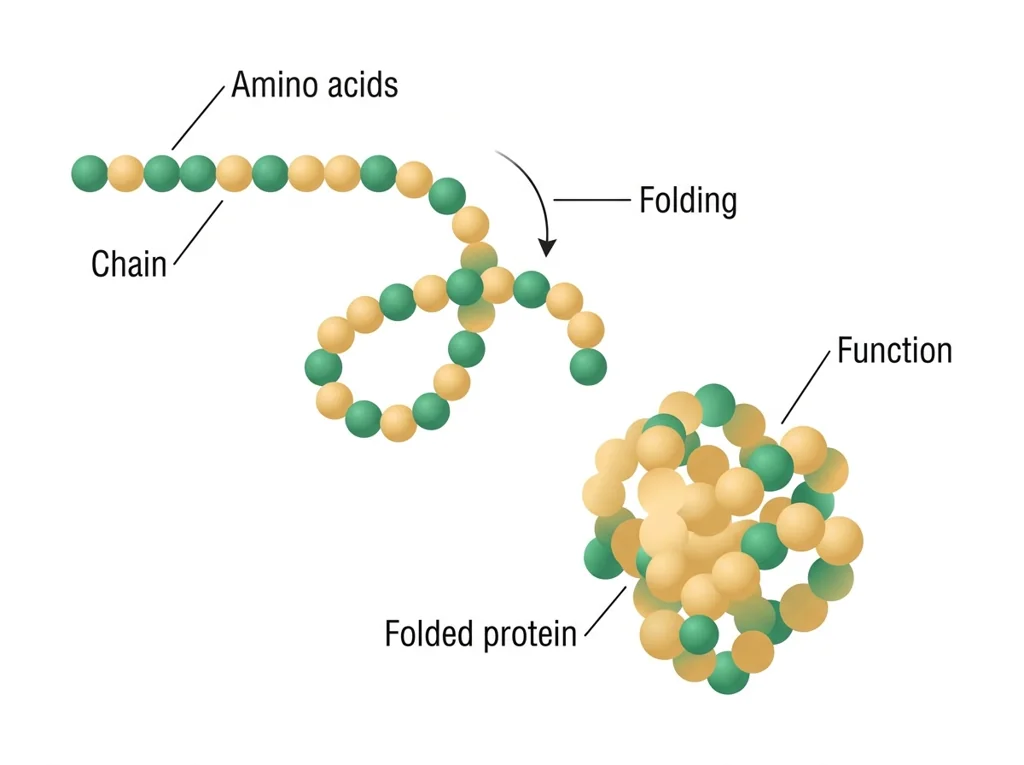
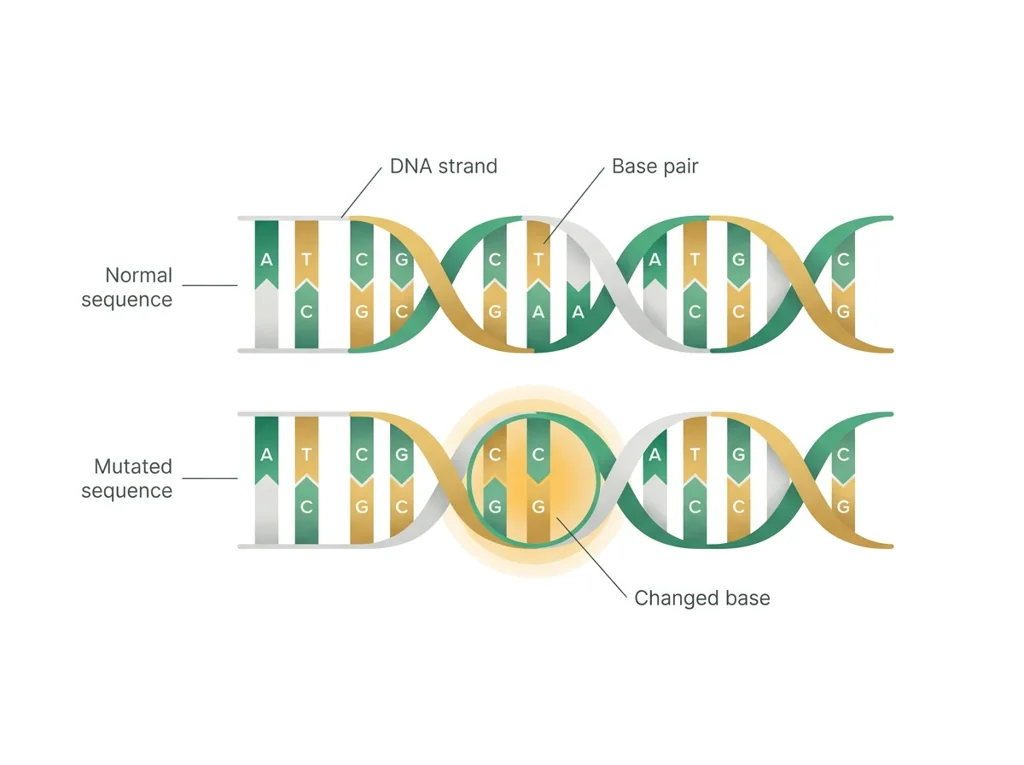
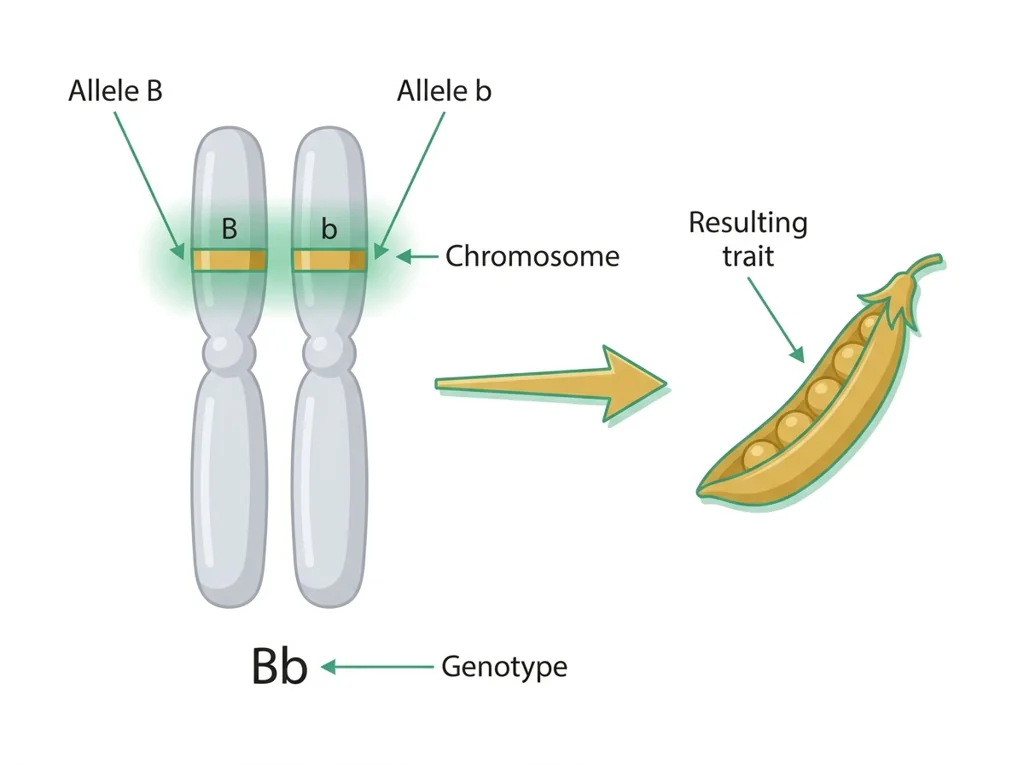
You can trace information from a gene to a protein and explain how a change can alter the product.
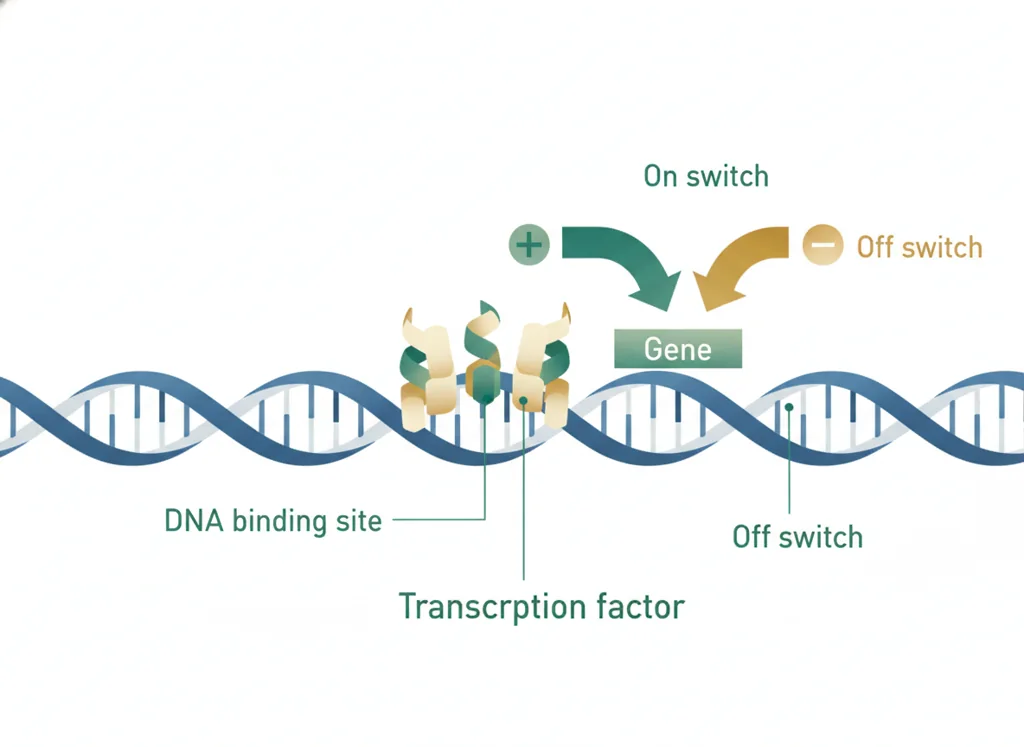
Having a gene is not the same as using it.
A kitchen copies one recipe card, hands the copy to a supervisor, and uses those directions to make the dish. A changed line can change the finished food.
Do not jump to the biology yet. Treat the picture as a small system. Track its parts, follow one change at a time, and keep more than one explanation open until the picture supplies a way to separate them.
What are the main parts, stages, or choices in this model?
Use the labels and the picture's left-to-right, near-to-far, or before-and-after order. Name only what you can point to.
What changes while the other parts stay the same?
Follow one object, stage, or path. Point to the first place where the situation changes instead of jumping to the ending.
What check would separate two explanations that still fit the picture?
List more than one explanation that still fits. Name the extra observation that would help you separate those possibilities.

Work from the visible evidence. A useful answer names the part of the picture that supports it and leaves unknown causes open.
Trace the instruction from recipe card to working copy to supervisor to finished dish, then predict what one changed line could do.
Answer in plain words. You can finish this required check without opening either optional section below.
How does a written instruction inside a cell become something that can do a job?
Having it is not using it. An instruction affects a cell only when the cell reads it and builds the working part it describes.

Goal: Trace an instruction from storage to working product, then explain how a changed instruction can interrupt a building step.
Plain-language explanations of a gene or condition, written for patients and families.
The full reference record for a gene: its official symbol, ID, location, and what it does.
Use the sentence starters, a word bank from the vocabulary, a labeled diagram, and the exact source link.
Complete a partly blank model or table and explain it.
Make a claim from a new example or an unfamiliar entry in the same database.
By the end of this session, submit ONE of: a labeled diagram with a 2-sentence explanation; a claim, evidence, reasoning paragraph; a completed data table from a real database; or a one-question exit ticket using today's vocabulary.
| Criterion | Proficient | Developing | Beginning |
|---|---|---|---|
| Complete | Every required part of the artifact is present and filled in. | Most parts are present, but one is missing or left blank. | Several parts are missing. |
| Accurate | The science and data are correct and match the evidence. | Mostly correct, with a small factual slip. | Key science or data is wrong. |
| Scientific reasoning (CER) | States a claim, backs it with specific evidence, and explains the reasoning. | Has a claim and evidence, but the reasoning is thin or missing. | Gives an answer with no evidence or reasoning. |
| Professional communication | Clear, organized, and labeled the way a clinician or scientist would write it. | Readable but disorganized or missing labels. | Hard to follow. |
| Submitted | Turned in through the route named under Submit here and confirmed. | Turned in, but in the wrong place or unconfirmed. | Not turned in. |
Everything required is above. Open this section only if you want the research reading and source trail.
How does a written instruction inside a cell become something that can do a job?
A kitchen copies one recipe card, hands the copy to a supervisor, and uses those directions to make the dish. A changed line can change the finished food.
Having it is not using it. An instruction affects a cell only when the cell reads it and builds the working part it describes.
This lesson reading is written from the vetted sources in the advanced citation trail below.
Everything you need for today is on this page. These links are optional.
These records and papers document the science. They are not assigned student reading. Use the plain-language lesson reading above unless your teacher asks you to inspect an original source.