
Looking Up a Variant
This reading contains every idea and every piece of evidence needed for today's decision. The research links at the end are optional.
Why this matters
Students must learn that databases organize claims rather than replace reasoning.
The question you are trying to answer
Which card has the strongest review trail?
Begin with the idea you already earned
IRF6 encodes a transcription factor that changes cell behavior by controlling other genes.
Study the analogy before the biology
- Which card has the strongest review trail?
- Why does a rare book not have to be harmful?
- What should happen when reviewers disagree?
Turn the analogy into three rules
Limit: Evidence databases change as new results arrive. They are not final verdicts.
Map those rules onto the biology
ClinVar collects variant interpretations from laboratories and expert groups. The same variant may have one or several submissions.
Review stars, dates, condition names, and assertion criteria help users judge confidence.
Population frequency from resources such as gnomAD adds another check. Rare does not automatically mean harmful, and uncertain means uncertain.
Read Mateo's labeled case evidence
ClinVar stores submitted variant-condition classifications and review status.
A classification must be read with its evidence level.
A pathogenic IRF6 assertion should match an IRF6-related condition and supporting evidence.
Condition context matters.
A common population variant is unlikely to cause a rare fully penetrant syndrome by itself.
Frequency constrains pathogenic claims.
Make the concrete decision
You are the variant-review trainee.
An IRF6 record says pathogenic but has one old submission and no assertion criteria; another lab calls it uncertain.
- Report the conflict and seek stronger current evidence.
- Treat the word pathogenic as final without review context.
- Call every rare variant disease-causing.
Choose the report language and cite review-status plus frequency rules.
Claim ceiling: You may summarize database evidence. You may not independently diagnose from a weak or conflicting record.
Write the 10-year takeaway
Variant interpretation combines clinical assertions, population frequency, molecular consequence, and evidence quality.
- What should be read beside a ClinVar classification?
- Why does rarity not prove pathogenicity?
Glossary in plain English
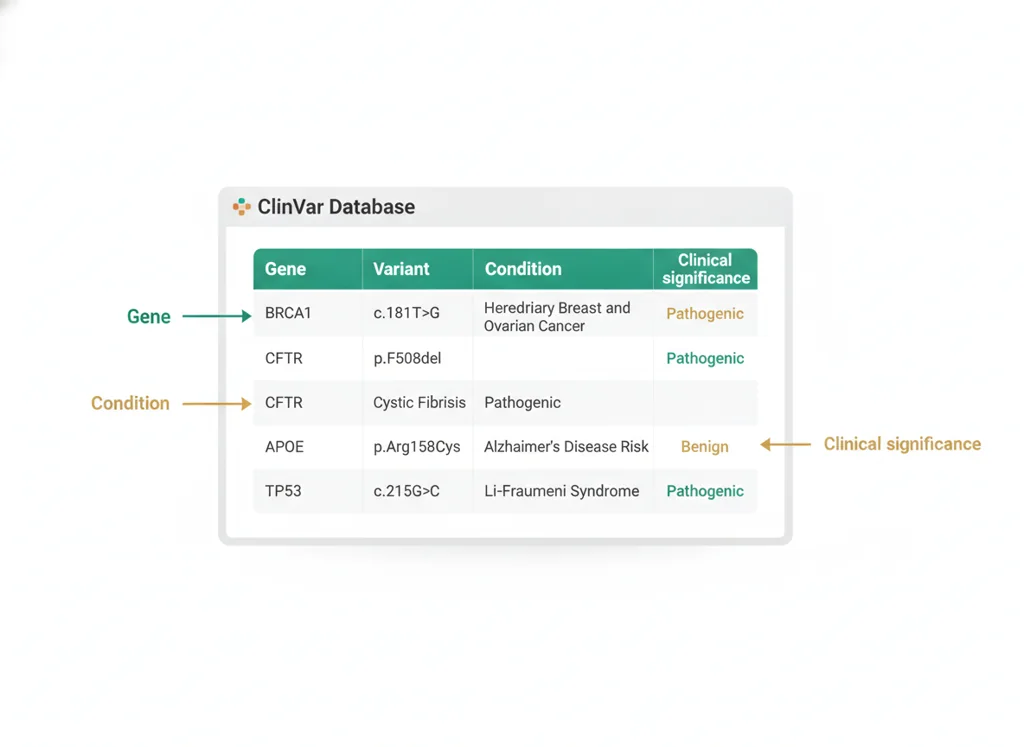
An NIH database of reported DNA variants, the conditions they are linked to, and a clinical-significance call for each.
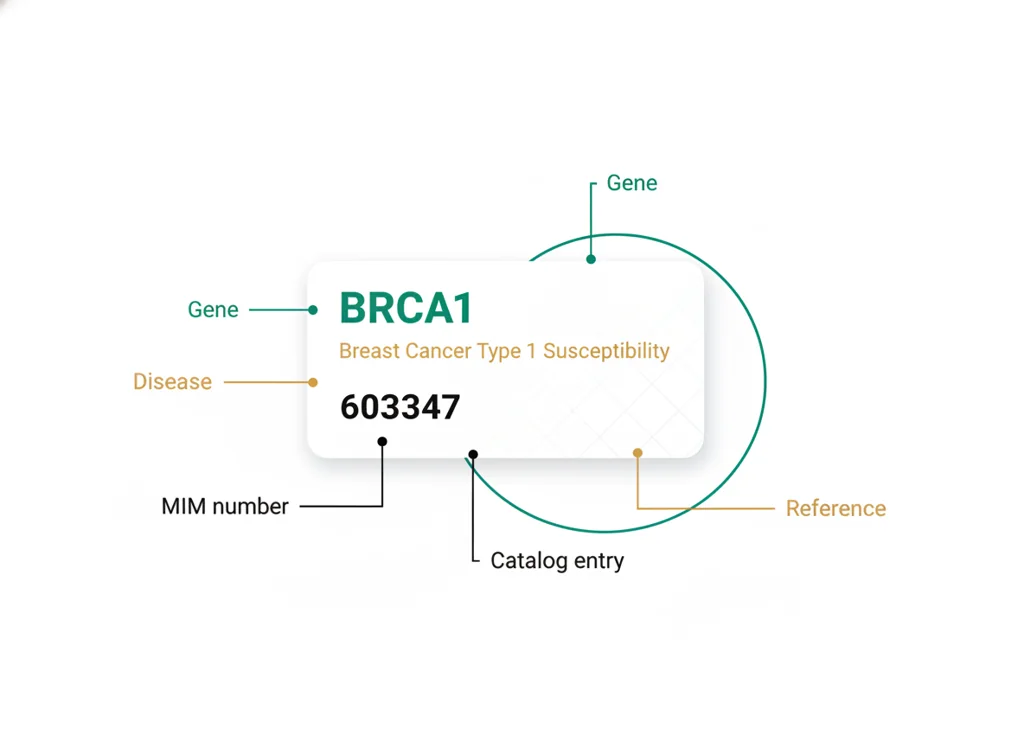
Online Mendelian Inheritance in Man, a catalog of human genes and the inherited diseases they cause, each with a stable reference number.
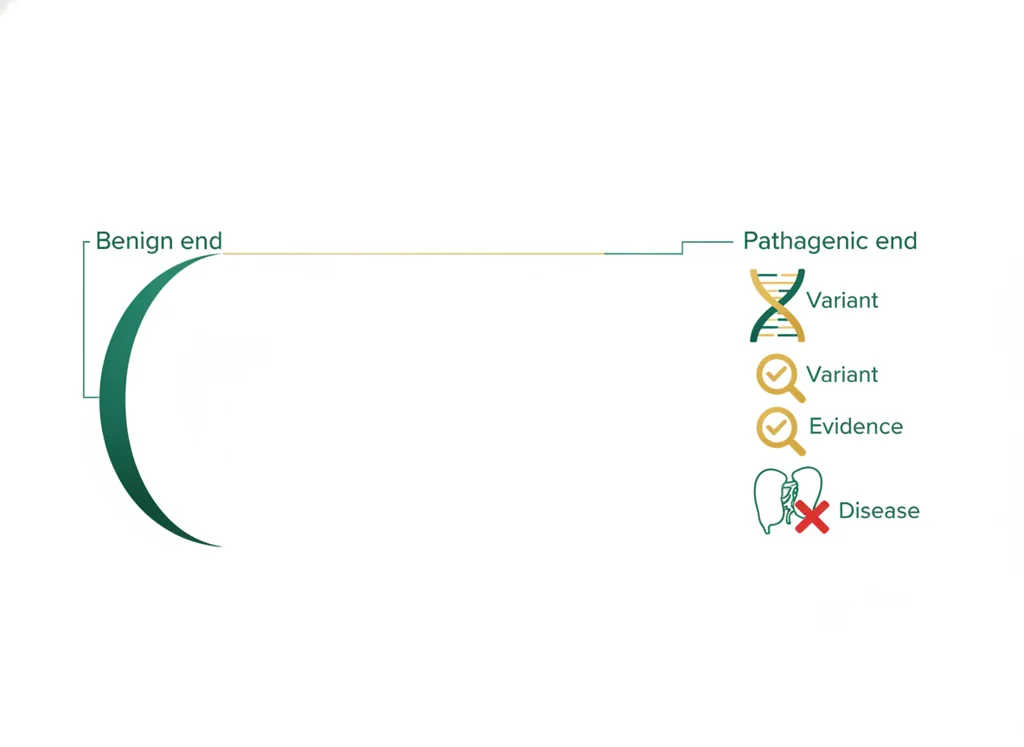
Capable of causing disease; for a gene variant, classified as disease-causing based on the weight of scientific evidence.
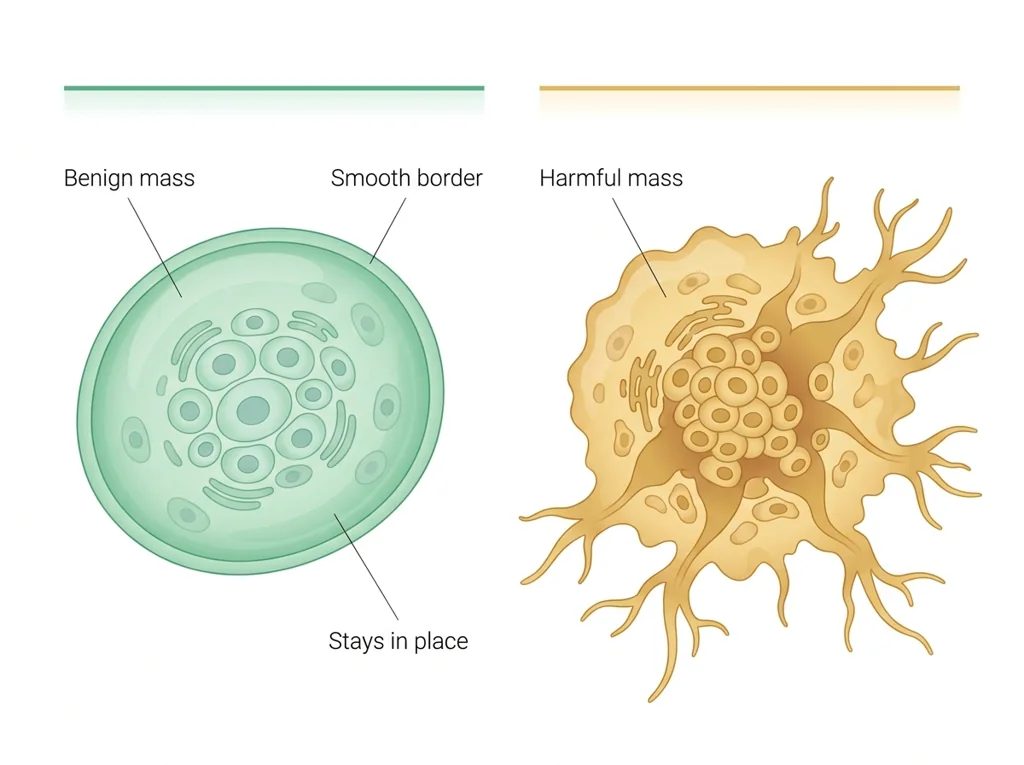
Not harmful or not cancerous; a benign tumor stays in one place and does not spread, and a benign gene variant does not cause disease.
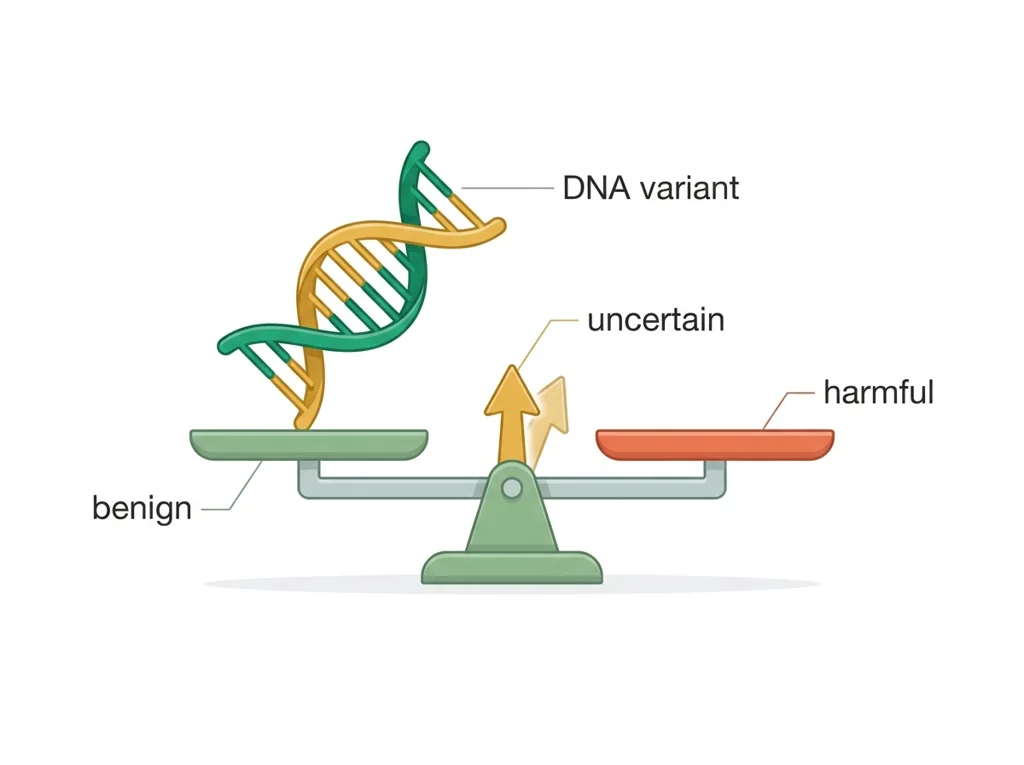
A genetic change whose effect on health is not yet known, leaving doctors unable to call it harmful or harmless.
Research citation trail (advanced)
You do not need these papers or database records to finish the lesson. They document where the plain-language explainer's claims come from and are intended for teachers or advanced readers.
- Kondo S, et al. 2002. IRF6 mutations cause VWS and PPS. Nat Genet. [PMID:12219090]
- Leslie EJ, et al. 2012. IRF6 variants in VWS and PPS. Genet Med. [PMID:23154523]
- ClinVar (NIH), query gene IRF6
- OMIM IRF6 (#607199); VWS1 #119300; PPS #119500 (professional database; use MedlinePlus Genetics if blocked)
- gnomAD (Broad Institute), gene IRF6: allele frequency in healthy populations