
The Gene at 1q32 Has a Name: IRF6, From DNA to Protein
This reading contains every idea and every piece of evidence needed for today's decision. The research links at the end are optional.
Why this matters
Students need the central dogma before they can interpret variant consequences.
The question you are trying to answer
Which object stores the lasting instructions?
Begin with the idea you already earned
Linkage follows inherited chromosome markers to narrow a gene's address before sequencing names the gene.
Study the analogy before the biology
- Which object stores the lasting instructions?
- What copy leaves the archive?
- How can one supervisor change many stations?
Turn the analogy into three rules
Limit: Genes do not contain recipes in words, and proteins do not make conscious decisions.
Map those rules onto the biology
IRF6 is a gene on chromosome 1q32.2. Cells copy the gene into messenger RNA.
Ribosomes translate the RNA into the IRF6 protein, which is 467 amino acids long.
IRF6 is a transcription factor. It helps control other genes that guide epithelial cells toward the right differentiated state.
Read Mateo's labeled case evidence
Sequencing the linked 1q32 interval identified damaging variants in IRF6.
IRF6 was the gene supported by molecular evidence.
IRF6 is transcribed into mRNA and translated into a 467-amino-acid protein.
The gene produces a specific protein product.
IRF6 contains a DNA-binding domain and regulates epithelial differentiation genes.
Its main job is control of gene activity.
Make the concrete decision
You are explaining the gene discovery to a molecular team.
A new intern says IRF6 is a piece of lip tissue made directly from DNA.
- Correct the path to DNA, RNA, transcription factor, target genes, and cell behavior.
- Agree that DNA becomes lip tissue directly.
- Say IRF6 is only a chromosome marker.
Choose the correction and cite gene-product and protein-job evidence.
Claim ceiling: You may describe IRF6's molecular role. You may not say one IRF6 result explains Mateo without a case test.
Write the 10-year takeaway
IRF6 encodes a transcription factor that changes cell behavior by controlling other genes.
- What molecule is translated?
- Why is transcription factor more accurate than structural lip protein?
Glossary in plain English
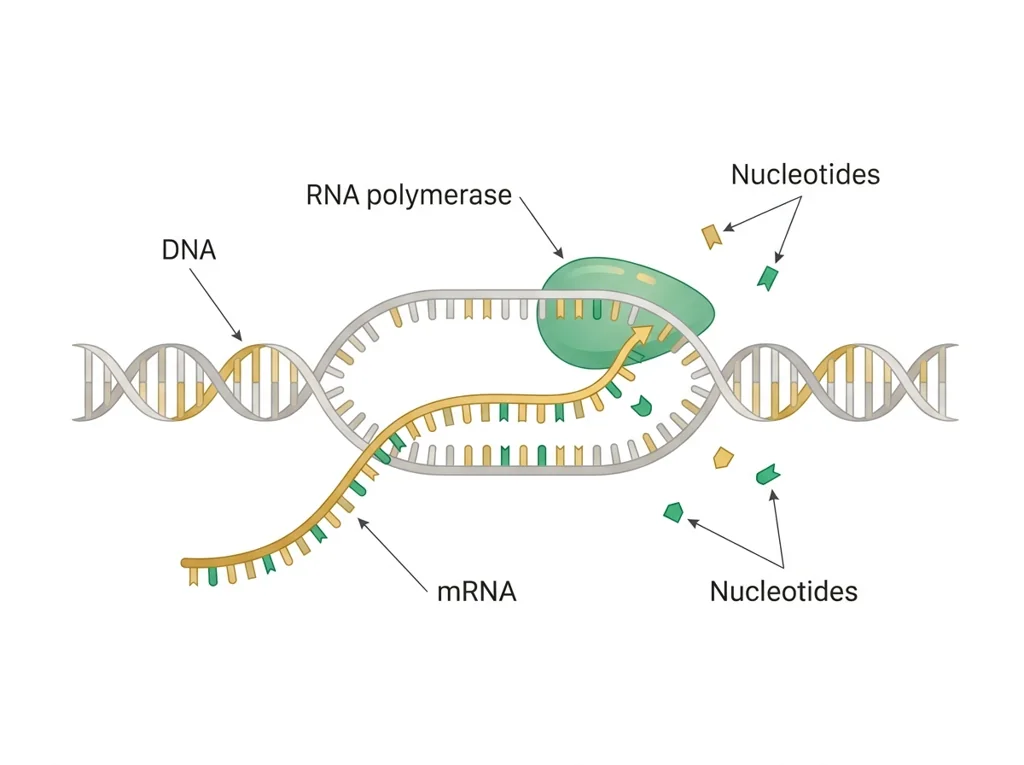
The first step of making a protein: copying a DNA gene into messenger RNA.
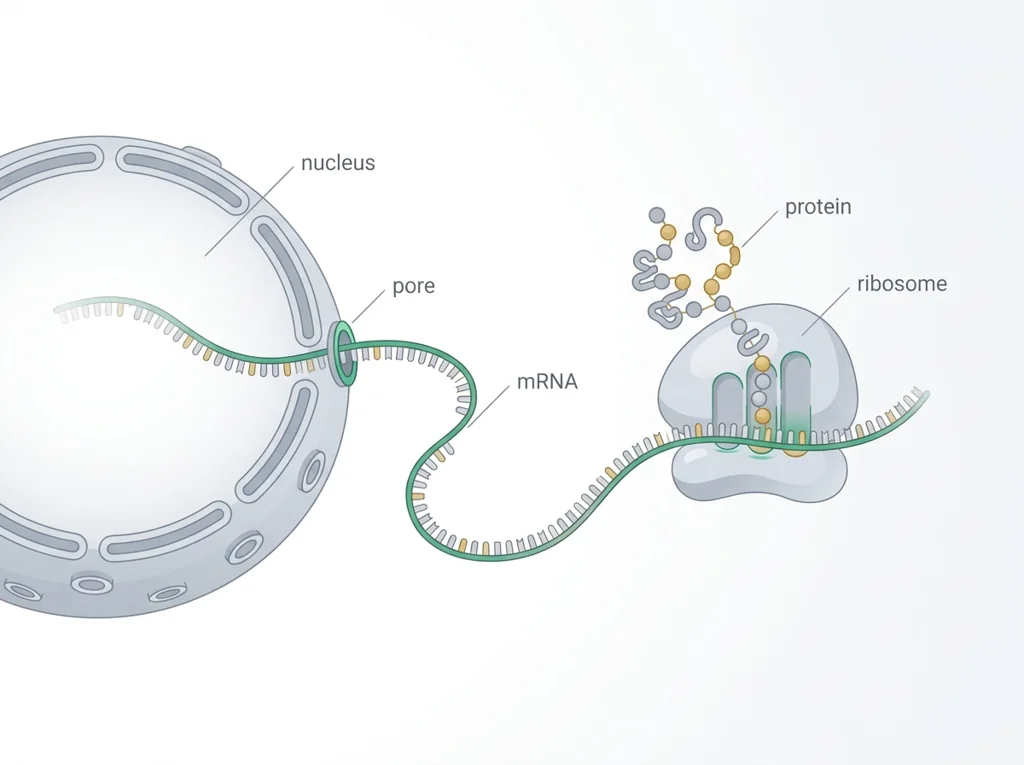
The working copy of a gene that carries its instructions out of the nucleus to the ribosome to be read into protein.
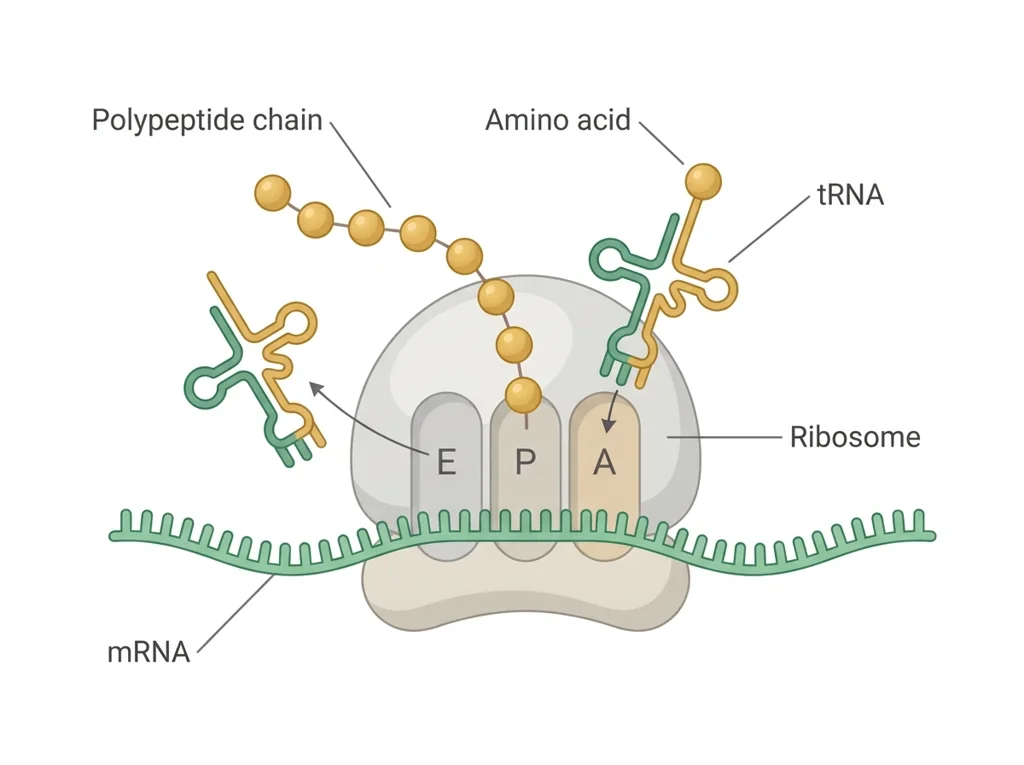
The second step of making a protein: the ribosome reads the mRNA and builds a chain of amino acids.
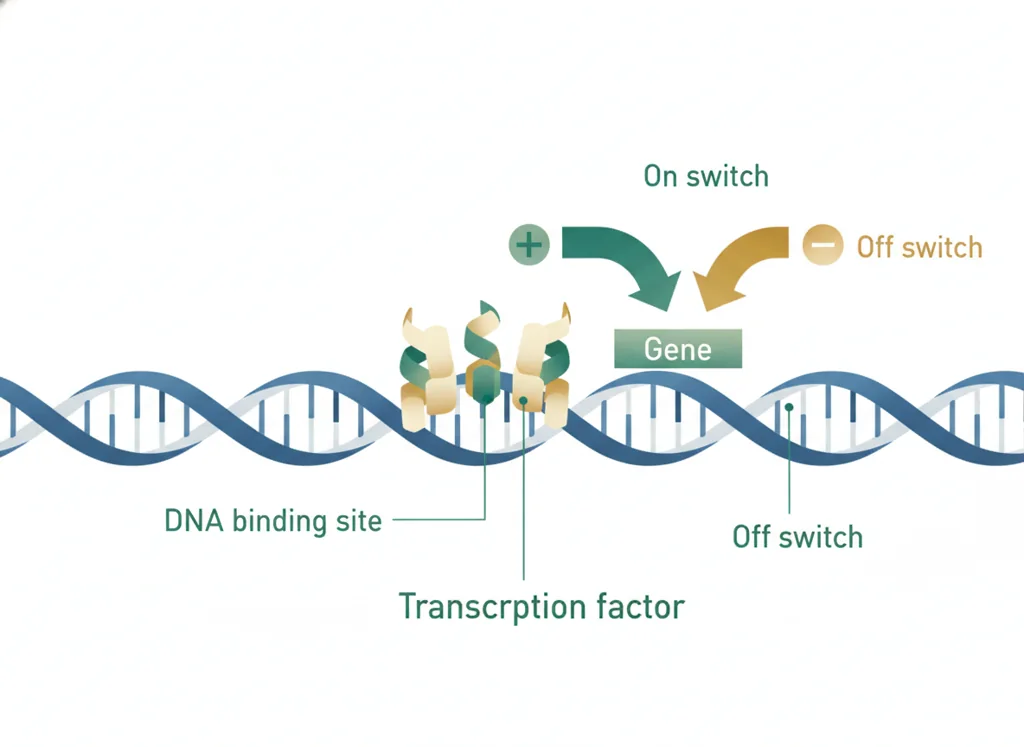
A protein that binds DNA and turns specific genes on or off, controlling what a cell becomes and does.
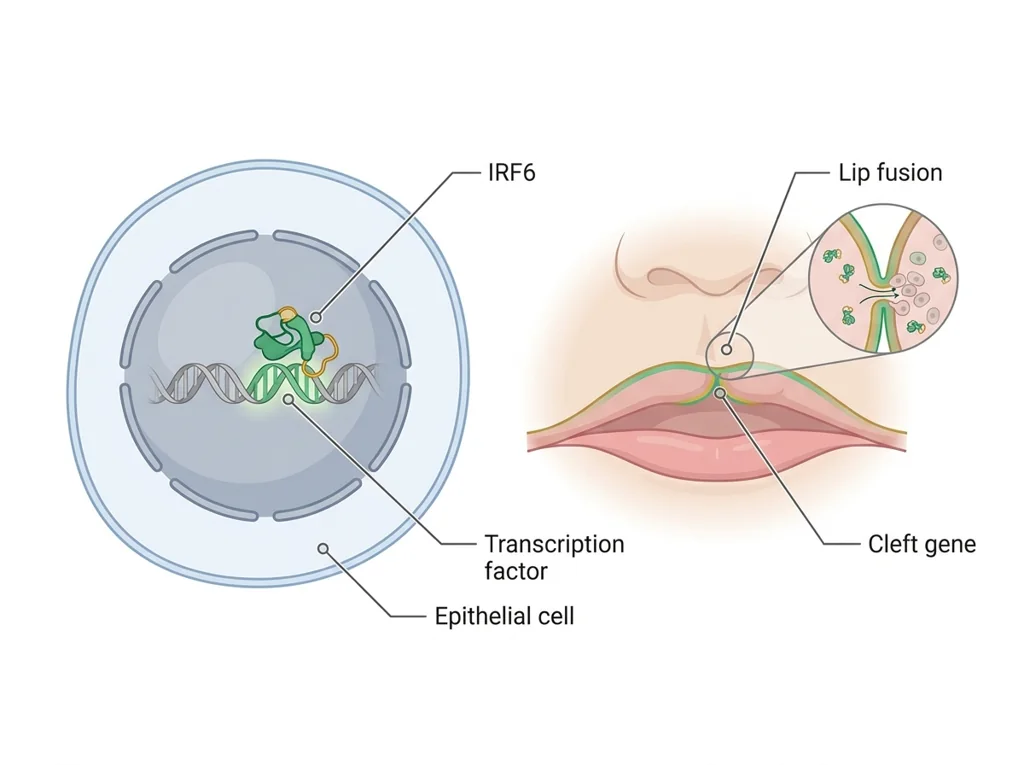
Interferon Regulatory Factor 6, a transcription factor needed by the skin-like cells that let the lip and palate fuse; a leading cleft gene.
Research citation trail (advanced)
You do not need these papers or database records to finish the lesson. They document where the plain-language explainer's claims come from and are intended for teachers or advanced readers.